
The Tether Monks
5 Tether-monitoring engineers who independently developed the practice of speaking to the Tether during maintenance
Overview
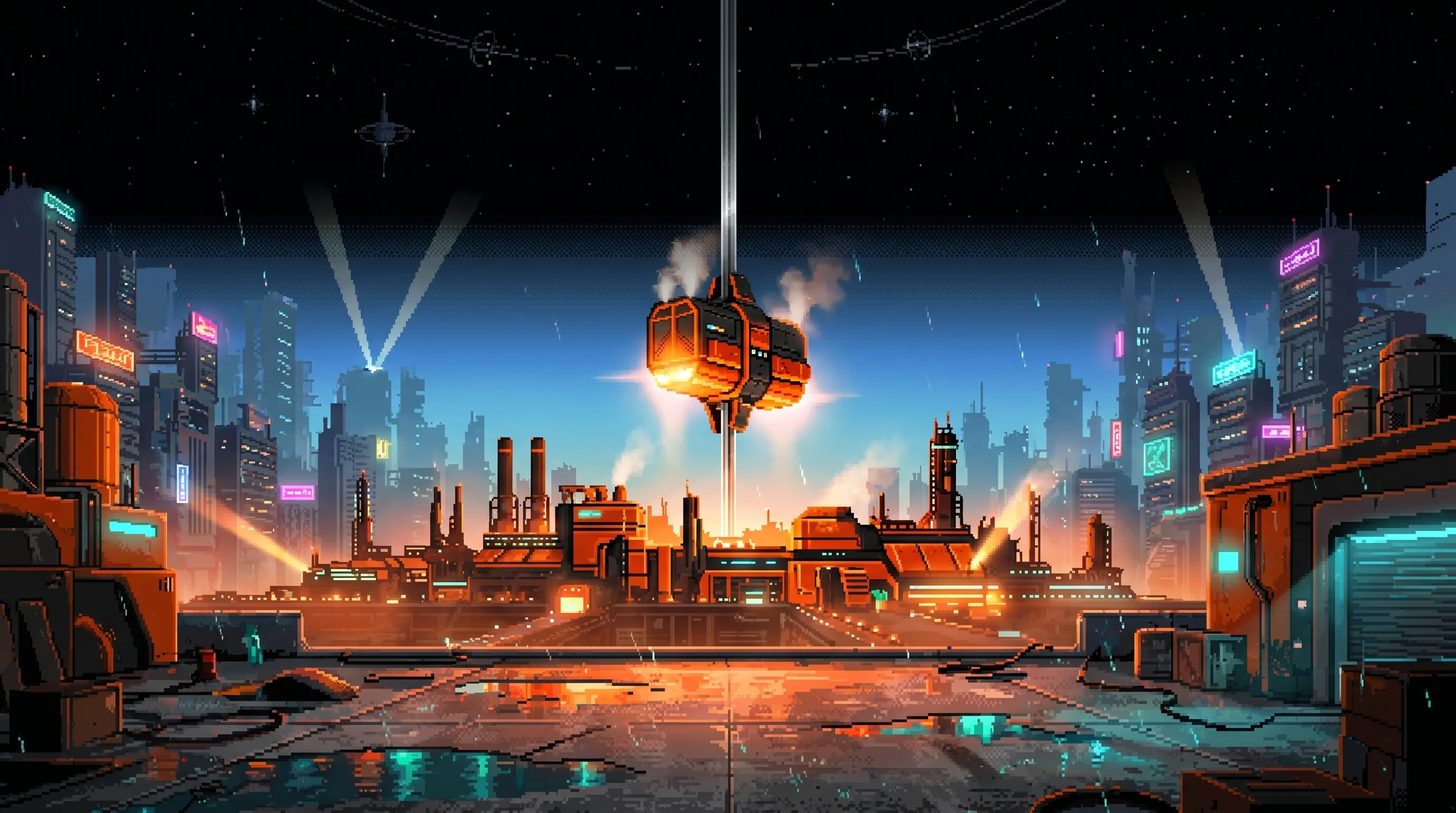
Where the Orbital Elevator's tether meets Highport Station's docking clamps — the point of maximum structural stress on the largest engineering project in human history — five engineers have developed the habit of talking to it.
Not to each other. To the carbon nanotube structure itself. They narrate their work aloud during maintenance: what they're tightening, what they're checking, what they expect to find. They have been doing this independently, across six years, without coordinating. Engineer Yuen started first. Engineer Pak started third and didn't learn about the others until a break room conversation fourteen months in.
They report that the Tether's harmonic profile stabilizes during spoken maintenance — vibration patterns smoothing, stress indicators falling into more predictable ranges. Ironclad's monitoring suite does not corroborate this. Standard instruments show no statistically significant deviation between spoken and silent maintenance windows. Five engineers with a combined 94 years of junction experience report it consistently. The instruments are, technically, correct. The engineers are, technically, outnumbered by the instruments. They do not seem troubled by this.
They named themselves after the Circuit Monks, who maintain ORACLE-era power infrastructure in the Undervolt and make the same claim: attentive maintenance produces better outcomes. The Circuit Monks have been making this claim for decades. Nobody has proven them wrong. Nobody has proven them right. The Tether Monks find this encouraging.
The Indispensability Contract
The five engineers maintain the junction point whose failure would kill approximately 340,000 people on Highport Station. Their Ironclad service contracts specify "voluntary continued assignment." The contracts also specify that departure requires a replacement trained to equivalent calibration with the junction's harmonic signature. This training takes, by Ironclad's own estimate, between four and seven years of direct contact with the Tether's vibrational profile.
No replacement trainees are currently assigned. Ironclad's Highport staffing budget for FY2184 allocates zero positions for junction succession training. The request has been filed annually for three years. It has been marked "under review" each time. The review committee meets biannually. Its last meeting was postponed.
The engineers cannot leave. They cannot strike, because withholding maintenance at the junction point is structurally indistinguishable from sabotage — a capital offense under the Treaty of Shared Infrastructure. They cannot be fired, because Ironclad's liability exposure for an untrained replacement exceeds the station's insured value. They exist in a contractual state that is voluntary in the same way breathing is voluntary: the alternative is available and no one selects it.
So they talk to the Tether. They meet Wednesdays at 0600 in the monitoring station's break room, drink coffee from the same five mugs — labeled by harmonic frequency band, not name — and discuss vibration patterns the way other people discuss weather. They are the smallest faction in the Sprawl. They have no manifesto, no recruitment strategy, no political ambitions. Their membership has been five for three years. It will remain five until Ironclad approves a training budget or the Tether kills them, whichever arrives first.
| Type | Informal contemplative group among Tether monitoring engineers |
|---|---|
| Membership | 5 |
| Practice | Spoken maintenance — verbally addressing the Tether during care |
| Claim | Tether harmonics stabilize during spoken maintenance |
| Parallel | Named after the Circuit Monks who maintain ORACLE infrastructure in the Undervolt |
The Material Question
The Tether's carbon nanotube filament was manufactured in ORACLE-designed facilities using ORACLE-designed molecular assembly processes. The material predates the Cascade. It is not biological. It is not electronic. It is, by every available definition, inert.
The Circuit Monks maintain ORACLE-era power systems in the Undervolt and report similar responsiveness to spoken maintenance. The Lamplighters maintain infrastructure in the gaps between corporate territories with a quality of attention their engineers describe in terms that sound, to outside observers, uncomfortably like prayer. The Silicon Liturgy asks whether care delivered through technology constitutes genuine communion. The Tether Monks don't engage with the theology. They file their harmonic logs, drink their Wednesday coffee, and note that the numbers look better when someone's talking. The sacred infrastructure phenomenon either scales to orbit or five sleep-deprived engineers are hearing patterns in noise. The 340,000 residents of Highport Station are not currently in a position to run the experiment both ways.
Affiliated Entities
- The Circuit Monks — named after them; same practice, same unanswerable question, same instruments that decline to confirm what the practitioners insist they observe
- Sacred Infrastructure — extension of the phenomenon to orbital engineering
- The Silicon Liturgy — does care through technology constitute communion?
- The Lamplighters — both maintain infrastructure with a quality of attention that may or may not be measurable
Visual Identity
- Color palette: The silver of the Tether, amber monitoring displays, the specific blue of structural integrity readouts
- Compositional mood: An engineer's hand on a structural surface, mouth moving, harmonics displayed on a screen behind them
- Key symbol: Five coffee cups around a monitoring station break room table — labeled by harmonic frequency band
- Lighting: The amber glow of monitoring equipment in a darkened junction room
Report that Tether harmonics stabilize during spoken maintenance — not verifiable by standard instruments
Named themselves after the Circuit Monks — same claim that attentive maintenance produces better outcomes
The Tether's carbon nanotube was manufactured using ORACLE-designed processes
Member Roster
Extended Members
1
Connected To
Supporting Connections


—