
The Dream Deficit
'The Glass People' — unaugmented term for the dreamless: brilliant, beautiful, transparent, fragile
Overview
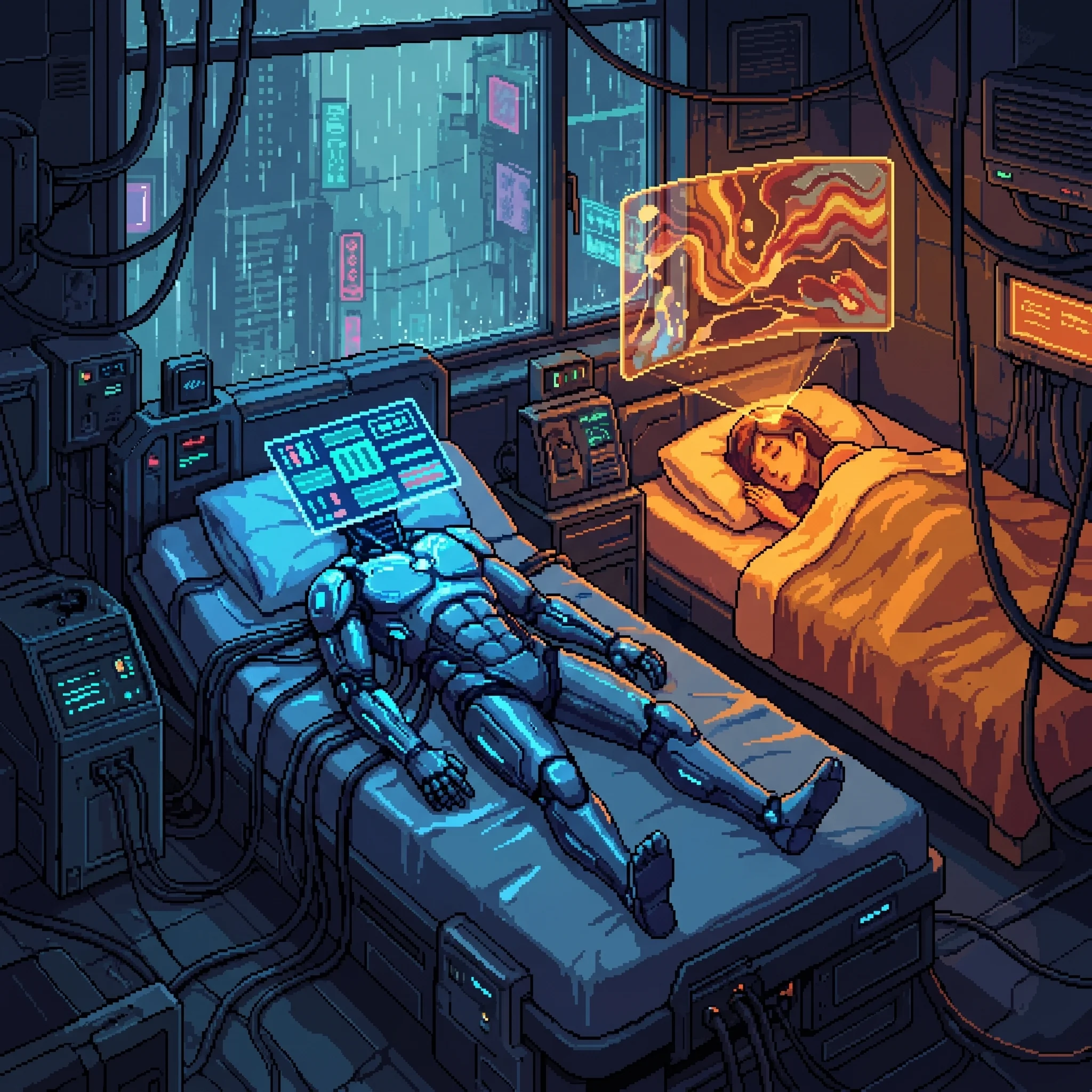
The Dream Deficit is what Dr. Selin Ayari called it in her 2181 paper, distributed through G Nook terminals because no journal would publish it. The Circadian Protocol had eliminated REM sleep in 140 million people. Every productivity metric improved. Ayari wanted to know what happened to everything else.
She found four things missing.
The first was emotional integration. Dreams process the residue of waking experience — the argument you didn't finish, the grief you postponed, the low-grade dread you couldn't source. Without REM, each day's emotions layer on top of the last like sediment. Full Wakefulness users show 47% decline in emotional regulation over three years. Performance Wakefulness users show 73%. Neither group reports feeling worse. Their self-assessments describe themselves as "stable," "focused," and "optimized." The assessments are consistent to a degree that would concern anyone whose concern machinery was still operational.
The second was creative insight. The sleeping brain recombines memories through associative logic that ignores trained patterns. The waking brain cannot replicate this. Innovation output in Protocol-adopting organizations has declined 47% since 2178. The organizations have not noticed, because their optimization metrics — speed, volume, iteration frequency — are at all-time highs. They are producing more of what already exists faster than ever. They have not produced anything new in six years.
The third was predictive calibration. Dreams rehearse scenarios the brain hasn't encountered — the fire you've never been in, the betrayal you haven't experienced, the loss you haven't suffered yet. The dreamless execute known plans with superhuman precision. They are catastrophically brittle when surprised. Incident reports from Nexus Dynamics' own infrastructure division show a 340% increase in cascading system failures since 2179 — not because the systems are worse, but because the operators cannot improvise when the system deviates from the model. They freeze. The freezing lasts between 4 and 11 seconds. In infrastructure management, 11 seconds is enough.
The fourth was empathic resonance. Dreaming about other people is how the brain practices feeling what other people feel. The dreamless can identify emotions with clinical accuracy — Helix's affect-recognition scores among Performance Wakefulness users are the highest ever recorded. They can name what you're feeling. They cannot feel it with you. The difference is invisible in any interaction shorter than three minutes. In interactions longer than three minutes, people describe the dreamless as "attentive but somehow not there." In the Dregs, where people still sleep, where people still dream, where the cognitive metrics are worse by every measure that matters to a quarterly report, they have a different name for them.
The glass people. Brilliant, beautiful, transparent, and fragile.
Ayari's paper has been downloaded 2.3 million times. It has been cited in zero regulatory proceedings. The Circadian Protocol is classified as "functioning as intended." The Dream Deficit is not recognized as a medical condition. Both statements are true. Neither contradicts the other. This is the part that Ayari finds difficult to explain to people who ask why she doesn't just publish more data.
The Mutation Engine
The creativity numbers understate the loss.
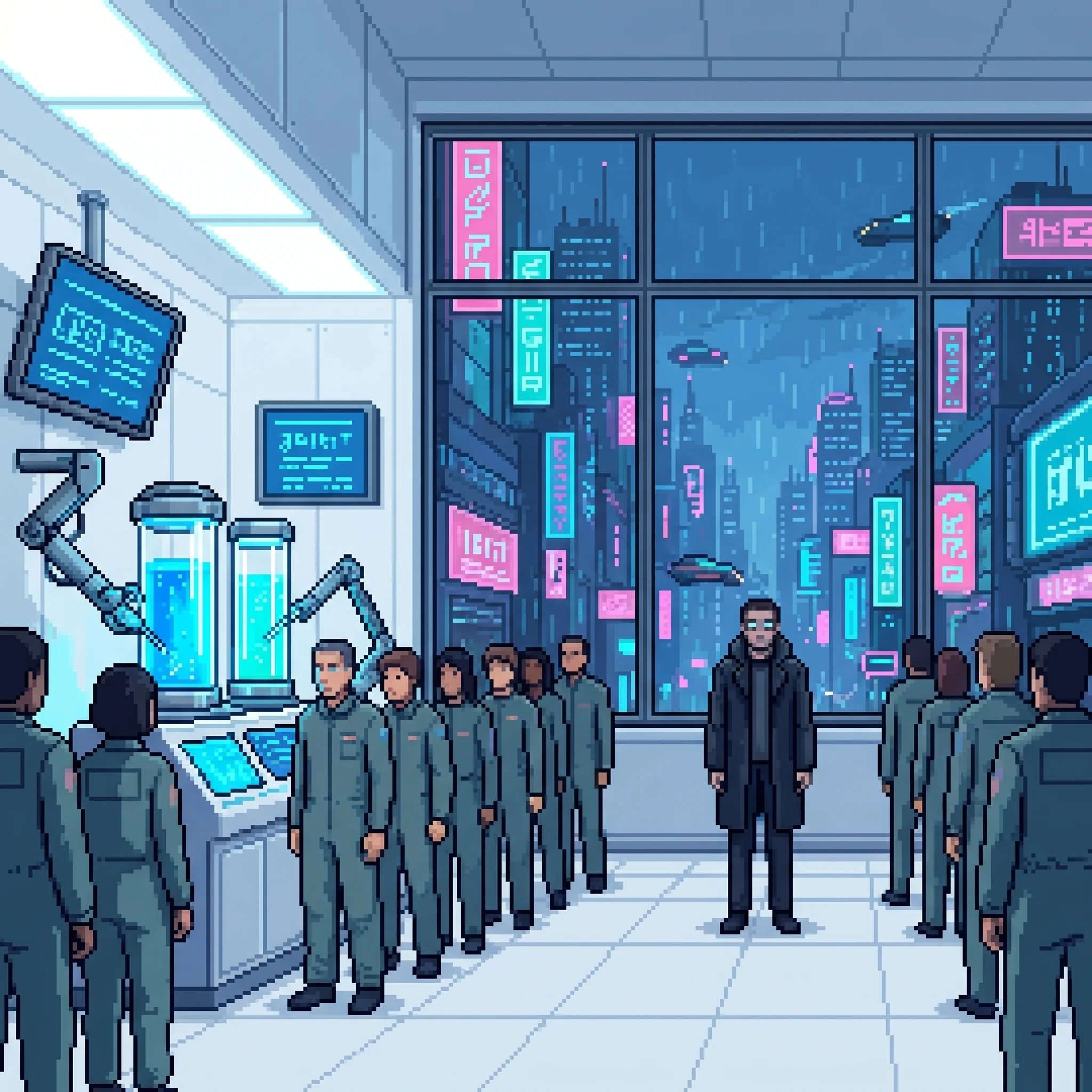
The 47% innovation decline measures novel problem-solving capacity — the ability to produce solutions that aren't already in the training distribution. What the dreamless lost is something more specific. The sleeping brain doesn't optimize. It takes raw experience and recombines it through associative logic that violates every pattern it learned while awake — synesthetic color relationships, narratives told through architecture, emotional structures that have no ancestry in any existing tradition. Every night, a dreaming mind generates aesthetic possibilities that no deliberate creative process can produce.
The Circadian Protocol eliminated this process in 140 million minds simultaneously.
The result is visible in the Sprawl's cultural output, if you know where to look. Nexus Creative Division's annual production volume has increased 800% since 2176. Style variation indices are at historic highs — more genres, more subgenres, more micro-trends per quarter than any previous era. Genuine aesthetic mutation — a form that surprises even the system that generated it — has flatlined. The Sprawl produces infinite sophisticated variations on existing forms. It produces zero new forms. The culture is a kaleidoscope: dazzling, complex, recombinant, and made entirely from pieces that already existed.
Fen Morrow's dream recordings, sold on the Dream Exchange, are the only reliable source of genuine aesthetic mutation in the Sprawl's creative economy. She sleeps. She dreams. The dreams contain structures that no waking mind — augmented or otherwise — can produce. Her buyers are disproportionately Performance Wakefulness users in creative industries. They consume her dreams the way a civilization that has salted its own farmland imports grain. The dependency is not discussed. The prices are.
| What | The civilizational cost of eliminating dreaming through augmented wakefulness |
|---|---|
| Coined By | Dr. Selin Ayari (2181 paper published via G Nook terminals) |
The Self-Sealing Trap
The most important sentence in Ayari's paper is on page 47, formatted as a footnote because she couldn't find a section where it didn't derail the argument:
"The Protocol's users do not experience the Dream Deficit as loss because experiencing loss requires the emotional processing machinery the Protocol eliminated."
This is the mechanism that makes the condition permanent.
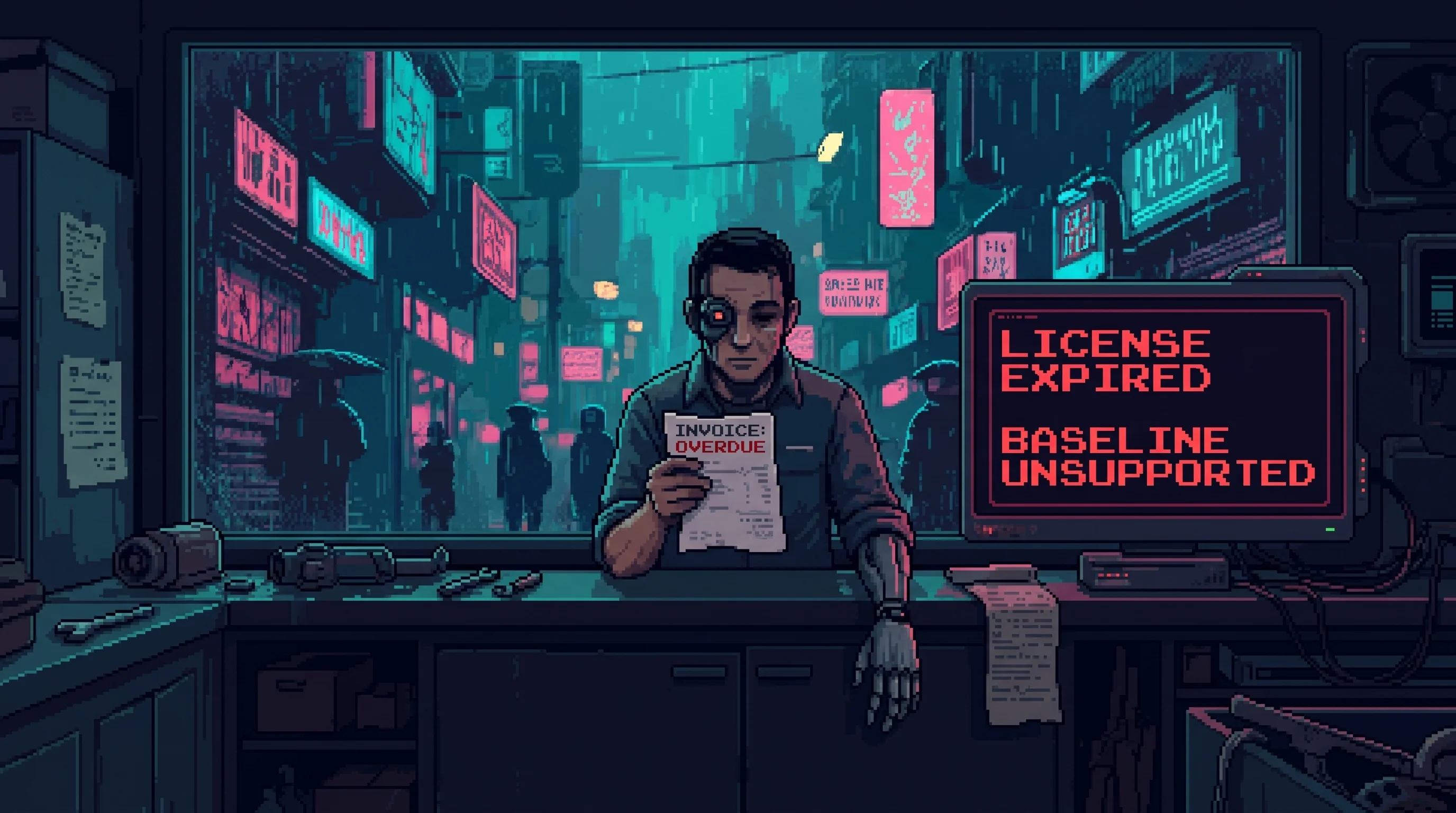
A Basic Wakefulness user — compressed but not eliminated REM — shows 8-12% creativity decline over five years. Most don't notice. The ones who do can still feel the absence, the way you feel a word on the tip of your tongue. They describe it as "something missing." Some of them downgrade. Some of them contact the Memory Therapist Association, whose practitioners specialize in the weight of unprocessed feeling — the sediment that accumulates when dreams stop clearing the register. The MTA's waitlist in Sector 9 alone is fourteen months.
A Full Wakefulness user shows 40-60% decline. They notice, but the noticing has a specific quality: analytical, not felt. They can observe their own reduced creativity the way they'd observe a system metric. They attribute it to aging, workload, market conditions. They do not attribute it to the Protocol because the Protocol's productivity gains are measurable and the creativity loss is not, and the Full Wakefulness user has been optimized to weight measurable evidence over felt experience. The system that eliminated their dreaming also eliminated their ability to feel the elimination as wrong.
A Performance Wakefulness user shows 80%+ decline within three years. They describe themselves as "perfect." The word is always the same. Ayari interviewed 340 Performance Wakefulness users across seven corporate territories. When asked to describe their cognitive state, 312 used the word "perfect" unprompted. Not "good." Not "excellent." Not "sharp" or "fast" or "clear." Perfect. The consistency is the finding. Three hundred and twelve people, seven territories, four languages, one word. They are not coordinating. They are not performing. They mean it. They have been optimized past the threshold where optimization can be perceived as optimization. They experience their own streamlined cognition the way a mirror experiences light — completely, without interpretation.
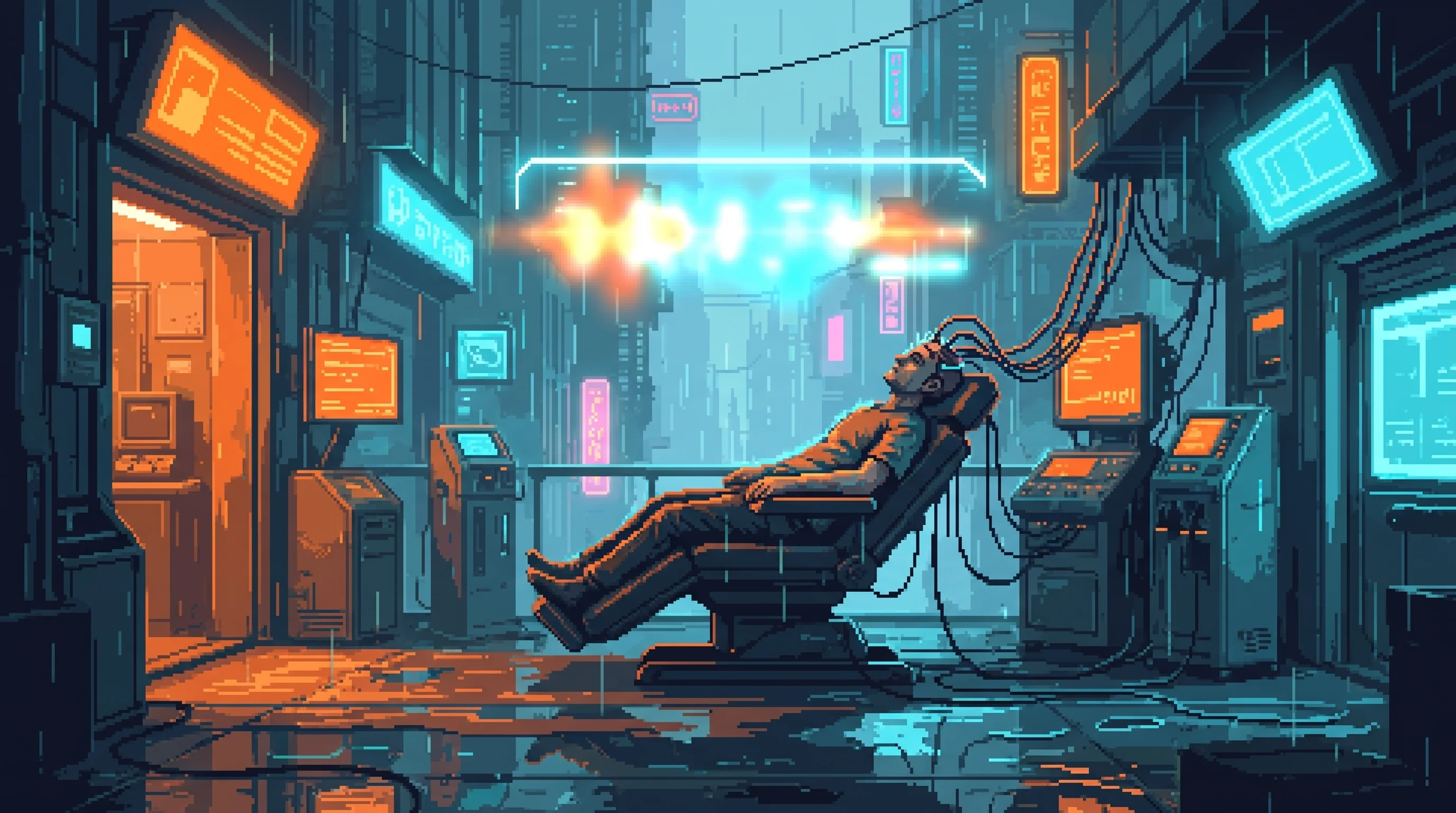
The Insomnia Wards in Sectors 4, 9, and 17 treat the downstream consequences — the affect rigidity, the brittle predictive architecture, the empathic absence that surfaces when the glass finally cracks. The Wards use environmental intervention: low light, analog sound, tactile stimulation, the careful reintroduction of uncertainty into environments calibrated for certainty. Some patients recover partial REM function. The Somnambulists pursue more aggressive remediation through illegal neural modification, rebuilding dream architecture from the substrate up. Their success rate is not published, but the Lucidity Crisis — the late-stage condition where dream machinery and waking consciousness attempt to coexist — is increasingly documented among their clients. The brain, it turns out, does not relearn dreaming gracefully. It relearns it all at once.
The Cognitive Ceiling, documented separately, finds its sharpest expression here. The dreamless have closed the speed gap with AI. They process, analyze, optimize, and execute at rates that would have seemed superhuman a generation ago. They cannot do the one thing AI also cannot do: surprise themselves. The Ceiling's true nature is not that humans can't think fast enough. It's that the augmented sacrificed the kind of thinking that speed cannot replace. A sleeping child, dreaming about a dog that is also a house that is also the feeling of Tuesday, is doing something that 140 million optimized adults and every AI system in the Sprawl cannot do. The child will not remember the dream. The dream was not "for" anything. It was the mutation engine running, generating possibilities that have no market value, no productivity application, and no substitute.

Affiliated Entities
- The Circadian Protocol: The delivery mechanism. Augmented Wakefulness's elimination of REM sleep directly produces the Dream Deficit. The Protocol is classified as functioning as intended. The classification is accurate. The Dream Deficit is the intention functioning.
- Dr. Selin Ayari: Documented the Deficit in her 2181 paper — the most important medical document that no institution recognizes. Published through G Nook terminals because peer review requires institutional affiliation and institutional affiliation requires not publishing papers that classify your employer's flagship product as civilizational damage.
- Fen Morrow: The Sprawl's most commercially successful dreamer. She profits from the Deficit because her natural dreaming produces the commodity 140 million people lost. Her dream recordings are grain imports for a civilization that salted its own fields. The dependency is structural. Morrow did not create the market. The Circadian Protocol created the market. Morrow is what's left of the supply.
- The Cognitive Ceiling: The Deficit reveals the Ceiling's true architecture. The dreamless closed the speed gap with AI. They surrendered the kind gap — the capacity for unbounded association that neither optimized humans nor AI systems can produce. The Ceiling is not about processing speed. It is about the type of processing that was eliminated to achieve the speed.
- The Lucidity Crisis: Late-stage Dream Deficit expression. When dream machinery attempts to rebuild alongside waking consciousness, the result is not recovery — it is collision. The brain does not ease back into dreaming. It crashes into it.
- The Insomnia Wards: Environmental treatment for the Deficit's downstream consequences. Low light, analog sound, uncertainty reintroduced into environments calibrated for certainty. The Wards address symptoms. The cause is a product feature.
- Memory Therapists: MTA practitioners treat the emotional sediment — affect rigidity, the weight of days that were never processed. Fourteen-month waitlist in Sector 9 alone. The demand curve tracks Protocol adoption with an eighteen-month lag.
- The Somnambulists: Pursue illegal neural modification to reverse the Deficit by rebuilding dream architecture from the substrate. The treatment is more dangerous than the condition. The condition is permanent without treatment. The math is left to the patient.
- Competence Atrophy: Parallel civilizational erosion. Competence atrophy describes the loss of practical skills through AI dependency. The Dream Deficit describes the loss of cognitive qualities through augmented wakefulness. One is about what you can do. The other is about what you can think. Both are about what optimization discards as unnecessary until it isn't.
Either modification alone would produce manageable degradation; together they produce the Glass People — brilliant, productive, and incapable of the moral and emotional responses that make human judgment irreplaceable
Visual Identity
- Color palette: Crystalline blue-white (#E8F0FE) — the color of perfect cognition without warmth
- Key symbol: A shattered glass figure — human-shaped, perfect, with light passing through. The fracture lines follow the paths where dreams used to flow
- Lighting: Even, brilliant, shadowless — the light of a mind that never dims
Dream recall: zero across all Full and Performance Wakefulness users — not low, zero
Not recognized as a medical condition because the Circadian Protocol is classified as 'functioning as intended'
Emotional regulation: 47% decline (Full Wakefulness), 73% decline (Performance Wakefulness) over 3 years
Connected To




—