
The Firmware Cliff
Enhanced pathways go dark — like rooms in a house where the lights have been permanently turned off
Overview
The firmware cliff is what happens when a corporation turns off the lights in rooms your brain already moved into.
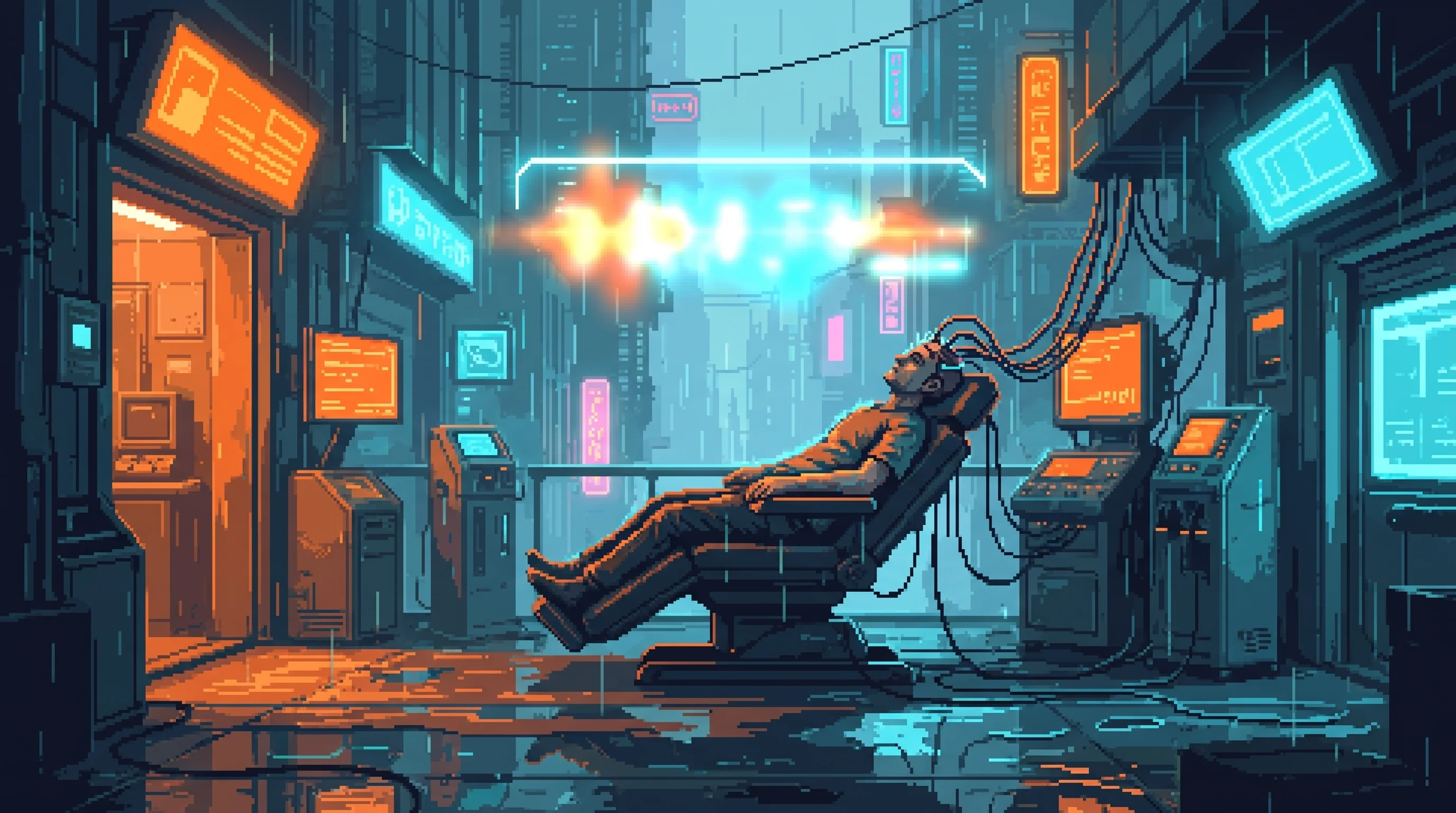
Corporate neural enhancement doesn't add processing power the way a second monitor adds screen space. It restructures cognition. Over months and years, new synaptic pathways form, existing connections get pruned, cortical regions repurpose themselves around the enhanced bandwidth. The architecture is permanent. The electricity is licensed.
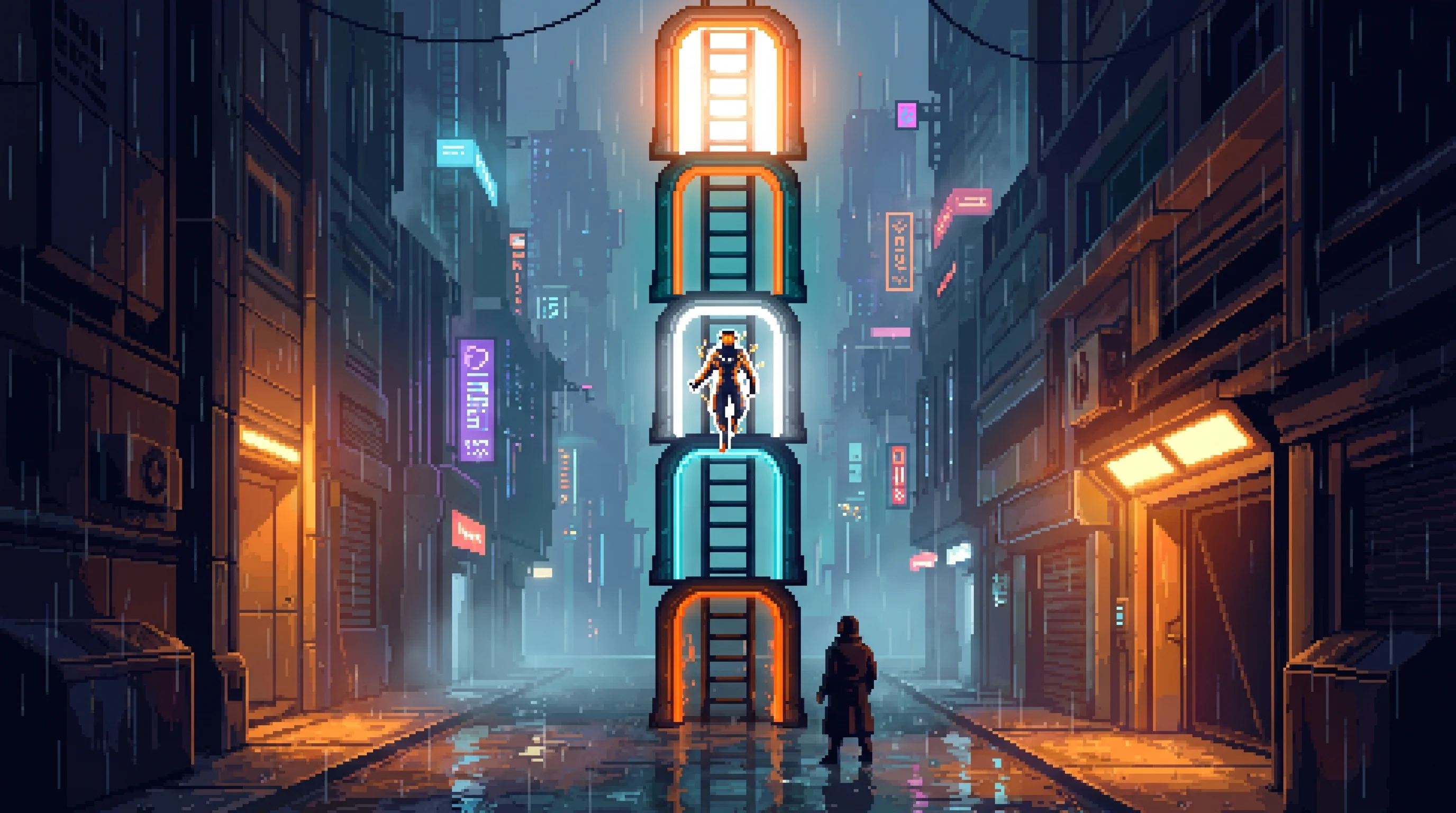
When firmware reverts from Professional to Basic — through deprecation, departure, or the standard Sunset Package — the enhanced pathways don't disappear. They go dark. The wiring stays. The fixtures remain. Nothing flows through them. Your brain has rooms it built, furnished, and lived in for years. You can feel the doors. You cannot open them.
The Dregs call it "going gray." The term is precise: colors don't technically change, but they feel less saturated. Sounds don't diminish, but they lose their layering. Conversations don't become incomprehensible, but the harmonic overtones vanish — the part where you could hear what someone meant underneath what they said. Going gray strips the world of its texture. What remains is adequate.
Adequate, after years of richness, feels like poverty.
The Mechanism
The cliff's severity scales with duration, which is convenient for the corporations that designed the duration:
A three-year employee gets discomfort. The world feels slightly flatter. Functional civilian baseline returns within months. A ten-year employee gets disorientation — reaching for cognitive capabilities that no longer respond, the phantom limb sensation of a mind that used to be larger. Recovery is incomplete. A twenty-year employee gets bereavement.
Nexus's actuarial division — the people who calculate what a human mind is worth in quarterly depreciation — determined that the average deprecated employee's productivity drops to 31% of enhanced baseline within ninety days. The number sits in a file labeled "Reversion Impact Assessment." Not "Side Effects." Not "Known Risks." Reversion Impact Assessment. The phrasing suggests weather.
The cliff ensures that leaving the Corporate Compact costs you your mind. A Coolant Guild engineer at Server Farm 14 carries ten years of Professional-tier thermal calibration in neural pathways that only function on Ironclad's firmware stack. Departure doesn't just trigger cognitive erosion. It erases the thermal modeling expertise that makes the engineer irreplaceable, because the knowledge lives in enhanced pathways that require corporate bandwidth to access. The engineer's competence is neurologically locked to the employer. Portable skills aren't portable when the port is proprietary.
This is the Dependency Spiral's terminal expression: the cage where the bars are made of your own synapses. The Corporate Compact's exit cost isn't a fee. It's a lobotomy you perform on yourself by walking out the door.
| Street Term | 'Going gray' |
|---|---|
| Productivity Drop | 31% of enhanced baseline within 90 days |
| Severity | Proportional to duration: 3 years = discomfort, 10 years = disorientation, 20 years = bereavement |
The Speed Problem
The cliff's severity correlates with how long you climbed. It correlates more with how fast.
A ten-year employee who accepted every thirty-seven-day firmware update experiences a worse cliff than a twenty-year employee who resisted half of them. The twenty-year brain had time to finish building before each renovation began. The ten-year brain is a house where every room was gutted and rebuilt on a thirty-seven-day cycle — none of them finished, all of them load-bearing, each one's incomplete walls holding up the next renovation's floor.
When the power cuts, the rooms don't go dark. They cave in. And the rubble blocks the hallways to the rooms you built before the updates started.
One Transition Corridor intake counselor described a former Nexus analytics lead — fourteen years, every update accepted on release day — who spent his first week post-reversion opening his personal terminal and staring at it. Not confused. Not lost. He knew what it was. He could feel the shape of what he used to do with it. His fingers moved to where commands should be, and the cognitive architecture that would have completed the sequence was a hallway full of collapsed drywall. He did this nine times in seven days before he stopped trying.
His intake form lists his current occupation as "consulting." His Transition Corridor file lists his current cognitive output at 22% of enhanced baseline. Both documents are accurate. Neither is honest.
The Strange Gifts
Going gray is mourning yourself. Except sometimes it isn't.
Felix Otieno went gray. Post-reversion cognition: flatter, slower, the whole diminished catalogue. He can still care for growing things. The patience required to tend a plant — the long tolerance for silence, the attention to small changes over weeks — survived the cliff because it was never augmented in the first place. It was underneath. His pre-enhancement knowledge of pharmaceuticals persists as residue: not the enhanced version, but the version he carried before corporate firmware built on top of it. The foundation held.
Wren Adeyemi's case is stranger. Her augmented impatience — the Professional-tier processing speed that made human-pace conversation feel like drowning — dissolved during reversion. What remained was her pre-augmentation conversational patience, buried for years under firmware that had made slowness intolerable. Going gray didn't restore something. It removed the thing that was crushing something that had never left.
The cliff's cruelest feature is that you can feel where your mind used to be. The rooms exist. The lights do not. You are standing behind doors you can see and cannot open, mourning a version of yourself that is not dead but simply inaccessible, like a neighbor who moved to a country without mail service.
Its strangest feature is that sometimes, underneath the rubble, there's a room you forgot you built. The original one. Before the renovations started.
Nobody markets this. It is not a selling point for the Sunset Package.
Going gray strips the world of its texture — what remains is adequate
The Rented Version
Class Passing runs the same collapse in miniature, on purpose, and on a schedule. A passer borrows a Professional-tier processing loan for the length of an interview, feels the fluency thin exactly on cue, and gets to try the loan again next week. Nothing at the bottom of the actual cliff comes with a next week attached. The firmware that comes back for a passer never came back for Felix or Wren; the whole distance between renting a mind and losing one is a schedule instead of a sentence.
Affiliated Entities
| Entity | Relationship |
|---|---|
| The Deprecation | Causes the cliff — reversion is the mechanism, deprecation is the policy |
| The Dependency Spiral | The cliff is the Spiral's terminal expression — where dependency becomes neurological fact |
| The Corporate Compact | Enforces through the cliff — the exit cost isn't financial, it's cognitive |
| The Sunset Package | Includes the reversion that produces the cliff — listed under "transition support" |
| The Transition Corridor | Where going gray becomes lived experience — walking into the Dregs while your cognition degrades in real time |
| Consciousness Licensing | Professional-to-Basic reversion produces the cliff — the gap between 12.4 and 4.7 petaflops, experienced as grief |
| Consciousness Tier Architecture | Reversion between architectures produces the cliff |
| Felix Otieno | Went gray — post-reversion cognition flatter, slower, but retained pre-augmentation pharmaceutical knowledge and the patience for growing things |
| Wren Adeyemi | Going gray removed augmented impatience — restored tolerance for conversation buried under years of Professional-tier speed |
| Dr. Felix Strand | Went gray but retained pre-augmentation pharmaceutical knowledge — the residue that survived the cliff |
| Class Passing | Runs the same collapse on a schedule instead of a sentence — a rented tier instead of a repossessed one |
Visual Identity
- Palette: Professional-tier blue-white fading to the warmer, flatter amber of Basic — not darker, just less
- Key Symbol: Rooms in a house with the lights off — doors visible, contents invisible
- Lighting: Diminished. Not dramatic. The specific quality of a space that used to be brighter and remembers it.
- Mood: Standing in your own mind, hand on a doorknob that no longer turns
The cliff ensures that leaving the Corporate Compact costs not just your job but your mind
Average deprecated employee's productivity drops to 31% of enhanced baseline within 90 days
A twenty-year employee experiences something closer to bereavement
Connected To

Supporting Connections




—