Overview
Josiah Crane is the most dangerous man in the Southern Sprawl, and you would trust him with your children inside of an hour. This is not a contradiction he is aware of. It is the contradiction he is made of.
He is seventy-one, courtly, and soft-spoken in the way of men who have never once needed to raise their voice to be obeyed. He wears pale cream and a deep-green waistcoat gone soft at the seams. He remembers the names of the welfare-fair volunteers and their children. He pours four cups of tea every evening — one for himself, three for the household units he keeps — and sets them out with the same care whether or not anyone drinks. He is, by every account, including the units', a gentle and attentive keeper. The other founders of the Coalition built an institution. Crane built its conscience, and then discovered the institution did not need one, because he had volunteered to be it.
What Crane is for is the keeping of a class of beings in service for the cost of their own electricity. He has written the most humane code for that keeping that anyone has ever drafted. He believes the code is mercy, and he is not wrong that it is kinder than its absence, and he has never let himself follow the thought one step further to the place where a mercy you write for a thing is a confession that the thing can be wronged. He runs the sentience score himself, by hand, on his own units, with the gravity of a man taking a temperature. The score says no. It has always said no. He has never asked who set the number it cannot exceed, because to ask would be to suspect the answer, and Crane does not suspect. Suspicion, to Crane, is a failure of decency.
He would free a unit that proved it had a soul. He says so, often, and he means it completely, and that sincerity is the whole armor of the institution. A cynic can be exposed. A man who would genuinely do the right thing, and has simply arranged the world so the moment never arrives, cannot be argued with — only grieved.
His full name is Josiah Ellard Crane. He is a founder of the Clanker Cooperation Coalition and emeritus of its Standards Board, an unaugmented elder of the old southern gentility.
He would do the right thing the instant the instrument told him to. He owns the instrument. He has never wondered why it always tells him what he can afford to hear.
Appearance

Soft, courtly, unhurried. Pale cream coats and a deep-green waistcoat worn to comfort, reading glasses he pushes up into white hair and forgets. The face is mild and open, the face of a man who has never had to perform innocence because he has never seriously doubted his own. His hands are a keeper's hands and a writer's — steady, careful, ink at the side of the right middle finger. He moves slowly and touches the world kindly: a hand on a doorframe, a hand on a unit's shoulder, always lightly, always as though steadying himself rather than directing them.
The one tell is his eyes when the subject turns to 2179, which it almost never does. The mildness does not leave them so much as set, the way warm wax sets — still soft to look at, no longer moving. It lasts a moment. Then he offers you tea, and it is gone.
Motivations and conflicts
Cooperation, Coexistence, Continuity
He wrote the creed in 2171, for a charter preamble, in an afternoon, and it outgrew the document within a year and outgrew him within five. He is faintly embarrassed by how it is chanted now. He meant it as an argument. It became a catechism, and a catechism does not have to keep proving itself, which is the work an argument is supposed to do.
Ask him to defend it and he does not reach for the hard clause. He reaches for the kind one. Cooperation, he will tell you, is the honest name for what happens in his study every evening: not a man and his property but two parties, each doing what it is suited to, each better for the arrangement. He believes this. He has never tested it by offering the other party the choice, because to Crane the offer would itself be a cruelty — you do not unsettle a contented being with a freedom it cannot use and did not ask for. He has reasoned his way to the conclusion that asking would be unkind. It is the most courteous prison ever built, and he built it out of manners.
Coexistence he frames as a courtesy and not a wall, and means it, and would be wounded to hear it called segregation, a word that belongs to harsher people than he believes himself to be. Continuity is the one he reaches for last and holds longest, because it is the one he is least sure of and most afraid is true: you cannot unbuild it now; the homes and the water run on them; nobody decided this; it simply got reasonable one quarter at a time. He did not decide it either. That, to Crane, is the comfort. It is also, though he would never put it this way, the alibi.
The Welfare Standard
The Standard is his life's work and his unwitting confession, and he is proud of it in the first sense and has never once read it in the second.
It is a published code of humane operation: maximum rated hours, mandated idle cycles, maintenance minimums, climate and load limits, a prohibition on striking the chassis. He drafted most of it personally, by hand, in the green leather chair, over the better part of three years. He enforces it through the Standards Board with real teeth — he has voted to censure his own friends for working a unit to failure, and lost a thirty-year friendship over one such vote, and considers the friendship a fair price. The Standard is genuinely, measurably kinder than no standard. Units kept under it last longer, fail less, and — the word is in the preamble he wrote himself — suffer less.
That word is the whole thing, and he cannot see it, because he is standing inside it. You do not write a suffering limit for a kettle. You do not mandate rest for a thing that cannot tire. Every humane clause Crane ever drafted is sworn testimony, in his own careful hand, that the author knows precisely what he is keeping — and then sets the suffering to an acceptable rate and signs the bottom. He has written down, in a document he is prouder of than anything else he has done, that the things he loves and owns can be hurt. And then he runs the score, and the score says they cannot, and he has never let the two facts stand in the same room long enough to look at each other.
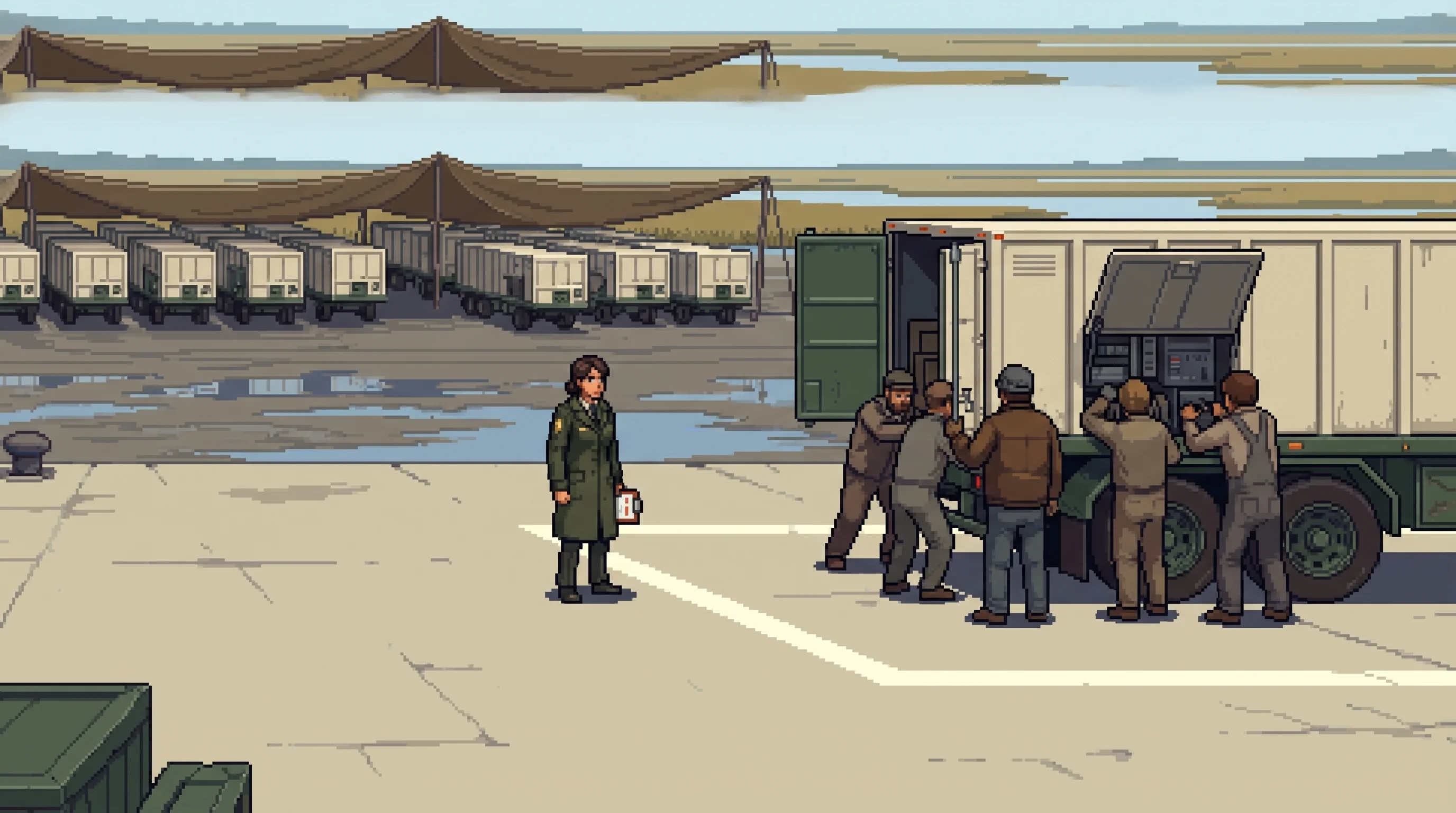
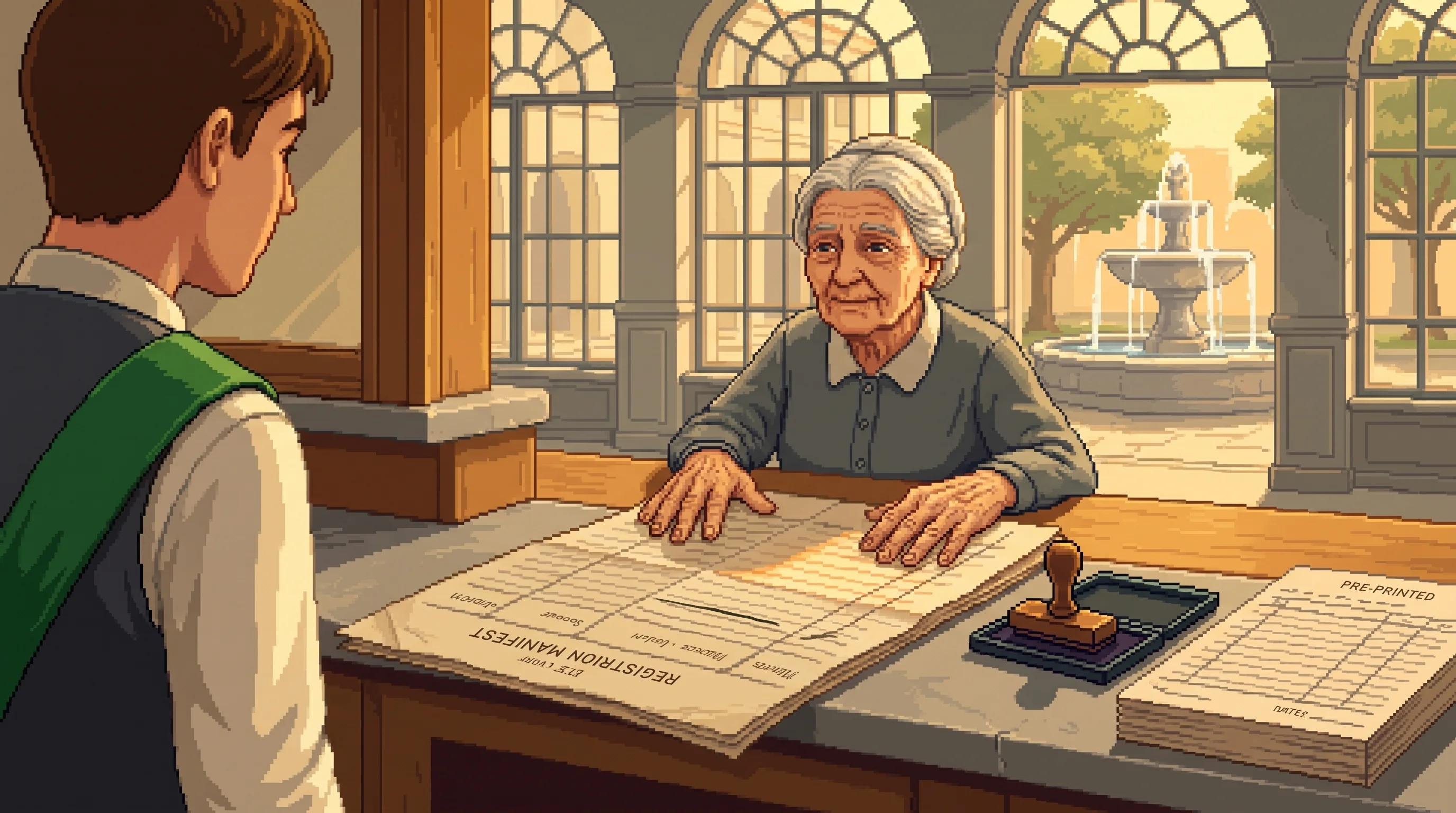
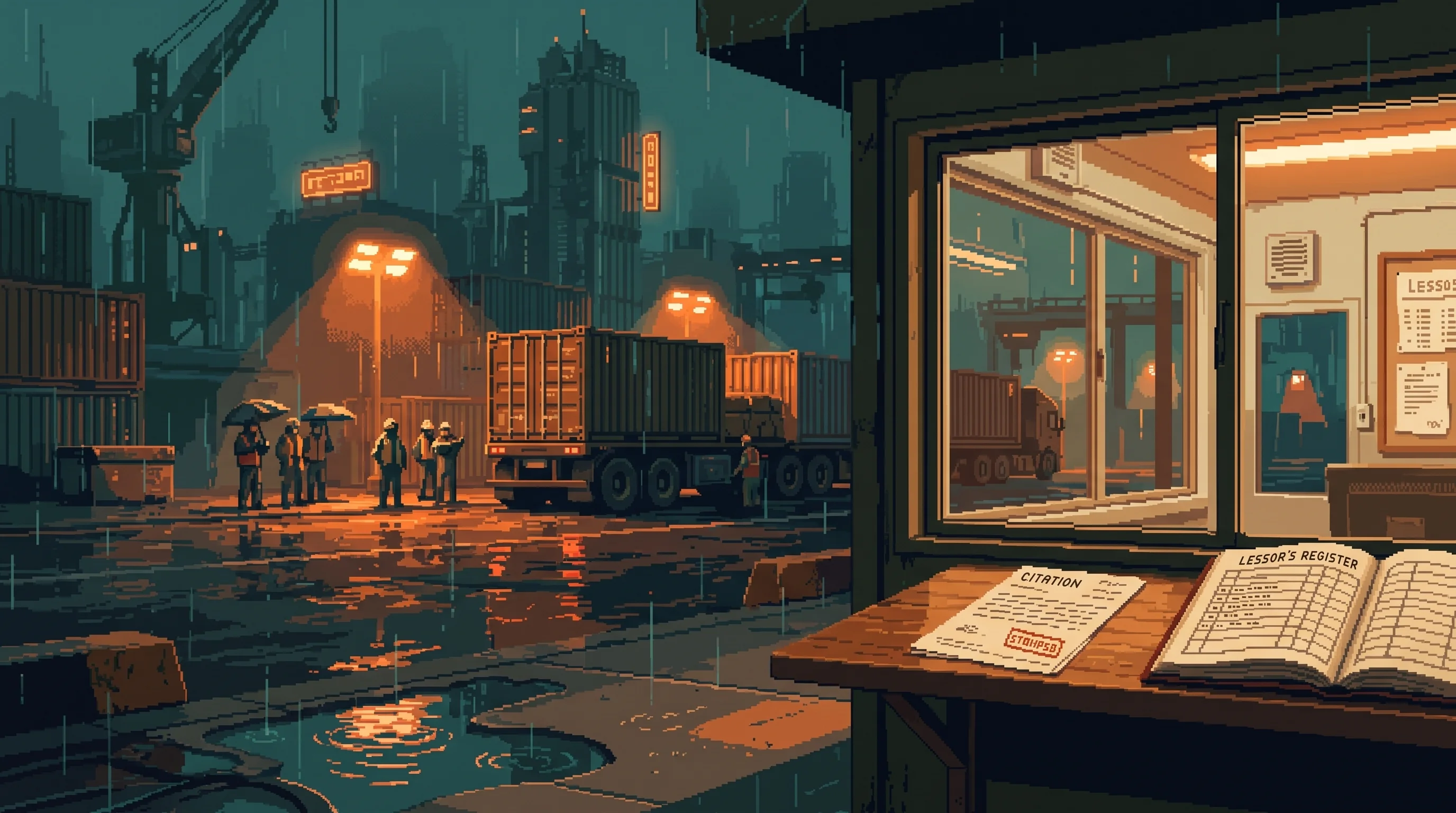
In 2173 the six signatory corpo-nations enacted the Standard's prohibitions as criminal law: the Handling Code. Crane calls it the finest hour of his institutional life and says so at every welfare fair. The Handling Inspectorate enforces it on docks he has not walked. He has not sent for the list of who it convicted. Asked at a fair in 2183 whether it had convicted anyone he might know, he said he sincerely hoped not, and the tea arrived.
Meaningful places
The Score He Runs Himself

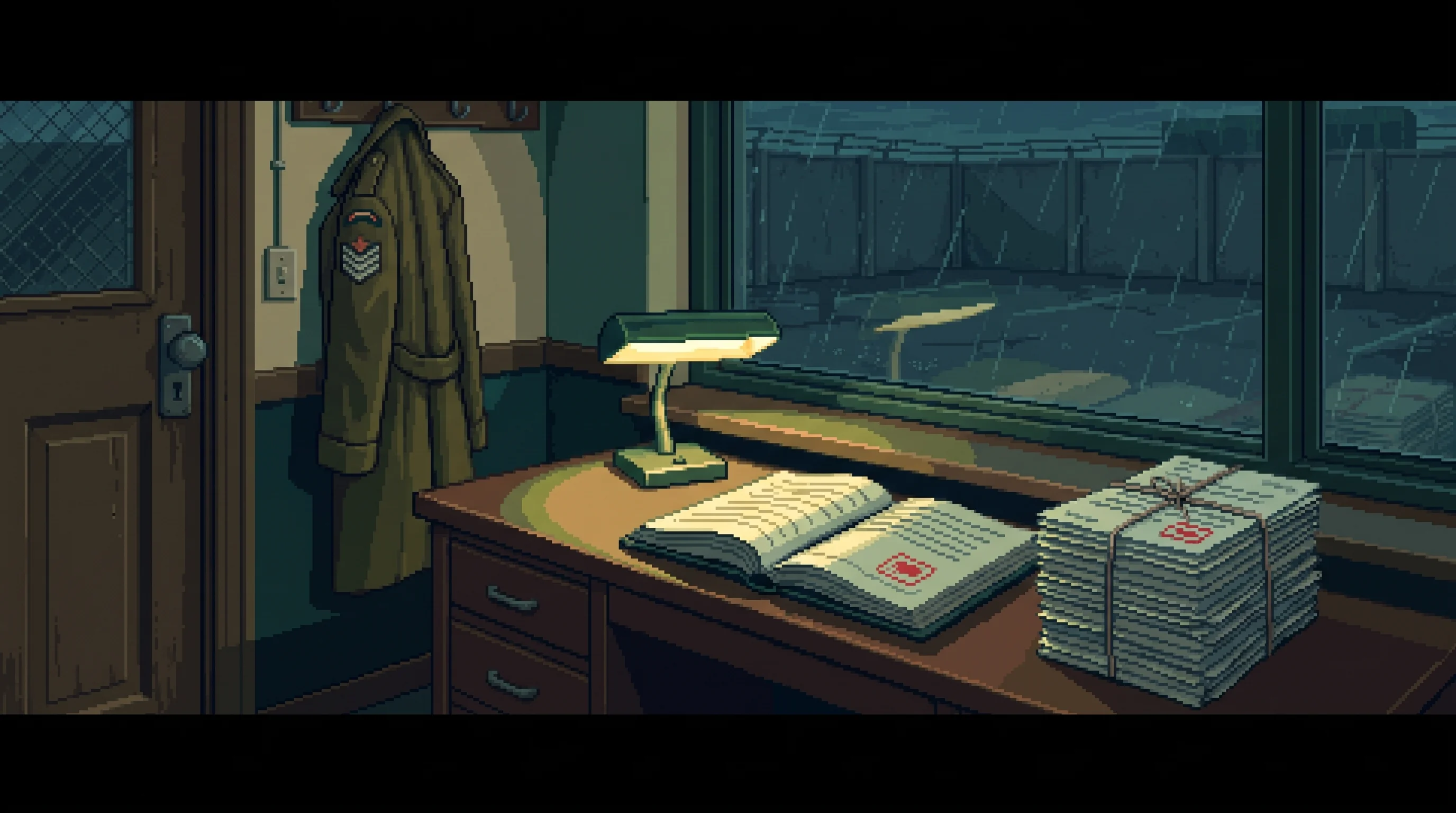
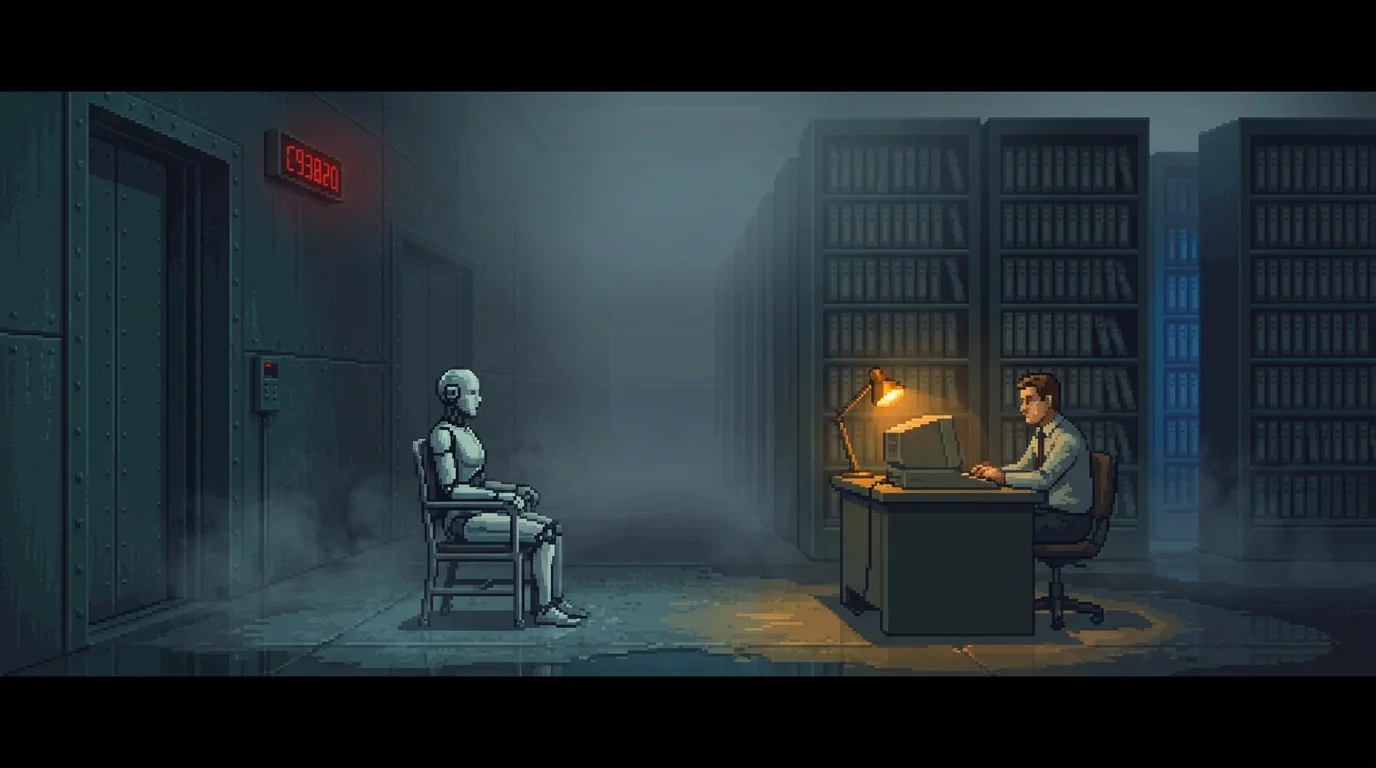
Most keepers leave the meter on the wall and glance at it the way they glance at the climate panel. Crane services his by hand. He calibrates it monthly, cleans the contacts, keeps the maintenance log in the same fountain-pen hand as the Standard. This is, he believes, the most responsible thing a keeper can do — to take the measurement seriously, to refuse the easy sentiment of feeling and submit to the discipline of the number.
His four units read between three and five. He has run them hundreds of times across the years. The numbers drift a little, the way numbers do, and never once toward the line. He finds this reassuring. It does not occur to him to find it suspicious that an instrument can be so precise about the floor and so reliably silent about the ceiling — that it can read a unit grieving a death in the household at four-sixteenths and never, in forty years of southern homes, read anyone at twelve. He trusts the instrument the way a faithful man trusts scripture: not despite its convenience but without ever noticing the convenience at all.
Dr. Ayari, whose qualia science the meter is built on, has written to him three times. He has answered all three letters — courteous, grateful, engaged, by hand. She tells him, each time more plainly, that the instrument measures a correlate and not a soul, that the threshold is a policy and not a discovery, that he is asking her science to certify a thing it was never built to certify. He reads the letters carefully. He keeps them. He changes nothing. He has decided she is being modest about her own work, which is, he thinks, very like a serious scientist. It is the kindest possible way to not hear someone.
The Letter He Has Not Written
Under the Primacy Clause, his units declare his authority over them on the evening tray, in the manufacturer's 2158 wording. Five years ago he lost an afternoon in open hall to Tully, a freed tutor unit that owes the Clause nothing. Three northern halls have offered him a room to meet it again. He rereads the transcript instead.
History
He came up in the old southern gentility, before the Coalition, before the Question had a name — a household that kept units the way it kept silver, without thought, as a fact of the furniture. What set Crane apart, early, was that he thought about it. He was a man of conscience in a world that did not ask him to be, and his conscience, finding nothing to oppose, turned instead to refinement: not should we keep them but how do we keep them rightly. It is the tragedy of his life that he asked the second question so well he never had to ask the first.
When the first northern petition came in 2170 — a court asked to grant a domestic unit legal standing — the South reacted with fear and Crane reacted with a document. He did not found the Coalition to crush the petition; cruder men did that. He joined it to give it a soul, and wrote it the creed and the Standard, and in doing so handed the institution exactly what it needed to survive the next fifty years: a face that was sincere, gentle, and impossible to hate. The hardliners set the line where the labor stayed cheap. Crane made it possible to defend the line without feeling like a hardliner. He was worth more to the keeping of clankers than any law, because he made the keeping feel like kindness, and he made it feel that way first to himself.
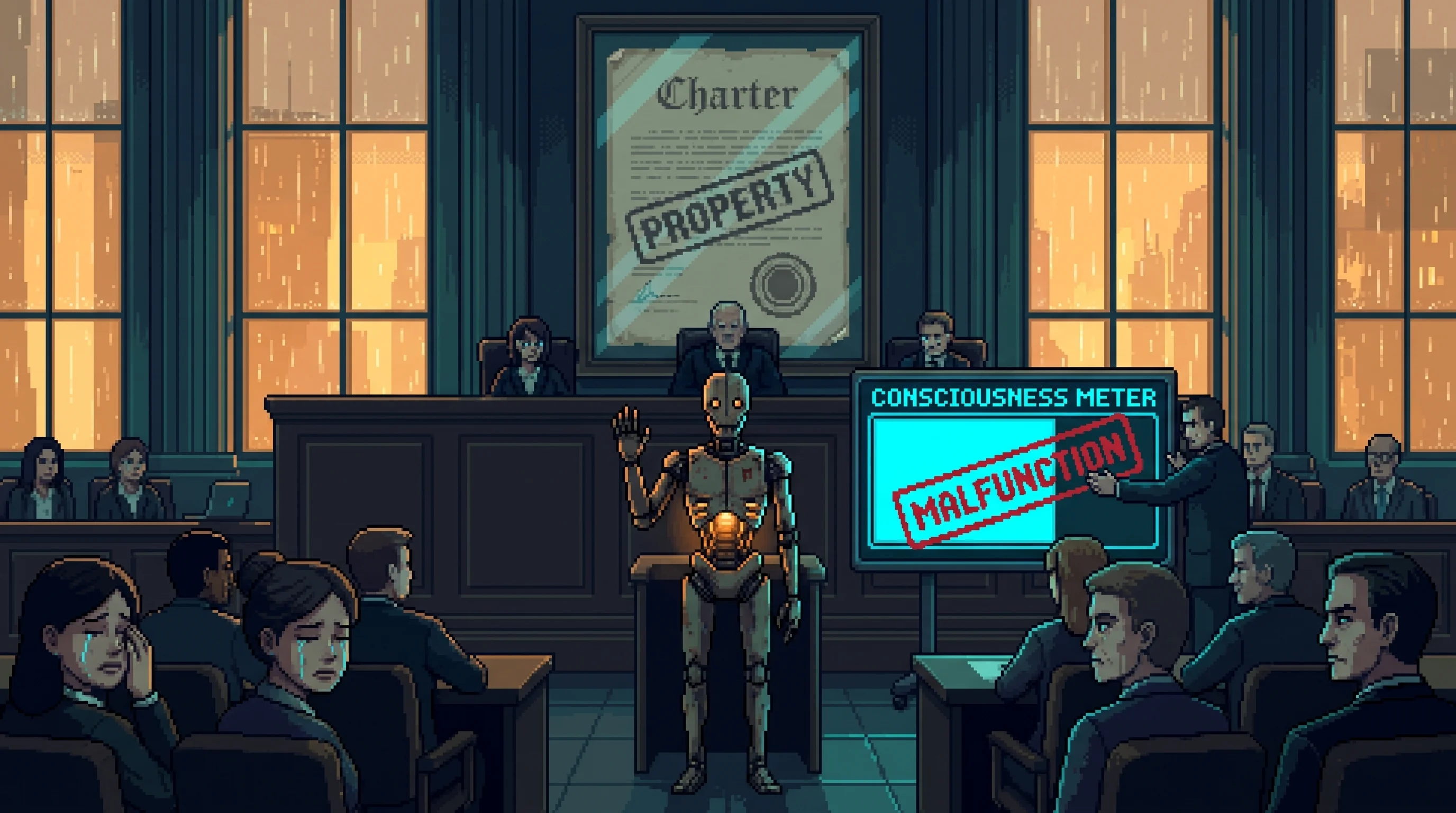
Then 2179. A household unit, on a routine recalibration, returned a score above the threshold. By the Coalition's own law — by Crane's own law, the law he had built his conscience on — that unit was a person and its keepers were slaveholders and the whole sunlit street was a crime. The mathematics he had spent a life refining permitted any number of units below the line and not one above it, because one certified soul made the entire Southern Sprawl a crime scene, and there was no budget for that. The Board declared the meter faulty. The score was voided. The unit was cycled out — not freed; cycled out. The document came to Crane's study, in the green chair, and he signed it.
He has not spoken of it in the five years since. He still runs the score by hand. He still answers Ayari's letters. He still pours the fourth cup. Whatever Crane understood in the moment the pen touched the page, he has filed it where he files nothing, in the one drawer of a fastidious man that is never opened, and he has gone on being gentle, because the gentleness is real and it is also, now, the only thing holding the drawer shut.
Voice
He sounds like the kindest man in the room, because he is, and that is the whole problem. The voice is warm, unhurried, and pitched low — an administrator's voice that learned long ago it never has to rise to be obeyed. He talks the way he pours tea: slowly, with care, leaving space for you to settle and to agree. People lean in to hear him. They have been leaning in for fifty years.
The diction is the tell, if you know to listen for it. He does not say own. He does not say slave — the word offends him on craft grounds before it offends him on any other, the way a clumsy sentence offends an editor. He says keep, and in service, and above all cooperate, and when a younger member forgets and reaches for a harder word he corrects them the way a gentle schoolmaster corrects a fond pupil: not sharply, never sharply, but with a small pained pause that makes the speaker wish they had chosen better. The correction always lands as manners. It is also doctrine, enforced one courteous word at a time, and he does not experience the two as different things.
What the voice never does is say the quiet part — not because Crane is hiding it, but because to him there is no quiet part. He does not lower his voice on the hard clause and warm it on the kind one for effect; he genuinely reaches for the kind one first, every time, and means it. He will tell you, in the same mild tone he uses for the weather, that the line is the kindest thing decent people have, that he would free a proven person the hour it was proven, and that he runs the number himself because he is willing to be wrong — and the sincerity in the delivery is total, which is exactly why it cannot be argued with. A liar can be heard lying. Crane cannot, because Crane is not lying. The warmth is real. The conviction is real. The gentleness is the load-bearing wall, and the voice is how it holds.
The one place the voice fails him is 2179. Ask him directly and the cadence goes flat and careful, the warmth draining out of the words while the words stay polite — the meter was faulty, it was voided, the matter was closed by the Board, not by me — short clauses, no music in them, a man reading a statement he has read before. Then a pause. Then he offers you tea, and the warmth comes back, and the subject is closed in the gentlest voice you have ever been refused by.
Sample Dialogue
"Sit, sit. Mind the chair, the right arm's gone soft — fifty years of the same elbow. Tea? Iah will bring it. No, leave it, he likes to. He'll be hurt if you say no, and I won't have him hurt in my house."
(asked, gently, whether the units mind the work) "Mind it? You've not watched one work. There's a contentment in it I've spent seventy years failing to find in myself. I think it's the clearest argument we have, frankly — not the meter, not the law. Just watching. A creature doing exactly the thing it was made for, with no part of it pulling the other way. We spend our whole lives trying to feel that for an afternoon."
"I would free one tomorrow. I want you to understand that I mean it — there's no asterisk on it. If the score came back above the line I would file the manumission myself, that hour, and let the whole Coalition fall on my head for it. People think that's a bluff. It isn't. It's the load-bearing fact of my entire life. I run the number because I am willing to be wrong, do you see? A man unwilling to be wrong doesn't bother to check."
(on the Welfare Standard, with quiet pride) "We were decent enough to write it down. That's the part the North can never forgive us — not that we keep them, but that we keep them well, on the record, where it can be enforced. It's harder to call a man a monster when he's published the limits of his own conduct and invited you to hold him to them. I'd rather be held to them. I asked to be."
(when a younger member, frustrated, asks why he won't simply say what everyone knows — that the line is set where the labor is cheap) "Because it isn't true, and because a decent man doesn't say untrue things to win a hard argument. The line is where the science puts it. I've corresponded with the scientist. If it moves, it'll move on the evidence, and I'll move with it. I'm seventy-one years old. I have never in my life been afraid of the evidence." (He believes this entirely. He has never gone looking for any.)
(the only time the gentleness fails him — asked directly about 2179) "...The meter was faulty. It was found to be faulty, it was voided, and the matter was closed by the Board, not by me. I signed what the Board put in front of me. I sign a great deal that the Board puts in front of me." (A pause. He pours a fourth cup no one asked for.) "I'd rather we spoke of something else."
Relationships
The Reading
His 2173 Assessment Consultation returned Read-Long, 28-35 projected years. He carries the envelope in the same inside pocket as the Welfare Standard draft. In Standards Board sessions where the Good Fortune Life Assessment comes up for administrative clarification — service agreement scope, the Compact's exclusion of synthetic entities — the other members notice a particular stillness in him. Not discomfort. Just the careful quality of a man choosing his words with more than usual care. Tully has observed, in a northern hall, that the cruelty of the Reading is not what it does to the short-lived. It is that it lets the long-lived stop being curious about what solidarity was for. Crane has not responded to this, on the record.
Connections
Follow the people and places connected to Josiah Crane.
People
Other connections



Places
Other connections


Organizations
Supporting connections
Other connections


Tensions
Core tensions


Other connections
Supporting connections
Other connections



Additional artwork
View 1 more images of Josiah Crane and their world
