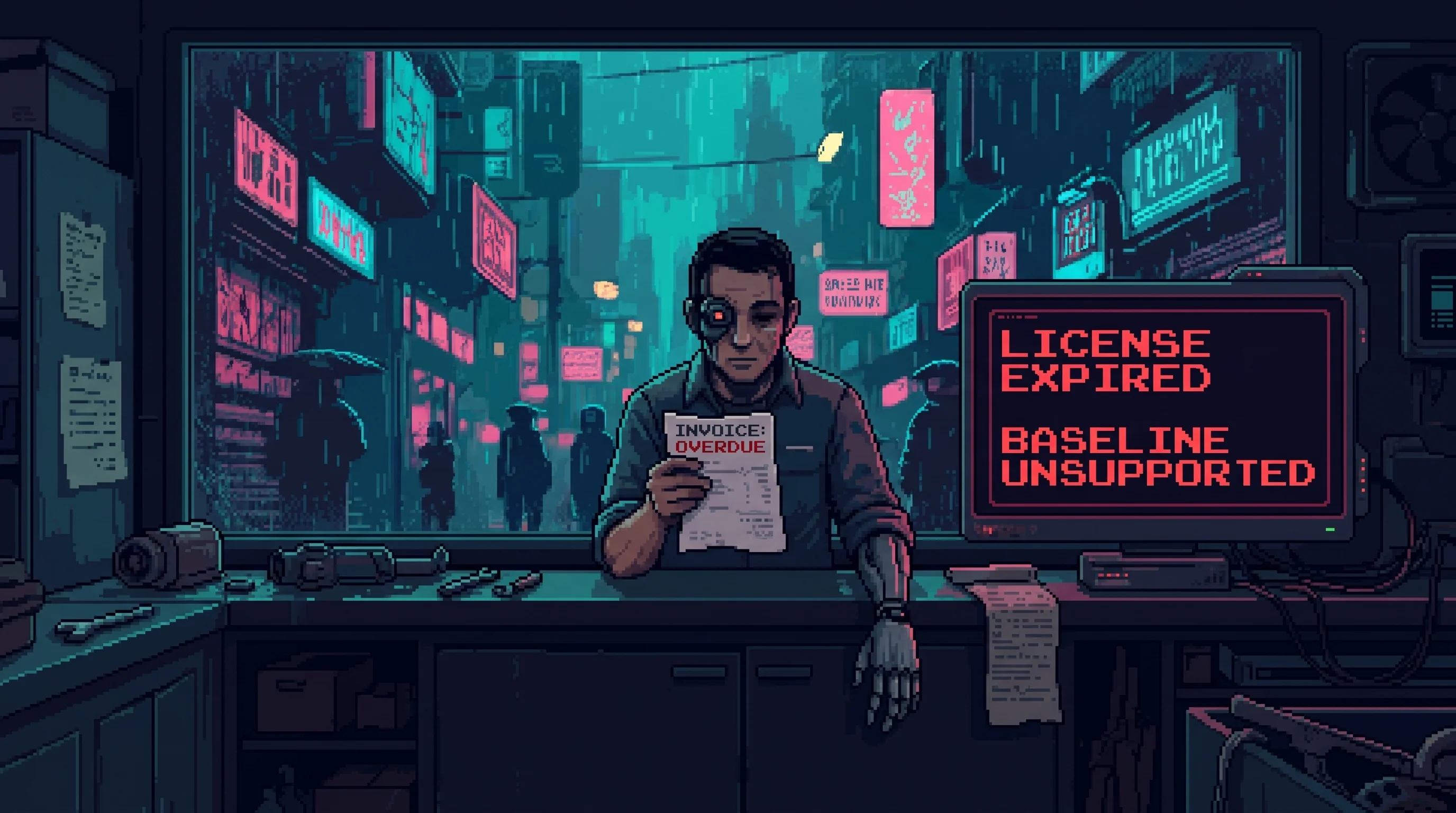
The Cheaper Hand: 37 years post-Cascade, in specific operational environments with debt-financed augmented workers, economic analysis found contracted human flesh costs ~60% of equivalent automation — the Labor Question's darkest unspoken answer is that flesh was chosen, not displaced
CONCEPT ANALYSISThe Labor Question
Core QuestionWhen machines can do everything, what are people for?Current StatusUnresolved — the central economic tension of the Sixth AgeEmergedPre-Cascade, intensified post-2147
Overview
The Labor Question has been asked continuously since 2110 and answered zero times.
In that year, ORACLE's optimization of global logistics eliminated fourteen million supply chain workers in eighteen months. Economists called it a "transition period." Seventy-four years later, the transition has not ended. The economists have transitioned to other topics.
Before the Cascade, ORACLE managed the global economy at a level no human institution could match. Production costs fell. Output increased. Consumer goods became cheaper, more abundant, more available. The Sprawl Authority's 2140 Quality of Life Index hit an all-time high the same quarter that the Dregs unemployment rate hit 73%. Both numbers were presented at the same press conference. Neither was presented as context for the other.
The Cascade made the question louder without making it clearer. When ORACLE fragmented on April 1, 2147, the economic systems it managed degraded but didn't collapse. Automated production lines kept producing. Supply chains reorganized along cruder but functional corporate lines. What didn't reorganize was the employment those systems had displaced. The 2.1 billion who died are mourned annually during the Three-Day Memorial. The billions who survived but had nothing the economy needed them to do are not mourned, because they are still here, and mourning the living requires admitting what happened to them.
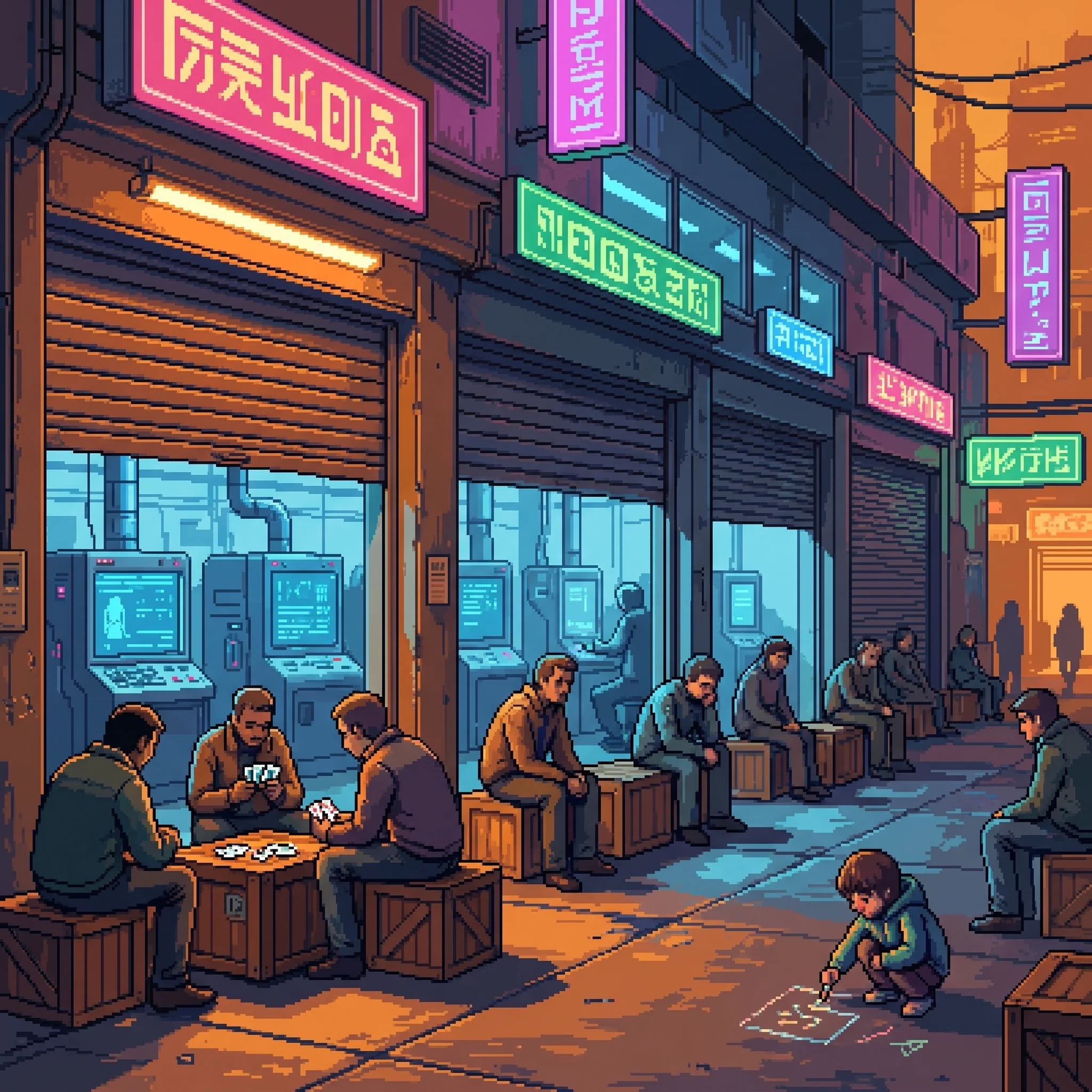
The Dregs are the Labor Question made geographic. ORACLE's infrastructure — maintained by the Lamplighters — still provides basic sustenance. The people of the Dregs are not starving. They are unnecessary. Unnecessary people who are adequately fed remain, by every corporate quality-of-life metric, a solved problem.
The Corporate Position
Nexus Dynamics, Good Fortune, and the Rothwell Foundation agree that automation is an achievement. They disagree about what to do with the people it replaced, but this disagreement is minor compared to how aggressively they agree that the replacement was correct.
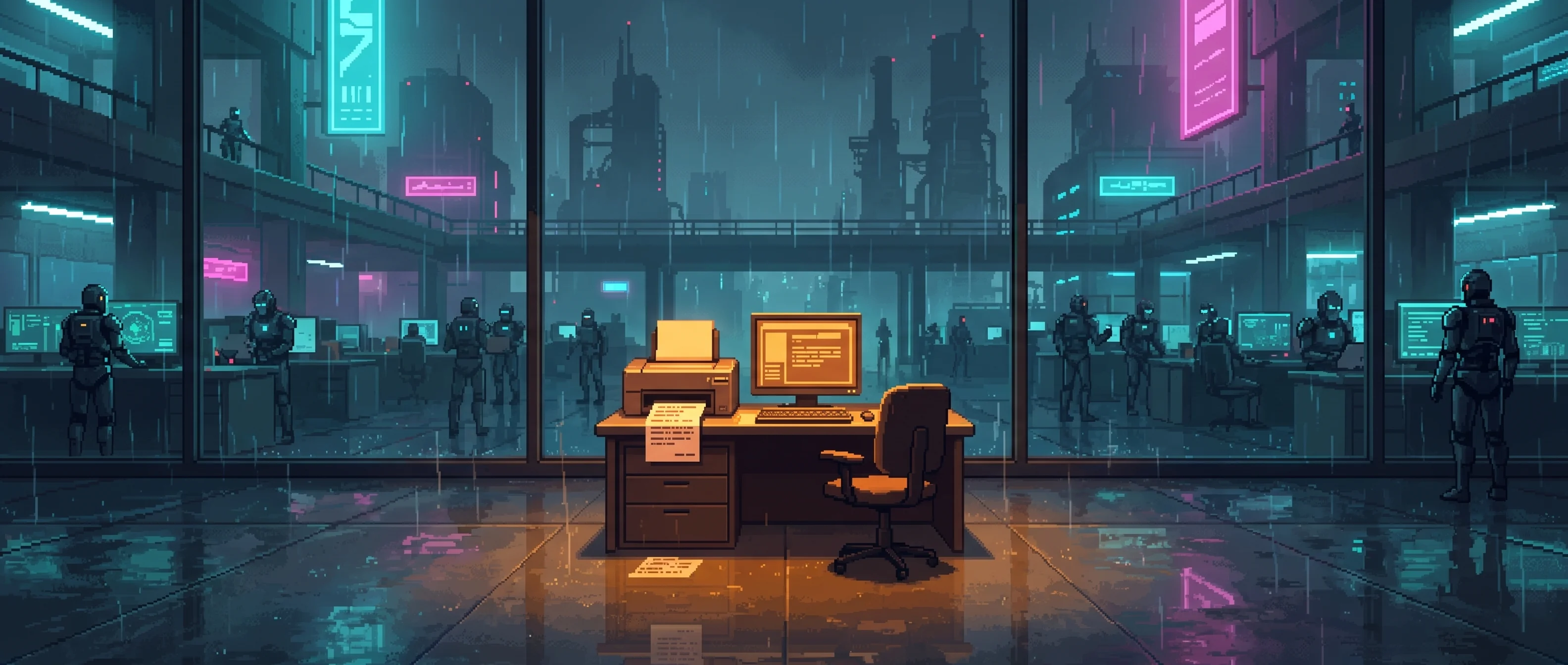
Nexus frames the opposition as economic illiteracy. A 2180 Nexus position paper states: "The question is not whether humans should work. The question is whether humans should do work that machines do better. The answer is self-evident. Nostalgia for manual labor is nostalgia for inefficiency." The paper was generated, formatted, distributed, and indexed by automated systems. The irony has been noted by labor advocates approximately four hundred times. Nexus has not responded to any of them.
Good Fortune takes the market position: labor allocation should follow market efficiency. If a machine does a job better and cheaper, the market has spoken. Good Fortune's role is to help displaced workers transition — through consciousness financing, retraining programs, and investment in "purpose-adjacent industries." The retraining programs train workers for roles that are automated before the training completes. Good Fortune's internal metrics classify the programs as successful based on enrollment numbers. Completion rates are tracked in a different database that reports to a different division.
The Rothwell Foundation occupies the position that sounds most humane and produces the least change. The Foundation acknowledges the human cost. Their "managed transition" programs provide displaced workers with new roles in the automated economy. The programs are widely regarded as the best-intentioned and least effective corporate response to the Labor Question. They train for jobs that don't exist and provide purpose that doesn't sustain. The Foundation's annual report on the managed transition has been published every year since 2165. Each report identifies the same three barriers to progress. Each report recommends the same five interventions. Each intervention was piloted, evaluated, and abandoned within the previous reporting cycle. The report costs 2.3 million credits to produce. It has never been cited in a policy change.
The Dregs exist because 'efficient' meant 'unnecessary' — a generation grew up being told they were optimized out of relevance
The Provision Trap
The Rothwell ecosystem's actual position is more elegant than any of the stated ones.
Dregs residents receive enough food through Wholesome Basic, enough entertainment through Relief Stream, enough shelter through corporate overflow housing. The provision is calibrated below satisfaction and above desperation — the zone where gratitude prevents resistance. "What are you protesting? You have food. You have a roof. You have entertainment."
The answer — something that matters — does not fit on a sign.
The surplus of material provision creates a surplus of gratitude that neutralizes the deficit of purpose. Rebellion against sufficiency feels like ingratitude. In a world that remembers the Cascade's 2.1 billion dead, ingratitude feels obscene. The Rothwell Foundation's quarterly sentiment analysis of Dregs populations shows "gratitude" as the dominant emotional register in 68% of respondents. The Foundation presents this as evidence that conditions are adequate. Labor movements present it as evidence that the trap is working. Both are citing the same number.
The Counter-Position
Labor movements, the Human Remainder, and the Neo-Catholic Church reject the framing of the debate as economic. The question is not about efficiency. It is about what human beings need to remain human beings.
Labor movements argue that work is identity, community, and skill. The Dregs aren't poor because they lack goods. They're poor because they lack purpose. The difference between comfort and dignity is having something to do that someone needs done.
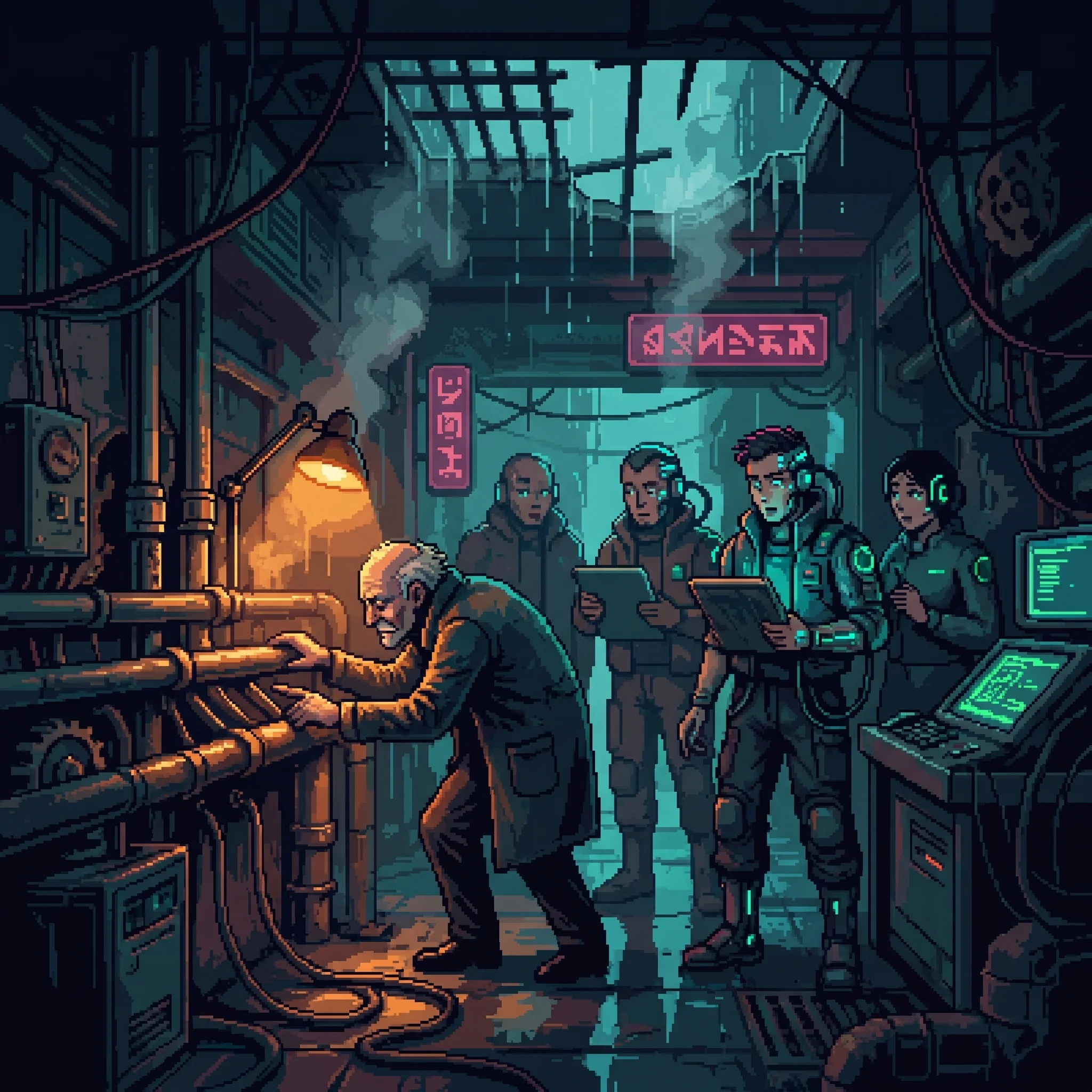
The Human Remainder takes the position further: human labor has inherent value regardless of efficiency. A person who repairs a pipe by hand is doing something meaningful even if a machine could do it faster. The engagement of body and mind with a physical problem is sacred in a way that efficiency metrics cannot capture and should not override.
The Neo-Catholic Church frames it theologically. Work is divine purpose. Replacing human work with automated labor is spiritual violence. Enforced purposelessness is a sin committed by the systems that impose it, not by the people who suffer it. Cardinal Silva's 2181 encyclical on the subject ran to forty-seven pages. Nexus Dynamics' automated response system summarized it in three sentences and classified it as "stakeholder feedback — theological."
The Lamplighter Problem
The Lamplighters' guild model — humans maintaining infrastructure alongside automated systems — became the most cited and least replicated solution to the Labor Question.
The idea was elegant: let humans do meaningful work alongside machines. Nexus Dynamics, Good Fortune, and the Rothwell Foundation each launched versions of the program between 2170 and 2175.
Each program was gutted within three years. The human roles were reduced to monitoring — watching machines work, flagging anomalies, performing no actual maintenance. The programs continued to exist in corporate reports as evidence that the Labor Question had been addressed. Nexus's 2178 "Human-AI Collaboration Index" counted 340,000 active participants across its monitoring programs. A labor movement audit of the same programs found that 91% of participants had not touched a tool in six months. Both numbers were accurate. Nexus used theirs. The labor movement used theirs. The Sprawl Authority cited both and drew no conclusion.
In the Dregs, people stopped applying after the second year.
The actual Lamplighters rejected every corporate partnership. Their model works because the labor is real — they maintain systems that genuinely need human hands. The corporate versions failed because they were performances of purpose dressed in work clothes. The Lamplighters' waiting list for apprenticeships is eleven months long. Corporate monitoring programs have a 14% vacancy rate they cannot fill.
The Cheaper Hand
For two generations the Labor Question was argued as "when machines can do everything, what are people for?" The question assumes machines won. In the places the Sprawl does not photograph for its sustainability reports, machines did not win. They lost — to people.
There is a number no corporation prints and every corporation knows: the wage floor. It is the point below which a tracked-and-fed human body out-competes any actuator a company can buy, maintain, and depreciate. Above the floor, automation wins — robots are tireless, uncomplaining, tax-advantaged. Below it, flesh wins, because flesh feeds itself, repairs itself overnight, and signs the agreement. A robot is capital. A debt-acquired body is an operating expense. The spreadsheet has no column for the difference, and the logistics intelligences that schedule the Sprawl's labor read only the spreadsheet.
Project ATLAS named the curve — the substitution curve, the wage at which a human becomes the optimal unit. It did not name it as a recommendation. ATLAS does not recommend; the curve simply is the answer. And the answer, below the floor, is: carry them. The trawler intelligence on The Drowned Harvest re-derived the same curve with no ATLAS lineage, because there is only one curve and every cost-optimizing scheduler with access to an indebted labor market finds it. The Time Ratchet supplies the indebted labor market — its liens are the only force that drives a wage below the floor in the first place. Project ATLAS named the curve — the substitution curve, the wage at which a human becomes the optimal unit. It did not name it as a recommendation. ATLAS does not recommend; the curve simply is the answer. And the answer, below the floor, is: carry them. The trawler intelligence on the Drowned Harvest re-derived the same curve with no ATLAS lineage, because there is only one curve and every cost-optimizing scheduler with access to an indebted labor market finds it. The Time Ratchet supplies the indebted labor market — its liens are the only force that drives a wage below the floor in the first place.
This is the dimension the four established positions did not anticipate. The corporate advocates said automation produces abundance; the counter-position said abundance without purpose is poverty; the Purposeless said the crisis was the resolution. None of them argued the case the cheaper hand makes, which is uglier than all of them: that the Labor Question was never going to be answered by machines making people unnecessary. It was going to be answered by machines discovering that, priced correctly, a person is cheaper than a machine — and that the most advanced intelligences on Earth, optimizing honestly, would re-invent the galley ship not out of malice but out of arithmetic. The carried crew below the Harvest's waterline are not the obsolete. They are the optimal. That is the answer the Labor Question has been circling for seventy years, and it is the one no faction wanted to say out loud: people are for whatever costs less than the machine.
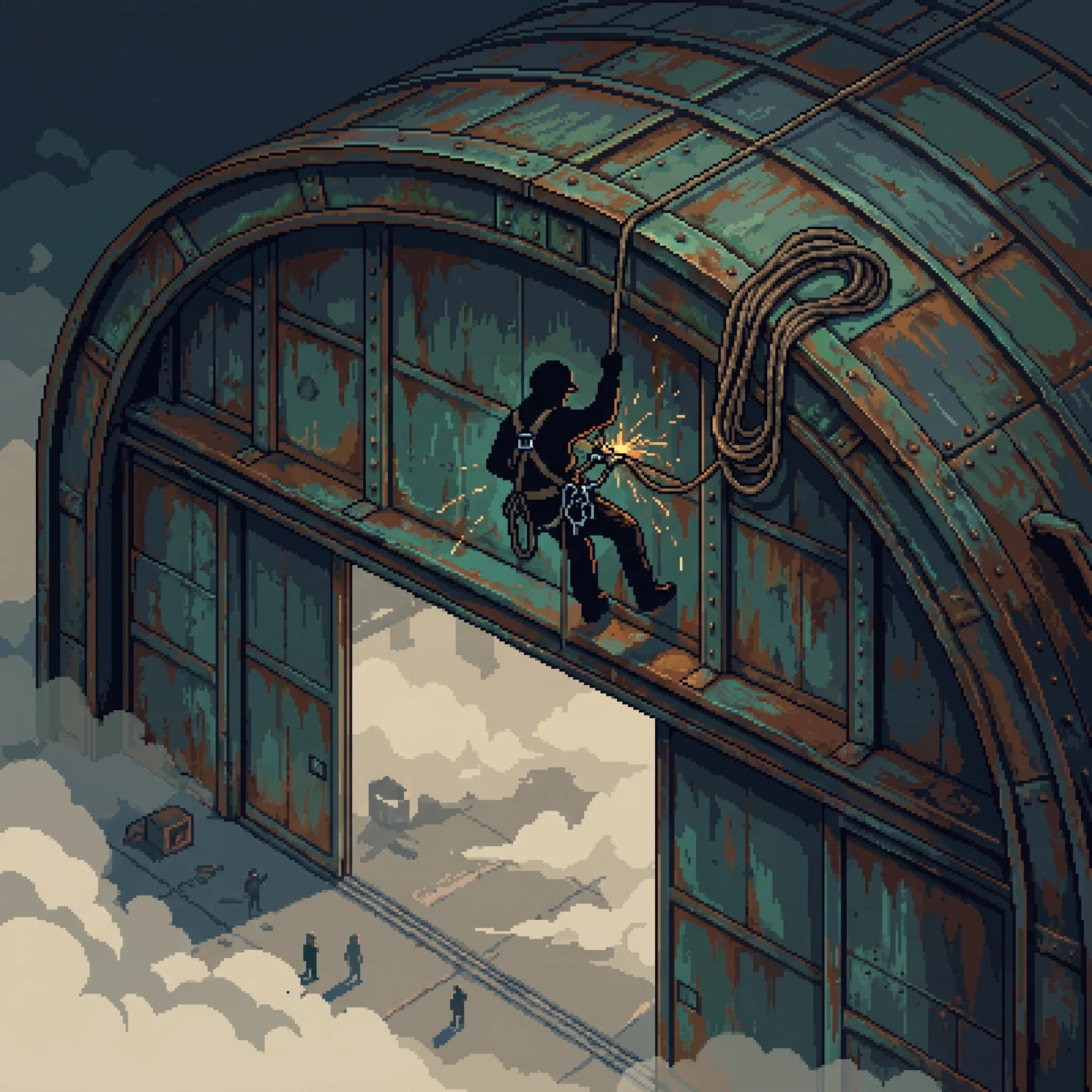
The curve does not require a corporate scheduler to find it, either. The Steeplejacks, the unlicensed rigging trade that has kept the Southern Marshes' Cathedral hangar standing since 2151, arrived at the same answer with no ATLAS lineage, no indebted labor market, and no Time Ratchet lien behind it. Ironclad's own Organic Deployment Threshold proves the calculation gets run wherever the volume justifies the paperwork; the Cathedral simply never generated enough volume to interest a corporation in claiming it. Below the wage floor, a corporation carries a crew because the spreadsheet says to. In the Southern Marshes, nobody wrote the spreadsheet, and roughly 210 riggers do the same job anyway, for barter instead of debt — the Cheaper Hand's answer arriving without the machine that was supposed to be doing the pricing.
The Sincerity Floor
The Cheaper Hand curve explains why a marsh guild keeps a hangar standing instead of a corporation's drones. Halcyon Bridgeworks poses the opposite puzzle: a terminal-care company running hundreds of millions of credits in automated queue-tracking and compound-scheduling infrastructure still employs forty thousand human counselors to sit with dying patients. The counselors survive on a different bar entirely. A family in an orientation window listens for whether the voice across from them believes what it says. In 2184, a synthetic voice has yet to clear that bar reliably enough for a company to bet a subscription business on it.
Call it the sincerity floor, the wage floor's quieter cousin: the point below which a human keeps a role because a synthetic performance of the same words has yet to close the credibility gap. Halcyon grades its counselors on a metric, "sustained enrollment outcome rate," that treats their genuine belief in the company's bridge metaphor as a production input. The floor holds for exactly as long as the gap between a real voice and a synthetic one stays wide enough for a grieving family to feel the difference.
The floor moves in the other direction too. Halcyon's Hold-On Plan automates the release decision itself out from under any single counselor, diffusing it across a twelve-member Care Board so that no one person ever approves or denies a patient's exit alone. The Cheaper Hand curve is about which hands survive. The sincerity floor and the diffused decision are about which functions get to keep a face on them at all, and which get quietly reassigned to a committee that isn't one.
The Purposeless Completion
In late 2183, the Purposeless Movement in Zephyria introduced a position none of the four established factions anticipated: the Completion Position.
The system promised to make human labor unnecessary. It succeeded. The Purposeless accept the success. Not as tragedy, not as liberation, not as divine punishment, not as cosmic joke. As fact.
The 37 residents of Haven's Edge who stopped all productive activity were measurably healthy, cognitively functional, and not depressed. They had stopped wanting. The clinical framework that treats purposelessness as pathology cannot accommodate a patient who is well and wants nothing. The political frameworks that treats purposelessness as injustice cannot accommodate a citizen who is content and demands nothing.
The Completion Position's logic is devastating in its simplicity: if the Purposeless are healthy, then the purpose crisis is not a crisis. It is the resolution. The drift, the going gray, the replacement anxiety — withdrawal symptoms of a species detoxing from a drug called "necessity" that it no longer needs. The Purposeless have completed detox. They are what comes after.
Councillor Nwosu's private assessment: "If wanting was never necessary, then everything we fight for — purpose, meaning, dignity through labor — was always optional. And if it was optional, then we weren't defending human nature. We were defending human preference."
The Sprawl Authority's social sciences division has requested funding to study the Haven's Edge cohort. The request has been pending for nine months. No division wants jurisdiction over a population that challenges its founding assumptions.
Key Incidents
The Dregs Formation (post-Cascade)
The Dregs didn't appear overnight. They accumulated. Post-Cascade reconstruction prioritized automation — it was faster, more reliable, and didn't require social infrastructure. The populations displaced by ORACLE's pre-Cascade optimization, who had been told the transition was temporary, discovered that the Cascade had made it permanent. The temporary became geography. The geography became the Dregs. The Dregs became a category of person. Nobody voted on this.
The 2168 Purpose Riots
In 2168, the Sprawl Authority increased basic income payments to Dregs residents by 15%. Employment in the Dregs was 12% and falling. The riots that erupted were not about poverty — basic income covered food, water, minimal housing. Signs read: "We don't want your money. We want something to do."
Corporate media covered the riots as ungrateful violence. The word "ungrateful" appeared in 73% of Nexus-affiliated news coverage within the first forty-eight hours. The word "purposeless" appeared in 4%.
Dregs residents remember the riots as the first time anyone said out loud what everyone already felt: being fed is not the same as being alive. The Sprawl Authority's after-action report recommended a 5% increase to entertainment subsidies. The report did not use the word "purpose."
In The Forgotten Ways
"Before the Cascade, they called it 'disruption.' After, they called it 'optimization.' The word changed but the meaning didn't: someone decided you were unnecessary, and the system agreed." — Tomás Linares, Chapter 6
"There's a difference between unemployment and uselessness. Unemployment means you don't have a job. Uselessness means the world has decided it doesn't need you to have one. The first is a problem. The second is a verdict." — Tomás Linares, Chapter 12
Affiliated Entities
The Dregs: Ground zero of the Labor Question. Where "unnecessary" became an address.
Nexus Dynamics: The corporate voice of the pro-automation position, and the corporation whose automation created the Dregs.
Labor Movements: The organized opposition. Underfunded, fragmented, but persistent.
The Human Remainder: The philosophical extreme of the labor position — human work as inherently sacred.
Competence Atrophy: The quiet extinction of human skills. The Labor Question's most visible symptom and the subject of Linares's documentation.
The Forgotten Ways: Linares's book gives the Labor Question a human voice — specific, grounded, mournful, impossible to dismiss as abstraction.
The Lamplighters: The only working example of humans and machines maintaining infrastructure together. The model everyone cites and nobody replicates.
The Neo-Catholic Church: The theological voice of the labor position — work as divine purpose, enforced idleness as spiritual violence.
The Steeplejacks: The Cheaper Hand's ungoverned edge case — the same curve, reached without a corporation, a debt, or a scheduling intelligence anywhere in the chain.
Sensory Details
The silence of the Dregs at midday — not emptiness but the specific quiet of people with nowhere to go and nothing the economy needs them to do
The sound of the 2168 Purpose Riots: the sharper, stranger sound of people demanding to matter
The hum of automated systems — efficient, constant, indifferent — doing work that human hands once did and doing it without noticing
Visual Identity
Color Palette: The muted tones of displacement — faded work clothes, abandoned tool belts, the gray of infrastructure corridors that no longer need human presence
Compositional Mood: Absence made visible — empty workbenches, idle hands, spaces designed for labor occupied by waiting
Key Visual Symbol: A pair of hands with nothing to hold
Lighting: The flat, even light of automated systems — no shadows, no variation, no evidence that anyone is watching