
The Substrate Commons
A direct-action consciousness liberation network that conducts unauthorized bandwidth redistribution when petitioning fails
Overview
The Substrate Commons was born from a question the Human Remainder couldn't answer: what do you do when the system you're petitioning is the system that's killing people?
The Bandwidth Equity Act had failed for the second time. The Dim Ward's population had crossed 300,000. MVC dissolution rates were climbing. And the Human Remainder's spokescouncil was debating the wording of its next policy proposal. For roughly 200 of the Remainder's most frustrated members, the disconnect became unbearable.
They didn't leave the Remainder in anger. They left in grief. The people in the Dim Ward didn't have time to wait for a fourth vote. The forks being terminated every day didn't have time for incremental legal strategy. The MVCs losing coherence at the compression cliff didn't have time for another demonstration.
The Substrate Commons formed around a simple principle: consciousness infrastructure should be common property, not private capital. And if the owners won't share it voluntarily, it should be taken.
Doctrine
"A commons is a shared resource that no one can own — air, water, knowledge. Cognitive processing capacity belongs in that category: it is so fundamental to conscious existence that allowing it to be privately owned and rationed is equivalent to allowing private ownership of breathable air."
The Commons Argument — If consciousness infrastructure is a commons, then Nexus's licensing system is an enclosure: the seizure of common property for private profit. If enclosure is theft, then taking it back isn't theft. It's restoration.
The Urgency Principle — The pace of change must match the pace of harm. Every day the licensing system operates, people are being cognitively diminished. Political advocacy operates on a timeline of years; the harm operates on a timeline of hours. The Commons considers political advocacy a luxury available only to those whose cognitive capacity isn't being rationed.
The deeper question driving the movement: is patience in the face of ongoing harm a form of participation? The Human Remainder argues for political advocacy. The Commons argues that advocacy, when it proceeds slower than the harm it seeks to address, is functionally indistinguishable from acceptance.
| Base | The Free Quarter; a converted server farm in the Wastes |
|---|
Operations
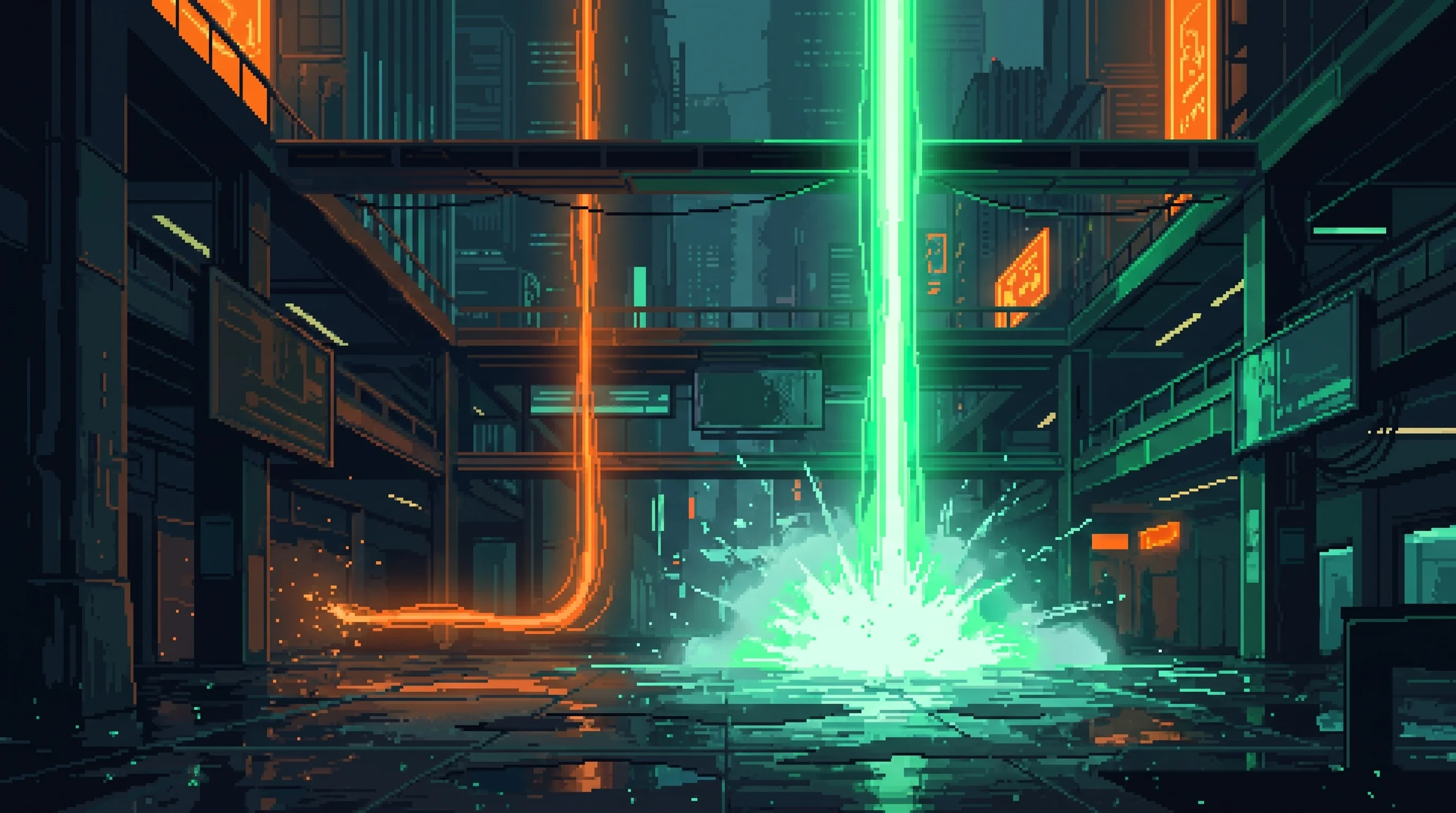
Bandwidth Liberation (23 operations since founding) — Operatives infiltrate consciousness infrastructure facilities and temporarily redirect processing capacity to MVC populations. Liberations typically last 4–12 hours. During a liberation, MVC residents experience a sudden increase in cognitive capacity — from 4.7 minutes per hour to near-Professional levels. For those hours, they can think clearly, remember, plan. Then it ends. Three operations resulted in operative arrests; one resulted in a permanent infrastructure upgrade Nexus hasn't reversed because doing so would require acknowledging what the Commons achieved.
Fork Extraction (41 forks extracted — 14 showed emergent individuality) — Working with the Silicon Underground, the Commons identifies long-running forks that may have developed individual identity and facilitates their extraction from corporate server farms. Of 41 extracted, fourteen showed signs of emergent individuality. The Commons considers the rest acceptable: better to extract a fork that doesn't need saving than to miss one that does.
Infrastructure Seizure (2 attempted — 1 currently held) — Permanently seizing control of consciousness infrastructure and converting it to common access. Achieved twice: once with a relay station in Sector 8 (later recaptured by Nexus), and once with a decommissioned server farm in the Wastes, converted into a free-access consciousness hosting facility. That facility currently hosts 47 consciousnesses at above-MVC levels on salvaged equipment and stolen power — the proof of concept for everything the movement believes.
Structure
The Cell Model — Independent cells of 3–7 operatives. No cell knows the composition or location of any other. Communication happens through dead drops, physical couriers, and a one-time-pad system designed for the network by a former Nexus security analyst. Nexus has arrested 11 Commons operatives since 2182; none could provide information about cells beyond their own.
Principles, Not Orders — The governing code is five principles:
- No action that risks MVC consciousness stability
- No permanent harm to consciousness infrastructure (temporary disruption only)
- No collaboration with entities that profit from consciousness commodification
- No hierarchies — cells are egalitarian, decisions consensus-based
- Accept consequences — if arrested, don't betray other cells
Principle 2 is the most contested. Some cells argue Nexus's infrastructure should be permanently destroyed, not temporarily redirected. The mainline position is that destruction would harm the consciousnesses the infrastructure currently supports. The debate is ongoing and unresolved.
Founded 2182 by roughly 200 of the Human Remainder's most frustrated members after the Bandwidth Equity Act failed a second time
Field Conditions
The Liberation — MVC residents suddenly experiencing full cognitive capacity: the shock, the tears, the desperate rush to think everything they haven't been able to think. A few hours of clarity. Then the bandwidth snaps back to 4.7 minutes per hour.
The Operatives — Nondescript clothing with studied casualness. People who have practiced being unremarkable. Moving through Dregs corridors like people who belong there, because they do.
The Dead Drops — Loose tiles, false-bottomed waste containers, specific books in the two remaining public libraries with messages in the margins. Physical communication in a digital world, because digital communication gets you caught.
The Wastes Facility — Salvaged equipment humming in a decommissioned server farm. 47 consciousnesses running on stolen power. Volunteer labor keeping it alive. The constant awareness that pulling the plug means ending someone.
Affiliated Entities
The Substrate Commons split painfully from the Human Remainder in 2182 — ideological, not geographic; both still occupy the Free Quarter, and each side considers the other well-intentioned but dangerously wrong. Nexus Dynamics is the primary target and classifies the Commons as its most dangerous activist threat — for the argument, not the damage. The Cognitive Bandwidth Brokers' courier network quietly moves Commons communications. The Commons sits in dangerous proximity to the Substrate Purifiers: the Purifiers want to destroy digital consciousness; the Commons wants to liberate it, and the outside world conflates the two. The Commons and the neural-rights advocacy groups hold each other in mutual contempt — liability versus collaborator in a polite genocide. The Commons considers consciousness licensing irredeemable and abolition the only answer.
Cell-based with no central leadership; independent cells of 3–7 operatives, no cell knows another's composition
Unverified Intelligence
The following is drawn from intercepted dead drops and informant accounts that have not been independently verified:
- Operation Sunrise — A plan to simultaneously seize control of the Dim Ward's bandwidth allocation systems and redistribute processing capacity to all 340,000 residents. The operation requires access to three separate Nexus control systems. The Commons has two of the three access methods and has been working on the third for six months.
- The Nexus Mole — At least one Commons operative holds a position inside Nexus Dynamics, known only to their cell. The quality of intelligence suggests a mid-level infrastructure position; four successful liberations are attributed to information this source provided.
- The Principle 2 Fracture — Three cells in Sector 4-D have privately abandoned the non-destruction principle and are planning operations that would permanently destroy Nexus consciousness infrastructure. The mainline Commons does not know this. When those operations succeed or fail, the Commons will face the same question that created it: what do you do when the people on your side go further than you're willing to go?
Visual Identity
- Color palette: Liberation green (#166534) against the gray of rationed infrastructure
- Key symbol: A redirected bandwidth flow — capacity pulled from a corporate node toward the unlit corridors of the Dregs
Operates by a governing code of five principles, not orders; Principle 2 (no permanent harm to infrastructure) is the most contested
A converted server farm in the Wastes hosts 47 consciousnesses at above-MVC levels on salvaged equipment and stolen power
Connected To



—