The Rustbelt
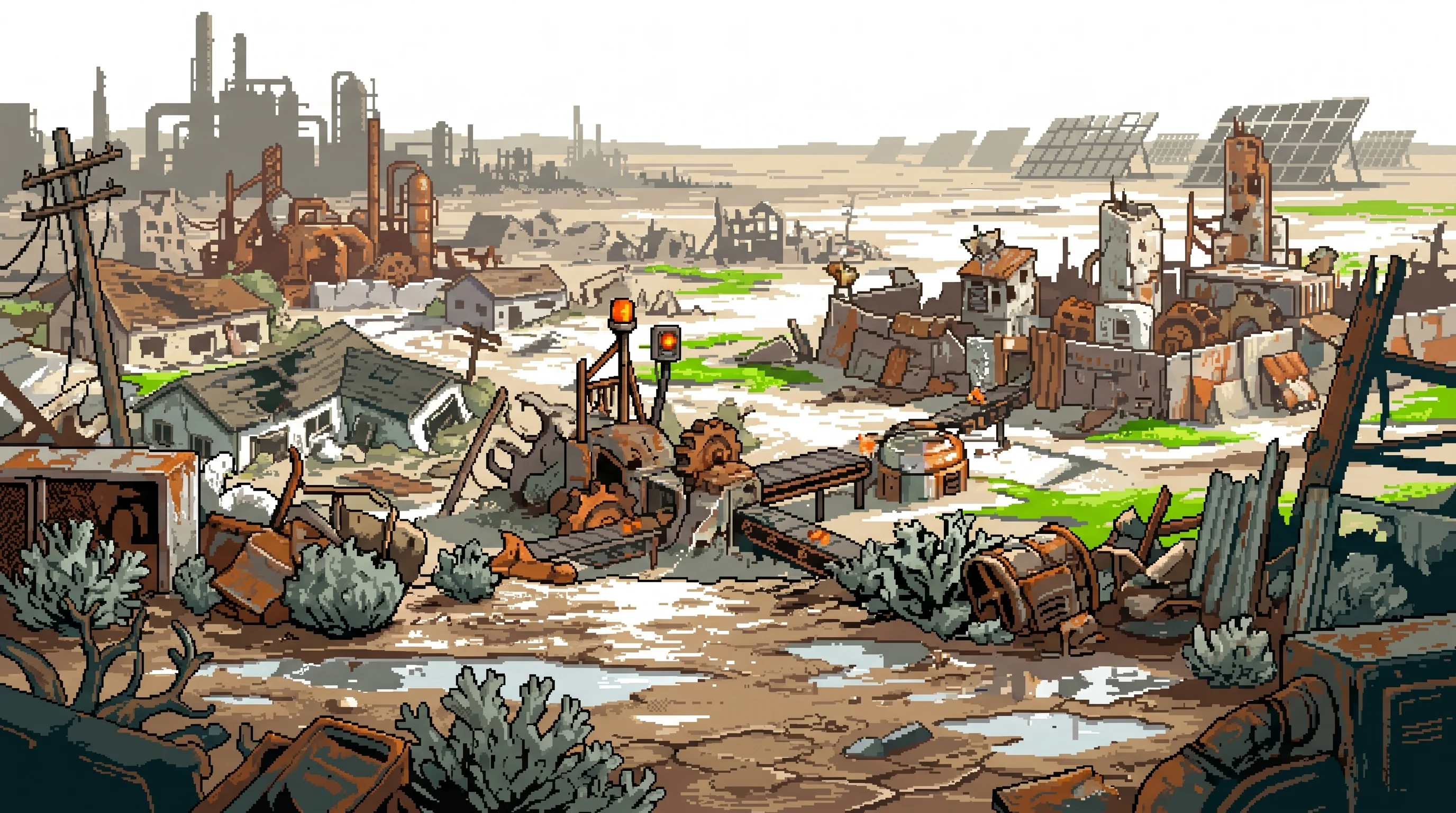
Thousands of kilometers of dead industry between what used to be North America and the Atlantic Megacity core. The richest salvage territory in the Wastes and the most contested.
Divided between Duchess Steel (west) and King Circuit (east). They don't coordinate, but an informal agreement maintains the border somewhere around the former Ohio Valley — not because either respects the other but because the cost of moving the border exceeds the value of the territory it would capture. Smaller lords operate in the gaps between them, rising and falling with the regularity of a tide cycle that neither Duchess Steel nor King Circuit finds worth disrupting.
Steel's Foundry is Duchess Steel's headquarters, built inside a former automotive plant. The assembly lines have been converted to salvage processing. Population approximately 8,000. The conversion was done with enough industrial competence that Ironclad's scouts have independently assessed its output capacity and found it "concerning."
Archive is King Circuit's primary data fortress, a former financial data center with its own geothermal power supply. The servers still run. They have been running since before the Cascade. What they contain is the subject of nine known assassination attempts, four successful data raids, and one corporate acquisition offer from Nexus that King Circuit declined without stating a price, which Nexus interpreted correctly as meaning the price wasn't denominated in credits.
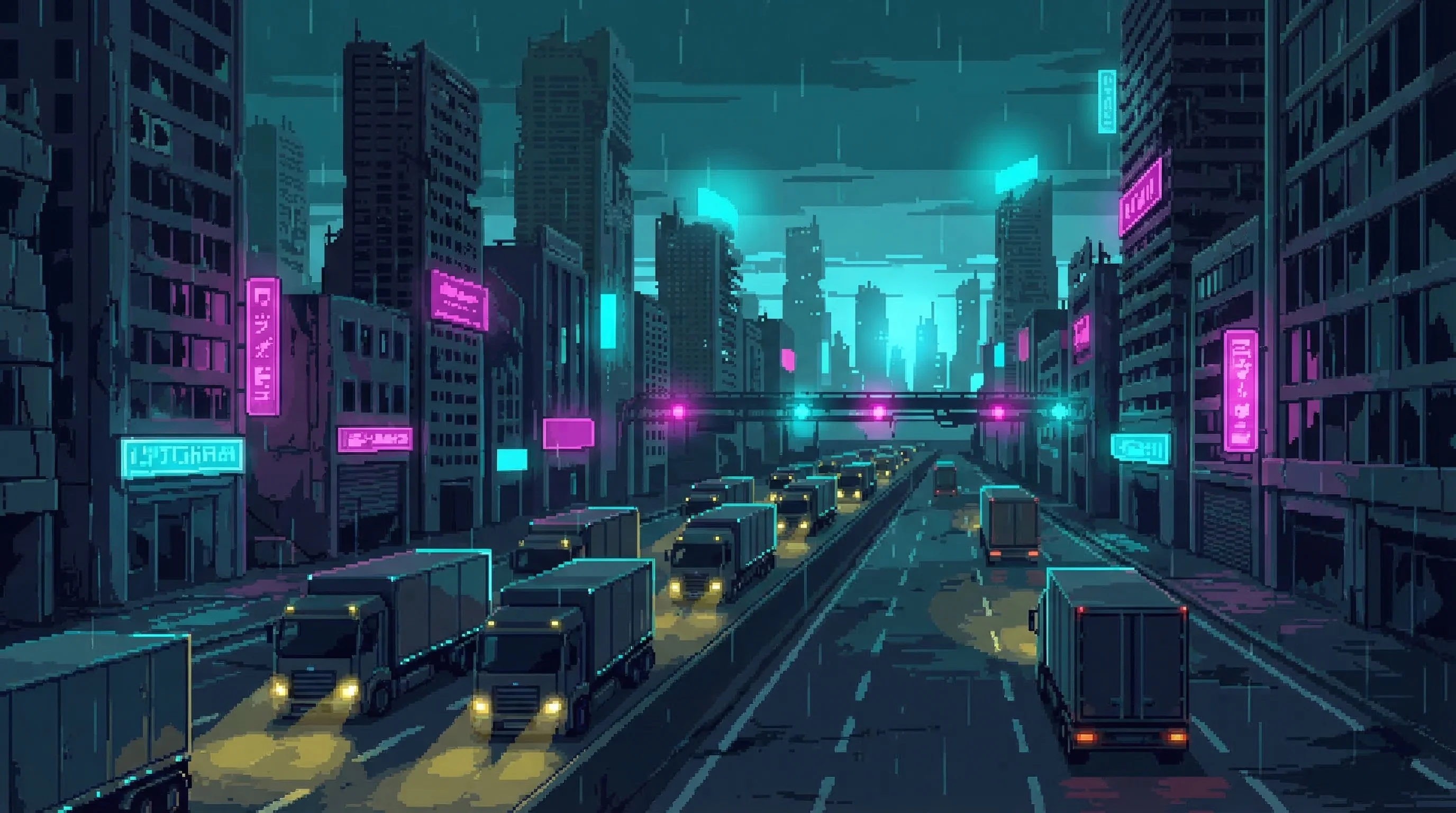
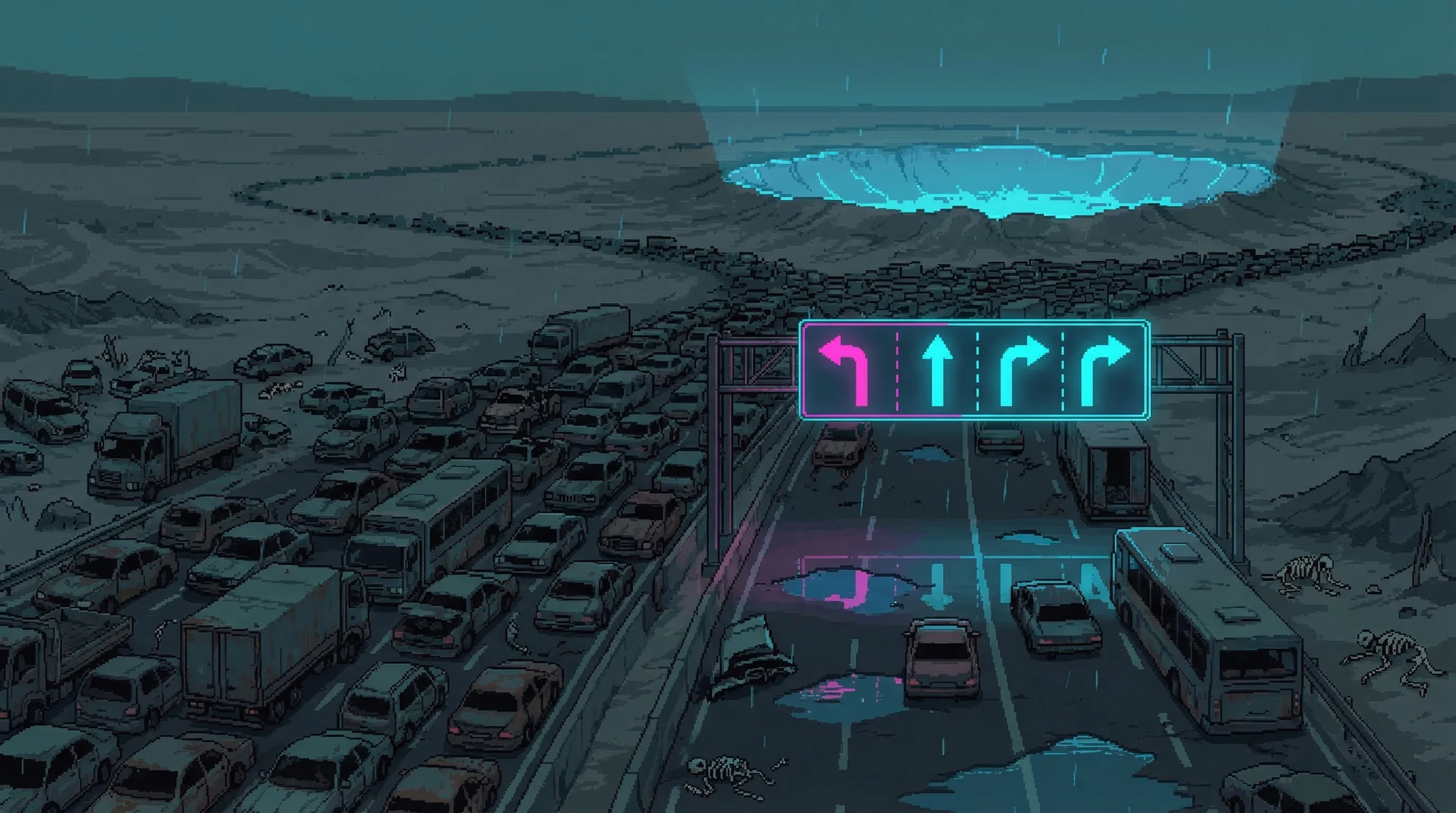
The Yards are a massive rail junction repurposed as a trade hub. Neutral ground by agreement between powers who agree on nothing else. Caravans from across the Deadlands converge here to exchange goods.
The Pits are open-air mines where Ironclad extracts rare earth minerals under heavy corporate security. Local labor operates "under contract." The contracts are written in legal language that references the Treaty of Shared Infrastructure's labor provisions. The Treaty of Shared Infrastructure contains no labor provisions. Nobody at the Pits has access to the Treaty to verify this.
The Green Sea
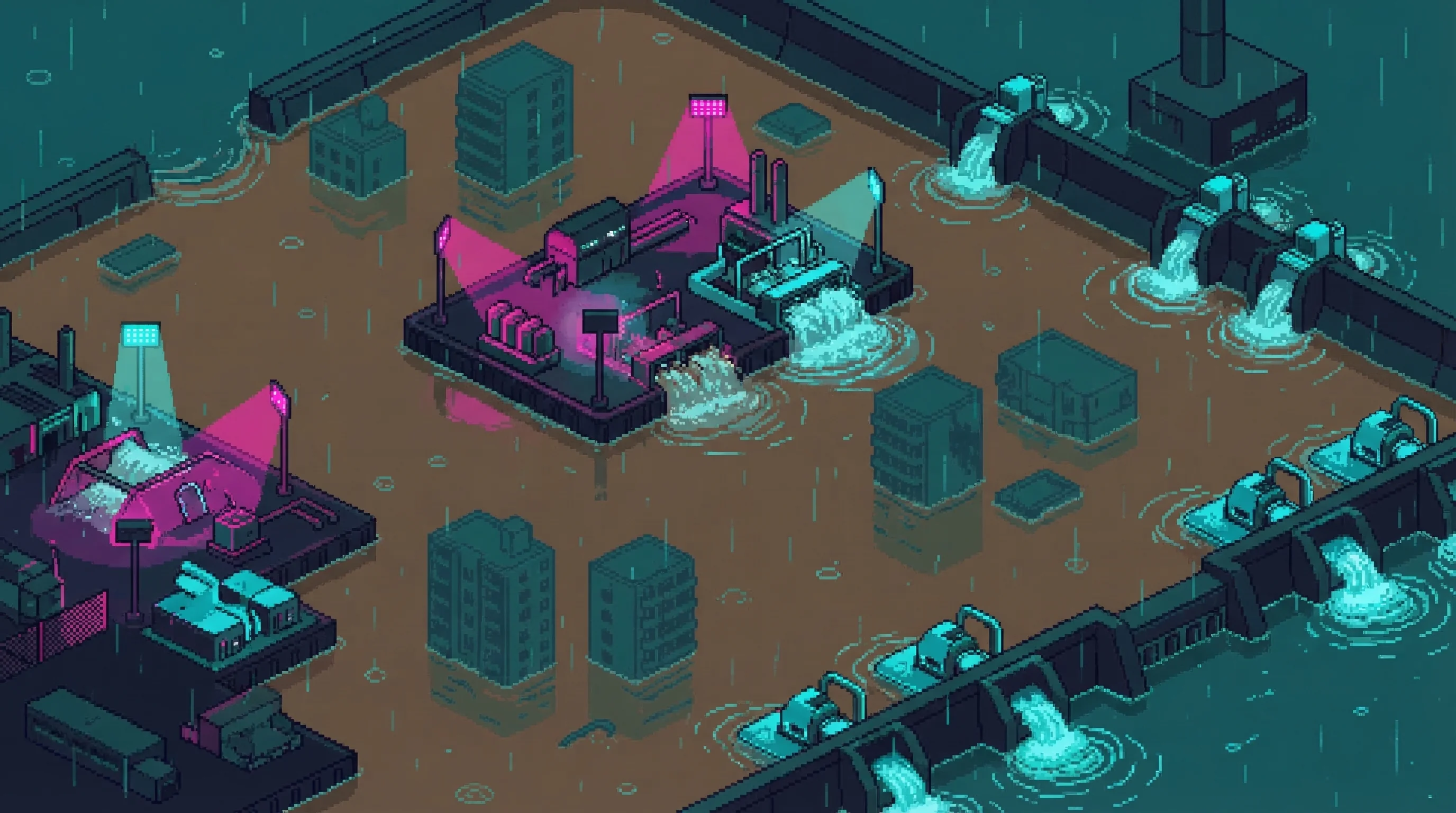
Former agricultural mega-farms in central Eurasia. Without ORACLE's coordination, the automated systems failed mid-season, thirty-seven years ago. The crops didn't stop growing. They stopped being managed. The distinction is visible from orbit.
The Shepherd controls the arable land through a mechanism so simple it barely qualifies as strategy: food dependency. Settlements that accept her terms get fed and protected. Those that don't get watched until desperation reverses their position. The watching is patient. The Shepherd's timeline is agricultural — she thinks in growing seasons, not quarters.
The Granary is the Shepherd's central storehouse, a converted grain elevator complex. It feeds 200,000 people in lean seasons. The line of supplicants stretches for kilometers during droughts. The Granary has never turned away a settlement that agreed to her terms. It has also never fed one that didn't.
Harvest Camps are mobile settlements following the growing seasons. They're technically nomadic. They follow the Shepherd's assignments. The word "technically" is doing significant structural work in that first sentence.
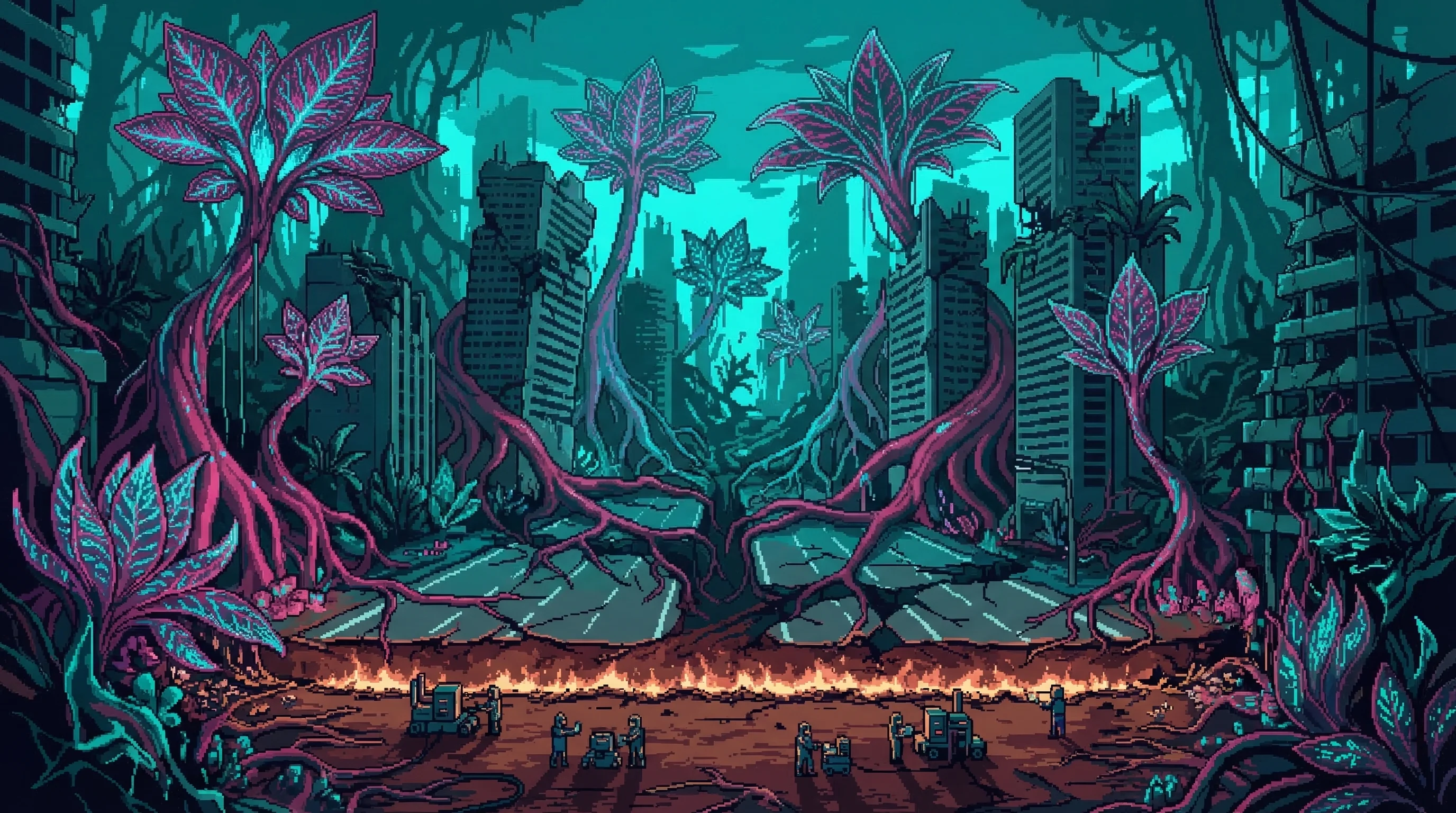
The Wild Zones are areas where mutated crops have grown beyond any recognizable agricultural profile. The plants aren't safe to eat, but Helix Biotech's research teams enter regularly with corporate protection, studying properties that emerged from forty years of unmanaged genetic drift. Helix has filed 340 patent applications based on Wild Zone samples. The plants were not consulted.
The Machine Graveyard is a valley of dead agricultural drones and combine harvesters. Valuable salvage. The Shepherd hasn't claimed it. She claims everything else. The absence of her claim is more alarming than any claim would be.
The Bleach
Coastal zones where sea level rise, industrial contamination, and Cascade fallout combined into something that dissolved the boundaries between those three categories. Salt flats that erode lung tissue. Dead forests. Water that registers on instruments designed to detect things water shouldn't contain.
Papa Ash rules the Bleach absolutely. There are no rivals because there are no other survivors with the navigational knowledge to operate in it. When Papa Ash dies, the Bleach's human geography will die with him — or something will fill the vacuum that no current Waste Lord cartography accounts for.
Ash Point is Papa Ash's headquarters, located somewhere in the Bleach that only he can reliably find. Visitors are blindfolded on approach and exit. What they see inside, they don't discuss. Whether this is loyalty or a condition of continued breathing is a question that visitors decline to answer, which is itself an answer.
The Dump Sites are locations where corporations pay to make things disappear. The filing requirements for corporate waste disposal in the Sprawl run to 1,400 pages. The filing requirements in the Bleach run to a handshake with Papa Ash and a transfer of credits to an account that doesn't appear in any corporate ledger. The Bleach dissolves everything eventually. This is its commercial value proposition.
The Shells are abandoned resort towns along what used to be the Gulf Coast. Buildings intact. Beaches white with salt. People claim to see lights there at night. The Nursery is a Rad Zone within the Bleach where something is growing. Papa Ash has forbidden anyone from approaching. He visits monthly. Alone.
The Cradle
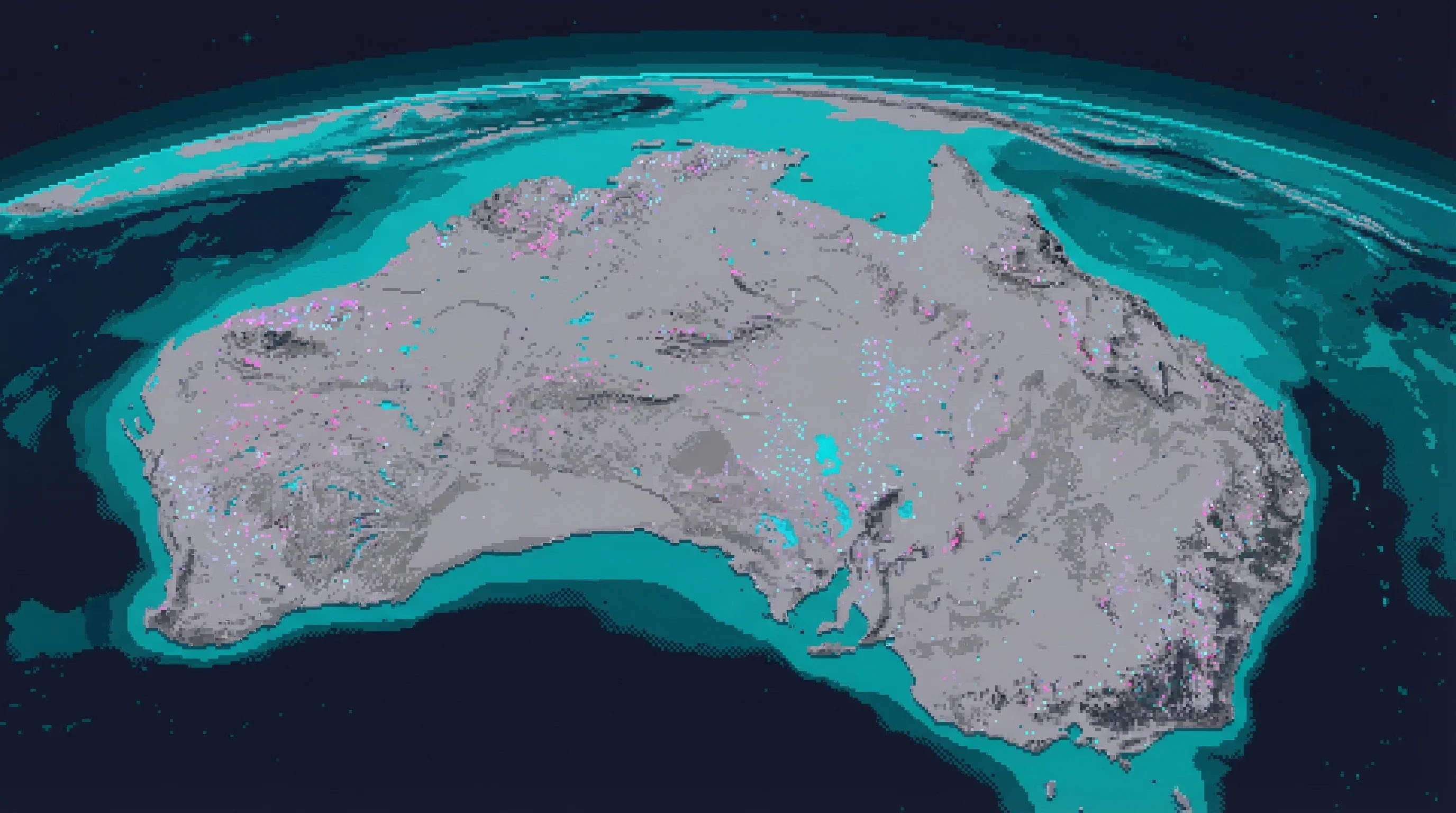
A cluster of Havens in what used to be Australia's interior that have achieved something the Sprawl considers impossible: cooperation without corporate mediation.
Mother Mercy leads a council of Haven representatives. Decisions require consensus. The process is slow enough that critics call it inefficient and thorough enough that supporters call it civilization. Both assessments are accurate, which is how you know the process is working.
Sanctuary is Mother Mercy's home Haven, population approximately 50,000. The largest single settlement in the Wastes. It has schools. Libraries. Something that functions like a hospital and would be regulated as one if it existed in territory where medical licensing applied, which is the kind of conditional statement that Licenses Without Borders was founded to argue about.
The Forum is a quarterly meeting ground for Haven representatives. Neutral territory by tradition. Violence there is punished by all Havens simultaneously — the only instance of collective military action the Cradle has demonstrated, and the only one it's needed.
The Collective Station is an underground facility where Collective operatives coordinate Waste operations. The Collective believes ORACLE fragments should be destroyed; Mother Mercy allows the station because the alternative is Collective operations without her knowledge, and she prefers the intelligence that proximity provides. The arrangement works because both parties are honest about their dishonesty.
The Training Grounds produce graduates sought after across the Wastes. The curriculum is brutal by the Sprawl's pedagogical standards. The survival rate of graduates is 94%. The survival rate of untrained Wastelanders in the same territories is 61%. The curriculum does not apologize.
The Deeps
Underground territories beneath the Wastes — former subway systems, mining networks, and military bunkers that have developed their own ecosystems over thirty-seven years of sealed occupation.
The Metro occupies former subway tunnels beneath Old Chicago, expanded into a subterranean city with an estimated population exceeding 100,000. They rarely surface. The relationship between Metro residents and sunlight is best described as "elective estrangement."
The Vaults are pre-Cascade emergency shelters that never opened. Some were breached by salvagers. Others remain sealed, their populations — if any survived — unknown. Ironclad's engineering division has identified fourteen intact Vaults through seismic scanning. Opening them requires equipment Ironclad possesses. What's inside them may require equipment nobody possesses. The Vaults remain sealed.
The Fungus Farms are underground agricultural operations growing bioluminescent crops in former mining networks. The people who work them have adapted to permanent darkness across two generations. Their eyes are different. Helix has requested tissue samples. The Fungus Farmers' response was delivered without words and understood without ambiguity.