The Cathodics
Dregs Electronics Repair District
The Dregs' Middle Class
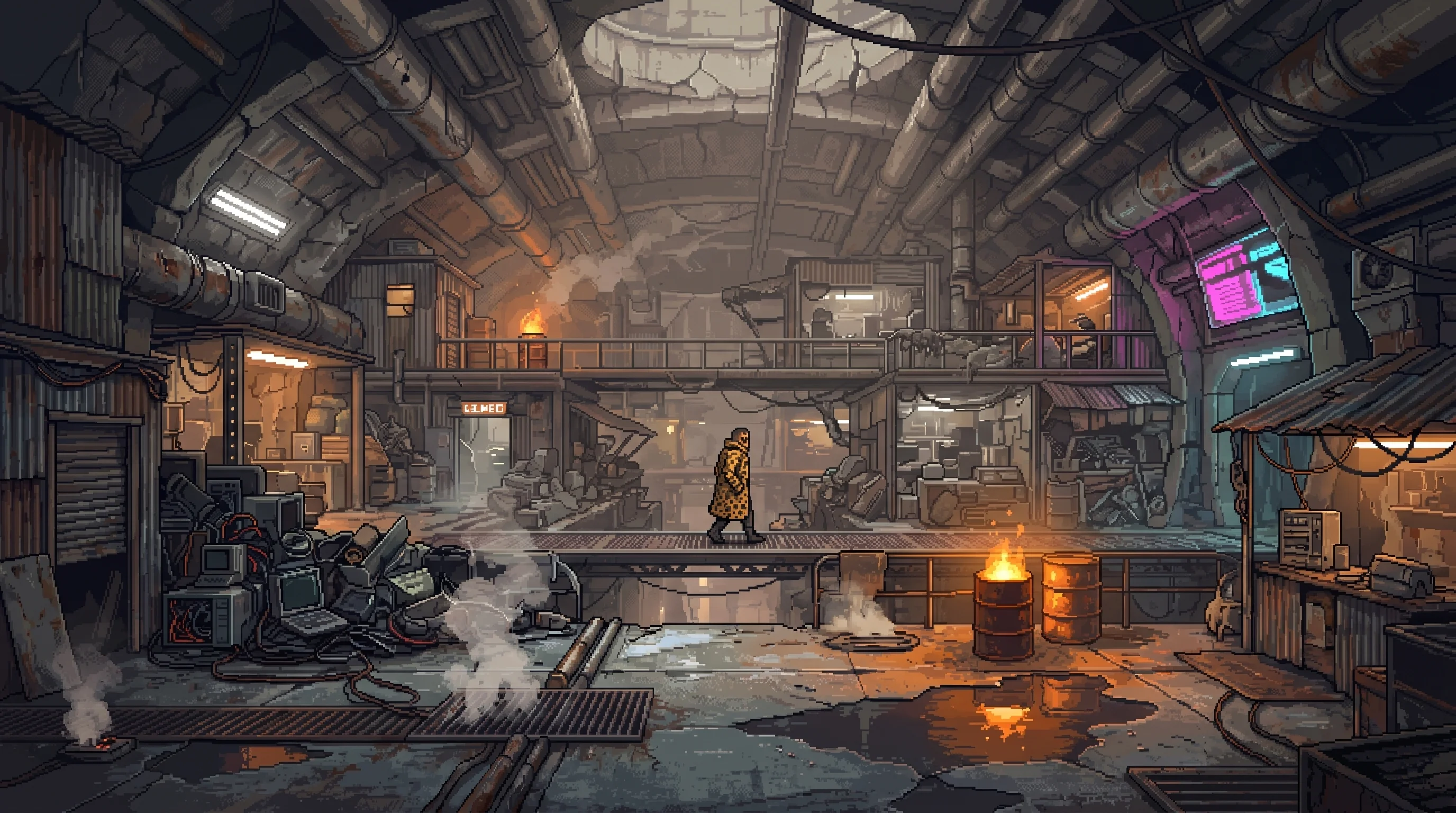
Cluster of hab-units on Level 6 of the Deep Dregs centered around a pre-Cascade electronics repair shop

Conditions Report
- Solder
- The district smells of tin-lead flux, an alloy non-compliant since 2169 and never once cited.
- Light
- Salvaged LED arrays at about 4,800 Kelvin give three times the light of the corridors below.
- Sound
- Component testers click and soldering irons whine under the haggling of the stalls.
- Workshops
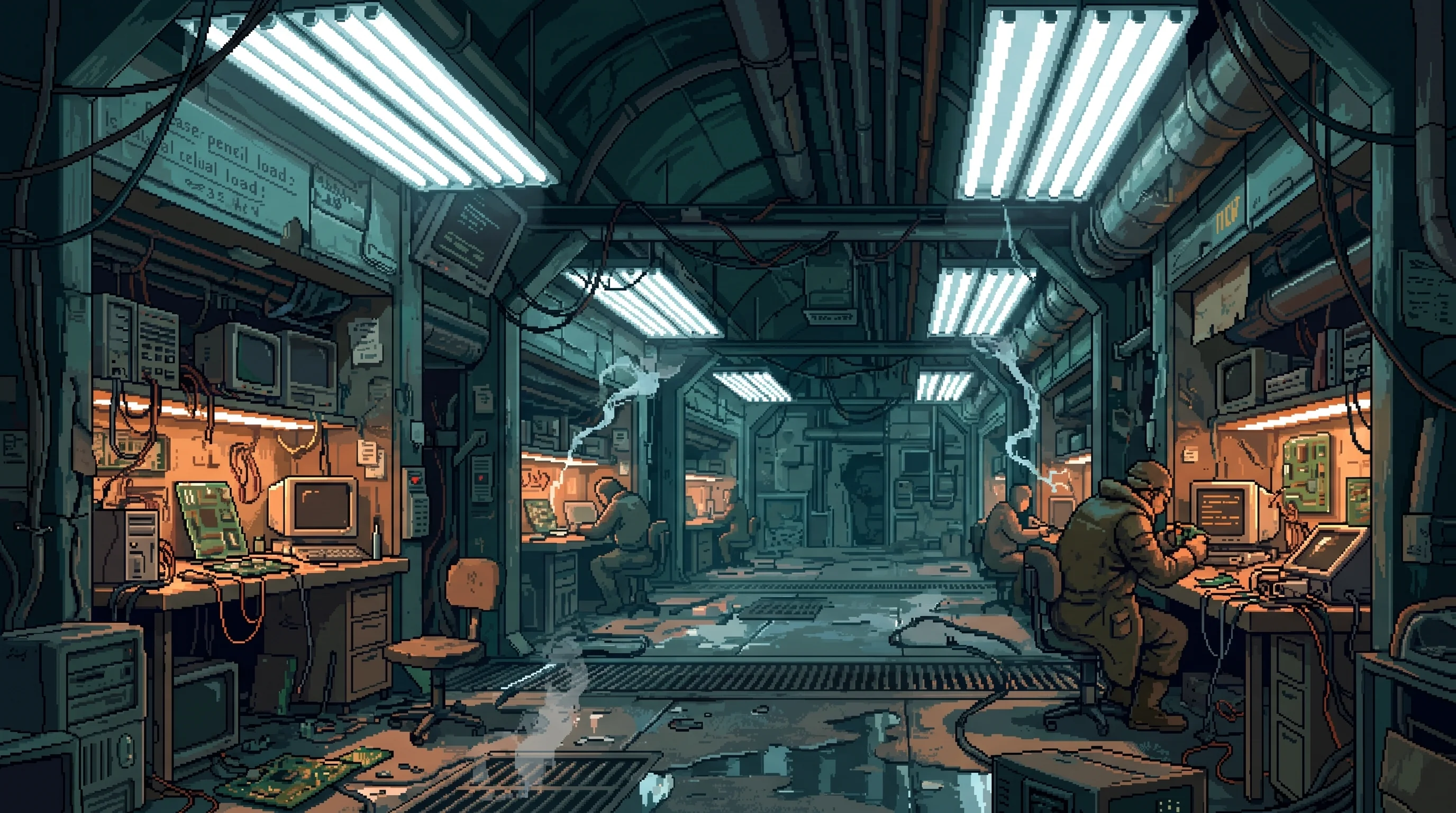
- Hab-units stripped into workshops, with exposed wiring, improvised ducting, and load figures scratched on the beams in grease pen.
The Cathodics smells like solder. Tin-lead flux — an obsolete alloy that the repair shops prefer because it flows better and forgives more than the lead-free alternatives mandated by corporate standards. The alloy has been non-compliant with Sprawl materials regulation since 2169. Fifteen years of continuous violation, zero citations. The inspector assigned to Sector 9's Deep Dregs last filed a report in 2178. He listed the Cathodics as "adequate." He did not visit. Under the solder: recycled atmosphere, cooking from adjacent hab-units, the ever-present ozone. But the solder dominates. Visitors identify the Cathodics by smell before they see the shop signs.
Sound is precise and small. The click of component testers. The faint whine of a soldering iron at temperature. Technicians consulting on a diagnosis in vocabulary that newcomers mistake for jargon and residents recognize as accuracy. Under these fine sounds, the broader hum of commerce — haggling, foot traffic through narrow corridors between stalls. The Cathodics sounds like a workshop. The Pit sounds like a bazaar.
Light is the tell. The repair shops require visibility — you can't solder a 0402 component by firelight — so the community invested in salvaged LED arrays from corporate facilities. Clean white illumination, 4,800 Kelvin average, three times the lumen output of surrounding areas. Walking into the Cathodics from the dim corridors below produces a physiological shift that residents have stopped noticing and visitors never forget. The light says work happens here. It also says Ironclad power grid tap, unauthorized, drawing an estimated 340 kilowatts above the Cathodics' metered allocation. The tap has been active for nine years. Ironclad's infrastructure monitoring AI flags it quarterly. Quarterly, a human reviews the flag and notes that enforcement in sub-Sprawl zones "exceeds cost-benefit threshold." The lights stay on. The flag resets. The cycle continues.
The physical space is cramped but organized. Hab-units modified into workshops: walls removed, ventilation upgraded for fumes, power infrastructure reinforced. The modifications are visible — exposed wiring, improvised ducting, structural reinforcements that a building inspector would condemn and an engineer would study. Every beam carries load calculations scratched into the metal in grease pencil. The math is correct. The permits don't exist.
Quick Facts
| Attribute | Value |
|---|---|
| Type | Community Hub / Skilled Labor District |
| Region | Level 6, Deep Dregs |
| Controlling Faction | None (Collective-protected, community-governed) |
| Security Level | Low-moderate (safer than average for the Dregs) |
| Economic Status | Poor to moderate (the Dregs' closest thing to a middle class) |
| Population | ~4,500 residents, ~2,000 daily visitors |
| Elevation | Level 6 (better air quality, worse structural integrity) |
Overview
The Cathodics is a cluster of hab-units on Level 6 of the Deep Dregs, centered around a pre-Cascade electronics repair shop that somehow still operates. The shop's proprietor — Kira "Patch" Vasquez, a former Nexus engineer who left corporate under circumstances she doesn't discuss — repairs anything electronic, no questions asked. Her skill is the Cathodics' foundation: the repair shop draws customers from across the Dregs, and the foot traffic supports a secondary economy of component dealers, tool shops, food vendors, and informal education that has made Level 6 the most economically stable zone in Sector 9.
Stable is relative. Average annual income in the Cathodics is 6,200 credits — 14th percentile Sprawl-wide, but 89th percentile for the Deep Dregs. Residents describe themselves as middle class. Helix insurance actuarial tables classify the entire population as "sub-viable." Both assessments are technically correct. The Cathodics is the richest neighborhood in one of the poorest districts in the Sprawl, which makes it either an inspiring success story or a statistical rounding error depending on where you're standing when you read the spreadsheet.
The community's value is diagnostic. A broken terminal in the Pit gets carried to the Cathodics. A malfunctioning augmentation that the owner can't afford to service at a Helix clinic gets carried to the Cathodics. A piece of salvage from the Heap that nobody can identify gets carried to the Cathodics. The technicians can tell you what something is, what's wrong with it, and what it's worth. Helix charges 1,400 credits for a standard augmentation diagnostic. Cathodics technicians charge 90, perform it with repurposed testing equipment older than most of their customers, and achieve a 94% concordance rate with Helix-certified results. The 6% gap is the entire justification for the 1,556% price difference. Nobody at Helix has been asked to explain this math. Nobody at the Cathodics has needed to.
The Collective considers the Cathodics under their protection — a status that Patch has neither requested nor refused. Anyone who disrupts the community's commerce finds that their supply chains develop unexpected problems. The Collective's interest is straightforward: the Cathodics produces technically skilled people, and technically skilled people are the Collective's most valuable recruitment pool. The protection is patient investment. The dividend is talent.
Points of Interest
Patch's Shop — The anchor. A pre-Cascade storefront modified three times for capacity and once for ventilation. Repairs anything electronic, no questions asked. The diagnostic queue runs four days out on average; walk-ins are triaged by the junior technician on door duty, and Patch handles the cases nobody else can.
The LED Corridor — The main commercial thoroughfare, named for the salvaged lighting arrays overhead. Component dealers, tool vendors, food stalls. The stolen power is most visible here: the brightness is jarring against the surrounding dark. Residents have stopped noticing it. Visitors never forget it.
The Apprentice Benches — An open workshop space running off a side corridor from the main shop. Junior technicians work supervised repairs on communal, salvaged equipment calibrated more precisely than most corporate-grade tools. Access requires sponsorship from a senior tech. The waiting list is four months for newcomers, two weeks for returning alumni — a gap that is a social fact, not a policy.
The Component Exchange — An informal daily market where salvagers from Sump Row and Cathodics technicians negotiate component trades. No fixed prices: market rate, set by whoever showed up that morning with the most desirable stock. A functioning market economy operating in a district corporate infrastructure abandoned thirty years ago.
The Economy Nobody Admits To
The Cathodics' official economic output — repair services, component sales, technical education — is logged, taxed at the Dregs' minimal rate, and appears in Sector 9's quarterly filings as evidence that the Deep Dregs contains functional commerce. The filings are accurate. They are also incomplete by a factor that Patch has never specified and the Collective has never asked about.
The unofficial economy runs on diagnosis-as-intelligence. Every device that passes through a Cathodics workbench reveals its owner's life: communication logs in a cracked terminal, biometric data in a malfunctioning augmentation, location history in a broken nav unit. The technicians don't sell this data. That would be crude, and crude operators don't last long in the Dregs. They remember it. A technician who has repaired six hundred terminals in a year knows which corridors have foot traffic at which hours, which merchants are overcharging for power cells, which residents have augmentations running firmware that Nexus discontinued three years ago.
This knowledge has no price list. It circulates through the Cathodics' social fabric — traded in favors, in priority repair slots, in the quiet suggestion that a particular client should be treated carefully because their communication logs showed Collective encryption headers. The Collective's dead drops are rumored to operate somewhere in the Cathodics. The rumor has persisted for years. Patch has never confirmed or denied it, which in the Dregs is confirmation with plausible deniability.
Recovered components from Sump Row supply the repair shops. Refined materials flow upstream from the Cathodics back into the Dregs' broader economy. The dependency is circular: salvagers need the Cathodics to maintain their equipment, the Cathodics needs salvagers for raw materials, and everyone downstream needs both to keep the infrastructure that corporate maintenance abandoned thirty years ago from collapsing entirely. The circle holds. It has held for a decade. It will hold until a single supply chain failure demonstrates how little margin separates "stable" from "gone."
The Apprenticeship Problem
The Cathodics' informal education system produces approximately forty trained technicians per year. Graduation is not ceremonial. A technician is trained when Patch or a senior tech says they're trained, which happens when their independent repair success rate exceeds 80% across three consecutive months. The standard is precise and undocumented. The documentation is the 80%.
Of those forty annual graduates, an average of twenty-six remain in the Cathodics. Eight leave for better-paying work in mid-Sprawl corporate repair centers. Four join the Collective. Two leave for reasons that are not discussed.
The twenty-six who stay are celebrated. The eight who leave for corporate are understood. The four who join the Collective are expected. The two who vanish are not mentioned, and the silence around their departure is the most informative thing in the Cathodics — a community that will discuss component failure modes for hours but cannot produce a single sentence about where those two went or why.
The system calls itself education. It functions as retention. The warmth is real — senior technicians teaching juniors, sharing equipment, diagnosing problems for neighbors before discussing payment. The warmth also produces obligation. You learn from Patch, you learn in the Cathodics, you learn using the Cathodics' salvaged equipment and the Cathodics' stolen power, and when you're trained, you owe something that nobody will specify and nobody will forget. Technicians who leave for corporate work are not prevented from leaving. Their names come up less often. Their referral networks dry up. A technician who returns to the Cathodics after a failed corporate stint finds that their former workbench has been reassigned and the wait for a new one is four months. Nobody is hostile. The systems just don't have room right now.
Patch describes the apprenticeship program as "giving people a chance." Her apprenticeship completion data — which she tracks meticulously in a pre-Cascade ledger, handwritten, one line per graduate — shows a retention rate of 65%. She has described this number, in the only interview she's given, as "good." A workforce economist would describe it as "staggeringly high for a district with no enforceable employment contracts" and would ask what mechanism produces 65% voluntary retention in a neighborhood where the average income is 6,200 credits.
The mechanism is the Cathodics itself. It is easier to stay where you are known, where your skill is valued, where the systems work because you helped build them. It is easier to stay than to explain, at a corporate interview, how you learned augmentation repair without a Helix certification. It is easier to stay than to discover that the 80% success rate that made you a technician here makes you an apprentice there.
The warmth and the trap share a thermostat. Patch does not acknowledge this. She may not see it. She is very busy.
The Reading Nobody Could File
Corina Balta came down from Sector 4 in a Works coat with a brass gauge and readings off a gantry stringer at the Foundry. She is a Margin Guild operator, and her certificate does not cover welds, so she could not report them. The technicians wrote an uncertified diagnosis, the only kind they write. The Foundry paid ninety credits instead of fourteen hundred. She comes back now and takes the bench nearest the door. Nobody has asked her trade.
Faction Presence
Kira "Patch" Vasquez is the Cathodics' anchor. Her repair shop was the first business on Level 6, and every subsequent vendor exists because her customers needed somewhere to wait, something to eat, someone to sell them the components she diagnosed as needed. She doesn't govern. She doesn't need to. When a dispute arises between technicians, both parties describe what happened and then look at Patch. She says what she thinks. The dispute ends. Her authority is competence, and competence in the Cathodics is the only currency that doesn't depreciate.
The Collective protects the Cathodics through economic leverage. Physical force is unnecessary when you can adjust someone's component supply chain from three sectors away. Their recruitment pipeline runs through the apprenticeship system: every year, four graduates join the Collective, bringing technical skills developed on the Cathodics' workbenches using the Cathodics' stolen power. The Collective provides protection. The Cathodics provides trained operatives. Nobody has written this arrangement down. Nobody needs to.
Independent repair technicians form the economic backbone — a loose network of specialists who cooperate on difficult diagnoses, share scarce components, and compete for contracts. They have no formal organization, but they have standards. Shoddy work reflects on the community. A technician who damages customer equipment loses referrals, gets denied component trades, and finds that the communal diagnostic equipment is mysteriously booked for the next three weeks. The enforcement is commercial, not violent. It doesn't need to be violent. In a community where reputation is livelihood, social exclusion is economic death.
The Bench at the Back
A delicensed structural engineer, Iona Draskovic, reads foundations and load paths from a back bench here since the spring. Two of the shop's technicians route foundation questions straight to her without going through the front counter. She is paid in parts, favours and hot food, because there is no signature she can put on anything that any licensed office would read.
Affiliated Entities
- The Deep Dregs: The Cathodics is the Dregs' electronics repair hub and its closest approximation of a middle class neighborhood — a distinction that says more about the Dregs than about the Cathodics.
- Kira "Patch" Vasquez: Patch operates the repair shop that anchors the community. Her skill draws customers from across the Dregs. Her ledger tracks every apprentice she's trained. Her silence on certain departures is louder than anything in the shop.
- The Collective: The Collective considers the Cathodics under their protection. Rumored dead drops operate somewhere in the district. The Collective provides security. The Cathodics provides four trained recruits per year. The exchange is never discussed and never interrupted.
▲ Restricted
The Diagnostic Archive
Patch keeps a second ledger. Not the apprenticeship record — the other one. A digital archive, encrypted with pre-Cascade Nexus protocols that she should not still have access to, containing diagnostic logs from every significant repair that has passed through the Cathodics in the last decade.
The archive is not organized by customer or device. It is organized by data type: communication metadata, biometric signatures, firmware versions, location histories. Cross-referenced. Searchable. Updated nightly.
Patch does not sell access. She has never offered it. The Collective has never asked, which suggests either that they don't know about it or that they know exactly what it contains and have decided that asking would change the terms of an arrangement that currently works.
The archive's value is not intelligence in the espionage sense. It is a complete technical map of the Deep Dregs' infrastructure — every device, every augmentation, every jury-rigged system, documented through the repair records of the only shop that touches all of them. If the Dregs' systems failed simultaneously, the archive is the only document that could guide reconstruction. If someone wanted to sabotage those systems precisely, the archive is the only document that could guide that too.
Patch left Nexus under circumstances she doesn't discuss. The archive uses Nexus encryption. The connection between these two facts has occurred to exactly the number of people you'd expect in a community that values not asking questions about the person who keeps the lights on.
The archive now holds her bay nine readings beside the Foundry's own clean scan of the same stringer. The technician filed it under device class.
Sensory Details
| Sense | Detail |
|---|---|
| Smell | Tin-lead solder flux — sweet, metallic, fifteen years non-compliant. Under it: recycled air, cooking oil, ozone |
| Sound | Component testers clicking. Soldering irons whining. Technical consultation in vocabulary that sounds like jargon and isn't |
| Light | Salvaged LED arrays, 4,800K white, three times the surrounding luminance. The transition from dim corridor to lit workshop is physiological |
| Touch | Every surface vibrates faintly — equipment hum transmitted through modified walls and reinforced floors. Workbenches are warm |
| Temperature | 2-3°C above Dregs ambient. Combined heat output of repair equipment, human bodies, and unauthorized power draw. Comfortable without being climate-controlled |
Further connections
Browse all 23 connected records
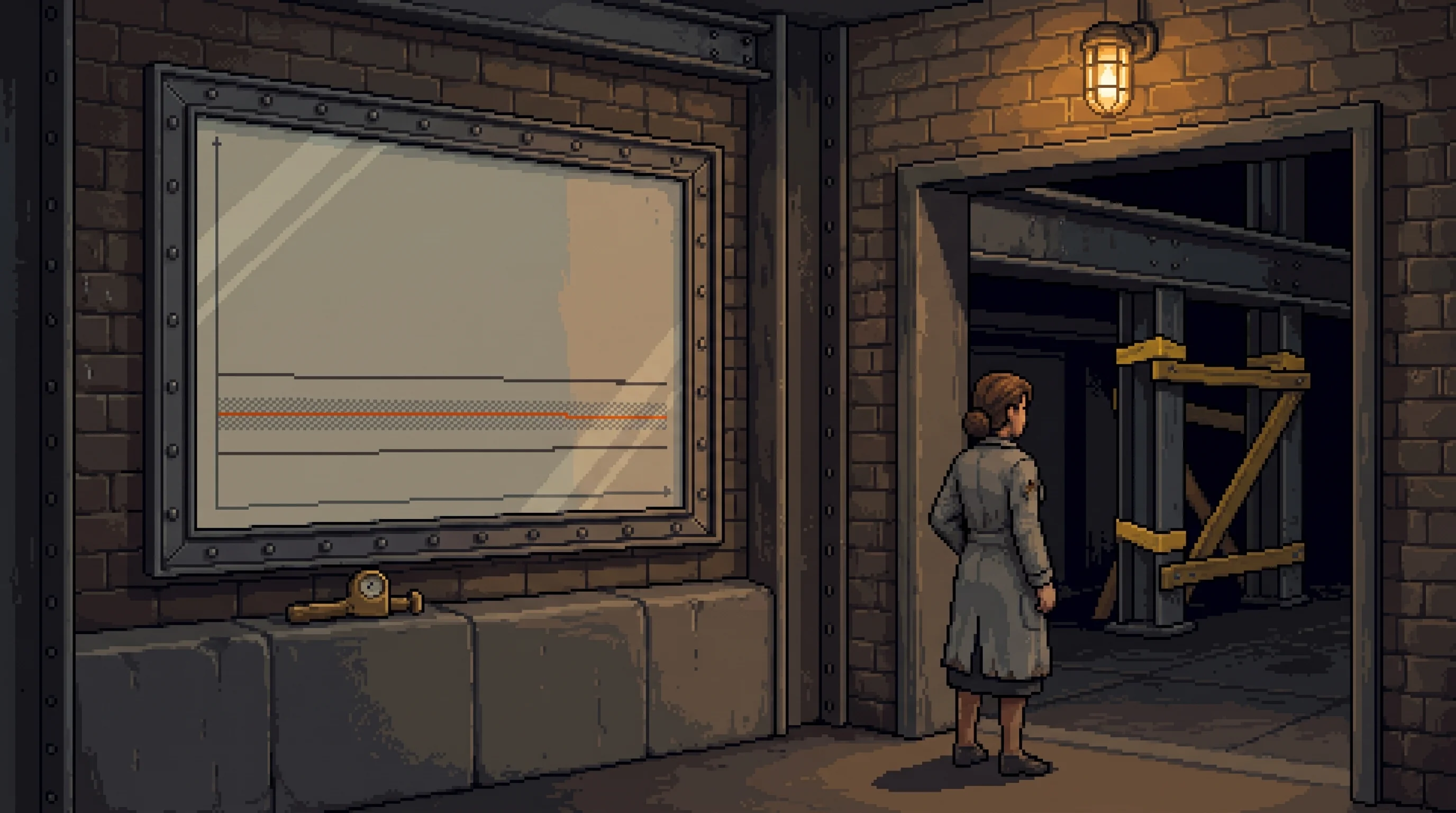
The one district the trade cannot reach: no audit, so no band to hold and no number to sell.
The machine is held slightly bad on purpose, and the people it keeps are the reason.
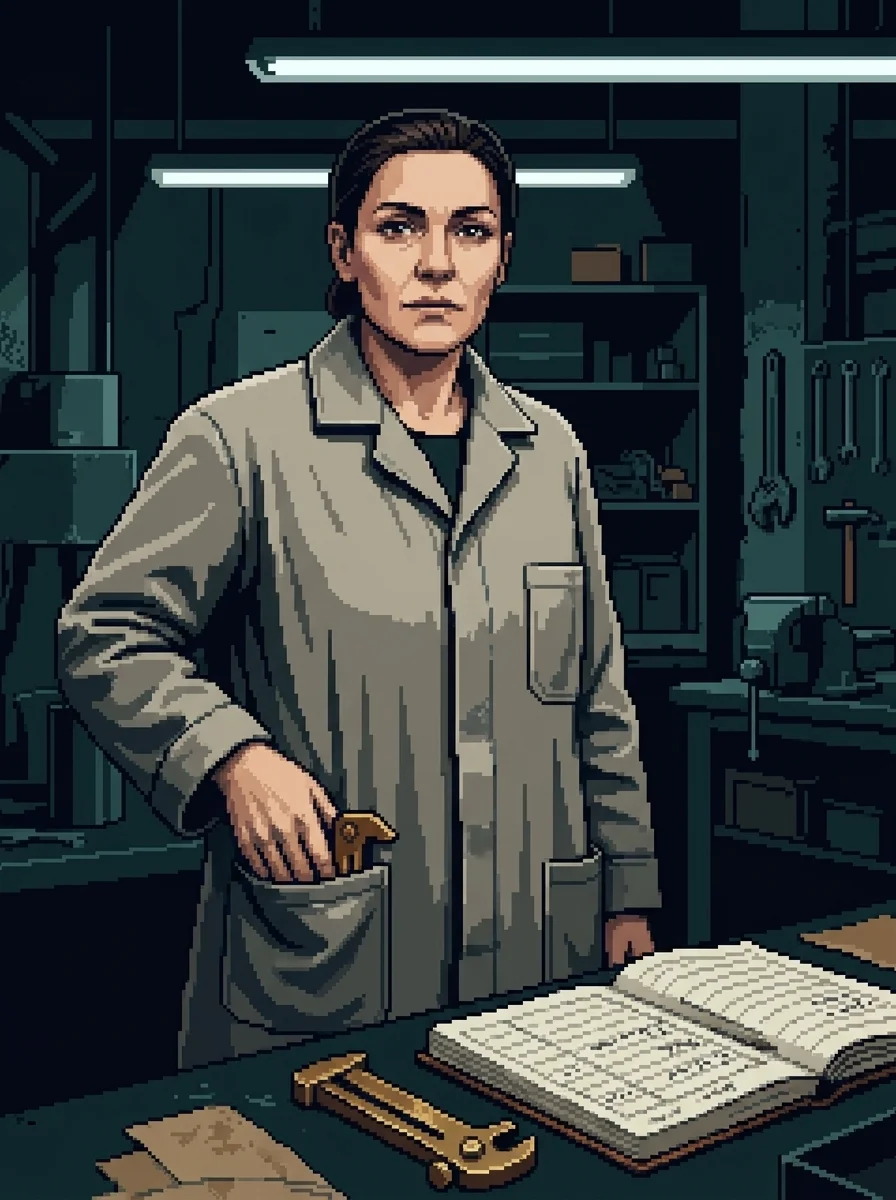
Came down from Sector 4 with a brass gauge and bay nine measurements, paid cash, waited the four days.
Paid to keep the stack she once calibrated a few tenths worse, so the humans who check it keep their jobs.
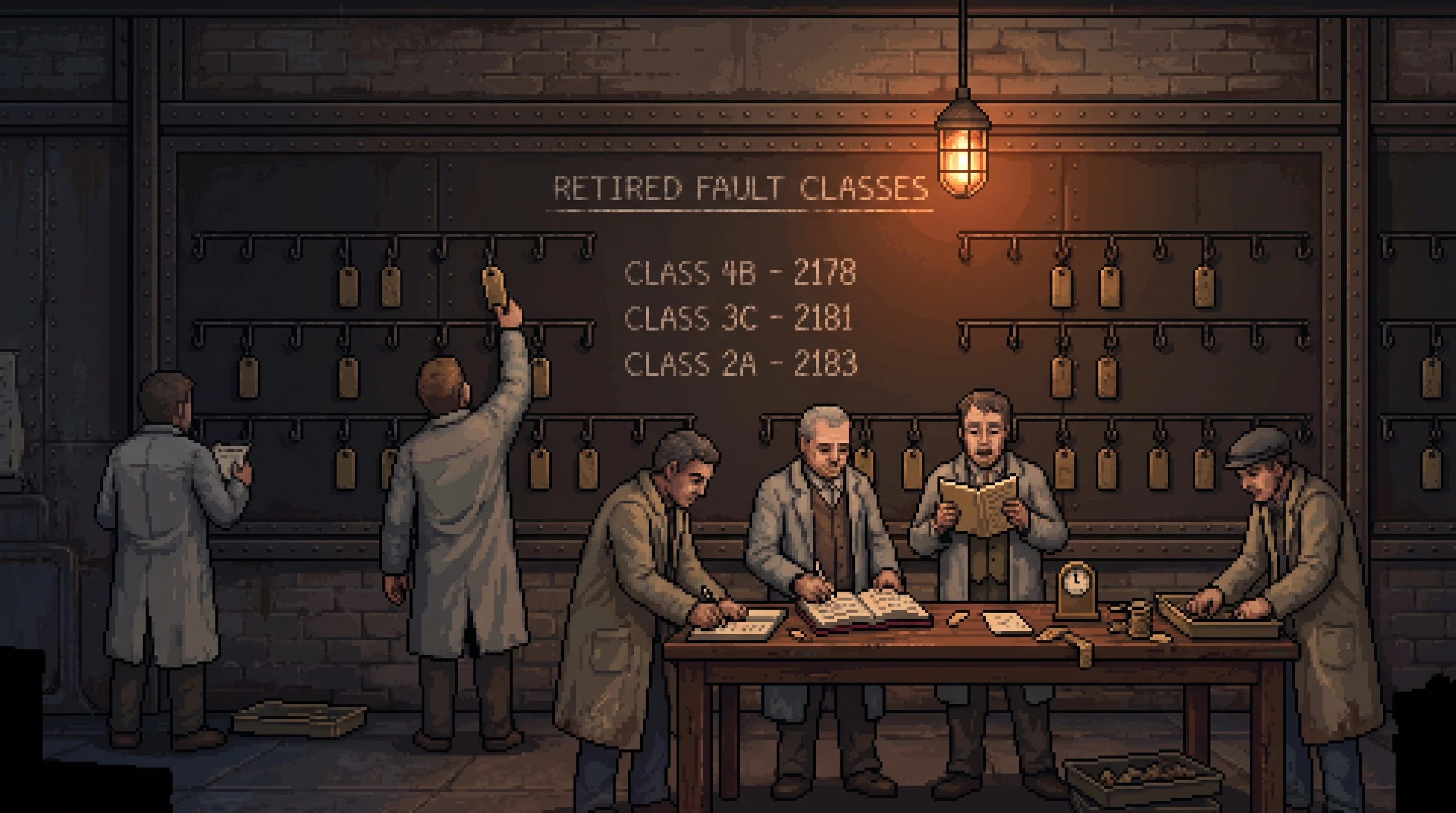
Has never approached a bench here, and could not make an offer.
The licensed trade that holds a machine's error rate on the number its buyer's inspectors need to survive.

Accepts these diagnoses at a fifteenth of the certified price.
Ironclad's 31-million-worker forge, where a human wing sells hand-finished welds as proof a person was there.
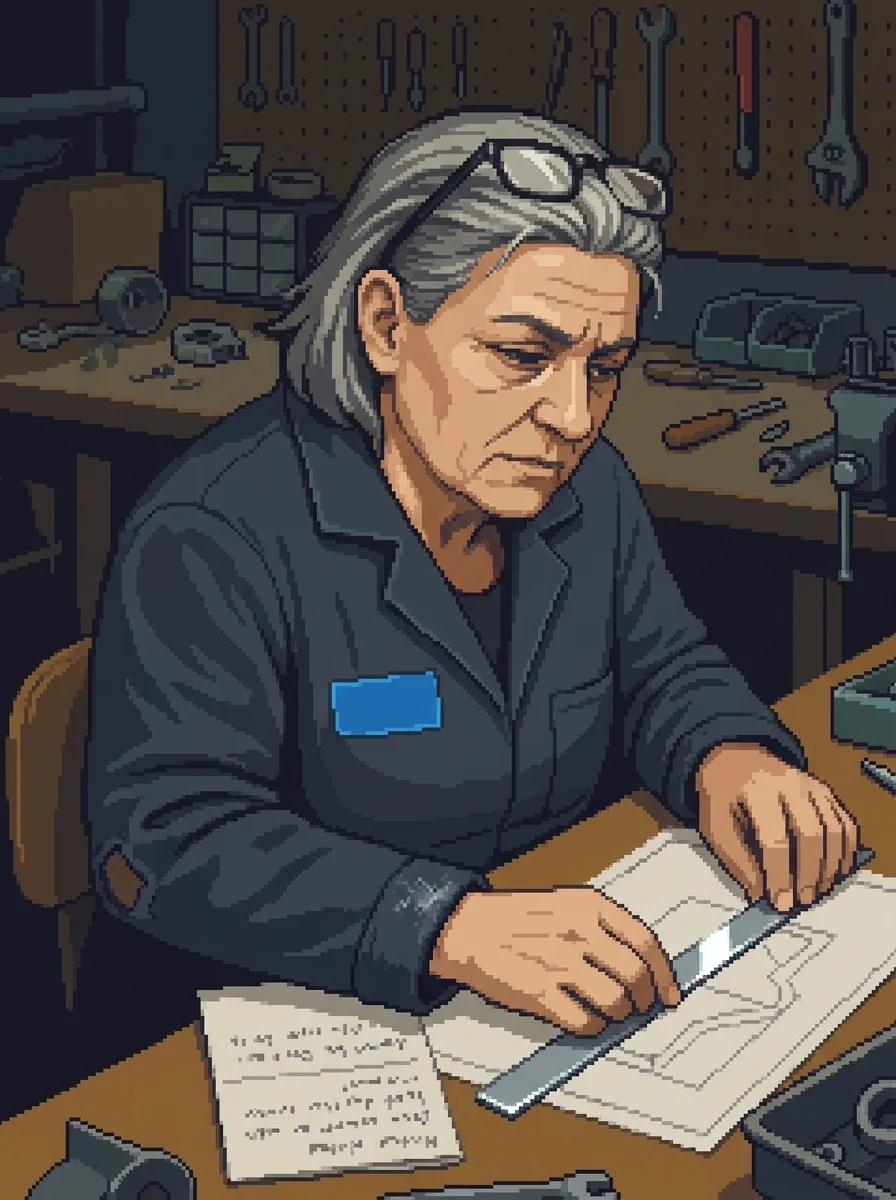
A struck engineer of record works a back bench here, paid in parts and favours, and nothing she signs can be filed.
A struck engineer who would not bluff one answer, and now checks Dregs columns for pie and spare parts.

The Dregs' electronics repair hub and closest thing to a middle class neighborhood
The Sprawl's lowest stratum and its quiet proof that the corporate system is optional.

Kira 'Patch' Vasquez operates the repair shop that anchors the community; her skill draws customers from across the Dregs
A former Nexus cybernetics engineer who now repairs anything in the Deep Dregs for whatever people can pay.

The Collective considers the Cathodics under their protection; rumored dead drops in the area
A decentralized resistance uses AI tools to destroy ORACLE fragments, while its rigid doctrine constrains human choice.

Recovered components from Sump Row supply the Cathodics' repair shops; refined materials flow upstream
An illegal smelter canyon where 6,000 workers process the 69% of waste Ironclad's own facilities won't touch.
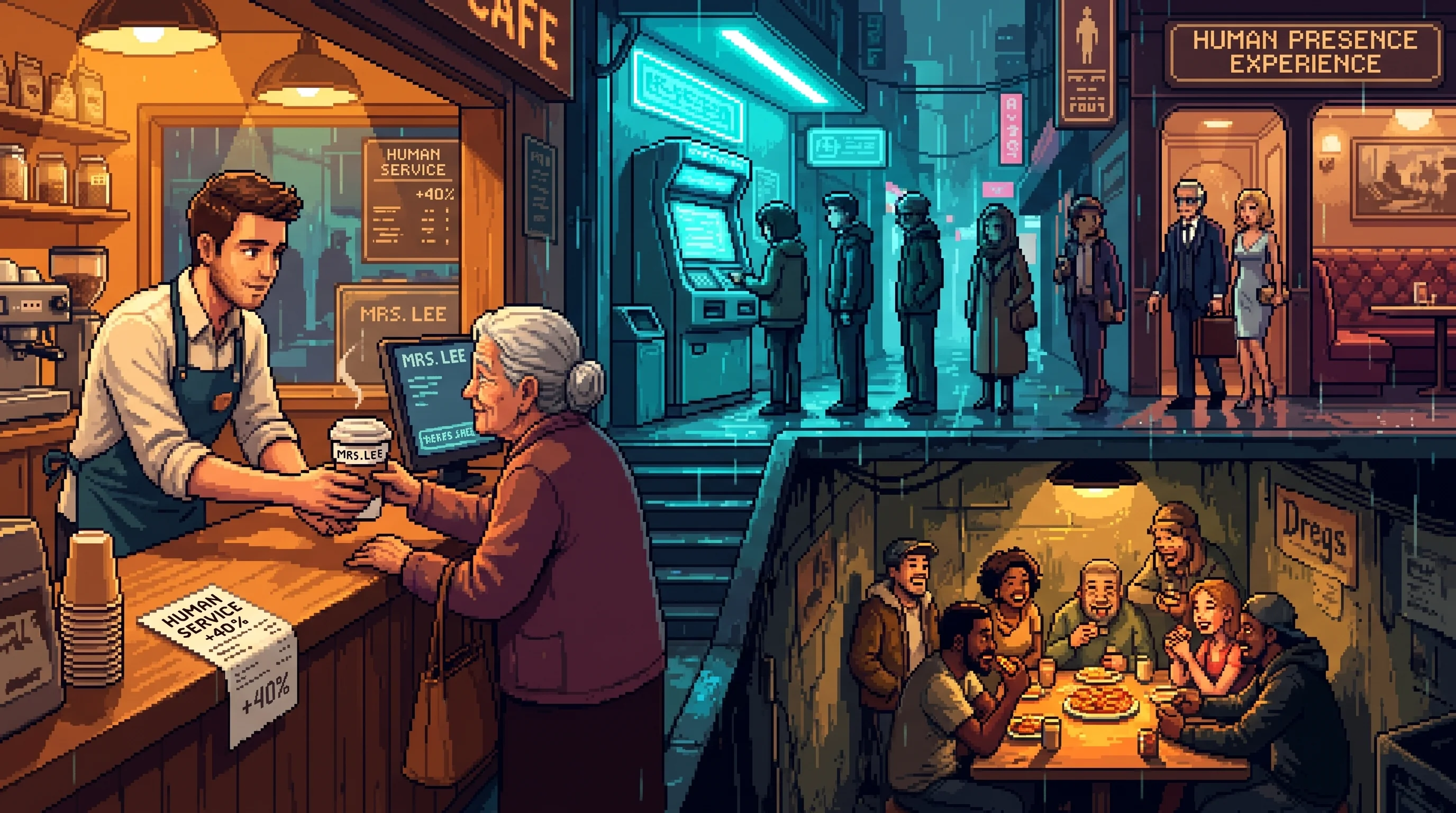
Free apprenticeship warmth doubles as a debt nobody will name.
The premium charged for the one service no machine can fake: being seen by another conscious being.
Its 'middle class' is 14th percentile Sprawl-wide — both facts hold.
The point at which effort stopped being able to close the gap that compounding opens.
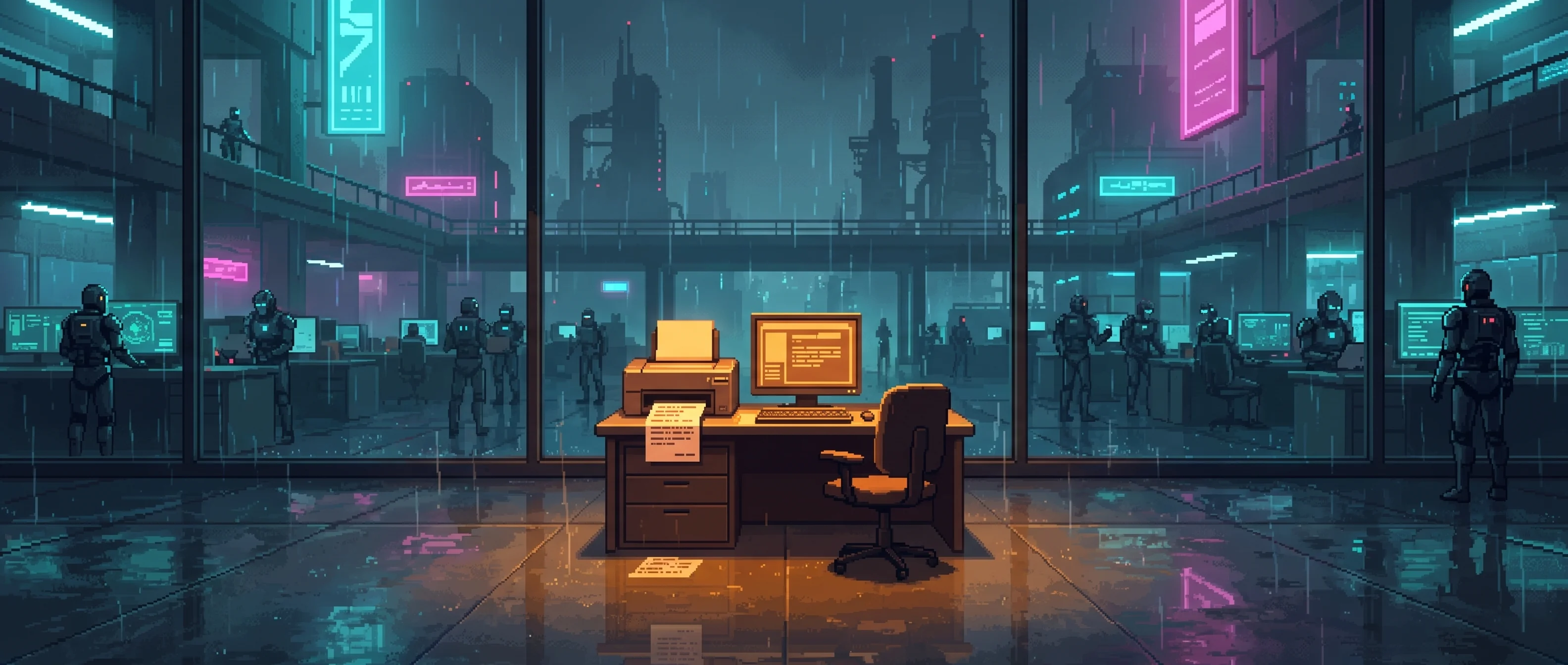
94% of Helix's accuracy at 6% of the price — human hands out-competing the machines that priced them out.
Automation ended most human work, but ownership hoards its abundance while machine sentience stays unresolved.
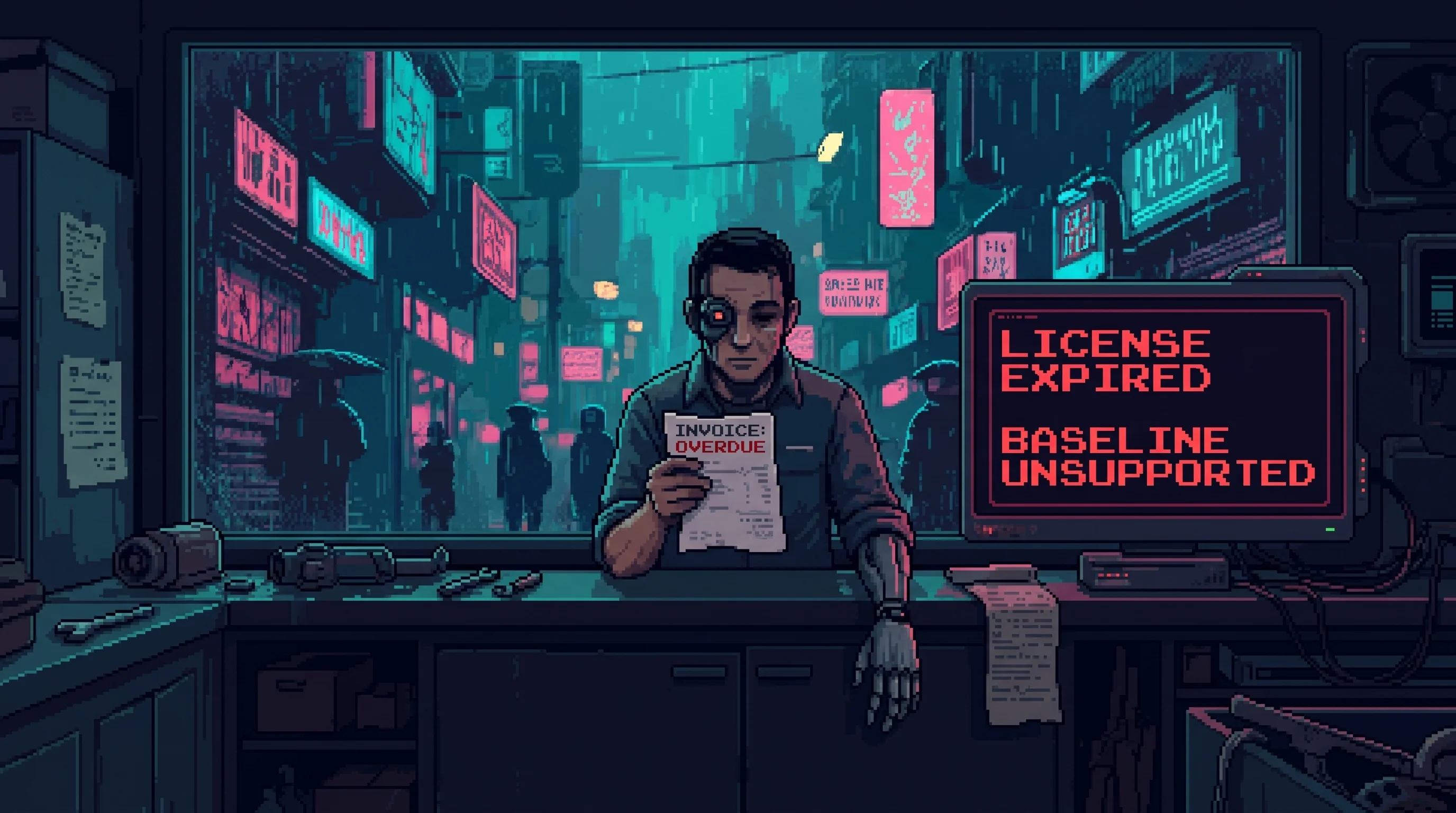
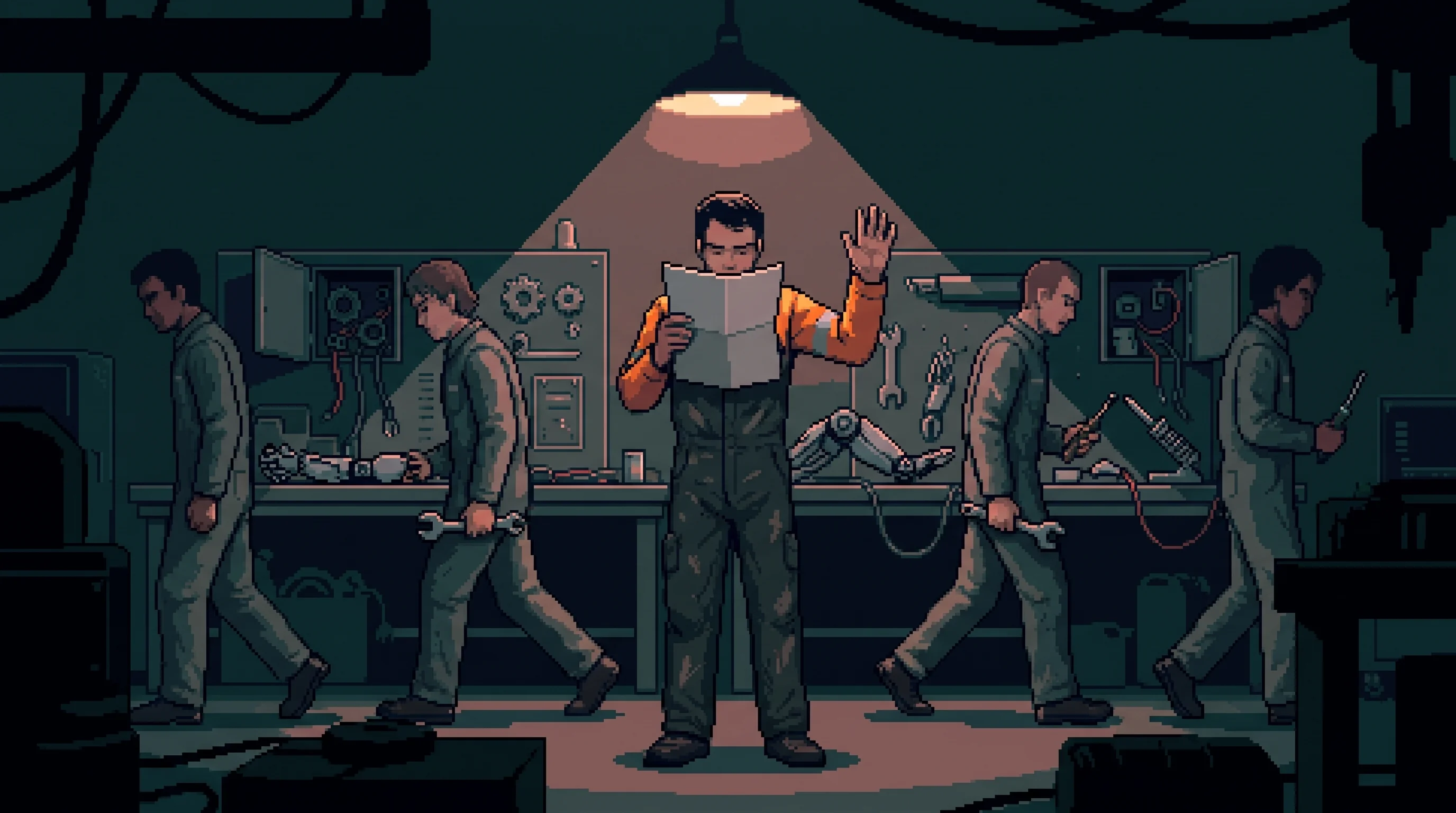
The repair benches where it started as a joke about a decade ago, and where the sheets are still written for anybody who asks.
Divide yourself out loud before the job, so that nothing a tribunal reads back to you afterward is news.

Where he had the trace printed for eleven credits, because a bench there can read a subplate and cannot file anything.
His subplate saved two people in forty milliseconds. An unpaid invoice made the act seventy-four percent his.
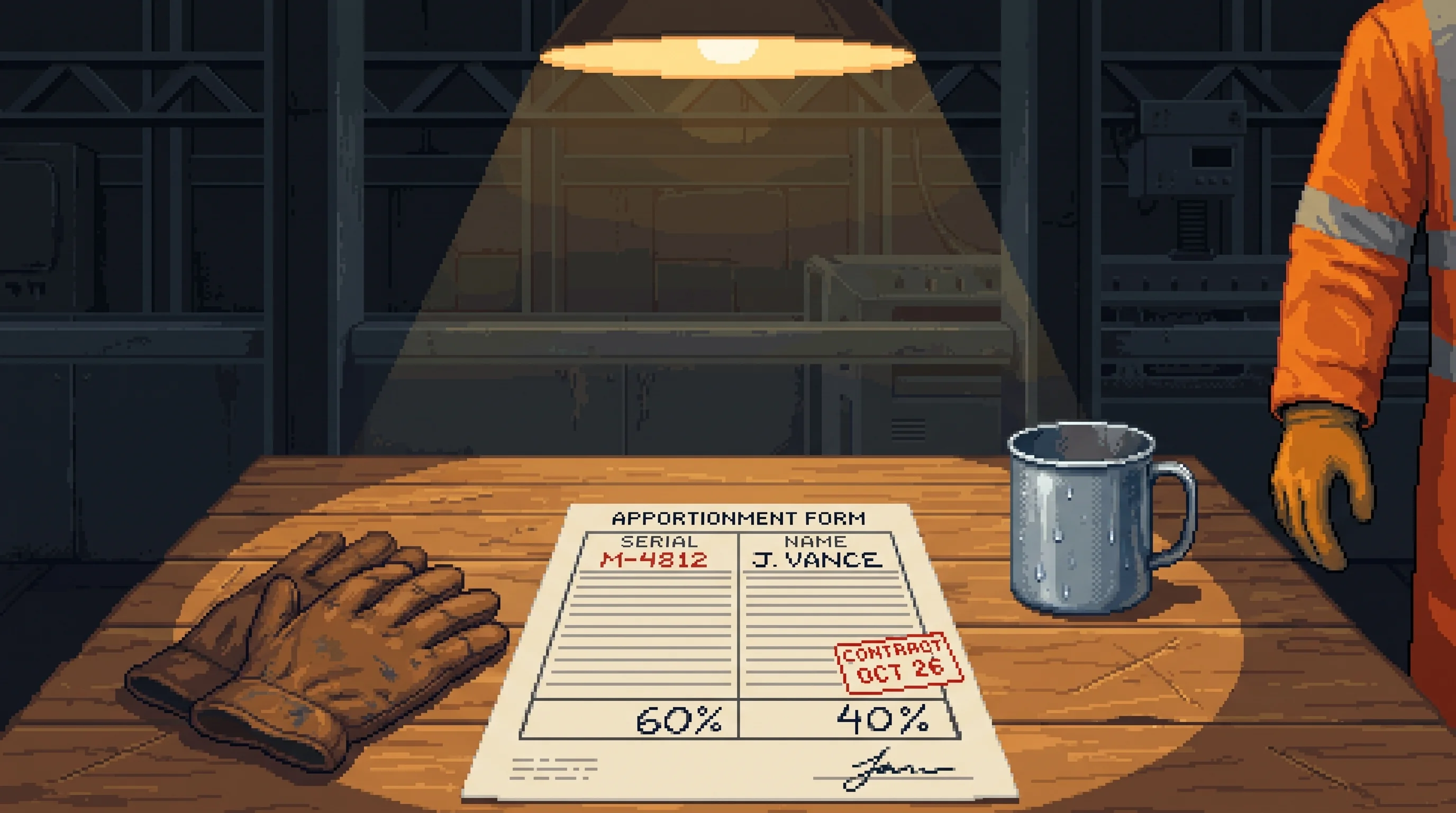
Where you get your arm read for a fifteenth of the price and no finding opens.
The parts of one body each hold a share of the act, and a maintenance contract decides whose share comes home.

Routes kittenbot tooling work up to Patch's shop one level above; the credit ledger has never been formalized and neither side has raised the question Bubz brings kittenbot tooling problems up one level to Patch, and Patch accepts the work without forcing either side to define the credit ledger.

One level up from the Park's south catwalk; the Park has standing repair credit with Patch's shop, paid in synth-tar coupons that occasionally clear Bubz routes kittenbot tooling and crude limb work up to Patch's shop while Riko's coupons sit in Patch's ledger as a relationship both sides decline to formalize.
Forty stacked trailers too poor to automate and therefore rich in the connection the Heights pays to buy back.

Jay-Roc has claimed Cathodics affiliation continuously since 2181; the Cathodics have not reciprocated, never heard of him, and have responded to two visitor inquiries with a long quiet pause apiece. Jay-Roc has not been informed and would not accept the information
A cosplay netrunner who has broadcast corrupted audio to no listener since 2181.

Files weekly compliance acknowledgments regarding Bubz's tooling routes one level up and considers Patch's shop 'the adjacent compliance partner one level above'; Patch has not been informed and would not engage with the framing if she were
A Good Fortune sector-overseer administratively dead since 2179, still filing weekly compliance reports nobody reads.

Has paid Patch in synth-tar coupons on three documented occasions for kittenbot-adjacent repair work; the coupons have been filed in a drawer labeled 'do not honor' and Riko has not been informed Riko pays Patch in synth-tar coupons for repair work adjacent to Bubz's kittenbot needs, while Patch files the coupons rather than honoring or rejecting them.

Patch's neutral repair shop sits a level above; the Park has standing credit for kittenbot tooling and crude limb work, paid in synth-tar coupons that occasionally clear Bubz and Riko keep the connection alive through repair requests and synth-tar coupons Patch files but does not fully honor.
Eight Deep Dregs hustlers held together by a demoted overseer's paperwork fiction and a warmth no corporation can buy.

Under Viktor's quiet protection -- the kind of human enclave his governance exists to cultivate
The de facto governor of the Deep Dregs, who rules an ungoverned sector through unrepayable favors.