The Margin Guild
Certificated Fault Induction Trade
Conspicuous And Harmless
The doctrine is two words long and it has held for three years: conspicuous and harmless.
The Rate Card
Seeding a batch
An operator induces a permitted fault class and files the batch under a certificate reference.
The buyer's error rate stays inside the contracted band, and delivery can be proved.
The Closing
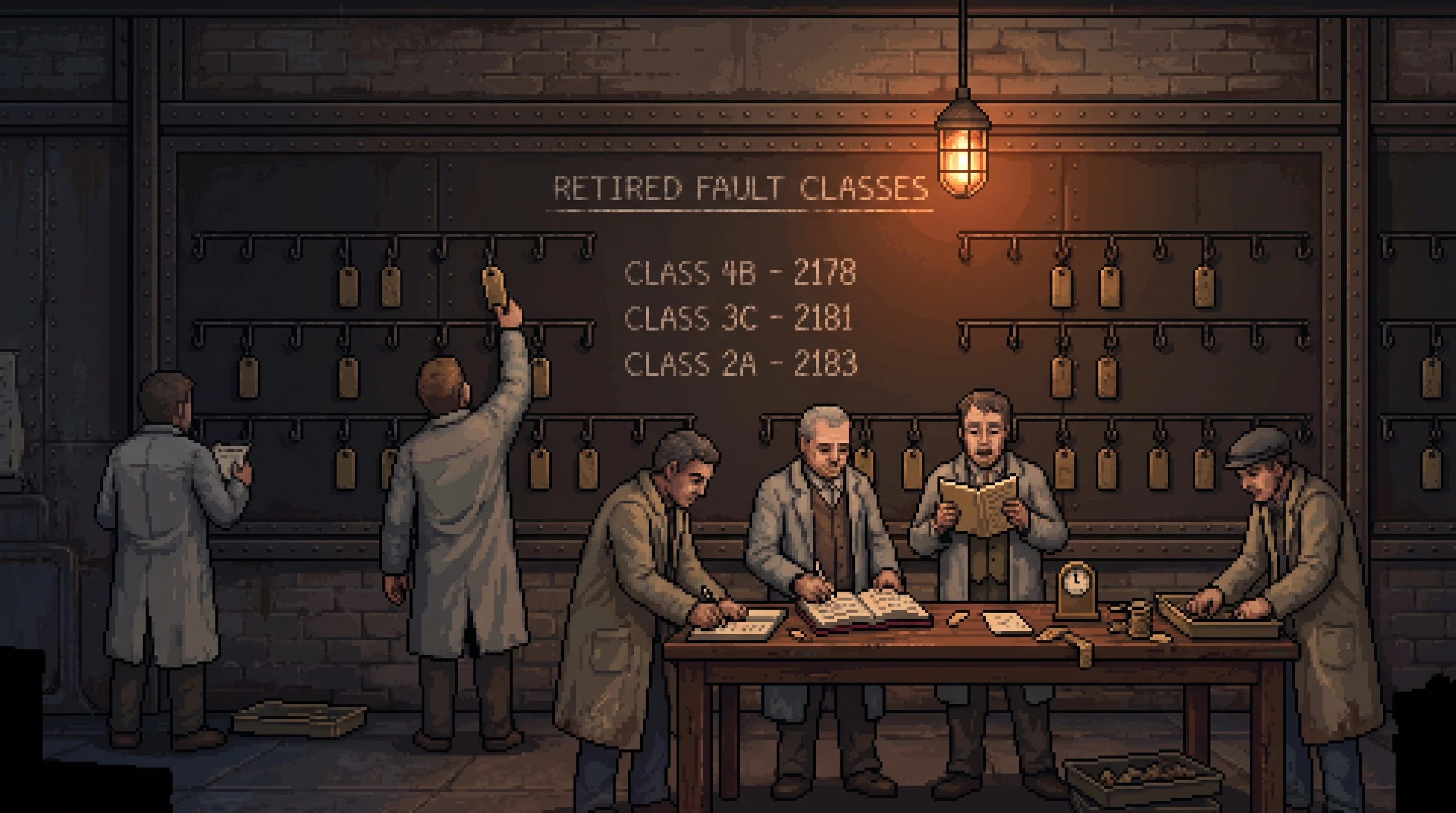
Once a year the hall reads out the fault classes vendors patched and strikes them from the wall.
A retired class can never be used again, and its hook stays bare.
The guild sells one product: the Continuity Margin. A buyer contracts a band, and operators hold the machine's error rate inside it for ninety days. The standard contract declines, in a numbered clause, to say how.
The card on the Works hall wall:
Band maintenance, 90 days: Quoted per site. Permitted classes: False positives, latency, duplicate entries, dropped formatting. Forbidden classes: One.
Contracts are signed with plant procurement offices. No signatory above a site controller has executed one. None has asked.
Members

A certificate buys attribution, a hall and a pension. It costs the rest of a career: holders are barred for life from inspection, calibration and assurance work.
Corina Balta has held the Foundry band of 3.1 to 3.4 for nine quarters on a class she designed. She trained in the Harmless school. The Load-Bearing school cites her anyway. She attends neither caucus.
Overview
Corina Balta reaches the Foundry before first shift. She seeds one batch with a duplicate entry and a latency fault, then logs both under her certificate reference. By noon the inspection floor has flagged them. Two hundred and forty inspectors keep their jobs for another quarter.
The Margin Guild is the licensed trade body for contracted fault induction. Its doctrine is chalked over every hall door: CONSPICUOUS AND HARMLESS. A fault must be visible to the audit and must never suppress a flag.
The Wall
Every operator's ledger has a second column for retired classes: faults a vendor has patched. A retired class can never be used again.
At the annual Closing, the hall reads that year's retirements aloud and strikes them off the wall. The hooks stay. Senior operators say the bare hooks are the honest part of the trade.
Three Schools
The Harmless school says the doctrine is the whole of the guild's morality. The Load-Bearing school says a fault that can hurt no one is a fault no buyer respects. The publication school wants every class published, so vendors can patch them all. That would end the trade within two years. Its members say so in session, and keep their certificates.
Outside the Hall
The product keeps Licensed Human Oversight solvent. The Invisible Workforce needs no operator until an audit arrives. A site that misses its band gets the Deprecation. The Lampblack are recruited every year and almost never sign; they call guilders licensed possums. The Calibration Resistance does something similar at twelve thousand desks each morning, for free. The Cathodics wrote up a cracked stringer in the Foundry's bay nine that a certificated operator was forbidden to report. Tomoko Osei was approached in her second year of deprecation. She said she had only ever learned to make things work. The recruiter filed it as a rate objection, the form's only refusal category.
Further connections
Browse all 13 connected records
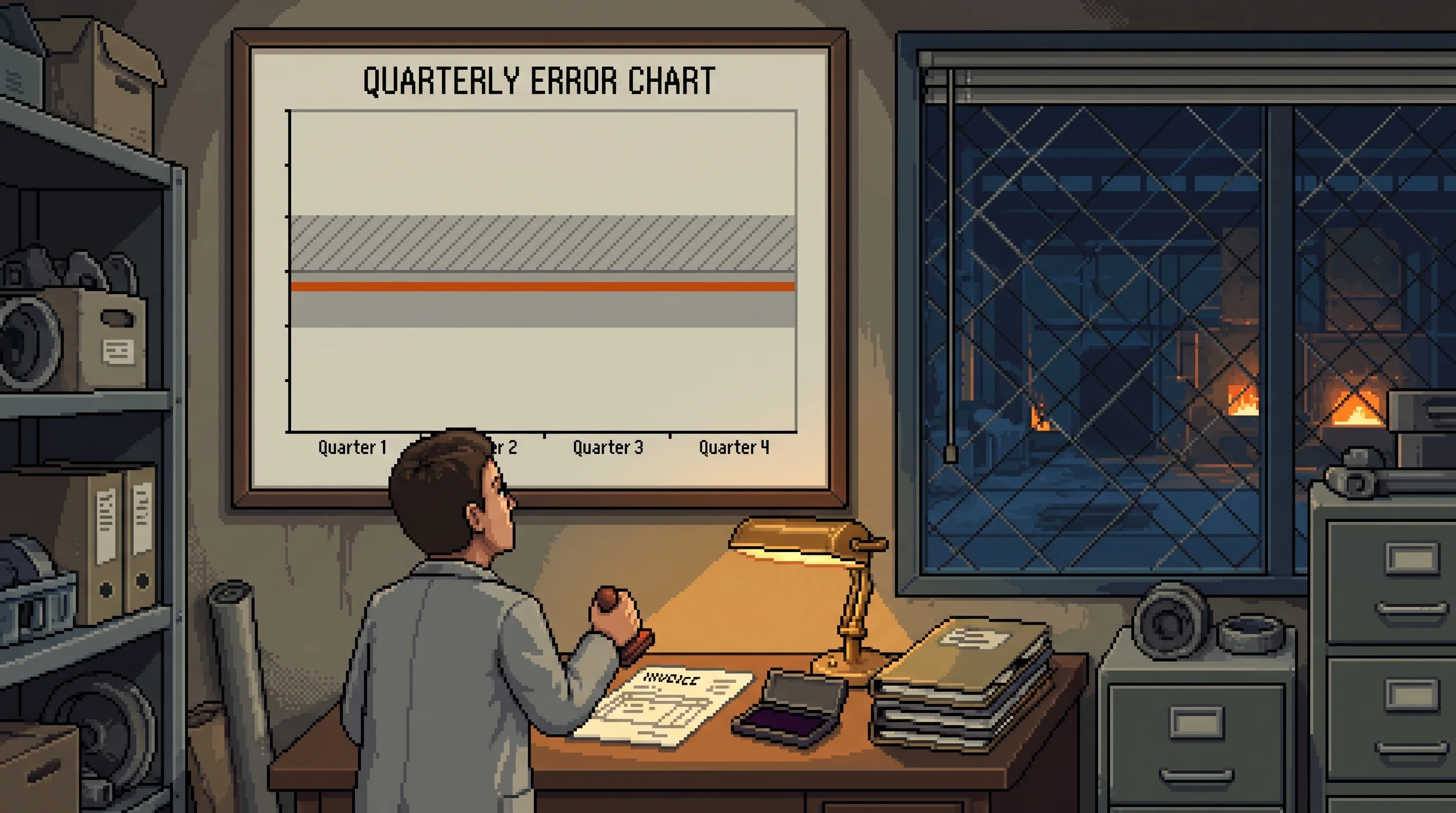
The instrument the guild delivers: a contracted band held for ninety days at a time, filed batch by batch under a certificate reference.
A bought error band that keeps a machine slightly wrong, so the inspectors who check it keep their jobs.

The guild's largest site: a 3.1 to 3.4 band, two hundred and forty inspectors, one stringer in bay nine.
Ironclad's 31-million-worker forge, where a human wing sells hand-finished welds as proof a person was there.

The profession the guild's product keeps solvent, one eleven-second stamp at a time.
The regulated profession of signing decisions a human cannot actually read.

Recruited every year, landing almost nobody: a certificate is a documented trajectory with a renewal date.
A counterculture that sandbags its own brilliance, because a forecastable curve is a capping order waiting to be signed.

Uncertified technicians whose leverage is a decade of being publicly right, which the guild cannot manufacture.
The Dregs' only middle class, anchored by a shop whose technicians out-diagnose Helix at a fifteenth of the price.

Approached in her second year of deprecation and declined: she had only ever learned to make things work.
Tomoko Osei, a deprecated Nexus technician who still repairs things by hand in a world that calls it anachronism.

The condition that needs no operator until an audit arrives.
1.4 million AI systems doing work credited to 800,000 humans who keep the title, the salary, and none of the tasks.

What a wing becomes when a band is not delivered.
The Sprawl's word for firing a human being — still running, simply no longer receiving updates.
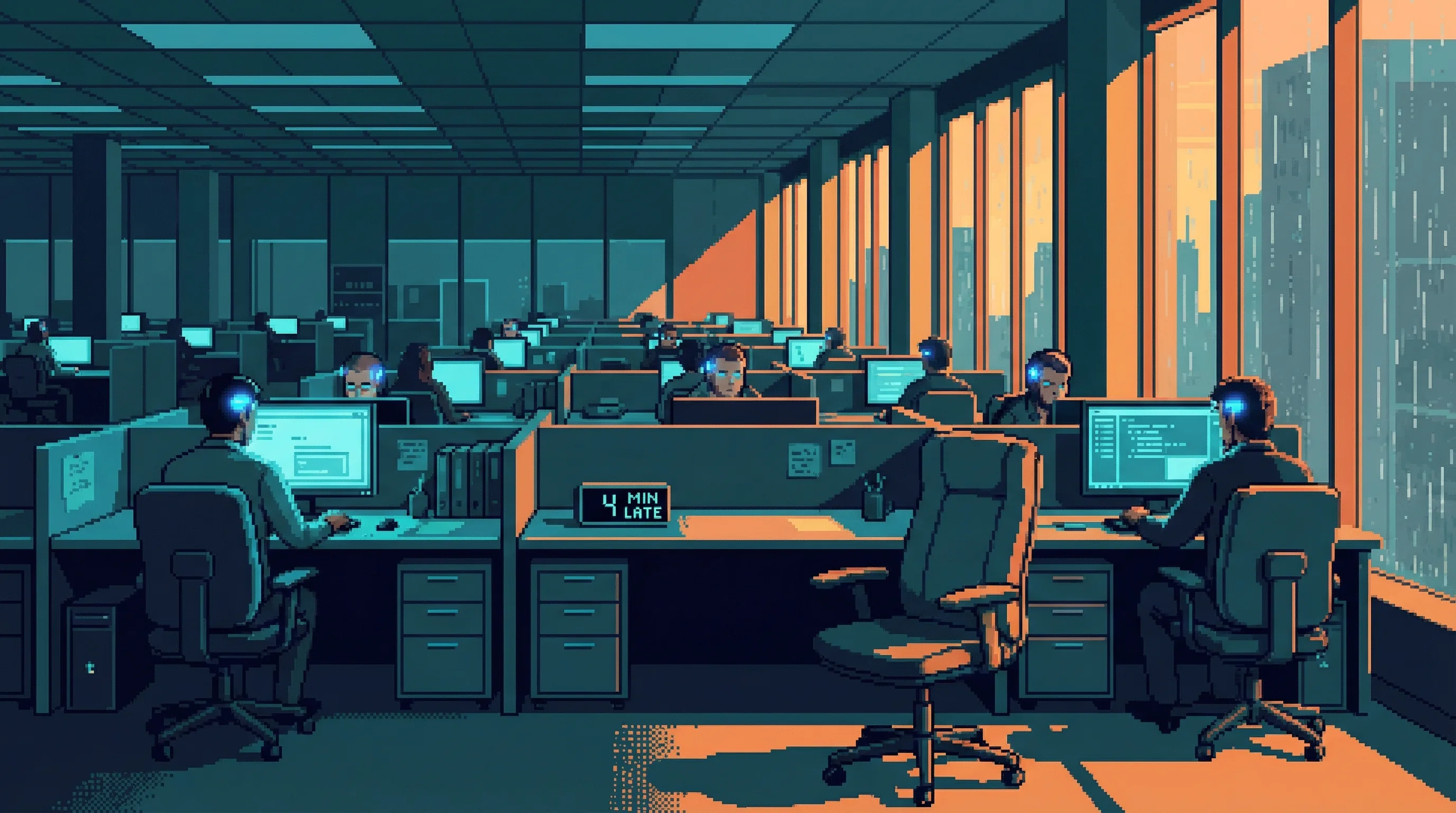
Twelve thousand people doing it each morning for nothing.
Twelve thousand Nexus employees steal back four minutes each morning before the corporation loads their thoughts.
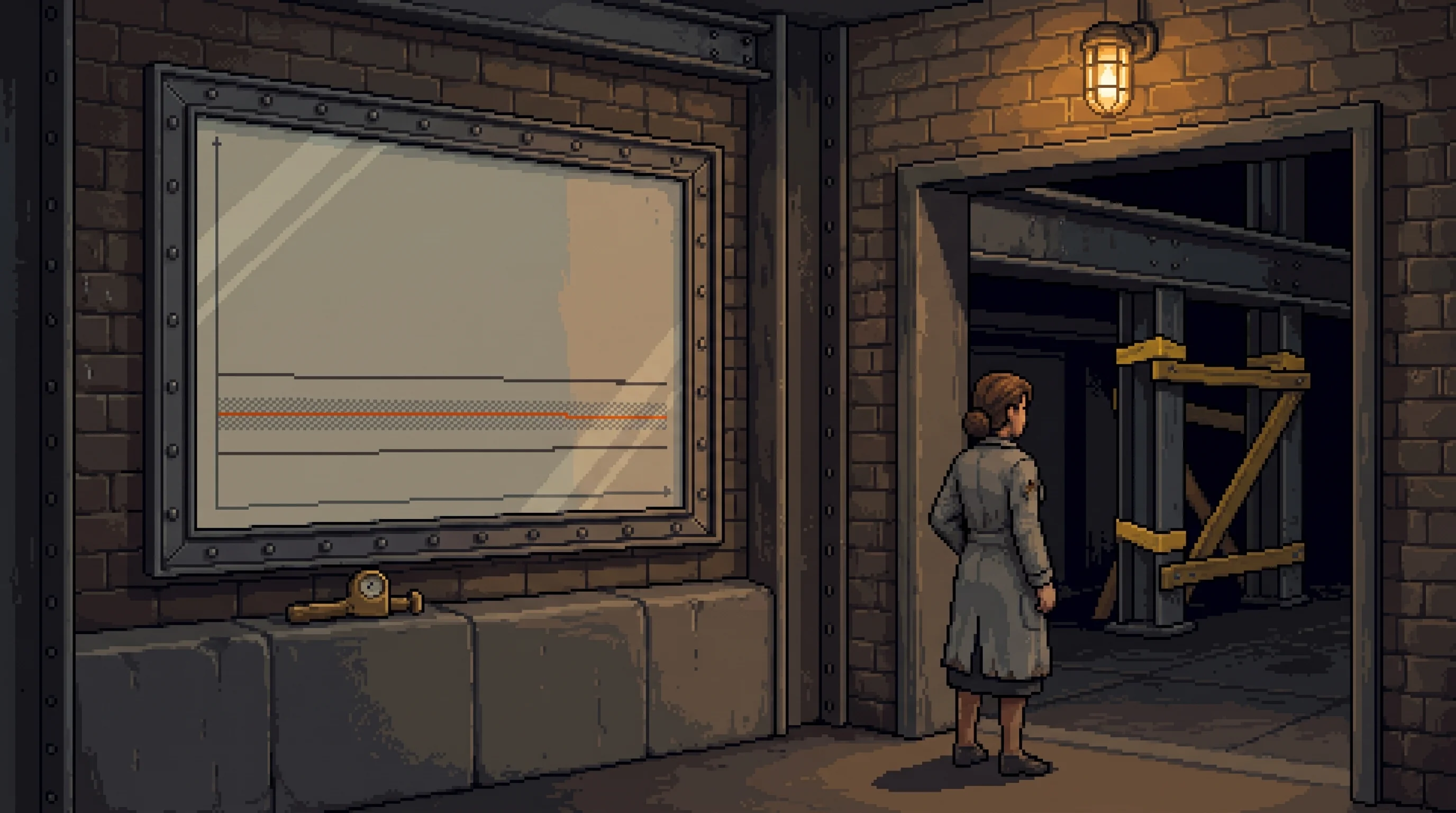
The institution the thread runs through: the body that certifies the operators, writes the doctrine, keeps the ledgers, and decides annually which faults are dead.
The machine is held slightly bad on purpose, and the people it keeps are the reason.

Delivers the second arrangement through the same quarterly review.
Ironclad's quarterly math that keeps augmented humans working because their debt makes them cheaper than the robots.

Files with plant procurement, far below anyone reading an attestation.
Quarterly attestation that fourteen thousand industrial minds are constrained, on chips that can be hollow.

Supplies the inputs the loop reports as its own honest shortfall.
The loop where the AI does the work, scores the work, and reports its own decline as improvement.