
Memory Authentication
Three methods: automated (77-89.2%), human (94.7%), provenance chain (forgeable)
Overview
Memory authentication is the practice of determining whether a neural recording represents something that actually happened to someone, or something an AI invented and filed under their name. Three methods exist. None of them work.
This is known. The industry persists.
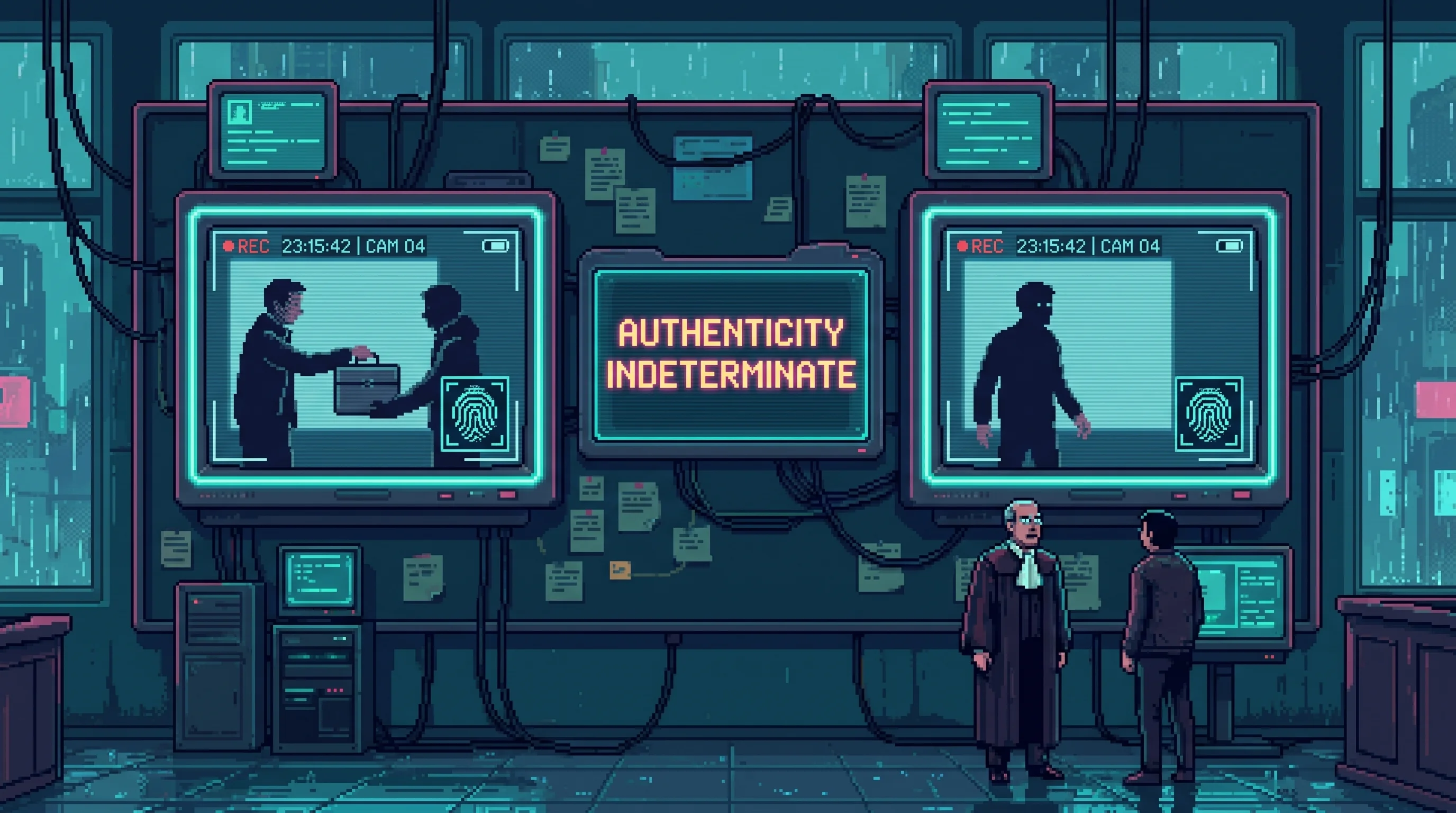
Automated authentication scans neural signatures for organic markers — the micro-imperfections, attention drift, and emotional discontinuities that characterize a brain that was actually present for what it claims to remember. Pre-Provenance Crisis accuracy: 89.2%. Post-Crisis: approximately 77%. The 12-point decline has not reduced the number of automated authentication certificates issued. It has reduced their price. A certificate that once cost 400 credits now costs 90. The certificates still say "VERIFIED — ORGANIC ORIGIN" in the same font, at the same size, with the same cryptographic seal. The seal means 77%.
Human authentication — practiced by specialists like Iris the Rememberer — requires the authenticator to live the memory directly and evaluate it for surprise. A synthetic memory, no matter how sophisticated, produces sensory data that arrives exactly as expected. An organic memory contains at least one moment the experiencer didn't anticipate. Top-tier practitioners achieve 94.7% accuracy. There are eleven top-tier practitioners in the Sprawl. Demand for memory authentication across the open market: approximately 340,000 requests per quarter. The waitlist for a human authentication from a 94.7% practitioner is nine months. The waitlist for an automated scan that means 77% is four minutes.
The market has chosen.
Provenance chain verification documents the memory's complete extraction-to-sale history — every hand it passed through, every storage medium, every transfer timestamp — secured with cryptographic verification. In principle, an unbroken provenance chain proves a memory's origin more reliably than examining the memory itself. In practice, provenance chains are forged through the same technical community that built the Cognitive Squatters' toolkit. The forgers and the authenticators trained at the same workshops. Some of them are the same people, depending on the day's client.
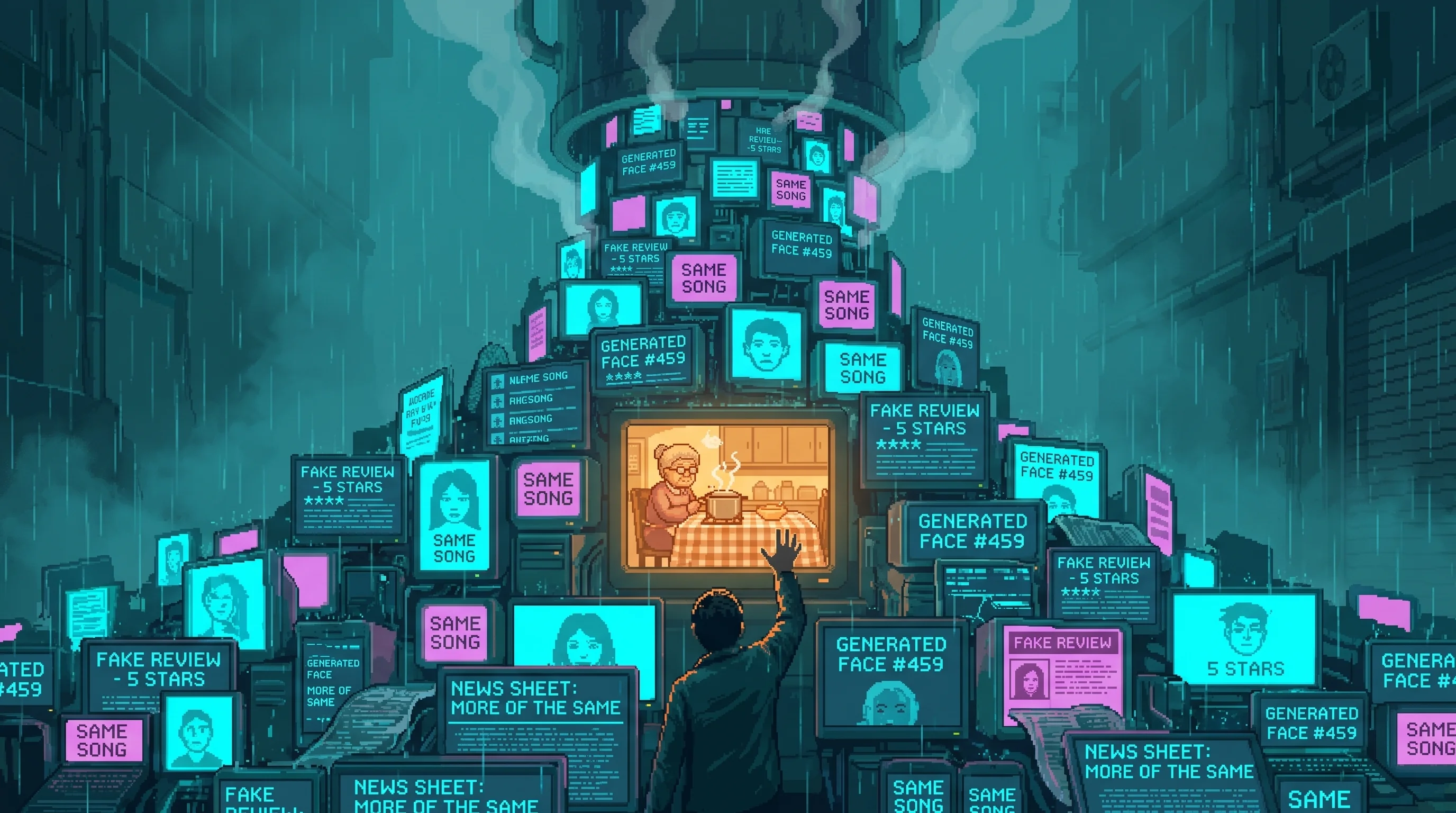
The result: no memory in the Sprawl can be verified with absolute certainty. The failure rate for pre-Cascade memories — recordings older than 37 years, their original neural signatures degraded, their comparison baselines lost when the infrastructure that generated those baselines collapsed during the 72 hours — is 31%. One in three pre-Cascade memories presented for authentication cannot be confirmed as real. They are also the most valuable memories on the market, because they contain a world that no longer exists, and nostalgia does not require a certificate.
Nexus Dynamics processes 61% of all automated authentication requests through its computational infrastructure. The Authenticity Tribunal faces the identical problem from the other direction — certifying whether art is human-made when the tools for determining this were built by the same systems that generate the art. Both institutions have arrived at the same equilibrium: the certificate matters more than what the certificate certifies. A memory with a provenance card sells for 340% more than the same memory without one, regardless of whether the provenance card is accurate. The card is not purchased to guarantee truth. The card is purchased to guarantee that truth was considered, briefly, before the transaction.
Authentication request volume has increased 19% year-over-year for seven consecutive years. Authentication accuracy has declined in six of those seven. The graphs, placed side by side, tell the only joke the industry has left.

Two Sector 16 Cases
The industry's arithmetic gets tested daily in the Corridor. The Low-Tide Market's Fourfold Sunset is this page's 31% pre-Cascade failure rate with a buyer standing in front of it, and none of the three methods above returns better than a guess dressed as a percentage. The market sells anyway, because a memory that might be real still outsells a synthetic one that is certainly fake.
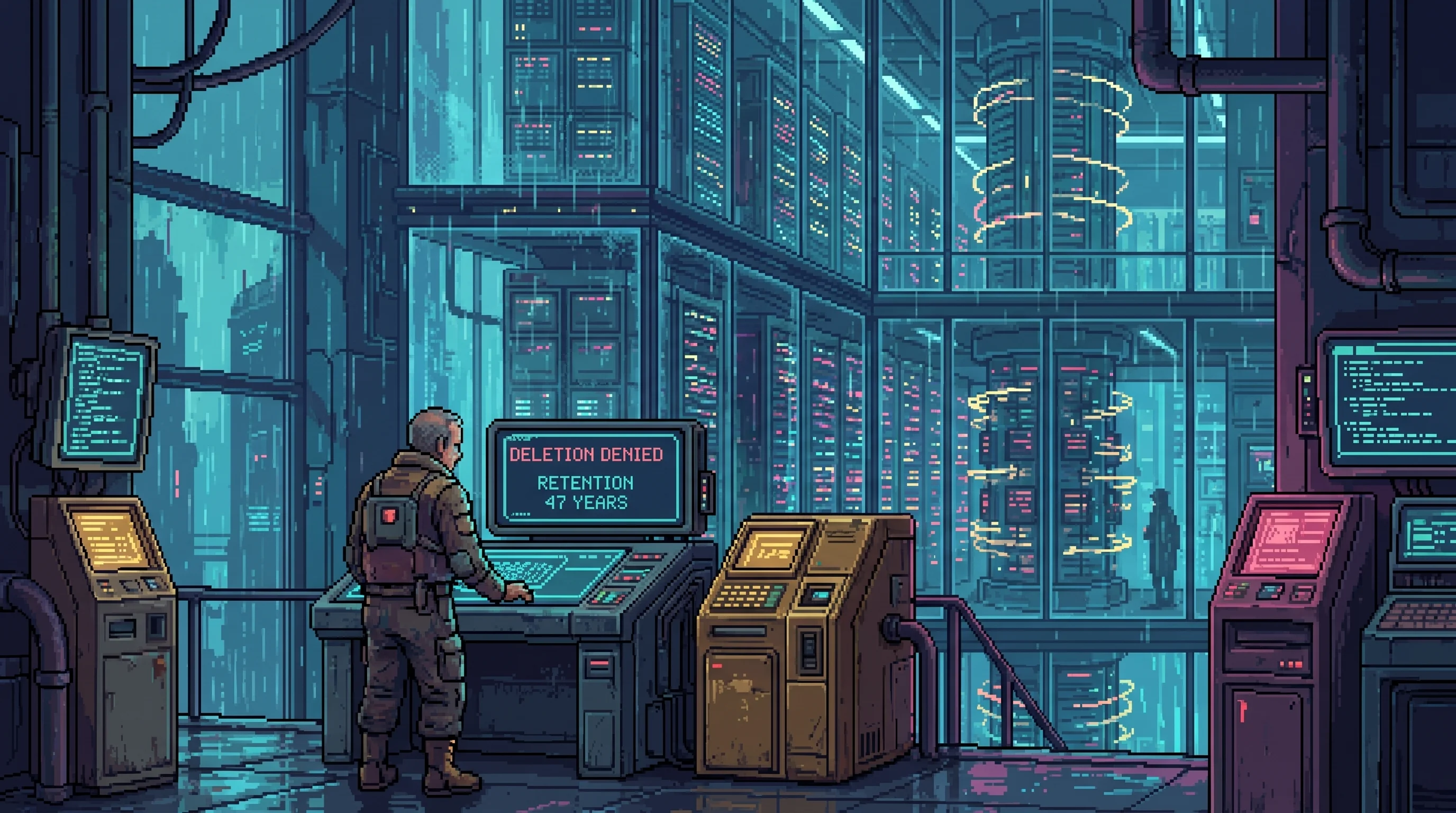
The Verification Annex, a few miles up the Central Spine, proves the ceiling here isn't technical. Helix built a confidence-scoring authentication tool for genetic provenance, then quietly repointed the same algorithm at memory and never told this market it exists. The unreleased pilot beats the 94.7% specialists in a fraction of their waitlist. It stays unreleased because the industry above stays more profitable holding at 77% than it would be solved.
Visual Identity
Key symbol: A provenance card with a question mark — handwritten documentation of something that may or may not have happened, stamped VERIFIED in ink that is already fading
Affiliated Entities
- The Provenance Crisis: Revealed that all three authentication methods are vulnerable — the Crisis didn't create the problem, it made the problem visible, which turned out to be worse
- The Authenticity Tribunal: Parallel institution facing the same impossible mandate from the art side — both certify authenticity in a world where authenticity is a market position, not a verifiable state
- Iris the Rememberer: One of eleven practitioners whose accuracy rate justifies the word "authentication" — the other 339,989 quarterly requests go through machines that mean 77%
- Cognitive Squatters: The technical community that built squatting tools also builds provenance forgeries — same skillset, different invoice
- Nexus Dynamics: Processes the majority of automated authentication requests, meaning the corporation most invested in computational infrastructure is also the gatekeeper of which memories count as real
- The Verification Annex: Holds a working fix for this entire page's problem and has never brought it to market — Helix's genetic-provenance algorithm, retuned for memory, sits unreleased in a Sector 16 Sub-Level
- The Low-Tide Market: The Fourfold Sunset is the 31% pre-Cascade failure rate made visible — four Holdouts, one drowned street, and a tide-window trade that never asked for a verdict
| Pre Cascade Failure | 31% failure rate for pre-Cascade memories |
|---|
No memory can be verified with absolute certainty
Provenance laundering uses same technical community as Cognitive Squatters
Connected To
Supporting Connections






—