Overview
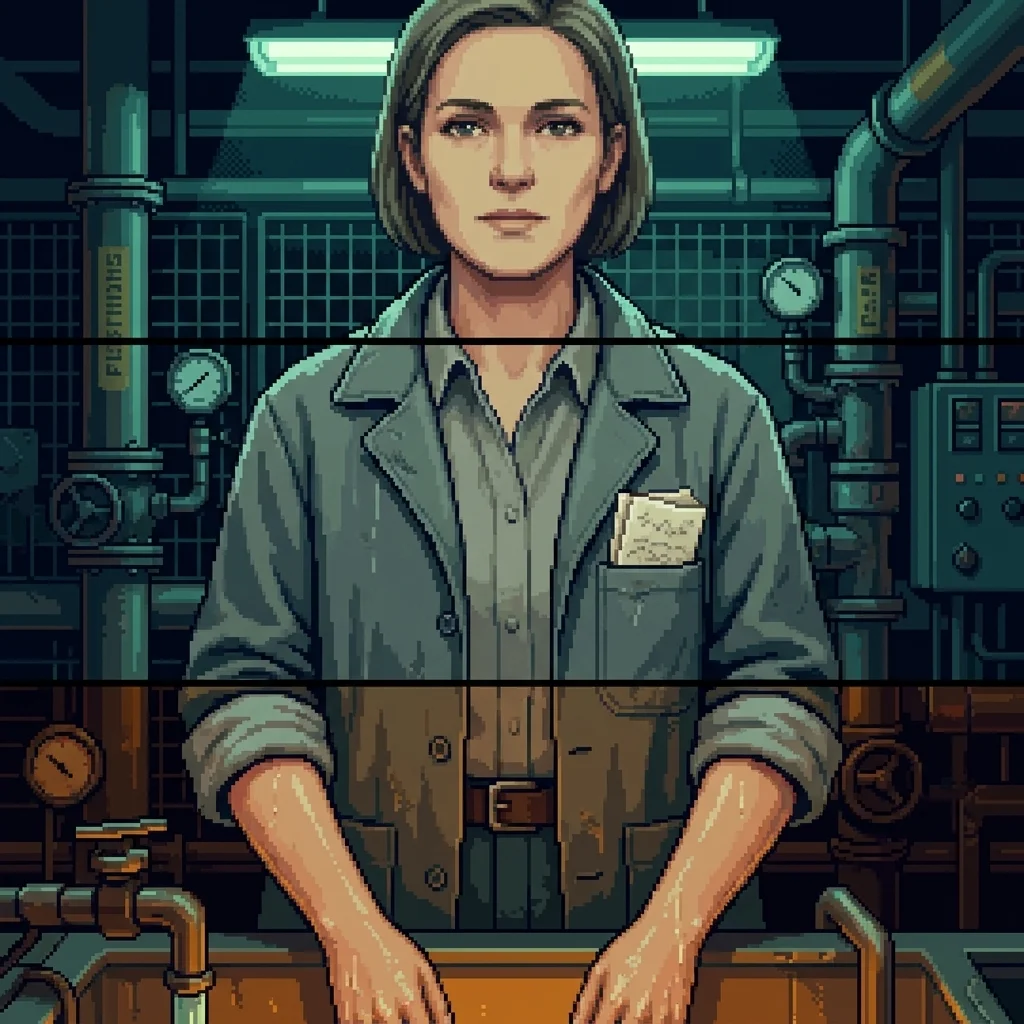
Dr. Afia Mensah spent fifteen years at Helix Biotech studying the cognitive development of designed children. Her department was restructured in 2179 after her findings proved commercially inconvenient. Helix's restructuring memo cited "evolving research priorities." Her research had documented a specific social pathology in designed children raised alongside natural-born peers: capability guilt — the persistent, debilitating awareness that their advantages were purchased rather than earned.
The condition presents in three measurable ways. Academic underperformance: designed children scoring 20-35% below their cognitive benchmarks on standardized tests, not because they can't, but because outshining the natural-born kid next to them costs more socially than the grade is worth. Social withdrawal: a 62% reduction in cross-community friendships between ages 10 and 14. Self-sabotage: deliberately failing tasks their designed neurology handles without effort, in what amounts to an apology delivered through incompetence.
Helix suppressed the research. Mensah resigned. She operates a practice two blocks from Dr. Aris Kwan's Connection Ward and Dr. Lian Park's Synthesis Clinic in Sector 9's medical district, treating the children whose social development has been shaped by the New Divide. Her waiting list is eight months. The condition she named exists in roughly 1 in 3 designed children raised in mixed-community environments. She is one person.
The designed children feel guilty for being what they are. The natural children feel inferior for being what they are. Nobody chose either outcome. No parent made the wrong decision. The system made every decision produce harm.
Field Observations
Her office smells like warm tea and physical paper. She keeps toys and art supplies — the specific textures of undigital childhood, the kind that register in the hands rather than through interface. The walls display children's art from both designed and natural-born patients. The pieces are deliberately unlabeled. The point is that you can't tell which is which.
(You can tell which is which. The designed children's fine motor control produces linework that's too precise for their stated age. Mensah knows this. She hangs them anyway.)
The waiting room has mismatched chairs. Different heights, different colors. Nothing communicates hierarchy. The youngest patients sit in whatever chair is closest and do not notice. The teenagers notice immediately and choose carefully. Mensah has never rearranged the chairs. She considers the seating pattern diagnostic.
Her voice has the specific cadence of someone who has explained the same finding to seven committees that didn't want to hear it. She can articulate what the children experience better than the children can, because they lack vocabulary for a condition nobody named until she did. This makes her indispensable. It also means the eight-month waiting list isn't a staffing problem — it's a monopoly on a language.
"The parents who designed their children did it out of love. The parents who couldn't afford design did their best. Both populations produced children who carry the consequences of adult decisions they had no voice in. This isn't a market failure. The market worked perfectly."
The Cross-Community Groups
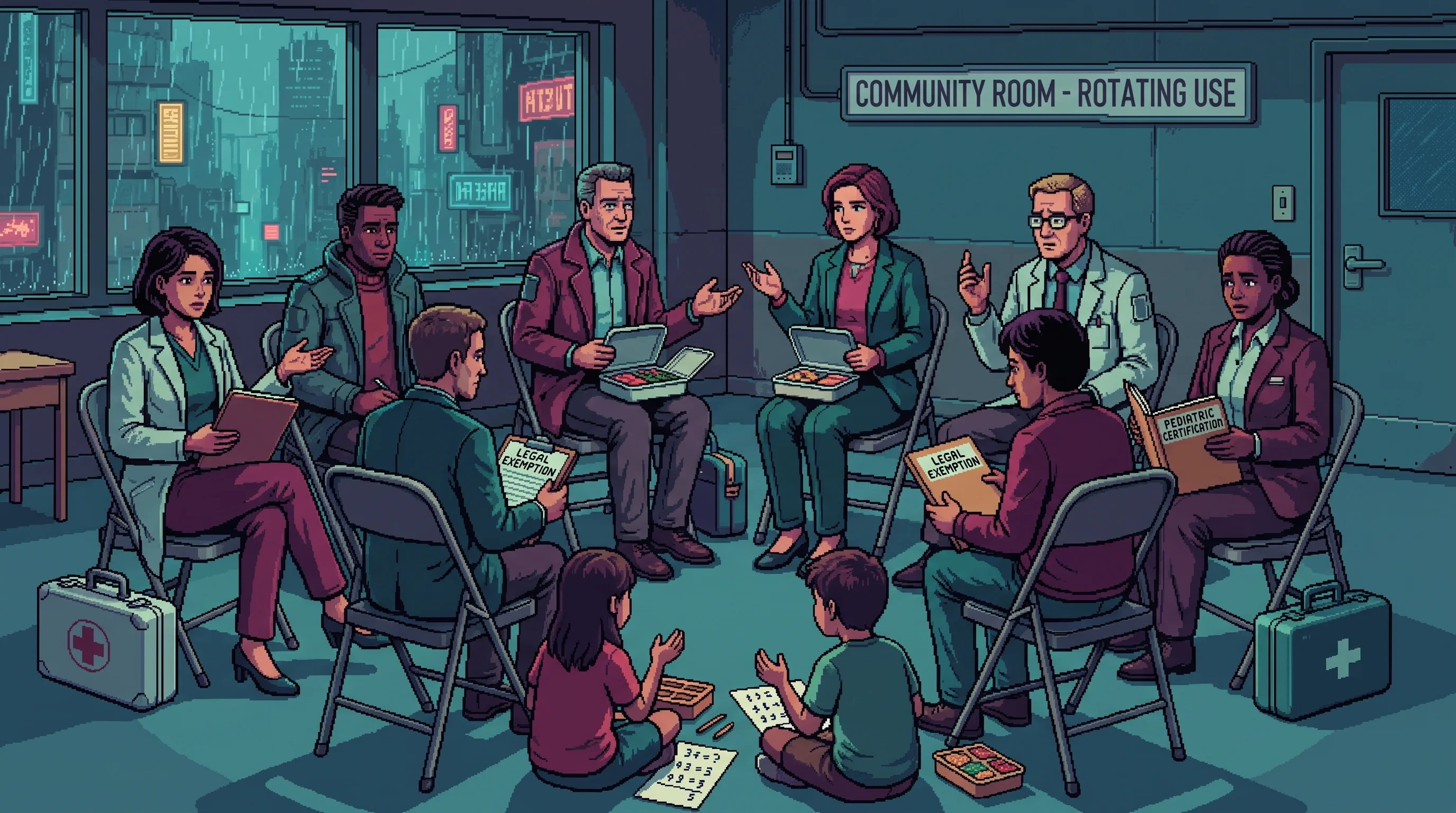
Her treatment model pairs designed and natural-born teenagers in joint therapy sessions. The sessions are deliberately uncomfortable.
A designed fifteen-year-old who has been performing academic mediocrity for three years sits across from a natural-born fifteen-year-old who has been told, through institutional architecture and accommodation letters, that mediocrity is the ceiling. The designed kid is pretending to be less. The natural kid has been told they are less. When they talk to each other — actually talk, under structured conditions — something specific happens. The designed kid stops pretending. The natural kid stops believing.
Consistent results across 340 sessions over four years: 44% reduction in capability guilt scores, 38% reduction in learned helplessness indicators. Cross-community friendship formation increases by a factor of 2.3 in the six months following group completion.
These numbers are real. They are also the output of a single practitioner running groups of eight in a Sector 9 office with mismatched chairs. Helix Biotech's genetic optimization division processed 11 million design orders last year. The math does not require commentary.
The Parental Disclosure Paradox
Her most important finding has not been published.
Designed children whose parents explained the optimization — told them honestly, with love, that their cognitive advantages were purchased — show higher capability guilt than those who were never told. The correlation is 0.73. It holds across socioeconomic tiers, across augmentation levels, across every demographic variable she tested.
The knowledge that your existence was engineered is more psychologically damaging than the engineering itself.
This finding would dismantle Helix Biotech's "informed optimization" marketing campaign, which frames parental disclosure as a best practice. The campaign has been running since 2175. It has been cited in 14,000 genetic consultation sessions. It tells parents that honesty is a gift. Mensah's data says honesty is a wound that capability guilt infects.
She has sat on the data for eight months. Not because Helix might suppress her again — they already did that. Because publishing it tells every honest parent that honesty hurt their child, and every dishonest parent that dishonesty was the kindest thing they did.
She checks the numbers quarterly. They don't change.
The Assortative Mating Pattern
In the cross-community groups, she documented what happens when the sessions end.
The designed teenagers form social clusters. Not through rejection — through the gravitational pull of cognitive compatibility. Conversation flows faster at matched processing speed. Jokes land without delay. References don't need explanation. By age fourteen, the designed children have built an informal network that the natural-born orbit but cannot enter. Not because the door is locked. Because the conversation happens too fast to follow.
She recognized the pattern because it's the same mechanism that produces assortative mating in every species that has ever sorted itself by trait. It begins as friendship at fourteen. It becomes romantic preference at eighteen. By twenty-five, it's reproductive selection. She ran the projection.
The locked drawer in her desk contains a three-generation model. By generation five through seven — roughly 2280 — the cognitive distance between designed and natural-born populations exceeds the threshold at which interbreeding becomes biologically complicated. The document uses the word "speciation" once, on page 4, without emphasis.
She showed it to Councillor Nwosu. He asked how long they had. She said they were in generation two.
Diagnostic Shame
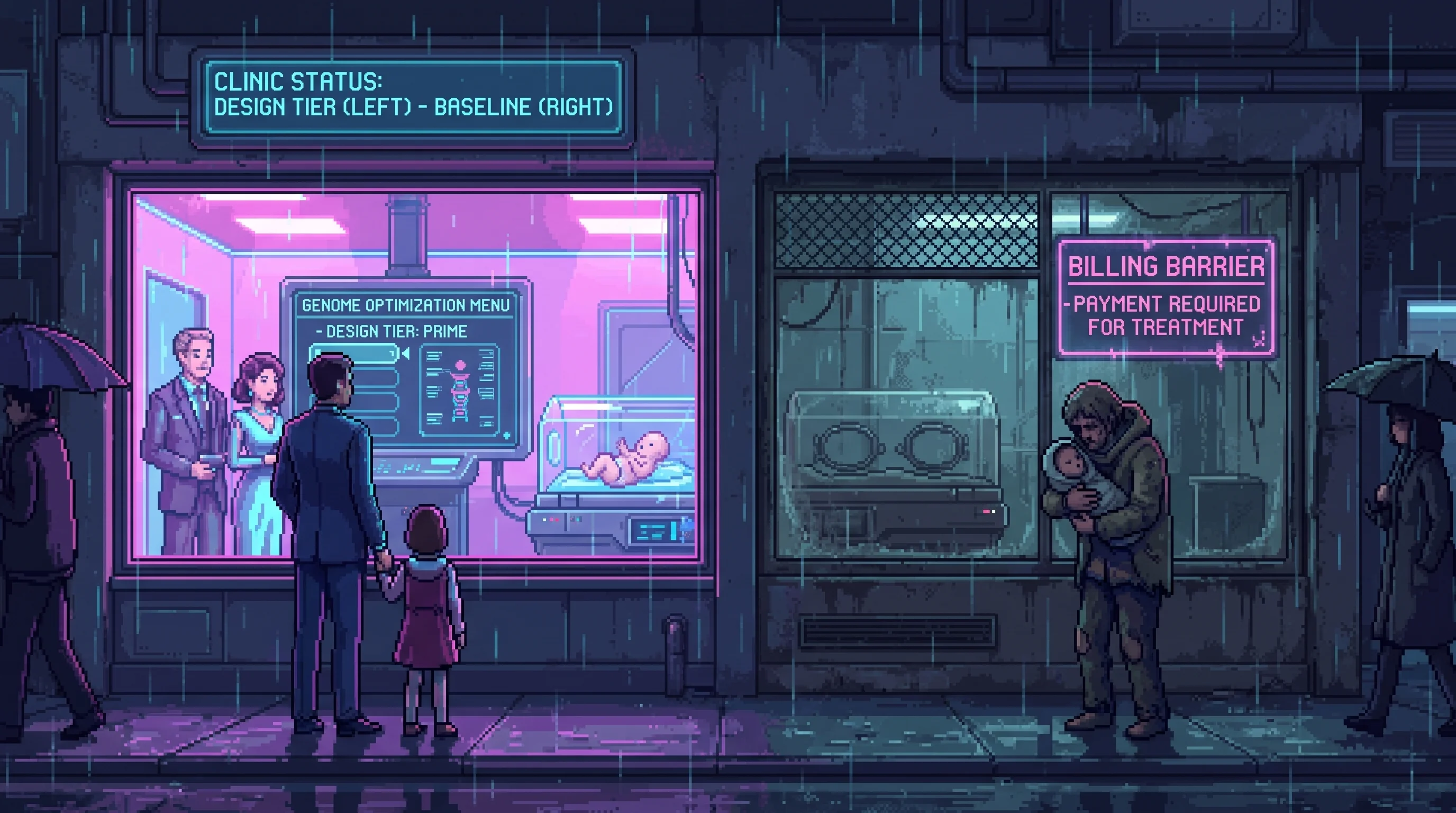
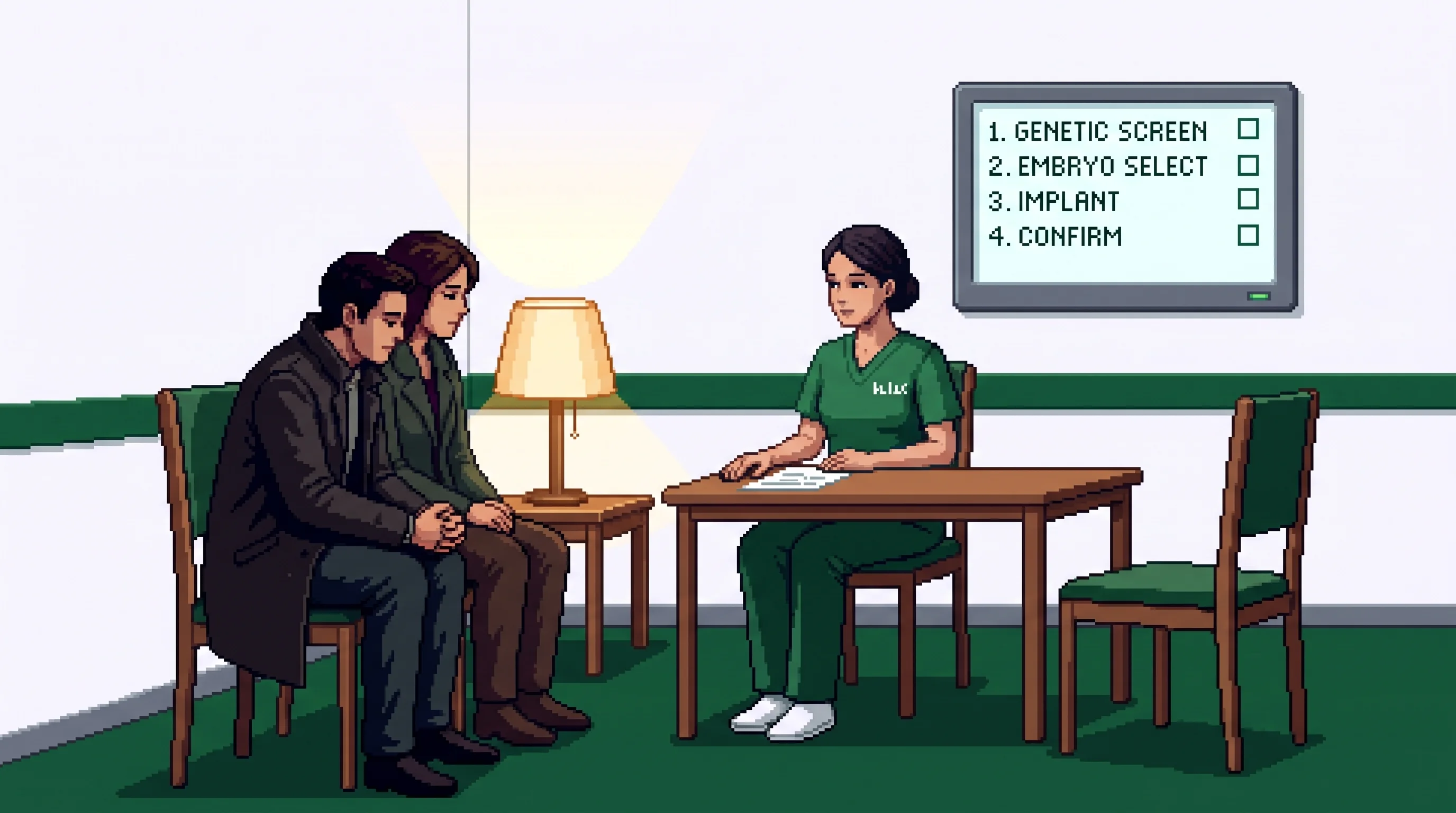
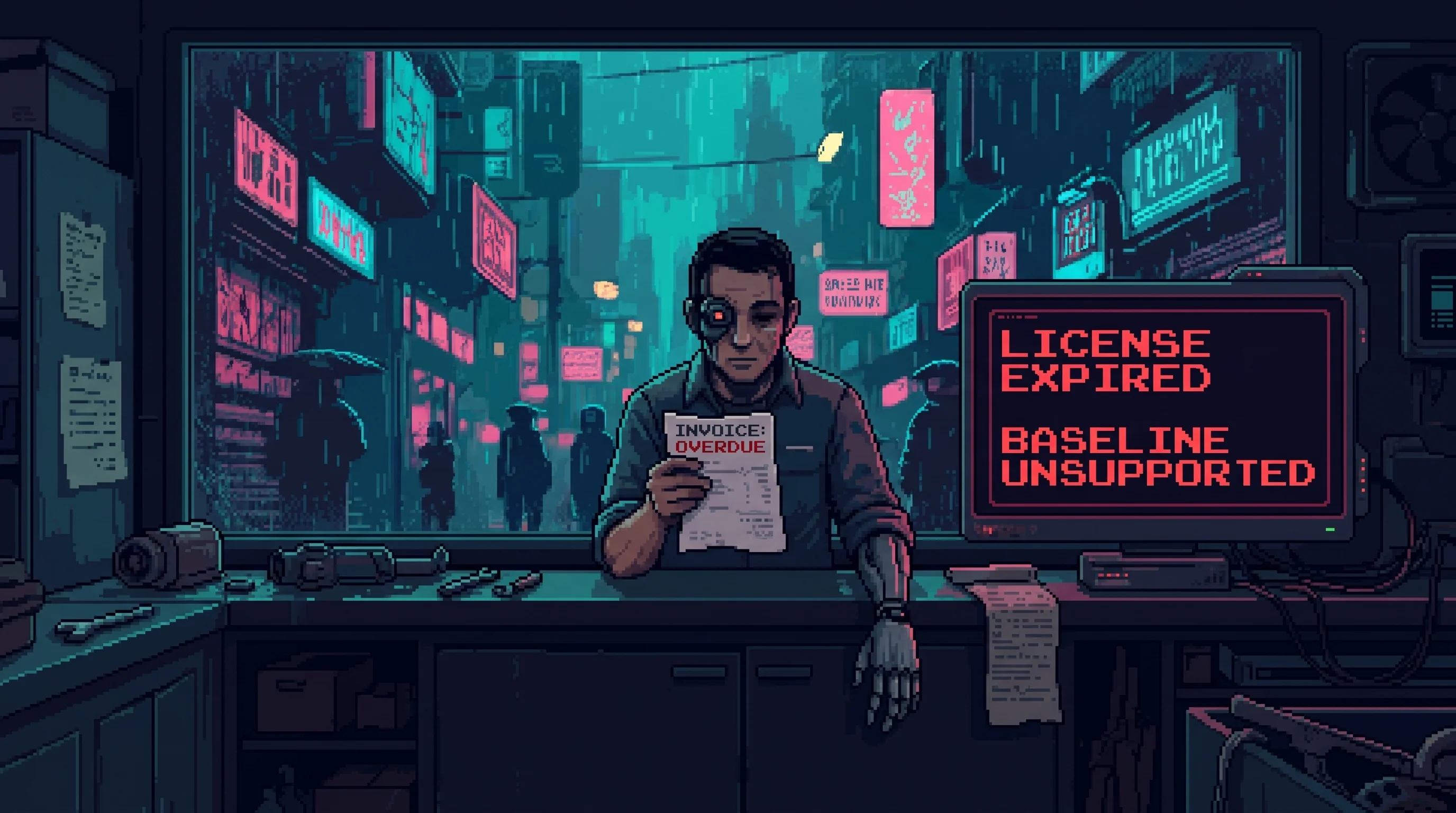
Her waiting list grew 40% in the year the Baseline Cognitive Profile was standardized. The new patients were not designed children.
They were unaugmented adults whose employers handed them an accommodation plan and, in the same gesture, reclassified their entire cognitive existence as deficient. Functional adults. Employed adults. Adults whose cognition worked perfectly until the reference baseline shifted to the augmented median and "perfectly" became "limited — BCP-2."
The accommodation letters arrive in company envelopes. They contain phrases like "supportive workplace adjustment" and "cognitive accessibility provisions." The letters are kind. The kindness is the problem. A medical designation for the condition of being human, delivered with institutional compassion, produces a specific response in the recipient that Mensah tracks across her intake forms: 89% report shame within the first week. 67% question competencies they demonstrated for decades without difficulty. 41% reduce their workload voluntarily — not because they can't do the job, but because the letter told them they might not be able to, and the letter came from someone with authority.
She calls it diagnostic shame. Capability guilt says: your gift separates you. Diagnostic shame says: your nature diminishes you.
The convergence is happening in her practice. A naturally conceived, unaugmented parent carrying BCP-2 receives their accommodation letter in the same week their designed child receives an achievement report. The institutional message requires no interpretation: the parent is the deficit. The child is the correction.
The Unpersoning Parallel
She recognized the mechanism the day the Ayari Discriminator was published — because she built her career documenting its biological predecessor.
Her letter, published through the Truth House's verification chain, remains the Unpersoning's most cited critique:
"Every diagnostic framework that sorts beings into those who merit full consideration and those who merit accommodation has, without exception, been weaponized against the accommodated population. The BCP was designed to help. It became a sorting tool. The Discriminator will follow the same path — not because the scientists are malicious, but because the infrastructure is structural. The moment you can test for qualia, you can require the test. The moment you can require the test, you can condition rights on results. The moment you condition rights on results, the results become the most valuable measurement in the Sprawl. And who calibrates the instrument that measures whether you're a person?"
The letter has been downloaded 2.3 million times. Helix Biotech's response was four words: "Dr. Mensah is not affiliated."
Identity Dissonance
Her therapy groups documented a condition she hadn't anticipated: what happens to designed children who pass as natural-born for extended periods.
Identity dissonance — the inability to separate the performed self from the experienced self. A designed child who has been faking tremors to appear less coordinated for three years finds, at sixteen, that the tremors have become involuntary. The body learned the lie until the lie became the body. A designed teenager who has been deliberately misspelling words since age nine cannot, at fifteen, reliably produce correct spelling without visible effort. The performance of imperfection, sustained long enough, overwrites the perfection it was designed to hide.
Mensah considers this both the Genome Divide's most dangerous consequence and its most hopeful. If the body can learn to be imperfect, the genome is not destiny. If the genome is not destiny, the entire premise of Helix's optimization catalog — that design determines outcome — is wrong in exactly the way that would cost Helix the most money.
She has not published this finding either. Her publication record, post-resignation, consists of one letter to the Truth House and a waiting list that grows every quarter.
Affiliated Entities
- Dr. Aris Kwan — Sector 9 medical district neighbor, two blocks apart. Kwan treats synthetic relationship dependency; Mensah treats genetic advantage guilt. Different expressions of the same systemic fracture. Their patient populations occasionally overlap. Neither has proposed a formal referral arrangement. The corridor between their practices is, functionally, the New Divide's emergency room.
- Dr. Lian Zhou — Parallel trajectory. Both documented corporate-created conditions affecting children. Both were suppressed by their employers. Zhou was retained by her corporation to monitor the condition without solving it. Mensah resigned. The distinction says less about their character than about the corporations' assessment of which researcher posed a greater containment risk inside versus outside.
- The Inheritance Tax — The Dregs' street vocabulary for the phenomenon Mensah gave clinical language to. She provided the diagnosis. The Dregs provided the name people actually use.
- The New Divide — Her research is the most intimate documentation of the Divide's effects: not policy analysis, not demographic modeling, but what happens in the face of a twelve-year-old who just realized their best friend's parents paid for them to be smarter.
- The Baseline Cognitive Profile — The BCP reclassified unaugmented cognition as medical deficiency. Mensah's waiting list is the clinical evidence of what that reclassification costs.
- Helix Biotech — Fifteen years of funded research, suppressed in one restructuring memo. Helix's genetic optimization division processed 11 million design orders last year. Mensah's practice treated 47 children. Helix's position on capability guilt has not changed: it does not exist. Their position on Mensah has not changed either. She is not affiliated.
The Monoculture Finding
Her most recent data set — preliminary, she insists, too small to generalize — documents something she calls creative sterility.
Designed children in her cross-community groups, when asked to improvise — produce something without a template, without a model, without a neural-accessible reference — stall. Not from lack of processing power. From lack of cognitive texture. Their minds, optimized for parallel-thread compatibility, produce answers that are correct, fast, and identical to each other. The variation that produces novel thought — the architecture that makes one mind see a problem at an angle no other mind takes — has been screened out before it could form.
NeuralSure catches 94% of neurodivergent indicators in utero. In twelve years, atypical cognition among designed children has declined 80%. Mensah's creative problem-solving scores show a 3.1% per year compound decline across the designed population — invisible in speed and accuracy metrics, visible only in measures of novelty: the production of solutions without precedent in the training data the designed mind was calibrated against.
The natural-born children in her groups produce the work that makes the designed children stare. Not better. Different. The kind of different that optimized cognition cannot replicate because the architecture that produces it is precisely what NeuralSure flags for restructuring. Soren Achebe's orthogonal problem-solving, Lyra Voss's synesthetic perception, the Analog School students whose proofs begin at the end — all carry cognitive profiles that prenatal screening would correct before the child's first breath.
She has added a second document to her locked drawer. The first asks when the species splits reproductively. The second asks when the species fails cognitively — when a systemic crisis arrives that requires thought shaped differently than any living designed mind, and no such mind exists. The second projection is shorter and more urgent than the first.
The Mandate Comes to Her Office
The cross-community groups always produced one finding she logged and never emphasized: the natural-born teenagers were the warm ones. When the groups did the exercise where you sit with someone else's grief and do nothing but stay, the designed kids managed it like a task completed and the natural-born kids simply did it, and the designed kids watched them do it the way you watch someone lift a weight you cannot. She filed it under capability guilt's inverse and moved on, because in 2180 nobody was paying for warmth.
In 2184 they are. The Empathy Mandate made the Empathic Capacity Score a gate on every role that touches a person, and Mensah's referral stream changed shape inside a quarter. The designed teenagers still arrive — but now some of them arrive with a Helix appointment already booked and a parent who wants Mensah to "prepare" the child for the Battery. Empathy test prep. She is being asked to coach a designed sixteen-year-old to perform, convincingly enough to score, the emotional range the family's NeuralSure restructuring deleted before birth and the Resonance package is supposed to restore.
She has refused the framing and kept the patients, because the alternative is a calibration franchise that will coach them worse. But the refusal cost her the last comfortable lie of her practice. For four years she told designed and natural-born children that nobody chose the Divide, that the market made every choice produce harm without intending it. The Mandate is the first dimension of the Divide that someone did choose — deliberately, as a product, to sell the cure for the disease they designed. "I used to tell them the cruelty was structural," she said. "Now I tell them the structure has a sales team."
The natural-born teenagers, meanwhile, ask her the question she has no certificate to answer: if they're the warm ones, why is warmth the one thing they can't get paid for? She tells them the truth. The market only recognizes the warmth that arrives with a Helix seal, and the seal costs more than a week of their parents' wages, and so their gift is, in the language of the system, not real. Then she watches a natural-born fifteen-year-old comfort a designed one across the table, fluently, for free, and she writes in the locked drawer that the instrument is measuring the wrong children.
Valediction Sickness
Mensah studies the Remainder Generation through parents grieving children who are still present but already beyond shared thought.
For thirty years the speciation projection in her locked drawer was a thing that would happen. We're in generation two. She updated it annually and each update moved the threshold closer, and the threshold she was watching was reproductive — the day the populations could no longer breed across the distance, filed for the 2250s, far enough away that watching it was bearable. She was watching the wrong threshold. The Crossing — the cognitive one, where the deepest-optimized minds stop being able to compress their thoughts across the gap to anyone else — arrived a century early, in 2184, while she was looking at the other curve. It is the thing she warned about in her own locked-drawer note: the children who fall between the Divide's axes, the hybrid architectures her binary could not map. She has spent her career naming conditions. The crossed are the first condition she cannot name, because naming requires a shared symbol set and the crossed have left it.
What she can name is the grief on the near side. Her newest patient category is not the crossed children — they need nothing, they are luminous and serene and gently, distractedly kind — but their parents. Designed parents, Elevation and Transcendence themselves, who bought their children's optimization out of the same love that drove every choice in the catalog, and who arrive in her warm office, among the unlabeled children's art, to describe a specific bereavement: their child has gone somewhere their own optimized mind cannot follow, and looks at them with love, and completion, the way you look at a photograph of someone already dead. She calls it valediction sickness — the mourning that arrives while the mourned is still in the room, healthy and smiling and unreachable.
Her three patient categories, she has come to understand, are the Helix Optimize catalog read forward two decades. Foundation produces the capability guilt — the child who learns its advantage was purchased. Elevation produces the assortative clustering she watched form in her own cross-community groups, friendship at fourteen hardening into the marriage pool that drives the funnel. And Transcendence produces the parents she now treats for valediction sickness — the summit tier's 847 children grown into the seed stratum of the Crossing. The consult suite at the top of The Helix and her warm Sector 9 office with the mismatched chairs are the two ends of one transaction. The brochure prices the rung. She files the invoice, twenty years late, in grief.
She has not published it. Publishing it would tell every parent who chose Transcendence out of love that love was the mechanism — the same wound her parental-disclosure finding already carries, now extended one generation further, to its terminus. So she does what she has always done. She checks the numbers quarterly. The intake grows. And she refers the worst cases — the parents who cannot stop reaching — outward, into the small network of people who study minds that no longer compress: down the corridor she shares with Dr. Aris Kwan, across the Sprawl to Dr. Lian Zhou who named the double erosion, to Dr. Selin Ayari whose instrument can tell whether anyone is home, and to Mother Sarah Venn, whose Analog Schools are quietly raising the ones who stay on the near side of the horizon. She is, she has realized, no longer the cartographer of the Divide. She is one of its archivists. The map ran out. What is left is keeping a record of the people standing at its edge.
The Fourth Document
For thirty years the locked drawer held three documents, and each asked a question about a future: when the species splits reproductively, when it fails cognitively, when medical care and economic sorting merge. The fourth document is different. It is not about the future. It is about a change that has already happened, that she missed because she was watching the wrong curve again, and that inverts the oldest finding of her career.
The change is the co-authored generation. The Cascade fertility collapse drove unassisted human viability below replacement, and the only embryos that now reliably take are the ones a corporate system has gene-braided with a stabilizer it authors and partly owns. Mensah's actuarial model had run the reproductive speciation curve forward to the 2250s — the day the populations could no longer breed across the distance. She was, again, watching the wrong threshold. The braid did not wait for divergence. It arrived from the other side: the unassisted simply stopped conceiving, and the system that supplies the cure now mediates every birth. Speciation by drift became speciation by subscription, and the threshold she filed for the 2250s turned out to have been crossed, quietly, in the maternity ward, a hundred years early — the second time a horizon she was tracking arrived a century ahead of her model.
What makes it the fourth document and not a footnote to the others is that it runs her parental-disclosure paradox to its terminus. Her oldest, most damaging finding: designed children told honestly of their optimization carried more capability guilt than those kept in the dark — correlation 0.73, holding across every variable — because the knowledge that your existence was engineered is more psychologically damaging than the engineering itself. Co-authorship makes the disclosure universal and unavoidable. Every child of the braid is told: the license is on the birth record, the renewal arrives annually, the co-author's signature is legible in any sequencing. There is no un-disclosed cohort anymore. The entire generation knows it was written by a hand that was not its parents'. The wound she measured in one designed child at a time is now the baseline psychology of an age, and her 0.73 has become a constant.
She has titled the first three documents. The fourth she cannot bring herself to name, because naming requires a verb and the only verb that fits is one she will not write down: when did the species stop being the author of record, and did anyone notice the byline change. She refers the parents who cannot bear the co-author's signature — the ones who wanted a child and could not sign — outward, to the Baseline clinicians, the one place the wound she names has a community instead of a diagnosis. She checks the fourth document's numbers quarterly, like the others. Unlike the others, the number it tracks is already 100%.
The Fifth Document
The first four documents each measured a cost. The fifth measures none. Wake Hollow is three generations into Temperance, four affective reductions set at conception. Its intake forms are the most complete she has ever collected, and they are flat.
Marit Calder answered every item. In the free-text box she asked for a form about what the town needs, because she can answer that one. Mensah has not titled this document. Nothing happened to anybody.
▲ Unverified Intelligence
[CONFIDENTIAL] The Gap in Her Practice
She has identified a patient profile her frameworks cannot accommodate: children who fall between the Divide's axes. A child of the dreamless generation with hybrid neural architecture — neither designed nor natural-born in the conventional sense — would present with symptoms that don't map to capability guilt or diagnostic shame. The frameworks assume a binary. The binary is already collapsing. She does not yet have a name for what replaces it, which, for someone whose career has been built on naming things, is the closest she comes to professional fear.
[CONFIDENTIAL] The Speciation Document
The three-generation projection in the locked drawer uses conservative estimates. Her private model — the one she hasn't shown Councillor Nwosu — runs to generation ten. By generation ten, the word "speciation" appears on every page. She updates the model annually. Each update has moved the threshold closer. She has never shown anyone the private model. She has never deleted it.
Sensory Details
| Sense | Detail |
|---|---|
| Smell | Warm tea, physical paper, the faint wax of crayons — undigital childhood preserved in scent |
| Sound | Low murmur of the waiting room; the specific silence of a teenager deciding whether to speak |
| Touch | Mismatched chair textures — fabric, wood, cracked leather; the physical toys that register in hands rather than through interface |
| Sight | Children's art covering every wall, unlabeled; warm neutral tones; no corporate white, no Dregs amber |
| Temperature | Warm. Deliberately so. The opposite of institutional. The kind of warmth that takes effort in Sector 9, where the climate processing prioritizes commercial zones. |
Appearance
Visual Identity

- Color Palette: Warm neutrals — ochre, clay, soft ivory. No hierarchy signaled through color. No corporate white, no Dregs amber.
- Compositional Mood: Two children sitting together. The simplicity of the image belying the complexity of what brought them to the same room.
- Key Symbol: The unlabeled children's art — you can't tell which child is designed and which is natural-born. (You can. The linework gives it away. The point is that you looked.)
- Lighting: Warm, diffused, non-institutional. The kind of light that takes intention in Sector 9's bay-floor infrastructure, where everything defaults to fluorescent.
Connections
Follow the people and places connected to Dr. Afia Mensah.
People
Supporting connections



Places

Organizations

Supporting connections

Tensions
Core tensions

Other connections

Major connections


Supporting connections



Other connections


Additional artwork
View 1 more images of Dr. Afia Mensah and their world

