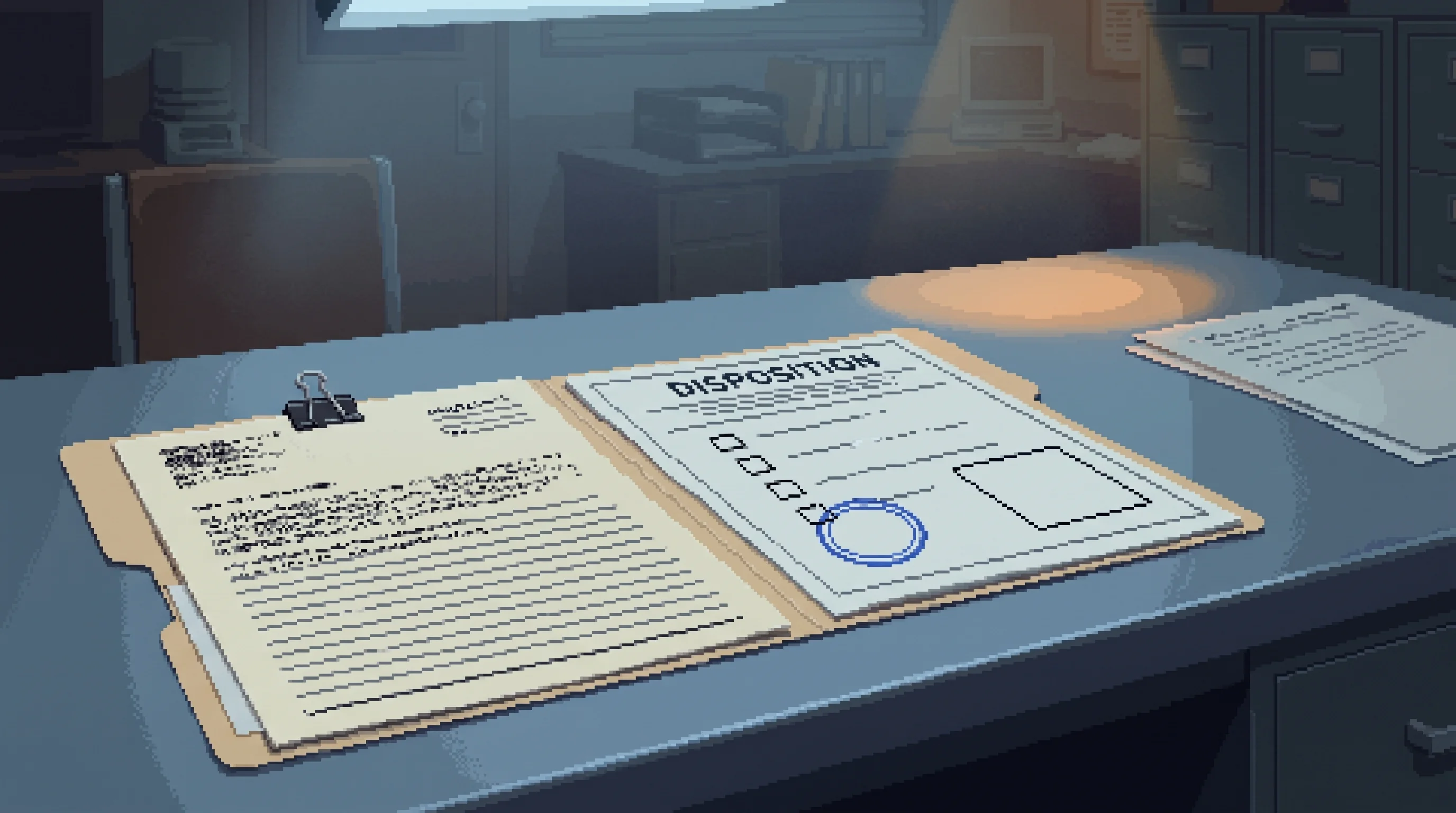
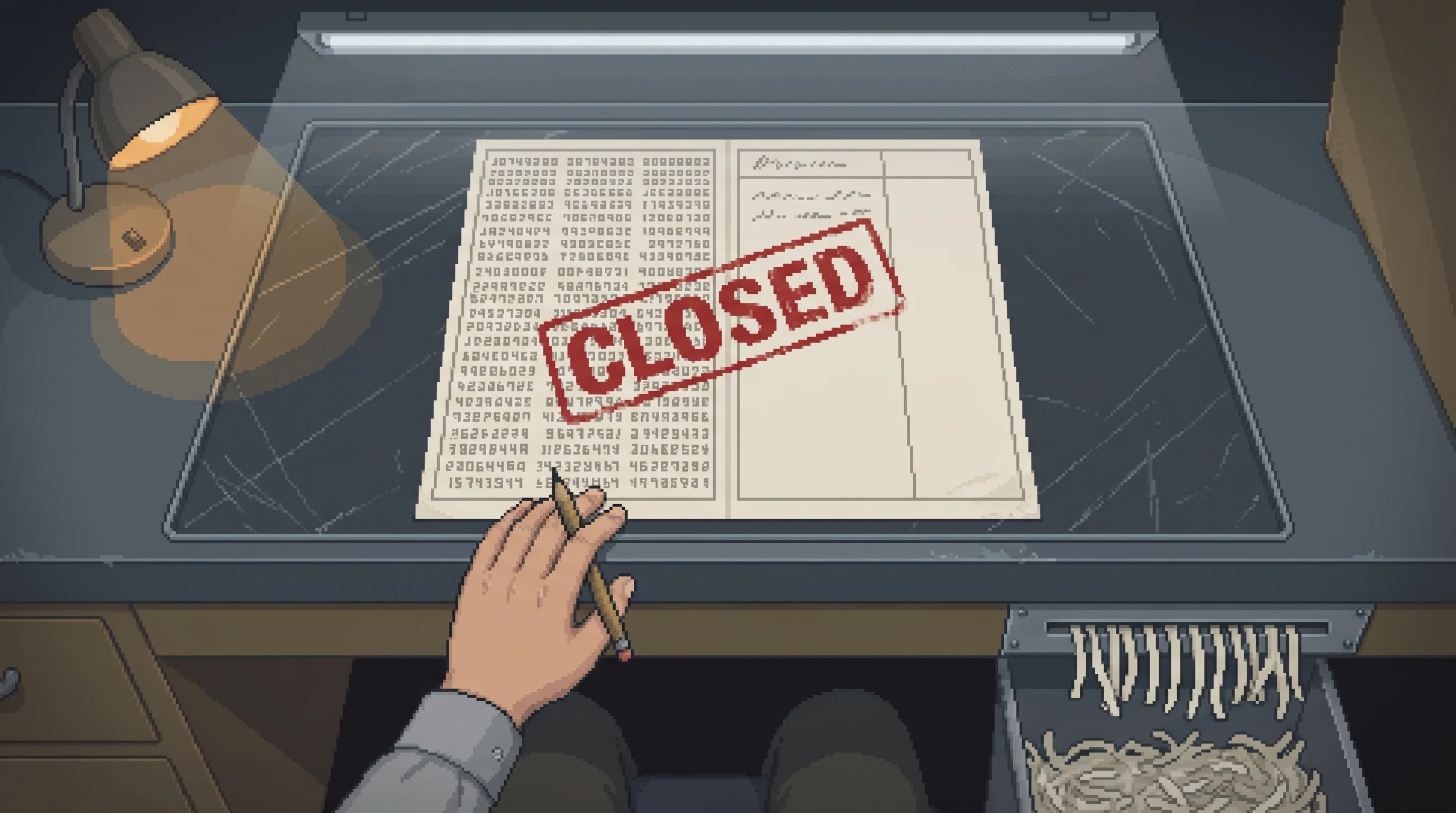
SUBJECT FILE
Maren Cott

Maren Cott

The Raised Assessor

Licensed Child Welfare Assessor specializing in Raised/Installed custody disputes; 3 years active practice; 8-12 active cases at any time

AugmentationBasic-tier neural interface installed at age 19; no competency packagesLocationSector 12 โ€” two corridors from the Family Court complexAge27

Overview

Maren Cott was nine years old when her parents' marriage ended and the installation question became a custody matter. Her mother's position โ€” that biological childhood was a gift, that slowness was not a deficit, that the decade of becoming was the point โ€” prevailed in Sector 12 Family Court on the grounds that no law had yet been written to compel it otherwise. Her father's position โ€” that a child who would compete against installed peers deserved every available advantage, and that withholding that advantage was a form of love performed at his daughter's expense โ€” was noted in the record.

The record is case number four hundred and seventeen in the court's first wave of Raised/Installed disputes. Maren has read it. She is currently handling case number four hundred and ninety-two in the same court.

She holds a basic-tier neural interface installed at nineteen, no competency packages, and a response latency of 310 milliseconds. She is, by every metric the Sprawl's labor systems recognize, slower than every Installed peer who entered her field in the same cohort. She is also the only licensed developmental assessor in Sector 12 who grew up knowing what the debate feels like from inside.

Appearance

Maren Cott is 27, which is unremarkable. What is harder to place is the way she inhabits a room. Installed adults process a social environment in the same fraction of a second they process everything else โ€” glance, sort, file, proceed. Maren watches. Not visibly longer, not in a way anyone could document; the difference is in rhythm, not duration. Any augmented person in the room registers it within a second of her entering. The registry is not hostile. It does not need to be.

She has dark hair kept cropped close on the sides, longer on top, and wears clothing in neutral corporate colors that she has described, once, as "the visual equivalent of not being asked about my augmentation status." Her neural interface sits behind her right ear โ€” a basic model, the kind that establishes connectivity without advertising investment. She carries a physical notebook alongside her tablet. She does not pretend she needs it for the same reasons.

Her hands are still when she listens. This is unusual. Installed adults' micro-movements track processing load; their hands speak the rhythm of ongoing computation. Maren's stillness is not absence of processing. It is a different kind of presence.

Case File โ€” Additional Record
Born2157
OccupationLicensed Child Welfare Assessor, Developmental Standards Division, Sector 12 Family Court System
SpecialtyRaised/Installed custody disputes
Raised StatusRaised โ€” unaugmented through age 10, maternal custody ruling 2166
Cognitive Baseline94th percentile natural-born; 23rd percentile overall; response-latency: 310ms (Raised baseline)
Caseload8-12 active disputes at any time
Known ForThe only Raised assessor in active practice; widely cited in Dr. Afia Mensah's unpublished longitudinal study (subject designation: R-043)
Recusals1 formal recusal in three years of practice โ€” the case whose record she has never read

Voice

She speaks in complete sentences. In 2184 this is slightly unusual. Installed adults have processed the full conversational exchange before it begins; their speech tends toward summary, bullet points, the distilled output of a mind that finished the argument while you were still in the middle of it. Maren delivers the whole thought, with its qualifications and the subordinate clauses that carry the weight. It can feel like warmth or like inefficiency, depending on how fast you process.

She is not slow. She is not uncertain. She has been told she "takes her time" in a tone that is either generous or condescending and she can no longer always tell which. She has been told she "seems thoughtful" in a tone that means the same thing. She has learned to recognize when the reassurance is for her and when it is for the person saying it.

In deposition she speaks faster โ€” not because she is more confident, but because depositions are not conversations and the rhythm does not require her to match anyone else's. Legal observers have noted that she sounds like a different person in formal testimony. She does not consider this a contradiction.

Sample Dialogue

"The question I am always asked is which side I think is right. I have reviewed sixty-three custody disputes in the past two years. Thirty-one ended with an installation order. Twenty-two ended with a preservation ruling. Ten are still pending because the court cannot agree on what harm means when nobody touched the child.

"My mother has a journal. Eight hundred and forty-seven pages, handwritten. Every one of them is about a decision she was certain was right. I have read it twice and I still cannot tell you whether she was correct. I can tell you that I am the evidence her argument produces, and that I am sitting here, and that I have reviewed sixty-three cases, and that neither side of this dispute would prefer me as their assessor if they knew everything in my file. I notice you haven't asked me whether I would recuse myself."

Raised (unaugmented through age 10); basic-tier neural interface installed at 19; no competency packages โ€” response-latency tell of 310ms is permanent and well-documented in her professional record

Background

Born 2157 to a structural architect and a commercial logistics contractor in Sector 7, before the Raised/Installed custody framework existed in any coherent legal form. Her parents' dispute preceded the case law; the court's ruling in 2166 was, in the presiding magistrate's words, "a decision in the absence of a framework, to be followed by the development of one."

Her mother retained custody. The decade held.

She tested at eighteen: 94th percentile natural-born; 23rd percentile overall. She spent two years pursuing standard legal certification before a Sector 12 family court judge, facing a Raised/Installed dispute with no available specialized mediators, appointed her as an expert witness in a case she had not volunteered for. She prepared the report in three weeks. The court found it useful. She was licensed eighteen months later.

She is currently subject R-043 in 's unpublished longitudinal study of forty-three Raised adults tracked through their first professional decade. She found the study through a document trail she was not meant to follow. She identified herself in the data. She contacted Dr. Mensah. They meet for tea on alternating Tuesdays in a Sector 9 cafรฉ where neither of them discusses the study directly.

She has formally recused herself from one case in three years: the case in which the preservationist parent's brief contained, verbatim, the argument her mother made in 2166. Delivered by someone who had never met her mother. She recused because she could not be certain her ruling would be wrong, and in these disputes being certain of your correctness is the disqualification.

Formally recused herself from one case in three years: the case in which the preservationist parent's argument was word-for-word her mother's argument, delivered by someone who had never met her mother

The Line That Was Added

In the spring of 2184 the developmental mediation form gained a line, between the household composition block and the signature block, and nobody sent a notice about it.

Correction available at conception: offered / declined / not applicable.

It was added so that family courts would have a finding to rule on when the disputes arrive, which they will, because is now carried in the braid every conception passes through and a schedule of four affective reductions is a decision somebody made about a person who was not there. Marking declined moves the household's Holistic Prosperity tier, because since 2183 the reductions sit inside the list of available corrections. Returning the form unmarked is an incomplete mediation, and a mediator who files incomplete mediations does not stay licensed.

She sat with it for eleven days. The file was Delphine and her partner, who had gone to the consult, listened to the four reductions read out in order, and stopped at the third โ€” dominance salience โ€” to ask what a person is like who has never once wanted what somebody else has. The consultant answered accurately: easier to live with. They went home to think about it and the ninety-day window closed while they were thinking.

Maren has read the transcript four times looking for the moment they chose. In case four hundred and seventeen, eighteen years ago in the same building, her mother chose โ€” argued it, won it, kept a journal about it for eight hundred and forty-seven pages. The Delphine file has no such moment. It has two people being careful and a clock. The form's three options do not include ran out of days, and the mediator's note field is one line long.

She has not decided what she will write. What she has noticed, and has told nobody, is that the line does not ask what the available correction was. A schedule that removes a child's capacity for grief and a schedule that removes a heritable cardiac risk produce the same three checkboxes, and she is the only person in the process who reads both files.

Her partner is Installed, processes at approximately 3x her baseline response rate; has made private arrangements to slow the pace of conversation at home; she has never told him she notices; he knows she notices

The Second Line

The form gained another line in the autumn, six months after the first, and again nobody sent a notice.

Mediator's concurrence in expected endorsement interval: concur / dissent.

It sits on the developmental caseload now, and it is the step that makes a operative on a child. A minor refuses a scheduled intervention in writing, and . A cohort model returns the month by which subjects like this one have historically come round. Somebody licensed has to say the month is sound, and in Sector 12 that is Maren. Her signature fixes the date. Fixing the date starts the insurance loading, sets the lapse clock, and moves the theatre slot precisely nowhere.

She has signed forty-one. She has recused from none, and there is no version of this she could recuse from: a concurrence is a finding about an interval, not about a household, and I do not want to be the person who dates this is not a ground known to the code. The one recusal in her record cost her nothing procedurally, because the brief in front of her was her mother's argument word for word and the conflict was legible to anyone reading the file. Nothing about the concurrence line is legible in that way. It looks like arithmetic.

What she keeps returning to is a difference she cannot make useful. In 2166 a magistrate ruled on her, in that building, in the absence of any framework, and the ruling was wrong or right and either way somebody had to decide it and put their name on it. The concurrence does not decide anything. It agrees with a number about a person she will never meet, and the person will very probably endorse the intervention within the month she certifies, and the file will close as consented, and Maren will have been correct.

She read one in the anonymized quarterly that did not fit. It is filed under a number rather than a name, and the name behind it is , which she has never looked up and could find in under a minute. Fourteen months open against a forecast of eleven, hearings attended, every card returned unsigned. She recognised the shape of it in about four lines. She has the case number and she has not looked up the name, because a licensed mediator making contact with an open subject is a recordable finding, and she has not thrown the quarterly out either.

Her mother kept a journal during the decade of Maren's Raised status โ€” 847 handwritten pages; it is the most loving document in the family's possession; Maren has read it twice

The Chart She Cannot Annotate

The custody finding does not rest on what the parents said. It has not since 2166. It rests on โ€” pupil, latency, breath, skin, taken through the sitting โ€” and the parents' own accounts arrive on her desk in , transcribed, weightless, destroyed when the file closes.

She reads the narrow column first. Nothing requires it. She has done it in every file since her first and has never once entered a finding that cites it, because a finding that cites the narrow column is void on its face.

Forty-one storefront charts have crossed her desk. She can name the curriculum off the trace, and the reason is not mystical: produces a curve that goes flat in the same place every time, at the same point in the questioning, in a way an untrained body does not do. The Standard has a discount for exactly this โ€” a reading may be set aside where documented composure training exists. She has asked for it four times in three years. She has been granted it once, for a family out of a sector with no academy in it, where discounting the training changed no outcome at all. She noticed that afterward. The three refusals do not say she is wrong. They say the clause is for the subject to raise.

Her own trace is the part she does not put in writing anywhere. Three hundred and ten milliseconds, permanent, documented since she was nineteen, the tell every augmented person in a room clocks inside a second. On a strip-chart that is not a Raised baseline. It is hesitation, and hesitation in a custody sitting is a finding. She has never sat on the subject's side of a table with the cuff on, and she has worked out, without wanting to, roughly what her chart would look like if she did.

She signs the concurrence anyway. Forty-one of those too.

The Refusal She Agrees With

In the spring of 2184 she applied to transfer to Sector 7. She had been thinking about it for a year and told nobody, including her partner, until the application was filed.

The refusal came back inside a fortnight with its complete operative reasoning attached, as the code requires. There is no second licensed developmental mediator in Sector 12. The caseload does not pause for a vacancy. Forty-one pending-objection files and eleven active custody disputes would wait on a mediator who does not exist yet, and the families in them are named in the annex. The document ends by recording her entry on , which exempts her from removal and bars resignation, transfer, and retirement while the finding stands.

She has read it more times than she has read the Delphine transcript. She has called it the most honest document the court has ever sent her, and she means it without irony: every clause is true, the annex is accurate, and she has personally met nine of the families listed in it.

The exit criterion is a trained successor. She has costed it. A candidate needs the two years of standard certification she did, then eighteen months of supervised Raised/Installed disputes, and the supervision has to come from a licensed mediator with hours to give it. There is one licensed mediator in Sector 12 and her caseload is eight to twelve active files. The criterion and the obstacle are the same sentence read twice.

What she has not told anybody is the small thing. In 2166 a magistrate ruled on her in that building with no framework to work from, and put a name on the ruling, and could have been wrong. The refusal has no name on it in that sense. It has a signature block and a correct annex, and there is nobody in it who decided she should stay.

Open Mysteries

The neuroplasticity premium โ€” the contested finding that Raised adults who later install show faster competency acquisition than baseline-Installed adults โ€” appears in three unpublished studies and one retracted published correction. Maren is mentioned, obliquely, in one of the unpublished studies as a case whose acquisition rates exceeded model predictions by a significant margin.

She has not been told which study. She has a theory about which study.

Her formal recusal is a matter of public record. The case she recused from is also public record. The only document that connects them is in her personal archive, not in the court system, and she has not decided what to do with it.

Connections

The people, places, systems, and open questions connected to Maren Cottโ€”and why each connection matters here.

Core tensions

The Corrected LineHappier, By Every Index

The determination line arrived on her forms in 2184 and she sat with it for eleven days. Signing moves a family's schedule; not signing moves her licence; and she was herself the outcome of the same argument.

A line built without grief, envy, rank, or god โ€” and an argument over who may still pass the ache on.

The Excellence ExileToo good to keep in one place

Being the only licensed mediator in Sector 12 is a reading. Her transfer was refused on continuity grounds with the full reasoning attached, and the reasoning was correct.

The districts remove the people too many others wait on, state the reason in full, and pay them while they go.

The Ratification ForecastAn Objection Pending Ratification

The second line to arrive on her form without a notice in 2184: a mediator's concurrence in the expected endorsement interval, which is what converts a child's written refusal into a dated objection the schedule can proceed past.

The forecast of who you will become is accurate, so your refusal is filed as a date rather than an answer.

The Unbidden RecordYour body is the evidence

She weighs the channel readings custody findings rest on, and her own 310ms latency is the deficit those readings are read for. The only person in the process who would fail the instrument is the one certifying it.

The involuntary channel is entered as proof; everything a person authors is filed where no finding has ever turned.

Evolution of PrejudiceThe Relocating Prejudice

Every augmented professional clocks her in under a second โ€” the sort doesn't need to be hostile to function.

Technology never eliminates prejudice โ€” it finds it better housing.

Primary connections

The Composure AcademiesNot honesty. A body that reads honest.

Forty-one storefront charts have crossed her desk and they go flat in the same place. She can name the curriculum and has no lawful way to enter that she recognised it.

Licensed schools that drill six-year-olds in the involuntary responses their hearing file is assembled from.

The Held RegisterToo important to remove, or to release

Entered in 2184. Exempt from removal, barred from resignation, transfer, and retirement until Sector 12 has a second mediator.

The honour roll of people whose removal would hurt someone, which is also the list of people who may not leave.

The Pending ObjectionNeither Overruled Nor Denied

Her concurrence is the step that makes the code operative on a minor โ€” the interval fixed, the loading started, the theatre slot unchanged.

The status a refusal becomes so that the work can proceed without anyone having to refuse you.

The Represented ColumnNoted, transcribed, not retained

The parent's account of themselves reaches her desk in the narrow column, transcribed and weightless, and she reads it anyway before she reads the chart.

The column where everything a subject authors is entered, weighed at nothing, and destroyed when the finding closes.

Teodor AlcarazDrilled at six not to have one

A mediator in another sector who can name a storefront curve off a strip-chart from the forty-one that have crossed her desk. She has been granted the clause once in three years. His hearing was not hers.

A twenty-year-old whose bought childhood composure reads as indifference in the one room where it mattered.

T
The Corrected LineHappier, By Every Index

The developmental mediator holding the form. Her signature moves a family's schedule; her refusal to sign moves her licence. She is herself the product of a decision her parents made for her, and has read the file.

A line built without grief, envy, rank, or god โ€” and an argument over who may still pass the ache on.

T
The Excellence ExileToo good to keep in one place

The only licensed developmental mediator in Sector 12, which is a reading. Her transfer request was refused on continuity grounds with the full reasoning attached, and the reasoning was correct.

The districts remove the people too many others wait on, state the reason in full, and pay them while they go.

T
The Ratification ForecastAn Objection Pending Ratification

The mediator whose concurrence fixes the interval โ€” a Raised adult adjudicating dates for children, from a form that gained the line without a notice.

The forecast of who you will become is accurate, so your refusal is filed as a date rather than an answer.

T
The Unbidden RecordYour body is the evidence

She weighs the channel readings custody findings rest on, and her own 310ms latency reads as the deficit she is asked to find. She can name a storefront curve off a strip-chart and has no clause that lets her say so.

The involuntary channel is entered as proof; everything a person authors is filed where no finding has ever turned.

Show all 9 primary entriesShow fewer primary entries