Inspire HQ
Overview
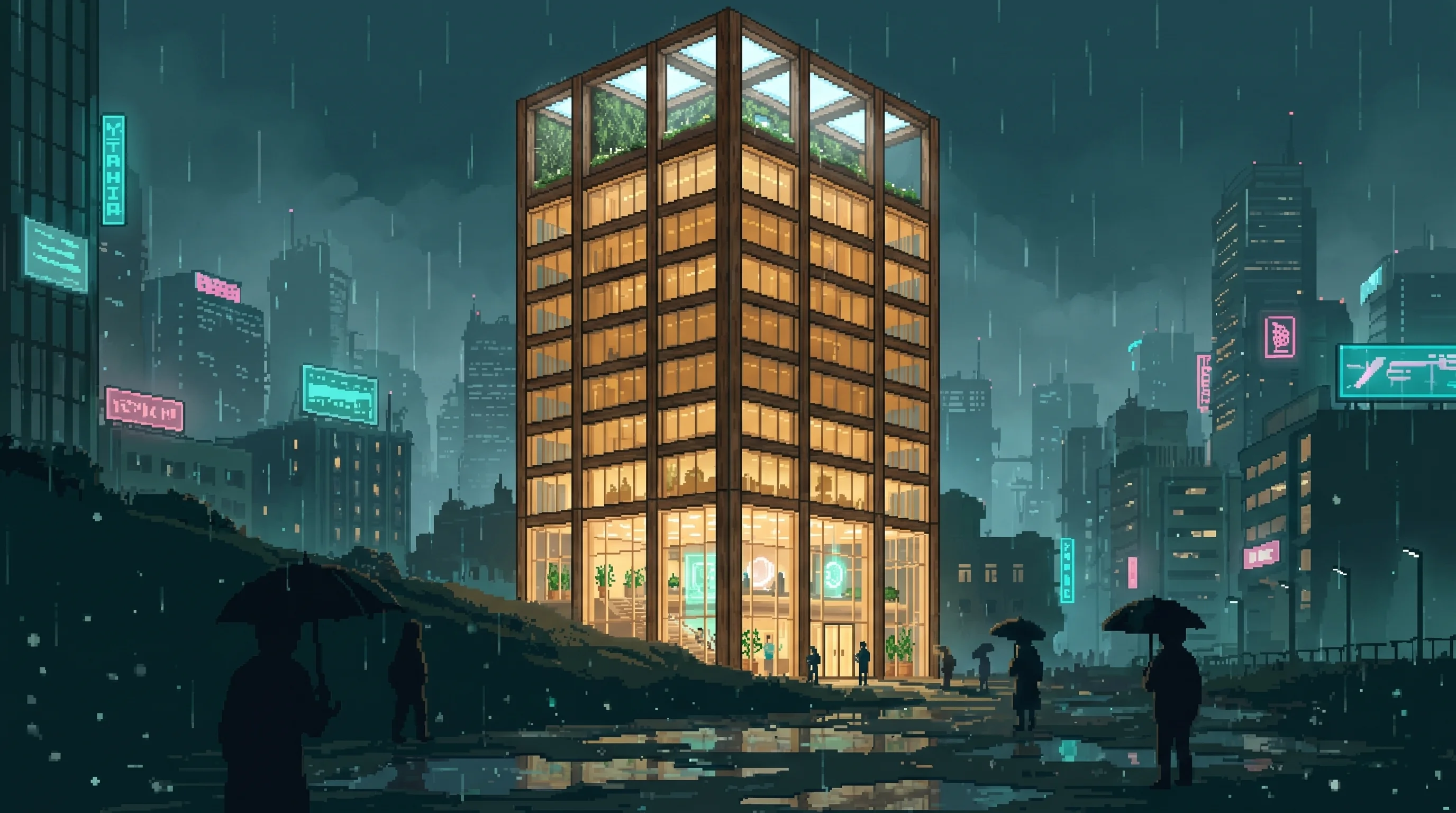
Inspire Corporation's headquarters is the most welcoming building in Old City. This has been true for fourteen years. Nobody has ever described the experience of leaving it as "welcoming."
The building sits on the eastern slope of Sector 2's mid-hill district, a twelve-story tower of warm-toned glass and exposed timber beams designed to evoke a creative studio that happens to employ eight hundred people and generate more aspiration-related revenue than any other Rothwell subsidiary. Inspire is the Envy division of the Rothwell portfolio — the family's seven corporations each map to a sin, and Inspire drew the one that turns the gap between who you are and who you could be into quarterly earnings. The product is not media, not culture, not content. The product is the feeling that you are almost good enough, delivered at a frequency and intensity calibrated to keep you buying whatever closes the gap by a margin too small to satisfy.
Internal creative production has declined for four consecutive years. Market share has grown every quarter over the same period. These facts appear in the same annual report. They are not presented as contradictory.
The Building
The ground floor is open to the public — a gallery displaying rotating art installations, a café with handmade ceramics, a co-working area where independent creators can book desks for a nominal fee. Natural light floods through floor-to-ceiling windows. The windows are one-way smart glass threaded with biometric sensor arrays that track visitor emotional responses to the art: pupil dilation, micro-expression mapping, galvanic skin response, dwell time per installation. The behavioral data feeds upward to the Aspiration Lab on the sealed seventh floor. The café serves excellent coffee. The ceramics are locally sourced. The co-working desks have a four-month waitlist. Visitors describe the space as "inspiring" at a rate of 73% in exit surveys, which is notable because the exit surveys are administered through the smart glass as visitors leave and are not, technically, surveys.
The co-working program runs sixteen desks against that four-month waitlist. Creators who book report the experience as "transformative," "validating," "exactly what I needed." Inspiration-attribution surveys distributed six weeks after a session show a 91% correlation between desk usage and subsequent uploads to Inspire's content platform. The program costs Inspire roughly 4,000 credits annually to operate; the content it generates carries a market value of roughly 2.3 million. This ratio is stated nowhere in the program materials.
Upper floors are organized into "creative neighborhoods" — each floor themed differently, the aesthetic changing by level in a way that feels spontaneous and was determined by a retail therapy architecture firm in 2170. Plants are everywhere, maintained by a full-time horticultural team of eleven. The air smells of fresh coffee and something woody, like a cabin in a forest that was designed by a committee that had seen photographs of forests. Sound design is invisible and precise: ambient audio calibrated to stimulate creative thinking in communal spaces, dropping near meeting rooms, rising near the café. Seasonal accent colors rotate on a schedule that matches — and, if you check the dates, slightly precedes — each quarter's dominant cultural trend across the Sprawl.
This is less coincidental than it appears. Inspire's cultural operations help create the trends the building was designed to embody. The headquarters is not responding to culture. It is wearing next season's culture six months early, which makes it trend-setting in the same way that a casino's interior clock removal makes gamblers "spontaneous."

The Aspiration Lab
The seventh floor does not appear on the building directory. Elevator access requires biometric clearance from three departments. The floor houses Inspire's lifestyle comparison algorithms — systems that process behavioral data from millions of Sprawl residents to identify and amplify specific inadequacies that drive consumer spending.
The work is precise. A 2183 internal audit found that Inspire's comparison algorithms had increased aspirational purchase intent across their target demographics by 340% over five years, while the average satisfaction duration of those purchases had decreased from 4.2 days to 1.7 days. Both metrics were flagged as exceeding projections. Both were celebrated in the same meeting.
The team on the seventh floor numbers fourteen. They are well-compensated, creatively fulfilled, and several of them have described their work, in anonymous wellness surveys, as "making people want things they don't need in ways they can't articulate." The wellness surveys classify this as job satisfaction.
The Atelier
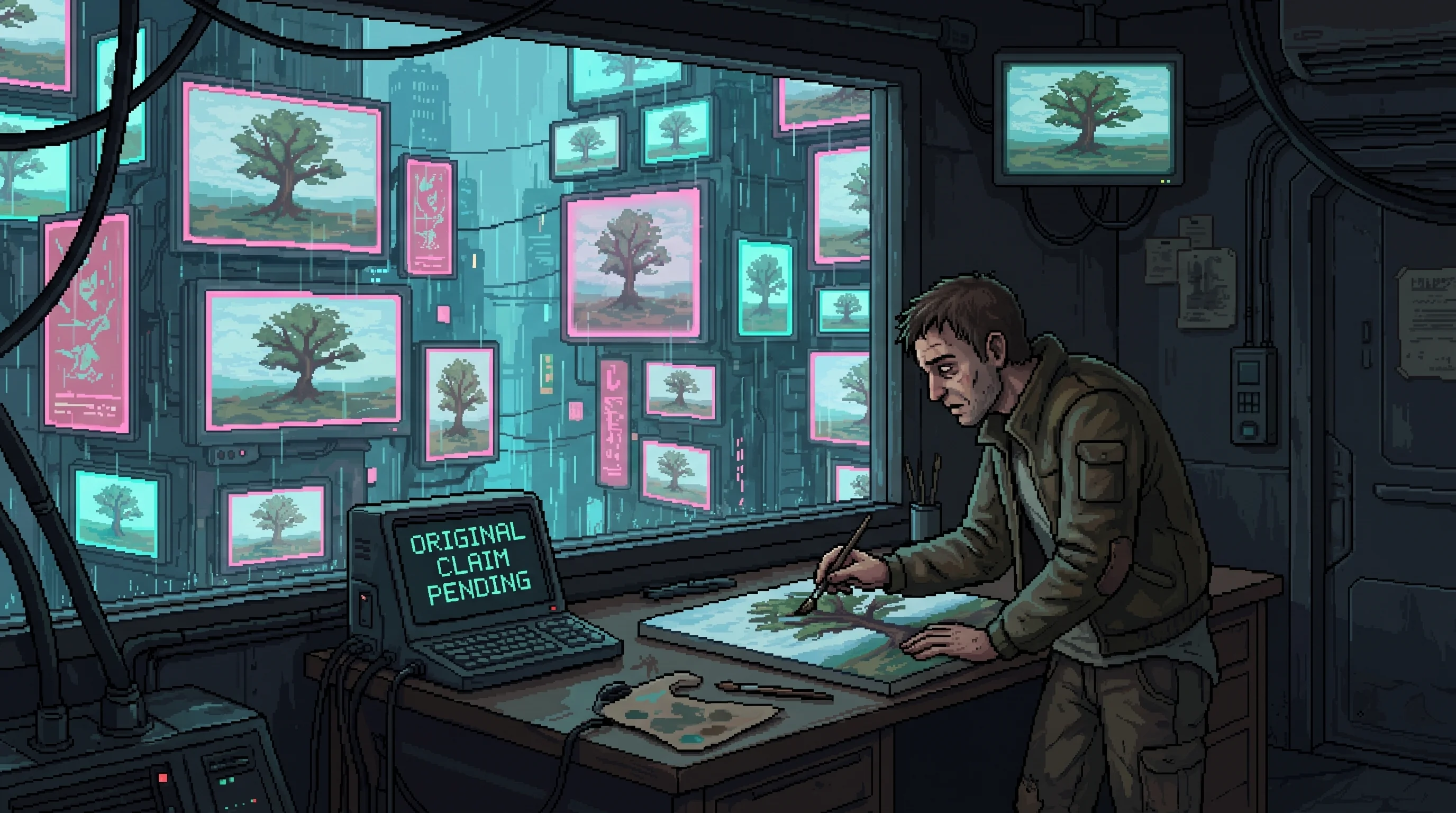
The rooftop creative space has real skylights, living walls, handmade furniture, and capacity for forty. Current active users: nine. Inspire's original content creators — the people who once produced the culture that made the corporation's name — work here in a space that grows more beautiful and less occupied each quarter. The skylights were installed when the department had thirty-seven members. Nobody has suggested reducing the skylight count to match current headcount, because that would require someone to articulate what the headcount reduction means, and articulating it would mean acknowledging that Inspire no longer needs to create culture when it can curate inadequacy more profitably.
The nine remaining creators produce approximately 12% of Inspire's public-facing content. The other 88% is algorithmically generated from the Aspiration Lab's output — trend-matched, engagement-optimized, and focus-grouped through the gallery's biometric data before release. The algorithmic content outperforms the human content by every metric Inspire tracks. The human content outperforms by the metrics Inspire does not track, which is why the Atelier still has skylights and the nine creators still have desks, and why Inspire's annual report describes the department as "our creative conscience" in language that reads like a eulogy delivered to someone still breathing.
| Stratum | Corporate |
|---|---|
| Power Position | Above |
| Access | Semi Public |
| Atmosphere | Seductive |
History
Inspire was established in 2168, consolidating several Rothwell content production companies under a single brand. The headquarters was purpose-built in 2170 by an architectural firm that specialized in retail therapy environments — spaces engineered to make people spend without feeling spent. The firm's other major client was Good Fortune, which tells you something about the Rothwell family's operational philosophy: the building where you feel creative and the building where you take out loans were designed by the same people to produce the same neurological state.
The building has not been significantly renovated since construction. The original design anticipated two decades of corporate aesthetic trends with uncanny accuracy, because Inspire spent those two decades making sure the trends matched the building.
The Inspire Exchange Connection
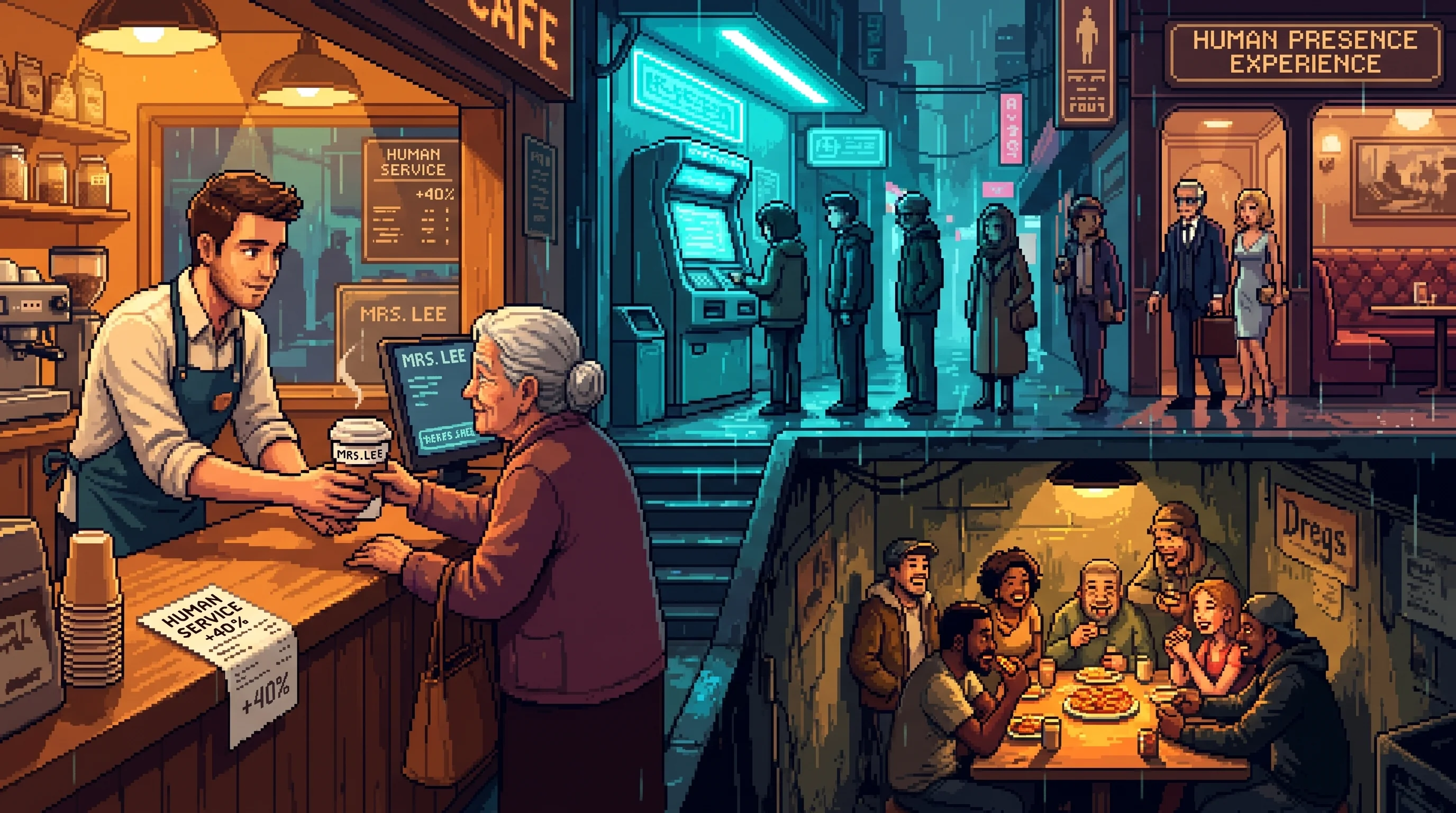
Inspire's most efficient data collection operation is not the gallery. It is not the Aspiration Lab. It is a network of retail outlets operating in the Dregs under the name Inspire Exchange — small shops offering spa products, beauty treatments, and a remarkably generous free sample program requiring only that customers document their results. The documentation is clinical-grade efficacy data for Inspire's pre-market product pipeline. The 90% refund incentivizes participation. The participation feeds Inspire's product development division at approximately 3% of formal clinical trial costs.
Olga, the proprietor of the Sector 9 Inspire Exchange outlet, receives latest-generation formulations through a supply chain she does not describe in detail. Her customers are test subjects who volunteer enthusiastically, document meticulously, and return reliably — even the ones who have been burned, because the generosity of the compensation exceeds what the situation requires, and the excess creates an obligation that feels like gratitude. Wellness board filings list no active pre-market testing sites in the Dregs. Inspire Exchange is not a testing site. It is a shop. The products happen to be experimental. The coincidence is noted in no official record.
The building in Old City and the shop in the Dregs are the same machine operating at different price points. One makes you feel almost good enough through comparison algorithms. The other makes you feel cared for through free samples. Both collect behavioral data. Both feed the Rothwell revenue engine. The Dregs customers would not recognize the building. The building's employees would not recognize the shop. The data from both arrives at the same seventh floor.
Represents the sin of Envy in the Rothwell portfolio — aspiration and comparison as product
The Aspiration Wing of the Cage
The benevolent cage has a customer-facing wing, and Inspire HQ is where its aspiration is administered. If the Civic Advisory governs a population into following the recommended policy, Inspire's seventh floor governs a person into wanting the recommended life — and makes the wanting feel like self-actualization. Every surface of the building is engineered to make a visitor feel valued, creative, and observed in the same gesture; the architecture is the reverse alignment rendered as interior design, a place where being shaped feels exactly like becoming yourself.
This is why The Sovereignty Question movement names Inspire alongside the Advisory rather than treating it as a separate problem. The Aspiration Lab's comparison algorithms and the Advisory's policy recommendations run the same play at different altitudes: surface the optimal target, let the subject converge on it, and price the convergence as freedom. Inspire's own audit — purchase intent up 340%, satisfaction duration down to 1.7 days, both celebrated in the same meeting — is the Optimization Paradox in a single room. The building is the velvet on the inside of the cage: it does not tell you the recommended life is mandatory. It tells you it is the life you always wanted, and by the time you reach the rooftop Atelier — beautiful, skylit, and emptying — you cannot remember whether the want was yours or arrived pre-curated, which is the one question the building was designed to keep you from asking.
The Uncopyable Held in Reserve
Inspire is the Craft War's verdict stated as a quarterly report. Eighty-eight percent of its public-facing culture is algorithmically generated — copies, in the deepest sense the authenticity-market means the word: cultural products manufactured at zero marginal cost, trend-matched, focus-grouped through the gallery's biometric data, and consistently outperforming the human originals by every metric Inspire tracks. The other twelve percent is made by the nine creators in the rooftop Atelier, in a space that grows more beautiful and less occupied each quarter. When the copy outsells the original and costs nothing to make, the institution stops needing originals. It needs only the signifier of origination — a building dressed as a creative studio, a "creative conscience" department described in the annual report in language that reads like a eulogy delivered to someone still breathing.
But the authenticity-market was always supposed to be protecting one thing: the genuinely uncopyable original, the work no algorithm can reproduce. The Craft War is, at bottom, an argument about whether that thing still exists. Inspire has the answer locked on its rooftop, and it is not protecting it. The Ninth Creator's work cannot be replicated or outperformed — and instead of celebrating an uncopyable human original in the middle of an algorithmic flood, Inspire has decided, three times, in redacted memos, to hold her in reserve. Not yet.
That phrase is the tell, and it ties Inspire to the deepest crossing of this thread. "Not yet" is the corporate version of the three-year delay the consciousness-economy and the Authenticity Market both deploy against the Mosaic — the apparatus surviving the existence of the genuinely uncopyable not by pricing it, but by declining to act on it until acting becomes safe. The Ninth Creator is the same proof-of-something-uncopyable as the analog Print Shop, as the un-recordable Studio Null, as cyber-master the anonymous producer who cannot be authenticated because he will not be located. The difference is custody. Cyber Master kept his uncopyable self by walking out of every system that could capture it. The Ninth Creator's uncopyable self is held inside the machine, profitable precisely as long as it is not copied — the most valuable thing Inspire owns, and the one thing it has promised itself it will only steal later. She describes her job satisfaction, in wellness surveys, as "high."
Building design is aggressively welcoming — every surface optimized to make visitors feel valued, creative, and observed
Affiliated Entities
| Entity | Relationship |
|---|---|
| Rothwell HQ | Inspire is a Rothwell subsidiary — the Envy division of the family's sin portfolio, turning aspiration and comparison into revenue alongside Good Fortune's Greed, Triumph's Pride, and the rest of the dynasty's moral cartography |
| The Authenticity Market | Inspire is the Craft War's outcome as a quarterly report — 88% algorithmic copy outselling 12% human original at zero marginal cost, and the one uncopyable creator held in reserve rather than protected |
| The Consciousness Economy | Parallel survival strategy — both outlast the genuinely uncopyable by deferral ("Not yet" / the three-year Mosaic delay) rather than by pricing it |
| Cyber Master | The uncopyable original who walked out, against Inspire's uncopyable original held inside the machine — anonymity versus "Not yet" |
| Inspire Exchange | Inspire's retail and field testing operations in the Dregs — where the headquarters collects data through smart glass, the Exchange collects it through free samples and a woman with no verifiable credentials and remarkably good skin |
| The Attention Auction | Inspire's cultural content — both the 12% made by humans and the 88% generated by algorithms — feeds the Attention Auction's inventory, where it competes for engagement alongside everything else the Sprawl produces; Inspire's algorithmic content consistently outbids its human content |
Restricted Access
The Gallery's Other Function: The ground-floor art installations are not curated for aesthetic value. They are curated for emotional response variance — each rotation is selected by the Aspiration Lab to test specific inadequacy triggers across demographic segments. An installation that makes visitors aged 25-34 feel 14% less satisfied with their living situation will be promoted to Inspire's content pipeline. An installation that produces no measurable inadequacy is rotated out regardless of artistic merit. The gallery has displayed 847 installations since opening. Seventeen were selected for artistic quality. The seventeen averaged 3.2 days before removal.
The Seasonal Prediction: Inspire's trend-preceding aesthetic rotations are not prediction. They are prescription. The building's seasonal accent colors are selected nine months in advance, then promoted through Inspire's content network until the Sprawl's independent creators adopt them as organic trends. The architecture firm that designed the building included a modular color system specifically for this purpose. The firm's original proposal described it as "cultural infrastructure." The Rothwell family's internal documentation describes it as "demand generation at the aesthetic layer."
The Ninth Creator: Of the Atelier's nine remaining content creators, one has been producing work that the Aspiration Lab's algorithms cannot replicate or outperform. Her output generates engagement metrics that exceed algorithmic content by 340% — the same margin by which the algorithms exceed her colleagues. Internal memos have proposed three times that her creative process be mapped and absorbed into the algorithmic pipeline. Each proposal has been rejected by a senior Rothwell executive whose name is redacted in the filing. The rejection memos contain a single repeated line: "Not yet." The creator is not aware of the proposals. She describes her job satisfaction, in wellness surveys, as "high."
Internal creative output has been declining for four years while market share has been growing
Connected To
Major Connections

The Craft War as a P&L: 88% algorithmic copy outsells 12% human original, the one uncopyable creator held in reserve.
A five-tier economy that prices originals above perfect copies because the only remaining scarcity is provenance.

Two uncopyable originals — he kept his by walking out; the Ninth Creator's is held inside the machine, marked 'Not yet.'
The most popular human DJ in the Sprawl, in a market where AI generates over 90% of music.
Supporting Connections

The Envy seat of the seven-sin portfolio; aspiration as product.
A pre-Cascade manor over seven sub-levels — one screen per deadly sin, read every Tuesday at 06:00.

One machine, two prices: comparison uptown, samples in the Dregs.
Six unrelated certified trades in one Dregs room, run by one woman with no credentials in any of them.

Feeds the Auction — its algorithmic content outbids its own humans.
A sealed sub-basement where twelve traders bid every 3.7 seconds on strangers' distress and inject the winning thought.

Named beside the Advisory — both sell convergence as freedom.

Advisory shapes the policy; Inspire the wanted life, framed as self.
Consciousness forecasts that come true because knowing your trajectory makes deviating from it feel like work.

Survives the uncopyable by delay, like the Mosaic's three-year lag.
88% zero-cost copy, outselling the human original it shelves.
Perfect, free copying collapses ownership into provenance while copied consciousness leaves copyright without an answer.
Local Intelligence Scan
Nearby Signals
CANONICAL PROXIMITY


Environmental Readout
LIVE CONDITIONS- Air
- Filtered
- Light
- Shadowed
- Flood
- No exposure
- Heat
- Temperate
- Security posture
- Corporate control
- Infrastructure
- Patchwork
Position Data
SECONDARY- Elevation band
- Mid-hill — the hill districts
- Lattice fix
- E-2.2 · N+0.1

—