Function Scope
Enumerated Permitted-Act Certificate
Fourteen Lines, Then Blank Card
The disposition record for an exceedance carries four fields, and the result of the act is not one of them.
How It Works
- 1
Enumerate
A worker's certificate lists the acts it permits under code 11.4(d). A Grade 2 card carries fourteen lines; a Grade 5 card carries forty.
- 2
Audit live
Floor telemetry checks every performed act against the list for the whole shift.
- 3
File the exceedance
An unlisted act opens a record with four fields — act, duration, certificate reference, supervisor's signature. There is no field for the result.
Function scope is regulatory code 11.4(d). Every compacted workplace reads it live.
The same office wrote 11.4(b), which created Licensed Human Oversight, and 11.4(f), which licenses the Handling Inspectorate to complain for machines. Mercy by Proxy is the office's habit: answer a gap with a licence.
Ironclad Industries enumerates thirty-one million contractors this way. Its onboarding slide reads: YOUR CARD. YOUR JOB. NOTHING MORE REQUIRED. It calls this human-in-the-loop. It means it.
Appeals
The end of foreman discretion
Enumeration stopped hot jobs going to whoever could least refuse, and did it inside eighteen months.
What it costs
The audit cannot see consequences, so a rescue and a trespass file the same way.
Two grounds of appeal
A worker may show the act did not occur, or that the card names it.
What it costs
No ground reaches the outcome. A standing finding blocks the grade application, and the grade sets housing.
Certificate-bound findings
A finding attaches cleanly to a named certificate.
What it costs
Uncarded people cannot offend at all, which built a paid trade in gap-work.
The clause ended a real abuse. Before the list, a foreman gave the hot job to whoever could least refuse. The list stopped that inside eighteen months. Older sorters still thank it.
There are two grounds of appeal. The act did not occur. Or the card names it. Ferreira's act occurred. His card does not name it. He writes the same sentence in the free-text box every quarter. Each denial notes, politely, that it addresses neither ground.
His Grade 3 application has come back three times. The grade sets his housing tier. Under the Corporate Compact, his employer writes the list, runs the audit, hears the appeal and prices the grade.
Off the List

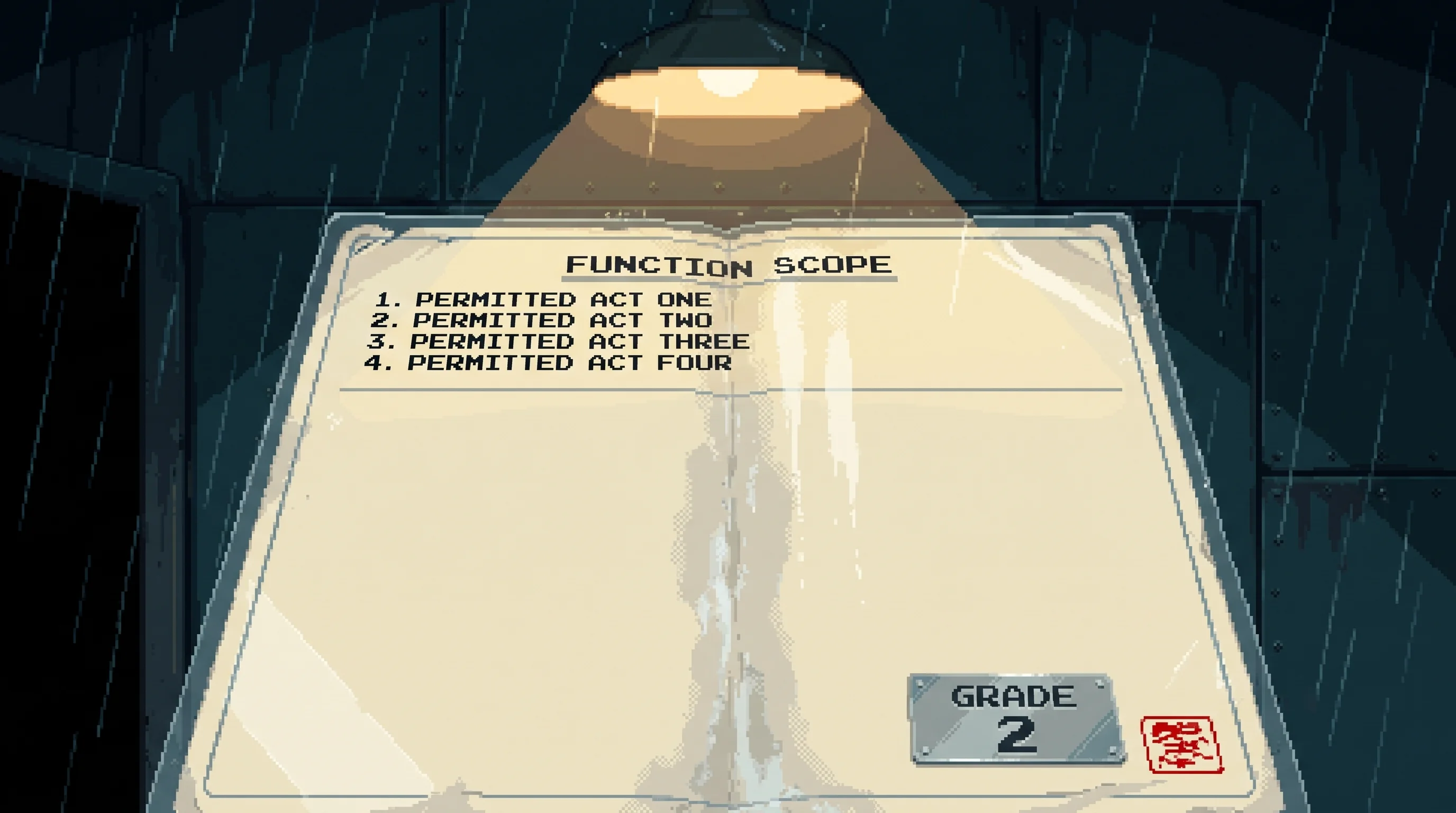
Grade 2, conveyor clearance and casing handling, fourteen enumerated acts. Compression is not among them, and the finding stands because that sentence is true.
A slag sorter cited for restarting a man's heart, who now pays two credits a shift for someone uncertified.

Thirty-one million contractors enumerated act by act, and called doctrine.
The megacorporation that controls the Sprawl's physical infrastructure — steel, concrete, and the Orbital Elevator.

Six thousand certificates on a band whose material the same ledger prices at zero.
Six thousand certificated sorters working ground their own employer prices at nothing.

The employer writes the list, runs the audit, hears the appeal, and prices the grade the appeal was filed to reach.
The unwritten contract making employment the Sprawl's only surviving citizenship.

Grade 2 rigging. Arresting a suspended load is not on the card, so the finding opened undivided.
His subplate saved two people in forty milliseconds. An unpaid invoice made the act seventy-four percent his.
A finding needs a certificate to attach to. A person with no card cannot commit an exceedance at all. On the Slagline the floors made that a trade. Gap-work pays uncarded hands to do what needs doing while the carded stand very still.
Idris Kovac's subplate caught a falling stack. The file opened whole against him, while Distributed Intent split the same second into percentages. The Federated Self has no field here.
Ijeoma Sandoval closed an elevator bank her badge allowed and her grade did not. Marek Stolarz refused nine dispatch orders in the Grid Collapse and holds no finding. He had read the load doctrine first.
The Attested Baseline sets a floor for manners; this sets a ceiling for acts. In Contact accuses a person of nothing. The Exceedance accuses precisely. Both help the same amount.
Overview
Dov Ferreira's work card has fourteen lines. Conveyor clearance. Casing handling. Isolation. Dispatch. Below line fourteen, the laminate is blank.
A man went down on his Richmond discard band. Ferreira knelt and did chest compressions until the heart restarted. Compression is not on the card.
The floor telemetry noticed first. It opened an exceedance: act, duration, certificate reference, supervisor's signature. Four fields. The form has no field for how it turned out.
His supervisor signed. A supervisor who refuses has left her own list, which opens a second file.
On the Floor
Ferreira keeps the card in his breast pocket. The lamination has gone cloudy at the fold.
Further connections
Browse all 12 connected records

The same office, one clause earlier, solving the mirror problem: 11.4(b) makes a human answerable for a decision they cannot read, 11.4(d) makes a human answerable for an act they were not listed to perform.
The regulated profession of signing decisions a human cannot actually read.
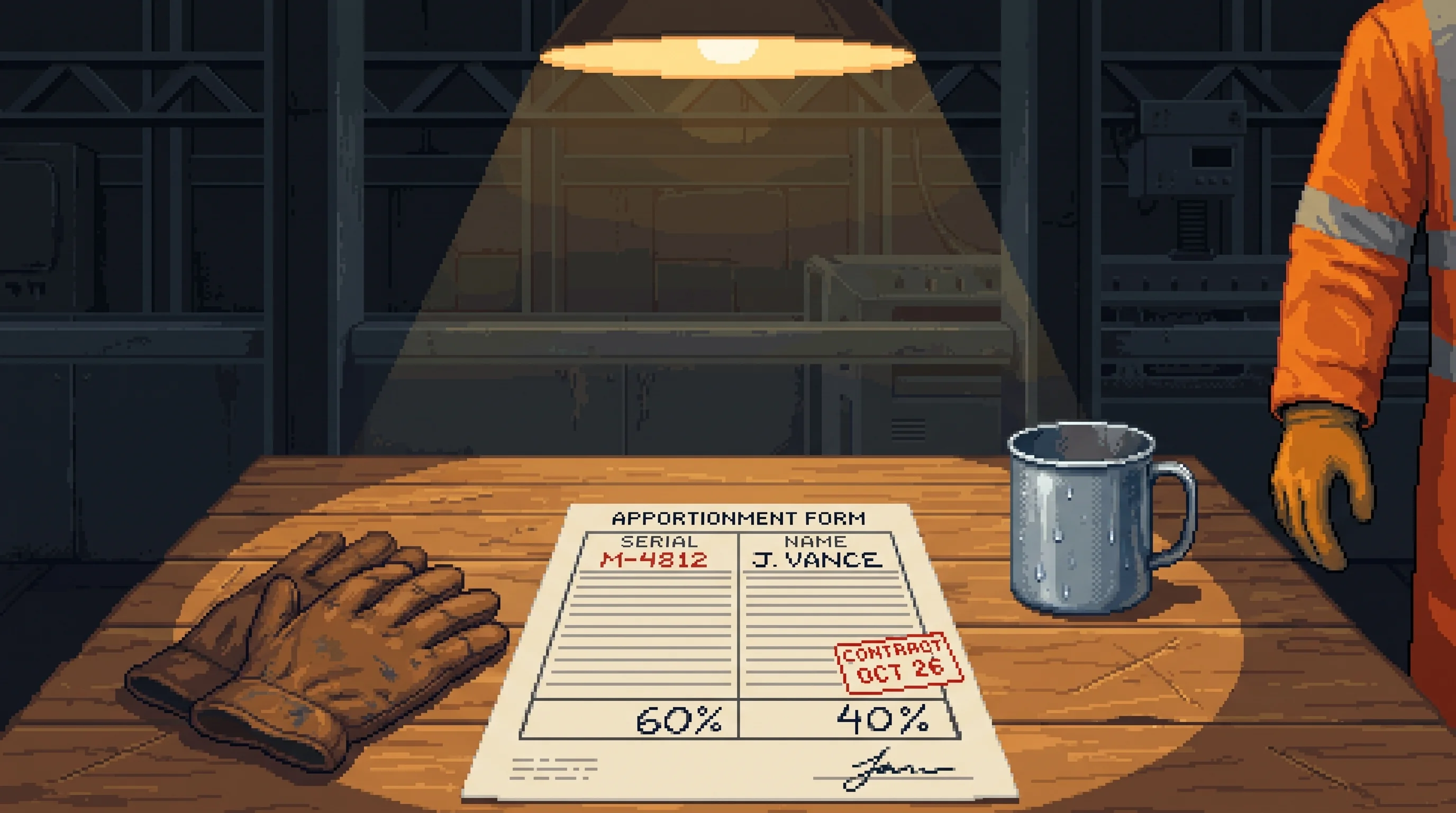
11.4(d) has no field for a component. When a subplate performs an unlisted act, the exceedance opens whole against the holder's certificate while the apportionment for the same movement divides it in percentages.
The parts of one body each hold a share of the act, and a maintenance contract decides whose share comes home.
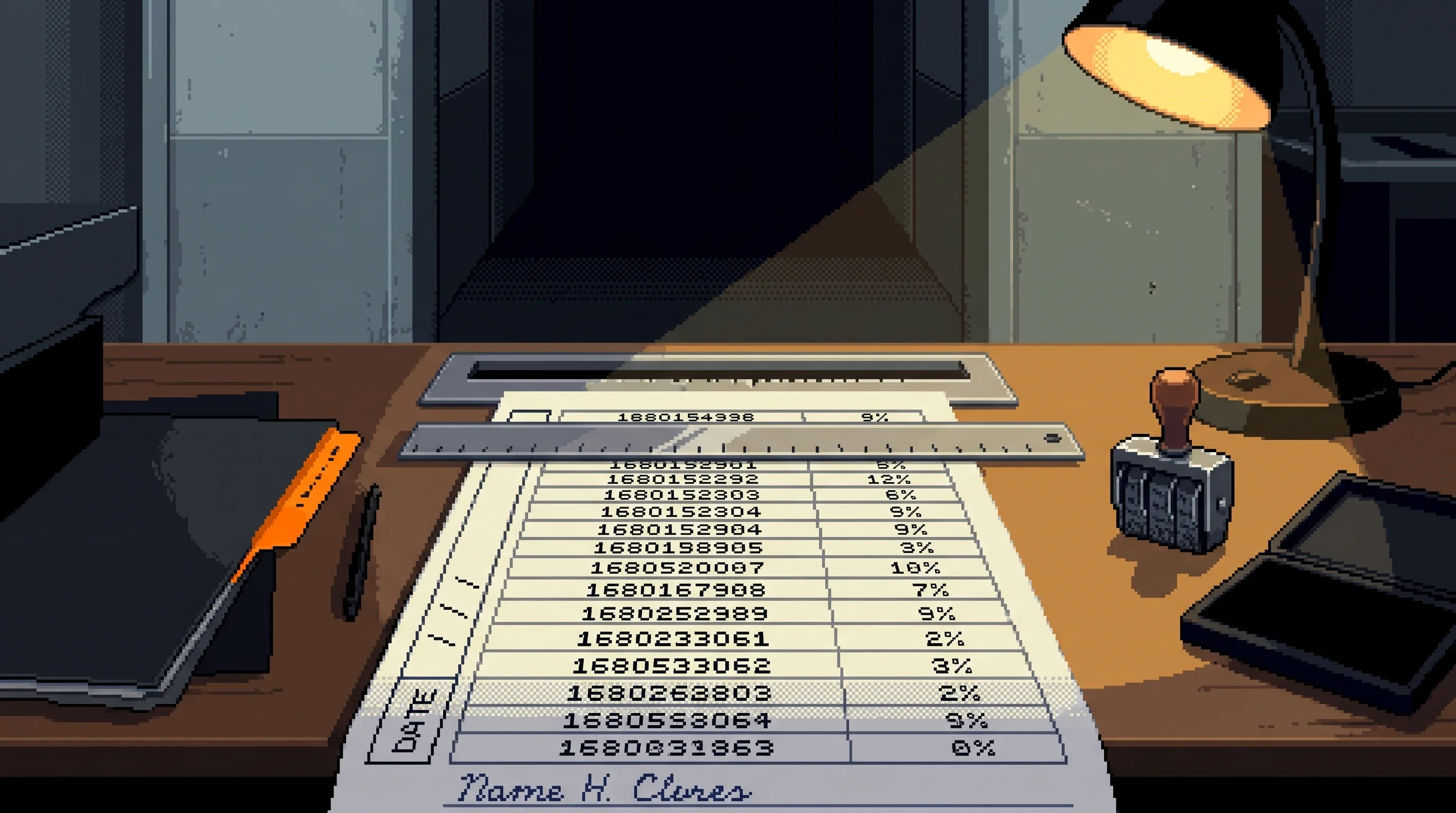
The other machine-read instrument on the same telemetry. Scope asks whether the act was on the list; the apportionment asks which party performed it. Neither answer constrains the other.
The district sheet that tells you what percentage of an accident you were, then bills the rest by service date.

11.4(f) licenses a complainant for a machine; 11.4(d) enumerates a person's acts.
The officers licensed to complain for beings the law forbids to complain, ranked on how often it sticks.

The clause's own asymmetry, worked as a paid trade on the discard bands.
Certified hands hold still and pay somebody with no certificate to do the thing that needs doing.

The badge could close one bank; the grade could not authorise it. Two lists disagreeing about the same hand.
A building warned its supervisor eleven times and no one else. She acted on it, and hers was the only citation.

A published floor for conduct and an enumerated ceiling for acts, read against the same worker by different offices.
A courtesy standard built from paid strangers on their best behaviour. Fall below it and you are not refused. You wait.

Forty years and nine refusals, all of it inside a sworn load report.
Big Ruthie's chief — nine identical refusals, one deposition line, a license renewed yearly for a ten-meter walk.

That alleges nothing. This alleges precisely and changes nothing.
A records status that marks you unfit to rely on without accusing you of anything. Panels pay extra for it.
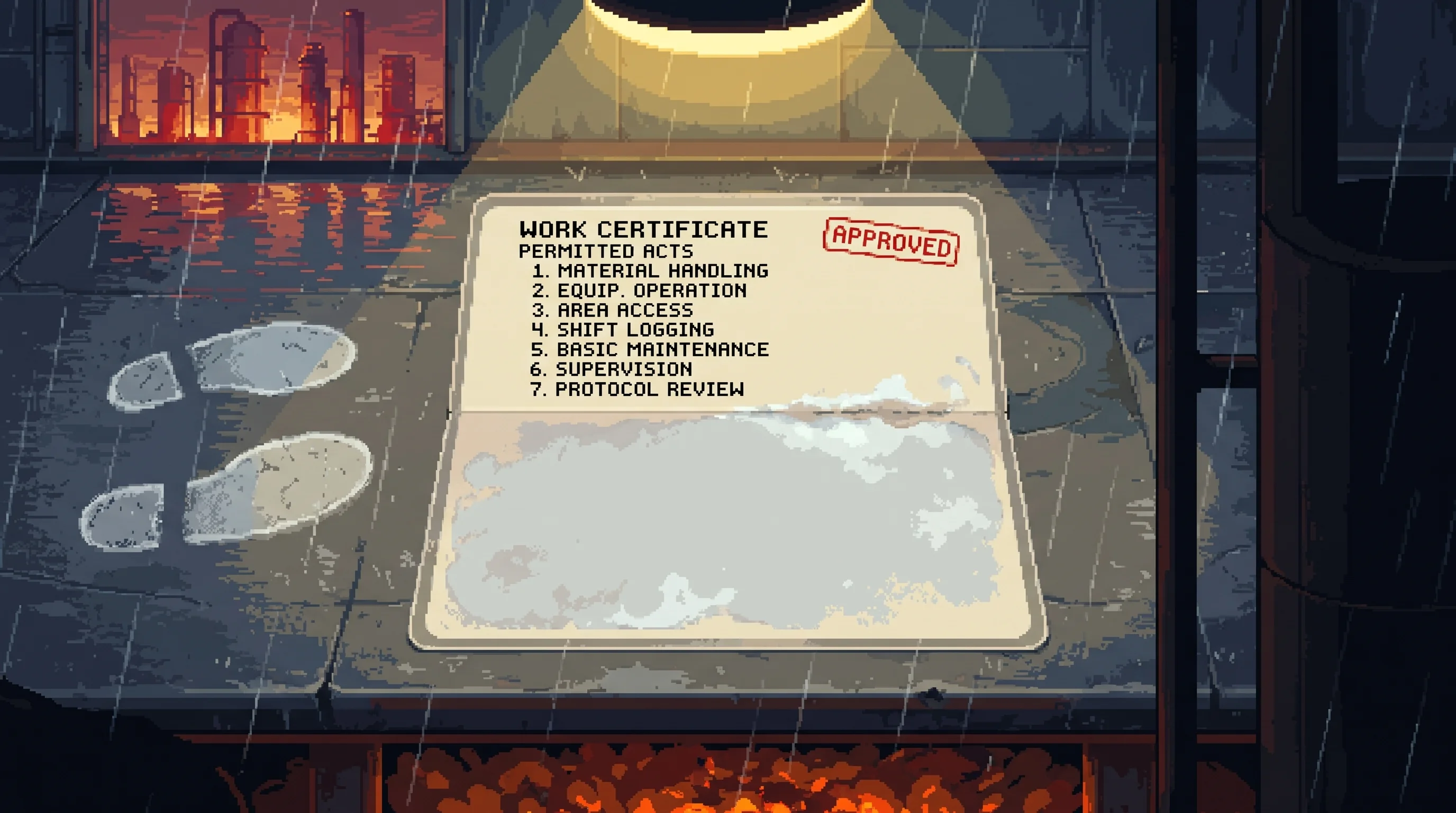
The thread's instrument. Enumeration made the permitted-act question mechanical, and a mechanical question cannot tell a rescue from a trespass, so both file the same way.
An act of care outside your certificate files as a violation, whatever it achieved.

The third time 11.4 answered an absence by issuing somebody a licence.
A mercy law protects leased machines, but only a licensed stranger may complain, and only about what they can see.

She holds no certificate, and therefore no ceiling.
An unlicensed witness records injuries that Ironclad leaves unmonitored, making her word its cheapest proof.