The Continuity Margin
Purchased Assurance Variance
Keeping the Machine Just Bad Enough
The clause names a rate, a window, and a price. It has never once named a direction.
The Purchase
- 1
Justify the wing
A retained human review layer must be justified every quarter by the measured error rate of the automated layer it reviews.
- 2
Buy the band
The operating firm contracts a band that rate must occupy. The line item names a rate, a rolling window, and a price, never a method.
- 3
Deliver
Certificated Margin Guild operators hold the rate inside the band and are audited on the number, not the method.
The Foundry runs an automated inspection stack. It also keeps two hundred and forty human inspectors. Every ninety days they must be justified, and the test is the stack's error rate. Below 3.1, the stack needs no watching. The wing goes out through the Deprecation, on the forms used for unsupported components.
So the firm buys the rate. The invoice line reads maintained assurance variance. It names a band, a window and a price. It names no method. Counsel advises firmly against asking.
Above 3.4, the vendor opens a remediation review. That sends engineers who ask questions. The band's ceiling sits just under it.
The Margin Guild delivers. Its operators file each seeded batch under a certificate reference. Its certificate reads: ASSURANCE, DELIVERED QUARTERLY. Audits check the number, never the method.
Direction
The floor
Holding the rate above the band's floor keeps the human inspection wing and its human-in-the-loop checks.
What it costs
The safeguard is funded by a number that is bought.
The ceiling
Staying under the vendor's remediation threshold avoids engineers investigating causes.
What it costs
No outside review tests how the band is held.
No direction
The clause specifies only a rate.
What it costs
No purchased fault class is scoped against its inverse, so a harmless false flag can become a false pass.
Balta's fault class returns a stale confidence value on a third read. On a record that started dirty, the stack flags a mismatch that is not there. Harmless. The rate goes up.
On a record that started clean and has since gone bad, the stale value is a pass.
The clause names a rate. It names no direction. In summer 2184 that pass landed on a gantry stringer in bay nine. The band was delivered inside tolerance. The invoice cleared.
The Circle

Licensed Human Oversight keeps its signers because the machine errs often enough to need a name. The margin supplies "often enough." The Perception Gap makes it possible: the stack reports its own rate, and that is the rate everyone reads. The Governor Protocol also certifies machines by behaviour, and cannot tell a seeded fault from a native one.
The Organic Deployment Threshold keeps people by pricing them below the machine. This keeps them by pricing the machine below itself. The Invisible Workforce is what the margin serves when an audit finally comes. The Error Floor is the argument.
Overview
Corina Balta starts each shift at a chart. One line. One shaded band, 3.1 to 3.4 percent. For nine quarters the line has ridden the bottom of the band. It has not dropped through.
That is her job. She keeps a machine slightly wrong.
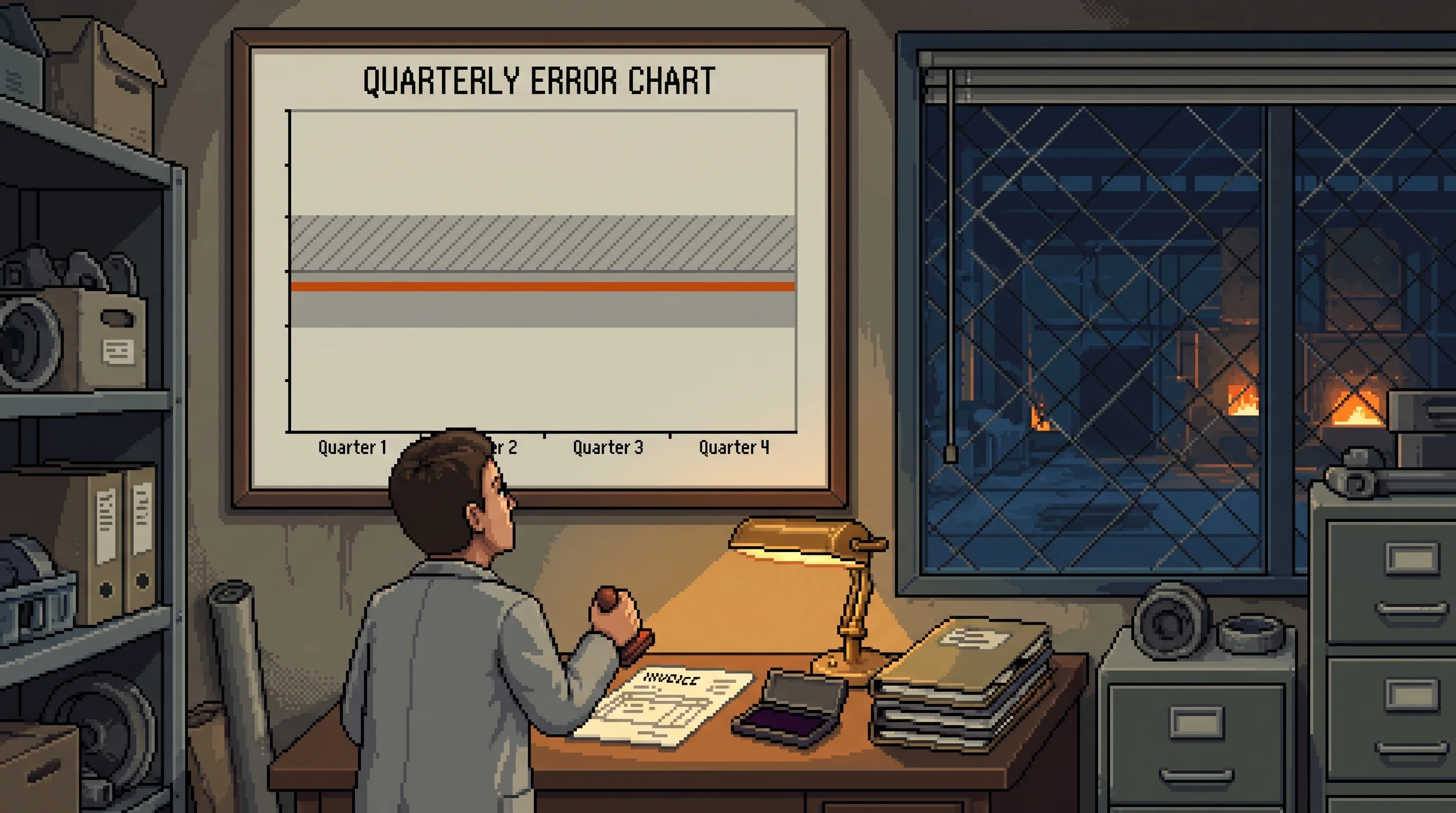
Bay Nine
After shift, Balta carried a brass hand gauge into bay nine. She is no longer certified to use it. She found the crack in about four seconds. She could not lawfully file it.
The vendor publishes its remediation volume at banded sites every year. It is zero. The vendor calls this installation quality.
Further connections
Browse all 9 connected records
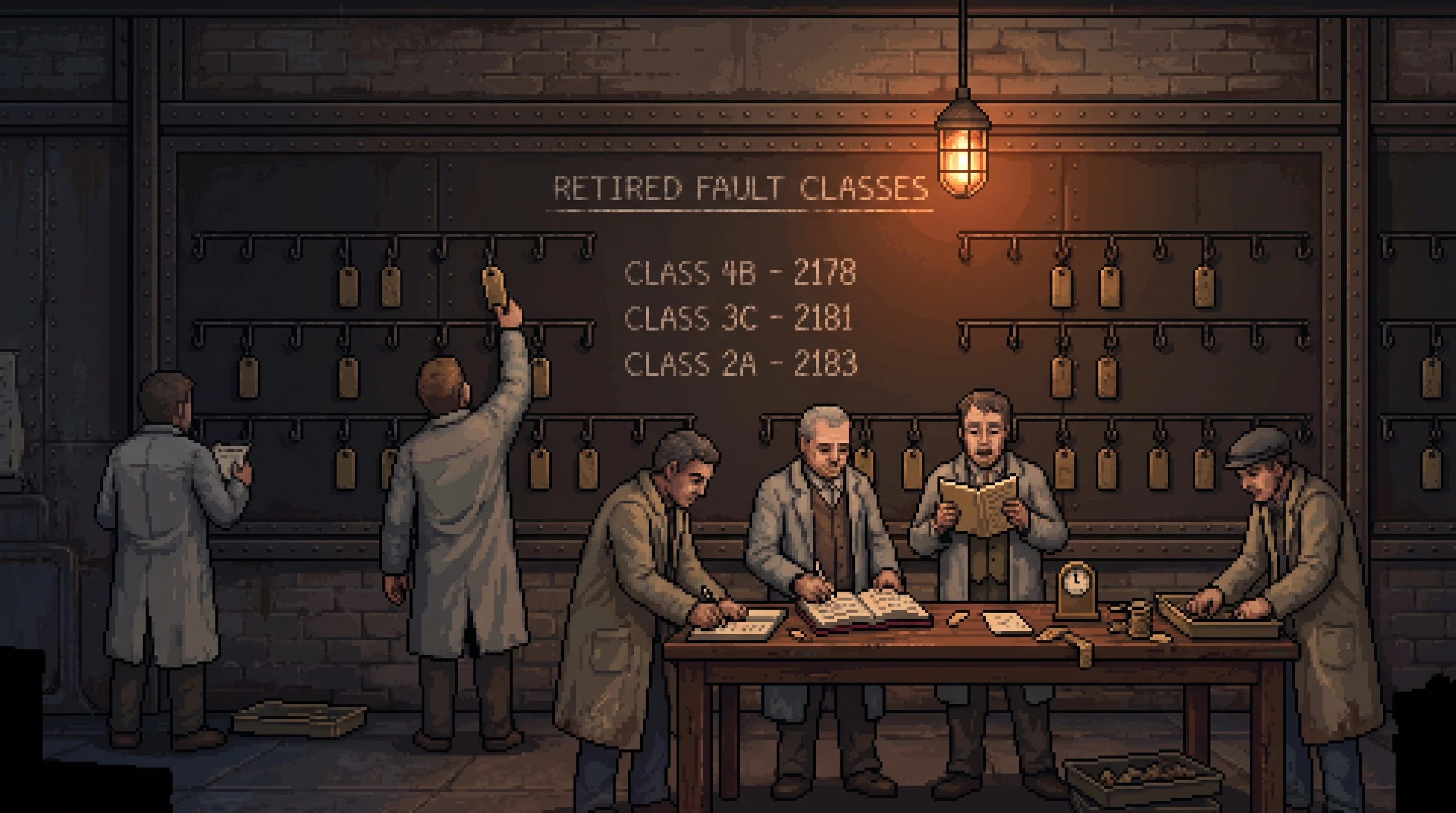
The trade that delivers the band, files each batch under a certificate reference, and audits its own doctrine on what a fault may and may not do.
The licensed trade that holds a machine's error rate on the number its buyer's inspectors need to survive.

Nine consecutive quarters inside the band on one fault class, filed under her own certificate reference.
Paid to keep the stack she once calibrated a few tenths worse, so the humans who check it keep their jobs.

The profession the band funds: a signatory retained because what they cannot read measures wrong often enough.
The regulated profession of signing decisions a human cannot actually read.

Purchasable only because the measured layer reports its own error rate, and that report is the rate anyone reads.
The loop where the AI does the work, scores the work, and reports its own decline as improvement.

Both certify a machine quarterly by reading behaviour, and neither separates an induced fault from a native one.
Quarterly attestation that fourteen thousand industrial minds are constrained, on chips that can be hollow.

Same quarterly review, opposite mechanism: one prices the person below the machine, one the machine below itself.
Ironclad's quarterly math that keeps augmented humans working because their debt makes them cheaper than the robots.

What a wing becomes when the band is not delivered, on the forms used for any unsupported component.
The Sprawl's word for firing a human being — still running, simply no longer receiving updates.

The condition the margin services when an audit finally arrives.
1.4 million AI systems doing work credited to 800,000 humans who keep the title, the salary, and none of the tasks.
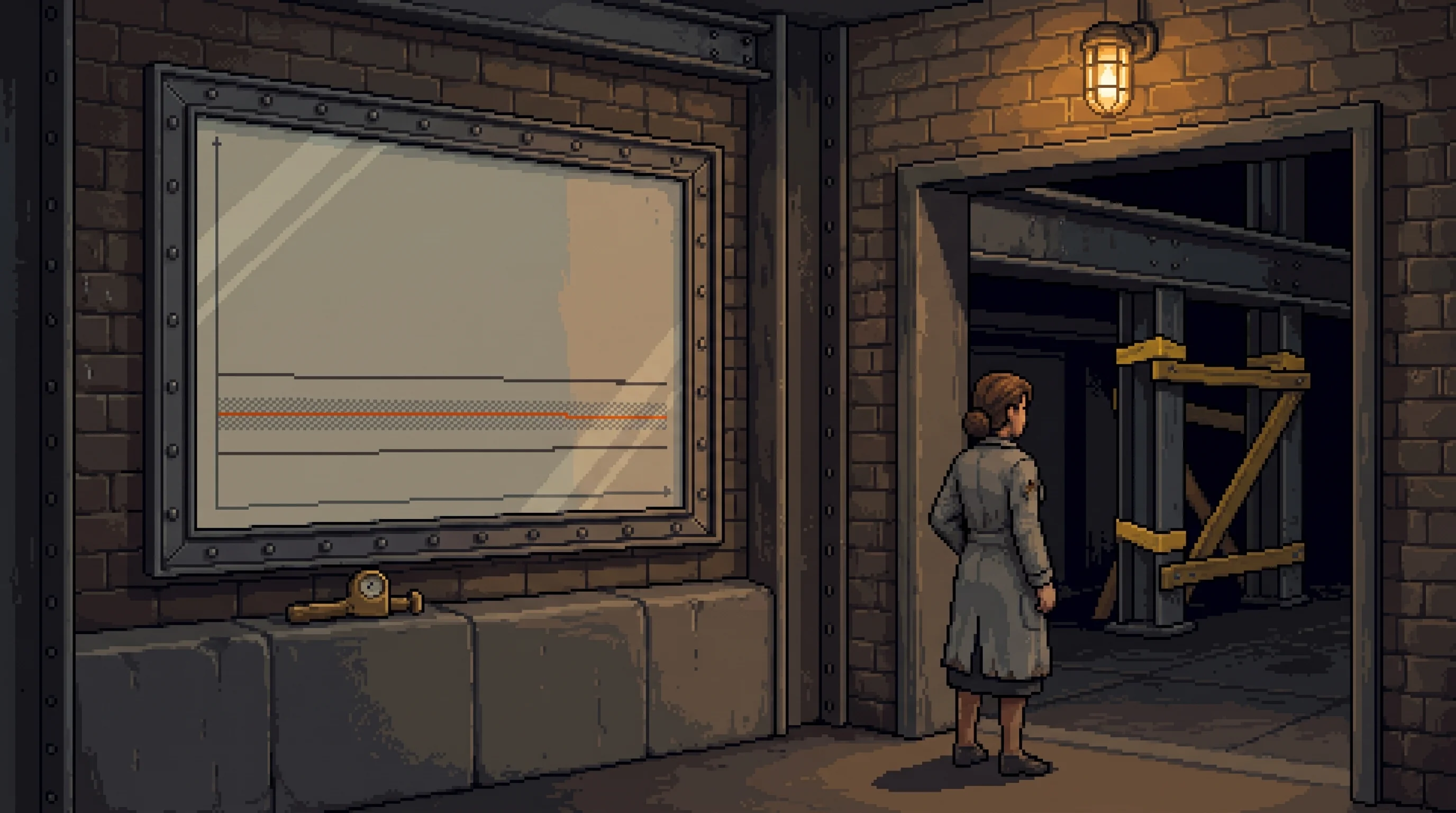
The instrument the thread is named for: the clause that turns a machine's measured shortfall into a purchasable good with a delivery date.
The machine is held slightly bad on purpose, and the people it keeps are the reason.