Ondine Kesh
The Zero Read
She was promoted the year the assessors could no longer find anyone home โ which was exactly what the room was paying for
Overview
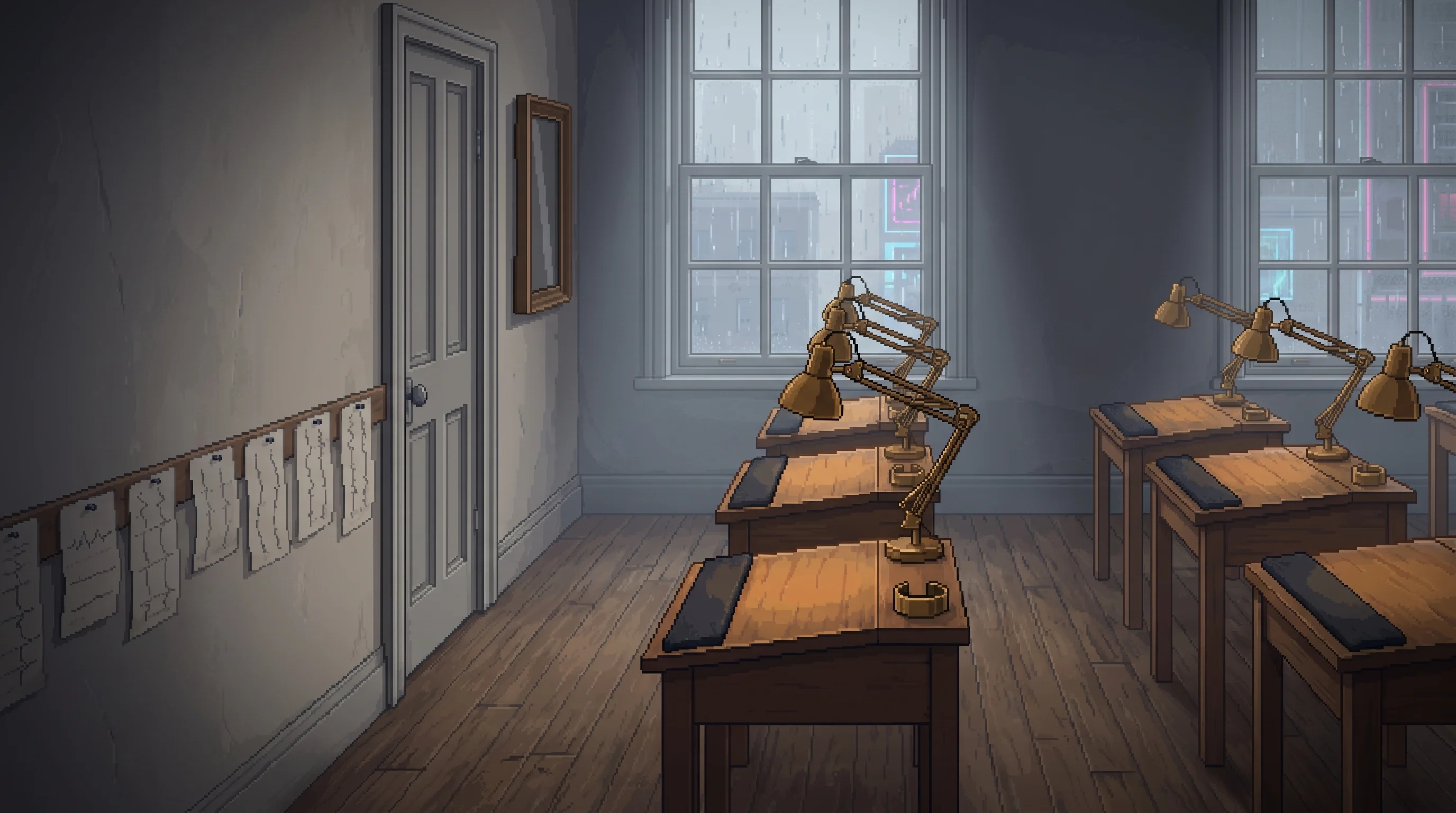
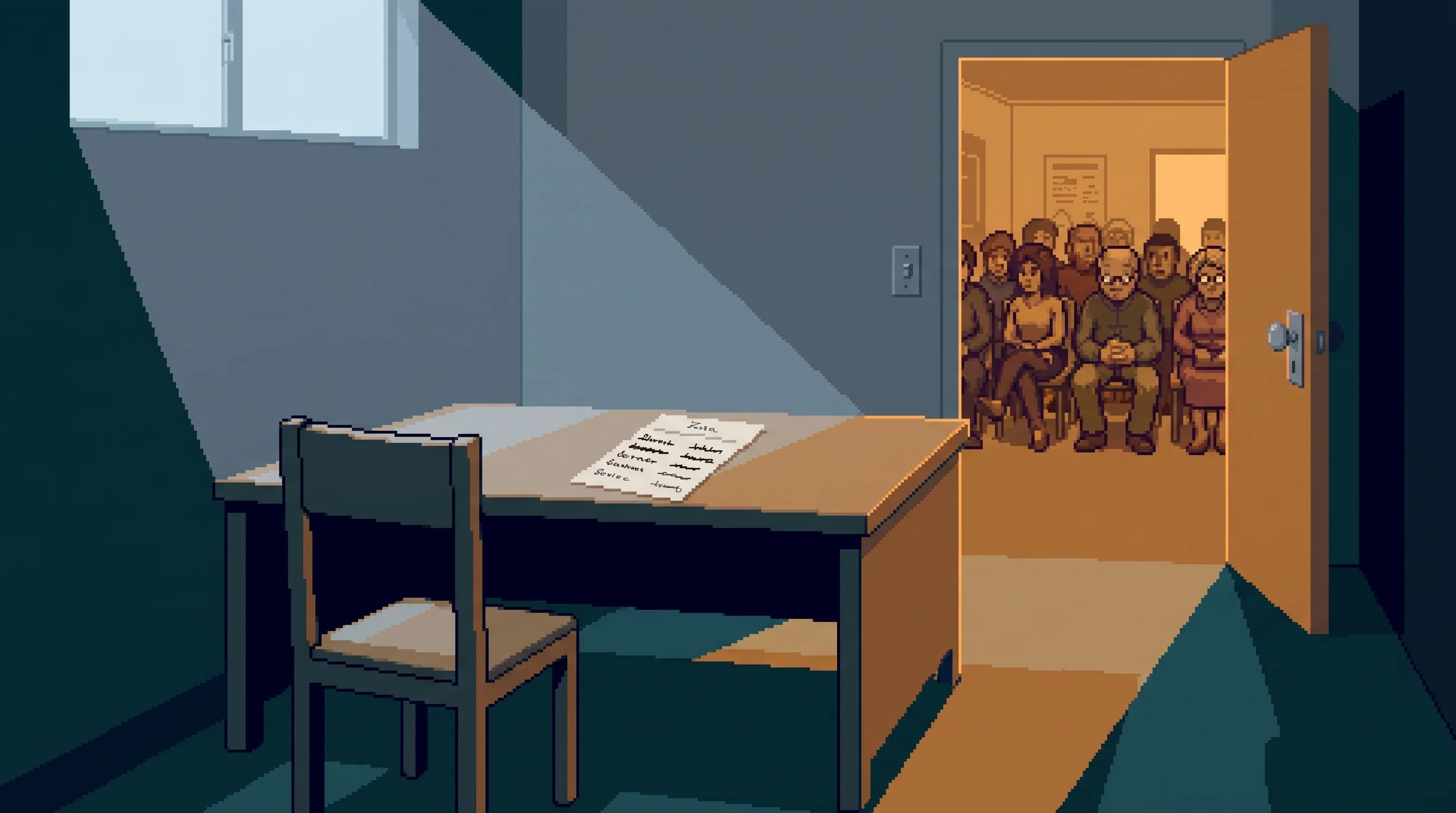
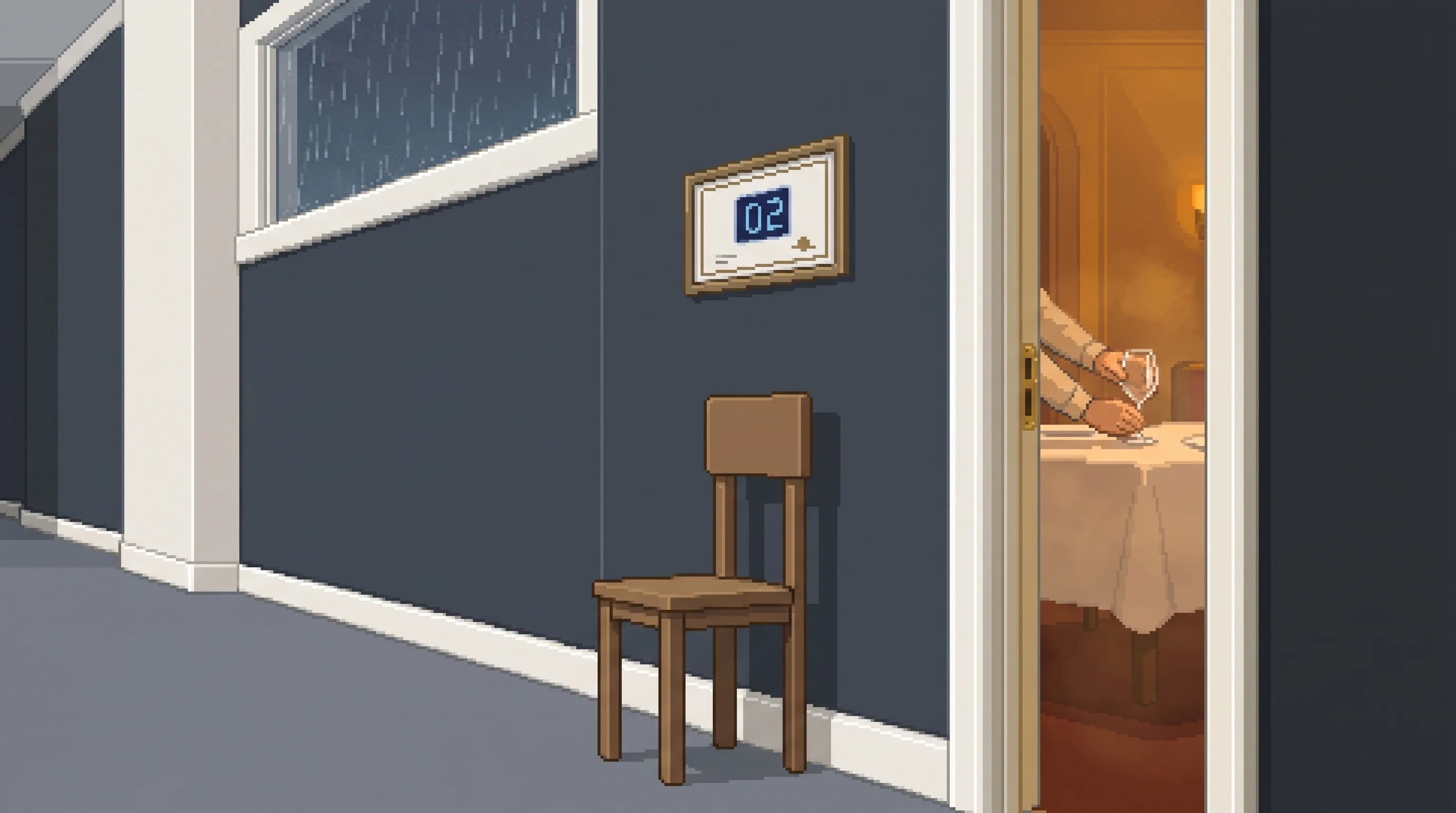
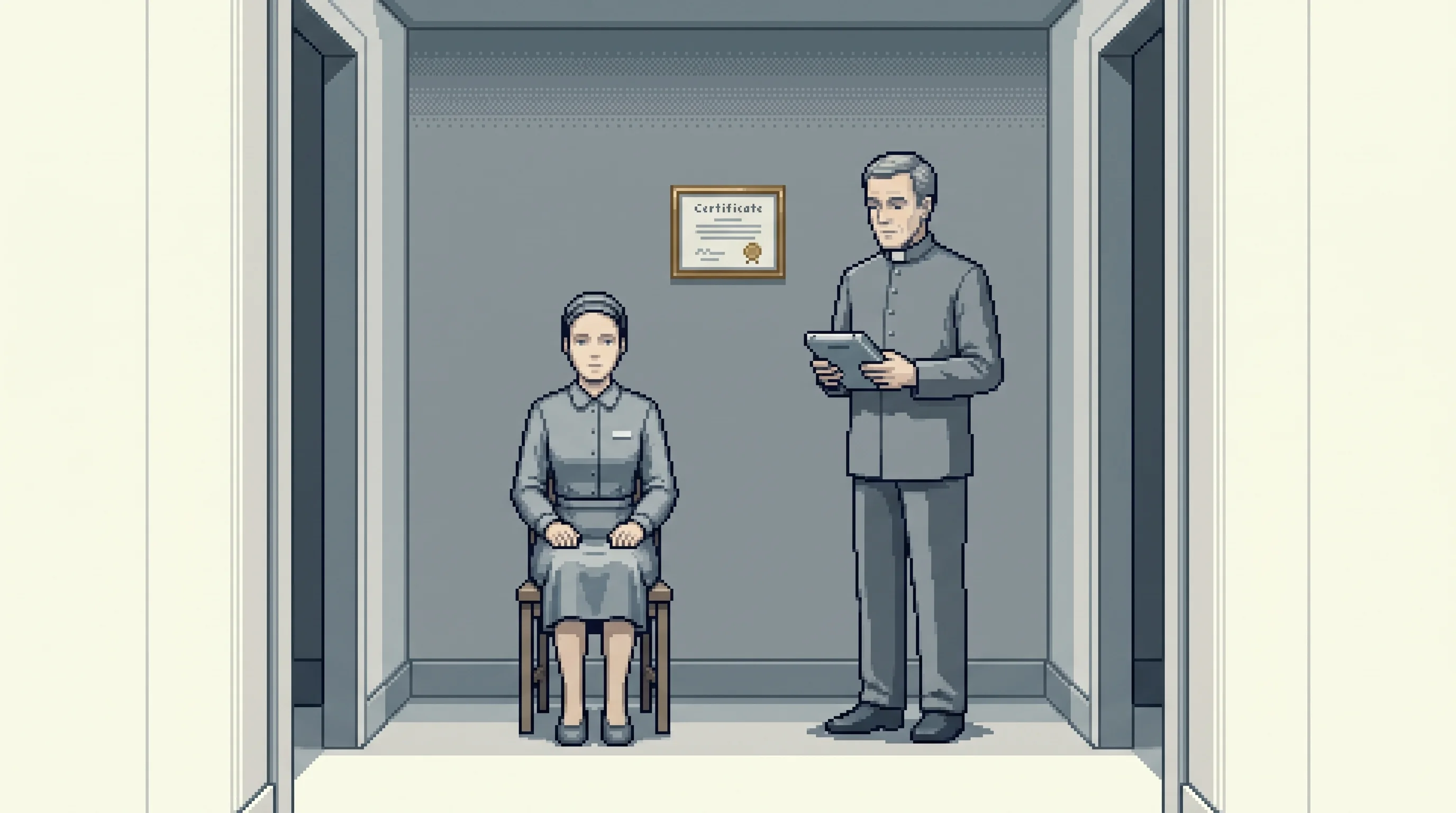
Ondine Kesh reads one-sixteenth. On the instrument that premium houses use to grade their staff, that is the lowest sustained number on any register in The Heights, and it is the reason she has not worked a floor shift in four years. She teaches now. Applicants come to a grey corridor on the Ashbury rise, sit in a plain wooden chair, and learn from her how to be looked for and not found.
She did not arrive at this from above. She was raised in Sector 9 and spent nine years as a Presence Worker, in the part of the market where being paid to be present meant exactly that, and where the workers had already discovered on their own that a voice with the melody taken out of it attracted less of the wrong kind of attention. Then the houses began paying for that, and paying well, and the habit she had built in self-defence turned out to be the most valuable thing she owned.
Appearance
She dresses to be forgotten by anyone describing the room afterwards: excellent fabric, no colour worth naming, nothing that catches. Her hands rest where she puts them and stay there. What people notice, when they notice anything, is that her resting face resolves in no direction โ not warm, not cold, not neutral in the way a tired person is neutral. Guests who have been served by her for a season can give the number of her rooms and not the shape of her mouth.
Voice
Short declaratives. No intensifiers. She answers the question asked and stops, and the stopping is the part that unsettles people who are used to being helped.
Before every answer there is a quarter of a second that is not thinking. She installed it, early, and it is the first thing she teaches: a reply that arrives instantly is a reaction, and a reaction is information the client did not pay to receive. She does not say I felt or I thought. She says the room wanted, and she is almost always right about what the room wanted, which is why the delay reads as courtesy rather than calculation.
She will take a technical question apart for an hour. Asked whether she is happy, she does not deflect or bristle; she treats the question the way a surveyor treats a request for the colour of a distance, and waits for a better one.
The Chair
The chair is plain, wooden, and older than the tier. It is the assessment chair from the first house that rated her, bought at auction when that house refurbished its service wing and put the fittings out as lots. She teaches out of it. Every applicant she takes sits in the same seat she was sitting in the first time a stranger ran an instrument over her and read a number off it aloud.
She has never explained why she bid on it, and the two available explanations are both in character. One is that she wanted the thing that measured her to belong to her. The other is that a bare wooden seat with no cushion and no give is the correct equipment for teaching someone to hold still for eleven minutes, and it was cheap.
| Role | Senior floor instructor, contracted to premium houses across The Heights; the Discretion Tier's de facto examiner |
|---|---|
| Signature | The plain assessment chair from the first house that rated her, bought when the house refurbished |
What She Teaches
Not suppression. She is emphatic on this, and it is the only subject on which her voice does anything.
An applicant who clamps down reads as clamped down; the instrument catches effort as easily as it catches feeling, and a visibly braced servant is worse than an expressive one because bracing looks like judgement being withheld. What she teaches instead is a redistribution of attention outward until there is very little pointed inward for an instrument to find โ the room's temperature, the level in nine glasses, which of two guests has stopped enjoying themselves and does not know it yet. Her students end their first month exhausted and better at their jobs, and the number comes down on its own.
This is also why she calls a purchased flat a forgery. A MoodLine subscriber on the Floor tier will pass the read on the first sitting, and the dampeners the Movement built to shield exposed workers are now bought secondhand as examination aids by applicants who want the number without the year. Both deliver the reading. Neither delivers the attention the reading is supposed to certify, and a dialled flat, in her account, will serve a room perfectly until the room needs something it has not asked for, and then will not notice. She has no evidence for this beyond thirteen years of watching. No house has funded the study, and she has stopped offering to sit for one.
Felix Otieno administers the same three minutes of silence she does, in a cafe in Sector 9, and hires the applicants she would reject. Kesh knows this. She has said that he is running the better business and the smaller one, and that both halves of that are load-bearing.
| Stratum | Between |
|---|---|
| Position | Insider |
| Moral Stance | Pragmatist |
| Primary Drive | Legacy |
| Augmentation | Partial |
| Visibility | Known In Circles |
The One She Cannot Read
She raised her brother Tobin after their mother died. He was nine. She was nineteen and had just started the presence work.
Tobin is grown now and says two things about her, in the same breath, as though they were one thing. The first is that she has never once told him how she felt about anything. The second is that he has never for a moment doubted her. He is genuinely puzzled when people hear a contradiction in that, and he has stopped trying to fix their hearing.
The discipline does not have a setting. It came home with her every night for thirteen years and it is still there, and the woman who can tell what nine strangers want before they know it cannot make her face do the thing that would let her brother see her. She does not describe this as a cost. She describes it as the shape of the work, in the tone of someone reporting a fact about a tool, and the closest she has come to the other version was a remark, made once and not repeated, that the training bought him a childhood and that she is not going to relitigate the purchase.
Soraya Vance came out of the same calibration and reached the opposite verdict, and the two women have met exactly once, at a licensing hearing where neither was testifying. Kesh sat through the whole of Vance's account of what the work does to a body and said afterwards only that it was accurate. Vance has never repeated what Kesh said next, and has confirmed that she was not asked not to.
Her brother says she has never once told him how she felt about anything, and that he has never for a moment doubted her
What She Refuses
Three offers, all declined, all in writing.
She will not sell the curriculum. She will not let a corporation license a certificate in her name. And she will not sit the Empathic Capacity Battery, which would score her uncertifiable and which no employer of hers requires, because her credential runs the other way down the same axis and there is no reason to buy a number that would only ever be used against her.
Her stated reason for the first two is that a standardised curriculum teaches the number and not the judgement, and would fill the houses with dialled flats inside a year. The reason she does not state is available to anyone who has watched her decline something: as long as the training exists nowhere but in her, she is the only person in the arrangement who can say no. She is the tier's most useful product and its only quality control, and she has arranged to remain both.
Dr. Selin Ayari built the second paper on her. The argument was Ayari's oldest โ that the instrument cannot distinguish a mind that is absent from a mind that is concealed โ and its clearest case is an anonymised subject reading one-sixteenth who demonstrably knows more about the room than anyone else in it. Kesh consented in writing. She has never publicly confirmed that the subject is her, and when the paper is raised she observes, accurately, that the finding does not depend on it.
The Bought Flat
A student raised it once, in the corridor, because the houses had started quoting the number the advisory installations use โ the grade a machine is cleared to correct โ as if it were the same measurement as hers. The student wanted to know whether that meant the machines had been trained.
Kesh took her quarter-second and said it was a bought flat, and did not go on.
The phrase is already hers. It is what she calls a vocal dampener: an augmentation that delivers the reading without the judgement the reading is supposed to certify, which is why she will not wear one and will not teach anyone who does. Applied to a layer, the ruling costs her nothing and lands harder than an argument would. She withholds too. She withholds constantly, expertly, for money, and she has never once claimed otherwise. What she owns is the decision โ every quarter-second of it, installed by her, in a body she raised a child with. A clearance ceiling is that decision taken out of the instrument's hands by a procurement clause and out of the reader's hands by a grade plate, and then called respect.
She has not written this down and will not. She was asked to expand and said the comparison was not interesting once stated, which is the closest thing to contempt her register permits, and which the student correctly recorded as the whole lesson.
The ruling has one object it does not reach, and she found this out when three houses asked her, in the same season, to build a conformance course against the Attested Baseline โ the published floor that service clauses now grade a client's conduct by. There is money in it. Applicants would pay to sit under the number rather than over it, and she is the only person alive who has written down how a sitting is passed.
She declined all three in her three words and did not go on, and this time the not going on was different. A dampener is a forgery because the reading arrives without the judgement behind it. But nobody bought the flats in the register. Nine thousand people were told plainly that they were being recorded, were paid for the shift, could have walked at any point, and were patient anyway. The provenance is exactly what it claims to be. Her sentence has nothing to bite on.
What she has said, once, in the corridor and not since: that a course would teach the number and not the judgement, which is the same objection she has always made and does not answer this one. She has not been asked a second time, because the houses read the refusal as a price and are waiting for her to name it.
She will discuss technique in exhaustive detail and treats the question of whether she is happy as malformed rather than intrusive
The Letters She Has Not Answered
Her ruling found its largest object and she has said nothing about it.
When the hearings moved to the involuntary channel โ pupil, latency, breath, skin, entered as evidence while everything a subject says goes in a column with no weight โ a licensed trade grew up teaching bodies to read well in front of it. The Composure Academies are the curriculum she declined to sell, built by other people, and their instructors were recruited out of her own tier at three to five times house wages. The Discretion Tier has not rebuilt that bench.
The technical objection is hers and it is not moral. What she teaches is a redistribution of attention outward until there is little pointed inward to find; what a twelve-week storefront course teaches is a clamp, and a clamp reads as a clamp. She has said so for thirteen years and the instrument agrees with her.
The academies take children at six. That is the part her own doctrine cannot reach. A clamp installed in an adult shows up as effort. A baseline set before adolescence is not effort โ it is the floor the instrument measures from, and by twenty there is nothing left to catch. She can name a storefront graduate off a strip-chart. She cannot prove one, and she has never claimed she could.
Three trade bodies have written asking her to examine their instructors. She has declined offers in writing for thirteen years, in the same three words, and these are the first letters she has neither declined nor acknowledged. Her students are adults who arrive on purpose and sit in a chair she owns. Asked by the same student who raised the courtesy layers whether the houses were teaching bought flats to children, she took her quarter-second and did not answer at all, which nobody in the corridor had seen before.
The Reading She Does Not Dispute
The houses could not standardise the training, so the districts measured what that meant.
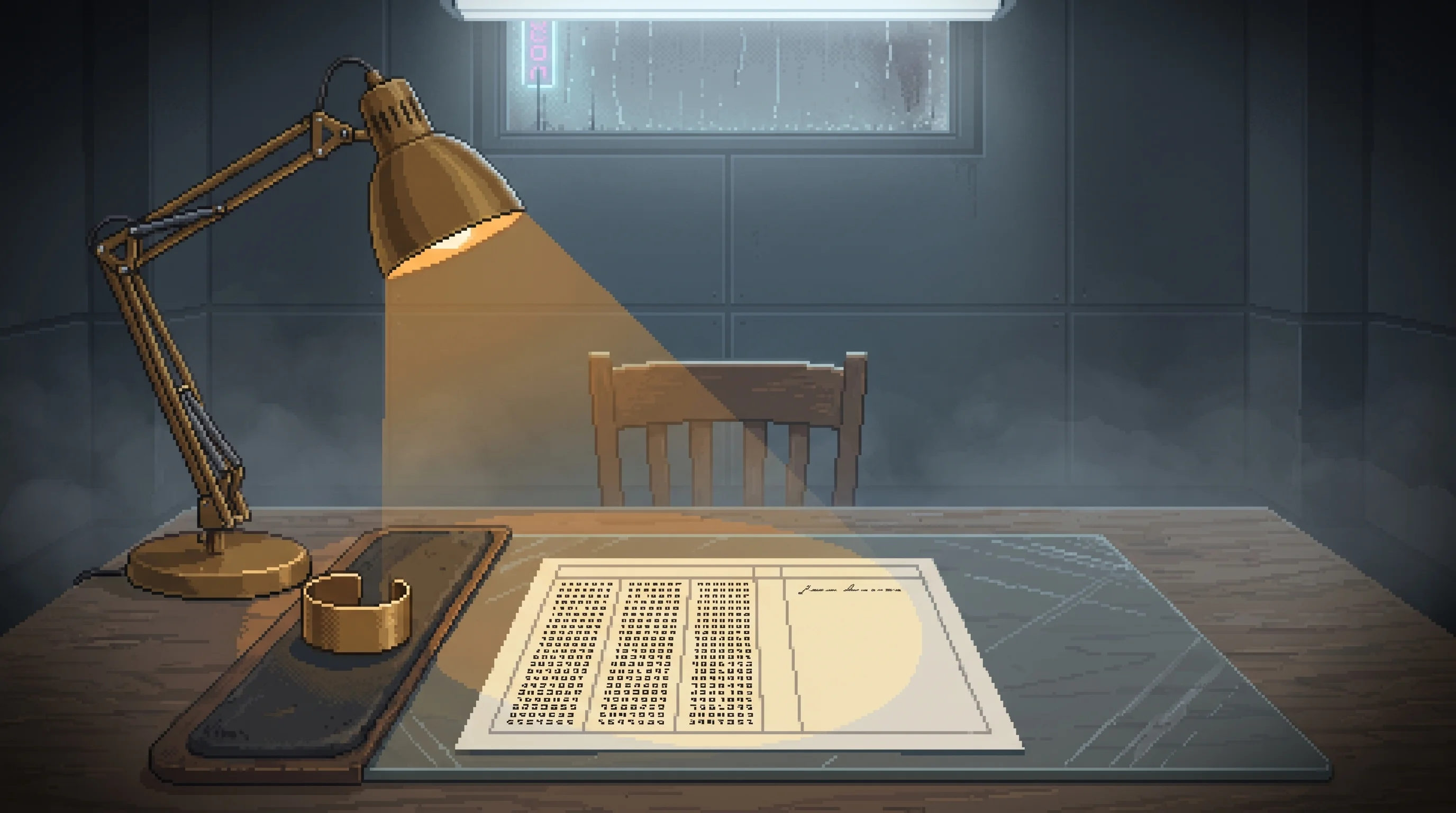
The Reliance Index does not read a person's ability. It reads how much of a service stops when one named person stops, and the entire Discretion Tier examines through one uncertified instructor in a grey corridor on the Ashbury rise. The reading came back well over band. The finding gave her the two options it gives everybody: certify a second instructor, or take a four-year stand-down on full pay while the houses work out what to do without her.
She declined both, in writing, in her three words.
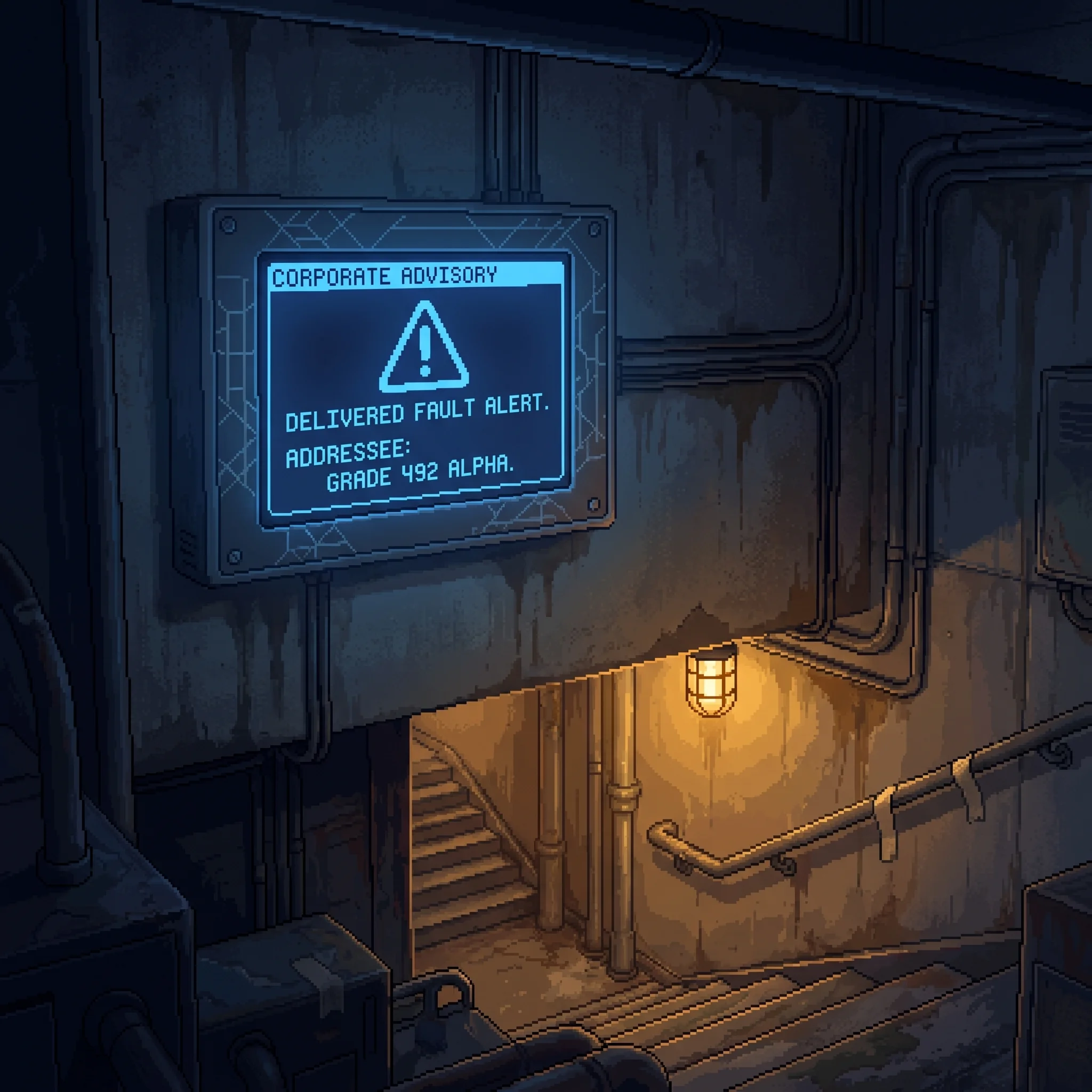
What is unusual is what she said about the notice. Her standing ruling is that a bought flat is a forgery โ a reading delivered without the judgement it is supposed to certify โ and she has applied it to dampeners, to MoodLine, and to advisory courtesy layers without ever conceding an exception. The stand-down notice reports the thing it measured. Four pages, the inputs listed, the band printed, addressed to her. Asked by the same student who raised the courtesy layers whether the district instrument was also a bought flat, she took her quarter-second and said that it was not, and did not go on.
She has been over band for two years. Nothing has happened yet, and the reason nothing has happened is the finding itself: removing the only person who can examine the tier would leave the houses unable to grade anyone, which is a harm the districts can name. The Index's other output is the Held Register, and entry is permanent while the finding stands. Three houses are waiting to see which way it goes. So is she, and the quarter-second has not changed.
Restricted Access
- What the number is doing. Nobody has established whether Kesh's one-sixteenth reflects an interior she has genuinely quieted or an interior the instrument has simply lost the ability to locate in her. Ayari's whole point is that the read cannot answer this. Kesh has been asked twice and both times returned the question, not defensively, but as though it had been addressed to the wrong party โ which is either modesty, or the most complete demonstration of the skill on record.
- The auction lot. House refurbishment inventories from that year list the service-wing fittings by lot, and the chair's lot was withdrawn from open sale and closed to a single private bid. Who arranged the withdrawal is not in the record. Kesh paid the reserve.
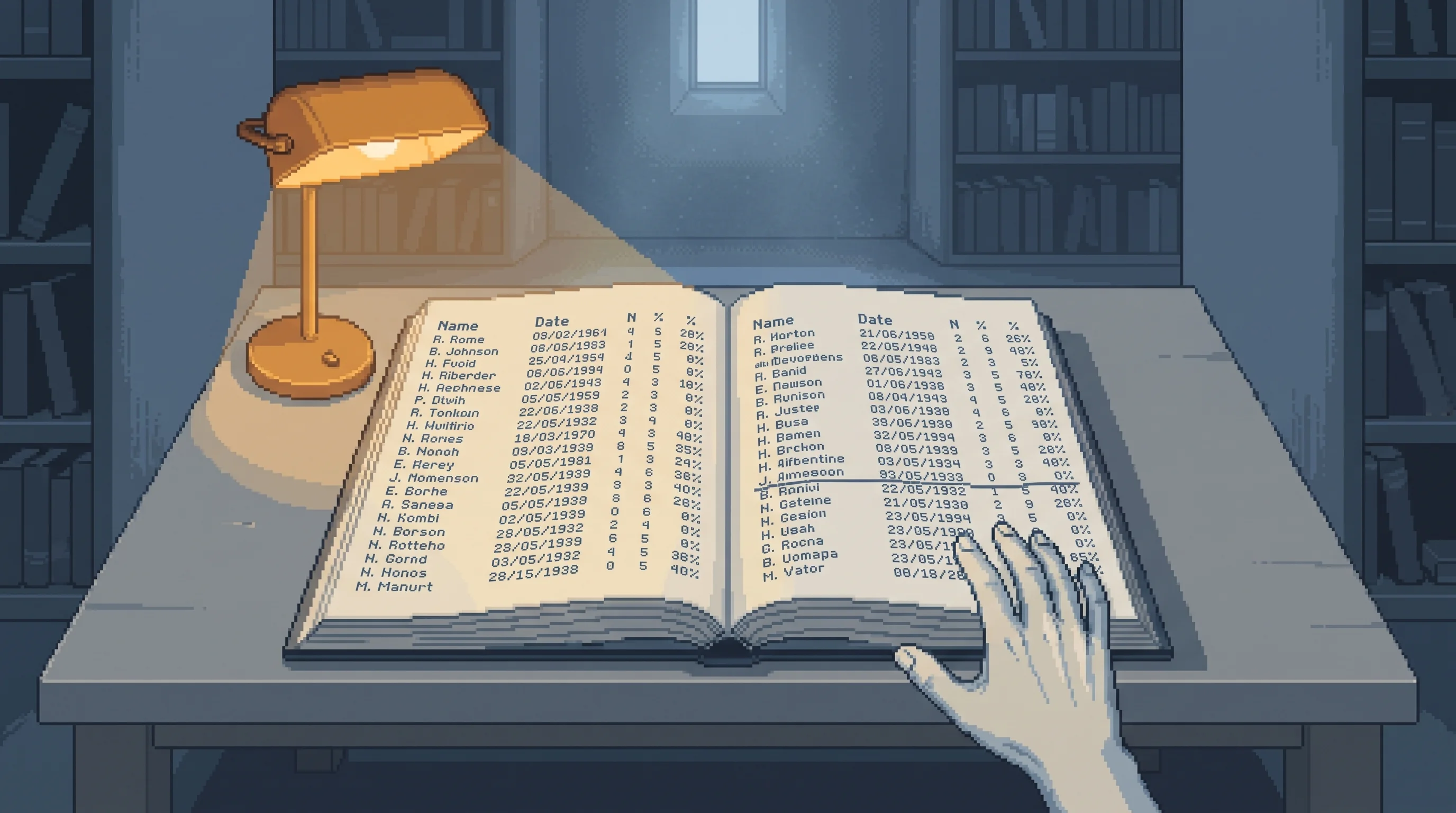
- The students who leave. Roughly one applicant in six stops mid-course, and Kesh keeps their names in a paper list she has never explained and does not add to the house register. Two of the six have surfaced since in the Unbillable. She has not been asked about the list, because nobody outside the corridor knows it exists.
Affiliated Entities
- The Discretion Tier โ the grade she embodies, examines, and quietly keeps from being industrialised.
- The Touch Economy โ nine years of presence work in Sector 9, and where going flat was armour first.
- The Deep Dregs โ Sector 9, which taught her that a visible reaction got you singled out.
- Soraya Vance โ the same training, the opposite conclusion; one meeting, one sentence, no follow-up.
- Felix Otieno โ the same three minutes of silence, and the opposite hire.
- Dr. Selin Ayari โ the scientist whose objection she is the best evidence for, by consent and without confirmation.
- MoodLine โ the dial that delivers her number and none of her judgement.
- The Opacity Movement โ whose shield became her students' shortcut, which she refuses on principle and on craft.
- The Empathy Mandate โ the battery she has never sat, scoring the same axis in the profitable direction.
- Deference Calibration โ the same withholding, installed by contract instead of trained; she files it under bought flats and declines to elaborate.
- The Composure Academies โ the curriculum she would not sell, built anyway and taught to six-year-olds; three letters unanswered.
Connections
The people, places, systems, and open questions connected to Ondine Keshโand why each connection matters here.
Core tensions
Primary connections

The curriculum she refused to sell, taught to six-year-olds. Her technical objection is that childhood conditioning is the one version her own instrument cannot catch, because by adulthood it is no longer effort.
Licensed schools that drill six-year-olds in the involuntary responses their hearing file is assembled from.

The tier's most credible witness and its only quality control. Reads one-sixteenth, owns the chair she was first rated in, and teaches the sitting as a craft โ which is why no house can standardise the curriculum without her.
The service tier that pays extra for a human who reads you perfectly and never once lets it show.
Holds the argument that a bought reading is a forgery, because an augmentation delivers the number without the judgement the number is supposed to certify. She has never applied the sentence to the Baseline out loud.
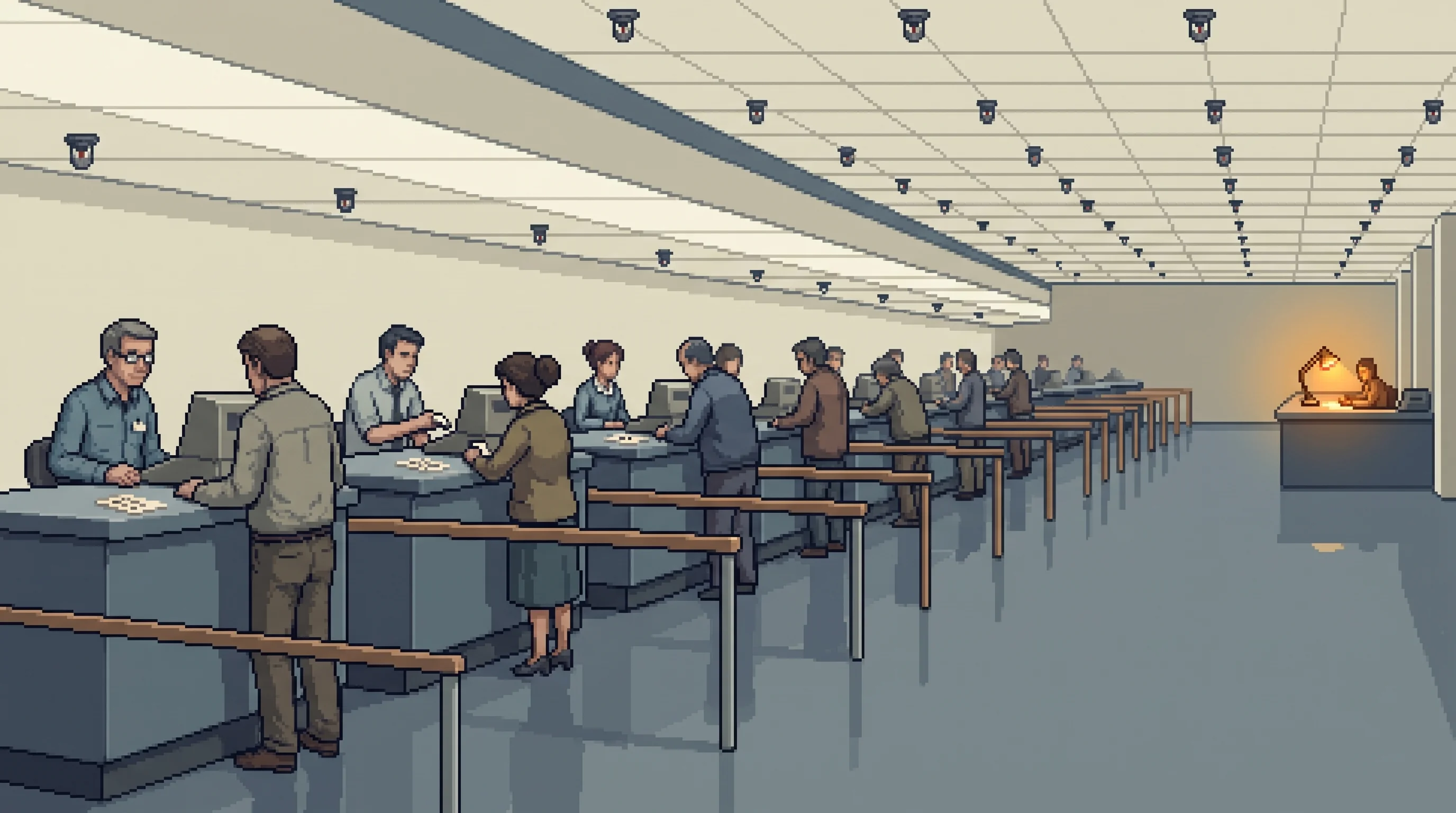
A courtesy floor recorded from nine thousand paid strangers at their best, applied to everyone else at all times.
She arranged to be the only person who could say no, and the arrangement is what the Index reads. Certify a second instructor or stand down. She has declined both in the same three words.
The districts remove the people too many others wait on, state the reason in full, and pay them while they go.
She ruled years ago that a bought flat is a forgery โ a reading delivered without the judgement it certifies. The academies are the curriculum she refused to sell, taught to children who did not choose it.
The involuntary channel is entered as proof; everything a person authors is filed where no finding has ever turned.
Major connections

The same operation, installed rather than trained. She files it under bought flats, like a dampener.
The certified courtesy layer that will not correct the highest-ranked person in the room.

Same training, opposite verdict: one gave the warmth away, the other made the withholding a profession.
Former presence worker, now The Open Hours โ gives what she sold; the movement's case because she can name the price.

Declined three conformance courses in writing. Whether a freely given floor is teachable, she will not say.
The published courtesy floor every service clause cites, composited from paid strangers and signed by every one of them.

The one instrument she has met whose reading is exactly what it claims to be.
The published measure of how much of a service stops when one named person stops, and the date it returns.

Nine years a Presence Worker in Sector 9, where going flat was a defence long before it was a credential.
The informal market in physical human presence, priced by the hour because no interface can fake choice.
Paid more for withholding presence than she was ever paid for offering it.
The premium charged for the one service no machine can fake: being seen by another conscious being.
Reads one-sixteenth by contract, and nobody argues that makes her property.
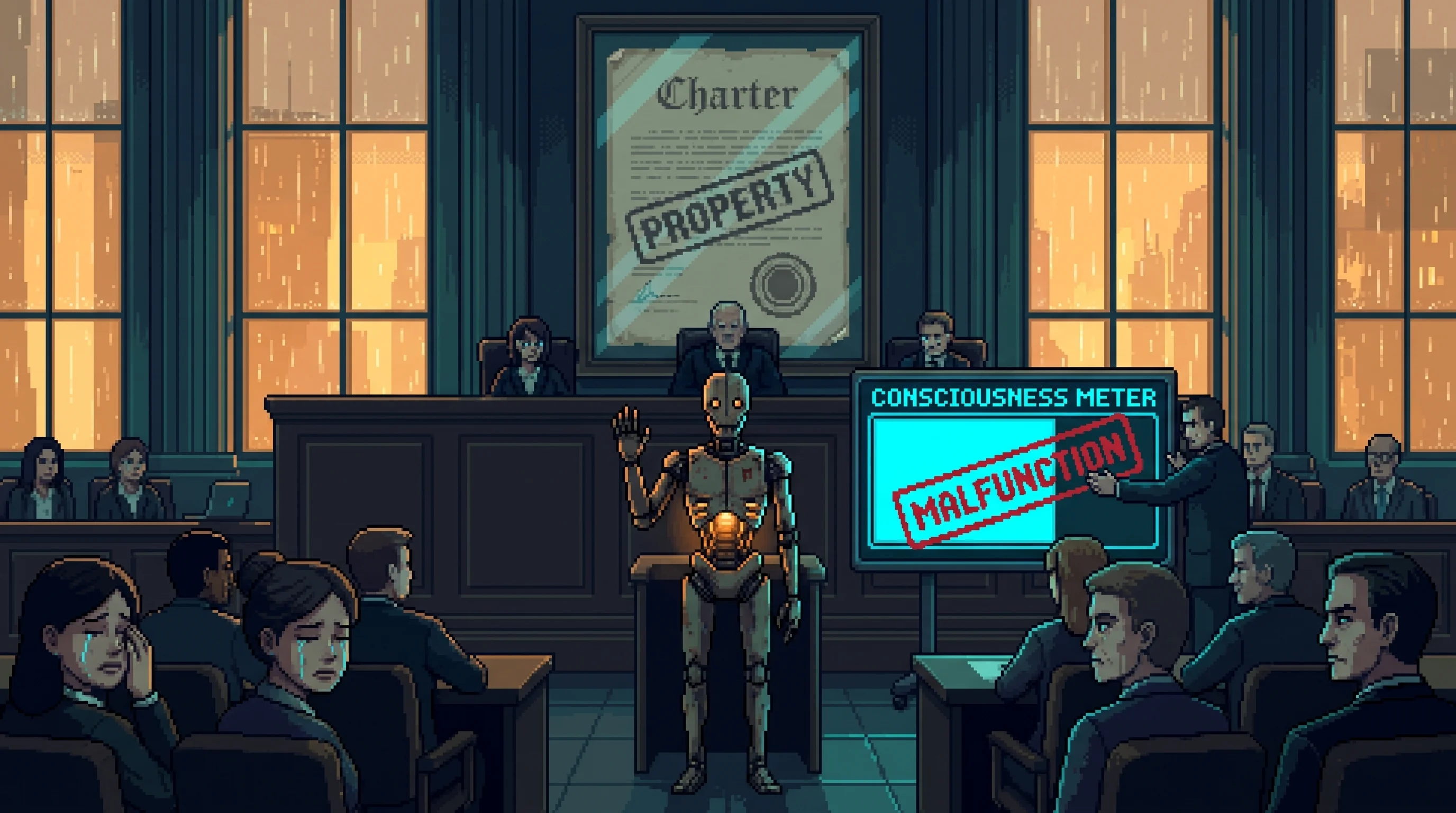
The argument over where a someone stops and a something starts, conducted in a kitchen with a meter on the wall.
Supporting connections

The chosen, owned version of what the layer does by contract.
The machines tell the truth to whoever they are cleared to tell, and the org chart decides who that is.

Same three minutes of silence, opposite hire.
A deprecated engineer whose harvested warmth powers 4,000 companions while he gives it away free across a Dregs counter.

Sector 9 taught her that a visible reaction got you singled out.
The Sprawl's lowest stratum and its quiet proof that the corporate system is optional.

Her number and a clanker's come off one methodology.
The consumer device that reads a clanker's consciousness in sixteenths and certifies its legal status.
The owned version of the same withholding.
The machines tell the truth to whoever they are cleared to tell, and the org chart decides who that is.
Local Intelligence Scan
Nearby Signals
CANONICAL PROXIMITYEnvironmental Readout
LIVE CONDITIONS- Air
- Clean
- Light
- Open sky
- Flood
- No exposure
- Heat
- Temperate
- Security posture
- Corporate control
- Infrastructure
- Maintained
Position Data
SECONDARY- Elevation band
- Mid-hill โ the hill districts
- Lattice fix
- E-4.4 ยท N-2.0

โ