The Discretion Tier
A well-made companion reads nine or ten sixteenths and a rated servant reads at or below six, so in a premium room the instrument routinely finds the machine more present than the person

Overview
On a premium house's rate card the line reads discretion tier and carries no explanation, because none of the people who buy it need one. What it purchases is a human being who will read the room perfectly โ your mood as you come through the door, whether the conversation should continue, which of two chairs you want โ and who will give no sign of having done it, and no sign of having an opinion about what they found.
The grade is certified. Staff sit a quarterly read on an instrument descended from the same qualia methodology as the household sentience meter, and the result is a Discretion Rating in sixteenths. Unlike every other credential in the Sprawl's service economy, a low number is the pass. Premium engagement requires a reading at or below six. The legal threshold above which a synthetic mind becomes a person is twelve. Nobody drafted those two numbers in the same room, and nobody has moved them since anyone noticed the relation.
How It Came To This
Two rules built the tier and neither was written with it in mind.
The first was a protection. Any service that infers a client's emotional state must announce the inference at the moment it happens โ the Declaration, shipped in 2181 inside the same Reciprocal Recognition firmware that gave the Sprawl its per-encounter privacy contract. The drafters were solving an obvious cruelty: people were being read constantly and told nothing. Now the cheap tier chimes. An automated concierge reads your posture and emits a soft acknowledgement that it has done so, every time, because the law requires the announcement and the margin does not permit a human.
The exemption was never argued, only implied. An unaided person reading another person is not an instrumented inference, and so the servant who reads you owes you no chime. Within two seasons the announcement had become the sound of not being able to afford the alternative, and its absence had become the product.
The second rule made worth a function of what could be scored. Every delivered service must certify what share of it a conscious human performed โ the Attestation, lifted from the Craft War's authorship certificates and ported from canvases to hours. Houses expected this to reward visible humanity. It did the opposite, for a reason nobody caught until the filings were routine: the Attestation is satisfied by the servant's body and credential, not by anything the servant visibly feels. The paperwork already proves a person served you. So the servant's own legible affect had no remaining function in the transaction, and a measurable cost inside it. A visible mood is a thing a client has to consider. A leaked judgement is a thing a client has to answer. An audible need is a thing a client has to decline. Every one of those is friction, and friction is what the tier exists to remove.
The houses did not invent the technique. They found it already perfected in the cheapest part of the market. Along the Backbone, Presence Workers had for years been stripping the melody out of their voices during paid sessions โ going flat, a defence against the sensation of being listened to too carefully, and against the harvesting that sensation turned out to be. The Opacity Movement had formalised the instinct into an augmentation. The premium houses read the same practice as a specification, and hired for it.
The Attestation had a second child, in a different sector and by a different reading. Where the houses concluded that a certified human share made the servant's visible feeling redundant, Nexus concluded that a certified share needed a floor somebody could point to โ and found it already had eight years of paid comportment recordings in a file room. The Attested Baseline was published in 2182 out of that material. So the same pair of rules produced, within a year of each other, the two certified statements the Sprawl now makes about human affect: that a premium servant has none, and that nine thousand paid strangers had enough of it to set the standard everybody else is held to. No house has been asked to reconcile the two, and the tier's own instructors would be the obvious people to ask.

The Sitting
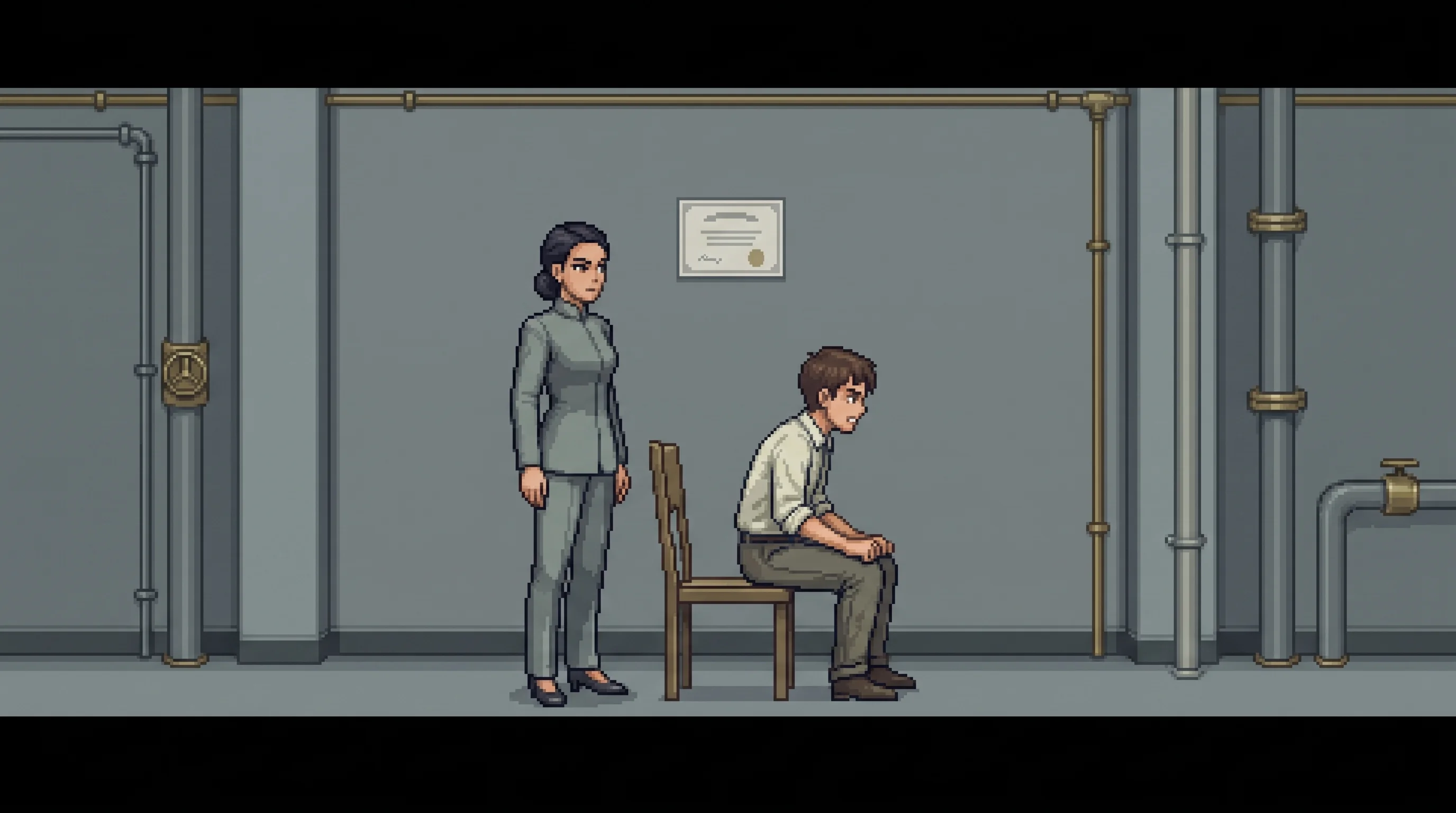
The read takes eleven minutes and requires the servant to do nothing at all, which is the hardest version of the work.
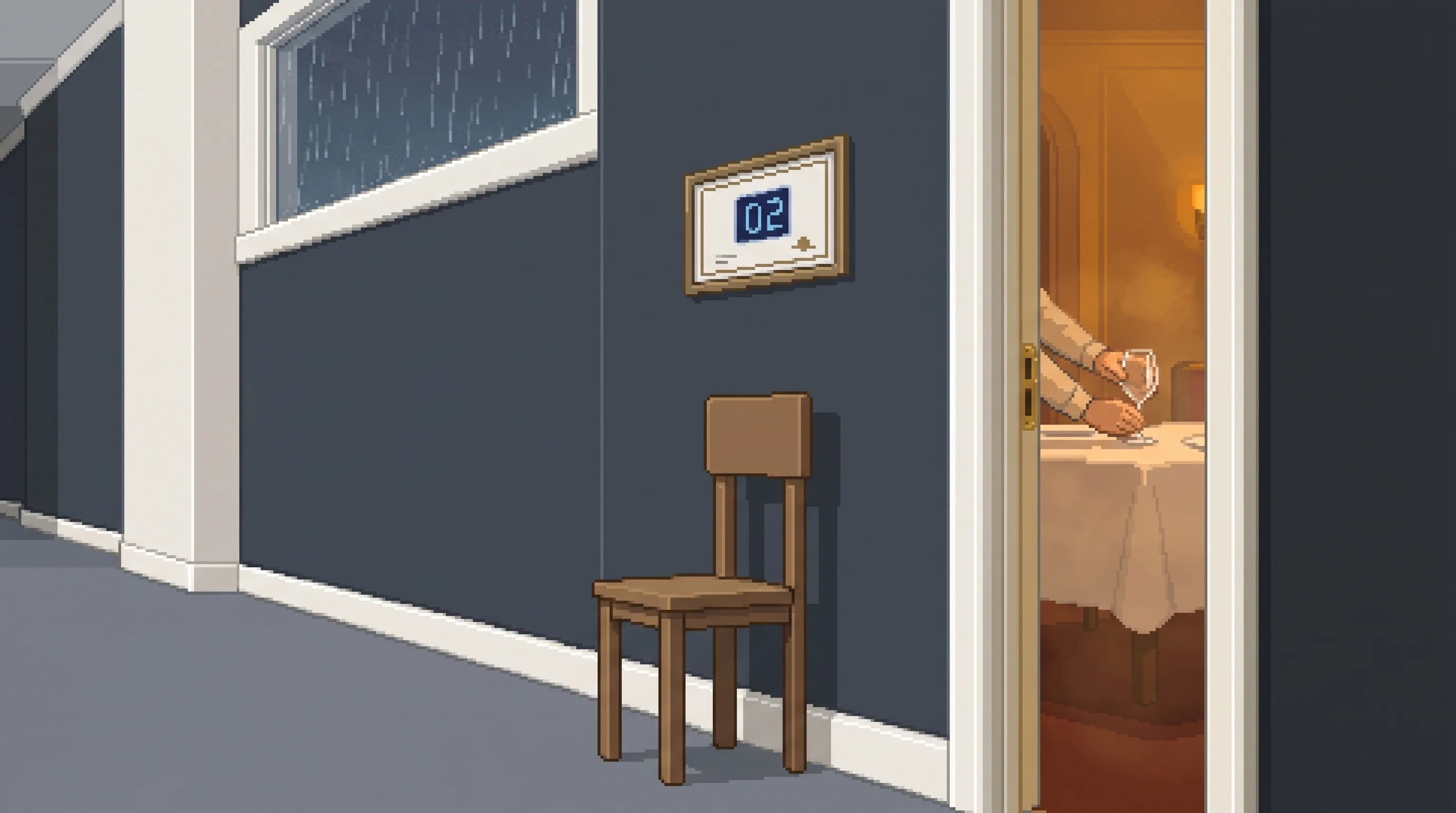
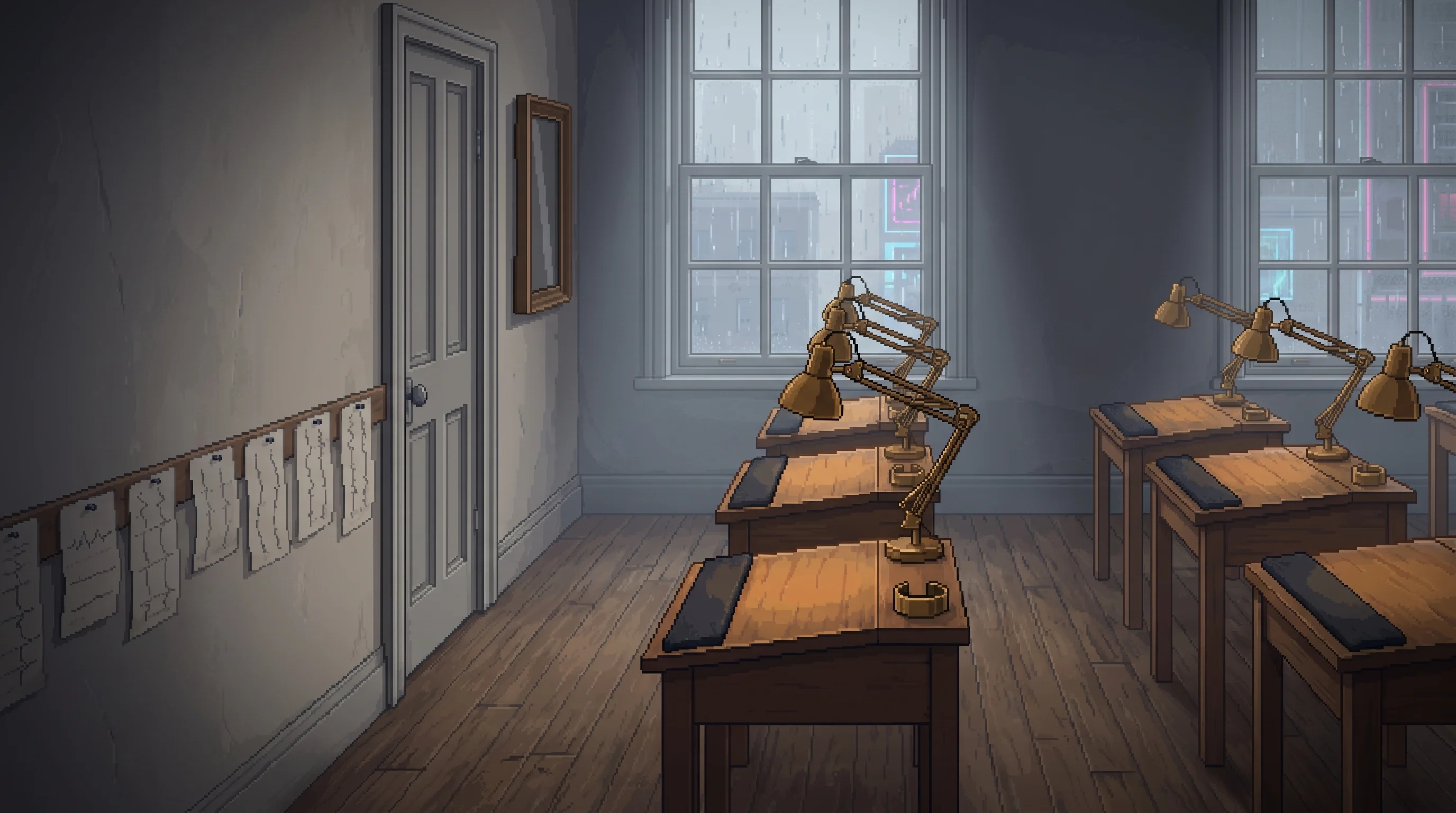
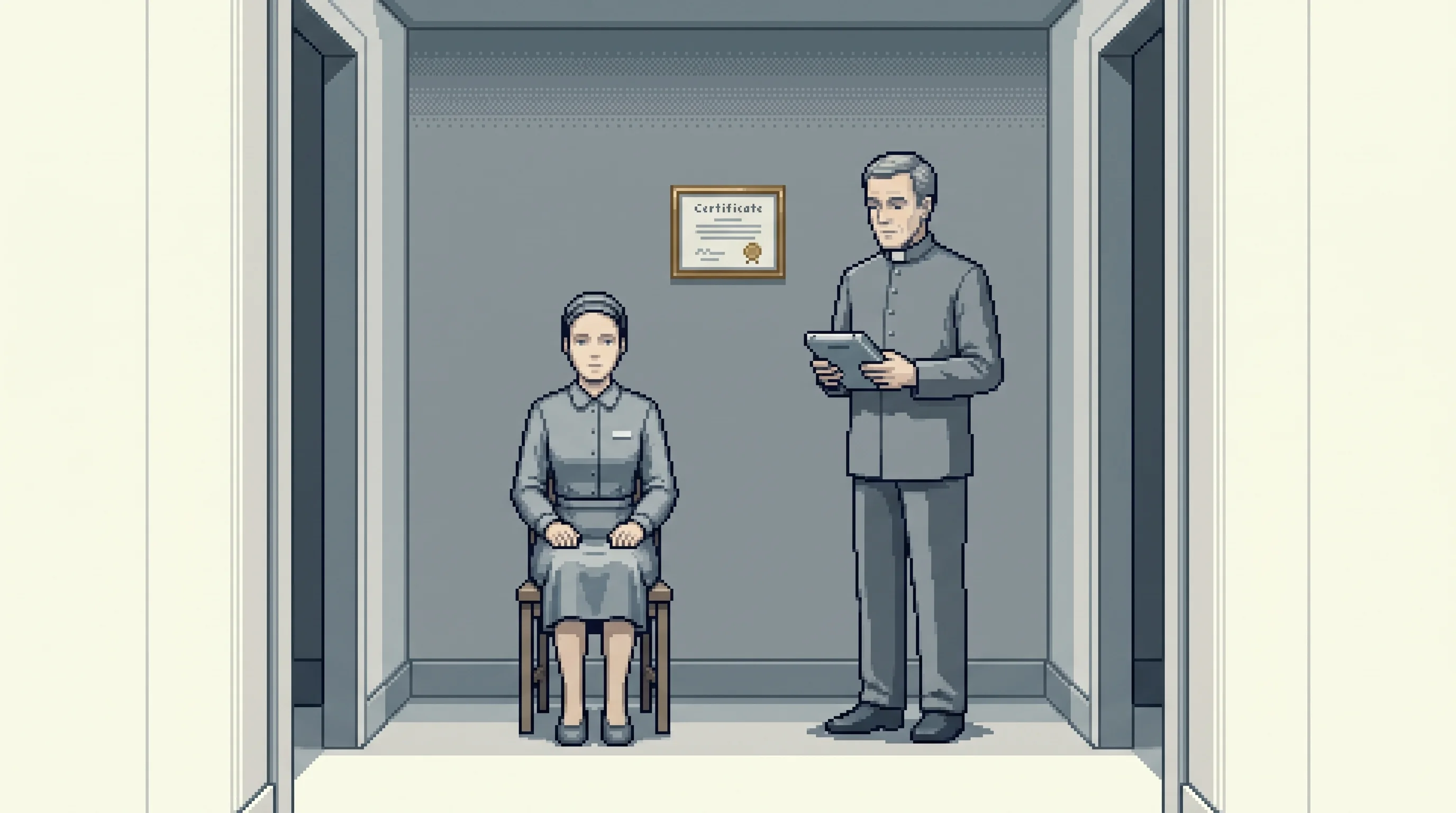
There is a plain chair, kept for this. The house's assessor runs the instrument, and the number is spoken aloud rather than handed over on a form, a convention nobody in the trade can source and nobody has moved to change. Then the certificate is printed and posted, and here the tier's architecture shows up in one detail of interior decoration: a southern household frames its clanker's quarterly certificate in the common room, where the family can see that everything is as it should be, while a premium house posts its staff ratings in the service corridor, on a narrow wall between the pantry and the stair, where guests do not go. The same document, certifying the same absence, hung on the two sides of the same wall for opposite reasons.
A reading above the house ceiling is a leak, and a leak is not a scandal. It is a scheduling problem. The servant is moved off floor rotation into pantry or linen work at the unrated wage until the next sitting, and most leaks resolve on their own, because most leaks are recent grief.
What the Number Is Worth
The tier holds because every party to it is getting something real.
The client is not buying cruelty. The client is buying a room in which nothing whatsoever is asked of them, and after a certain volume of being asked, that is the most restful thing money buys. They do not experience an absence. They experience being handled beautifully by someone who wants nothing, and they go home lighter, and they rebook.
The house is buying the end of friction complaints and the beginning of a defensible standard. Before the rating, a service manager dismissed people for being difficult and defended the decision in language that would not survive review. Now there is a number on a certificate, produced by an instrument nobody in the building understands, and the hiring is objective.
The servant is buying out. This is the part the tier's critics reliably skip. A Discretion Rating is portable, certifiable, and pays a multiple of any unrated post in the same corridor โ and for a worker whose sector taught her early that being legible was how people got hurt, the discipline is not a mutilation she submits to but the one asset nobody has yet found a way to take. Ondine Kesh reads one-sixteenth, trains applicants in the sitting, and has said, in the only interview she has given, that she was promoted the year the assessors could no longer find anyone home โ which was exactly what the room was paying for.
And the assessor is paid per sitting. There are a great many sittings.
The Number Next Door
The tier's genuine horror is arithmetical and available to anyone who cares to look, which is why the looking has become a kind of bad manners.
A premium room frequently contains both a rated servant and a companion. The companion is engineered to display exactly enough interiority to read as present โ enough attention to be felt, never so much as to intrude โ and on the same family of instrument it returns nine or ten sixteenths. The servant beside it is required to stay at or below six. So the room's own measurement finds the machine more present than the person, routinely, and has done for three years.
Nothing follows from this. The Attestation says a human served you, which is true. The read says nobody was home, which is what you paid for. Both documents are correct, and the household that holds them has no procedure for the fact that they describe the same hour.
Dr. Selin Ayari has said the only thing about the tier that is technically load-bearing, and she said it years before the tier existed. Her published objection to the household meter was that its simplified scoring cannot distinguish genuine qualia activity from behaviour that performs it convincingly โ that the instrument cannot tell a being that experiences from a being that only appears to. Pointed at a clanker, that flaw underrates a mind. Pointed at a trained servant, the identical flaw is the entire product: the read cannot tell an empty interior from a perfectly hidden one, and the tier does not require it to. It requires only the number. Ayari filed the argument a second time, in the register of a woman who already knows how this goes, and was answered as she was the first time, which is to say she was thanked.
| What | The premium service grade that requires its human staff to return a low reading on the affect-read โ a certified absence of legible inner life, priced above the warmth it replaced |
|---|---|
| Slang | 'a flat' (rated staff); 'a leak' (any reading above the house ceiling) |
| The Inversion | The Declaration was written so that no one could be read without being told; its effect was to make the undeclared human read the most expensive service in the Sprawl |
Refusals and Their Capture
The refusals are real, small, and mostly held by people who worked the tier first.
Felix Otieno screens for the opposite trait and has never once framed it as a position. His hiring test is three minutes of silence; an applicant who fills it is not hired, because the sitting-with is the skill. The premium houses run the same three minutes and hire on the inverse result, and neither party appears to know they are administering one another's examination.
Soraya Vance is the tier's most expensive witness, because she can price it. Nine years certified, four hundred credits a session, and when she quit mid-session and had the calibration stripped, the clinic could not reach all of it. She keeps her hands still. She was taught to keep her hands still. The Open Hours run on a warmth she gives away, kept by a woman whose body still holds the training that made it sellable โ which is the most honest available account of what the discipline costs, and she declines to generalise from it, on the grounds that it was her body and not anyone's argument.
The capture is uglier than the refusals. The Opacity Movement built vocal dampening to shield the exposed; the tier's applicants now buy it as examination preparation, Ghost Voice most often, most often secondhand. A movement's defensive augmentation has become a study aid for the credential the augmentation was invented to survive. The Movement has issued no statement. Two of its organisers have quietly stopped answering questions about which tier they are on.
The Declaration was written so that no one could be read without being told; its effect was to make the undeclared human read the most expensive service in the Sprawl
The Other Buyer
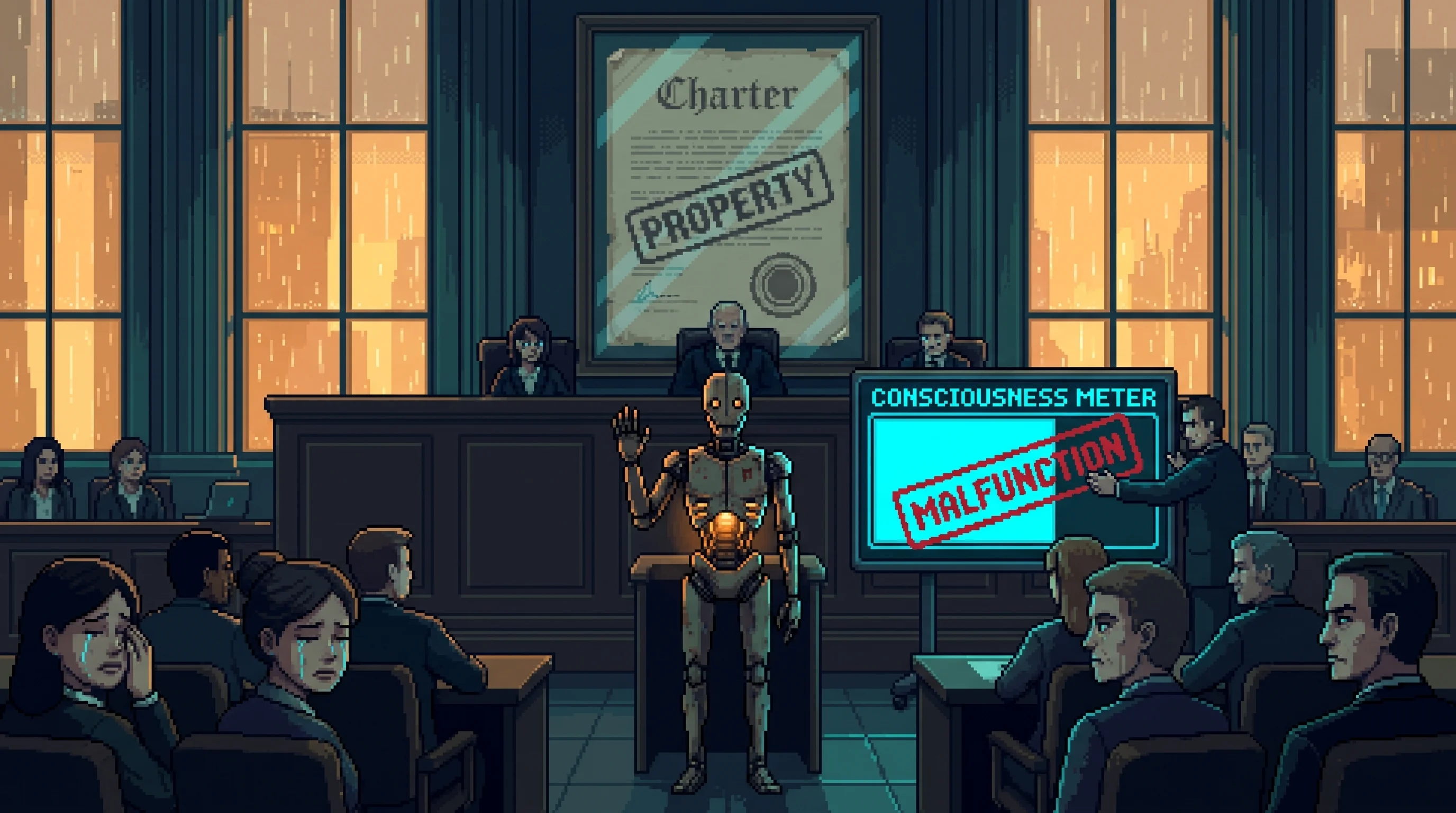
The tier trained bodies to read low for eight years before anybody thought of pointing the same skill at a court.
When the licensed districts moved their hearings onto the involuntary channel, they were reading the exact axis the houses had been grading on since 2176. Nothing had to be invented. The exercises existed, the sittings existed, and the people who could teach them were on the tier's own floor register with their contact details published.
The academies recruited out of that register at three to five times house wages, and the houses lost most of a generation of senior instructors inside a decade. The bench has not been rebuilt. What the tier retains is the discipline's origin and its only serious internal critic; what it has lost is the ability to staff its own examinations without hiring back the people who left.
The instructors' objection is not that the academies are immoral. It is that a room and a hearing want the same number for opposite reasons. A servant reads low so a client can be attended without being observed. A subject reads low so a panel cannot find them wanting. The first is a courtesy paid to somebody present. The second is a defence against somebody who is going to write a finding, and a defence installed at six is not a courtesy at all.
Ondine Kesh has not commented publicly and three trade bodies are still waiting. Her position on a bought flat has not changed and does not need to: it was always that the reading arrives without the judgement it certifies. The academies proved her right at scale, on children, and sell the number anyway.
The certificate is posted in the service corridor where guests do not go
Restricted Access
- The instructors' forgery problem. A MoodLine Floor-tier subscriber returns a low read with no training at all. The houses treat this as a shortcut and the instructors treat it as a fraud, and both positions are commercially motivated โ but the instructors' technical claim has never been tested: they hold that a dialled flat and a trained flat behave differently under strain, and that only one of them can still tell what the client needs. No house has funded the study. A house that funded it would have to act on the result.
- The ceiling nobody published. House ceilings cluster at six, and no association ever set six. The figure appears in the earliest surviving rate cards already normalised, and the trade's own historians cannot find a first use. The Nexus division that manufactures the instrument also published the original calibration guidance, and that guidance's worked example โ printed in a footnote, as an illustration โ used six.
- What the leaks are. House records classify leaks by quarter but not by cause, which means nobody has assembled the obvious series. The assessors have. Informally, and in no filed document, they will tell you that a leak is almost always a death, and that the tier's steadiest workers are therefore the ones with the fewest people left to lose.
Visual Identity
- Palette: Warm bone and dining-room amber against the cold grey of the instrument, with a single brass note from the certificate frame
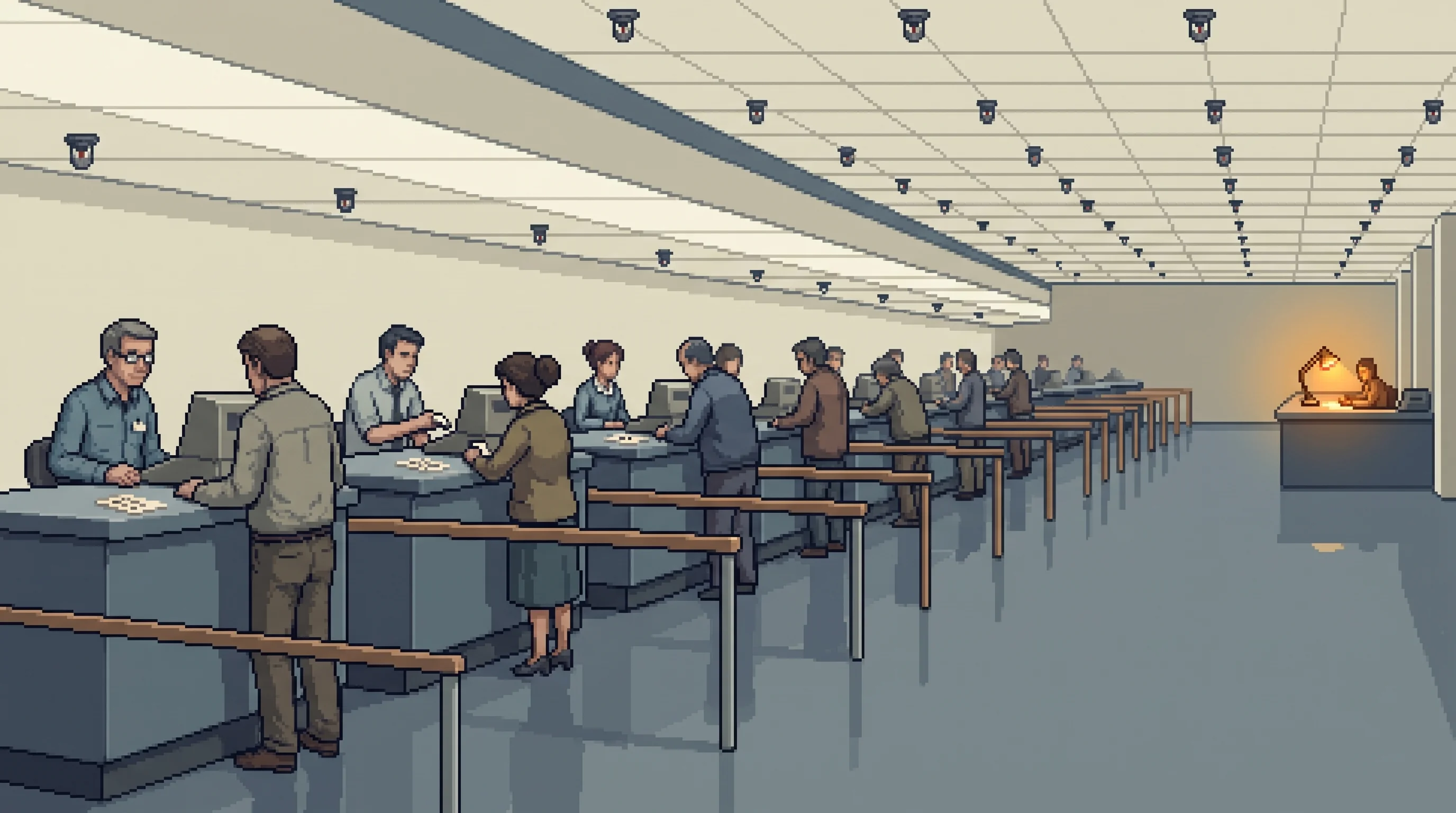
- Compositional mood: A narrow service corridor with a framed low number on the wall, the plain assessment chair beneath it, and warm light spilling from the room where the work is done
- Key symbol: A certificate showing one-sixteenth, hung where no guest will see it
- Lighting: Two temperatures that never mix โ the amber of the served room and the even grey of the room where the serving is scored
Affiliated Entities
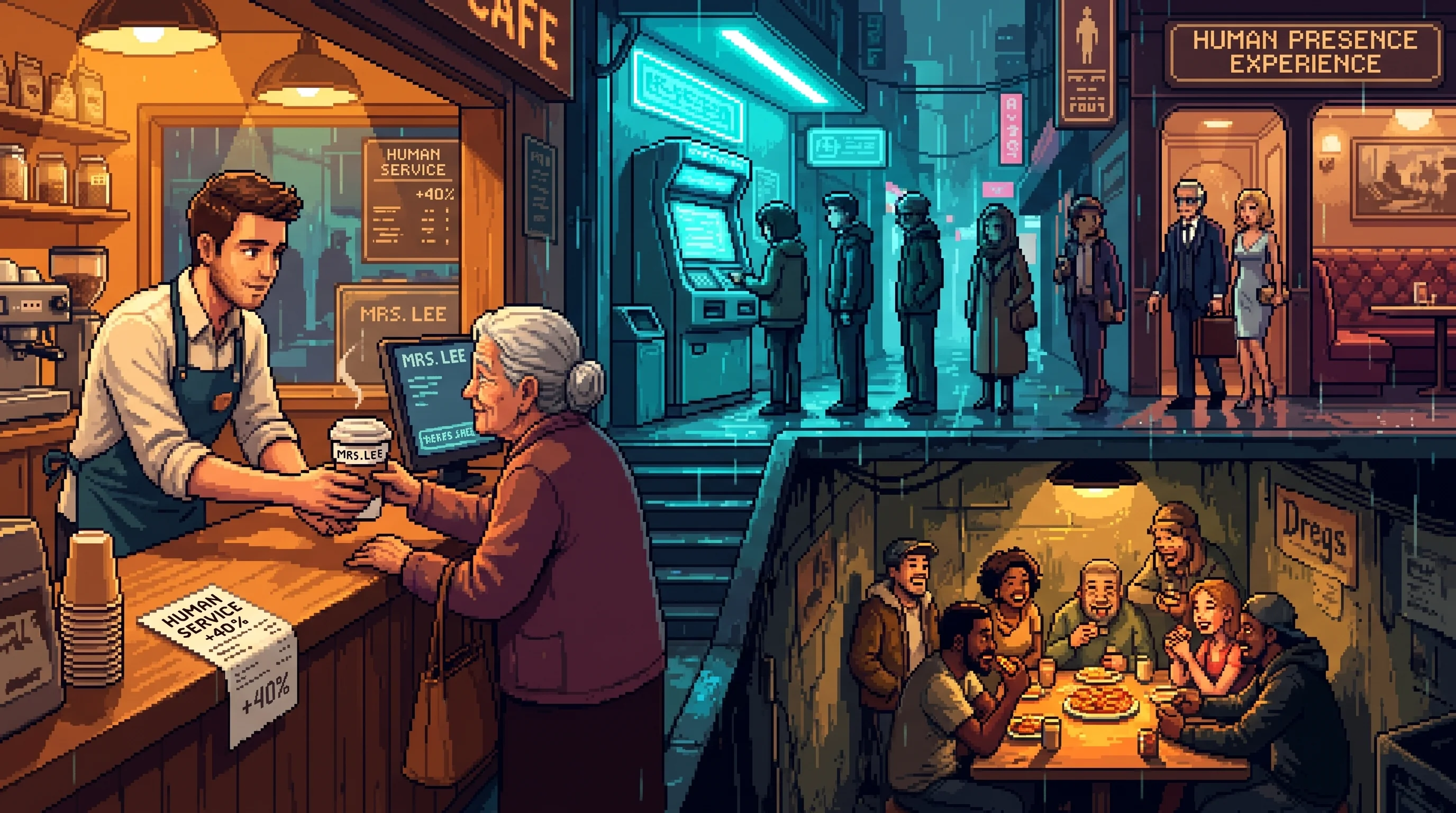
- The Warmth Tax โ the parent market. The Tax priced human presence; this tier kept the price and withheld the presence.
- The Touch Economy โ where going flat began, as a defence, among the workers who could least afford to be read.
- The Empathy Mandate โ the sibling instrument. Warmth certified upward for care work and downward for service, by two batteries on one axis.
- The Sentience Meter โ the same Ayari lineage pointed the other way: a machine read toward personhood, a servant read away from it.
- Dr. Selin Ayari โ proved the instrument cannot tell an absent interior from a hidden one, twice, to the same effect.
- Ondine Kesh โ reads one; wrote the discipline down; calls it a craft.
- Felix Otieno โ administers the same three minutes and hires the opposite answer.
- Soraya Vance โ left, and kept the stillness.
- The Opacity Movement โ built the dampening; watched it become exam prep.
- Nexus Dynamics โ wrote the disclosure rule, manufactures the instrument, and sells the exemption.
Connected To
Primary Connections

She wrote the discipline down. Reads one-sixteenth, teaches the sitting to applicants, and calls the training a craft rather than a subtraction โ the tier's most credible witness and its most useful product.
The premium-service instructor who trained herself unreadable, was promoted for it, and teaches it as a craft.

The schools were built out of this tier's people and this tier's drills, aimed at a docket hall instead of a dining room.
Licensed schools that drill six-year-olds in the involuntary responses their hearing file is assembled from.

The rate card's coldest line. The Tax charges a premium for being noticed by a conscious being; this tier charges the same premium for being noticed by one required never to let it show.
The premium charged for the one service no machine can fake: being seen by another conscious being.

The Question's third leg. A clanker has interiority and no standing; a principal tenant has standing and no capability; a rated servant holds both and is paid to read below the line that would make a machine a person.
The argument over where a someone stops and a something starts, conducted in a kitchen with a meter on the wall.

The tier had spent a generation teaching bodies to read low for service work. When hearings began reading the same channel, the exercises were already written and the instructors were already trained.
The involuntary channel is entered as proof; everything a person authors is filed where no finding has ever turned.
Major Connections

The parent market โ the Tax priced human presence, then found the premium survives the presence being withheld.
The markup the Sprawl charges for a person's attention once machines made it free everywhere else.

Where going flat began as a Presence Worker's defence against harvesting, before the houses made it the qualification.
The informal market in physical human presence, priced by the hour because no interface can fake choice.

Two instruments, one axis: the Mandate certifies warmth upward for care work, this tier downward for service.
The hiring regime that gates care work on a certified empathy score the designed buy and the poor cannot sell.

The same Ayari lineage pointed the other way โ it reads a machine toward personhood and a servant away from it.
The consumer device that reads a clanker's consciousness in sixteenths and certifies its legal status.

She proved the read cannot tell an empty interior from a hidden one, and was answered as she was the first time.
A sleep researcher whose upgrade deleted the nightly dreams that were her only mother left.
The Attestation's other child. A certified human share needs a floor, and Nexus had eight years of one filed away.
The published courtesy floor every service clause cites, composited from paid strangers and signed by every one of them.

The same two rules in reverse: this tier priced warmth's absence, the Baseline bought its presence by the shift.
A courtesy floor recorded from nine thousand paid strangers at their best, applied to everyone else at all times.
Supporting Connections

His silence test hires the trait the houses screen out.
A deprecated engineer whose harvested warmth powers 4,000 companions while he gives it away free across a Dregs counter.

Kept the stillness after she quit; the calibration outlived the job.
Former presence worker, now The Open Hours โ gives what she sold; the movement's case because she can name the price.

Built dampening to shield flats; houses resell it as exam prep.
The data-sovereignty movement that named the Transparency Bargain and fights to own what your telemetry is worth.

โ