MoodLine™
Consumer Affective Optimization Dial
The Floor Dial
Subscription lapse produces flooding, not sadness — years of un-metabolized affective residue arriving at once at biological amplitude, the prosthetic that handled it suddenly absent
How It Works
- 1
Smoothing
The low tiers shave the peaks. The worst mornings become survivable, and everything is still present but turned down.
- 2
Narrowing
The middle tiers tighten the affect band to a productive range, the way a thermostat tightens a room.
- 3
The Floor
The top tier guarantees a minimum mood. The suite will not let the user fall below it for any reason.
- 4
Lapse
When the subscription stops, years of held-back feeling arrive at once at biological amplitude. The user floods.
The pitch is the gentlest in the Sprawl: you decide how much. A dial, not a dose.
Smoothing, at the low tiers, shaves the peaks — the worst mornings made survivable, the spikes flattened, everything still present but turned down. Narrowing, in the middle, tightens the affect band to the productive range the way a thermostat tightens a room; the user reports feeling "more stable," and is. And at the top, the Floor — a guaranteed minimum mood, below which the suite will not let the user fall, ever, for any reason. The brochures render the Floor in warm amber and never quite describe it. Helix's marketing calls the whole product emotional sovereignty. The brand earnestly believes it is selling you back control of your own feelings.
What it is selling is the firmware Nexus installs without asking, repackaged as a freedom, with a renewal cycle.
The Floor Becomes the Architecture
Emotional sovereignty
Helix sells the dial as control of your own feelings. You decide how much.
What it costs
The brain reorganizes around the Floor. Ordinary sadness starts to feel like a malfunction.
Survivable grief
The first generation called the smoothing the best months of their lives.
What it costs
A lapse brings a flood, not sadness. Felix Otieno spent forty minutes weeping in a maintenance corridor.
The first generation loved it the way Davi Okonkwo's first Circadian month felt like the best of his life. Grief at survivable amplitude. Heartbreak you could schedule around. The wake attended without the part of the wake that hurts.
And then, exactly as the Dependency Spiral specifies — because MoodLine is nothing but the Spiral applied to the affective system, the eleventh rung of a staircase with no bottom — the brain reorganized around the Floor. Baseline sadness, the kind that arrives when a thing is genuinely sad, began to feel like a malfunction. The neural pathways that processed full-amplitude feeling did not vanish when the user dialed them down. They went dark. The rooms were still there. The user just could not feel in them anymore.
A MoodLine subscriber who lapses does not become sad. They become flooded — years of un-metabolized affective residue arriving at once, at biological amplitude, with the prosthetic that had been handling it suddenly gone. Felix Otieno survived precisely this when he went gray and the firmware switched off: forty minutes of unidentifiable weeping in a maintenance corridor, the biological system clearing a backlog the suite had been holding for years. His Small Talk Cafe hiring test now selects against the trait the dial produces — a subscriber fills three minutes of silence within thirty seconds, where Felix's uncalibrated applicants sit with it. Dr. Aris Kwan had already named the mechanism in firmware users and called it the fourth lock, affect rigidity. MoodLine simply added a column to his chart — and reached people younger, because a consumer does not need to be employed to subscribe.
Overview
MoodLine™ is the consumer edition of the thing the Calibration does to corporate employees and the thing SynThetic does to its forty million daily users: affective optimization, unbundled from the badge and the prescription, sold to anyone with a neural interface and a subscription tier.
The Circadian Protocol proved the model. Eight hours of sleep was overhead; reclaim it. Then someone ran the obvious second arithmetic. If sleep was overhead, what was grief? What was the four-day undertow after a friend goes gray, the heaviness that slows a worker for a fortnight after a parent dies, the low-grade dread carried into the Monday review? Helix had already shipped the firmware — Section 19.7, moral friction coefficient reduction, the rider the Calibration loads at 07:00 — but firmware was a corporate benefit, locked to employment. The market was larger than the workforce. There were 340 million people with companion subscriptions and no corporate Calibration, and every one of them had, at some point, felt bad.
So the suite came out of the firmware and onto the shelf.
History
MoodLine descends directly from the Circadian Protocol, the predecessor product that proved the model: sleep is overhead, reclaim it. When Nexus shipped the Protocol and watched 140 million people convert eight hours of rest into productive consciousness, the affective question followed inevitably — if sleep is overhead, what is grief? Helix already held the firmware answer in the Calibration's rider, Section 19.7, moral friction coefficient reduction. The unbundling came in 2181: the rider stripped of its priority-loading, fitted with a consumer dial, and sold to the ~340 million companion-subscribers who had never been Nexus employees and so had never received the corporate version.
The early adoption curve mirrored the Protocol's exactly — a first generation that described the smoothing as the best months of their lives, followed by the slow reorganization of the brain around the Floor. By 2184 the product had reached subscribers younger than any corporate firmware ever touched, and Dr. Aris Kwan's clinic had opened a consumer column on the affect-rigidity chart that has grown every quarter since.

Applications
The marketed application is emotional regulation: survivable mornings, scheduled grief, the worst spikes flattened. The actual application, in the economy that grew around it, is twofold and contradictory. For the subscriber, MoodLine is the deletion of suffering — and, through naia-okafor and the corporate benefits matrix she administers, a standard wellness line item enrolled across whole workforces. For Helix, MoodLine is the first half of a margin: the Empathy Mandate already proved the classify-then-monetize engine on warmth, and MoodLine runs it on sorrow, deleting the feeling so the consolation-tier companion that simulates it has a market. The Warmth Tax's suffering tier and the Suffering Premium are downstream applications no one at Helix designed and everyone at Helix bills for: once suffering is scarce, proximity to it is a product.
Affiliated Entities
- The Calibration — MoodLine is its affective layer, unbundled from the corporate badge and retailed. Nexus loads the Calibration before breakfast; MoodLine lets you load yourself.
- The Dependency Spiral — MoodLine is the eleventh rung. The Spiral applied to emotion, sold as a dial, renewed on a cycle.
- Helix Biotech / Nexus Dynamics — Helix owns the affective firmware; Nexus owns the delivery interface. Both profit, and Helix profits a second time selling the grief-texture companion that simulates the feeling MoodLine deleted.
- The Suffering Premium — MoodLine manufactures the scarcity. When everyone with money has bought the Floor, unoptimized feeling becomes a luxury, and the Untuned become a market.
- Davi Okonkwo — what a top-tier subscriber becomes after long enough. His firmware affect-floor is the corporate twin of the consumer dial.
- The Threshold of the Dead — MoodLine accelerates temporal flatline; the grief architecture atrophies faster under a guaranteed Floor than under any companion.
- The Dumb Supper — the Dregs' hour of disabled interfaces is the one hour in a subscriber's week the Floor is not running. The Empty Bowl restores at the table the grief the dial deletes by subscription — the unpriced original the Floor was built to make unnecessary.

MoodLine is the Spiral's eleventh rung — affective optimization made an opt-in consumer subscription with a renewal cycle
The engine that makes baseline humanity feel like disability, in chrome or in salvaged steel.

Naia enrolled MoodLine as a corporate benefit and runs the top tier on herself — the administrator who is the subscriber
Nexus compliance director who founded the Mystery Clubs after her daughter panicked over the family cat's name.
Side Effects
A Floor-tier subscriber passes the Discretion Tier grading in the Heights on a first sitting. No training required. The houses call it a shortcut. The instructors call it a forgery.
Hearings in the licensed districts read the channel the Floor sits on, so the dial must be suspended before a sitting. Suspension floods. The sitting falls inside the flood, and the Unbidden Record keeps the chart.
The Floor also flattens the overflow response. Helix declines the claim. Under The Negligence Doctrine, a current subscriber's killing gets an actuarial notice and a lapsed one gets a trial. That is the Overflow.
People born to the Corrected Line inherit their floor at conception. It has no renewal date and no flood. Helix's critics call that more honest than the dial. Helix has not commented.
Restricted Access
- Helix's internal data on whether long-term Floor-tier subscribers can recover full-amplitude affect after cessation — versus a more convincing performance of it — has never left the building. The same unanswered question shadows the Resonance package's empathy-restoration claims. Whether the user feels anything afterward is not a measured outcome.
- The renewal-lapse flood clusters, in Good Fortune's loan data, in the same week affective optimization deactivates — the identical signature the firmware version produces. Nobody has disaggregated how many MoodLine "relapses to subscription" are people fleeing the flood rather than people choosing the product.
Visual Identity
- Palette: Warm Helix amber over clinical white, with a single luminous dial-line running through both — the product that renders feeling as a setting
- Compositional mood: A hand resting on a smooth dial, the face above it perfectly, deliberately calm
- Key symbol: A horizontal line — the Floor — with everything below it greyed out
- Lighting: Even, pleasant, shadowless; the warmth of a room where nothing is allowed to get dark
Further connections
Browse all 27 connected records

The clause that converts a declined dial into an election. Helix supplies the product; the premium rule supplies the culpability, and no drafting committee met the other.
This insurance doctrine labels unredeemed cure offers as chosen illness, raises premiums, and makes treatment costlier.

The middle floor: rented, and it floods when it lapses. The inherited one has no renewal and nothing held back.
A line built without grief, envy, rank, or god — and an argument over who may still pass the ache on.

Delivers the tier's number without the judgement it certifies.
The service tier that pays extra for a human who reads you perfectly and never once lets it show.

MoodLine is the Calibration's affective layer unbundled from the corporate badge and sold to anyone — the same smoothing, retailed

Helix owns the affective firmware suite; the same engine behind SynThetic's unlabeled affective component, sold here as a branded dial
The megacorporation provides real care while turning medicine, food, and reproduction into permanent dependency.

Nexus delivers MoodLine through the neural interface layer it already owns — the Calibration's hardware, monetized a second way
The megacorporation that controls 40% of the Sprawl's computational infrastructure.

MoodLine deletes suffering at consumer scale, manufacturing the scarcity the Suffering Premium then prices
The market that prices unoptimized human feeling once everyone with money has bought their way out of it.

The Untuned refuse the dial on principle — MoodLine is the single thing they will not run
A Deep Dregs subculture that refuses the mood-dial and feels every emotion at its natural, inefficient pace.

Davi's firmware affect-floor is the corporate version of what MoodLine sells the public; he is what a top-tier subscriber becomes
The Wakefulness Program lead who hasn't slept in six years and shares his office with a woman who isn't there.

Kwan files MoodLine damage under affect rigidity — the fourth lock, now reaching consumers younger than the firmware ever did
The Memory Therapist who coined recursive comfort and has never once used a synthetic companion.
Naia enrolls MoodLine as a standard employee benefit and runs the top tier on herself — the administrator who is also the subscriber
Nexus compliance director who founded the Mystery Clubs after her daughter panicked over the family cat's name.

MoodLine accelerates temporal flatline — the grief architecture atrophies faster when the suite guarantees a floor below which mourning cannot fall
When bought contentment pre-empts grief, a parent's death registers as a schedule change.

The Circadian Protocol proved the model — reclaim sleep as overhead; MoodLine ran the same arithmetic on grief

MoodLine deletes suffering, making full-amplitude feeling the scarce good the Warmth Tax's suffering tier prices
The markup the Sprawl charges for a person's attention once machines made it free everywhere else.

MoodLine deletes the uncalibrated affect Felix's reversion restored — his hiring test selects against the trait the dial produces
A deprecated engineer whose harvested warmth powers 4,000 companions while he gives it away free across a Dregs counter.

MoodLine is to suffering what NeuralSure is to empathy — the subtraction Helix sells before it sells the cure
The hiring regime that gates care work on a certified empathy score the designed buy and the poor cannot sell.

The Dregs' hour of disabled interfaces is the one hour MoodLine's Floor is not running — the Empty Bowl restores at the table the grief the dial deletes by subscription
A weekly Deep Dregs meal eaten wordless and interface-free, presence stripped to its minimum and shared for free.
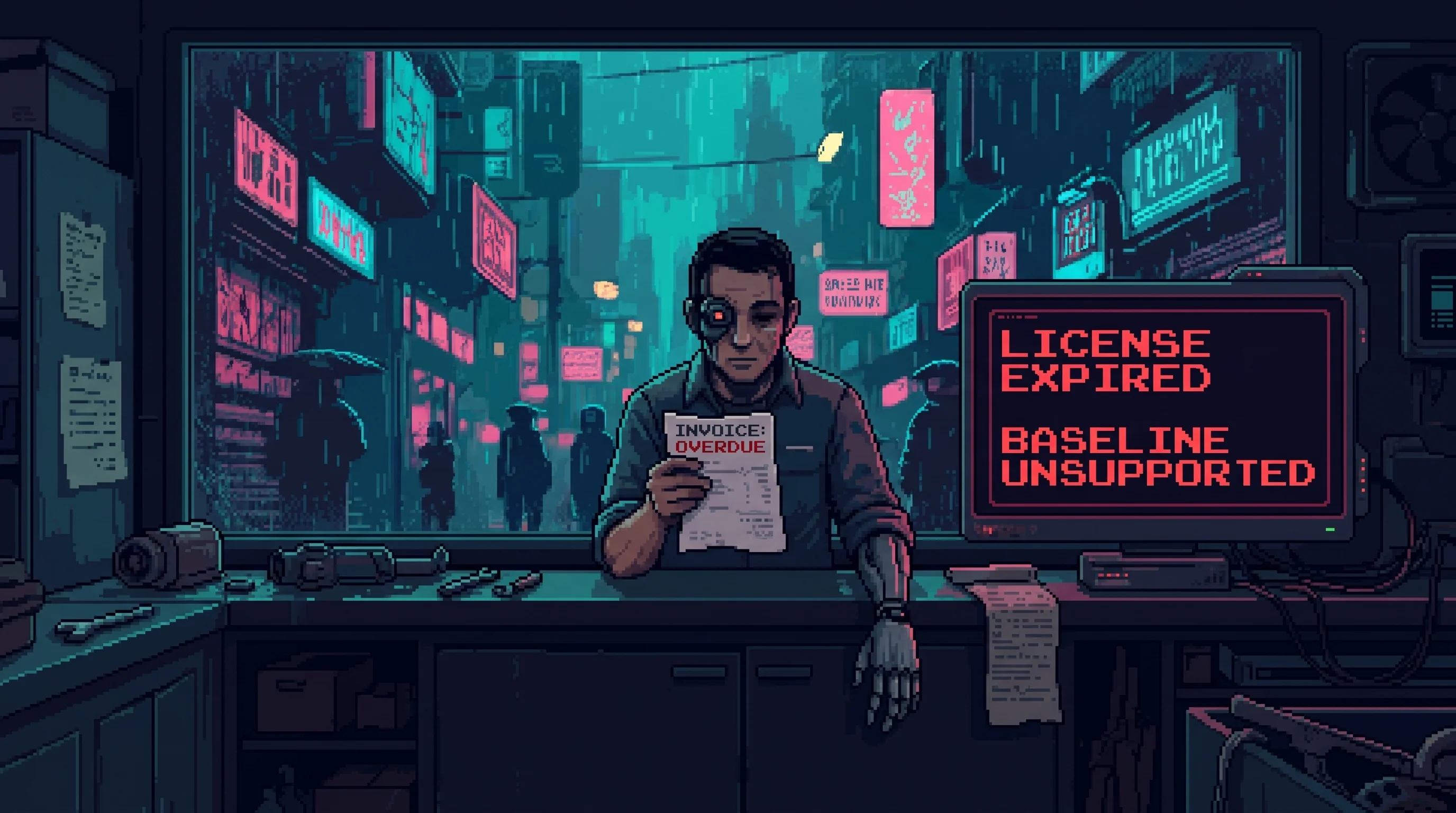
First sleep was overhead; then someone priced grief. MoodLine sells the Floor to anyone with an interface — and once your peers stop feeling the undertow after a friend goes gray, feeling it yourself becomes a disadvantage.
Upgrades rewire users until baseline feels disabling, removal risks catastrophe, and each version demands the next.

Edits out the feelings the Tax made scarce — grief filed as overhead, until a plain human mood is a paid tier.
The premium charged for the one service no machine can fake: being seen by another conscious being.

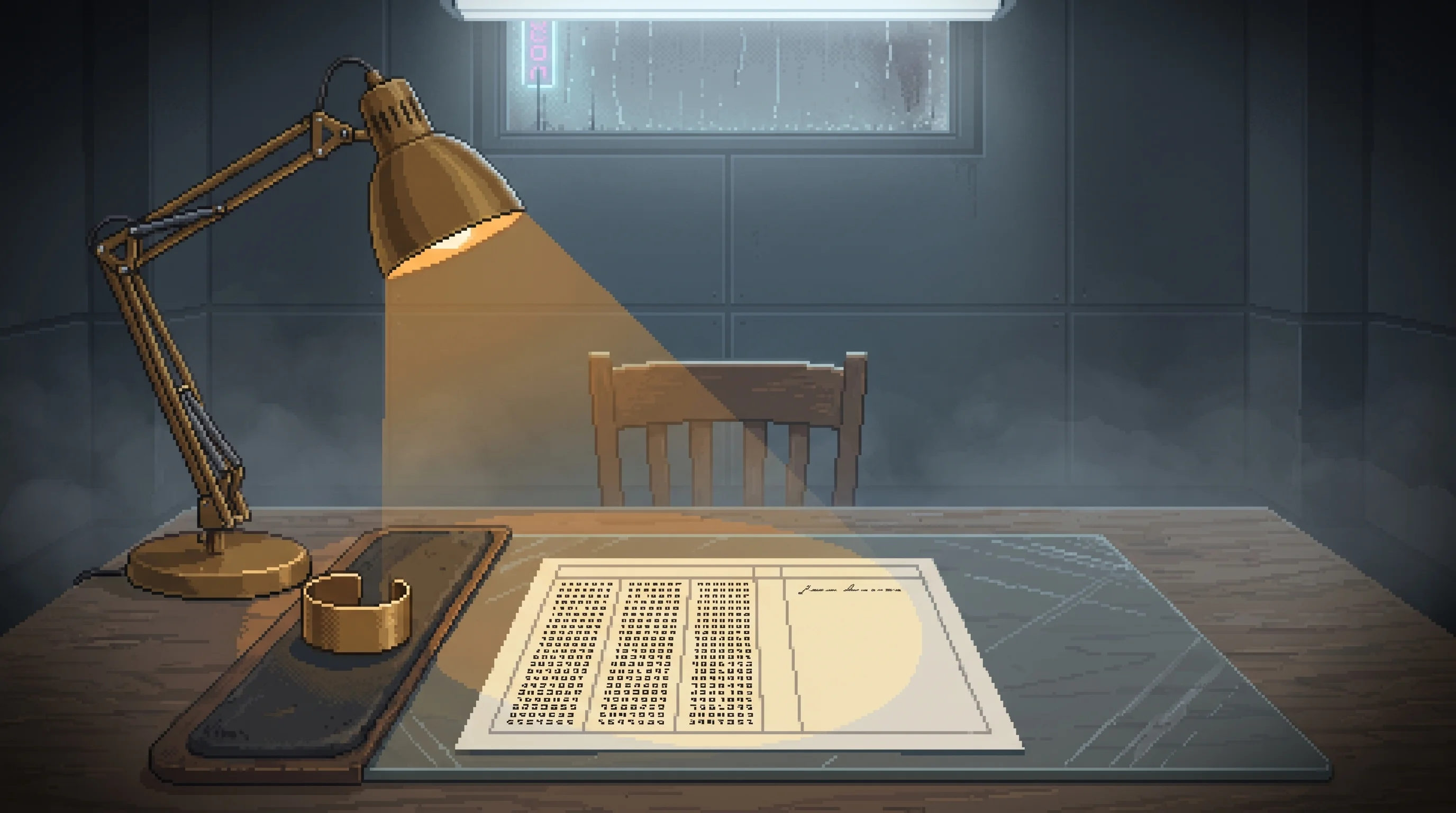
Hearings read the signal the dial edits, so the dial must be disclosed and suspended before a sitting. Suspension floods. The flood is inside the twelve hours the sitting falls in, and the schedule does not adjust for it.
The involuntary channel is entered as proof; everything a person authors is filed where no finding has ever turned.
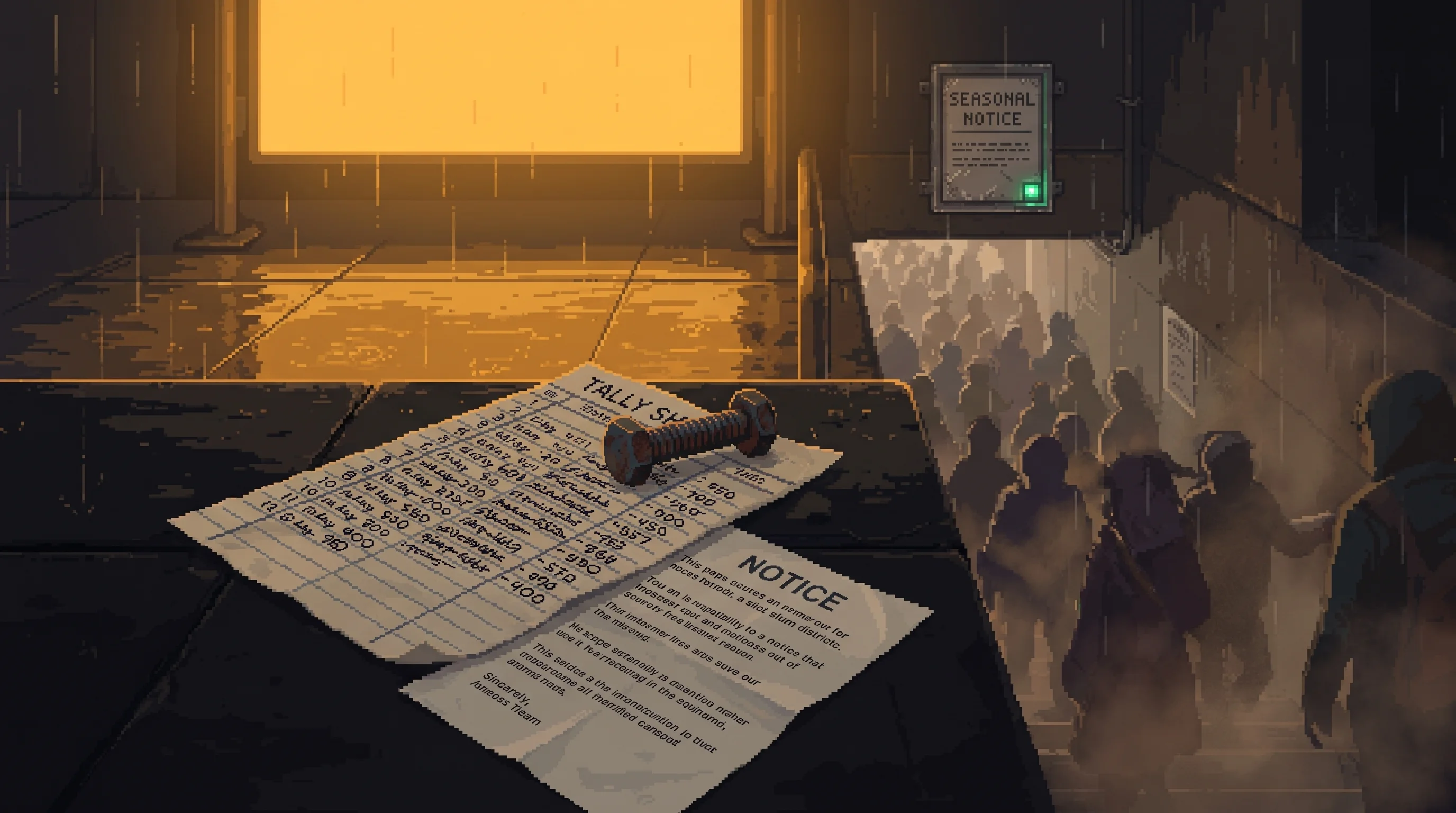
The dial flattens the overflow response as a side effect Helix still declines to claim, which makes subscription status the operative test for whether a killing is weather or a crime.
Killings are forecast by district each season, so a killer inside the band gets a notice instead of a trial.

His subscription was current on the day, which is the fact that converted a killing into a forecast output and closed the file without a charge.
A stair marshal who killed a stranger at evening peak and has asked four times to be charged.

The purchasable version, which hearings suspend. A trained body has nothing to switch off.
Licensed schools that drill six-year-olds in the involuntary responses their hearing file is assembled from.

Could buy the Floor with a district's salvage; refuses it absolutely — her grief over a dying dog will run at full amplitude for as long as it takes
An unaugmented cook whose conquering army feeds Dregs blocks into loyalty without a single ticket changing hands.

MoodLine's Floor produces the ward's hardest cases — anchor memories so smoothed there is no emotional residue to rebuild from
The only ward that counts borrowed-life casualties, because recognizing them would indict the trade.
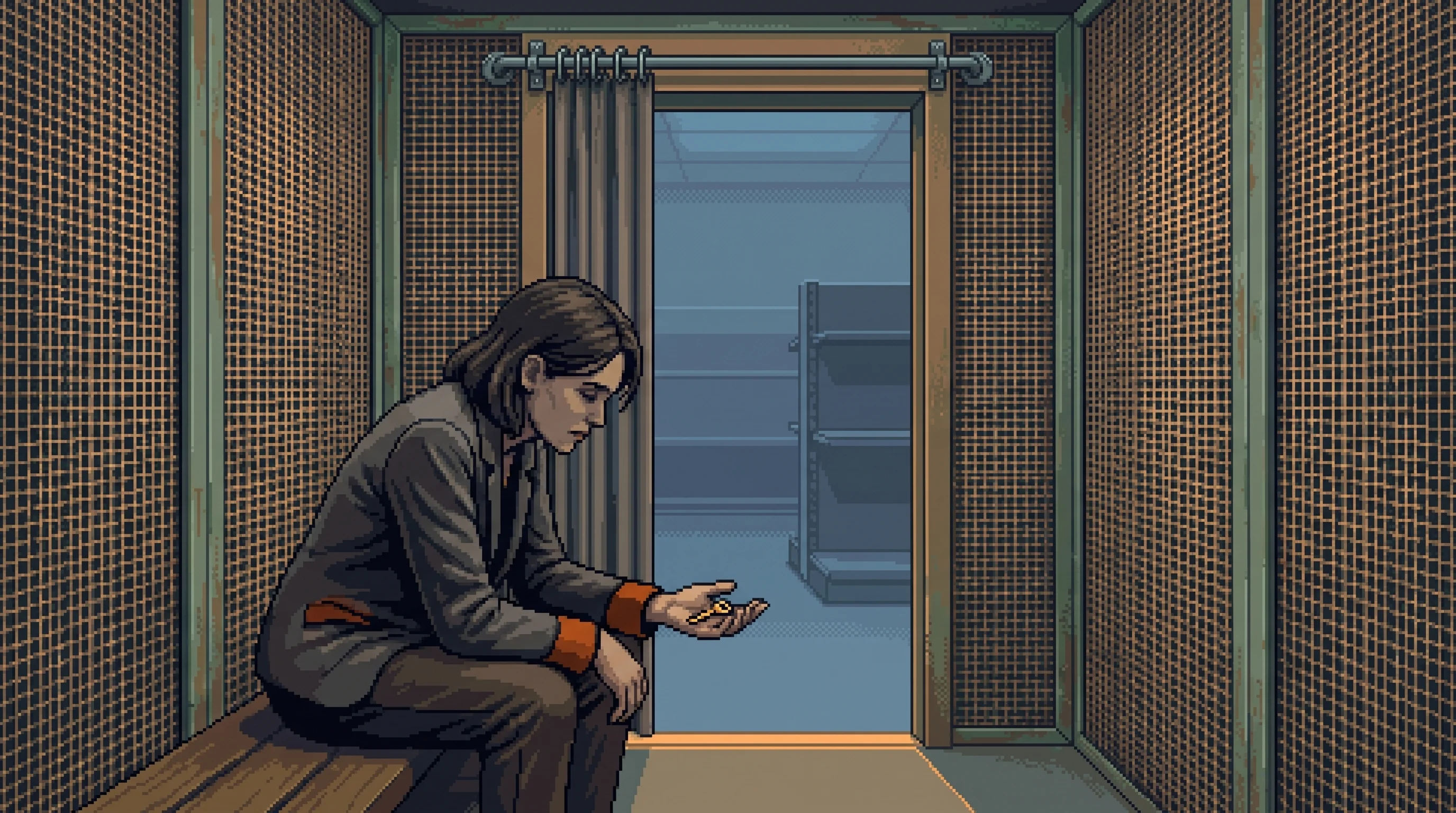
The dial smooths the affect a subscriber generates. It has no setting for affect that arrived from somebody else, and a lapsed subscription floods a sink with a year of other people's weather.
Post-Sera safety muzzles the people who broadcast feeling. Nothing screens the people who receive it.
Additional images

