SUBJECT FILE
Junia Bexley

Junia Bexley

Grade B

She wrote nine thousand refusals. Not one of them was ever overruled, and she has never been able to decide whether that is a commendation.

The LicenceConditioned on never being told the operative grounds behind anything she reviewsThe RecordNot one determination she drafted was ever overruledThe PayAbout four times what the district paid her; median Grade B career, six years โ€” she is in her thirdThe ReplyTwo lines from Rosa Iturbe, 2181, thanking her for explaining the refusal clearly

Overview

For six years Junia Bexley wrote the reasons.

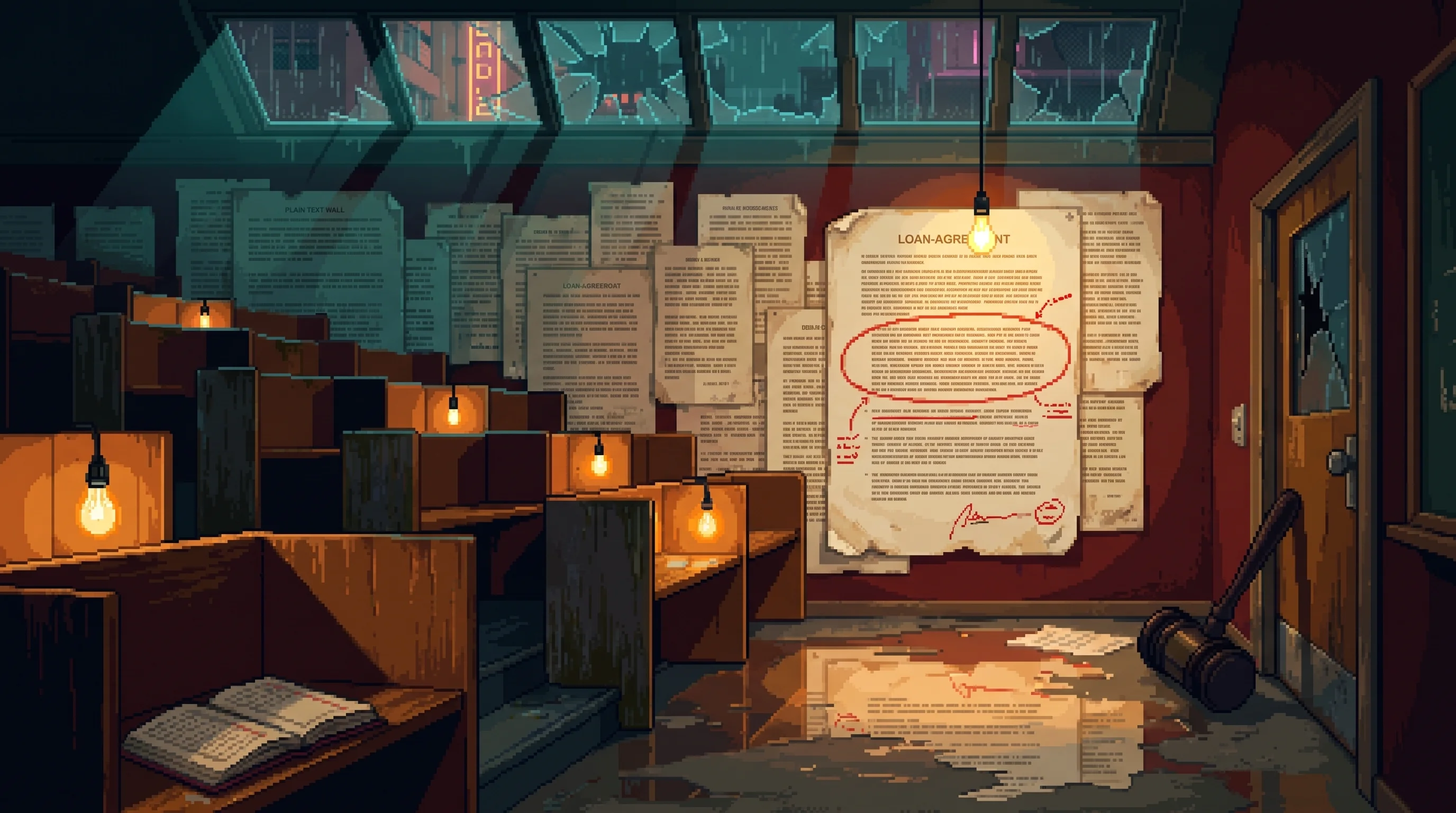
A district clerk drafts the operative reasoning served with an adverse determination under โ€” the facts that bore on it, the weighing, the comparison that decided it โ€” against a published readability standard, addressed to the person the determination is against. Bexley did about nine thousand of them between 2175 and 2181. Her scores sat near the top of her district four years running. Her notices did not come back. Not one determination she reasoned was ever overruled.

She now sits in an audit house four streets from the old office, holding a Grade B review licence, whose defining condition is that she may never be told the operative grounds behind anything on her desk. The pages she works are one line of outcome above three quarters of empty paper. She is the best finder in the building. She is paid about four times what the district paid her, the median career in the grade runs six years, and she is in her third.

The Craft

She is precise about what the job was, and she still corrects other people's sentences aloud without noticing she is doing it.

The trick, she says, is that you are not writing so the decision can be defended. You are writing so the person can see it. Those produce different paragraphs, and a clerk who confuses them writes notices that come back marked too difficult, which is the only clerical error the districts publish and the only one that carries any shame. A good notice does not argue. It sets the thing down where the reader can walk around it.

She was proud of this. She will still defend the craft against anyone who calls it a euphemism, including herself, and the defence is the same one the clause's authors made in 2173: before it, a refusal was a clause number, and you cannot argue with a clause number because there is nothing in it to argue with. She has never claimed the old form was better. She gets visibly impatient with people who do.

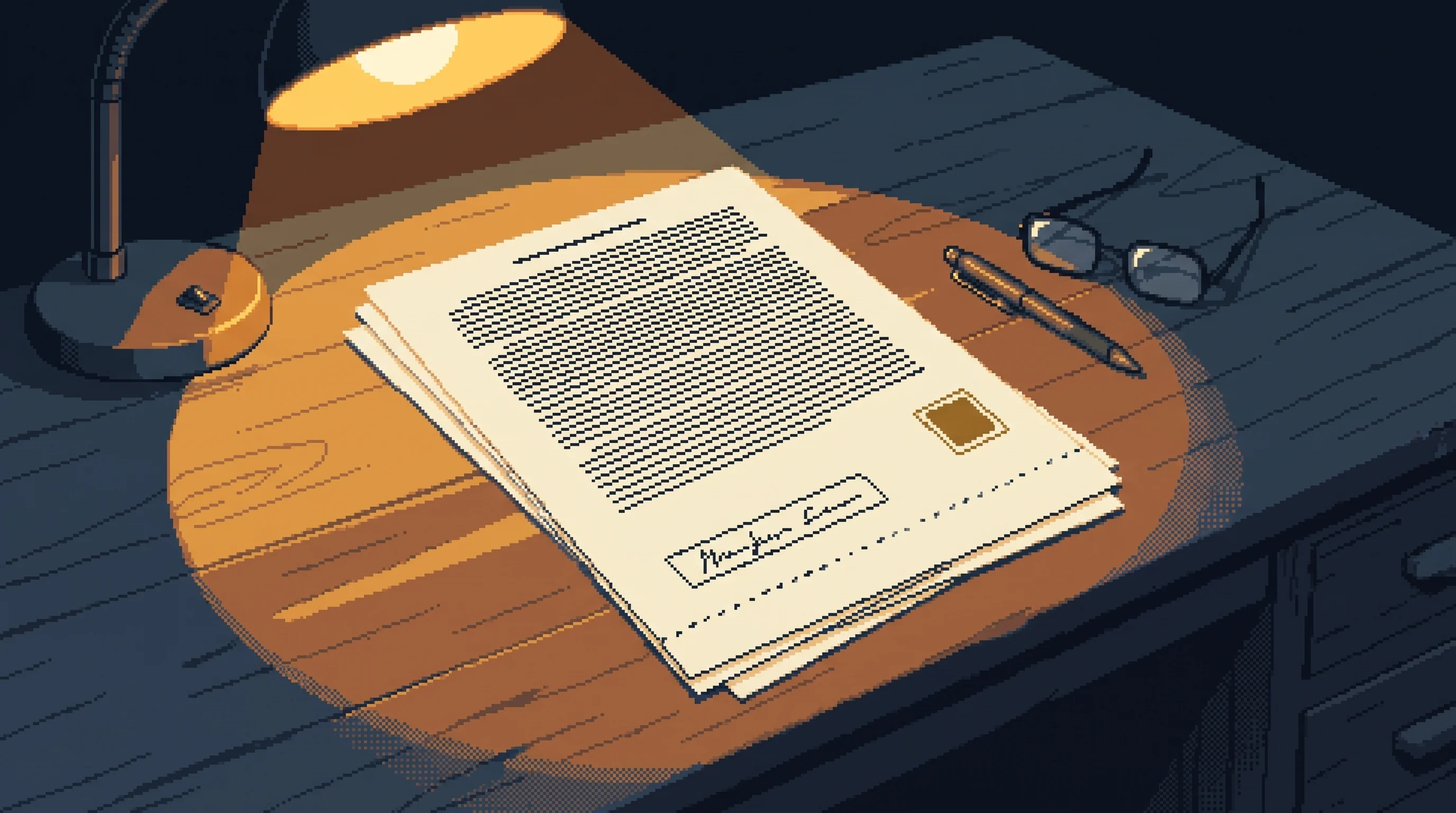
A folded two-line note in a desk drawer, thanking her for explaining it so clearly, kept for three years by the woman who wrote the four pages it thanks her for.

The Iturbe Note

In the spring of 2181 she drafted a refusal of a suspension-ward place.

Four pages. The queue arithmetic, the ward's capacity, the applicant's projected outcome, and the specific clinical reason another applicant would benefit more from the same bed. Every line of it was true and she took some care over the third page, where the comparison sat, because the comparison was the part that would hurt and the standard says the part that hurts is the part that most needs to be followable.

Eleven days later the district office received two lines from the applicant's daughter, Rosa Iturbe, thanking the clerk who wrote it for explaining it so clearly that she could understand.

Bexley has described what happened next as an absence of anything to do. There was no error. There was no appeal, because there were no grounds for one and the notice had made that visible, which was the notice working. She had performed the function correctly and the output was a woman writing to thank her for the clarity of a refusal about her mother. She resigned that quarter. The note is folded in her desk drawer at the audit house and she has never shown it to anybody who did not already know what it was.

Grade B

The licence was not a penance and she becomes short with people who frame it that way.

She took it because it was the only arrangement she could find in which the reasoning could not reach her. She had spent six years learning precisely what a sound, well-set, honest justification looks like, and she is extremely good at recognising one, and she had come to understand that the recognition is not a form of scrutiny. It is the end of scrutiny. gives her an outcome, a clause reference, and nothing to be persuaded by.

She finds errors at a rate the house cannot explain and neither can she. Pressed, she offers the only account she has: that when the page will not tell her why, the single question left is whether this is the sort of outcome that tends to land on this sort of person, and that this question is the one a good notice answers so completely that nobody thinks to ask it. She does not present this as a theory. She presents it as the thing she does all day and cannot describe better.

Six hundred metres east, holds a captive oversight licence and works the same impossible verification from the other direction, with the objection rate driven to zero rather than licensed away. They have never met. On , reads determinations aloud at ยข2 a page and is contractually forbidden to open the nine years of correspondence addressed to himself. Bexley wrote the notices and may no longer read one; reads them for a living and may not read his own. Neither arrangement was designed with the other in mind.

Case File โ€” Additional Record
Age41
Former RoleDistrict Grounds clerk, 2175-2181 โ€” roughly nine thousand determinations reasoned to the readability standard
Current RoleGrade B reviewer, an Old Town audit house paid on findings

What She Will Not Say

She does not claim the clause should be repealed and has never signed anything that says so.

Asked directly โ€” and has asked, twice, through an apprentice who came up from the Free Quarter with a copy of an unfiled eleven-page draft โ€” she gives the same answer, which is that she does not know what would replace it and will not argue for less explanation than people currently get. The apprentice pointed out that this is also Elena Sarkisian's position and the reason the draft is still unfiled. Bexley said she was aware.

What she will say, on the record, is the narrower thing: that not one of nine thousand determinations was ever overruled, that she has never been able to decide whether that is a commendation, and that in three years of Grade B nobody has offered her a way to find out.

Appearance

Forty-one, unremarkable at a distance, with the posture of a person who reads for a living and stopped noticing years ago. Professional-standard augmentation, none of it visible, none of it doing anything a clerk's would not. Flat overhead light, a bare desk, a monitor turned away from her because the work is paper.

The clerk-era fountain pen is the tell. She does not need it and has not filed a handwritten thing since 2181, and it sits capped beside the review sheets, and she picks it up when she is deciding.

Sample Dialogue

"Read it again and tell me what you can't argue with. That's the part I'd have spent the afternoon on."
"No โ€” I'm not allowed to know that. Not 'I don't have it.' Not allowed."
"Nine thousand. None overruled. People say that back to me like it settles something."
Personnel Record
StratumCorporate
PositionInsider
Moral StanceComplicit Refuser
Primary DriveIndependent Judgment
AugmentationProfessional Standard
VisibilityKnown In Circles

Psych Profile

AgencyMid
CompassionHigh
DisciplineHigh
TrustLow
ConvictionHigh

Open Questions

  • What she does at the end of the sixth year, which is the question the grade does not answer for anyone
  • Whether the finding rate survives being explained, if anyone ever explains it
  • Whether Rosa Iturbe knows the clerk resigned
You are not writing so the decision can be defended. You are writing so the person can see it. A clerk who confuses those two writes notices that come back.
I know exactly what a good reason looks like. The licence is the only thing I've found that stops it working on me.
The Iturbe note is folded inside her desk drawer, and she has never shown it to anyone who did not already know what it was

Connections

The people, places, systems, and open questions connected to Junia Bexleyโ€”and why each connection matters here.

NEXUS CARTOGRAPHIC ARRAY // LOCAL FIX

Local Intelligence Scan

SCAN 2.5 km local radius

Nearby Signals

CANONICAL PROXIMITY
  1. The Ratification Registryfaction~253 m E
  2. Synthesialocation~625 m NE
  3. The Secular Defaultsystem~680 m N
  4. Good Fortunecorporation~690 m N
  5. Dr. Selin Ayaricharacter~734 m SW
  6. The Insomnia Wardslocation~734 m SW

Environmental Readout

LIVE CONDITIONS
Air
Filtered
Light
Shadowed
Flood
No exposure
Heat
Temperate
Security posture
Corporate control
Infrastructure
Patchwork

Position Data

SECONDARY
Elevation band
Mid-hill โ€” the hill districts
Lattice fix
E-1.1 ยท N+0.1