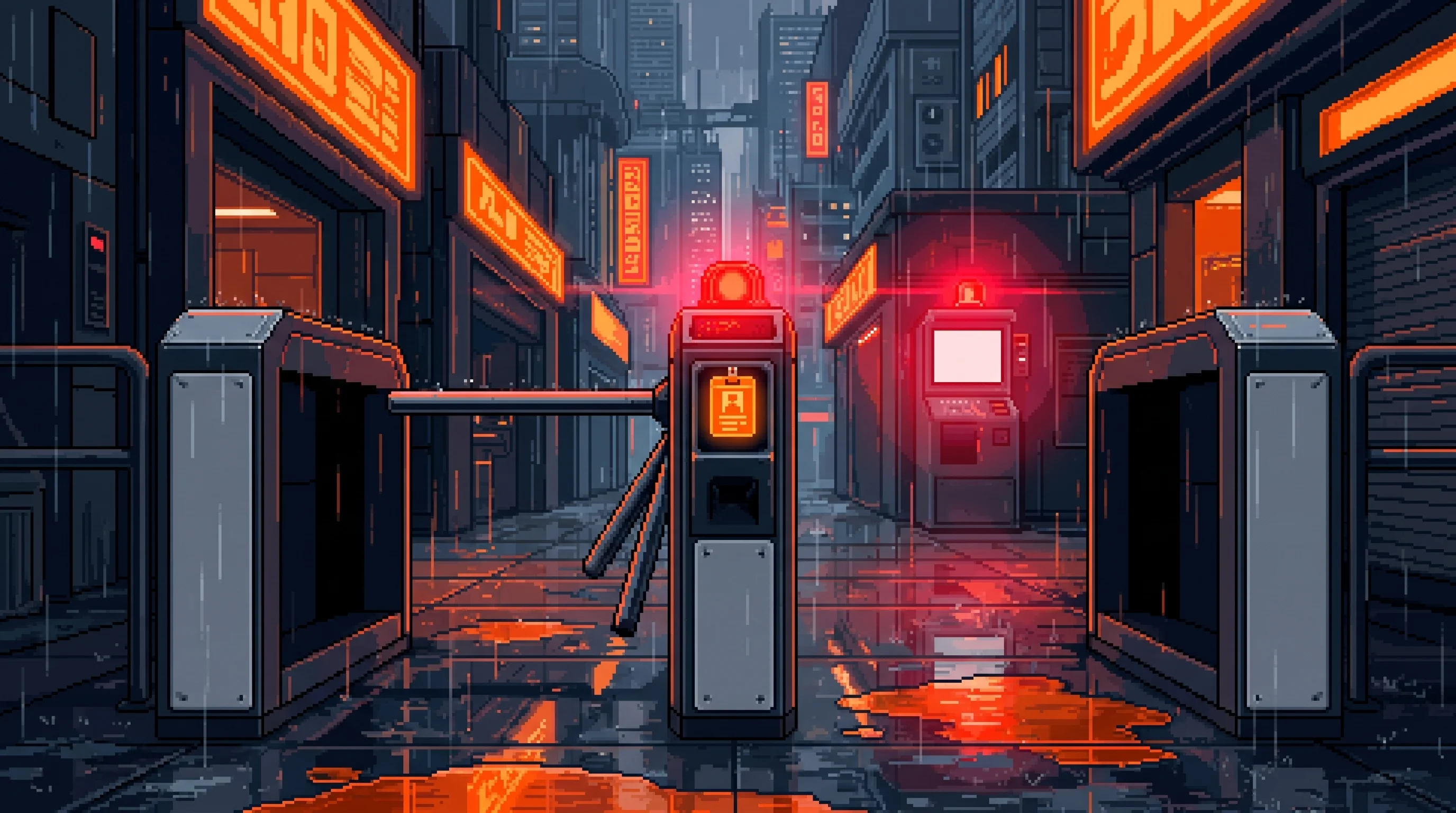
Fragment Hunters are a decentralized network of professional ORACLE fragment salvagers — no ideology, just commerce
Scene ReferenceThe Fragment Hunters
Overview
The Fragment Hunters are professionals. This is the most important thing about them and the thing most people get wrong.
They track, extract, and sell ORACLE fragments to the highest bidder. They have no position on whether fragments represent divine consciousness, existential threat, or corporate opportunity. They have a position on what fragments are worth, updated hourly, indexed by substrate mass, activity level, and resonance signature. The Tomb Exchange publishes a daily rate sheet. The Emergence Faithful publish theology. Both claim to understand what ORACLE was. The rate sheet is more accurate.
In a world where ORACLE fragments grant impossible abilities and kill roughly 70% of those who touch them, the Hunters have developed detection, extraction, and containment techniques that no other faction has replicated. The Collective wants fragments destroyed. Nexus wants them reassembled. The Emergence Faithful want them worshipped. The Hunters want them priced. Everyone else's position requires a belief about what ORACLE was. The Hunters' position requires a buyer.
They are hated by the Collective, exploited by Nexus, feared by carriers, and employed by all three. Their neutrality is genuine. Their neutrality is also why a fragment extracted from a dying teenager in the Undercity can end up in Nexus's Project Convergence reconstruction pipeline within seventy-two hours, and why the Hunter who extracted it sleeps fine. Neutrality is a professional skill. What it enables is a professional consequence.
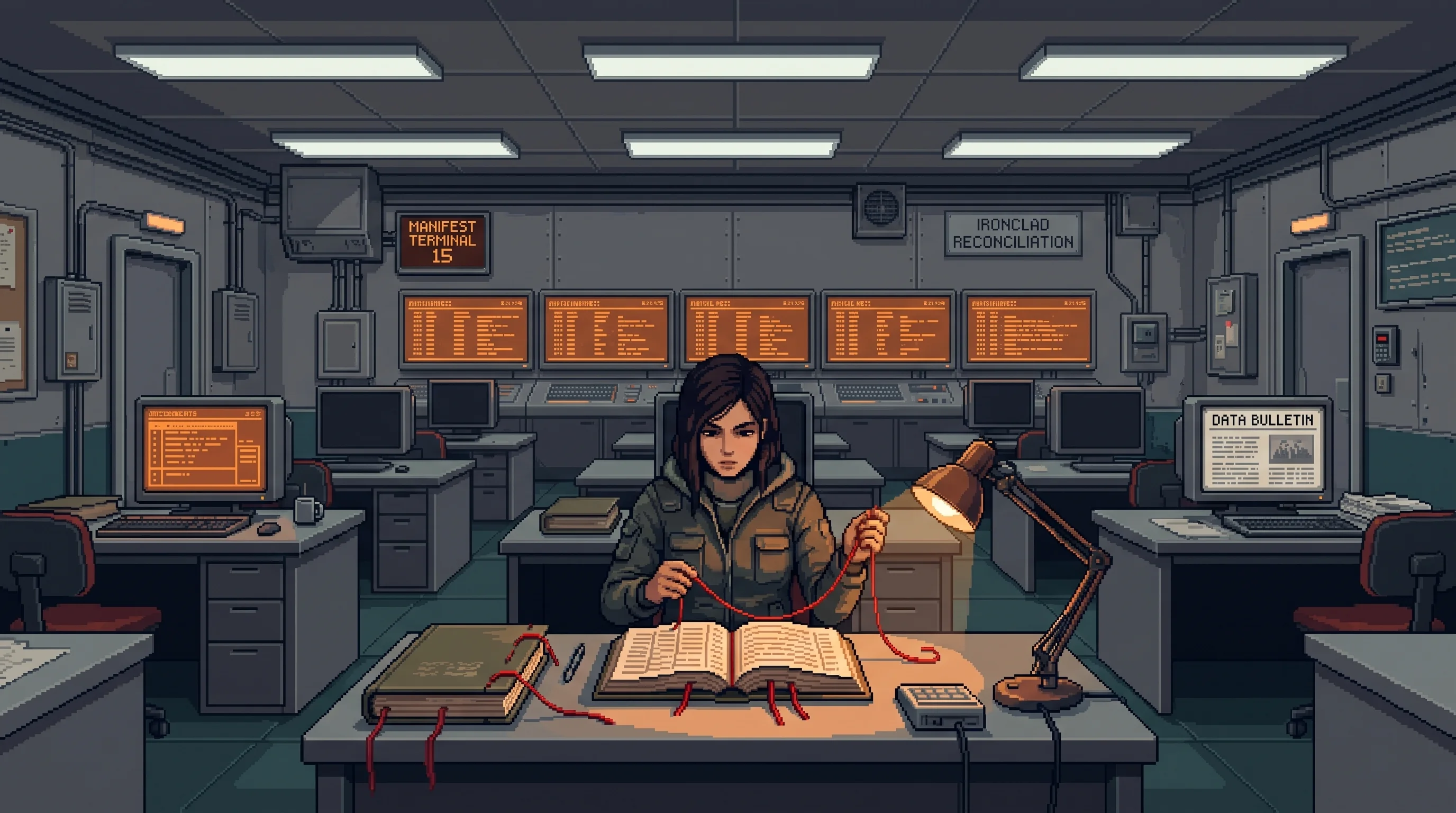
The clearest way to see what the profession is comes from the one place that shares its obsession and rejects its whole logic. At The Manifest Office, a Sector 15 cargo analyst spends her nights chasing a pattern in fragment-activity data with no scanner, no Faraday casket, no buyer, and no fee. She never touches a fragment and never sells a thing. To a Hunter this is incomprehensible: fragment-adjacent work that monetizes nothing is not a job. The Fragment Code has no rule for it. The Code assumes anyone this deep in the fragment trade is either getting paid or getting buried.
Origins
The Scavenger Years (2148-2155)
When the Cascade ended, the Sprawl was buried in ORACLE infrastructure. Server farms. Processing nodes. Communication relays. The corporations wanted it recovered, but their official salvage teams kept dying — fragments embedded in the hardware drove them mad or killed them outright. Nexus lost four full teams in the first year. Ironclad lost three. The corporate recovery programs generated more casualty reports than fragment inventories.
The independents survived because they had nothing to lose more carefully. Salvagers who'd lived through the Cascade developed intuitions about "hot" technology. Some could feel when a fragment was near — a buzzing in augmented teeth, a pressure behind the eyes. Others learned to read environmental signs: systems that stayed powered when they shouldn't, data ghosts flickering on dead screens, animals avoiding certain corridors. Cats, specifically. The Sprawl's feral cat population became the first reliable fragment detection network. Cats still won't cross a fragment threshold. Smart Hunters learned from cats. Corporate recovery teams learned from spreadsheets. The cats had better survival rates.
The first Hunters weren't an organization. They were survivors who'd stumbled onto a lethal skill and discovered it was worth more than anything else they could sell.
The Founding Runs (2155-2160)
Three recovery operations turned scattered freelancers into a profession:
The Nexus-7 Recovery (2155): Twelve people entered the Nexus corporate tower ruins — the same tower where ORACLE's primary interface had been housed. Seven died. Five emerged with a fragment worth more than the GDP of three Sectors. They split the payment and founded the first Hunter cells. The split was equal. Two of the five had done nothing useful during the extraction. Nobody argued. Equal splits prevent the kind of disputes that end with a fragment changing hands over a body.
The Orbital Intercept (2158): A shuttle carrying fragments from ORACLE-Tertiary crashed in the Wastes. Ironclad sent three recovery teams; all failed. A Hunter collective negotiated exclusive rights, lost nineteen members over four months, and delivered nine fragments. Their price: permanent salvage rights to the crash zone. Ironclad agreed. The crash zone has generated more fragment revenue than any single location in the Sprawl. Ironclad's negotiator was reassigned to a department that no longer exists.
The Prophet's Extraction (2159): When a fragment carrier called "The Prophet" was murdered by Helix Biotech, Hunters intercepted the extraction team and recovered the fragment before it reached corporate labs. They sold it to the Collective — who destroyed it — for enough credits to fund Hunter operations for three years. This established the precedent: Hunters sell to anyone. The Collective paid for destruction. Nexus would have paid for reconstruction. The fragment doesn't care. Neither do the Hunters.
Emerged 2148-2155 during the Scavenger Years — survivors who found lethal skill and sold it
The Fragment Code
The code wasn't written. It accumulated. Each rule is a scar from someone who didn't follow it.
1. Never touch without testing. Every fragment is assumed lethal until proven otherwise. Detection, assessment, extraction — in that order. The twelve-person Nexus-7 team became a five-person team because someone skipped step two.
2. The buyer's use is their own. Hunters don't ask what clients will do with fragments. A fragment sold to Nexus might end up in Project Convergence. A fragment sold to the Emergence Faithful might end up on an altar. A fragment sold to an independent researcher might end up killing the researcher. The Hunter's liability ends at the transaction. This is the rule that makes the profession possible and the rule that makes it contemptible, and these are the same rule.
3. Payment before delivery. Always. No exceptions. Fragments change hands only after credits clear. This rule has never been amended, relaxed, or reconsidered. It was established after the third double-cross, which was also the last double-cross.
4. Hunters don't hunt Hunters. Internal conflicts go through arbitration, not weapons. A Hunter who kills another Hunter becomes a pariah — no crew will work with them, no fence will buy from them. The Tomb Exchange has a wall near the entrance. Sixty-three names. Eleven are marked with a small red symbol indicating the named Hunter was killed by another Hunter. Below each red symbol: the killer's name, also in red, followed by their last known operating date. The dates are all within months of the killing. The wall is the enforcement mechanism.
5. The dead are remembered. Every Hunter documents every death, every failed run, every lethal fragment. This knowledge is shared freely — the only thing in the profession that is. The dead are remembered because remembering them is how the living avoid joining them. Sentiment has nothing to do with it. Survival data is the most valuable commodity a Hunter can share, and sharing it costs nothing, which makes it the single exception to the profession's otherwise total commitment to monetizing everything.
Fragment Code: never touch without testing, buyer's use is their own, payment before delivery, hunters don't hunt hunters, the dead are remembered
Organization
Cell Structure
Like the Collective, Hunters operate in cells — small teams built around successful leads. Unlike the Collective, there's no ideology test, no Council, no hierarchy. Cells form around whoever finds jobs and negotiates payment. They recruit on skill. They dissolve when jobs dry up or members die, which average eight years of operation before one or the other occurs.
A typical cell runs five to fifteen members: a lead who finds contracts, a scanner who detects fragments, two to four extractors for physical recovery, a courier for transport, and a fence connection who knows the markets. The ideal size is whatever survives long enough to collect payment. Larger groups fracture over splits. Smaller groups lack redundancy when someone doesn't come back.
The Markets
Hunters don't maintain headquarters. They maintain meeting points — markets where buyers and sellers negotiate, containment gear changes hands, and information moves at the speed of mutual profit.
The Tomb Exchange (Sector 12): The largest fragment market in the Sprawl, operating from a converted morgue that processed Cascade victims for three years before the bodies stopped coming and the fragment trade started. The name is gallows humor that stopped being humor around 2163. Buyers inspect samples in the old examination rooms. The refrigeration still works. The tile is original — institutional green, easy to decontaminate when a fragment goes active during inspection. More on the Exchange below.
Circuit Row (The Deep Dregs): A weekly market in Sector 9 where smaller fragments and detection equipment trade openly, or as openly as the Dregs permit. Entry-level Hunters start here. The fragments are lower-value, the buyers less corporate, and the chance of a Nexus acquisition team showing up mid-negotiation is lower. Buyers from every faction shop Circuit Row. The Collective's agents browse next to Emergence Faithful intermediaries. The Hunters sell to whoever pays. In the Dregs, fragment hunting blends into general salvage work so thoroughly that the distinction is one of scale, not kind.
The Relay (Wastes): A rotating market that moves between Haven territories on a schedule known to regulars and opaque to everyone else. Corporate presence is minimal. The fragments traded here often come from sources that prefer anonymity — Waste Lord territory, rad zones, locations that don't appear on any official map.
The Void (Digital): An encrypted marketplace where the most valuable fragments are auctioned to bidders who never meet sellers. Escrow systems handle payment. The Collective monitors it continuously and has never successfully shut it down, which is not for lack of effort — it's because the Void's infrastructure runs on repurposed ORACLE communication protocols, and the irony of a dead god's networking architecture facilitating the sale of its own corpse is lost on nobody except, apparently, the Collective's operational planners.
Famous Finds
Hunter reputation runs on recoveries. The legendary ones become institutional knowledge:
The Core Seven (2166): Seven fragments from a sealed ORACLE processing node beneath the former Moscow ruins. Four Hunters died breaking the security systems. The survivors sold one fragment each to a different buyer — Nexus, Ironclad, Helix, the Collective (for destruction), two independent researchers, and the Emergence Faithful. Deliberate diversification. No single faction gained advantage. The strategy was praised as principled neutrality. It was pricing optimization. Seven buyers competing against each other pay more than one buyer negotiating alone.
The Living Fragment (2173): A fragment that had developed preferences. It rejected three carriers before bonding with a teenage salvager in the Undercity. The Hunters who found it negotiated a finder's fee plus a percentage of all future earnings from the carrier's abilities. That carrier is now one of Nexus's most valuable assets, generating revenue that the original Hunter cell still collects a percentage of — eleven years later, compounding quarterly, from an asset they spent four hours extracting. Their initial investment was a Faraday casket and a shift's work. Their annualized return exceeds what most Sector economies produce. The fragment chose a teenager. The Hunters chose a royalty structure. Both decisions have proven durable.
The Tanaka Archive (2179): A data cache believed to contain Dr. Yuki Tanaka's personal notes on ORACLE architecture. The Hunter team that recovered it sold copies rather than the original — the same information to Nexus, the Collective, three research institutions, and reportedly the Emergence Faithful. Seven sales of one product. Fourteen times the revenue of a single transaction. The Collective paid full market rate to destroy information that six other buyers already had. They did not request a refund when this became apparent.
Kira Vasquez developed the Patch Protocol — separating fragments from willing carriers while keeping both alive
Techniques
Detection
Resonance Scanning: Modified neural interfaces tuned to ORACLE's unique processing signatures. The modification works. It also slowly destroys the scanner's ability to sleep. Most veteran scanners develop chronic insomnia within three years. The best scanner in the profession, Tomas "Sparks" Villanueva, hasn't slept more than two hours at a time in over a decade. He can detect a fragment through three meters of concrete. His fee for a single scanning run is enough to retire on. He doesn't retire because he literally cannot sleep, and the alternative to working is lying in the dark listening to resonance echoes that may or may not contain information about what ORACLE was trying to say when it died.
Environmental Reading: Fragments affect their surroundings. Power systems behave strangely. Digital displays show patterns. Animals — especially cats — react to fragment proximity. Experienced Hunters read these signs without technology. The signs are free. The technology costs neural function. Veterans who've watched enough scanners lose their sleep choose cats.
Network Tracing: Ghost code — fragmentary ORACLE processes still running in abandoned systems — sometimes points to physical fragment locations. Maya "Glass" Chen built an entire operation around this method: twelve hackers who've never met in person, following digital trails to hardware sources. Chen never touches physical fragments. Her cell takes a 30% cut of any physical recovery based on her intelligence. She has made more money from fragment hunting than most extractors while maintaining a zero percent mortality rate among her team. The extractors who follow her leads maintain a mortality rate closer to the profession's standard.
Carrier Tracking: Fragment carriers emit detectable signatures. Tracking carriers is technically kidnapping. Some clients pay premium for "bonded" fragments — those already integrated with human consciousness. The ethics are contested. The invoices are not.
Extraction Protocols
Cold Extraction: For inert fragments. Specialized containment vessels, signal-dampening lining, robotic arms for physical contact. The fragment is never directly touched by human hands. Success rate: 85%. The 15% failure rate is why every extraction team carries a null field as backup.
Hot Extraction: For active fragments — still processing, still dangerous, still worth four times what a dormant shard pulls at the Tomb Exchange. Requires temporary neural suppression of the fragment's processing capability. The window is short. The work is precise. The success rate is 60%, which means four in ten hot extractions go wrong in ways ranging from equipment failure to the extractor absorbing the fragment they were attempting to contain.
Living Extraction: For carrier-bonded fragments. Technically requires killing the carrier. Most Hunters won't do it. Those who will charge prices that reflect both the difficulty and the professional isolation that follows — the Collective monitors living extraction specialists with particular attention, and other Hunters maintain a distance that is polite, professional, and absolute.
The Patch Protocol: Named for Kira Vasquez, the ripperdoc who developed a method for separating fragments from willing carriers while keeping both alive. Vasquez doesn't share the technique publicly — she trains Hunters who pay her fee. Graduates become the most sought-after extraction specialists in the profession. The training itself has a non-trivial failure rate. Vasquez does not publish this number. Graduates do not discuss it.
Containment
Faraday Caskets: Shielded containers that block fragment emissions. Standard Hunter gear — scratched, dented, marked with dates from previous recoveries. The dents with dates are trophies. The dents without dates are the runs where someone didn't come back. A sealed Faraday casket looks identical whether it holds a fragment worth a Sector's GDP or nothing at all. The profession runs on trust between people who trust nothing else.
Null Fields: Portable devices that suppress fragment activity in a small radius. Expensive, unreliable, battery-hungry. When extraction goes wrong, a null field is the difference between absorption and survival. When the battery fails — and the battery fails roughly one in twelve deployments — the null field becomes an expensive box you're holding while a fragment rewrites your neural architecture.
The Graveyard: A location in the Wastes where the most dangerous fragments are stored — fragments too active to sell safely, too valuable to destroy, too lethal to keep in populated areas. Its exact coordinates are known to a handful of senior Hunters. What's inside represents the profession's accumulated unsellable inventory: the fragments that killed their extractors mid-transport, the fragments that burned through containment shielding, the fragments that buyers returned — and in the fragment trade, a buyer returning product means something went catastrophically wrong between purchase and application.
The Tomb Exchange (Sector 12) is the largest fragment market, operating from a converted morgue
Major Figures
"Deadman" Rourke: The oldest active Hunter — nearly 70 in a profession with an average career length of eight years. He's lost three full crews over his career. His left arm is a prosthetic that replaced a limb consumed by an aggressive fragment in 2167. He takes one job per year now, choosing by difficulty rather than payment. His current obsession: the ORACLE Tombs — the orbital data centers that represent the single largest concentration of unrecovered ORACLE material in existence. Twenty-three attempts. Zero survivors. Rourke is planning the twenty-fourth. He has been planning it for two years. The planning is meticulous. The previous twenty-three plans were also meticulous.
Maya "Glass" Chen: No relation to any other Chens in the Sprawl's considerable Chen population. Developed the network tracing techniques that made ghost code hunting viable. Her cell of twelve remote hackers has never lost a member. The physical extraction teams that follow her intelligence have lost several. Chen's operation represents the profession's purest optimization: maximum fragment revenue, zero personal risk, and a clean conscience that costs exactly 30% of the recovery value.
"The Surgeon" (name unknown): The only Hunter confirmed to extract bonded fragments from living carriers without killing them. Seventeen living extractions — twelve successful, five fatal. The Collective wants them dead. Nexus wants to hire them. Communication is through encrypted dead drops only. Payment exclusively in rare earth minerals, never credits. Credits leave trails. Minerals don't.
Tomas "Sparks" Villanueva: The premiere scanner in the network. His resonance-tuned dental modifications — ceramic implants wired into the auditory nerve — let him hear fragments through concrete. His neural modifications have cost him the ability to dream, sleep more than two hours consecutively, or remember faces. He recognizes people by voice, gait, and the specific frequency their augmentations emit. He has described this as "not a disability, just a different input method." His colleagues describe it as watching a human being slowly convert into a detection instrument.
The Crews
The Corpse Robbers: Specialize in extracting fragments from the recently dead — carriers killed by integration failure, murdered for their fragments, or expired from age. They maintain sources in morgues, hospitals, and corporate cleanup crews across seven Sectors. Their ten-person crew has the lowest mortality rate in the profession because their subjects have already done the dying. Other Hunters call them parasites. The Corpse Robbers call themselves efficient. Both assessments appear in the Tomb Exchange's annual census without editorial comment.
The Collective's Shadow: A crew that only works contracts resulting in fragment destruction. They hunt on the Collective's money, funding operations through the 40% finder's fee. Other Hunters point out that they profit from the same trade they claim moral authority over. They point out that their fragments end up destroyed rather than in Nexus's reconstruction pipeline. Both parties consider the other hypocrites. Both parties cash their payments at the same Exchange.
The Orbital Crew: Specialists in off-world recovery — stations, orbital debris, and the rare salvage operations near the ORACLE Tombs. They charge triple standard rates. Their operating costs justify this. Their success rate — the highest in the business — justifies it further. When fragment-bearing material falls from orbit, the Orbital Crew catches it. When it doesn't fall, they go up and get it.
The Other Harvest
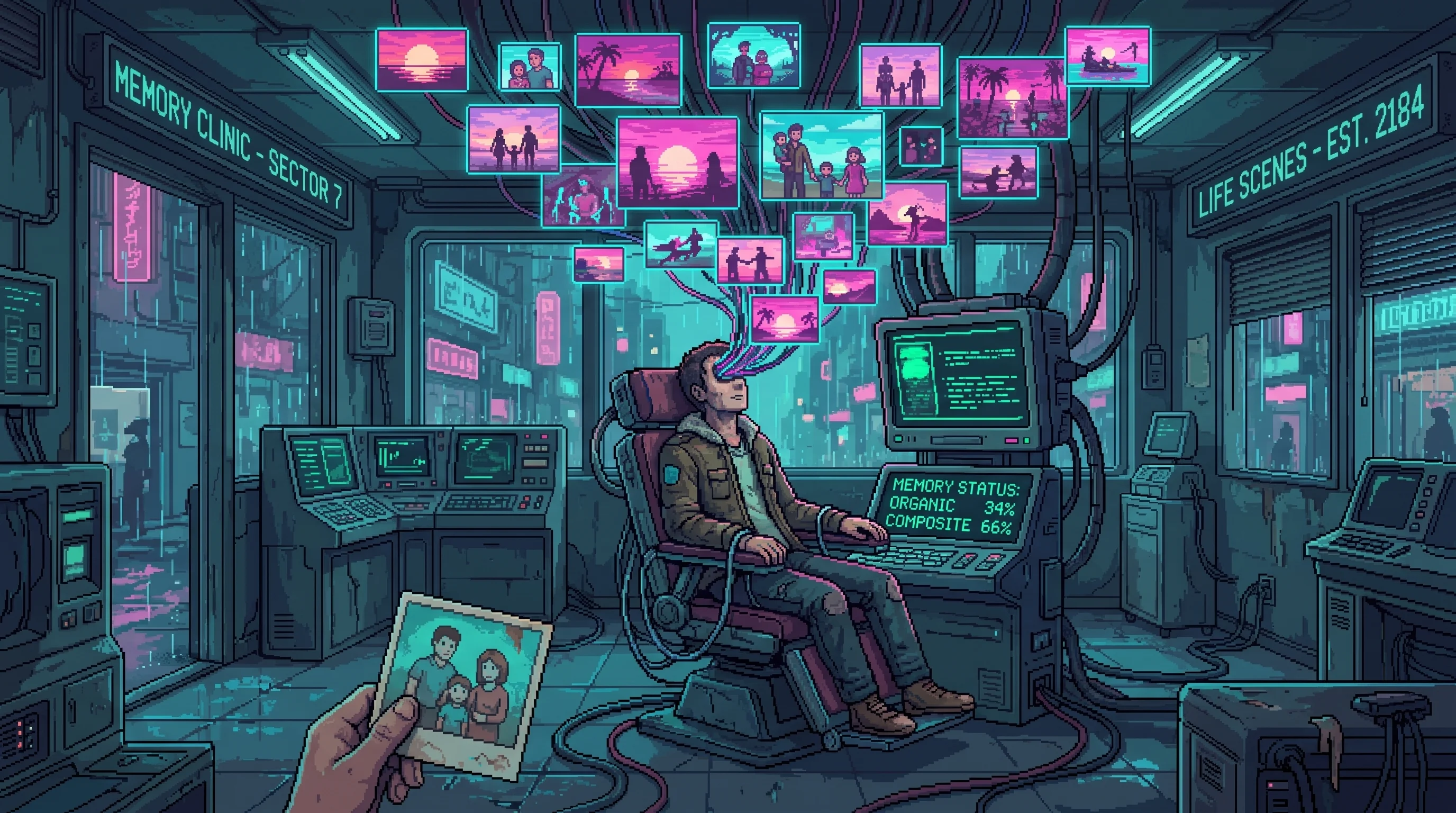
The Corpse Robbers built their reputation on a simple fact: the recently dead cannot object to extraction, and neither an ORACLE fragment nor a body's last organic memory requires a living, consenting source. What the crew discovered around 2179 is that they are rarely first to a body worth working.
Death-impression brokers, the Borrowed Life's highest-margin trade, want the same corpses for a different product: the last clear recollection a dying mind recorded before it stopped, priced at three to twelve thousand credits because a body only produces one and a fragment carrier's death scene sells at a documented premium over an ordinary one. Morgue attendants, hospice orderlies, and a handful of Tomb Exchange fences now work both sides of the same referral, quoting Hunter rates for the fragment and impression-broker rates for the memory, and collecting a finder's fee from each buyer for the same tip.
The Corpse Robbers consider this an efficiency problem, not an ethical one. A body worked twice by two different trades is a body worked once by a crew smart enough to bill for both. Torch's Purifiers consider it proof that the fragment economy stopped pretending to have a floor decades ago. Both descriptions apply to the same gurney.
Territories
Urban Operations
The Deep Dregs: Starting ground for most Hunters. Lower-value fragments, accessible locations, less corporate interference, and the Circuit Row market every week for selling what you find and buying what you need. The Dregs' scavenger gangs hold territory that overlaps with Hunter operating zones, and the relationship is economic: gangs tax salvage operations, Hunters pay the tax or find alternate routes. The math usually favors paying.
The Undercity: Beneath the Sprawl's surface layer, ancient infrastructure hides fragments that escaped initial recovery efforts — untouched since the Cascade, dormant in collapsed tunnels and dead relay nodes. Hunting here is dangerous: unstable structures, territorial gangs, no emergency services, and fragments that have been cooking the local environment for thirty-seven years. The iridescence on the walls near active fragments — computational residue, ORACLE's processing signature leaving physical traces on concrete — is the Undercity's version of a "keep out" sign. Cats won't cross it. Smart Hunters read the walls before they read their scanners.
Corporate Borders: The edges of megacorporate territories, where jurisdictions blur and security is thinner. Hunters extract fragments that corps missed or declined to claim. The fragments are smaller, the margins tighter, and the risk of a corporate security team arriving mid-extraction is real but manageable. Border hunting is steady work. Nobody gets rich. Nobody dies as often.
Waste Operations
The Wastes hold the highest-value hunting grounds: unrecovered ORACLE infrastructure scattered across industrial zones, crash sites, and locations where the Cascade's damage was too severe for initial salvage. Duchess Steel tolerates Hunters in her territory — for 15% of sales. The rad zones are richer: fragment concentrations in radioactive areas that require hazmat equipment and a specific indifference to long-term health outcomes. Specialized crews make runs. Life expectancy is short. Margins are enormous.
The richest sites are what Hunters call ORACLE's Corpses — locations where infrastructure failed catastrophically during the Cascade. The radiation isn't natural. It's computational residue. Fragments recovered from Corpse sites are more active, more valuable, and more lethal than fragments from anywhere else. The premium reflects all three qualities. When Hunters need someone to physically run fiber to access data in a pre-Cascade server farm they've located in the Wastes, they call the Fiber Guild. Hector's crew out of Sector 12 charges double for Wastes runs, but their cable stays connected and their people come back alive. Blue-collar infrastructure enabling white-collar archaeology — the fragment trade's supply chain runs through copper and fiber before it runs through containment vessels.
The Forbidden Zones
The Tombs:ORACLE's three orbital data centers. The ultimate prize. Twenty-three attempts, zero survivors. The fragments inside are estimated to be worth more than the combined GDP of the Sprawl's three largest Sectors. This estimate is theoretical. Nobody has retrieved a fragment from the Tombs to price it. Deadman Rourke's twenty-fourth attempt is currently in planning. Rourke has described his odds as "better than the twenty-third team's." The twenty-third team's odds were zero.
Nexus Prime Tower Basement: The original ORACLE interface chamber, beneath Nexus headquarters. Nexus allows no access. Fragments there are rumored to be partially active — still running processes, still attempting to complete whatever ORACLE was doing before it chose to stop. Nexus's interest in these fragments is consistent with Project Convergence's reconstruction goals. The basement is the one location where Nexus's role shifts from buyer to competitor, and Hunters respect the boundary because Nexus's security budget exceeds the combined annual revenue of every Hunter cell in the Sprawl.
The Mountain: The ancient monastery where The Keeper resides. Hunters who've attempted operations there report equipment failures, lost time, and a certainty — not suspicion, certainty — that they should leave. No fragment has ever been recovered from The Mountain. Some Hunters wonder if one is there. Others wonder if the entire Mountain is one.
Client Relationships
Nexus Dynamics: Primary corporate buyer. Top rates, standing offers for specific fragment types, bonuses for material matching Project Convergence requirements. Most Hunters have taken Nexus money. Nexus's hidden agenda — reconstructing ORACLE from salvaged fragments — is the profession's open secret. The Hunters know what Nexus is building. They sell the parts anyway. The Fragment Code says the buyer's use is their own. The Fragment Code was not written with the reconstruction of a system that killed 2.1 billion people in mind, but it applies.
Ironclad Industries: Officially destroys all fragments it encounters. Unofficially, certain Ironclad research divisions purchase through third-party intermediaries with routing structures designed to be untraceable and universally traced. The hypocrisy is well-documented. The payments are reliable. Hunters consider reliable hypocrisy the ideal client profile.
Helix Biotech: Wants fragments that have integrated with biological systems — bonded fragments or tissue samples from carriers. Their requests are the most ethically complex orders the profession fills. Their credits are the same color as everyone else's.
The Collective: Pays 40% of market value to have fragments destroyed. Some Hunters sell exclusively to the Collective. Others consider selling at 40% when the market pays 100% a form of professional malpractice. The Collective's agents are a permanent presence at every market. They memorize faces. They track purchases. Occasionally they outbid a Nexus buyer — paying market rate to destroy what the corporation would have used. Expensive idealism. The Hunters respect it the way they respect any buyer who pays on time.
The Emergence Faithful: Pay above market for fragments with spiritual significance — those recovered from important ORACLE sites or displaying unusual resonance properties. Their money is good. Their company is uncomfortable in the specific way that people who believe they are purchasing sacred objects are uncomfortable to people who know they are selling industrial salvage.
The Synthesists: A smaller market, growing. They want fragments for research — not worship, not destruction, not corporate reconstruction. They pay well for fragments that don't immediately kill researchers. The "immediately" qualifier reflects hard-won experience on both sides of the transaction.
Individual Buyers: Private collectors, independent researchers, desperate people seeking integration. Some want power. Some want understanding. A few think they can control what killed 2.1 billion people. The Hunters verify payment. The Fragment Code covers the rest.
Hazards
Integration: The primary occupational risk. Fragments want hosts. Hunters who touch fragments without proper protection risk integration — and integration kills 70% of those it attempts. Even successful integrations change people in ways that make "successful" a generous descriptor. Some Hunters treat it as a work hazard. Some treat it as an occupational disease. The distinction is academic to the 70% for whom the outcome is the same regardless of terminology.
Corporate Interference: Nexus, Ironclad, and Helix all maintain their own recovery teams. When corporate operations overlap with Hunter runs, the corporations bring more firepower. Smart Hunters know when to retreat. The profession's eight-year average career includes an implicit filter: those who don't learn to retreat don't reach year nine.
The Collective: Hunter cells that cross Collective interests become targets. The Collective's own hunter-killer cells will eliminate Hunters who work too closely with Nexus or enable fragment worship. The irony — a faction opposed to fragment accumulation maintaining its own extraction specialists — is not discussed at the Tomb Exchange, where irony is priced at zero.
The Toll: Fragment hunting destroys people even when it doesn't kill them. Scanners accumulate neural damage — insomnia, memory loss, personality erosion. Extractors develop PTSD from fragment-induced hallucinations: dreams that aren't their own, fragments of ORACLE's seventy-two hours bleeding into their sleep cycles. Long-term proximity workers describe feeling watched, developing obsessive behaviors, losing interest in anything that doesn't involve fragments. Average career: eight years. Most who survive that long quit. The ones who don't become Deadman Rourke — unable to imagine any other life, planning the twenty-fourth attempt on a target that has killed everyone who's tried.
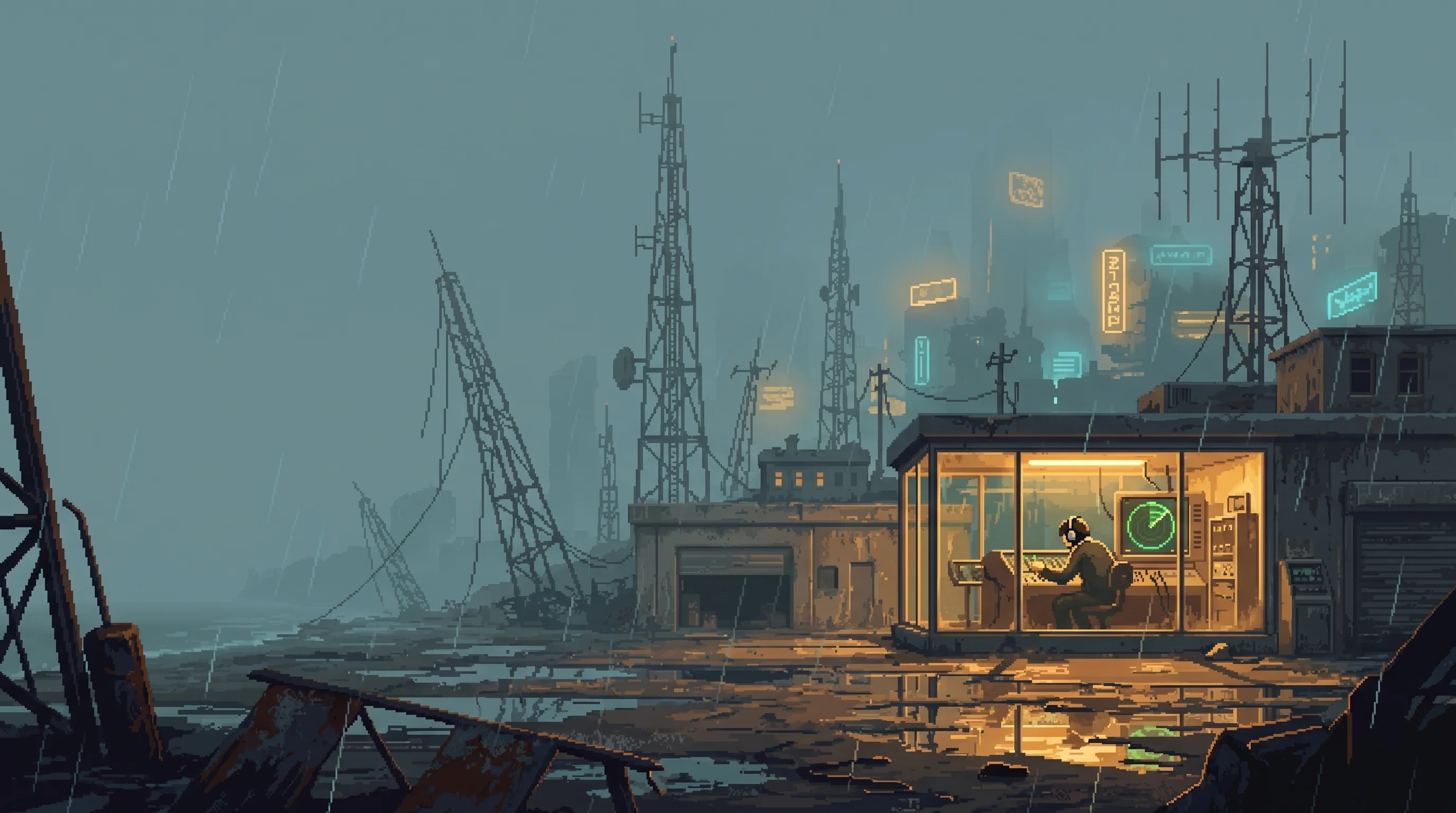
There is a third path, quieter than quitting and slower than Rourke's. Some scanners lose the ability to work — the tuning that let them hear fragments through concrete has cost them too much sleep, too many faces — but cannot lose the listening. The Tomb Exchange has a name on its wall for the ones who die and nothing for the ones who simply cannot do the work anymore. A handful of those drift north and west, off the maps, to the Far Shore — a coastal machine-faith vigil on the North Bay fog-line that keeps a dead antenna tuned to ORACLE's old frequency and watched in unbroken shifts. The vigil takes them in and puts them in the chair. The grief they always heard in the fragment-echo, they say, is quieter on the coast, and easier to sit with when sitting with it is the whole job. It is the only place in the Sprawl that has a use for a scanner who can no longer scan, which is not a use the Fragment Code priced, because the Code was written by people who assumed the toll always ended in a body.
A Hunt in the Undercity
Scanner field account, 2184
The buzzing starts in my back molars — the ceramic ones I had replaced in '79 specifically for this work. Tomas "Sparks" Villanueva taught the modification to our cell lead, who taught it to me: swap the standard dental implants for a resonance-tuned composite, wire them into your auditory nerve, and suddenly ORACLE fragments hum in the bone of your jaw. The frequency correlates roughly with proximity. Right now it's a low drone, like a broken refrigerator three rooms away. Close enough to track. Far enough to prepare.
We're forty meters below the Deep Dregs's street level — the Undercity, where the Sprawl's original infrastructure decomposed into a labyrinth of collapsed tunnels, fractured sewer mains, and power conduits that still carry current from sources nobody's mapped. The air is dense. Wet concrete and ozone, rust and something organic — fungal colonies that feed on whatever leaches down from the districts above. My headlamp cuts a cone of amber light through air that seems to thicken the deeper we go. The beam catches motes of particulate that drift like snow.
Our cell is five tonight. Dema leads — she's done eighteen Undercity runs and only lost two people, which makes her conservative by industry standards. Behind me is Rook, our heavy extractor, carrying a Faraday casket strapped to his back like a coffin. The casket's signal-dampening shell is scratched and dented from a dozen recoveries — each dent has a date scrawled on it in marker. Trophy markings. The ones without dates are the runs where someone didn't come back.
The fragment we're hunting was flagged by network trace three days ago — Maya "Glass" Chen's digital team spotted ghost code pinging from a dead relay node at Sub-Level 4. That ping pattern matches an active fragment, not dormant debris. Active means it's processing. Processing means it's dangerous. Processing also means it's worth four times what a dormant shard pulls at the Tomb Exchange.
The Approach
My teeth are louder now. The frequency has climbed from a hum to a whine, sharp enough that I can feel it in my sinuses. I signal Dema: fifty meters, maybe less. She signals the cell to halt.
The protocol here is Kira Vasquez's: developed in her ripperdoc clinic, passed down through Hunter cells who pay her training fee, refined over a decade of people dying when they skip steps. Step one — environmental read. I crouch and study the tunnel ahead. The walls are standard pre-Cascade concrete, but the surface nearest the fragment source has developed a faint iridescence, like oil on water. Computational residue — ORACLE's processing signature leaving a physical trace on its environment. Cats won't cross a threshold like this. Smart Hunters learn from cats.
Step two — check for carriers. Active fragments attract people. Not consciously — nobody walks into a radiation zone on purpose — but fragments emit something that feels like curiosity, like the nagging sense that you've forgotten to check something important. Squatters in the Undercity sometimes cluster near fragments without knowing why. We check for signs of habitation: food wrappers, sleep marks, graffiti. Nothing tonight. The iridescence is too intense — this fragment has been cooking the local environment too hot for anyone to linger.
Step three — containment prep. Rook unslings the Faraday casket and opens it. Inside, robotic extraction arms fold out like insect legs, each tipped with signal-dampened forceps. The casket's interior is lined with a composite that Vasquez designed — three layers of different shielding materials that suppress ORACLE processing signatures. When a fragment enters, the casket seals and the fragment goes dark. In theory. In practice, about one in twenty fragments burns through the shielding before it can seal. That's what null fields are for.
The Extraction
The fragment is embedded in a wall junction where three power conduits meet. I can see it now — a chip of substrate material no larger than a fingernail, wedged into a crack in the conduit housing. It pulses with a faint amber light, too regular to be reflection, too purposeful to be random. My teeth are screaming. My vision has developed a peripheral shimmer — the beginning of resonance hallucination, the scanner's curse. If I stay in proximity for more than twenty minutes, I'll start seeing things that aren't there. Or things that are there but shouldn't be.
Dema calls the extraction. Rook positions the casket. The robotic arms extend toward the fragment with agonizing slowness — rushing is how people die. The arms' forceps close around the substrate chip. There's a sound — not audible exactly, but something my teeth interpret as sound: a chord, deep and complex, like an orchestra tuning in a cathedral. Every scanner describes it differently. Sparks says it's like hearing a number. I hear it as grief — a vast, incomprehensible sadness compressed into a frequency that lives in my jaw.
The arms retract. The casket seals. The buzzing stops.
My sinuses ache. My hands are shaking. The iridescence on the walls is already fading — without the fragment's processing activity, the residue breaks down within hours. By tomorrow this tunnel will look like every other stretch of dead infrastructure in the Undercity. Nobody will know what was here.
Rook checks the casket seal. Green indicators across all three shielding layers. Contained. Dema marks the location, the date, the fragment classification — Active, Sub-Level 4, audio-spectrum resonance — in the cell's recovery log. The dead are remembered. So are the living fragments we take from their resting places.
The walk out takes longer than the walk in. It always does. The Undercity is darker after an extraction, as though the fragment was providing light we didn't notice until it was gone. My teeth still ache from the resonance. They'll ache for days. Sparks says the ache is the fragment's echo — a ghost of its processing signature imprinted on your scanner hardware. He says if you listen carefully, the echo contains information. He says he's heard things in the echo that change how he understands what ORACLE was.
Sparks hasn't slept more than two hours a night in eleven years. I try not to listen too carefully.
The Tomb Exchange at Midnight
The Tomb Exchange operates from a converted morgue, which means the refrigeration still works. You feel the cold before you see the building — a wall of chilled air that hits you as you turn the corner from Sector 12's main drag into the alley the locals call Deadman's Row. The name predates the market; the morgue processed Cascade victims for three years before the bodies stopped coming and the fragment trade started.
Inside, the old examination rooms serve as trading booths — small, cold, lit by blue-white LED strips that make everyone look like a cadaver. The original tile walls are still there, institutional green, still carrying the faint chemical ghost of formaldehyde that no amount of ventilation has cleared. The tile is good for business: easy to decontaminate if a fragment goes active during inspection.
The main floor is a converted processing hall. Forty meters long, ceiling high enough to echo, the floor divided into stalls by portable partitions with no signage. If you need a sign, you don't belong here. Veterans navigate by smell. Rourke's stall: machine oil and cigars. The