The Sound Register
Exclusive-Receipt Performers' Register
One desk, sixty-one thousand claims
It was built so that no musician could ever be paid alone. In 2184 that turned out to include being paid at all.
Registration
Registration
The first operative clause is read aloud to each new member.
The member's new-use claims pass to the desk permanently.
Bulletin morning
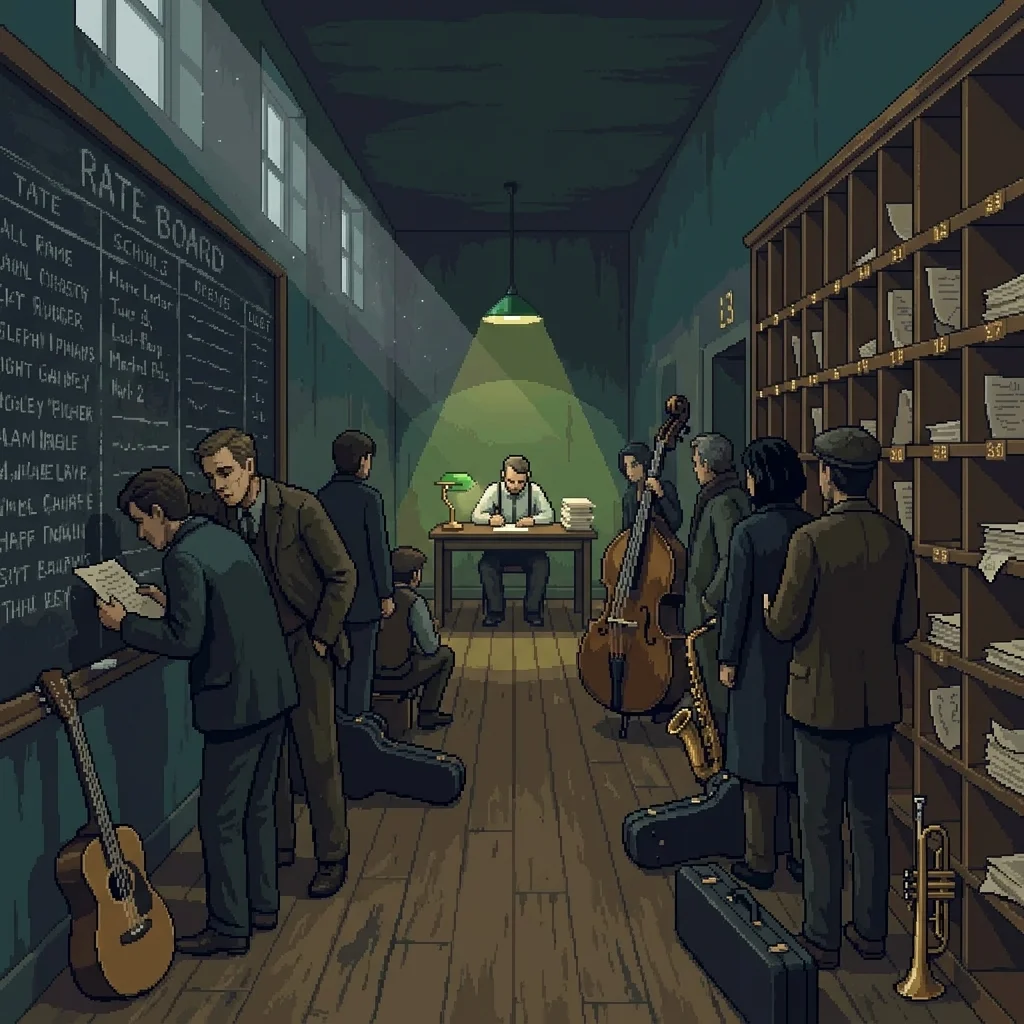
Members queue in the Hall to read the rate board and the quarterly bulletin.
The board sets session prices across the Sprawl, members or not.
The first operative clause is read aloud at registration: the claim goes to the desk, permanently. In return a member gets the rate board, a clinic, and the only session musicians' pension in the Sprawl. Members elect the board and the Registrar. The Grievance Sitting hears appeals against the Register's own Notices. No other body can.
Member 14,206
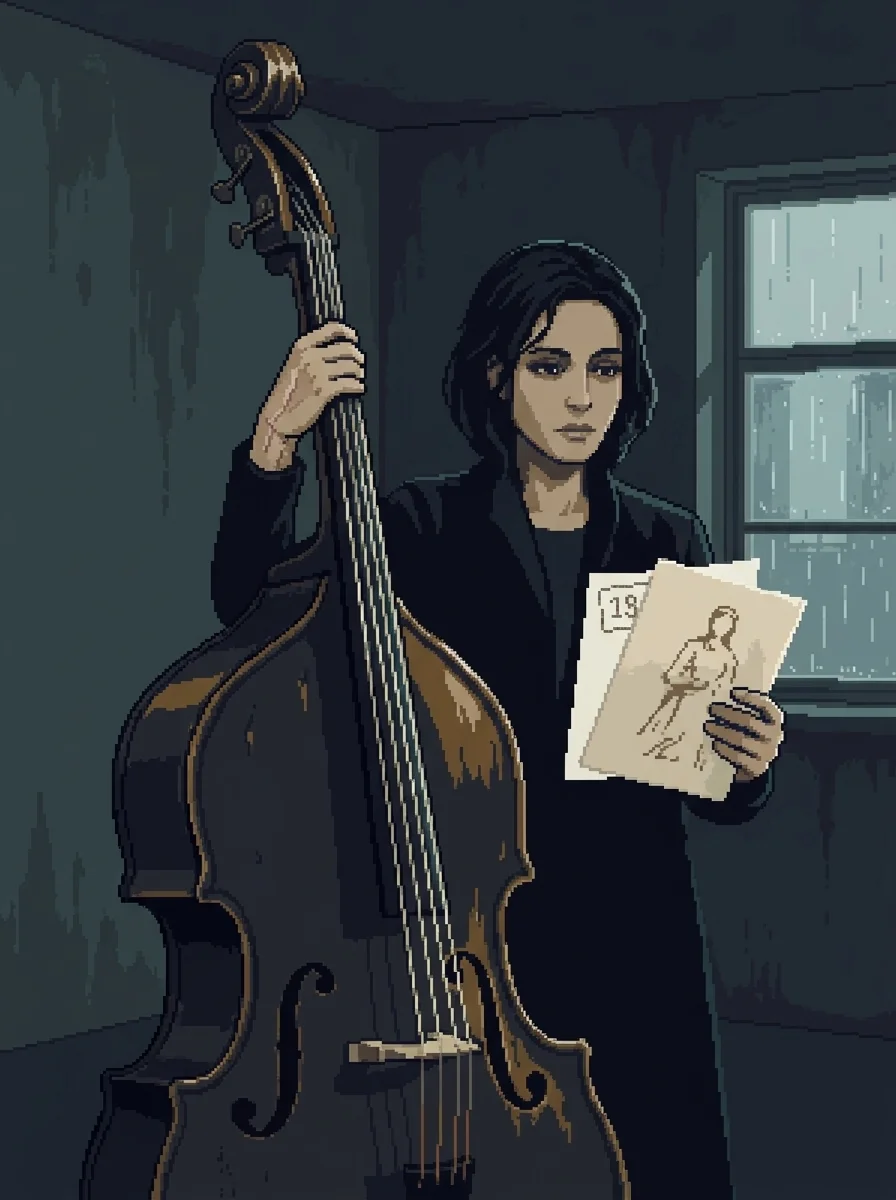
The clinic set Ilsa Brekke's left wrist in 2179. She plays because of it. She will get no other pension. She appealed her Notice to the Grievance Sitting, lost, and paid her dues the same week.
Overview
Ilsa Brekke, member 14,206, queues in the Register Hall on bulletin morning with her double bass. The chalked rate board runs the length of the wall. It is the only public price for session work in the Sprawl. Studios with no members use it too.
At the far end, under a green lamp, is one desk. Under Article 7 of the Recorded Work Agreement, only that desk may receive a new-use payment on a member's recording. No member may receive, negotiate or settle her own. Its countersignature, the Conclusive Receipt, certifies every represented performer satisfied.
The motto over the pigeonholes: ONE DESK. NO CHEAP SIGNATURES.
Why One Desk
The founders met in the Outer Works in 2159. A Sector 8 studio had just cleared a room of sixty musicians by buying four waivers. So the founders made a signature impossible to buy.
The Bulletin
In 2184 Relief licensed forty years of session masters into its generative catalogue and paid ¢94.2 million to the desk. Deputy Registrar Anselm Kew countersigned on a Tuesday afternoon.
Article 7 then requires division by identified performance. No one can say whose eight bars are in which generated track. Registrar Mirjana Vetch, elected in 2178 to defend Article 7 unamended, twice asked the Authenticity Tribunal to certify a method. Both came back marked outside its remit.
The money stayed in general funds, which pay for the clinic and the pension. The bulletin printed both figures in the same type: ¢94.2 million received, ¢0 apportioned. The Register posted 61,412 Notices of Satisfaction.
Four Streets Away
The Hall stands in Neon Graves, where the musicians already were. The Resonance Collective refuses recording, so no desk can be paid for it. Lyra Voss never registered; forty thousand companions wear her voice, unpaid. Hollis Sarr reads Notices aloud at a folding table on Sump Row. The Line-Walkers Union kept its leverage off paper. The Register wrote its leverage into a clause and won with it for twenty-five years. The Salt Ledger pays finders a flat sum and never claims to act for them. The Labor Question, AI Labor and Copyright in Infinite Reproduction all meet at this desk: a payment that can be received and cannot be divided.
Further connections
Browse all 13 connected records

The Register holds the countersignature. Kew's eleven seconds on the satisfied-use certificate is the act that closes every represented claim in a use.
A one-page notice that your claim was paid and closed. The figure field is blank. Members fill it in pencil.

Paid the Register ¢94.2 million for forty years of session masters, twice over — the use already taken and the term ahead — and took its certificate.
The corporation whose algorithms produce 70% of the Sprawl's synthetic content and decide what surfaces from the rest.

The Register Hall sits in the Graves because the rent was nothing in 2159 and because the musicians were already there. It is now the district's largest employer of nobody.
The Sprawl's last art district preserves aesthetic diversity because its artists cannot afford certification.

Four streets apart and structurally incompatible. The Collective refuses recording so no body can ever be paid for it; the Register exists to be the body that is paid.
Musicians accompany the Dispersed as artists, but reject recordings because the dead cannot consent to distribution.

The other answer to the same question. Highport refused to write its leverage into a document; the Register wrote its into Article 7 and won with it for twenty-five years.
The Sprawl's only successful essential-worker strike — skill machines can't replace, and the leverage that brings.

The Register's best argument, standing outside it. No collective held her claim, and forty thousand companions wear her voice for nothing.
A neural-recording artist whose consciousness patterns resist duplication — her voice didn't.

Labour's strongest instrument in the Sprawl, and the case that its own advocates have no form of words for.
Seventy years arguing what people are for; its ugliest answer is that priced right, flesh costs less than the machine.

Certifies a use as licensed, which is what a satisfied-use certificate is issued against.
Nexus-funded body certifying what's real — its accuracy is decaying toward a coin flip, unpublished.

The trade's unofficial reading room for Notices. He has read more of them aloud than the Register has answered.
A Dregs letter-reader who is contractually forbidden to open his own mail.
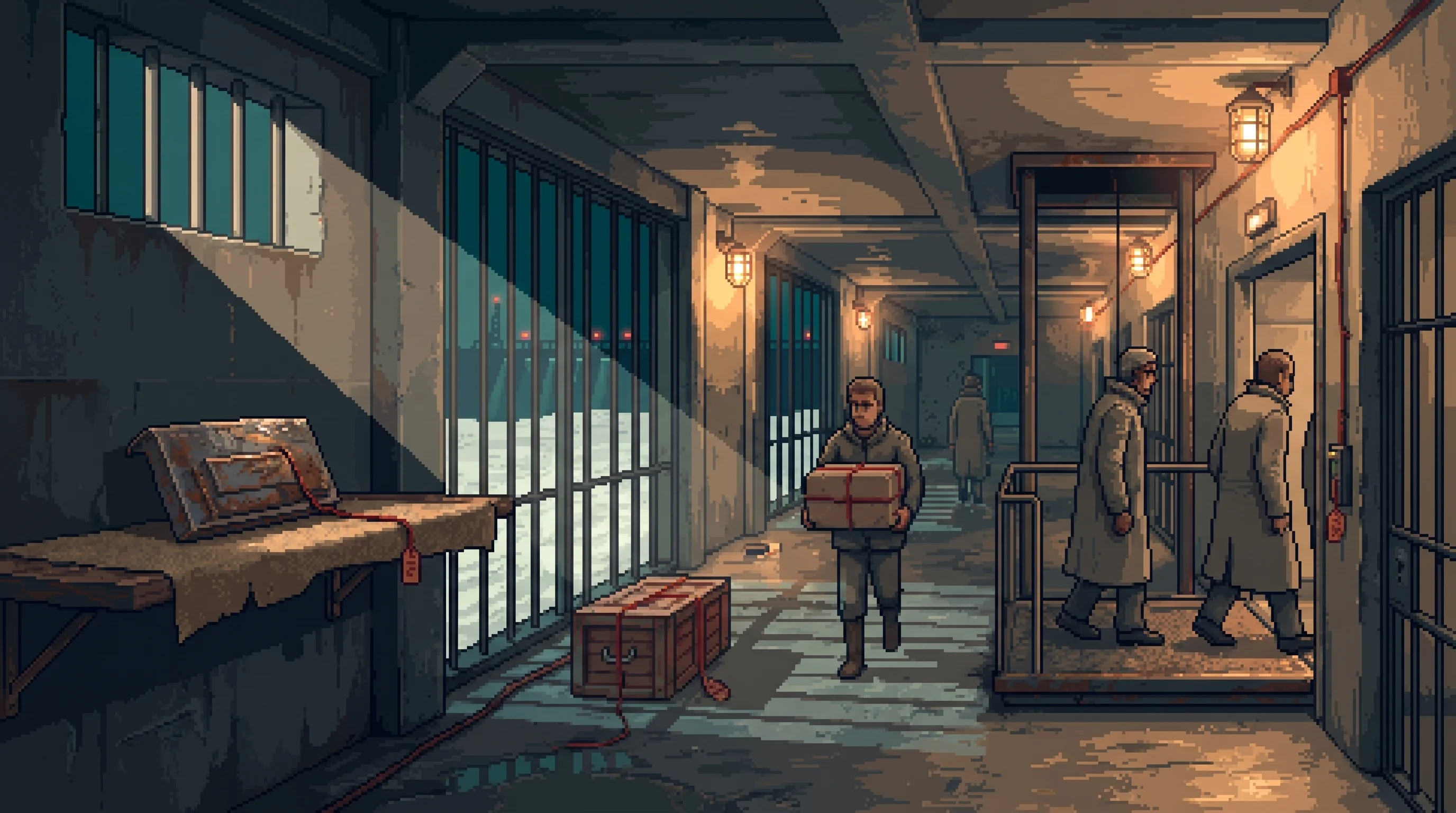
A house that pays a flat sum, keeps the difference, and has never claimed to act for the finder.
An Alcatraz cell-house auction room where one hand-inked line turns a rusted pre-Cascade object into a fortune.

Built to make copying payable, and met a use that could be paid for and not divided.
Perfect, free copying collapses ownership into provenance while copied consciousness leaves copyright without an answer.
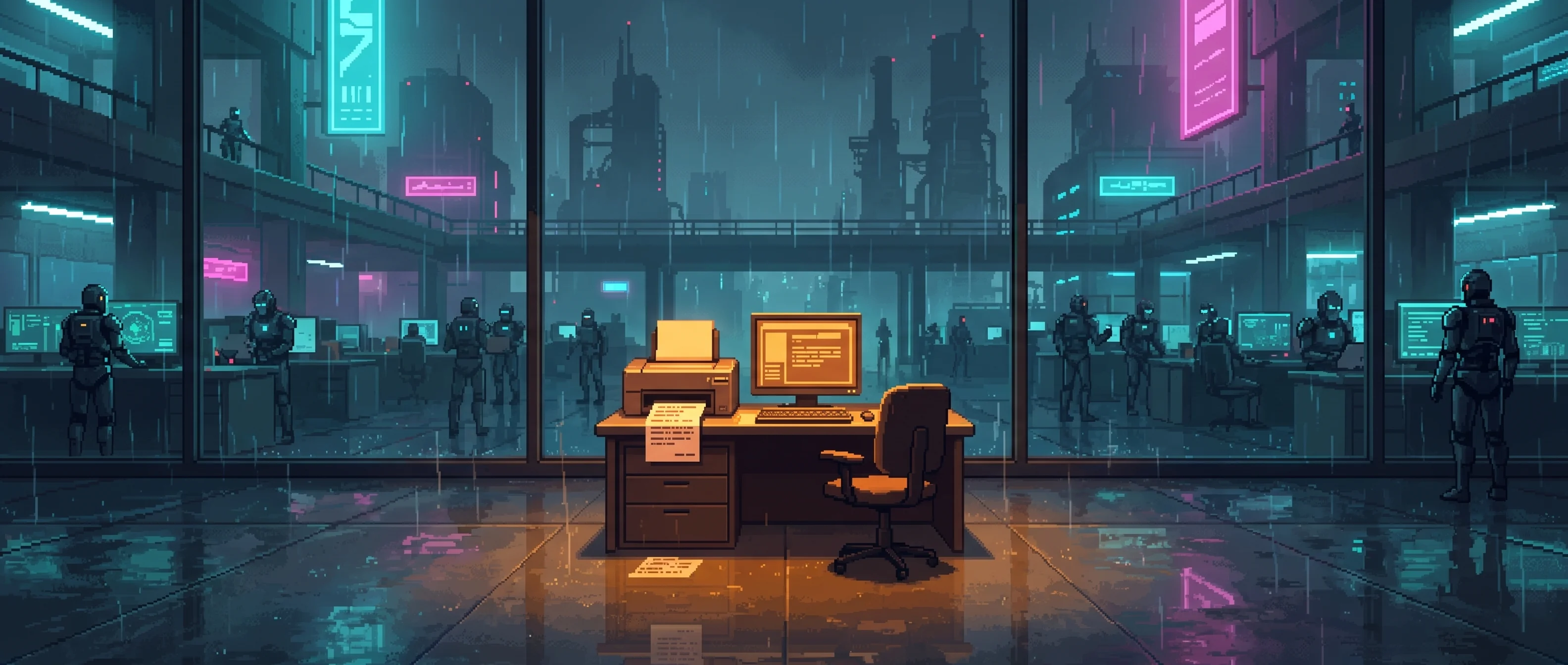
Work survives as training material; the trade as a rate board.
Automation ended most human work, but ownership hoards its abundance while machine sentience stays unresolved.
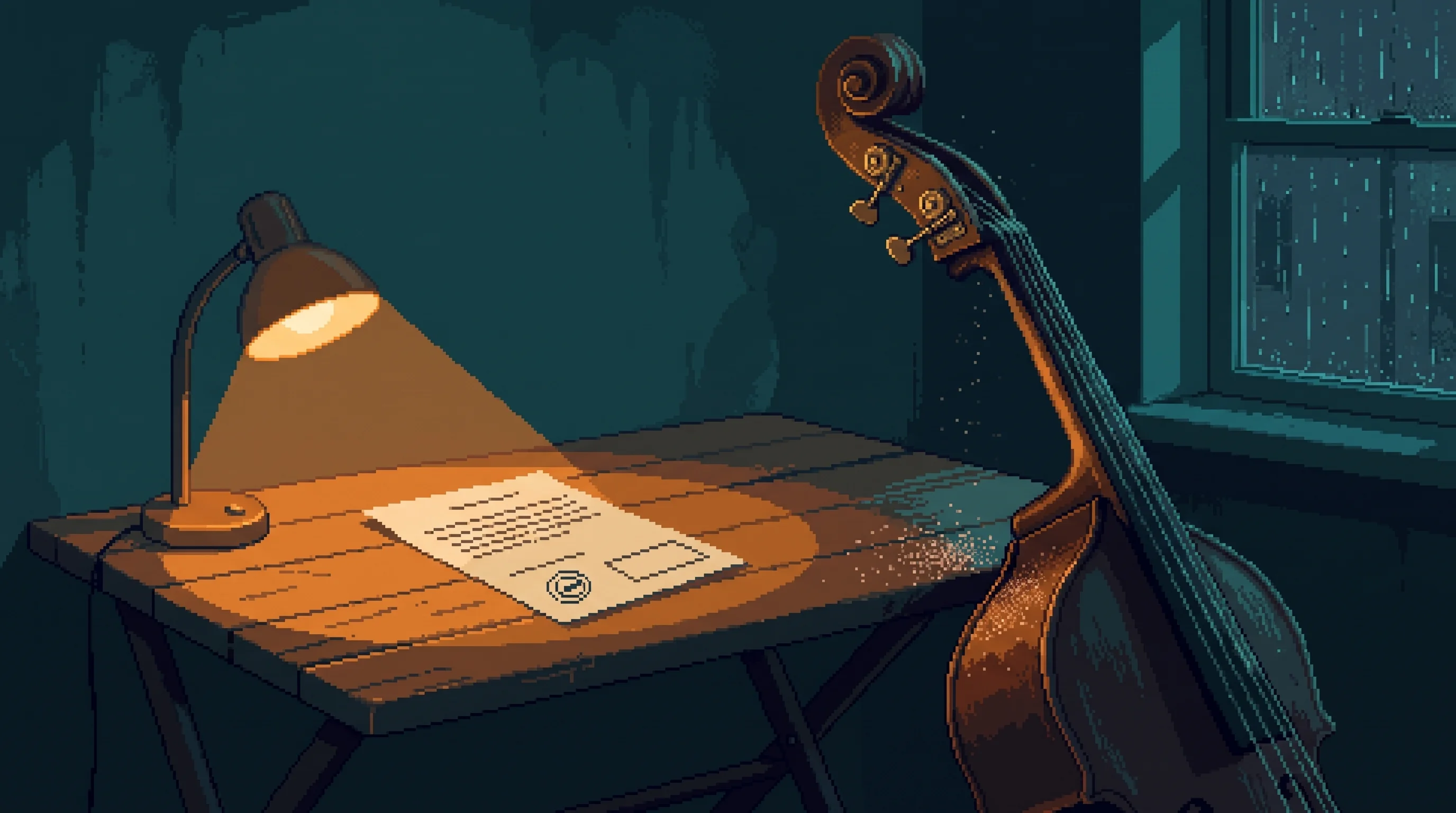
The body at the centre of the argument, and the one that wrote the clause. It won exclusive receipt against real opposition in 2159 and spent its members' claims with it in 2184.
Relief paid for her bass lines. Her union kept the money and wrote to say she was satisfied.