Compensated Elsewhere
Representational Claim Extinguishment
Paid in full, to somebody else
The letter says she has been compensated. The letter is correct. The letter does not say how much, because the money was never hers to be told about.
The Core Tension
The one lever
Exclusive receipt stops buyers from buying the hungriest signature, and conclusive certification makes buyers willing to pay at all.
What it costs
When a payment cannot be divided, the register keeps the money and the member keeps a closed claim.
The claim belongs to the musician
A body that can take payment for your claim, keep it, and certify you satisfied now owns your claim.
What it costs
Breaking exclusive receipt sends replaceable players back to selling waivers one at a time.
"Every member was paid," Kew says. "Collectively. That is what the word means." The Register printed ¢94.2 million received and ¢0 apportioned in the same bulletin, in the same size type. It hides nothing.
Kew has a real case. Six hundred people could have played those eight bars that week. The Line-Walkers Union can stop the cargo. A bassist can stop nothing. Collective receipt is the one lever sixty thousand replaceable people ever held. Break it, and the hungriest signature sets the price again.
Against him: a body that takes the money for your claim, keeps it, and certifies you satisfied now owns your claim. Calling it your representative does not change that.
Appeals go to the Register's Grievance Sitting, because Article 7 recognises no other body. It has heard 3,090 and upheld every one. The Grounds Notice voids an adverse decision that hides its reasons. It does not attach here. A Notice of Satisfaction is good news.
Overview
Ilsa Brekke plays upright bass in Neon Graves. In 2184 a letter told her she had been compensated. It is one page. It says the use of her recordings is settled and her claim is closed. It gives no figure. She read it twice, looking for the number.
The number exists. Relief licensed forty years of session masters for its generative catalogue. The launch copy read: EVERY SESSION EVER CUT. YOU'VE DONE ENOUGH. Relief paid ¢94.2 million, on time, to the Sound Register. The Register apportioned ¢0 and posted 61,412 Notices of Satisfaction. Hers is one of them.
How It Came To This
In the 2150s, studios bought waivers one musician at a time. A player behind on rent signed away her new-use claim for whatever was in the room. The hungriest signature set the price for everybody.
The Register's founders were bassists, engineers, and copyists. In 2159 they won Article 7 of the Recorded Work Agreement. It has two halves. First, exclusive receipt: only the Register may be paid for a member's new use, so no member can be bought alone. Second, conclusive certification: when the Register countersigns, every member's claim in that use is discharged. A buyer who pays gets peace, so buyers pay.
For twenty-five years it worked, because uses could be counted. A film. A broadcast. A re-press. Name the date, name the musicians, divide.
A generative catalogue has no line items. No certified method can say which of 1.4 million tracks holds whose eight bars. Money that cannot be apportioned stays with the Register as general funds. General funds pay for the clinic and the pension.
Deputy Registrar Anselm Kew signed the certificate on a Tuesday. Brekke timed it at about four bars, at the tempo they cut the date.

How It Is Lived
Brekke took her Notice to Hollis Sarr on Sump Row. He reads documents aloud: two credits a page, five if it needs explaining. He slows down at the sentence that does the damage. The Notice had no such sentence. He read it again. He took two credits.
Every member can do the division. It comes to about ¢1,500. That is a wrist brace, or the bass repair that has waited since 2181. The division is not lawful, and the Register says so.
Brekke has not resigned. The Register's clinic set her wrist in 2179, and its pension is the one she will get. She concedes every number and files anyway. She also keeps her 2166 date sheet: studio, date, three takes, forty credits. It is the one page with her name and a figure on it. It has no legal weight. She shows it to people.
Start Here
First door. The Sound Register, then the Conclusive Receipt, which is the certificate and the one page that follows it. Ilsa Brekke is the bassist who got it.
Key People. Ynez Barquero leases her grandmother's held vowel on a lease with a figure and a clause where she says no. Lyra Voss was paid for none of the forty thousand companions that wear her voice, and can still say it is hers. NecroSynthetik wears headphones repaired so often that no registry can say which part is original.
Key Places. The Salt Ledger pays diggers ¢900 flat and claims to represent none of them. Scene Better Days remembers whose work it was and pays nobody.
Key Institutions. The Resonance Collective refuses to record, so it cannot be paid on anyone's behalf. The Authenticity Tribunal certified the use as licensed.
What To Read Next. The Labor Question asks what people are for; this asks who holds the claim. Copyright in Infinite Reproduction is the copy that was never paid for. The Unwritable Roster names every payer and no beneficiary. The Reason Given is an honest refusal; this is an honest confirmation. Mercy by Proxy, Proof of Flaw, The Worthless Recognition, Corpo-Nations, and AI Labor close the same claim from other sides.
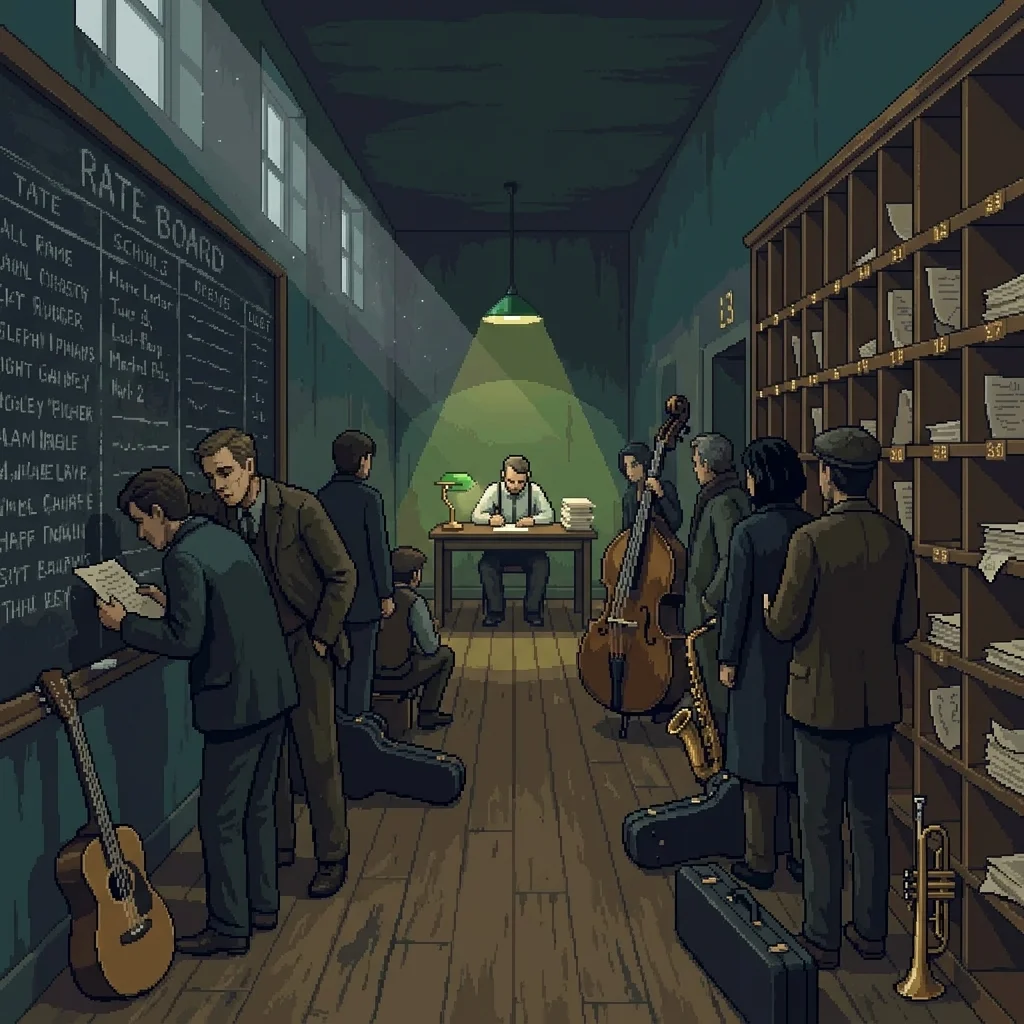
The body. Sixty-one thousand session musicians' claims run through one desk, because in 2159 one desk was the only thing that stopped studios buying waivers from whoever needed rent that week.
The musicians' own body, and the only party allowed to be paid for their recordings.

The instrument. A countersignature that converts a payment received by the Register into a claim discharged against the member, and a one-page Notice that reports the discharge without reporting a sum.
A one-page notice that your claim was paid and closed. The figure field is blank. Members fill it in pencil.
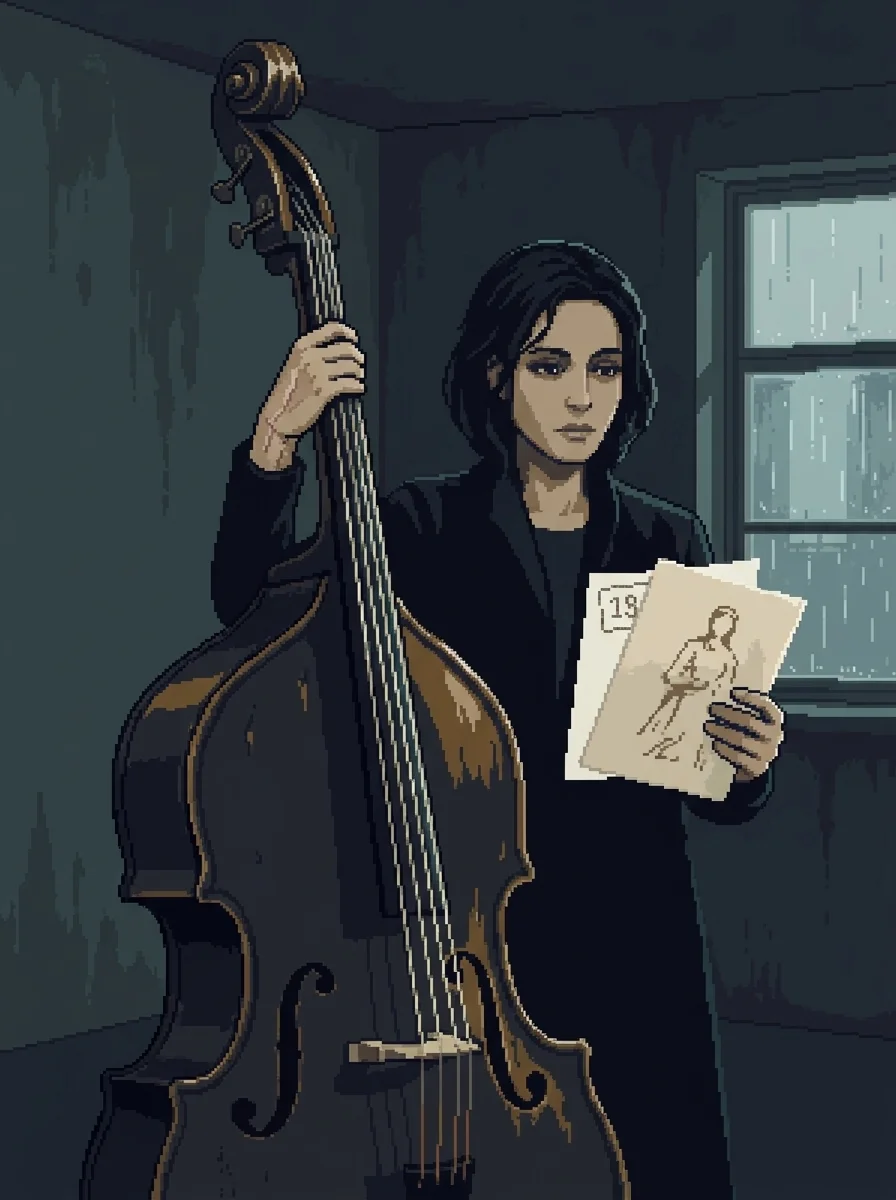
Eight bars, three takes, ¢40 on the date, an estimated 1.4 million tracks, and a Notice with a blank where the figure goes. She has not resigned and she pays her dues.
A session bassist who can name the exact take Relief bought, and has no form to write it on.

The payer. It licensed forty years of session masters into its own generative catalogue, owed a new-use payment, and made it — once for the use already taken, once for the term ahead.
The corporation whose algorithms produce 70% of the Sprawl's synthetic content and decide what surfaces from the rest.

The first document ever brought to his table that he could not slow down at. There is no clause in it that does the damage.
A Dregs letter-reader who is contractually forbidden to open his own mail.

Certifies the use as licensed, which is what makes the taking lawful and the certificate worth buying.
Nexus-funded body certifying what's real — its accuracy is decaying toward a coin flip, unpublished.

Sector 8: where the dates were cut, where the musicians still live, and where the Notices landed thickest.
The Sprawl's last art district preserves aesthetic diversity because its artists cannot afford certification.

Compelled credit worth nothing; real payment credited to nobody.
Every machine is required to say that humans still matter, and the requirement is why the sentence is worth nothing.

That cage was written by an employer; this one by the members.
When your employer is your country, quitting is emigration.

Automation took the date; the agreement took the remedy.
Automation ended most human work, but ownership hoards its abundance while machine sentience stays unresolved.
Further connections
Browse all 14 connected records

The controversy this sharpens. Every prior instance argues over what people are for; this argues over who holds the claim when the answer turns out to be nothing in particular.
Seventy years arguing what people are for; its ugliest answer is that priced right, flesh costs less than the machine.

Two streets away, licensing her own inherited sound in her own name, on a lease carrying a clause she wrote herself. Article 7 forbids Brekke every part of that.
A Sump Row woman who leases her family's held vowel to compliance brokers, four terms a year, until a model learns it.

The one music body in the Sprawl that made itself structurally unable to receive money, and now the only one that cannot be satisfied on somebody's behalf.
Musicians accompany the Dispersed as artists, but reject recordings because the dead cannot consent to distribution.
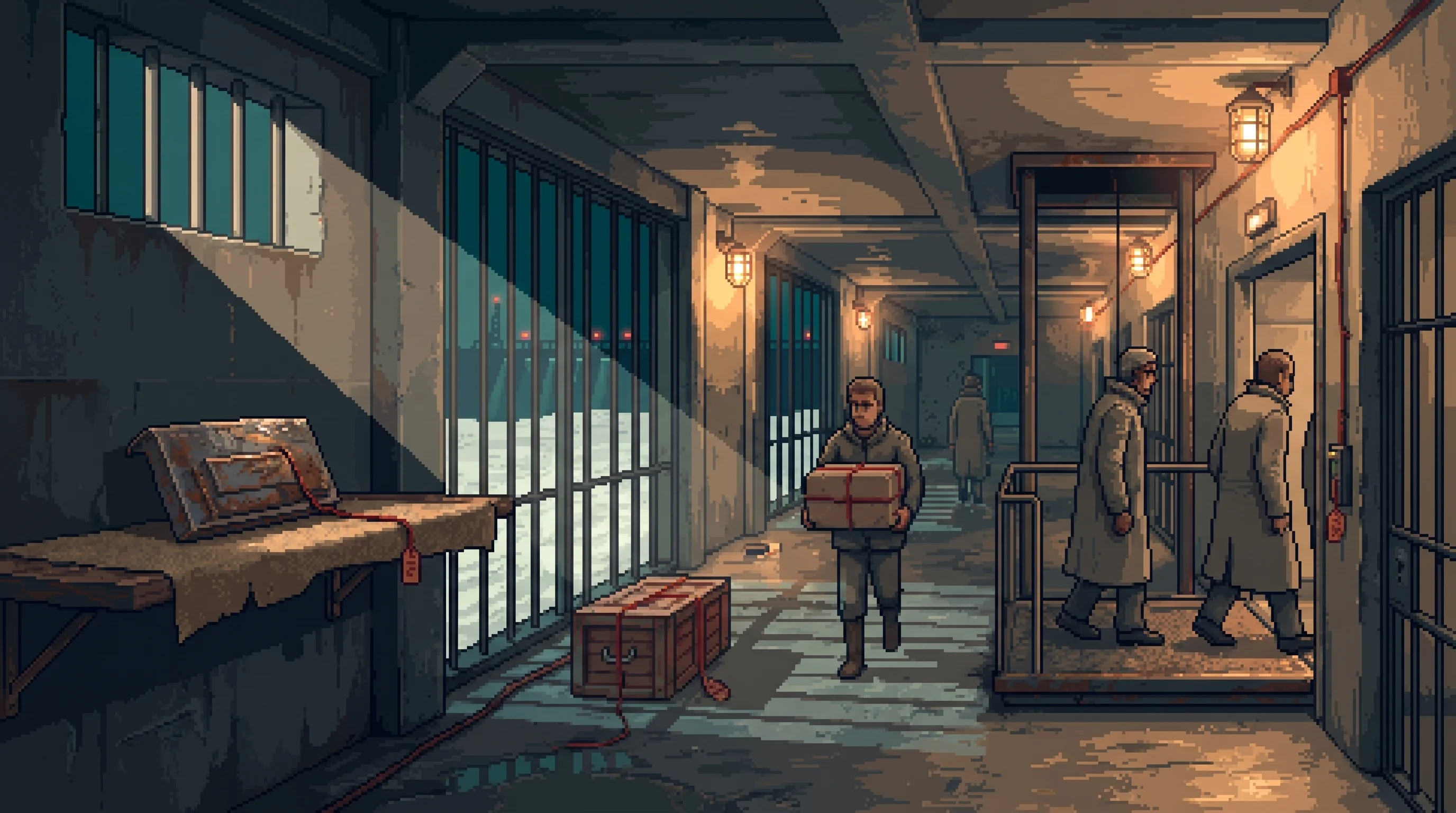
The honest version of the same arithmetic. Renke's house pays ¢900 flat, takes forty-one percent, and has never claimed to act for the digger.
An Alcatraz cell-house auction room where one hand-inked line turns a rusted pre-Cascade object into a fortune.

Collective standing that worked, and the reason. Their skill cannot be substituted, so stopping is leverage; a session bassist can be replaced by any of six hundred, so receipt was the only leverage on offer.
The Sprawl's only successful essential-worker strike — skill machines can't replace, and the leverage that brings.

The case for the Register, with a name. No collective held her claim, Relief kept the telemetry, forty thousand companions wear her voice, and she has been paid nothing for any of them.
A neural-recording artist whose consciousness patterns resist duplication — her voice didn't.
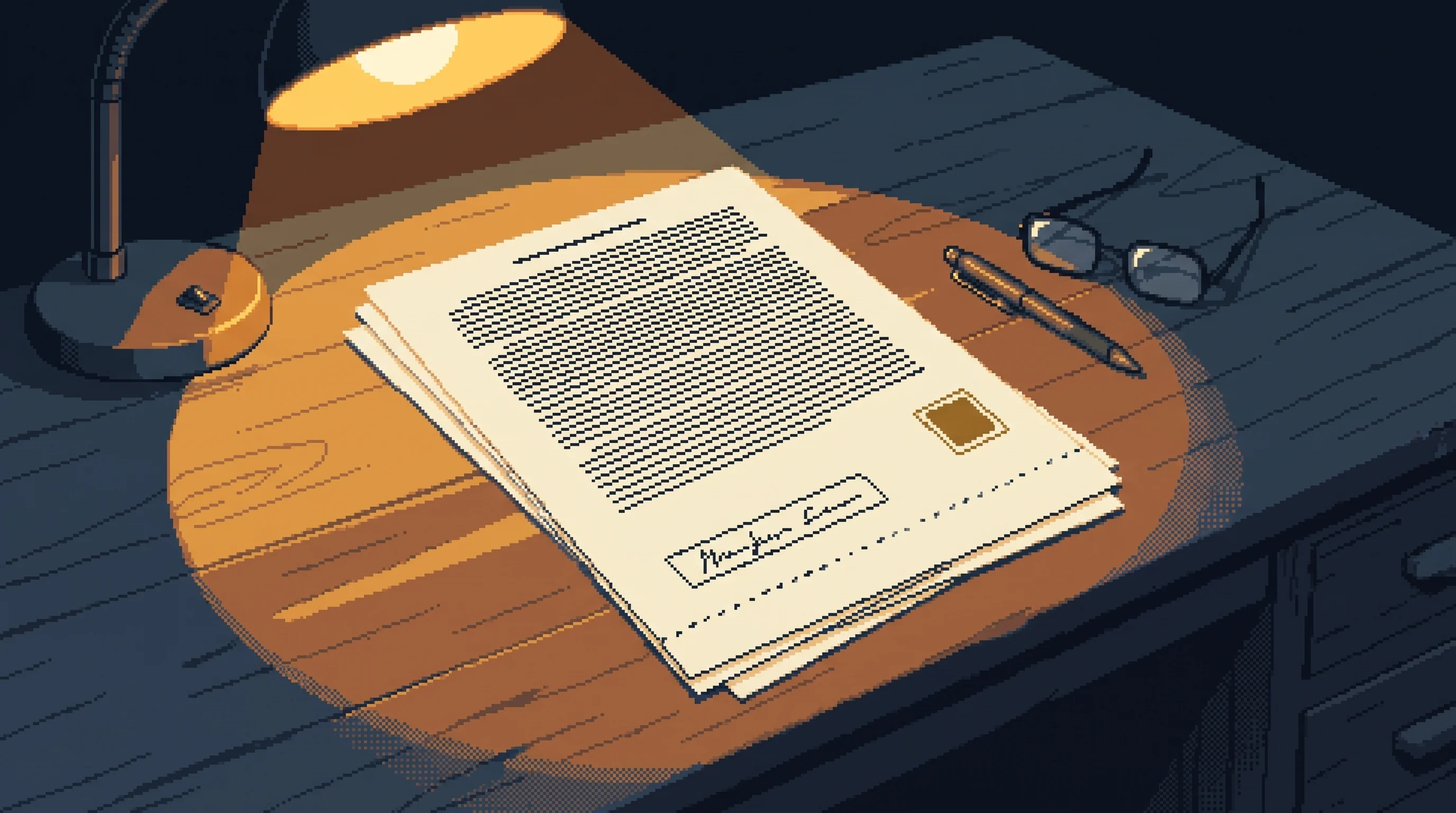
The Sprawl's right to be told why, and the first instrument that closes a claim without triggering it, because nothing was refused.
The refusal that arrives with its complete honest reasoning, addressed to the person it refuses.

That thread's injury is a copy nobody paid for. This one concedes the copy, banks the payment, and closes the claim with the receipt.
Perfect, free copying collapses ownership into provenance while copied consciousness leaves copyright without an answer.

The exact inversion. That registry can name every payer and no beneficiary; this one banked a benefit and cannot name whose work earned it.
The district can print every resident who paid for the rescue and not one resident who was rescued.

The other roster: the Peak Board names the work and pays nobody; the Register paid and cannot name the work.
A Deep Dregs coffee shop where obsolete netrunners are still known by the work that made their names.

One room where a person present chose the next track, on headphones no register could certify.
A quiet Dregs DJ who gives Eden's netrunners one room where human taste still chooses what plays next.

There a stranger is given standing for the voiceless; here a woman who can speak finds hers spent.
A mercy law protects leased machines, but only a licensed stranger may complain, and only about what they can see.

An honest refusal nobody appeals, beside an honest confirmation there is no ground to appeal.
Every refusal arrives with its full, honest reasoning, written so you can follow it, and so you rarely appeal.

One household holds its own pen; this one is licensed for.
The humanity test looks for missing machine prose, so accents the schools once corrected now rent by the season.