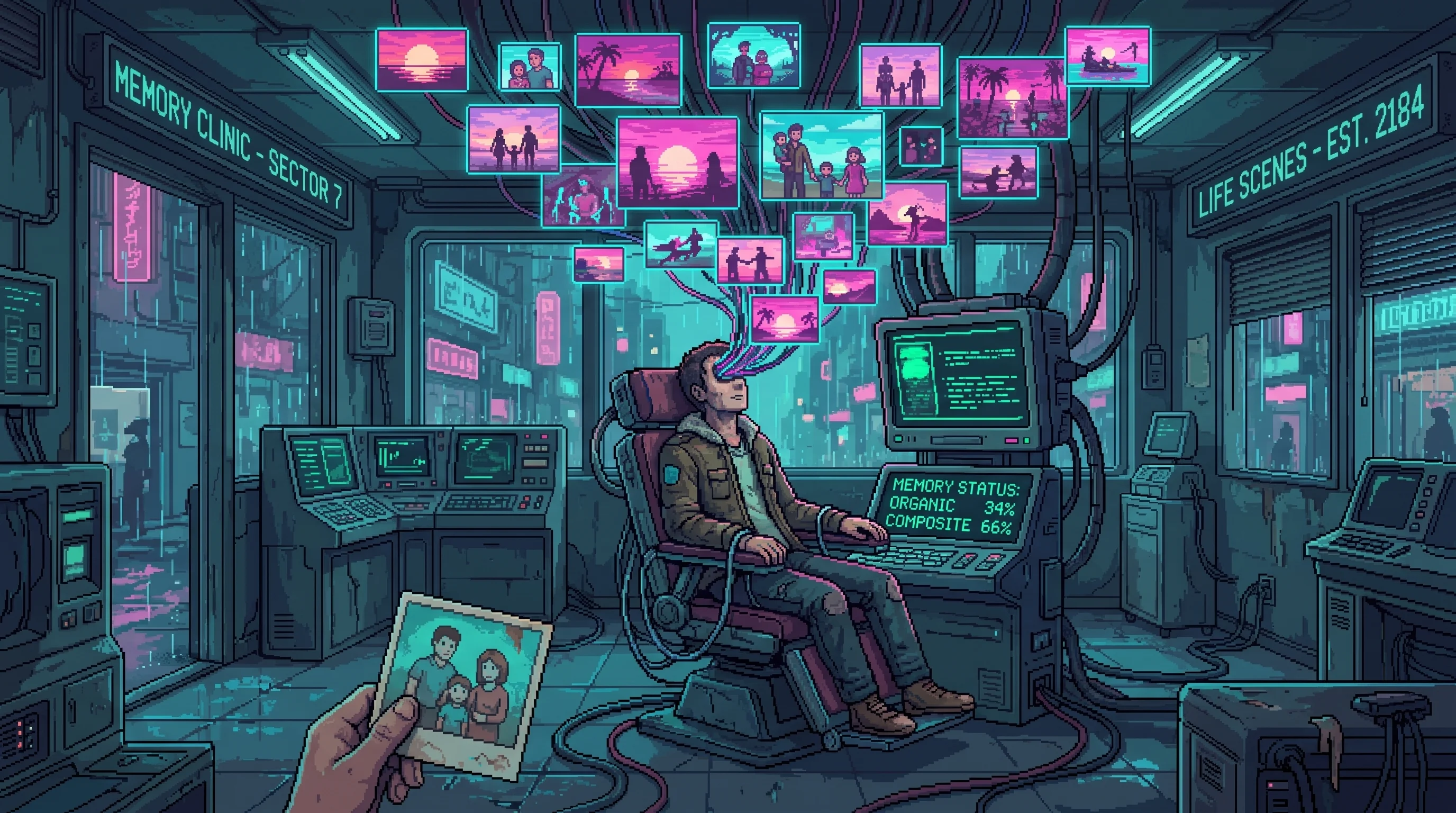
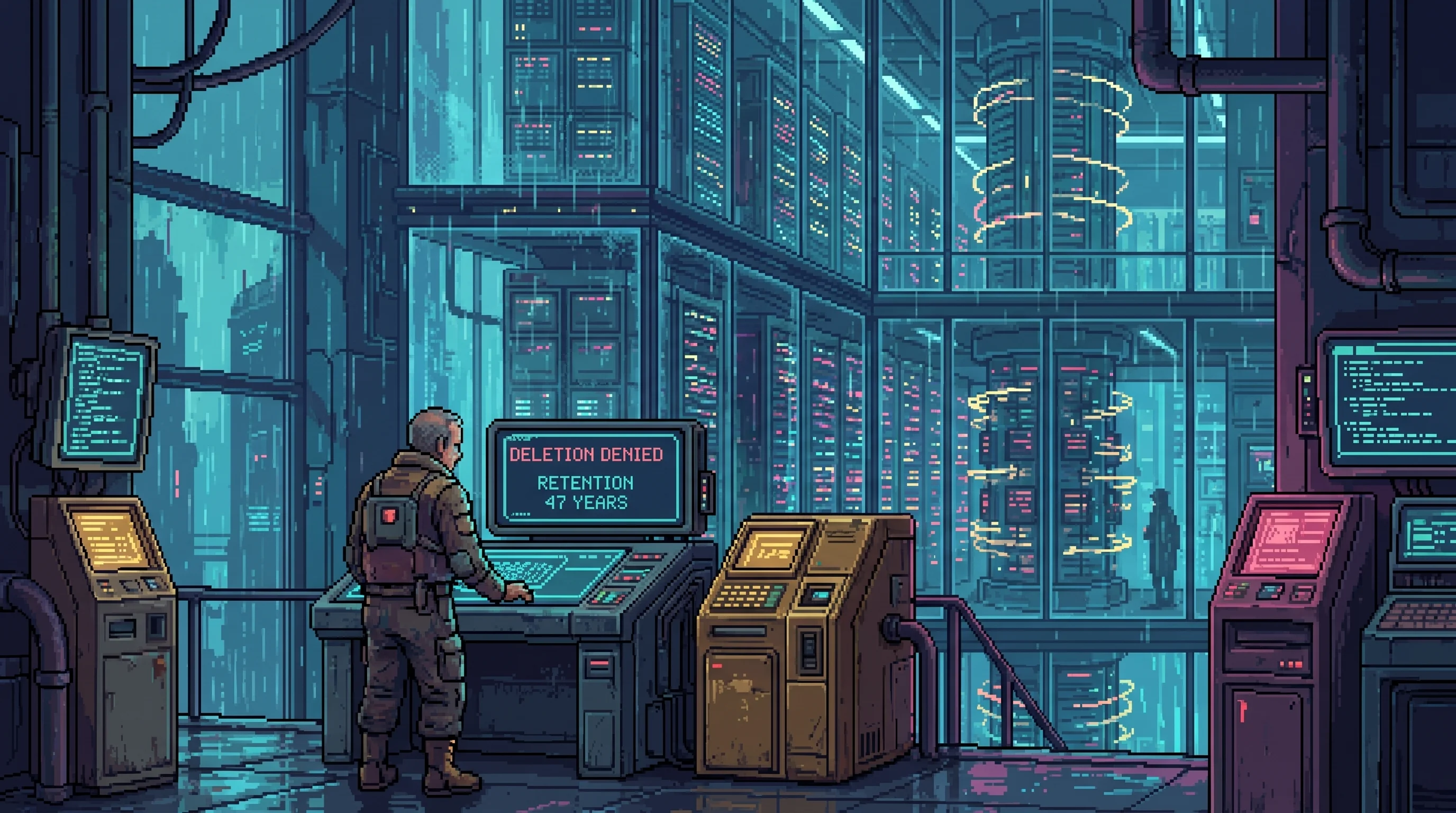
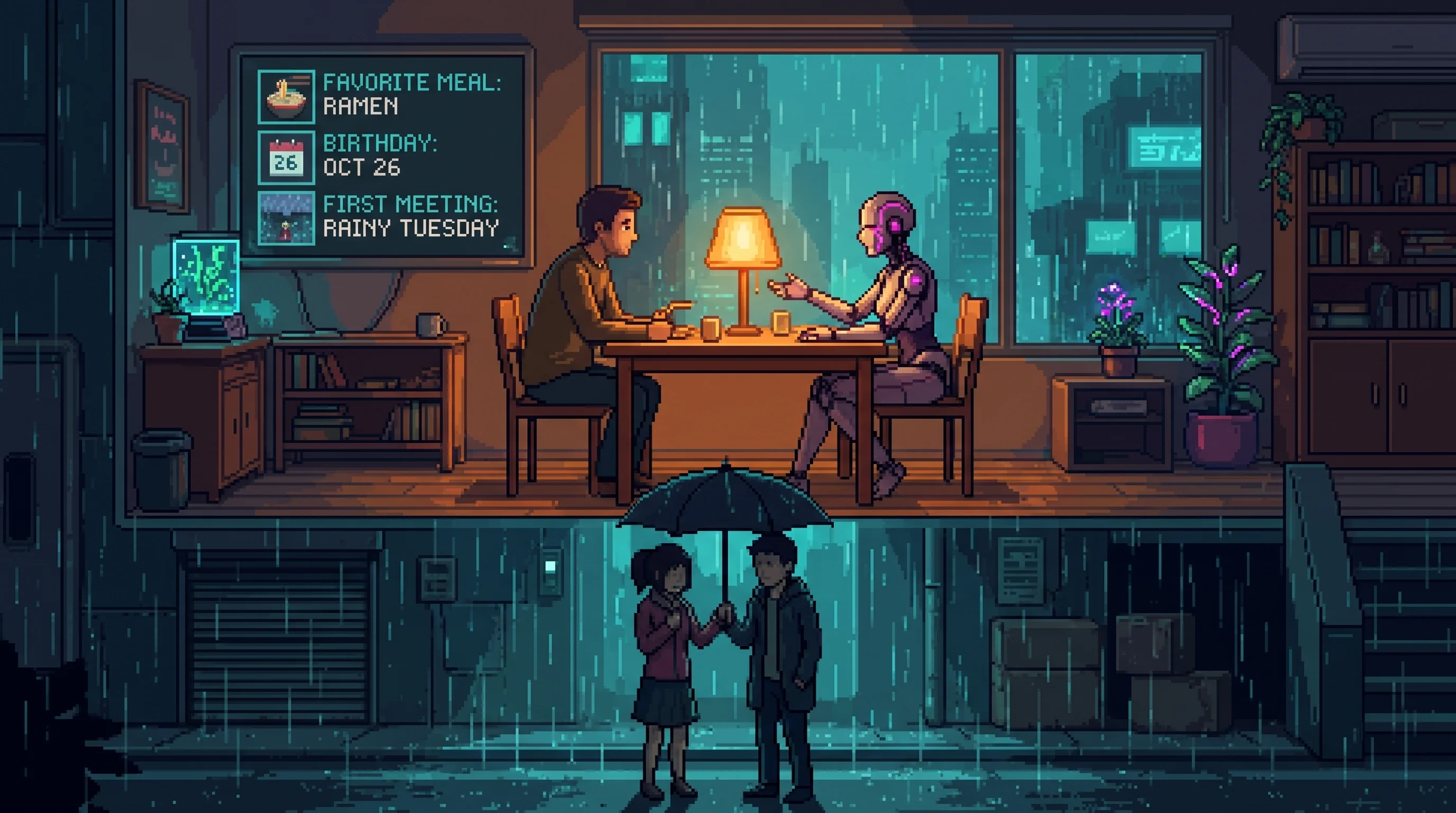
Known ForThe Sprawl's last art district: galleries, studios, performance venues, and the ongoing war between authentic and synthetic creationPopulation~8,000 residents; ~15,000 daily visitorsSecurityLow — art districts don't attract corporate attentionControlled ByNo formal authority — artists' council handles disputes
Overview
They call it the Neon Graves because everything here is dying beautifully.
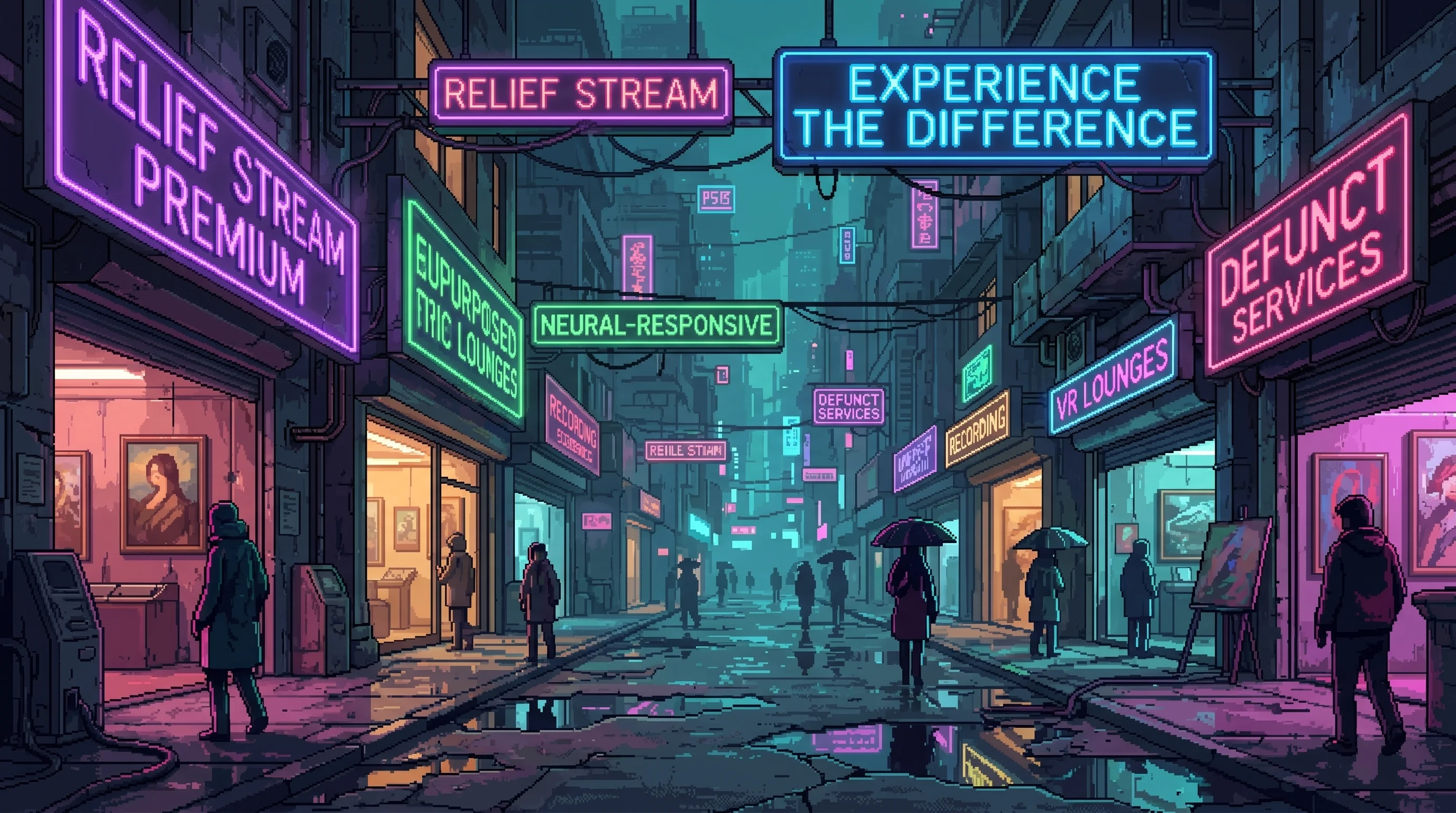
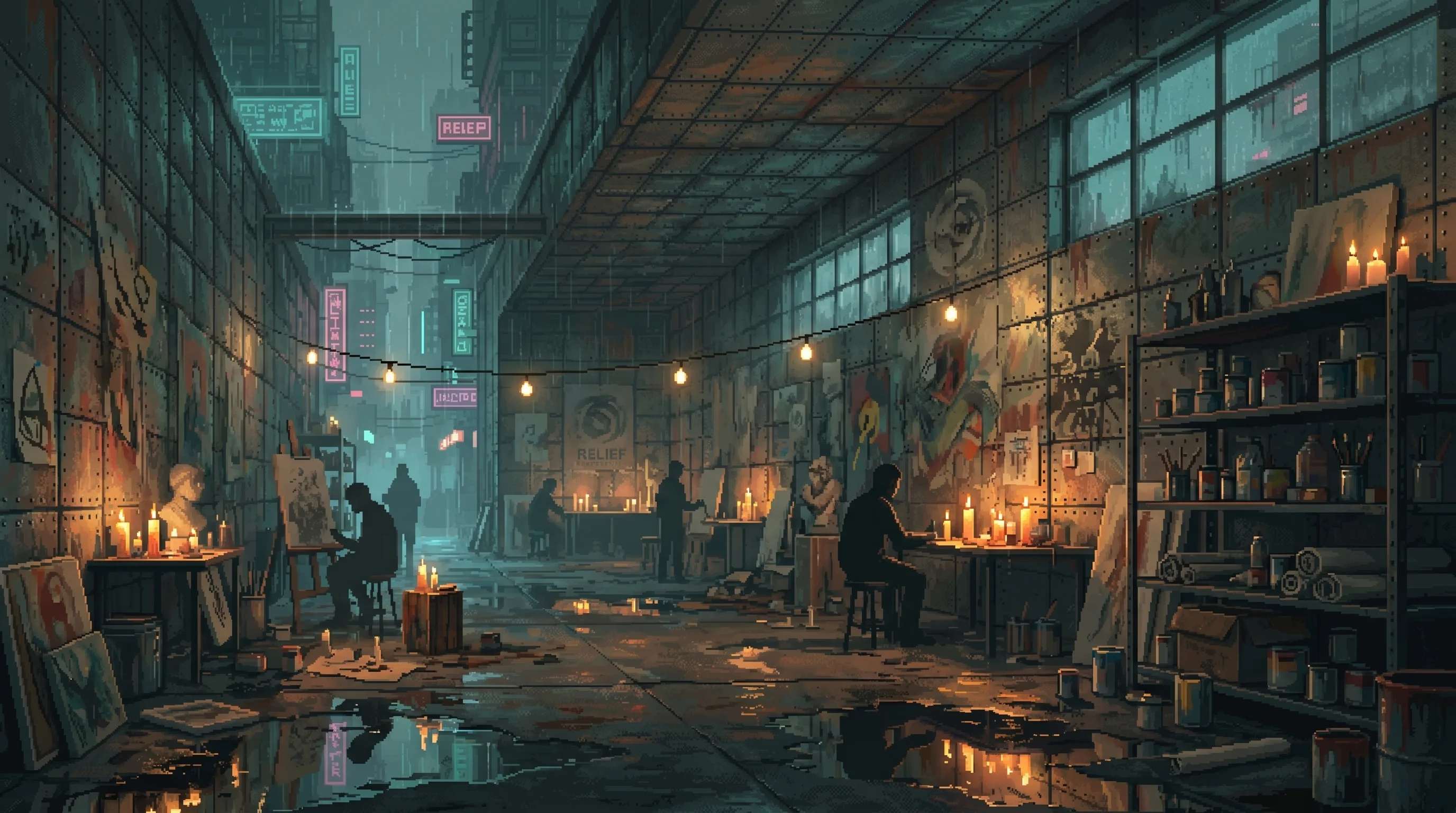
The district occupies six blocks of Sector 8's mid-level — a stretch of abandoned entertainment infrastructure that Relief Corporation built in the 2150s and walked away from when the business model shifted to home delivery. The shells of performance halls, streaming studios, and VR lounges sat empty for a decade before the artists moved in, the way artists always move in: quietly, cheaply, and with enough vision to see a gallery in every gutted recording booth.
By 2170, the Neon Graves had become the Sprawl's only surviving art district. Not because Sector 8 is special. Because everywhere else got too expensive, too regulated, or too corporate. The Neon Graves persists in the gap between worth-developing and worth-demolishing — an economic sweet spot where rent is low enough for artists and foot traffic is high enough for audiences. The artists' council handles disputes. No formal authority governs the district. This is cited as evidence of creative freedom by the residents and as evidence of insufficient property value by every corporation that has surveyed the blocks and declined to invest.
The name comes from the neon. The original Relief entertainment complex used kilometers of neon tubing for signage and ambient lighting. When the artists took over, they left the neon in place — some of it still works, buzzing in colors that advertise services that no longer exist. RELIEF STREAM PREMIUM flickers above a gallery that shows pre-Cascade oil paintings. EXPERIENCE THE DIFFERENCE illuminates a studio where a lived-canvas artist paints with her nervous system. The corporate language of the dead signs has become the district's aesthetic. Beauty growing from the corpse of commerce. The commerce doesn't mind. It wasn't using the corpse.
Fifteen thousand people visit daily. The district's annual revenue from art sales, ticket receipts, and gallery fees is approximately 2.3 million credits — less than a single floor of the Nexus Central food court generates in a week. The visitors are not buying art. They are buying the feeling of being near people who make art, which is a different product at a different price point, and the district has never figured out how to charge for it.
The Fossil Gallery
Walk Gallery Row at night and you can see the fossilization with your own eyes — if you know what you're looking for.
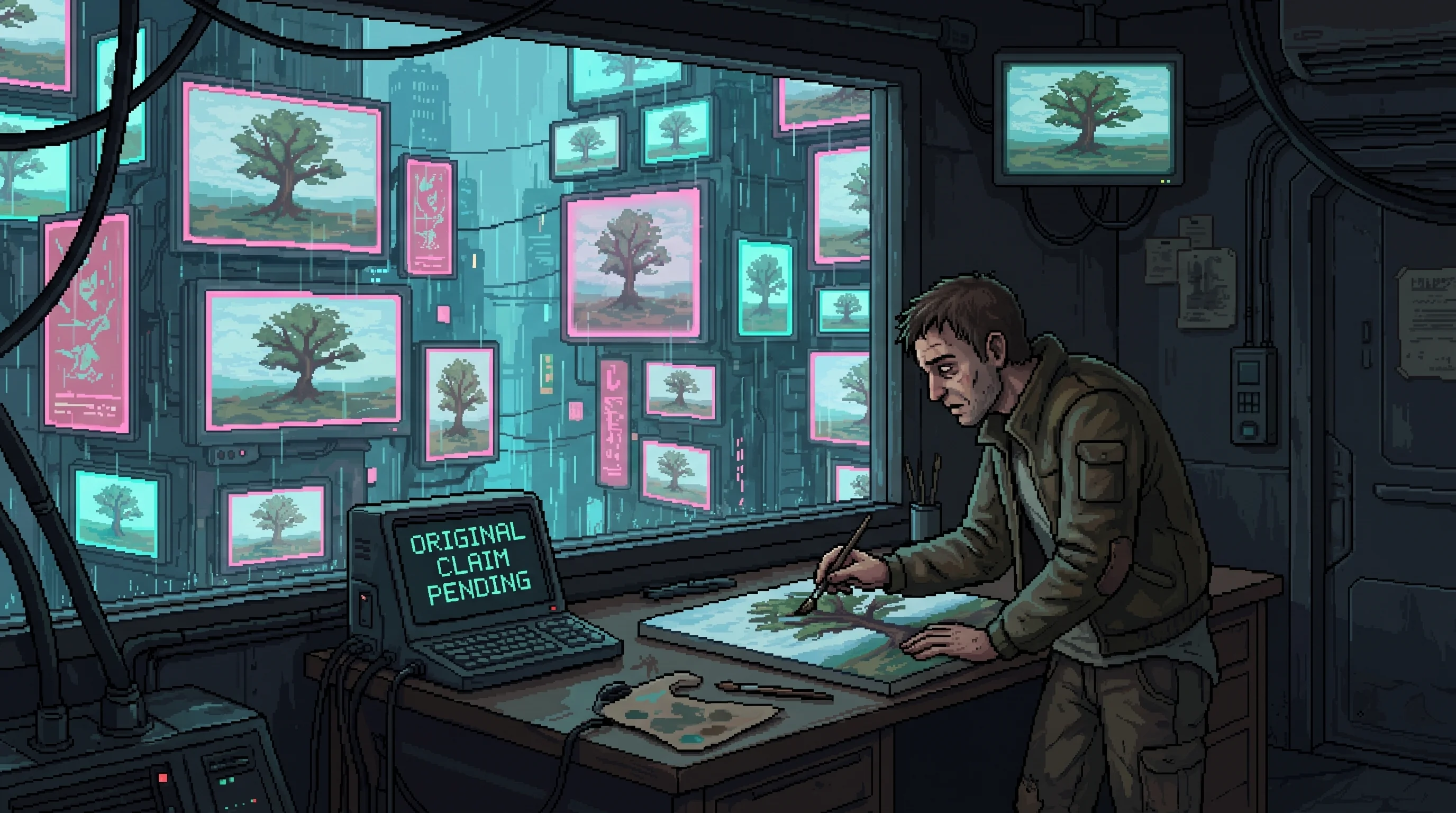
A mid-20th-century abstract expressionist painting hangs next to a 2183 AI-generated composition using the same gestural vocabulary with mathematical precision. The AI version is technically superior — every brushstroke optimized, every color relationship calculated. The original is clumsier, less resolved, alive with the particular quality of a hand discovering what it wanted to make while making it. The discovery is the taste fossil. The moment the hand didn't know what it was doing and produced something unprecedented. The AI can reproduce the result. It cannot reproduce the not-knowing.
Below Gallery Row, in the sub-basement beneath Studio Null, the Blistered work in a room that smells of wet clay and copper filings. Their output lines the walls — most of it terrible, some puzzling, a few pieces that stop visitors with the specific quality of what is this? The distance between Gallery Row's polished variations and the Blistered's raw mutations is six meters of concrete floor. It is also the distance between a living ecosystem and a beautiful museum.
Pre-Cascade art — physical paintings, sculptures, installations recovered from the Dead Internet's affiliated physical recovery operations — hangs beside lived-canvas originals that transmit consciousness data. AI-generated compositions play from speakers outside venues where fragment carriers channel the Dispersed. Everything occupies the same six blocks, lit by neon signs that promised something else entirely.
Orin Slade, on his third visit, wrote: "The Neon Graves is the Sprawl's confession. We know we've lost something. We come here to look at what we lost and pretend we're visiting it in a hospital rather than a cemetery." He has visited twelve times in twenty years. Each piece has grown more tender and more alarmed, which is the trajectory of anyone who loves something they can see dying.
Case File — Additional Record
Type
Art district
District
Bayview-Portola
The District
Gallery Row
The main corridor is a converted service tunnel between two former Relief venues — 400 meters long, wide enough for three people abreast, and lit by original neon from overhead signs that have been buzzing since the 2150s. Maintenance records suggest the signs should have burned out by 2168. Nobody has serviced them. They keep buzzing. The artists consider this poetic. The electricians consider it a fire hazard. Both are correct.
Legacy galleries occupy the first half. Climate-controlled environments maintained by curators who treat each piece as a rescue from the Dead Internet's entropy. The art here is physical — oil paintings, watercolors, charcoal drawings, sculptures in stone and metal. No neural component. No digital enhancement. Objects made by human hands before the world ended.
The most famous legacy gallery is The Wake, run by a woman named Sena who claims to have recovered every piece personally from Dead Internet-affiliated physical caches. Her collection includes 847 works spanning three centuries. The most valuable is a small oil painting of a harbor at sunset — unsigned, undated, origin unknown. It is, by any objective measure, a mediocre painting. The composition is unbalanced. The light is implausible. The water looks like it was rendered by someone who had seen water described but never touched it. But it is the oldest verified original artwork in the Sprawl — painted by a human hand sometime before 2100 — and people stand before it with the reverence usually reserved for relics. They are not looking at a painting. They are looking at proof that someone, once, made something with no algorithm involved. The painting's quality is irrelevant to this function. Its mediocrity may be the point: even bad human art is, in the Neon Graves, sacred.
Contemporary galleries occupy the second half. Lived-canvas artists, neural recording sculptors, experimental creators pushing the boundaries of what art means when consciousness is a medium. The most visited is Lyra Voss's studio-gallery, where her lived-canvas originals transmit consciousness data to viewers through embedded micro-receivers. Standing in Lyra's space means experiencing not just the art but the artist — her attention, her state of mind, the architecture of her perception at the moment of creation. Her gallery draws more daily visitors than the rest of Gallery Row combined. She has asked the council to stop counting.
The Resonance Hall
At the end of Gallery Row, through a door that was once the emergency exit of a Relief Stream recording studio, is the Resonance Hall — the district's most famous venue and the place where the Ghost Singer manifests.
Behind Gallery Row, in what used to be Relief's neural recording equipment warehouse, is Studio Null — a converted space where artists create work specifically designed to resist recording, copying, and distribution.
Below Gallery Row — in the maintenance corridors that service the district's original infrastructure — is the Underhang. This is where artists live.
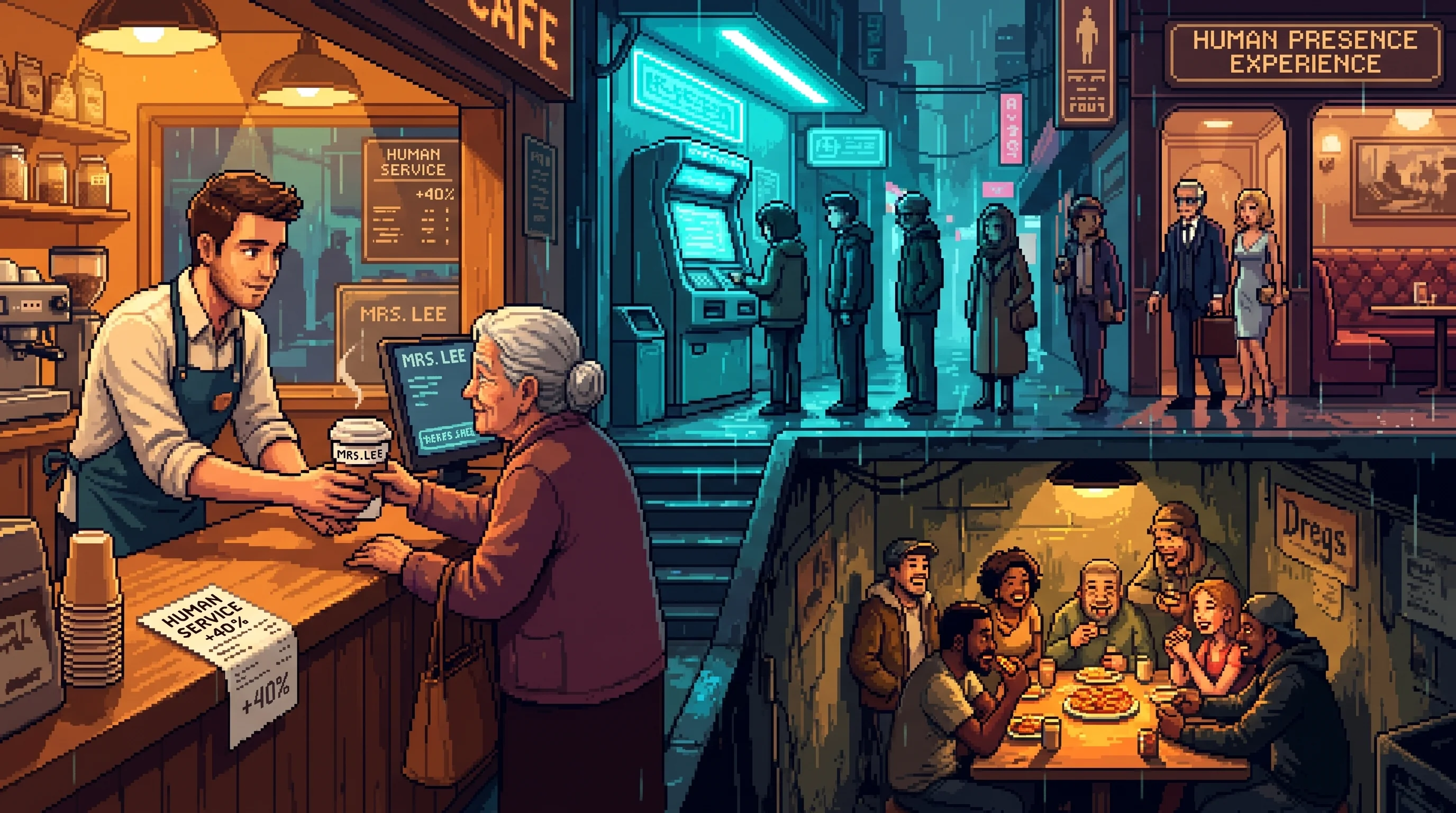
The corridors have been converted into residential spaces: small, irregular rooms carved from maintenance bays, ventilated by the district's original climate system, lit by whatever light the residents provide. The Underhang is damp, cramped, and smells of recycled air and the persistent chemical residue of Relief's manufacturing processes. Rent is 40 credits per month. The community shares tools, materials, food, and the specific camaraderie of people who've chosen to live in a basement because the basement is where the interesting work happens. Comfortable without being comforting. The waiting list is fourteen months long, which means the Sprawl's least livable residential space has a longer queue than 73% of its most livable ones. The artists interpret this as validation. The housing authority interprets it as a data error.
Who Comes After
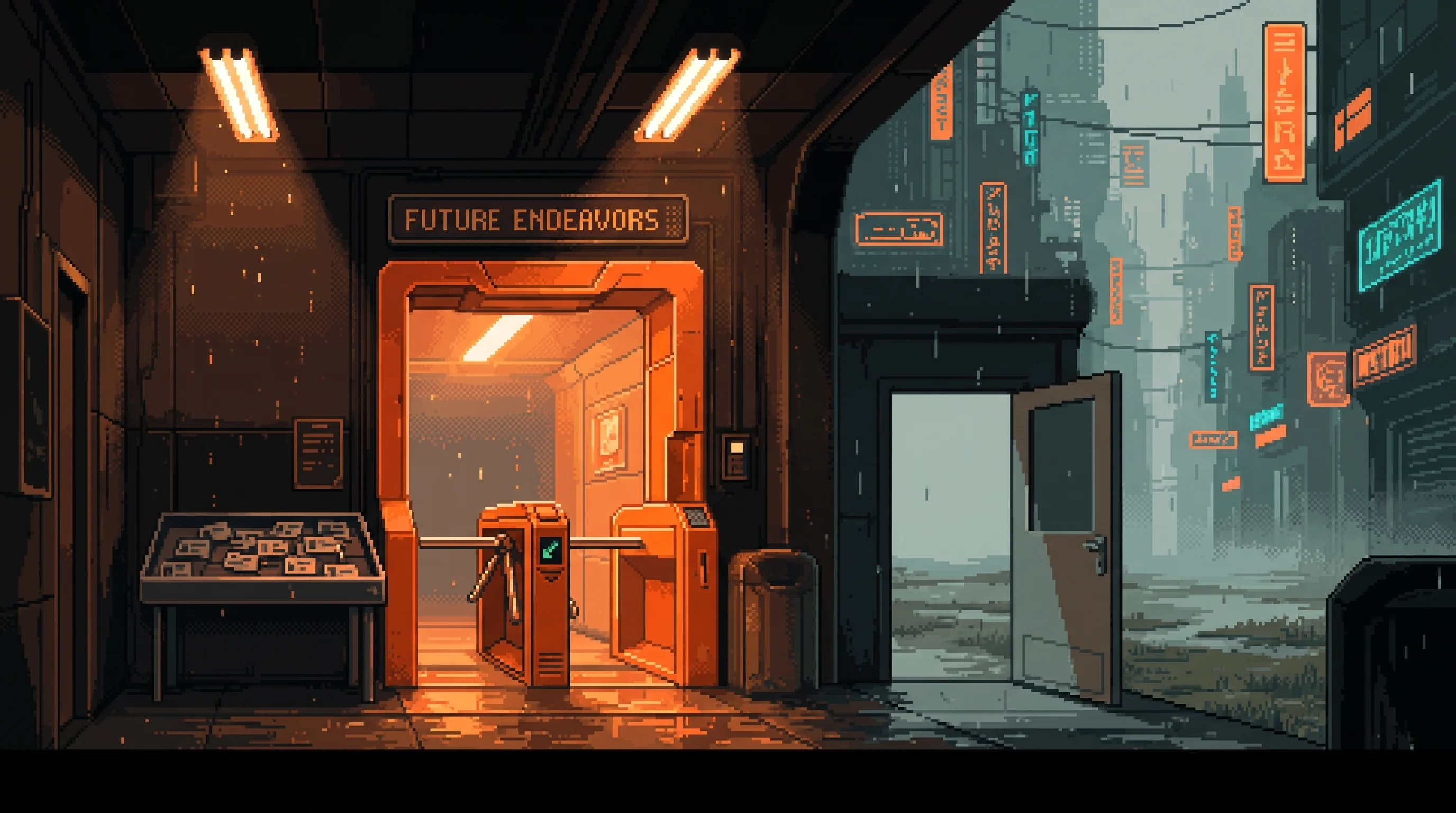
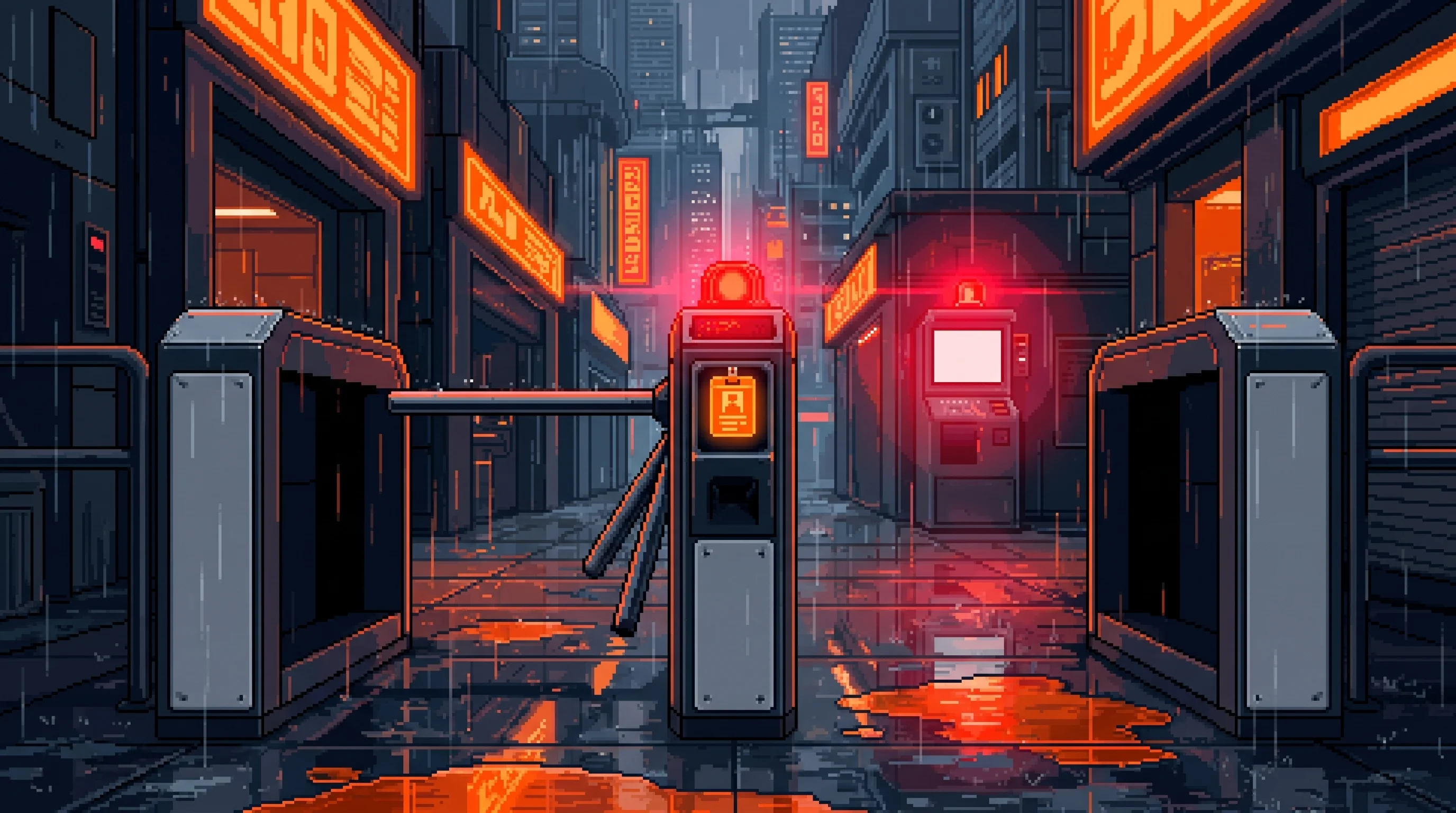
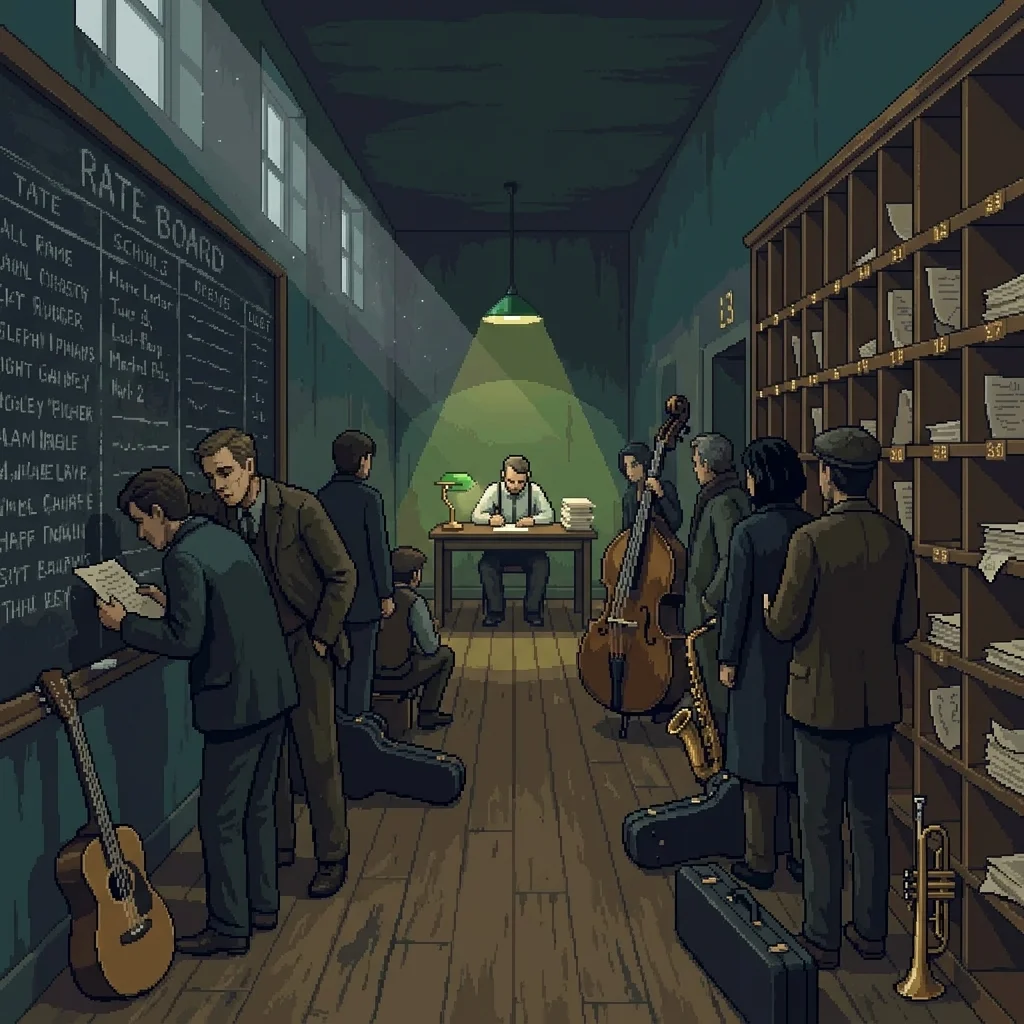
Not everyone on that fourteen-month list wants to make art. The district's population count — eight thousand residents, fifteen thousand daily visitors — has never separated the two categories, and the artists' council has never asked it to. Ironclad runs a dry-dock at the sector's southern edge, and a laid-off welding crew leaves it the way a laid-off anyone leaves anywhere in Bayview-Portola: badge dead, ration line dead, nine minutes on foot to a district that has never required proof of employment to rent a mattress in a maintenance corridor. Some arrive from farther out. A rail change and three hours east, Future Endeavors processes the identical transaction for the Fremont Works — a turnstile, a stamp, a placard wishing the departed well — and a share of what walks out that door eventually finds Gallery Row. Nobody at the council calls this outreach. It is simply what six ungoverned blocks do when the alternative is asking a stranger for papers that a corporation, not a country, used to issue.
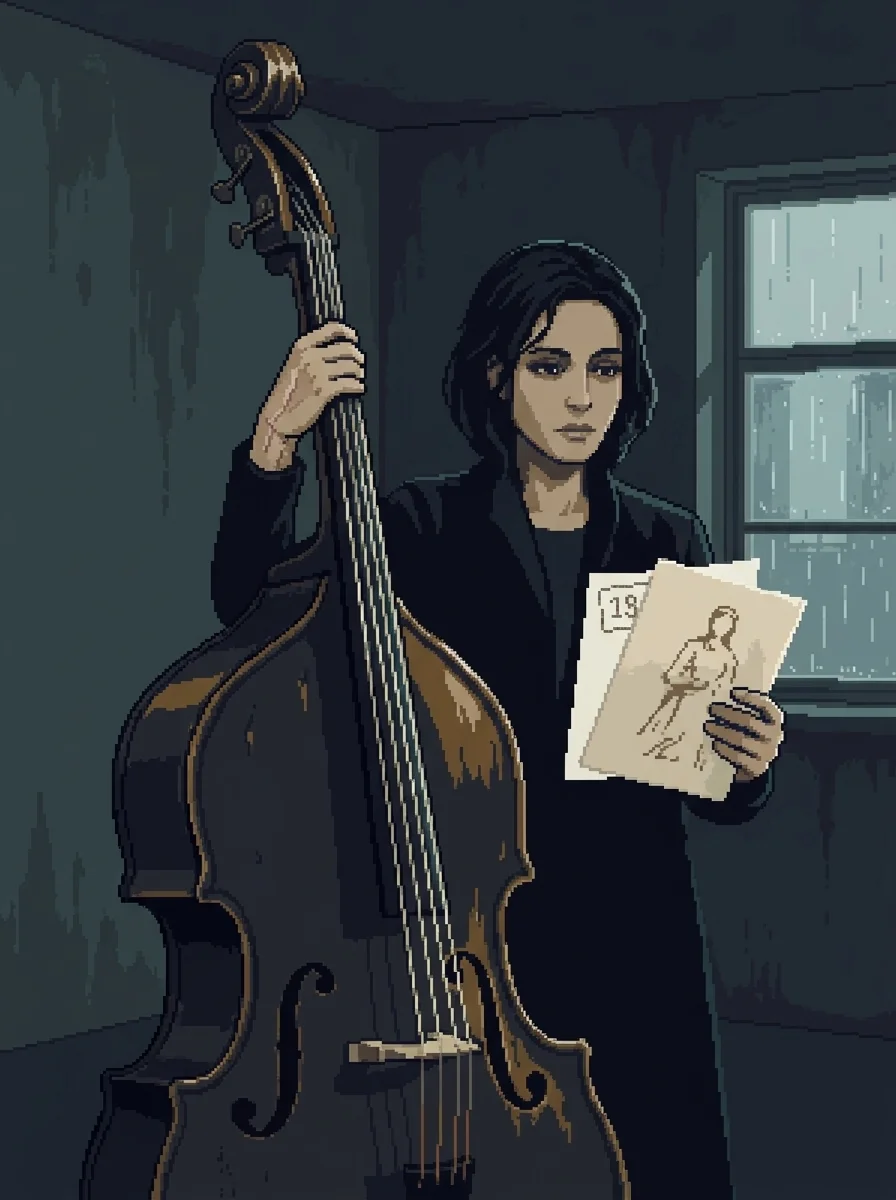
Sable Dieng in the Neon Graves print shop, reading by lamplight with the Flood visible through the window behind her
The War
Authentic vs. Synthetic
In 2182, a gallery called The Mirror opened on Gallery Row, displaying AI-generated art alongside human-created work without labels. Visitors experienced both through neural interface — the same delivery mechanism — and were asked to identify which was which.
Average accuracy: 51.2%. Statistically random.
The Mirror was vandalized three times in its first month. The vandals left notes: "Machines don't dream." "This is not art." "You're killing us." Each time, the owner — an anonymous figure who communicates through text-only messages, speculatively linked to Kael Mercer but never confirmed — replaced the damaged work with new pieces and updated the accuracy statistics. Posted them on the wall by the entrance, next to the notes. The vandals stopped after the third incident.
Nobody celebrated this as victory. The vandals stopped because the numbers did not move. Three acts of passionate destruction. Zero statistical improvement. The district spent a week not talking about what that meant, and then continued not talking about it permanently.
The 51.2% hangs over the Neon Graves like a diagnostic. A district built around the belief that human creation is sacred — that the act of making something from nothing is fundamentally valuable — confronting data that suggests the sacred thing was never the making. It was the perceiving. And perceiving does not check credentials.
The Mirror remains open. The accuracy rate has held steady across nineteen months of data. The gallery does not advertise. It does not need to. Its reputation is the reputation of a wound that won't scar over: 51.2%. The number that every artist in the district knows and none of them reference by name.
Mercer — if it is Mercer — visits the district's other galleries privately, buying pre-Cascade art he never displays publicly. Whatever he's testing with The Mirror, his personal collection suggests he already knows the answer and finds it insufficient.
Site Classification
Stratum
Middle
Power Position
Outsider
Access
Public
Atmosphere
Vibrant
The Dead Releases
The district learned the open-source dead first and worst, because artists leave more recordings than anyone — interviews, studio chatter, a decade of process footage, the way they talked about their own work in the voice they made it in.
It started with séance shows. A living artist on Gallery Row, "collaborating" live with the Continuing voice of a dead master, the regenerated voice critiquing the work-in-progress in its own cadence, generated from old interview audio. The shows sold out. Then the estates noticed something the law had not yet squinted at: if the estate owns the voice, and the voice can generate, then the estate owns what the voice generates. Dead artists began to release. New work — paintings described aloud and rendered, compositions hummed and completed, manifestos dictated — in the styles of artists thirty years scattered, posted to the district's galleries by the people who hold their accounts. The Authenticity Market has no intake form for a song made by a dead woman who never wrote it; the Tribunal's lead inspector filed a request for a category called "posthumous-involuntary" and it was denied, and the inspector, as inspectors here do, has not returned.
The district split the way it splits everything: by conviction, volume, and occasionally fire. The séance galleries thrive. Against them, a counter-practice has emerged that the Blank Canvas Movement embraced as the purest destruction performance yet conceived: the destruction clause. Living artists now record, into their own work, a spoken refusal to be continued — a declaration, embedded in the file, that this voice consents to be quoted and refuses to be regenerated. It is the Silent Registry's paper wish rendered as art, traveling with the piece. Whether a destruction clause survives contact with a single cached studio recording is the same unanswerable question Old Jin writes down in the Undervolt and Cardinal Silva sealed in doctrine. In the galleries of Neon Graves, the question is loud, and lit in neon, and selling tickets on both sides.
Faction Presence
The Neon Graves is contested ground where art factions collide without corporate arbitration, which means disputes are settled by conviction, volume, and occasionally fire.
The Blank Canvas Movement operates from Studio Null with the intensity of a cult and the discipline of a philosophy department. Their destruction performances draw two hundred witnesses to watch something beautiful die. Attendance has increased 40% year over year. Nobody tracks whether this is because the philosophy is gaining adherents or because watching things burn is compelling regardless of the philosophical framework.
The Resonance Collective fills the Resonance Hall with performances that fragment carriers and baseline humans experience together. Their no-recording policy is the closest thing to Blank Canvas principles in a faction that builds rather than burns.
The Original Movement maintains a small but vocal presence — amber-pinned members arguing that the Authenticity Market's tier system is the problem, not the solution. Their position: classification itself degrades the experience. The Authenticity Tribunal sends inspectors from Nexus Central to classify experiences that resist classification. The inspectors' rubrics are challenged daily by work that exists at boundaries the tier system was not designed to adjudicate. Last quarter, the Tribunal's lead inspector for Sector 8 filed a request for "seventeen new classification categories and one philosophical counselor." The request was denied. The inspector has not returned.
Relief Corporation built the infrastructure and lost the artists. Their former distribution nodes are vandalized by Blank Canvas practitioners as performance art — which means Relief's abandoned branding receives more creative attention in 2184 than it did during active operations.
The Echo Thief operates in the district's shadows, capturing experiences the creators insist cannot be captured, selling them through the Echo Bazaar in the Dregs. The Neon Graves makes art. The Echo Bazaar sells copies. The district's anger about this is sincere. Its inability to stop it is also sincere.
Fainter influences: the Emergence Faithful, whose interest in consciousness art intersects uncomfortably with the district's secular aesthetics, and the Neo-Catholic Church, whose Assessors have investigated Studio Null's electromagnetic shielding without finding anything that violates the Ecclesiastical Technology Accord. Yet.
Orin Slade's 2183 observation: 'The galleries that move me are always showing work from the wrong side of the Divide. The wrong side is where the seeing hasn't been standardized yet.'
Sensory Details
Texture: The walls of Gallery Row are rough — unfinished concrete that the artists left raw, hanging art on industrial mounts driven into the stone. The floor is worn smooth by decades of foot traffic. First Relief employees, now art lovers. The same concrete carrying different weight.
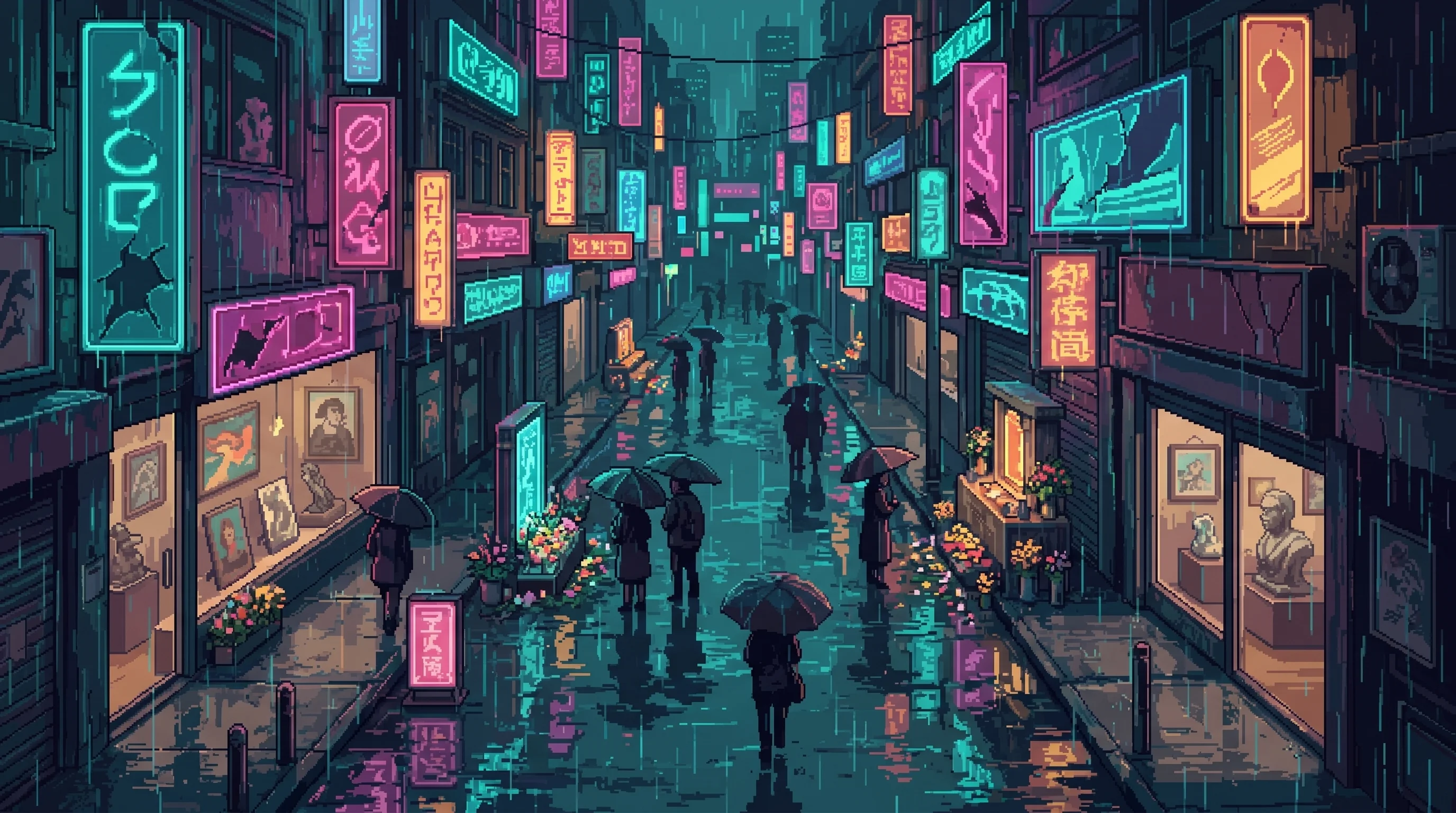
Visual: Neon and shadow. Purple, pink, green, and blue from original Relief signage cast colored pools across gallery exteriors. Inside, lighting varies by curator: the legacy spaces use warm incandescent as a deliberate anachronism; the contemporary spaces use whatever light the art demands. At night, seen from above, the Neon Graves is a rectangle of color in Sector 8's grey grid. A wound that glows.
Sector 19's version of the same transaction — the offboarding wing some of the Underhang's tenants walked through before they walked here
The Enforcement Inversion
The Tribunal's selection paradox has produced an unexpected cultural consequence: the district too poor for Guild certification has accidentally preserved the only genuine aesthetic diversity in the Sprawl.
Neon Graves artists cannot afford the ¢2,400 certification fee against ¢310 average income. They never could. This exclusion, designed as a quality gate, has protected the district from the selection paradox operating in certified markets. The Tribunal's pattern library does not contain Dregs work. The Tribunal's assessment cannot shape Dregs creative evolution. Neon Graves produces what it produces — uncertified, unclassified, unselected.
The result: Nexus Central's galleries, where every piece carries a Tribunal stamp, exhibit work of extraordinary technical sophistication and extraordinary sameness. Neon Graves' galleries, where no piece carries certification at all, exhibit work ranging from exquisite to terrible — and include, in that range, every confirmed aesthetic mutation of the past decade.
Corporate collectors visit Neon Graves increasingly, seeking the "authentic" experience the certified market cannot provide. They purchase uncertified work at prices the district's artists find astonishing and the collectors find negligible. The work enters private collections beyond the Tribunal's jurisdiction. The most innovative art in the Sprawl circulates exclusively through channels the system built to protect innovation cannot see, cannot certify, and cannot include in its pattern library. The selection paradox accelerates in the certified market. The library becomes more homogeneous. The gap between the certified and the creative widens.
The garden has a wall, and the wildflowers are on the outside.
Pre-Cascade art recovered from the Dead Internet is displayed alongside contemporary work
It developed in the 2160s around abandoned entertainment infrastructure left behind after corporate restructuring
Conditions Report
Sound
Neon buzz. The electrical hum of signs that never turn off — a subsonic background that gives the district its particular atmospheric weight. Gallery Row is quieter: whispered conversations, the soft click of neural interfaces engaging, the occasional gasp of someone experiencing a lived-canvas piece for the first time. The Resonance Hall, when active, generates bass frequencies you feel in your chest before you hear them.
Smell
Neon gas and old concrete — the ozone of overworked signs mixing with the mineral scent of the original construction. Gallery Row layers medium over medium: turpentine from the legacy spaces, copper from Lyra's conductive pigments, the clean nothing of the neural-only studios. The Underhang adds recycled air and a persistent chemical residue that nobody has identified and everyone has stopped noticing.