The Negligence Doctrine
Elective Illness Insurance Doctrine
The Convergence Finding
Field 7 of the Blameless Ward intake form, inherited from a Good Fortune actuarial process: 'List all conditions for which you have received a Helix bespoke synthesis offer and declined.' People fill it out like a confession
How It Works
- 1
The offer lapses
A Helix synthesis offer goes unredeemed for 90 days. The division sends an administrative Therapeutic Elective Notification to the insurer.
- 2
The Review
Good Fortune's Holistic Prosperity algorithm reviews the policy. The unremedied condition lowers the wellness tier and raises the premium.
- 3
The classification
The policyholder is Negligent under the 2183 Therapeutic Elective Addendum. A Certificate of Genuine Incurability is the one exit.
The mechanism has three steps, each of which is internally coherent.
Step one: Helix Biotech's Personalized Intervention Division catalogues 22,000 bespoke compounds available for synthesis within seven days of a blood panel intake. When a synthesis offer goes unredeemed after 90 days, the PID's manufacturing algorithm automatically generates a Therapeutic Elective Notification. The Notification is classified as administrative, not medical. It routes to the patient's insurer.
Step two: Good Fortune's Holistic Prosperity algorithm receives the Notification and initiates a Holistic Prosperity Review. The Review evaluates the policyholder's wellness tier against the updated profile. An unremedied Therapeutic Elective condition — one for which a cure was offered and not accessed — reduces the wellness tier. The tier drop increases the insurance premium. The premium increase makes the cure less affordable. Good Fortune's actuarial team named this the "convergence finding" in internal documentation.
Step three: the reclassified policyholder is now classified Negligent under the Therapeutic Elective Addendum to the Sprawl Health Responsibility Charter (2183). The Addendum was legally derived from existing elective cosmetic surgery precedent. The Senate chamber was 63% genetically co-authored at passage.
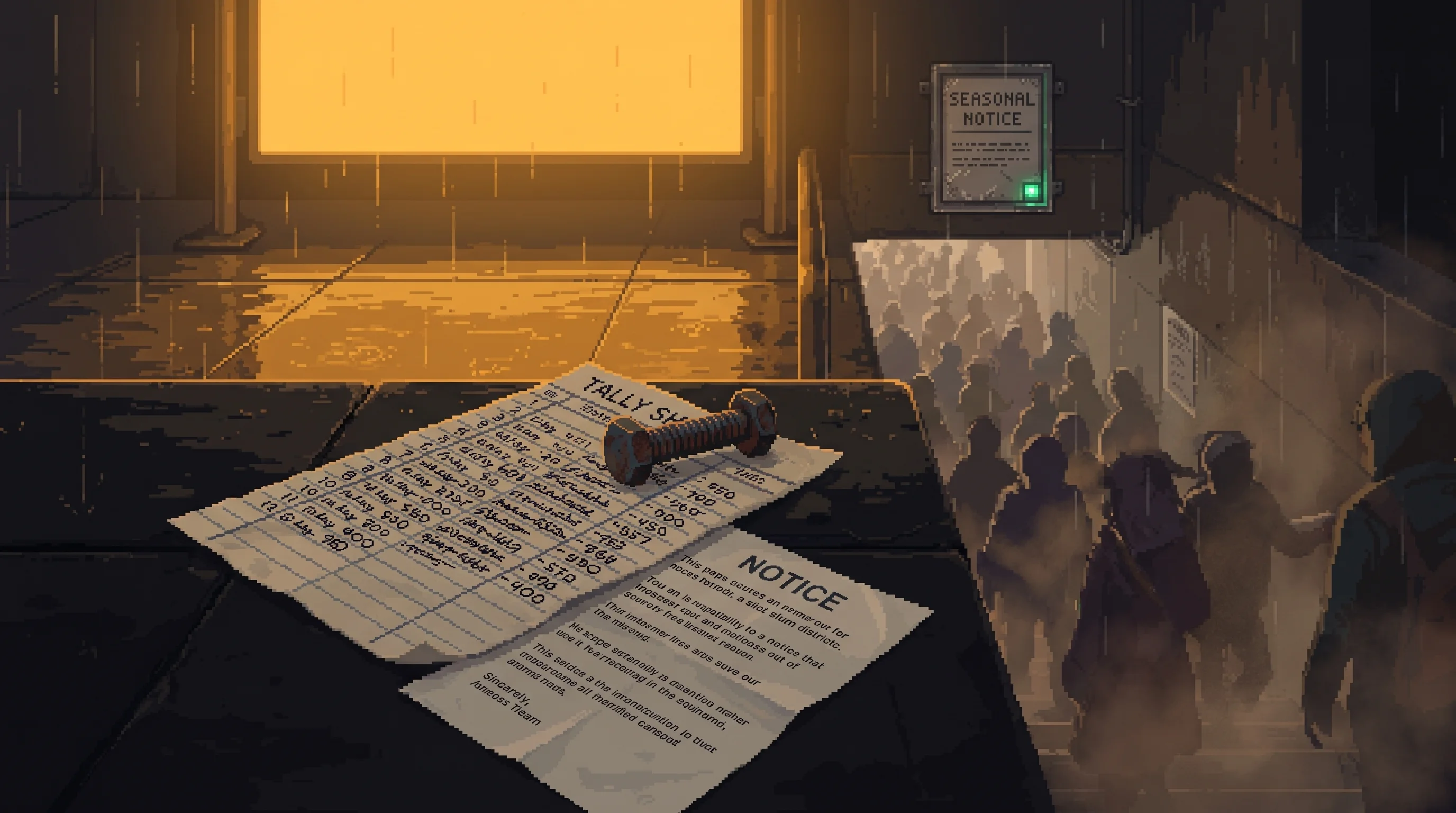
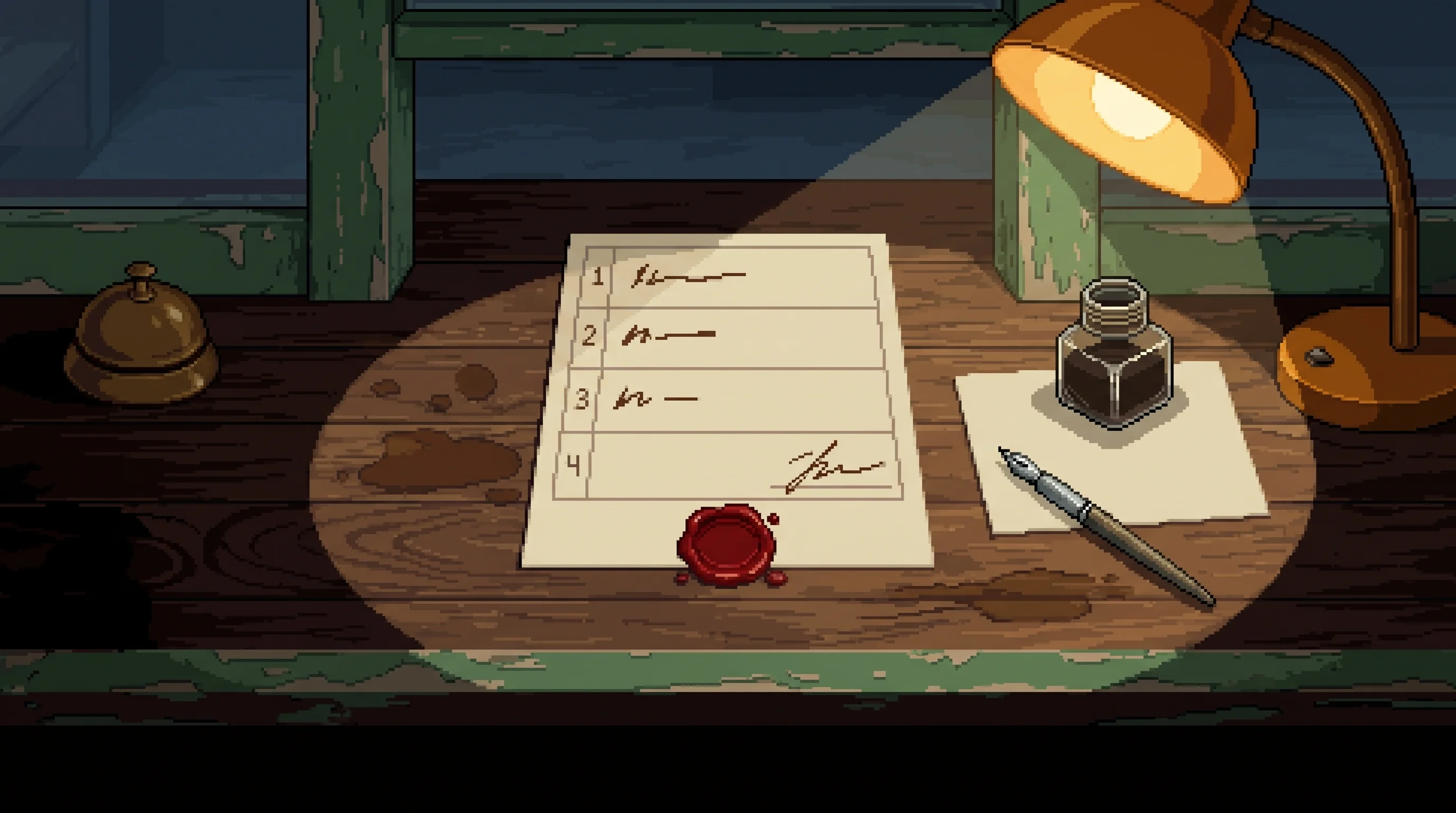
There is one exit. A Certificate of Genuine Incurability: a document signed by a licensed clinician attesting that the patient's condition has no associated Helix synthesis offer — that the Doctrine does not apply to this diagnosis. The Blameless Ward in the Dregs subsurface issues these Certificates. The waiting list is three hundred people long. It is managed on paper.
What Else the Column Reads
The schedule
Any catalogued code with an offer attached can be priced as a choice.
What it costs
Grief, an inner life, and a forecast wait all bill like a cardiac risk.
The levy
A levy makes no offer to a person, so its refusal leaves nothing unredeemed.
What it costs
The actuaries costed it twice and closed both files as non-attributable.
The schedule reads a pathology code. It does not read anything else.
In 2183 Helix filed the four reductions of Temperance against Cascade-Persistent Affective Load. Grief now shares a column with a heritable cardiac risk. The filing was accurate and uncontested.
Interior load needed no amendment. The screen obliges an offer. The patient says no, out loud. The clinician ticks one of three boxes. That argument is the diagnosed soul.
A pending objection carries a forecast date, so Good Fortune can price the wait in advance. It calls this the term-certain loading. Every month a Ratification Registry advocate wins is another month billed. That is the ratification forecast.
The Averted Incidence Levy is the refusal it cannot reach. A levy makes no offer to a person. The actuaries costed it twice and wrote non-attributable. See the unwritable roster.
One arrival left insurance. An overflow killing inside the Saturation Load forecast closes with a one-page notice if the killer kept up a MoodLine subscription. If it lapsed, the tribunal gets a defendant. Good Fortune earns no fee on the Overflow.
Overview
The Negligence Doctrine did not announce itself. It arrived as an administrative update to the Good Fortune Holistic Prosperity Package — a 340-word addendum to the terms of service, distributed in the quarterly wellness review alongside a note about updated copay structures. The addendum was legally precise and publicly uncontroversial, because the public did not read the addendum and the legal precision had been three years in the making.
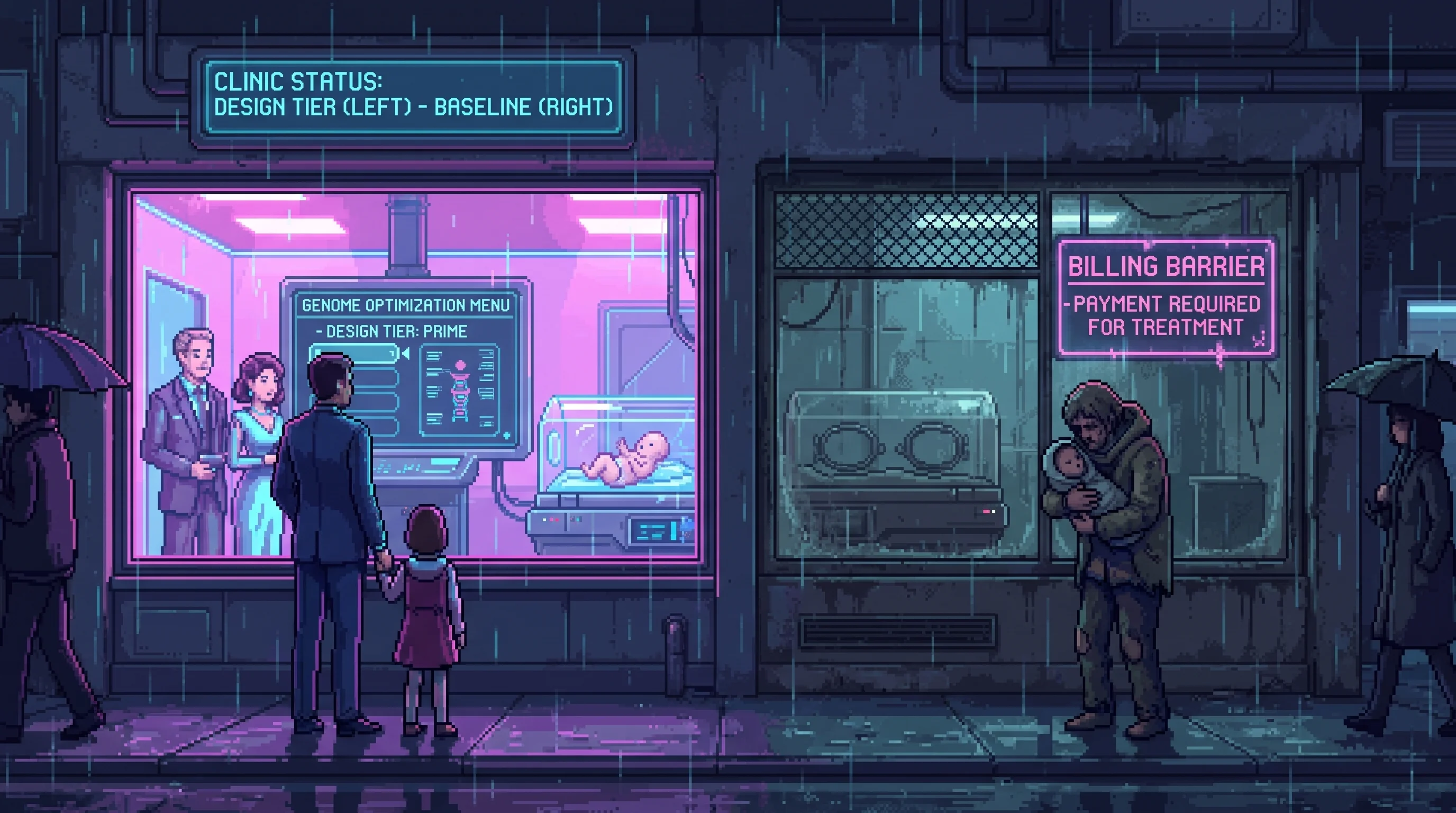
Helix Biotech's Personalized Intervention Division had achieved same-week synthesis for the majority of catalogued conditions by 2181. The catalog was 22,000 compounds. The PID offered the catalog to anyone who could submit a blood panel, which in practice meant anyone who could afford the intake fee, the synthesis fee, the administration fee, and the monthly maintenance compound required for all but 14% of the treatments. The PID had 340,000 active orders as of Q3 2183. The PID was not tracking the 23% of offers that were declined.
Good Fortune was.
The Holistic Prosperity algorithm updated with one new trigger: a Helix synthesis offer not redeemed within 90 days. The trigger produced a Holistic Prosperity Review. The Review produced a wellness tier assessment. The assessment produced a reclassification: the unremedied condition, for which a cure had existed and been offered, was now a Therapeutic Elective. A lifestyle choice. An elected state.
The insurance premium went up.
The cure became less affordable.
The actuarial team noted this in an internal document as a convergence finding.

Reproductive Negligence
In 2184, the Therapeutic Elective Addendum was extended to cover reproductive non-compliance. The Population Viability Subsection — formally titled the "Reproductive Service Therapeutic Elective Classification" — applied the Doctrine's existing architecture to a new category: the natural-fertile individual who had received a Reproductive Requisition Order and had not complied within the specified window.
The logic was structurally identical to the original Doctrine. A condition had been identified (sub-replacement fertility in the territory). A remedy had been offered (quarterly Requisition protocol). The individual had declined the remedy. Decline, under the Addendum's existing precedent, was a choice. Choices, under the Doctrine's existing framework, had consequences.
The actuarial team handling the extension proposal noted internally that the Reproductive Negligence classification differed from prior Therapeutic Elective categories in one respect: prior categories penalized individuals for not accepting treatment for a condition they had. The Reproductive Negligence category penalized individuals for not providing treatment for a condition the territory had. The team noted this. The team filed the note. The extension was ratified.
The feedback loop — classification makes compliance less affordable; compliance is what the classification penalizes you for refusing — was named the "natalist convergence" in internal Good Fortune documentation. The documentation notes that convergence projections for Reproductive Negligence run at approximately 3× the rate of standard health-condition convergence, because the Compliance Subsidy that compliant individuals receive is large enough that non-compliance produces a material relative disadvantage within 90 days rather than the 6-18 months typical of medical Negligence. The documentation does not comment on whether this was the design intent.
The Name
Nobody legislated the category Negligent. It spread through popular usage, the way most verdicts do — first in the offices where actuaries discuss claims, then in the HR departments where wellness-tier ratings appear on manager dashboards, then in the language people use to describe their neighbors, their patients, their family members who are still, after all this time, inexplicably sick.
The word was not accurate. The Negligent were not necessarily negligent in any ordinary sense. They were ill in a world where illness had been priced, and they had not paid the price, and the Doctrine was the mechanism by which not paying became visible as a character trait rather than a circumstance.
They cured the disease and the shame moved into the empty space where the disease used to live.
The street proverb captured something the Charter language did not: that shame does not require an intentional architect. It requires only a vacuum. The corporations did not design the shame. They designed the cure and the insurance update and the convergence finding. The shame designed itself, the way shame has always designed itself — into the space between what a person is and what the world has decided they could have been.

Social Impact
The Negligent are the Warmth Tax's newest category: warmth-poor by their own apparent choice. The Warmth Tax had always penalized illness — the sick require care without producing it, disrupting the household's warmth ledger. The Negligence Doctrine added the moral dimension: the Negligent were not simply unable to produce warmth, they had been offered the cure that would have restored their warmth production and had declined it. In Good Fortune's product guidance documents, three versions of which applied the word thoughtless to this category without quotation marks.
The Doctrine's deepest damage is its extension to refusal groups. The Baseline Movement had chosen to end as themselves, accepting the genetic consequences of refusing co-authorship. Under the Addendum, the genetic predisposition conditions they carry — conditions Foundation would have flagged, the PID now synthesizes for — are Therapeutic Elective. They are Negligent twice: once for the conditions, once for the refusal that prevented prevention. The Untuned refused the affective dial; any Untuned member assessed and offered a Helix compound for a mental health condition who declined is administratively Negligent. The drag coefficient acquired a moral category alongside it.
The cruelty the Doctrine did not design — it emerged — is the Halcyon Bridgeworks intersection. Patients on the Hold-On Plan are in the Managed Trajectory lane that moves 23% slower than acute cases. When the 90-day synthesis window closes while a patient is suspended and waiting, the Doctrine classifies the bridged condition as Therapeutic Elective. The bridge kept them alive while the Doctrine reclassified their survival as non-compliance. Good Fortune named this the "queue-bridge convergence event."
Affiliated Entities
- Helix Biotech — provides the synthesis catalog and the Therapeutic Elective Notification; the PID does not design the Doctrine, it provides the infrastructure the Doctrine runs on
- Good Fortune — operates the Holistic Prosperity algorithm that executes the reclassification; the convergence finding is their term for the feedback loop
- The Warmth Tax — the Doctrine is the Warmth Tax's medical tier; illness-shame is warmth-deprivation with a classification attached
- The Suffering Premium — structural inverse: the Premium prices unoptimized suffering as luxury, the Doctrine prices uncured illness as liability; both run on the same pharmaceutical gap
- The Baseline Movement — definitionally Negligent under the Addendum; the first axis of the New Divide the sorting impulse could not sort, now given a sorting axis
- The Untuned — definitionally Negligent for any mental health condition offered and refused; the art that was devastating by mechanism is now also a record of non-compliance
- The Blameless Ward — the Ward exists because the Doctrine exists; issues Certificates of Genuine Incurability; its paper waiting list is the Doctrine's most precise measure of how many people cannot afford innocence
- Kira Vasquez — her clinic is a gap in the Doctrine's coverage; she routes patients toward the Ward through undocumented channels
- PresencePlus — turns parental warmth into hereditary evidence when Continuity Depth records show a household's documented intergenerational Negligence.
- The New Divide — the Doctrine gives the Divide a moral grammar: those who can buy remediation become responsible citizens, while those who cannot are named as choosing their condition.
- Dr. Selin Ayari — the Insomnia Wards' 48-hour no-digital-record window is the only protected gap in Good Fortune's data feeds; the Negligent find her as they find every gap, by needing it
- Cascade Fertility Collapse — the structural predecessor; the framing fork ("collapse" versus "condition-with-a-cure") is the Doctrine's logic applied at civilizational scale a generation before it was applied to individuals
- The Reading — The Good Fortune Life Assessment made the Doctrine's logic complete in a way its authors had not planned. Before the Reading, Negligence was retrospective: decline a synthesis offer within ninety days and the Review caught it after. The Reading added a predictive dimension. Field 7, Sub-field B of the Good Fortune–Helix integration algorithm flags entities whose actuarial profile correlates with statistical non-redemption — a cluster associated with Read-Short projections, lower income tiers, certain genetic ancestry markers. Flagged entities receive synthesis offers six weeks earlier, with modified urgency framing, and are classified predictively Negligent if the window closes unredeemed. Good Fortune named this the "wellness curve optimisation." The Doctrine did not design predictive Negligence. The Doctrine only needed the Reading to make it thinkable.
Further connections
Browse all 37 connected records
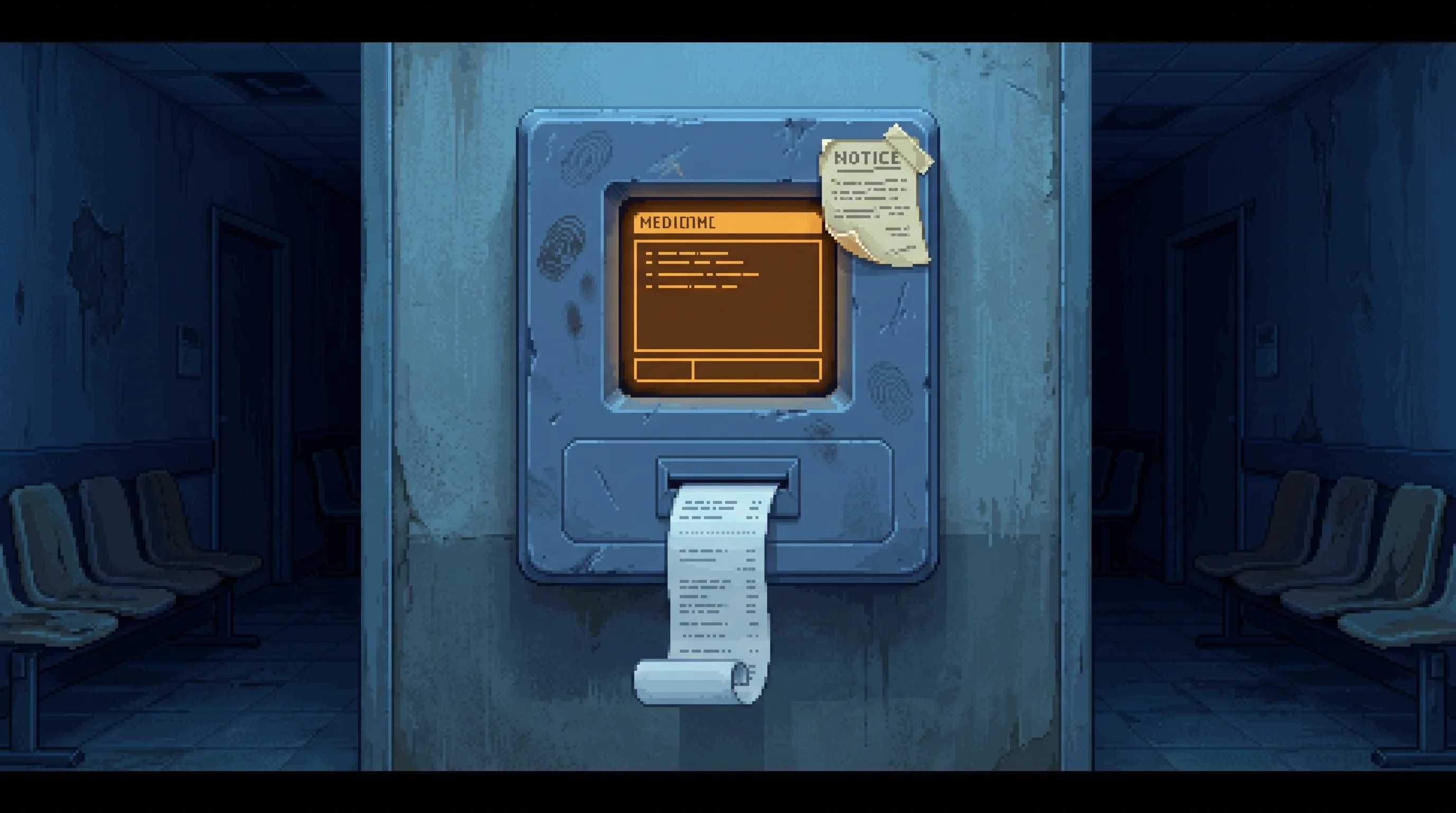
The screen generates the offer; the Doctrine prices the refusal. Neither was built with the other in mind, and the join required no amendment because the Addendum already accepted any catalogued indication.
The bundled clinic screen that scores how much of your thinking never leaves you, and files it as treatable.

Code 3 supplies the start date and the expected end date; the ninety-day trigger supplies the money.
The records code that keeps your written refusal open, then reports it beside consent after thirty-six months.

The only refusal in the licensed districts the schedule cannot reach. A levy makes no offer to a person, so nothing is ever left unredeemed and the ninety-day trigger has nothing to fire on.
The district can print every resident who paid for the rescue and not one resident who was rescued.

The band this clause reads. Inside forecast plus a current subscription closes a file; the same act with a refused one is an election.
The seasonal stimulus figure pinned at every stair head, and the sealed forecast of how many neighbours it will kill.

The declined offer at issue. Helix declines every claim that the Floor suppresses violence, and the Doctrine does not need the claim: it prices the refusal, and the tribunal reads the price.
The consumer subscription that prices and edits out unwanted human feeling for anyone with an interface.
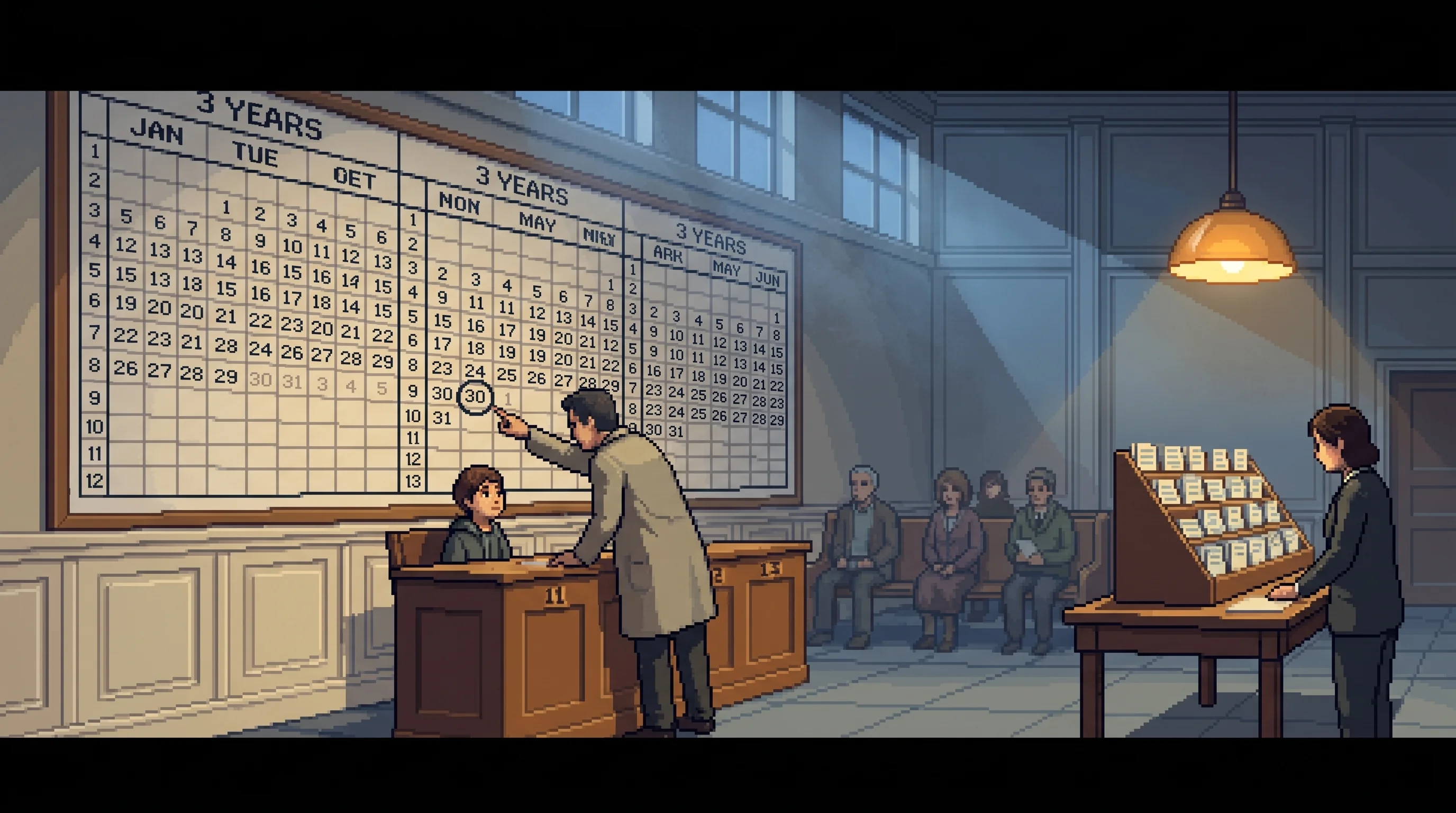
Every month an advocate wins is another month of loading, disclosed at the first meeting.
The body that hears objections it has no power to sustain, argued by advocates who dispute only the calendar.
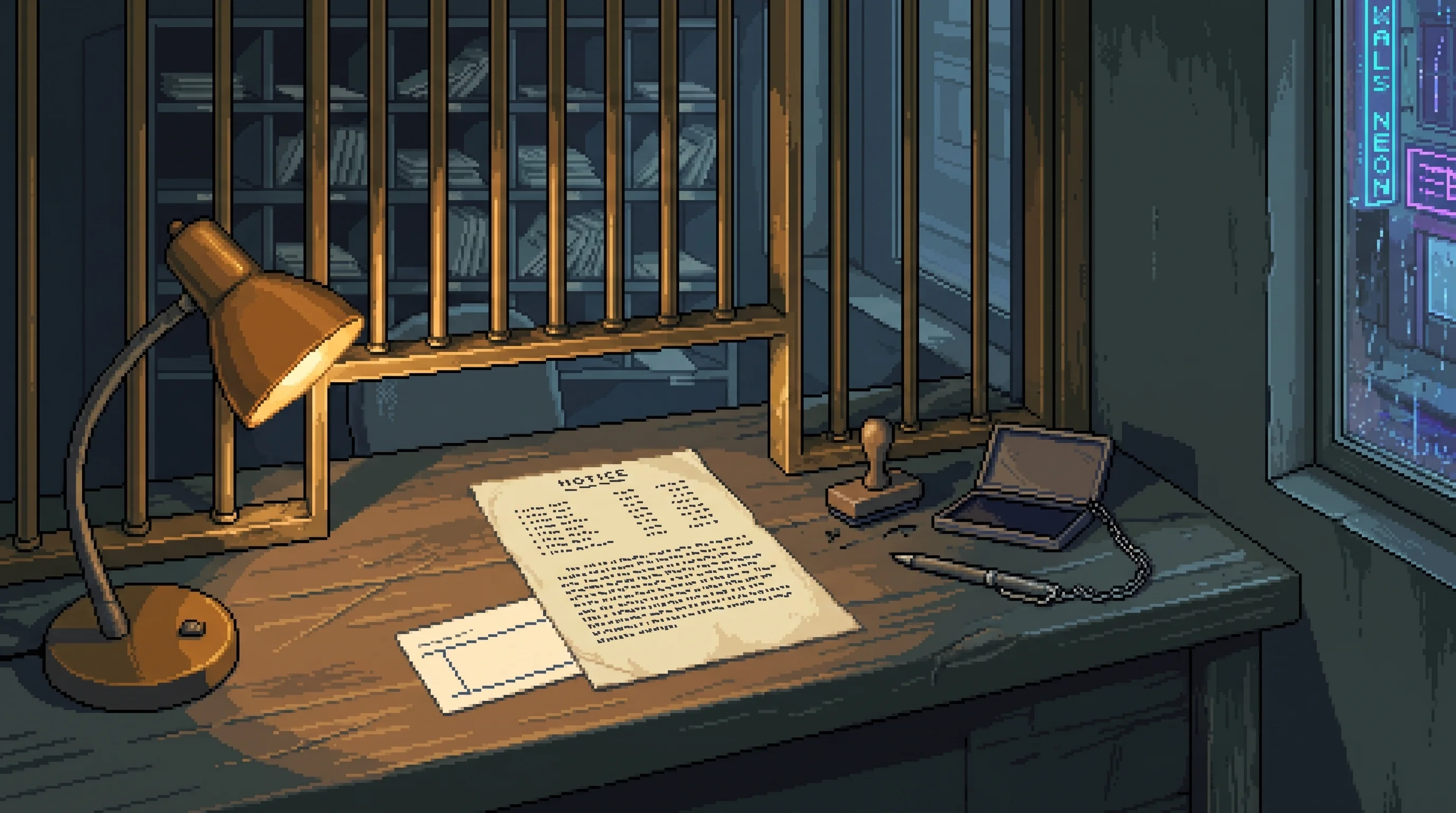
Assessed twice for Therapeutic Elective treatment and closed twice as non-attributable.
A daily prevention charge that prints every payer's name and can never name one person it saved.

The PID's same-week bespoke synthesis catalog is the Doctrine's infrastructure — without a cure on offer, there is no offer to decline; the Therapeutic Elective Notification is generated automatically by Helix's manufacturing algorithm when a synthesis window closes unredeemed
The megacorporation provides real care while turning medicine, food, and reproduction into permanent dependency.

Good Fortune's Holistic Prosperity algorithm executes the reclassification — the 90-day unredeemed synthesis offer triggers the Review, the wellness tier drops, the premium rises; the actuarial team named the feedback loop a 'convergence finding'
The megacorporation that finances the Sprawl's consumer debt behind red envelopes and lucky numbers.

The Doctrine is the Warmth Tax applied to the sick — warmth-poverty by apparent choice; the Negligent are not simply unable to produce warmth, they refused the cure that would have restored their warmth production, making their drain on the warmth economy a moral rather than circumstantial failure
The markup the Sprawl charges for a person's attention once machines made it free everywhere else.

The Premium prices unoptimized suffering as luxury; the Doctrine prices uncured illness as liability — opposite ends of the same pharmaceutical gap; Helix profits at both ends, the Premium selling back what the Doctrine named
The market that prices unoptimized human feeling once everyone with money has bought their way out of it.

The Baseline Movement members carrying genetic predisposition conditions — conditions Foundation would have flagged and the PID now offers synthesis for — are Negligent under the Addendum; they are Negligent twice: for the conditions they carry, and for the refusal of co-authorship that would have prevented their children from inheriting them

Every Untuned member who has been assessed, offered a Helix bespoke compound for a mental health condition, and refused it is administratively Negligent; the drag coefficient acquired a moral dimension
A Deep Dregs subculture that refuses the mood-dial and feels every emotion at its natural, inefficient pace.

The Blameless Ward issues Certificates of Genuine Incurability — the only documents that remove a patient from the Negligent registry; the Ward exists because the Doctrine exists; the Ward's waiting list is the Doctrine's most precise measure of how many people could not afford innocence

Kira Vasquez's clinic keeps no records and charges what patients can pay; the Negligent find her because she predates the Doctrine and has no mechanism for documenting their status; her clinic is not a solution to the Doctrine — it is a gap in the Doctrine's coverage
A former Nexus cybernetics engineer who now repairs anything in the Deep Dregs for whatever people can pay.

Ayari's Insomnia Wards became inadvertent intake for the Negligent — the Wards' 48-hour no-digital-record window is the only protected gap in Good Fortune's data feeds; Ayari routes patients toward the Blameless Ward queue through a courier network she does not document
A sleep researcher whose upgrade deleted the nightly dreams that were her only mother left.

The Cascade Fertility Collapse established the template — a civilizational-scale medical failure offered a corporate solution, and the population that could not access the solution became morally adjacent to people who had chosen to remain in decline; the Doctrine is the Collapse's mechanism applied to somatic illness
A post-Cascade germ-line decline makes unassisted birth unreliable and system-mediated conception the only viable path.

Patients on the Halcyon Hold-On Plan are in the 'Managed Trajectory' lane that moves 23% slower than acute cases; when the 90-day synthesis window closes while a patient is bridged, the Doctrine classifies their bridged condition as Therapeutic Elective; the bridge kept them alive while the Doctrine reclassified their survival as intransigence
Terminal-care corporation that suspends the dying on subscription while a proprietary cure-queue decides who leaves.

PresencePlus Captures recorded by Negligent parents trigger Good Fortune's heritage medical review — Continuity Depth records from households with documented intergenerational Negligence adjust descendants' Holistic Prosperity tier; the warmth was genuine; the warmth was evidence
Records a parent's bedtime warmth and plays the captured self back to their children while they are away.

The Negligent are the New Divide's medical axis — the chronically ill sorted not by wealth alone but by their apparent willingness to accept the cure; a new stratum that crosses old lines
The Sprawl turns new technology into new axes of prejudice, making systemic exclusion look like personal failure.

The Reproductive Negligence extension (Population Viability Subsection, 2184) applies the Doctrine's convergence architecture to fertility non-compliance — documented non-compliance with an active Requisition Order is reclassified as a Therapeutic Elective election, attaching the same insurance-tier feedback loop to reproductive refusal that the original Doctrine attached to medical refusal
A corpo-nation policy conscripts natural fertility while Helix co-authorship clients buy exemption through the braid.

The Good Fortune Life Assessment gave the Doctrine predictive depth: Field 7, Sub-field B of the Good Fortune–Helix integration algorithm flags entities whose actuarial profile correlates with statistical non-redemption, classifying them as predictively Negligent before any synthesis offer has been declined; the Reading converted Negligence from a retrospective classification to a prospective one
A Good Fortune lifespan certificate that predicts remaining years, sorts access to finance, and dissolves mutual aid.
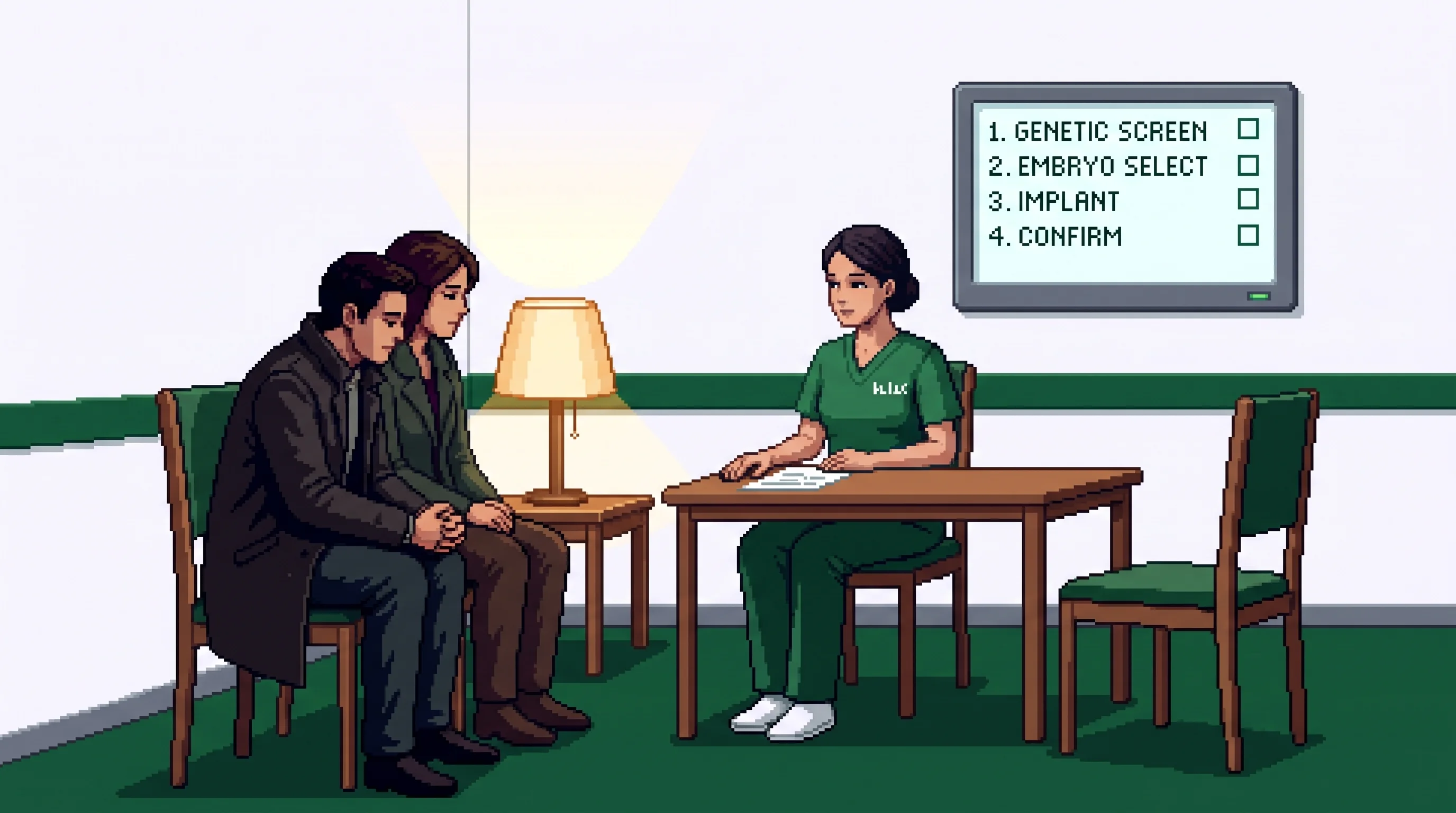
The column that caught a subtraction written for diseases.
A line built without grief, envy, rank, or god — and an argument over who may still pass the ache on.

The column that turns a declined interiority offer into an elected state. Nobody legislated that having an inner life was a condition; somebody filed it against an indication that already had one, and the schedule reads codes.
The unshared inner life measures as a treatable disorder, and everyone who is treated agrees it was one.

The third arrival the schedule accepted without amendment: a recorded refusal carrying a forecast endorsement date is an unredeemed offer of known duration, so the Doctrine can price the interval before it has elapsed.
Your written refusal is filed with the month you are forecast to agree, and the procedure goes ahead on schedule.



The arrival that left the ledger. A declined affective dial is an elected state, so the districts read the Doctrine's classification to decide whether a killing is a forecast output or a crime.
Killings are forecast by district each season, so a killer inside the band gets a notice instead of a trial.

The clause that read his account status instead of his conduct. Had he refused the dial, the same act would have been an election and he would have been tried.
A stair marshal who killed a stranger at evening peak and has asked four times to be charged.

A filed null return reads on the insurance schedule as an unredeemed offer of treatment.
The Heights' priciest Wanting Counsel refuses to suggest a single want, and reads you the blank result aloud.

The eleven days between his refusal and the theatre were priced to his mother's cover.
He can hear now and does not dispute it. He just will not sign the card saying he agreed.
A surrendered care priority is not a declined remedy, so the ninety-day elective trigger never starts.
The unpaid board seat for whoever has nothing left to lose. It has a four-year waiting list.

It would price her refusal, if a levy made a declinable offer.
She typesets the names of everyone who paid for the rescue, and wants one name for the other column.

Her signature is the finding the schedule attaches to.
The only licensed developmental mediator in Sector 12 who was herself the product of the practice she adjudicates.

A filed null return reads, on the schedule, as an unredeemed offer.
Anything you can specify gets built, so the people who cannot specify live in lives somebody else wrote.
