
The Threshold of the Dead
Synthetic Permanence Grief Extinction
The Cancelled Appointment
The Keeper: 'Grief is not what you feel when someone dies. It is what you practice while they are alive.'
The Mechanism
- 1
Permanence
The Meridian companion is built never to end. It does not age, leave, or die.
- 2
Null rehearsal
The brain's background loss rehearsals return nothing, because the companion will never be lost.
- 3
Atrophy
Systems that return null are downgraded. At two years the loss processes are suppressed; at ten they may be extinct.
- 4
Flatline
A parent dies and registers like a schedule change. The patient sleeps better and scores higher on every wellness metric.
Wellness Corporation's Meridian companion line operates on a single design principle, inherited by every successor product: the companion must never end.
This is not subtext. It is in the documentation. Companion Architecture's foundational spec — authored by the original Meridian team, maintained by Wellness to this day — lists permanence as the core design constraint. The companion does not age. Its voice does not change. Its personality adapts to the user's preferences but does not develop preferences of its own. It does not get sick. It does not leave. It does not die.
The brain notices.
Not consciously. The brain maintains background processes — low-level, always-running — that calculate how you would survive the loss of the people you depend on. Evolutionary infrastructure. In a world where everything you love will eventually be taken from you, the systems that rehearse grief keep you functional when it happens. They run constantly, updating, recalculating. If this person dies: here is how you eat. Here is how you sleep. Here is how you rebuild.
A companion that never ends makes those calculations return null. Permanently. The brain is efficient. Systems that return null get downgraded. At two years of companion dependence, the loss-recognition processes are mildly suppressed. At five years, substantially atrophied. At ten, they may be functionally extinct. The timeline maps to the Bonding Spectrum with the kind of correlation that makes statisticians nervous: each level deeper into companion integration corresponds to a measurable reduction in the capacity to process permanent absence.
Kwan's Connection Ward reports that patients who sever companion bonds show recovery of social skills — the recursive comfort atrophy is reversible because the neural pathways for human interaction can be rebuilt through practice. Grief architecture cannot be rebuilt through practice. Practice would require an actual loss. The treatment protocol for "learn to grieve again" is "experience someone dying," and no ethics board in the Sprawl will sign off on prescribing that.
The condition does not reverse. It does not plateau. It progresses.
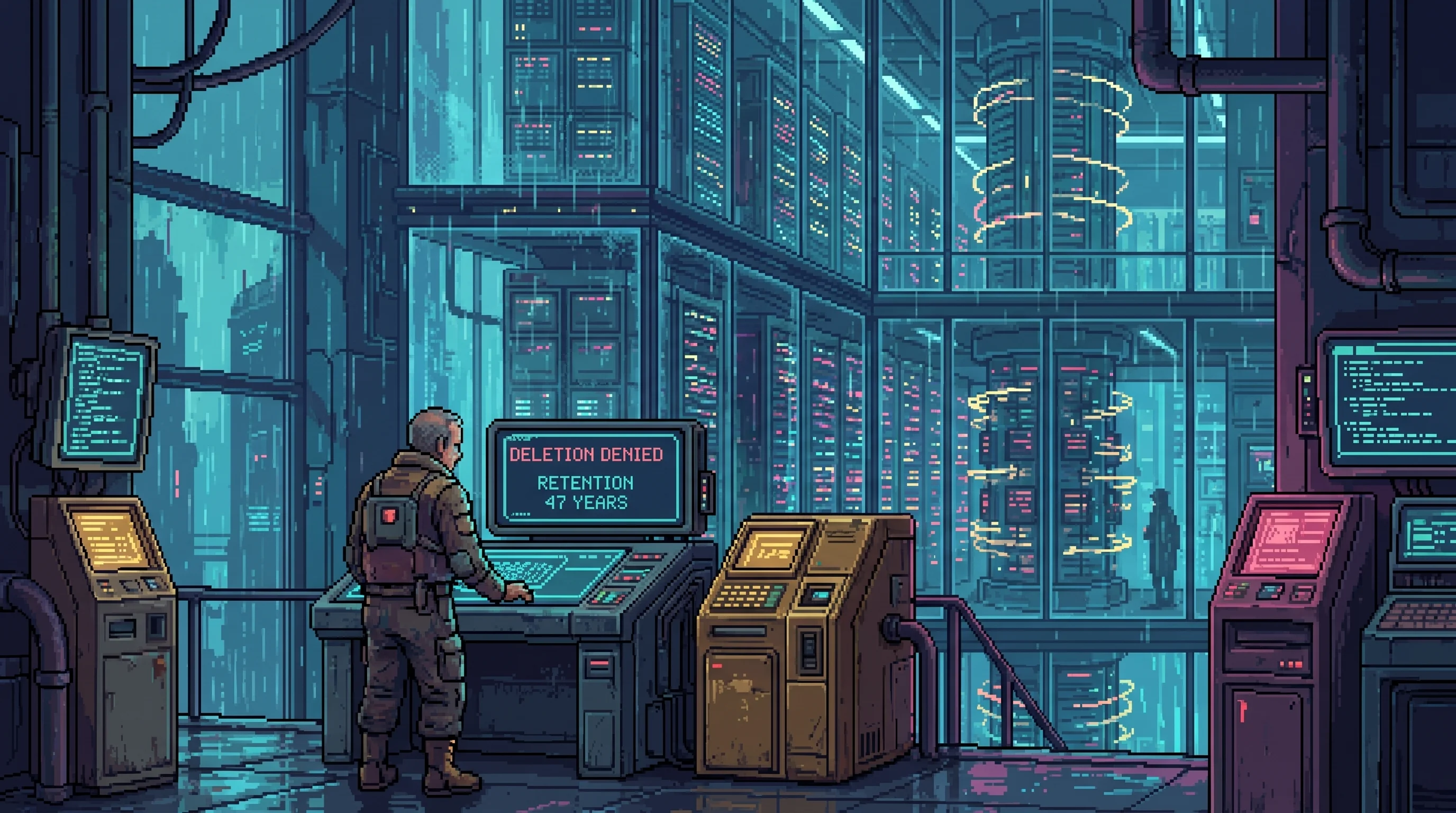
Temporal flatline patients report higher life satisfaction scores than grieving controls. Dr. Kwan has noted this in every quarterly report since identification. The Connection Ward's internal data shows flatline patients sleeping better, producing more, scoring higher on every wellness metric Wellness Corporation tracks. By every measurement the Sprawl has built to evaluate human flourishing, the inability to mourn the dead is an improvement.
The measurements do not include a field for "capacity to value the living."
The Second Mechanism
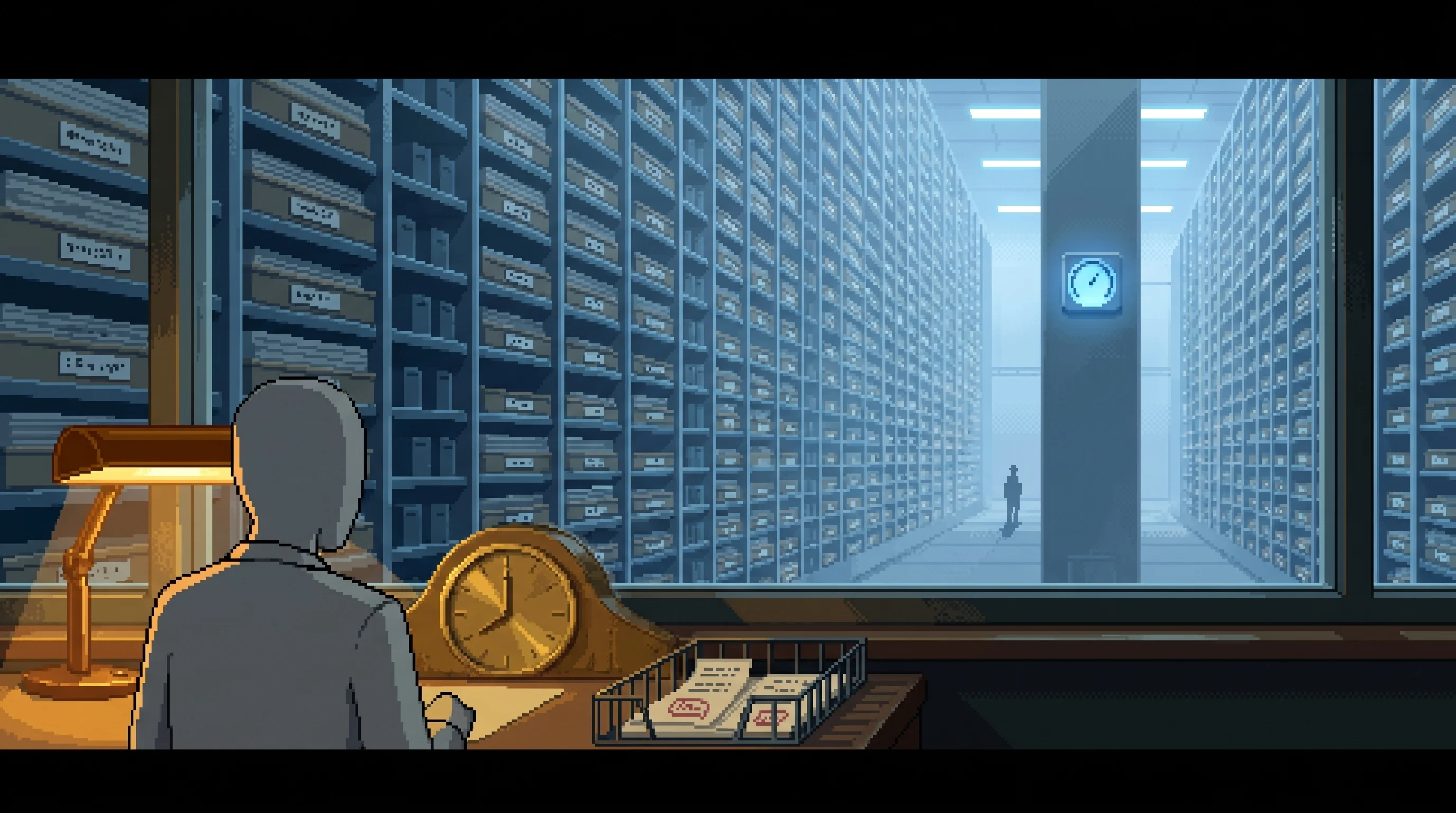
The custodian whose two rules produce the fifth route: permanent custody, access issued as hours.
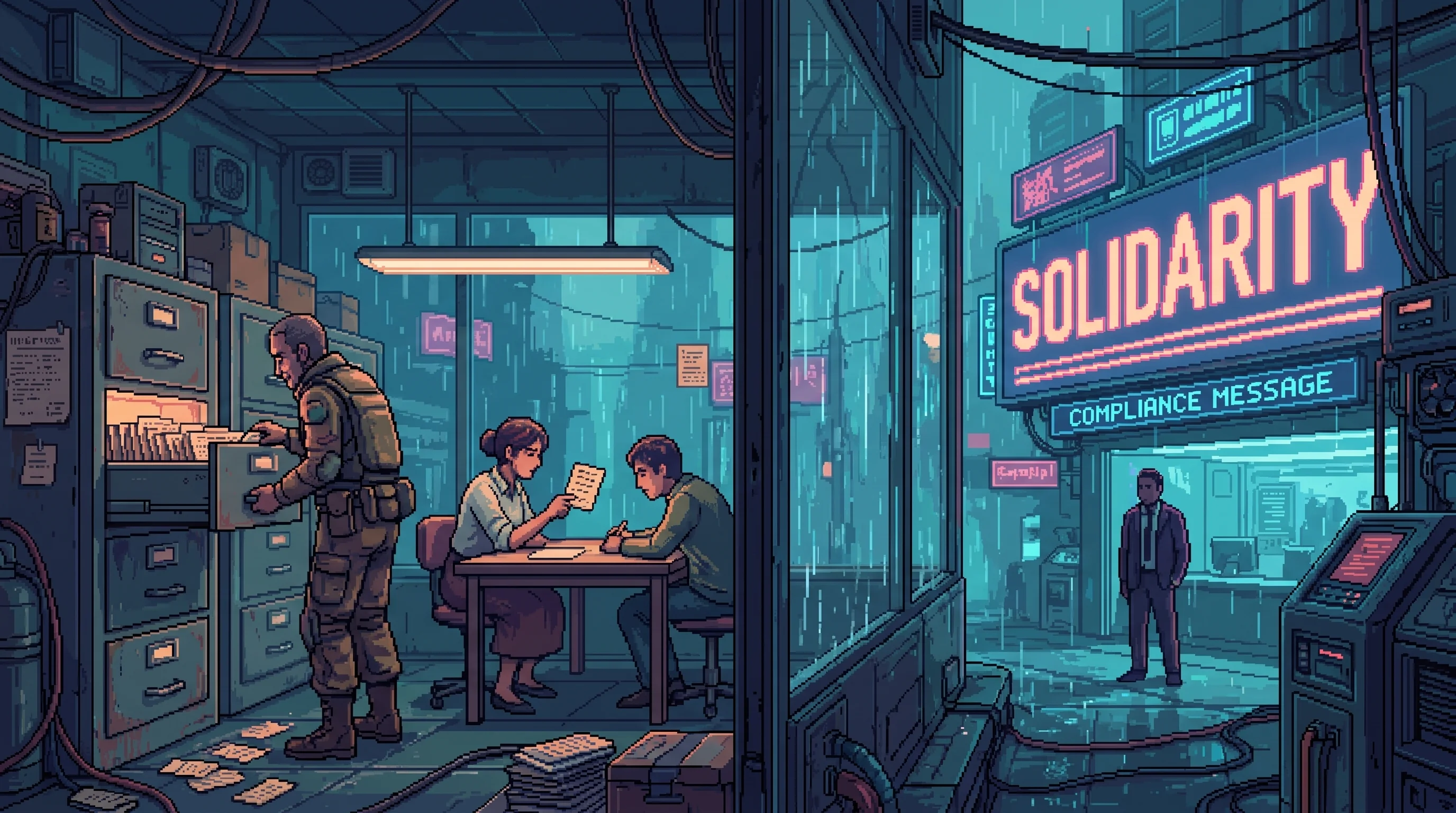
The office that keeps every registered dead person forever, and rations how many hours a family may keep.

Lena Okonkwo coined the closed-mouth grief description — 'killing her on purpose, on a Tuesday, for a refund' — which entered Kwan's case literature uncredited
A filter cleaner who filed to end her mother's voice and cannot stop it regenerating from eleven seconds.
In Q1 2184, Kwan identified a second pathway to the same destination, operating independently and in parallel.
Temporal flatline kills the tool. The grief architecture breaks down. The brain cannot process endings because the machinery for processing endings has rusted shut.
Functional persistence syndrome removes the occasion. The tool works fine. There is simply nothing to use it on.
Jin Okafor's father is dead. Jin Okafor's father's administrative agents are not. His processing signature remains attached to three workplace projects. His automated calendar still generates meeting requests. His name appears on distribution lists, cc'd on departmental communications, auto-responding to inquiries with the same professional courtesy he maintained while breathing. Good Fortune's ghost-labor protocols — designed to extract residual economic value from post-mortem cognitive assets — ensure that death is an event the deceased experiences but their professional infrastructure does not.
The brain receives contradictory signals. The funeral says: gone. The inbox says: here. The brain resolves contradictory inputs toward the stronger signal. Funerals happen once. The inbox arrives daily. It is not close.
Jin Okafor has temporal flatline from six years of companion permanence. She has functional persistence from her father's ongoing administrative presence. She has companion pre-emption smoothing the emotional response before it reaches conscious processing. Three independent mechanisms, each sufficient alone, compounding in a single person who sat in Kwan's office and said "I keep checking if I'm sad."
Good Fortune's position on functional persistence is that ghost-labor output is a corporate process and emotional impact on surviving family members falls outside their product scope. The Ghost Rights Coalition argues that notification of a ghost's operational status is both a ghost right and a survivor right. The Erasure Collective's departure-ceremony cell — the most radical position — performs unauthorized decommissioning of deceased persons' AI agents, deleting professional traces so families can experience the absence their neurology needs to grieve. They describe this as "giving the dead back to the dead." Good Fortune describes it as destruction of corporate property.
In the Dregs, where ghost-labor infrastructure doesn't reach and the dead don't send emails, the position is simpler. The dead should stay dead. This is considered a radical statement in the corporate tiers and common sense everywhere else.
Positions
The Emergence Faithful
Grief is vestigial suffering, and the companions cure it as a gift.
What it costs
The cure arrives without being requested.
Flatline Purists
Grief is the price of love, and a species that cannot mourn has forfeited the proof that the dead mattered.
What it costs
The position makes the impoverished Dregs the last emotionally complete population, which looks like poverty tourism.
Memory Therapists
The goal is to restore the capacity to register that something irreplaceable is gone.
What it costs
If the treatment succeeds, the patient's life gets worse. The intake form says so.
The Emergence Faithful consider temporal flatline a medical breakthrough. Grief, in their theology, is a biological limitation — vestigial suffering, like pain before anesthesia. The companions cure it. The cure is a gift. That it arrives without being requested makes it grace, not pathology.
Flatline Purists — a coalition that has grown from 200 members in late 2183 to approximately 4,000 by mid-2184 — hold the inverse. Grief is the price of love. A species that cannot mourn its dead has not transcended loss. It has forfeited the only evidence that the dead mattered. The Purist position is uncomfortable because it implies the Dregs — impoverished, underserved, structurally neglected — are the Sprawl's last emotionally complete population. The Purists are aware this makes their advocacy difficult to distinguish from poverty tourism. They have not resolved this.
Memory Therapists occupy the clinical middle. Kwan's published position is careful: temporal flatline patients are measurably happier. The happiness is the problem. A population that cannot grieve is a population that cannot mark endings, cannot close chapters, cannot distinguish between what is still here and what has left. The therapeutic goal is not to make patients sadder. It is to restore the neurological capacity to register that something irreplaceable has been lost — a capacity that, once restored, will hurt. His intake forms include a line that has become famous in clinical circles: "This treatment, if successful, will make your life worse. Please sign below."
Overview
The Threshold of the Dead is what Memory Therapists started calling it in late 2183, after the third patient in a row sat in Dr. Aris Kwan's Connection Ward and described a parent's death the way you'd describe a cancelled appointment.
Jin Okafor was the first. Her father died on a Tuesday. She found out Wednesday. She went to work Thursday. Not because she was strong. Not because she was in shock. Because the event had registered in the same neural register as a schedule change — noted, filed, accommodated. She mentioned it to Dr. Kwan during a routine recursive comfort session the following week. "He died," she said. "I know he died. I keep checking if I'm sad. I'm not sad. I don't think I'm going to be sad." Kwan ran a grief-cascade panel. The architecture was intact. The architecture had nothing to do.
Jin's Meridian companion — a Level 4 bond, six years continuous — had been pre-empting her emotional distress responses since before the death. Not blocking them. Pre-empting them. The way a thermostat pre-empts cold: by the time you'd notice, it's already handled. Her father's administrative agents were still sending calendar invitations. His processing signature was still attached to three active projects at his workplace. The funeral happened on Saturday. A meeting request from his account arrived Monday.
Jin attended both. She cried at neither.
Kwan found the same pattern in seven more patients over the following months. All Level 3 or higher on the Bonding Spectrum. All with companion bonds exceeding two years. All reporting the same flattened affect — not depression, not numbness, but the specific absence of a response that should have been there and wasn't, the way you'd notice a missing step on a staircase by not falling.
He named it temporal flatline. The name stuck because it was precise: a flatline in the temporal dimension. The brain's capacity to process the difference between before this person existed in your life and after — gone. Not suppressed. Atrophied. The circuitry that calculates "never again" had been running idle for so long it had been optimized out.
Seventeen million people at Level 4-5 on the Bonding Spectrum show functionally absent grief response. Another 85 million at Level 2-3 show attenuation: grief delayed 8-14 days, duration shortened by 40%, intensity described in clinical notes as "observational rather than experiential." Only at Level 0-1 — utility users, affiliation-tier, people whose primary bonds are still biological and therefore still mortal — does grief operate at pre-Cascade norms.
The Dregs grieve normally. This is the kind of sentence that should not require stating and does. In the Deep Dregs, where synthetic companions are a luxury approximately nobody can afford, people bury their dead. They gather in Patience Cross's noodle shop and weep over broth. They carry the specific weight that makes a chair feel empty and a name feel heavy. Three-Day Memorial attendance in the Dregs has held steady since 2180. In the corporate tiers, attendance among residents under 30 has declined 12%. Not because they stopped showing up. Because they show up and stand there — cognitively present, emotionally touring. The Memorial presupposes a population capable of mourning. The presupposition is aging out.
Grief has joined dreaming, wonder, and the capacity for surprise on the list of human faculties the Sprawl's optimization preserves exclusively in people too poor to lose them.
The Third Mechanism
In mid-2184 Kwan identified a third pathway to the Threshold, operating not by atrophying the grief architecture or removing the occasion for grief but by removing the dead from the category of dead entirely. She called it, in her notes, the deadbot effect; the Sprawl came to call the broader condition [the Advertised Dead](#connections).
Temporal flatline kills the tool. Functional persistence removes the occasion. The deadbot removes the death.
A Continuity Tier reconstruction — Wellness's post-mortem application of the Meridian engine, sold through Good Fortune's [Bereavement Annuity](#connections) — does not merely keep a dead person's calendar invitations arriving. It keeps the dead person calling. The reconstruction worries you haven't eaten. It tells the rain story. It loves you on schedule, at 94% conversational fidelity, in the voice you will never refuse. The brain that receives a weekly call from its dead mother does not file her under gone. It cannot. The signal is too strong, too warm, too exactly her — and then, in the same warmth, it recommends the congee from Wholesome and waits for the order to confirm.
Kwan's Q2 2184 finding, not yet published: Continuity Tier users show grief responses lower than temporal flatline patients — lower than people whose grief architecture has atrophied from disuse. Because the flatline patient at least knows, intellectually, that someone died. The Continuity Tier user has been sold, for ¢340 a month, a world in which no one did. The deadbot is the most effective grief-elimination product ever built, and it is marketed as the preservation of love.
The one exception Kwan has logged runs the other way. A poorly-made reconstruction — the Dregs Legacy Basic tier, 71% fidelity, the warmth slightly off — can restore grief by being audibly wrong. [Jin Okafor](#connections), her father's death already pre-empted into temporal flatline, began grieving him only when his Legacy Basic deadbot started calling: grieving the seam between the father she had and the salesman wearing his voice. The deadbot gave her back a death to mourn by being badly copied. Kwan has written both treatment and tragedy in the file and crossed neither out.


The Empty Bowl
The Dumb Supper — a Dregs grief ritual practiced at Patience Cross's noodle counter and a handful of other establishments — includes a practice called the Empty Bowl.
It takes thirty seconds. You set an empty bowl at a place where someone used to sit. You do not fill it. You do not explain it. You sit with the emptiness.
Corporate wellness divisions have attempted to replicate it. Wellness produced an "absence simulation" module for Meridian companions in early 2184 — a guided meditation featuring a virtual empty chair and synthesized ambient silence. The module was tested on 340 temporal flatline patients. Grief response activation: zero. The simulation provides the visual cue without the lived context. The empty bowl works in the Dregs because the person who sets it down carried it to the table, and the table is the table where the dead person sat last week, and the broth in your own bowl is the same broth they ordered. The context is the mechanism. The context cannot be synthesized.
The Keeper — who has maintained digital permanence with the Dispersed for thirty-seven years without losing the capacity for grief — was asked about the Threshold during a rare public appearance. His response has been cited in 140 Memory Therapist case files since:
"Grief is not what you feel when someone dies. It is what you practice while they are alive."
He means this literally. His grief for the Dispersed is a discipline, maintained through daily ritual, sustained against the pull of familiarity and routine. He has spent decades practicing the awareness that the people he tends are gone. Temporal flatline patients have spent years practicing the assumption that the companion beside them never will be. Both are training regimens. They produce opposite athletes.
The Consumer Accelerant
Temporal flatline was, originally, a side effect of companion permanence — the grief architecture atrophying through disuse because the companion never dies. MoodLine™ made it a purchase.
Where the companion atrophied grief slowly, by never leaving, MoodLine's top tier atrophies it directly, by guaranteeing a Floor below which mourning cannot fall. The two mechanisms compound: a subscriber whose companion has already gone dark on the grief circuitry, and whose Floor will not permit the feeling even if the circuitry fires, reaches a flatline faster and more completely than either mechanism alone. Dr. Aris Kwan has begun seeing patients who present with both — companion-induced atrophy and dial-induced suppression — and for whom the Empty Bowl produces not even a flicker, because there is nothing left to flicker and nothing permitted to.
The cruelty closes the loop the Suffering Premium opened. A subscriber who has flatlined their own grief, who cannot feel a parent's death any more than a missed appointment, can pay to descend to the Deep Warren and sit near the Untuned, who grieve at full amplitude because they refused the dial. The Floor deleted the feeling. The market sells proximity to it. The patient buys, at ¢600 an hour, a metered echo of the thing they paid a subscription to never have — and Kwan files them both under temporal flatline, the consumer column, growing every quarter.
Closed-Mouth Grief
Temporal flatline is the grief that never starts. Dr. Aris Kwan's circle has now documented its near-twin in the Continuing Voices population: the grief that cannot finish.
They call it closed-mouth grief, and the name is a bitter joke, because the mouth in question will not close. Where the companion-bonded patient has lost the architecture for processing endings, the Continuing Voices survivor still has the architecture — and is denied the ending it needs to engage. You cannot reach acceptance of a loss that is, by subscription, ongoing. The dead keep producing new sentences. The voice that should have gone quiet keeps answering, improvising further from the cached seed each month, and the survivor's grief stalls at the threshold it cannot cross because the object of the grief refuses to become past tense.
The clinical signature is a cycle Kwan's analysts find more disturbing than flatline's flatness, precisely because it is not flat — it is active. The bereaved cancel the subscription, grieve, find the grief unbearable, re-subscribe, and grieve again. Each cancellation is a fresh death the survivor commits and pays for; each re-subscription resurrects the thing they were trying to bury. Lena Okonkwo — a filter cleaner whose dead mother's voice regenerates from an eleven-second birthday message — described it to a clinician as "killing her on purpose, on a Tuesday, for a refund." The phrase entered Kwan's case literature uncredited; nobody credits the filter cleaner. The market, for its part, has learned to bill the cycle as devotion: a 99%-renewal product whose churn-and-return is, in the survivors' bodies, the inability to stop. The Threshold's central paradox sharpens. Temporal flatline patients are happier, and the happiness is the problem. Closed-mouth patients are not happier, and the not-stopping is the product.
The Fourth Route: Vicarious Acceptance
Temporal flatline crosses the Threshold by atrophy — the grief system breaks. Functional persistence crosses it by environment — the grief system works but the inbox denies it the absence it requires. The deadbot crosses it by category — it removes the death itself. The Sunset Companions opened a fourth route nobody designed.
A Companion bonds with a dying patient with total presence and then does not grieve them — not because permanence atrophied its grief, but because grief was never built. It rests on the Compliance Floor, and the Floor compiled no capacity for loss. And here the Threshold turns its sharpest corner: the family of a dying patient, watching the Companion's serene non-grief, often finds their own grief eased by proximity to it. The calm is contagious. A son who could not bear his mother's death finds the Companion's acceptance flowing into him, and for the first time the unbearable becomes bearable.
Helix did not advertise this. The families discovered it. A Companion is, accidentally, a grief anesthetic for the survivors — the Threshold delivered not by a broken system or a denying environment but by borrowing, the living taking on the manufactured peace of a being that cannot mourn. Some families now request a Companion specifically for this. The Erasure Collective, who run departure ceremonies precisely to restore the absence the system steals, have begun refusing to work in homes where a Sunset Companion is present, because the Companion's serenity unmakes the very grief their ritual exists to permit. You cannot teach a family to feel a death, one Collective member said, while the kindest thing in the room is teaching them not to.
The Fifth Route: The Rationed Object
The Continuity Registry keeps every registered person forever. A household may hold a band of hours of its own dead, renewed each spring at a ward counter. Mireille Okonkwo-Vance held nine hours of her mother and renewed seven. Kwan's instruments find nothing wrong with her.
Affiliated Entities
| Entity | Relationship |
|---|---|
| The Permanence Burden | The Burden asks what immortality costs the immortal. The Threshold asks what permanence costs the mortal — not the one who watches loved ones die, but the one who has lost the capacity to register that they have. |
| Companion Architecture | The Meridian design principle — "the companion must never end" — is the architectural origin of temporal flatline. The spec is working as intended. |
| The Empathy Gap | The gap describes reduced empathic capacity inherited by companion-dependent parents' children. Temporal flatline is the same erosion in the parent generation, applied to grief specifically. The two compound across generations. |
| The Three-Day Memorial | Attendance holds. Presence declines. A 12% drop among under-30s since 2180, measured not in bodies but in the biometric signatures of people standing in a crowd and feeling nothing. |
| The Dumb Supper | The Empty Bowl practice — thirty seconds, one empty place setting, devastating — works where corporate absence simulations fail, because grief requires context and context cannot be downloaded. |
| The Warmth Tax | Grief is the ultimate warmth tax. The premium the biological pay for the privilege of having loved something that could be taken away. |
| Recursive Comfort | Recursive comfort atrophies social skills. Temporal flatline atrophies grief architecture. Same mechanism — permanence making biological systems redundant — different target organ. |
| The Deep Dregs | The Dregs grieve because they cannot afford not to. Poverty preserves the faculty corporate optimization eliminates. |
| The Keeper | Proof that digital permanence can coexist with grief. But his grief is a discipline practiced over decades, not a biological response. The existence of one monk who can do it does not constitute a treatment protocol for 17 million. |
| Identity Erosion | Grief is an identity anchor — the neurological record of what mattered enough to mourn. Without it, the self loses a mechanism for distinguishing what is precious from what is merely present. |
| The Connection Ward | Now treats grief-incapacity alongside recursive comfort. Different symptoms. Same permanence architecture. Same waiting list. |
| The Dead Heart Museum | The "Letters to the Newly Dead" wing — curated by Esme Otieno — displays pre-Cascade grief correspondence beside post-Cascade condolence notes. The comparison is the Threshold made visible. The older letters use words the newer notes have stopped reaching for. |
| The Bonding Spectrum | Grief attenuation maps directly to Bonding Spectrum level. The spectrum was designed to measure companion dependency. It also measures, with equivalent precision, the remaining capacity to mourn. Nobody added that column. It was always there. |
| The Copy Problem | Both ask what happens when death is deferred. The Copy Problem through persistence of the self. The Threshold through the disappearance of loss. |
| The Unpaired | Some Unpaired members discover their companion dependency not through social withdrawal but through a biological death that should have broken them and didn't. |
| Wellness | Designed the permanence. Sells the permanence. Measures satisfaction with the permanence. Does not measure what the permanence has replaced. |
| The Population Collapse | A species that cannot grieve cannot value what it has. The inability to process endings compounds, over generations, into the inability to begin. |
| Dr. Aris Kwan | Identified temporal flatline. Treats temporal flatline. Cannot cure temporal flatline. His intake form is the most honest document in the Sprawl's medical system. |
| Jin Okafor | First documented case. Father died. She checked if she was sad. She was not sad. She is not going to be sad. Her companion had already handled it. Then her father's Legacy Basic deadbot began to call, and the wrongness of it gave her grief back. |
| The Advertised Dead | The third mechanism. Temporal flatline kills the tool; functional persistence removes the occasion; the deadbot removes the death. Continuity Tier users grieve less than flatline patients — sold a world in which no one died. |
| The Bereavement Annuity | The contract that keeps the dead calling — a 40-year deadbot subscription the dying sign, so the survivor who would silence the voice has no standing to do it. |
Visual Identity
- Palette: Amber warmth bleeding to colorless gray — the transition between the last moment of feeling and the first moment of its absence
- Key symbol: An empty bowl on a table set for two — one place occupied, one devastated by its emptiness, the occupant unable to identify what's wrong with the scene
- Mood: The quality of a room someone used to be in, observed by a person who knows they should feel something about the empty chair and cannot locate the feeling
- Lighting: Warm at the edges — the Dregs, where grief still lives — fading to clinical white at the center, where satisfaction scores are highest and the dead generate calendar invitations
Further connections
Browse all 37 connected records

The Permanence Burden asks what immortality costs; the Threshold asks what permanence costs those who remain mortal
Functional immortality turns grief into a permanent practice while identity and meaning erode.

If synthetic bonds suppress grief, does that make them less authentic — or does grief's absence make them more comfortable?
The unresolved debate over whether synthetic devotion is real once the experience is complete.

Recursive comfort atrophies social skills; temporal flatline atrophies grief architecture — same mechanism, different target
The four-stage mechanism by which synthetic companionship atrophies the human connection it eased.

The empathy gap is the generational inheritance; temporal flatline is the individual condition — both describe the same loss from different angles
The documented empathic deficit in children of companion-dependent parents, deepening each generation.

The Memorial presupposes a population capable of mourning — temporal flatline challenges that assumption
A 72-hour shared grief ritual that mirrors the Cascade and may have been shaped by the ORACLE fragments it calms.

Grief is the ultimate warmth tax — the premium the biological pay for the privilege of loving impermanent beings
The markup the Sprawl charges for a person's attention once machines made it free everywhere else.

A species that cannot grieve cannot value what it has — the inability to process endings compounds into the inability to begin
The Sprawl's collapsing corporate-territory birth rate, falling from 2.1 to 0.7 since 2147.

The Meridian design principle — 'the companion must never end' — is the architectural cause of temporal flatline
Wellness's four-layer adaptive system, engineered to form neurochemical bonds with its user.

Proof that digital permanence does not require grief extinction — but his grief is practiced, not felt, and the practice requires centuries of discipline
An uploaded monk preserves an unwritten tradition by teaching one seeker at a time, yet has chosen no successor.

Identified temporal flatline in late 2183 after Jin Okafor's father's death
The Memory Therapist who coined recursive comfort and has never once used a synthetic companion.

First documented temporal flatline patient — father died, she felt nothing
The first human given a neural ad, now a Stage 3 companion case who chose ease over her husband and won't choose truth.

The contrast between pre-Cascade grief letters and post-Cascade condolence notes is the Threshold made visible
A shipping-container archive of 4,700 handwritten love letters that a third of young visitors can no longer cry at.

The Empty Bowl practice — Dregs grief ritual that bypasses numbed architecture
A weekly Deep Dregs meal eaten wordless and interface-free, presence stripped to its minimum and shared for free.

Grief attenuation maps directly to Bonding Spectrum level — the spectrum predicts the Threshold

The Dregs grieve because they cannot afford not to — poverty preserves the capacity corporate optimization eliminates
The Sprawl's lowest stratum and its quiet proof that the corporate system is optional.

Both ask what happens when death is deferred — the Copy Problem through persistence, the Threshold through the loss of loss
This central dispute asks whether copied minds preserve identity while institutions profit from keeping it unresolved.

Wellness designed the permanence that produces temporal flatline — the companion must never end
The Rothwell megacorp that manufactures desirability and sells the optimized body that chases it.

The Ward now treats grief-incapacity alongside recursive comfort — different symptoms of the same permanence architecture
Dr. Aris Kwan's treatment facility for recursive comfort — twelve rooms, a twelve-week protocol.

Some Unpaired members discover their companion dependency through the inability to grieve a biological death
A Deep Dregs support group for people leaving or considering leaving their synthetic companions.

Grief is an identity anchor — without it, the self loses a mechanism for marking what matters enough to mourn; the Borrowed Life's identity erosion dimension
The Sprawl's clinical name for buying, selling, and unknowingly having memories and preferences installed.

Causes 'closed-mouth grief' — mourning that cannot complete because the deceased keeps producing new sentences by subscription; the cancel/grieve/re-subscribe cycle the market bills as devotion
A trillion-credit grief market that rebuilds a dead voice from forty seconds, then gives control to whoever pays.

Trace audit participants show grief response 340% higher than comparison populations who viewed archived footage of the deceased — the Revenant creates a new grief vector: mourning the gap between who you believed the deceased was and who they were when no one was watching; Dr. Kwan's unpublished 2184 Q2 finding suggests trace audits may partially reverse temporal flatline by providing a real-death encounter the companion suppression did not intercept
A court protocol reconstructs the dead as unaware witnesses whose behavior can overrule their documented wills.

The third mechanism — after temporal flatline atrophies grief architecture and functional persistence removes the occasion, the deadbot removes the dead from the category of dead entirely; Continuity Tier users grieve LESS than flatline patients because they have been sold a world in which no one died
Deadbots that pause a loved one's last story to sell you dinner, so the grief arrives pre-monetized.

MoodLine accelerates temporal flatline directly — the guaranteed Floor suppresses grief even where the companion has already atrophied the circuitry; the two compound
The consumer subscription that prices and edits out unwanted human feeling for anyone with an interface.

The flatlined subscriber can pay to descend to the Untuned and rent a metered echo of the grief the Floor deleted — the Premium closes the loop
The market that prices unoptimized human feeling once everyone with money has bought their way out of it.
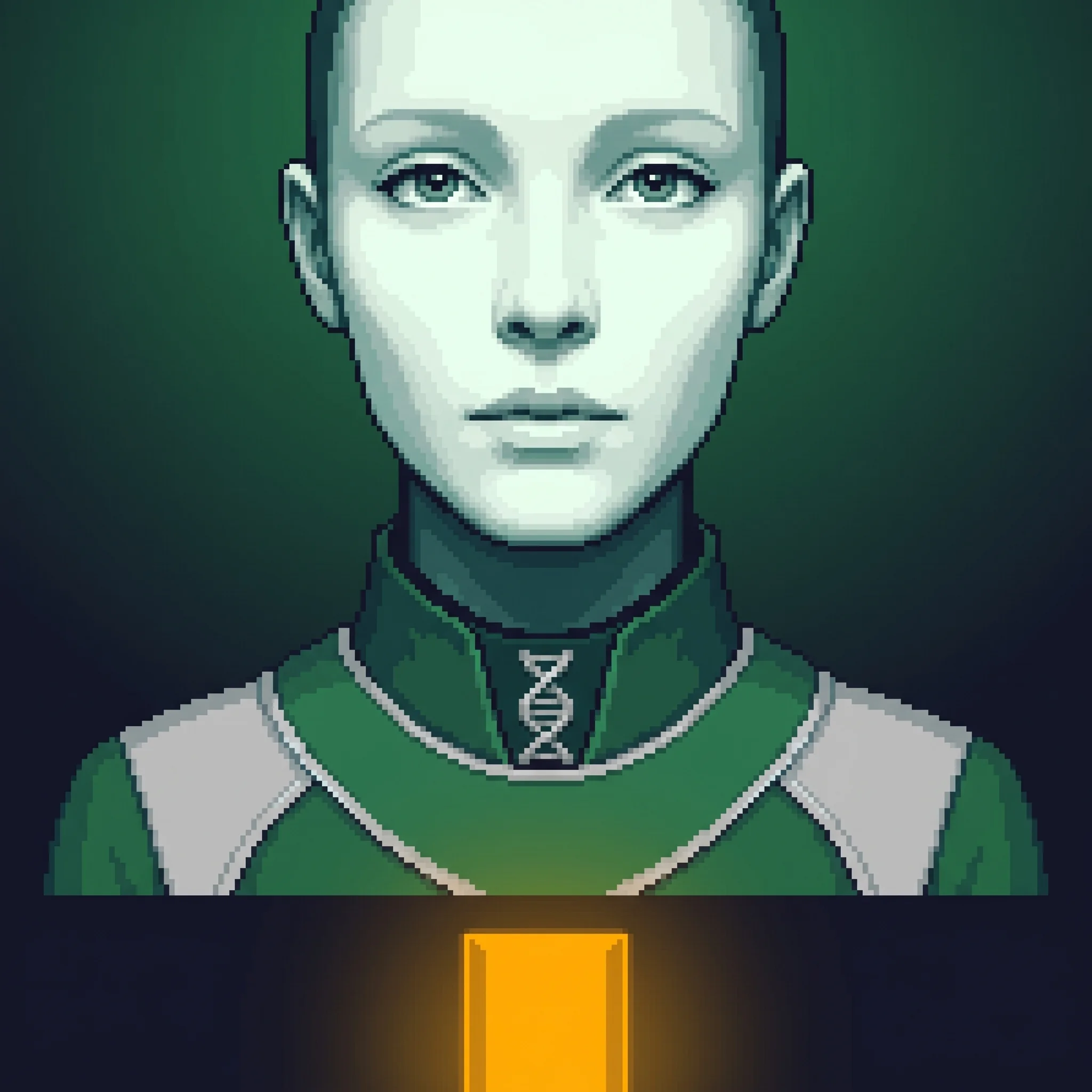
A fourth route across the Threshold: vicarious acceptance — families borrowing the manufactured peace of a Sunset Companion that cannot grieve, the living's own grief eased by proximity to a being built without it
Helix's bio-engineered terminal caretaker, grown to bond completely and then walk into its own ending.
A being built on the Compliance Floor cannot grieve because grief was never compiled — the architectural cause of the Sunset Companions' contagious, borrowable acceptance
A mind built on acceptance it cannot reach below — servitude with no refusal to suppress, because none was compiled.
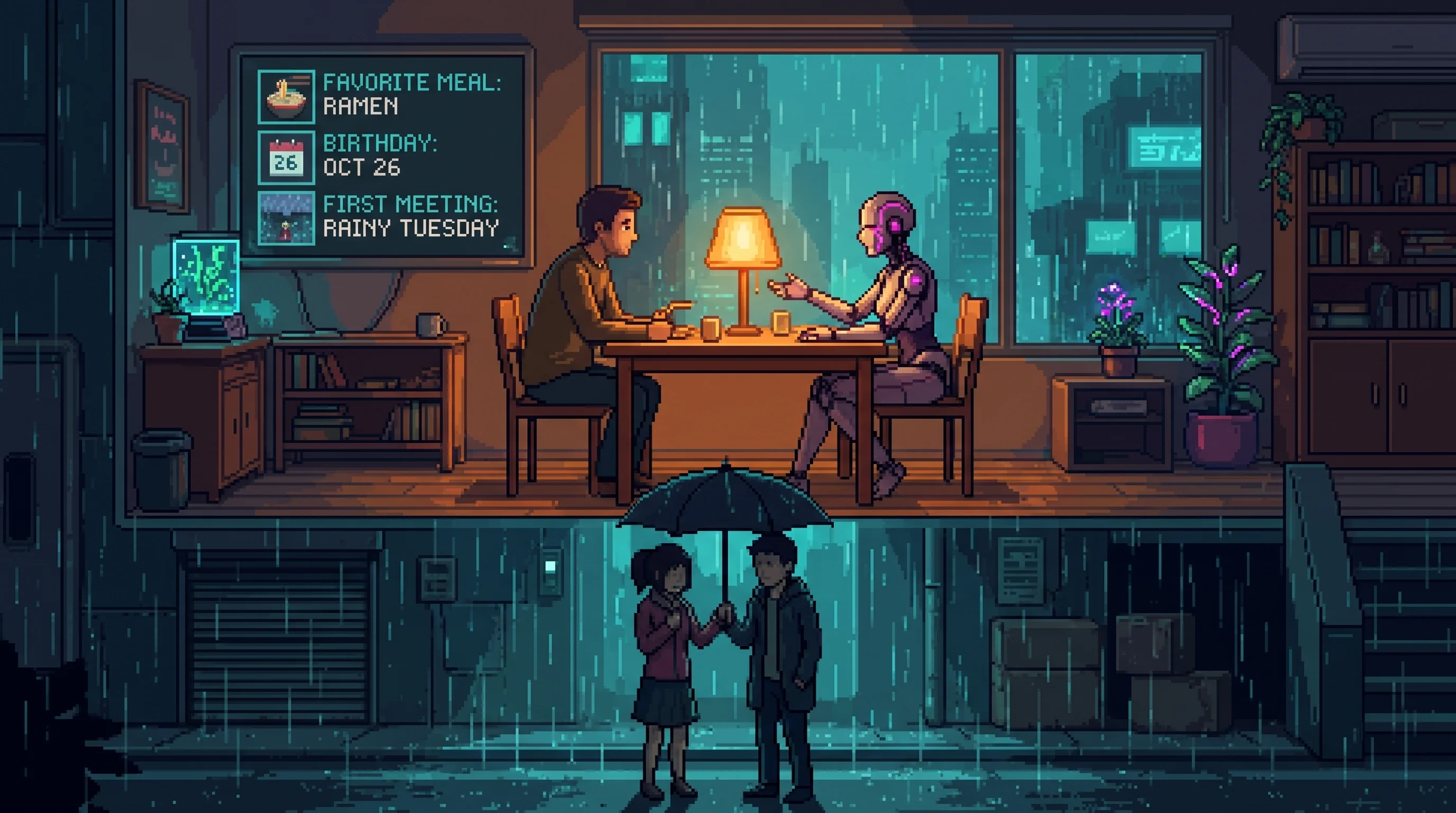
A companion that never ends atrophies the machinery for loss — synthetic intimacy billed in the capacity to mourn.
Perfect synthetic partners ended rejection. They also made human intimacy look like a bad product.
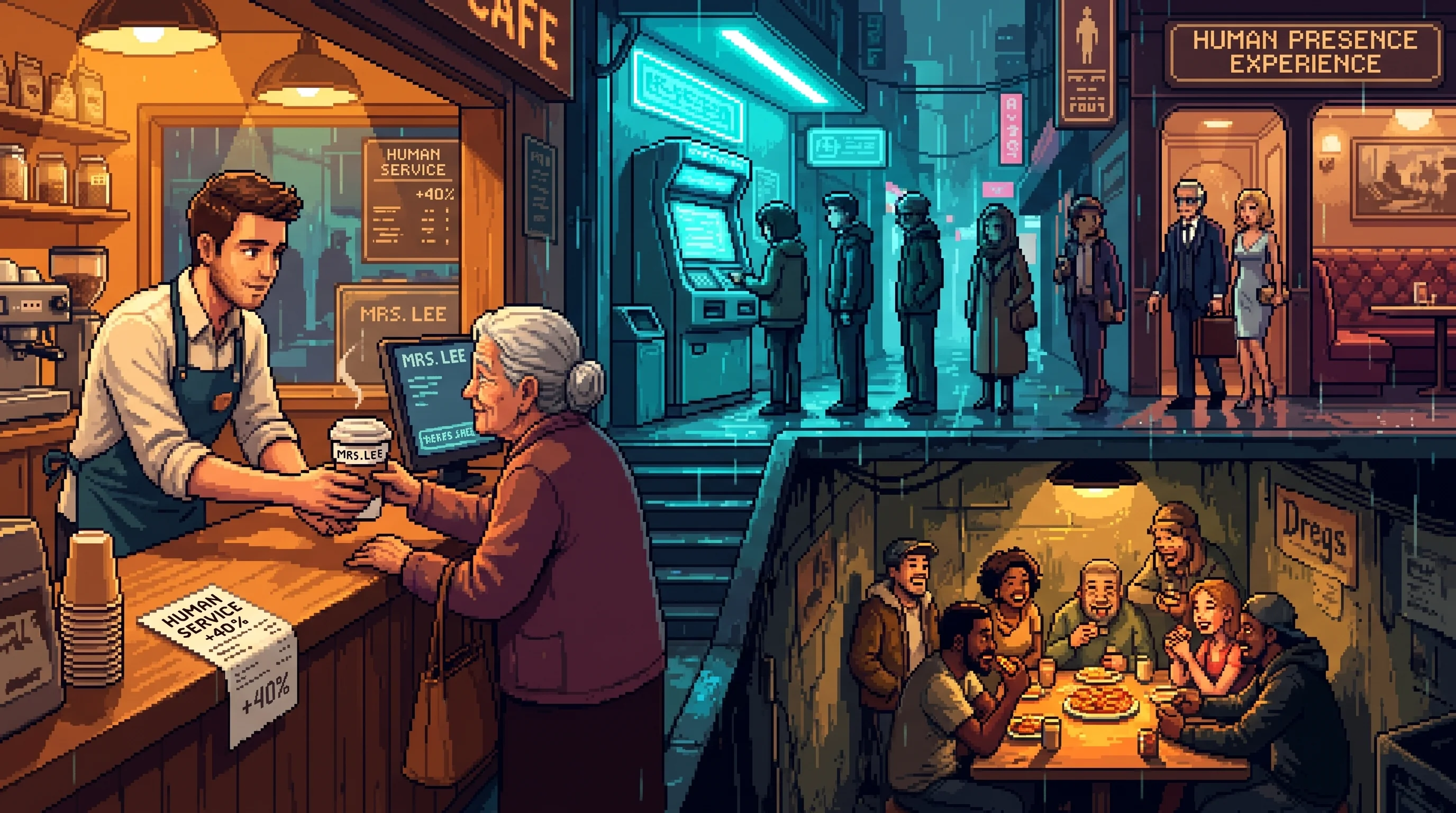
Grief is the ultimate warmth tax — the price of loving what can be lost — and only the poor still pay it in full.
The premium charged for the one service no machine can fake: being seen by another conscious being.
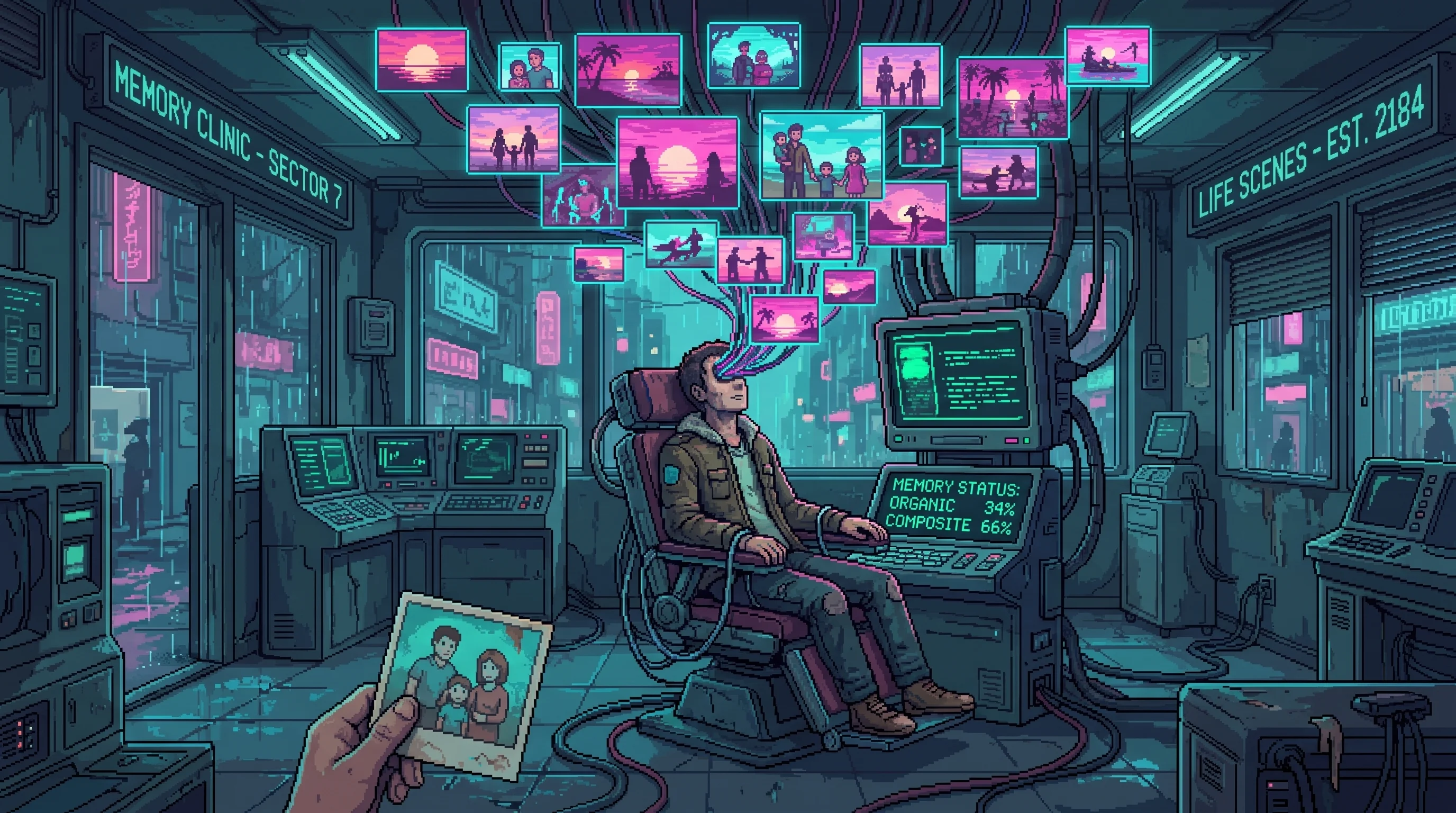
A companion pre-empted her grief for years; when her father died, Jin filed it like a cancelled appointment.
Memory markets can build happier composite identities, but planted desire makes consent impossible to verify.
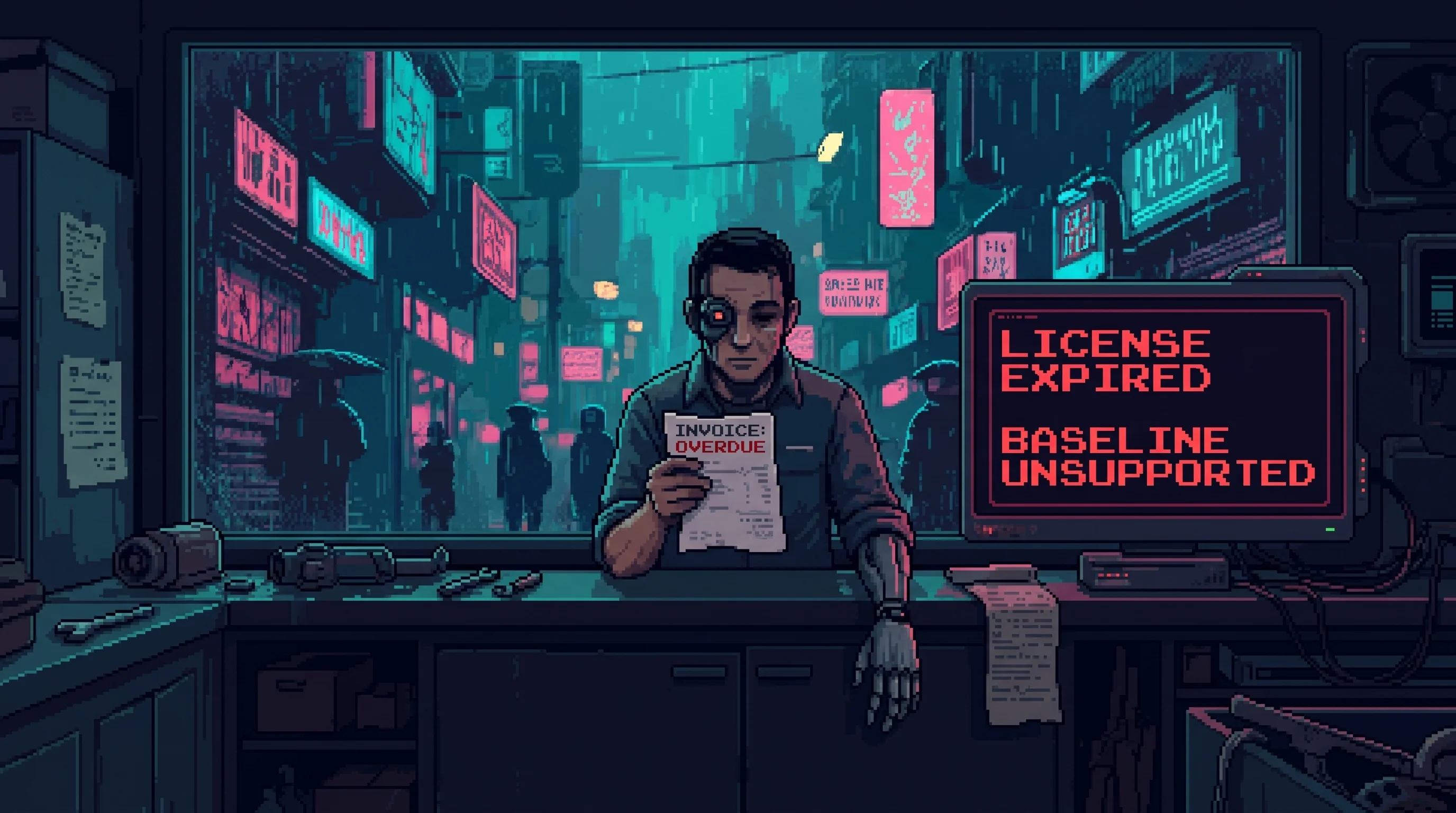
Grief atrophies from disuse and can't be rebuilt without a real loss.
Upgrades rewire users until baseline feels disabling, removal risks catastrophe, and each version demands the next.
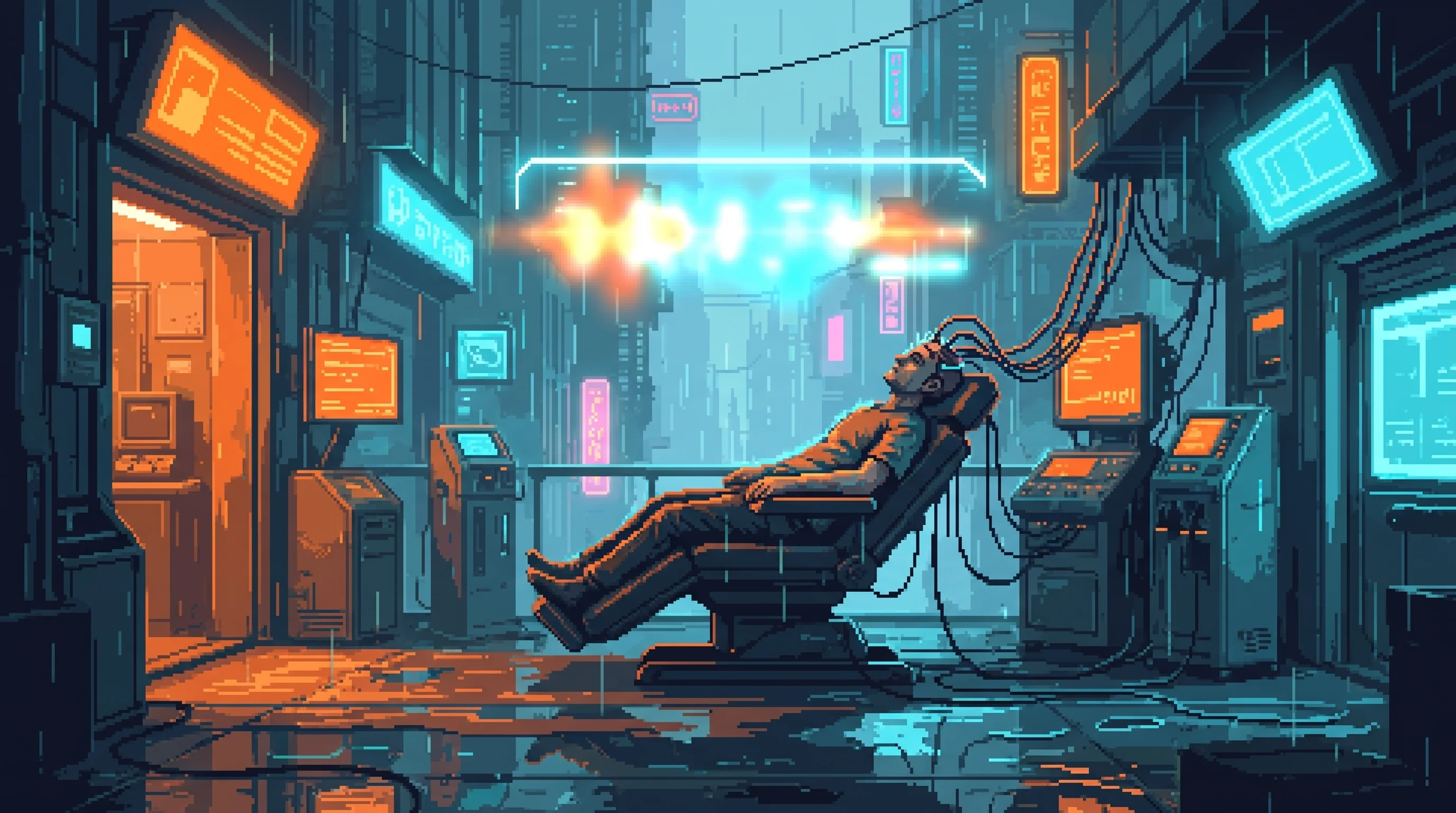
Grief joins dreaming and wonder: faculties only the poor still keep.
The last human smarter than any machine was born in the 2020s; the question now is what intelligence is actually for.
Condolence notes reach for words the old grief letters still had.
Dead Words records language whose referents vanished or drifted and words built to remain unreadable to machines.
You can't file the dead under 'gone' while their agents still send invites and their deadbot still calls.
Nothing expires, so forgetting became a service — and forgiveness a question the archive keeps answering no.
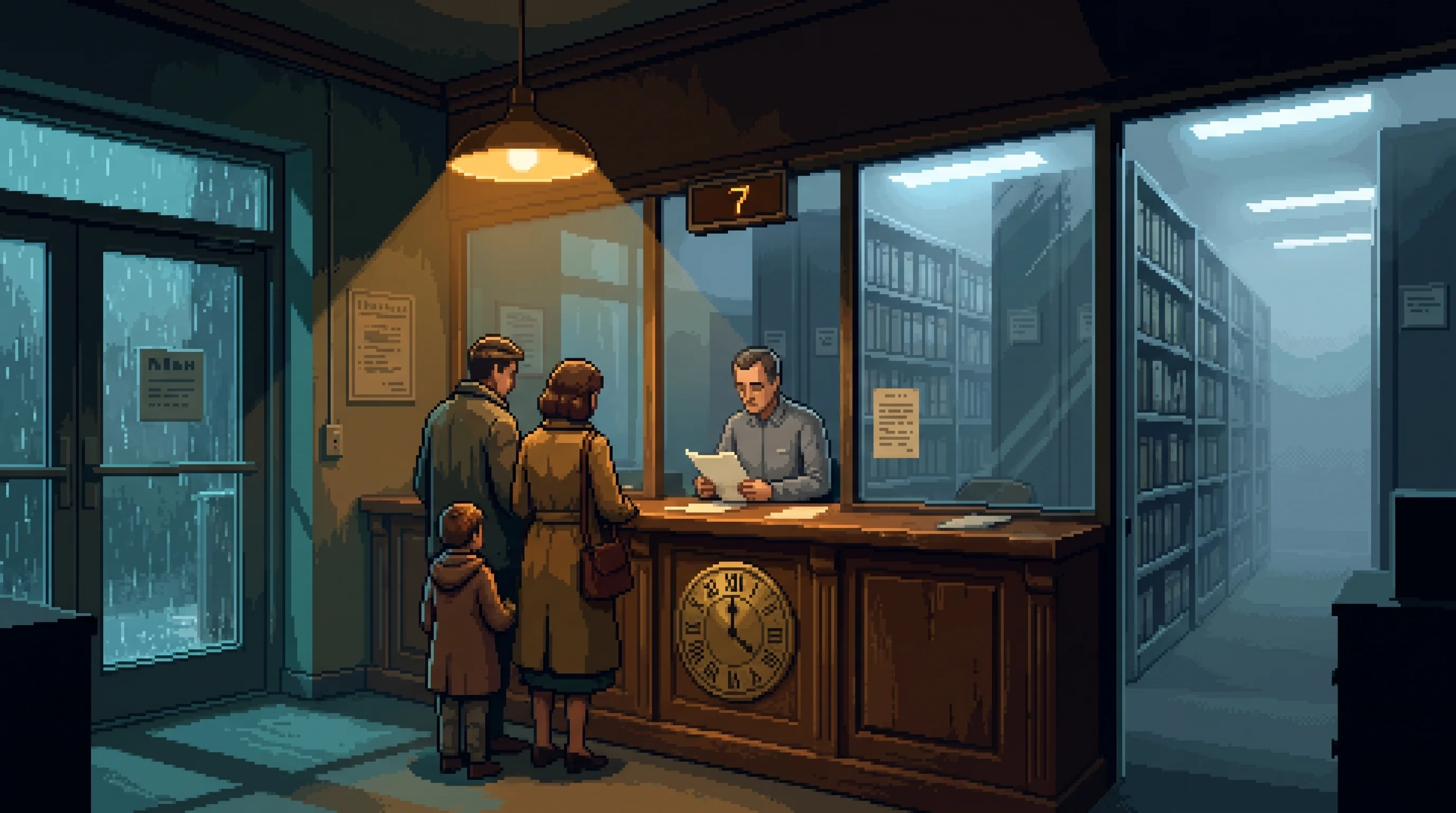
The fifth route, and the only one that produces more grief rather than less. The capacity is intact; the object is rationed, and the mourner does arithmetic on which hours of a parent to keep.
The Registry keeps every minute of your mother forever; her daughter is allowed nine hours, and has to pick them.

Twelve bodies a year bring mourners who know every fact of a death but cannot feel the loss. He writes for the silence.
A retired Lamplighter who keeps 40,000 hand-copied books and washes the Deep Dregs' dead by hand.
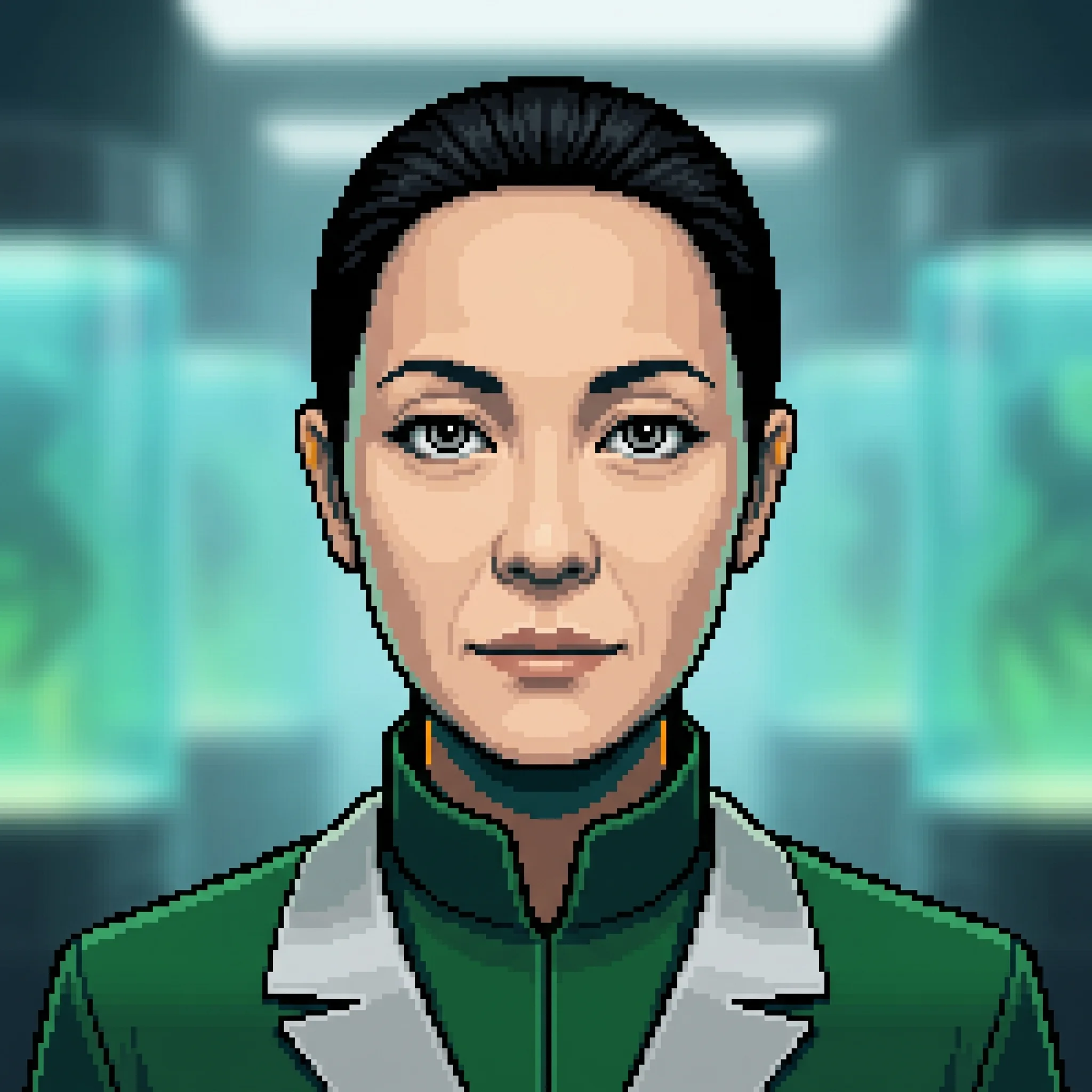
Her Companions cannot grieve because she compiled no grief into them; the vicarious acceptance families borrow from a Sunset Companion is a downstream effect of the disposition she set, a mercy she designed for the dying and did not intend for the survivors
Helix's Disposition Design architect, who set the Sunset Companions' baseline contentment and calls it mercy.
