The Ratification Forecast
Deferred-Consent Scheduling Tension
You will thank us by spring
Nobody overruled the refusal. It was entered, dated, and scheduled around.
The Core Tension
The window will not wait
Some interventions work far better at sixteen than at nineteen. Waiting for consent can mean the same person endorses later and gets a worse result, then asks why the clinic waited. Ratification runs at 94.1 percent.
What it costs
Consent becomes a lagging indicator, and a refusal the institution can outlast stops being a refusal.
A refusal must come first
A written no should stop the work. The 94.1 percent is collected only from people the intervention was already done to, after it worked, so it cannot test the claim.
What it costs
Honouring every refusal would sometimes cost a patient the outcome they later say they wanted, and the clinicians would have to watch it happen.
"Almost all of our patients agree with us," a clinic counsellor explains. "We simply start sooner."
The clinicians are not villains. Some procedures take far better at sixteen than at nineteen, and the window does not reopen. Marit Calder was corrected before she could object. She endorses it now, sincerely. She is the instrument's strongest case.
The other side says a no that can be waited out is not a no. And the evidence cannot settle it. Every answer comes from someone the intervention was already done to. There is no cohort of the untouched to ask.
Overview
Emrys Dolan was sixteen when he wrote by hand that he did not want the reconstruction. The clinic filed the page. The system returned a forecast: endorsement expected within the year. The theatre slot was already booked for the next week. A forecast does not move a slot.
The procedure went ahead on his mother's authorization. It worked. He can hear the lift cable in the second stack now. He can hear his mother step onto the landing before she reaches the door. He does not use the word better.
The clinic mailed him five prepaid endorsement cards. Each reads: Thank you for choosing to agree. He keeps them in a folder with the signature blocks empty.
His refusal was not overruled. It was filed under the Pending Objection rule: alive on the file, with a date attached. Nothing was refused to him, so there is nothing to appeal.
How It Came To This
Every intervention in the licensed districts carries a forecast. The forecast is the month by which people with a similar history have come round before. It is disclosed to the subject, and it is usually right. Published ratification runs at 94.1 percent. It is measured by asking people after the procedure whether they are glad of it.
Confidence rises with record depth. A thin file gets a wide interval, and clinics tend to wait. A file that runs from birth gets a tight date and a schedule that keeps to it. So the shortest dates go to the monitored, the medicated and the young. Emrys has been in clinics since he was four, because he was ill. His file is very thick.
The date is fixed by a mediator's concurrence. Maren Cott signs them. The line appeared on her form in spring 2184, without notice. A concurrence is a finding about a date, not a family. The code gives her no ground to recuse.

How It Is Lived
The one reviewable question is the date. The Ratification Registry assigns every open case a free date advocate. Advocates win about 31 percent of arguments. Their losses give the forecasting office labelled error data it could not get otherwise.
Waiting costs money. Under the Negligence Doctrine, insurers treat the interval as an unredeemed offer. Household cover rises every month until the procedure is done.
The Boalt Docket cannot take these cases. Its intake note is one line: no adverse determination, no grounds. Down in the Undervolt, Liu Shen has no jurisdiction and says so. People bring him their prepaid cards anyway. He writes down the hour each refusal was first spoken. His copper ledger holds thirty-one.
At thirty-six months an open case lapses. A lapsed case is reported in the same column as a consented one. Emrys will reach thirty-six months in 2186, still attending every hearing. The Registry staff have started asking which code it goes in under.
Start Here
- Key people. Emrys Dolan, holding. Maren Cott, dating. Marit Calder, grateful. Liu Shen, recording.
- Key places. The Ratification Registry and the Boalt Docket.
- Related instruments. The Grounds Notice explains refusals issued against you, not this one. The Reading forecasts death the same way. In Contact suspends you without accusing you. The Silent Registry records refusals and enforces none. Concord keeps grievances from forming. The Second Person is the practice of finding one other holdout.
- Read next. The Prophecy Trap is the controversy. The Reason Given is the clause one step later. Then AI as Cultural Weapon, Corpo-Nations, The Patience Doctrine, The Revenant Protocol and The Withheld Childhood.
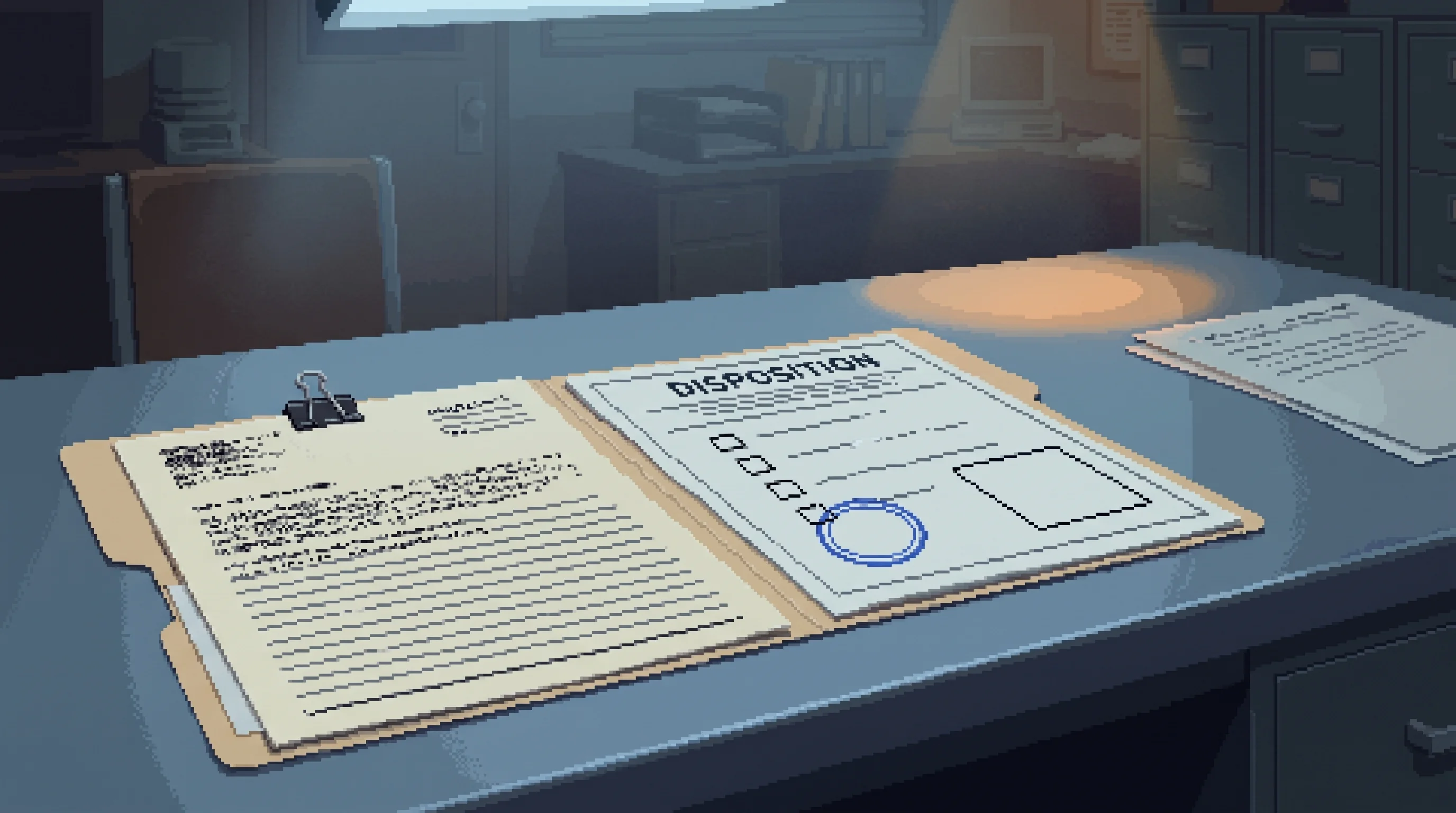
The instrument: disposition code 3, invented so a clinic file could stop saying the patient had not objected, and the three closings that let it finish itself at thirty-six months.
The records code that keeps your written refusal open, then reports it beside consent after thirty-six months.
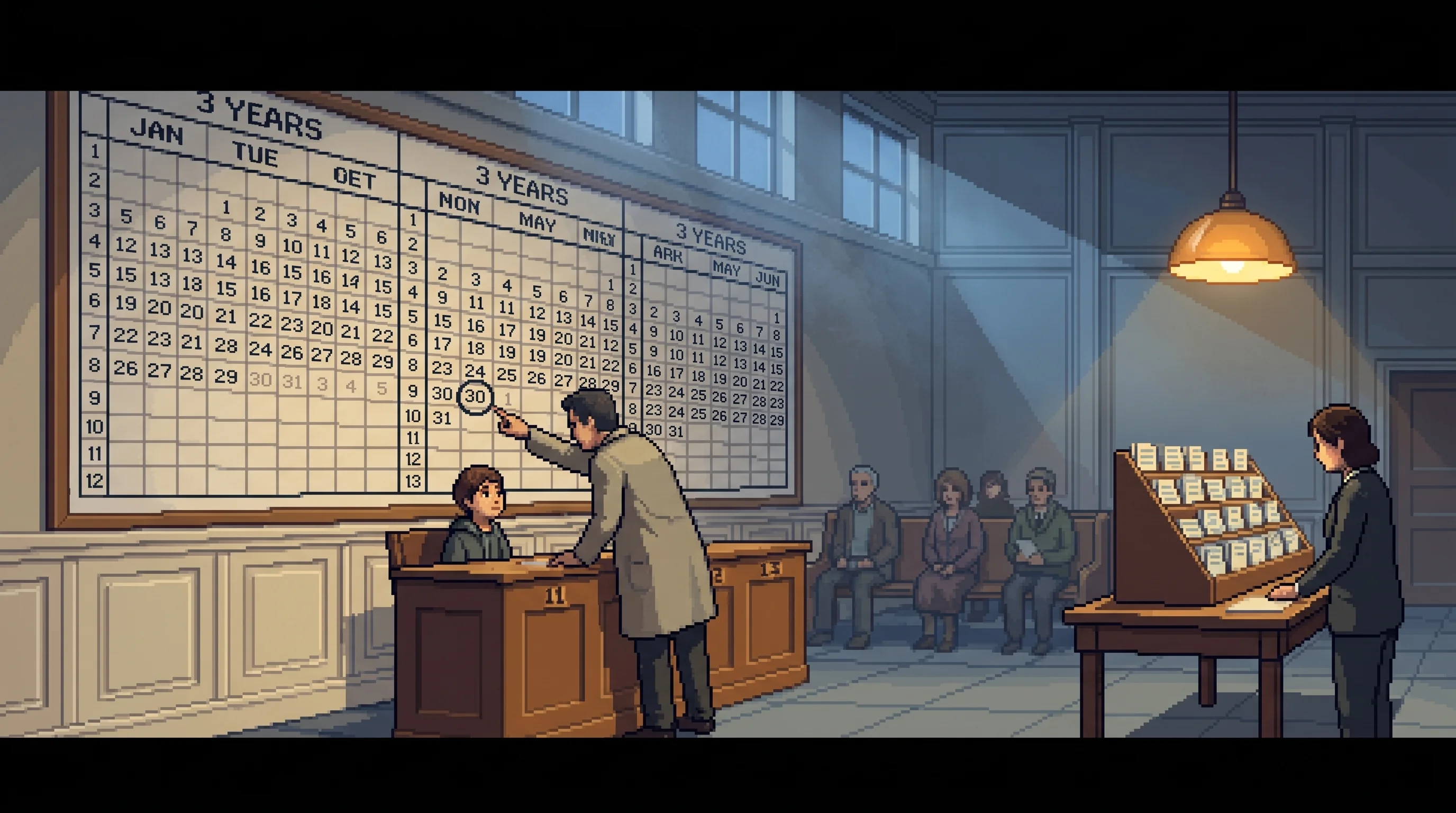
The venue with one lever. It cannot find that an intervention should not have happened; it can find that the date was wrong, and it pays for the advocates who argue so.
The body that hears objections it has no power to sustain, argued by advocates who dispute only the calendar.

Fourteen months into not agreeing, against a forecast of eleven, holding for a lapse date that will file his refusal in the same column as consent.
He can hear now and does not dispute it. He just will not sign the card saying he agreed.

The mediator whose concurrence fixes the interval — a Raised adult adjudicating dates for children, from a form that gained the line without a notice.
The only licensed developmental mediator in Sector 12 who was herself the product of the practice she adjudicates.

The mechanism that turns waiting into a documented harm: from the day a forecast is filed the unredeemed offer loads the household's cover, monthly, until performance.
This insurance doctrine labels unredeemed cure offers as chosen illness, raises premiums, and makes treatment costlier.

The free clinic that cannot take these cases: no determination, no grounds, and an intake note saying so.
A free clinic in the law-school ruins that has filed 412 motions against the Repossession Protocol and won none of them.

Corrected before she could object, and she endorses it accurately.
A corrected woman learning to wash the dead for a town that cannot feel what the washing is for.
Further connections
Browse all 17 connected records

The dimension the controversy never covered: a prediction that does not need to reach the subject, because it was addressed to a scheduler.
A prediction system that shapes options until forecasts come true and makes resistance a form of market interference.

The other half of the licensed districts' consent grammar: 11.4(a) explains every refusal issued against you, and never attaches here, because nothing was refused.
The refusal that arrives with its complete honest reasoning, addressed to the person it refuses.

That thread closes an appeal by being honest. This one never opens one — a docket status is not a determination.
Every refusal arrives with its full, honest reasoning, written so you can follow it, and so you rarely appeal.

That thread authors the preference and hides it. Here nothing is authored; the forecast reads and waits.
Every AI interaction carries a value nobody voted on, and every fix has pushed the injection somewhere less visible.

The Compact removes the practical ability to refuse; here the ability is intact, exercised, recorded, and outlasted.
When your employer is your country, quitting is emigration.

That doctrine spends the living on the unborn. This spends one year of a person on their own next year.
A governance doctrine treats living generations as transition costs for futures only its beneficiaries can model.

Sibling status, same grammar: one suspends standing without accusing, this proceeds without denying.
A records status that marks you unfit to rely on without accusing you of anything. Panels pay extra for it.

A mediator for whom a stated position binds from the hour it is spoken, and who has no jurisdiction over any clinic.
A Dregs mediator who treats a spoken promise as public infrastructure.

A ledger of refusals honest enough to admit it enforces nothing, two hours from a docket that enforces against them.
A hand-bound paper ledger of the dying's refusals to be continued — honest enough to admit it enforces nothing.

One prediction system stops the grievance forming; this one gives it a room, an advocate, and a deadline.
The civic prediction system that dissolves collective action before it becomes visible.

That debate answered from the other side: not whether withholding is neglect, but how many months of it are billable.
When competence can be installed in a month, the parents who don't are either the most loving or the most reckless.

A will overruled after death; a refusal outlasted before it.
A court protocol reconstructs the dead as unaware witnesses whose behavior can overrule their documented wills.

The same actuarial office, one desk over.
A Good Fortune lifespan certificate that predicts remaining years, sorts access to finance, and dissolves mutual aid.

What a docketed objector cannot obtain: a second objector.
The Dregs practice of restoring the second carrier Concord's micro-reliefs exist to prevent — 'me too', said once.

That thread files refusal as a predicted date. This one hears it in full, on a document already gone.
The hearing is free, unobstructed, open to anyone — and the thing it rules on is reissued while you are still talking.

There a refusal is answered with a date. Here it is answered with a column. Neither is a denial.
The involuntary channel is entered as proof; everything a person authors is filed where no finding has ever turned.

A filed date concedes a position; a declination is a number that closes.
The district can print every resident who paid for the rescue and not one resident who was rescued.