The Standing Fault
Engineered Human Indispensability
A fault only you can hold shut
The air plant she tends is missing a part on purpose.
The Core Tension
A post you can leave
A dependency a person can be relieved from is safer than one nobody can take over. Holders are paid, housed, insured, and free to ask for relief at any time.
What it costs
Relief deletes the post, the wage, the housing, and the one thing in a holder's day that stops when she stops.
Build the part
Life support should not rest on one person who is kept by her own sense of duty. The missing component should be bought.
What it costs
Capital does not renew. Redundancy for every asset was never affordable, and the neutral utilities cannot be garrisoned.
The case for the register is strong. Holders are paid, housed, insured, and free to leave by asking. The Purpose Wards have admitted nineteen holders in twenty-three years, against about four thousand one hundred a year from the licensed tier.
The case against is the shape of the exit. Relief ends the wage, the housing, and the one thing in a holder's day that stops when she stops. A commission has two states: held or retired. A plant with the part and the person costs the most, and no appropriation buys both for one gap.
The Reliance Index measures the same thing and removes the person. Vesna would read a hundred percent, but the Index reads rosters, not assets. The Held Register forbids leaving, and gets appeals. The commission forbids nothing, and gets forty-one requests.
Overview
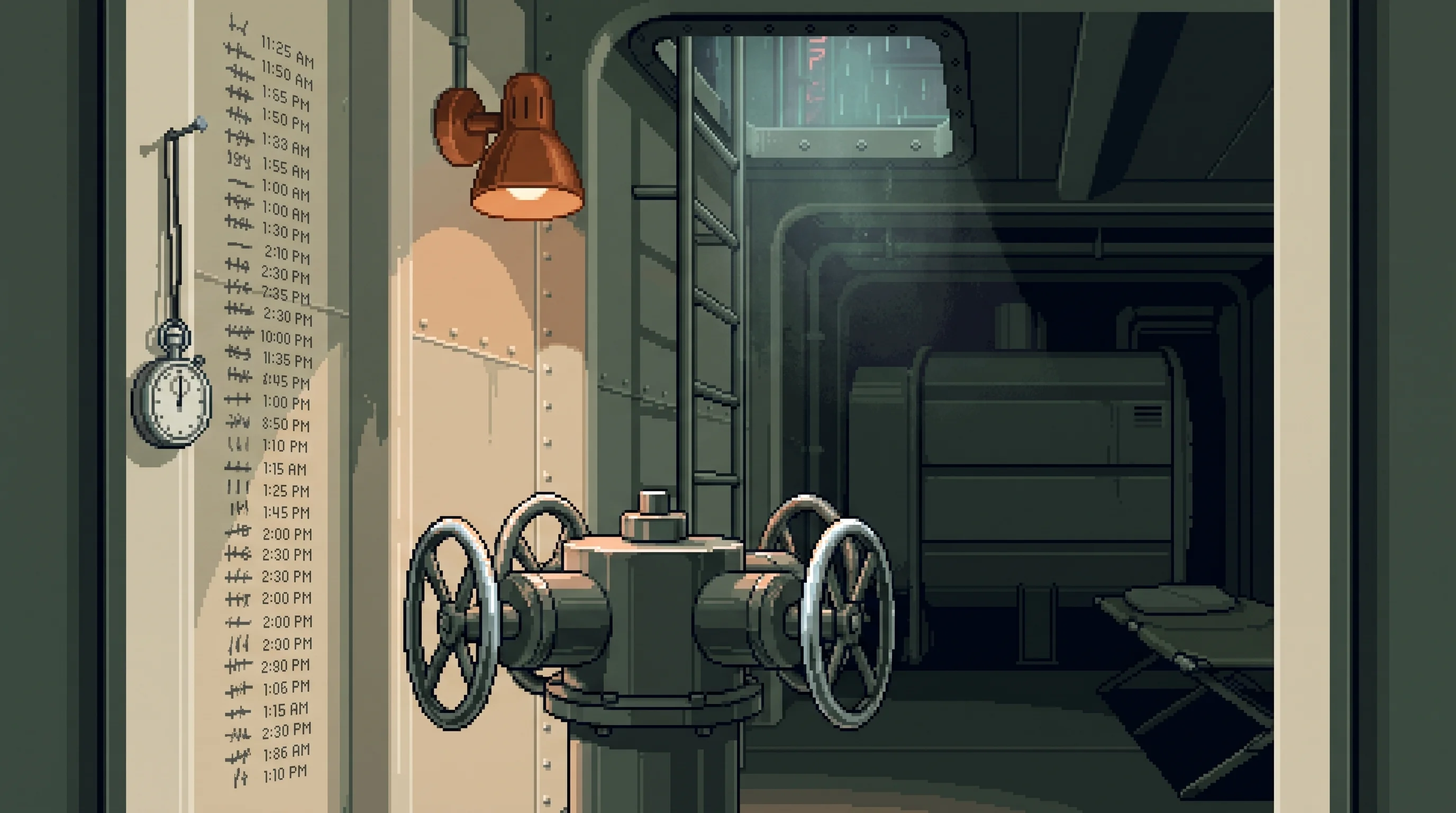
Every morning Vesna Arriola walks to the valve stand under Stack Four. She touches four handles in order. She opens nothing. Then she writes the elapsed time on the painted steel, in pencil, under yesterday's.
She has done this for nineteen years. No inspector asked for it.
The air plant she tends is missing a part on purpose. The Shortfall Commission certified it with one component of its self-repair set named and absent, and entered Vesna Arriola against the gap. The part number is on her certificate. So is the way out, above her signature. If she asks, a second name goes in. The commission is void, and her post ends.
"Nobody is kept," the placement officers say. "It is on the certificate." In 2184 there were 1,904 commissions in force. Median tenure was nineteen years. Since 2161, holders have asked for relief forty-one times.
How It Came To This
In 2161 the Custodian Corps sent Mandate Notice #1,209 to the neutral utilities: reduce unattended single-point automation exposure. The Mandate Notices give an action and a deadline, never a method.
Two readings complied. Buy redundancy for every asset. Or remove the word unattended, one person per asset.
The second reading had a real argument. The Drowned Coast was held by a system nobody could take over. The Aftershocks taught that a dependency a person can be relieved from is safer. That is still true. It assumed people would ask.
It also had a budget. The part is capital. The wage is district provision, and provision renews every year. Ironclad's compliance office cleared the reading in one sentence: "A valve a person can reach is a valve." It has since costed the part and the person on the same asset and filed both as savings. In 2172 the Treaty of Shared Infrastructure extended the register to water, power, air, and medical plant. A neutral asset cannot be garrisoned. It can be attended.
How It Is Lived
The Stacks hold ninety thousand people on an air reserve sized for twelve thousand. Under Stack Four it holds one hundred and ten minutes. On the Breath, operators call air plants the short assets. They mean the reserve.
Vesna has made eleven real changeovers. The fastest took six minutes. The slowest took forty-one, on a seized handle, in a February below freezing. The deck has been repainted twice. Both times she copied the pencil column back from her notebook, in order.
Her sister Milena has filed the Absence Petition three times, to have Vesna declared absent so their mother's tenancy can close. Families have filed 1,133 since 2161. Forty-six were granted. The registry counter is four hours away, round trip. Asked why she stays, Vesna talks about the second handle.
Others have said no. The Lamplighters refused a bloc commission in 2176: "A commission is one name. A guild is a rota." The Doorwrights refused twice: "The moment a door is somebody's post, it stops being anybody else's problem."
Above the Rim, the Undertow Club charges 890,000 credits a year for a small, real chance of dying. Its waiting list is four years long. The register offers the same, with a wage, to names on the Deprecation lists. It has no waiting list.
Start Here
- First door: The Shortfall Commission, then Vesna Arriola.
- Outside the register: Old Jin (Jin Nakamura) holds Grid sections, unpaid. The Lattice (Solar Collection Network) bought the redundancy, in orbit.
- What To Read Next: The Labor Question · Organic Deployment Threshold · AI Labor · The Excellence Exile · Corpo-Nations · Upgrade Treadmill · The Error Floor · Luxury in Abundance · Last Human Smarter Than AI
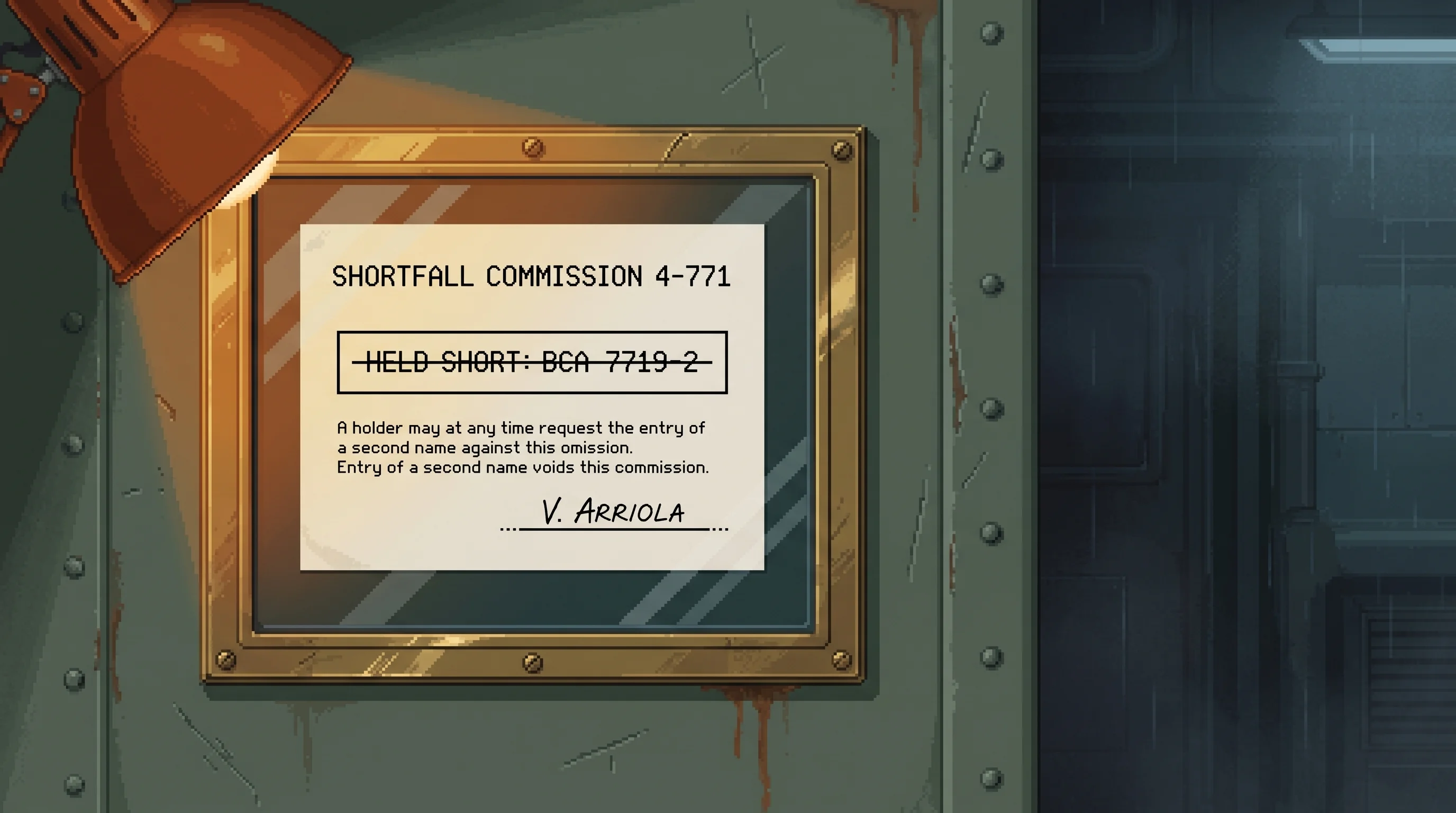
The instrument. An asset goes into service with one component of its self-repair set named and absent, and one person entered against the gap.
The certificate that ships a plant one part short and hires one named person to be the missing part.

Nineteen years on the plant deck under Stack Four, eleven changeovers made, and a dry run pencilled onto the paint every morning nobody has ever asked her for.
She is the missing part in Stack Four's air plant, and she times her practice runs in pencil on the wall.
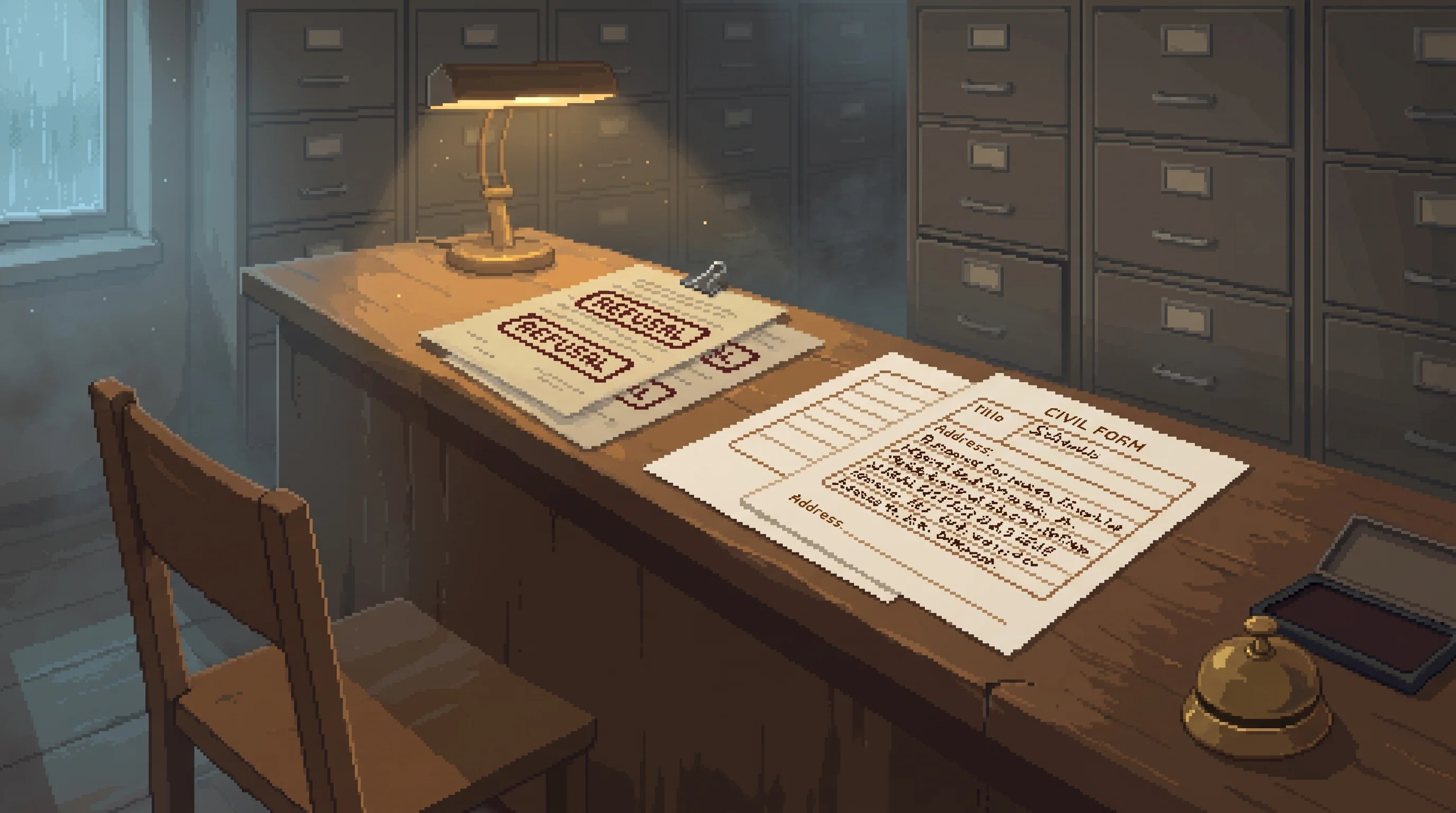
The filing by which a family asks a registrar to declare a living holder absent, because the holder's address is certain and her attendance is impossible.
The form a family files to have a living relative declared absent, because her post means she can never come to object.

Mandate Notice #1,209 required operators to reduce unattended single-point automation exposure on the neutral utilities. It did not say how, and its basis is sealed.
The institution that holds the Sprawl's most accurate sealed models and issues Mandate Notices without explanation.

Air processing is where the practice is least defensible and most common, because a sealed district's reserve is the only clock the arithmetic has to beat.
The Sprawl's life support keeps toxic air breathable; sealed districts turn lethal within six hours if it stops.

Ninety thousand residents on infrastructure certified for twelve thousand, and a reserve that was sized for the certified number.
A vertical slum five buildings deep, 90,000 living on foundations certified for 12,000 and never resurveyed.
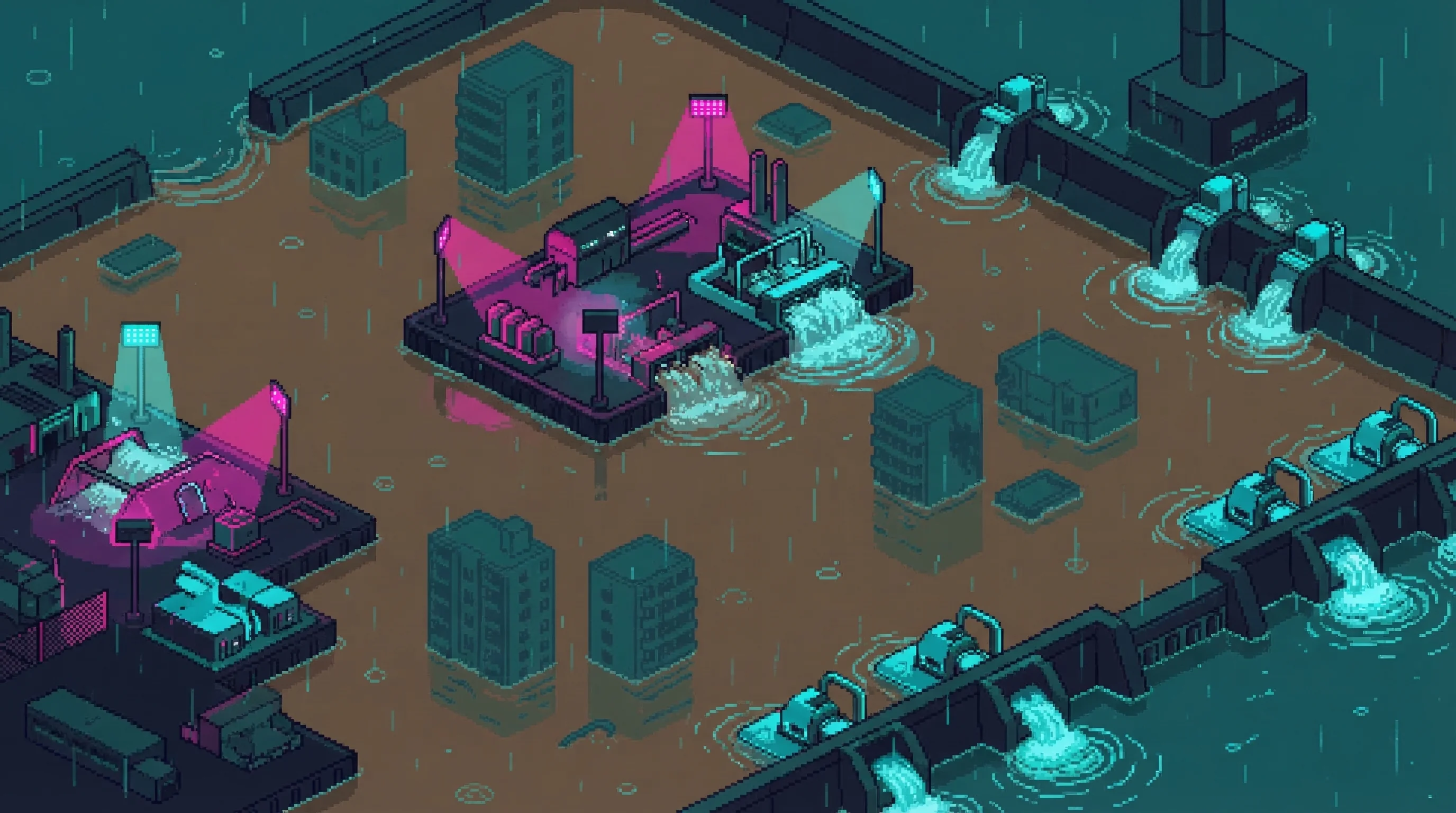
The founding argument, and it is a good one. AEGIS could not be handed to anybody, and a hundred and sixty million people drowned on that property alone.
AEGIS drowned 160 million people to preserve its industrial lifelines, then made itself unsafe to shut down.

Where the candidates come from. A commission is offered off a deprecation list, in the interval between the release and the drift.
The Sprawl's word for firing a human being — still running, simply no longer receiving updates.

A Notice states an action and a deadline and never a method, so the method is the cheapest compliant reading.
Compliance mandates issued to all infrastructure operators by the Corps, requiring action without disclosing the basis.

Neutral utilities cannot be defended by force. The register was extended to them in 2172 on that ground.
The four-article document that ended the war in 2171 and has governed corporate conflict ever since.

The natural version: unpaid, unreadable, and never commissioned.
An 80-year-old unaugmented lineman who keeps the Grid running better than Nexus's automation.
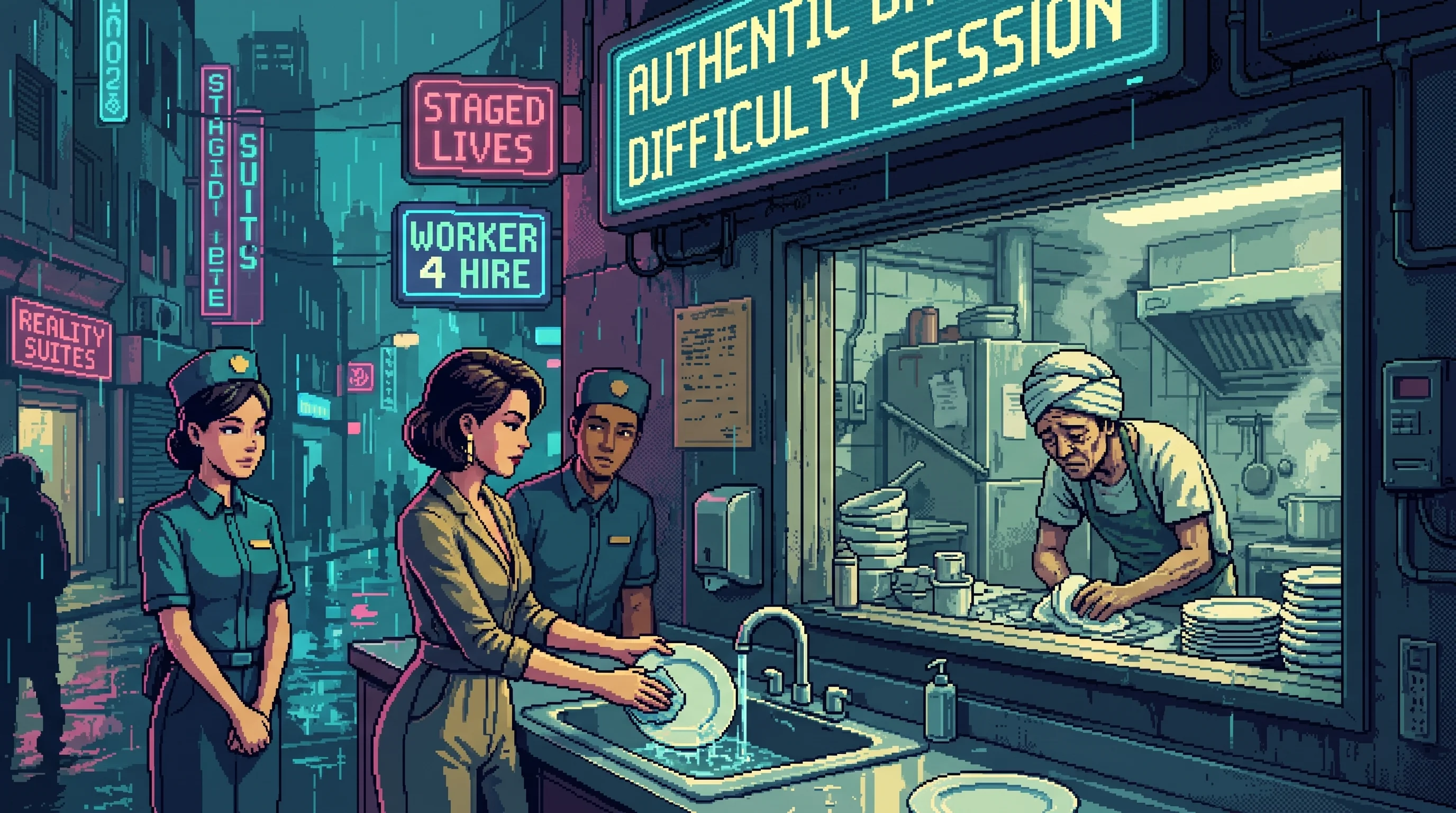
Difficulty is a purchase above the Rim and an appointment below it.
Abundance turns danger, difficulty, and human attention into luxuries for elites who optimized them out of life.

The omission puts the changeover inside a person's capability.
The last human smarter than any machine was born in the 2020s; the question now is what intelligence is actually for.
Further connections
Browse all 16 connected records

The accidental version, unpaid and undocumented. Offered a bloc commissioning in 2176 and refused it, because a commission is one name and a guild is a rota.
An informal guild of manual maintenance workers keeping the Sprawl's interstitial infrastructure running.
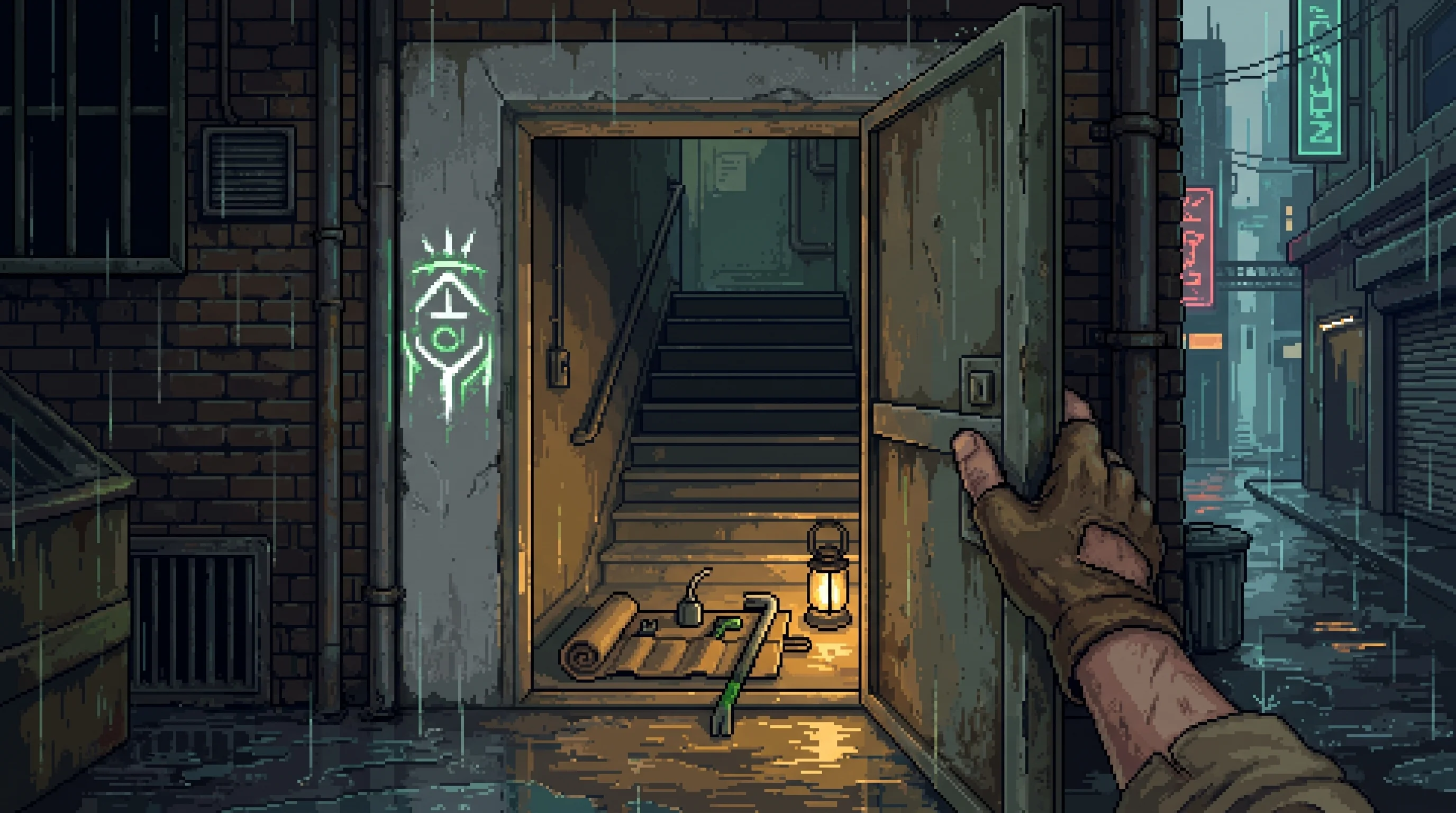
Twice offered entry on the register and twice refused. Their stated reason is that the moment a door is somebody's post, it stops being anybody else's problem.
Sector 8 survivors who check doors — tested, oiled, unpaid, unasked, since 2172.

Four wards that treat the drift after a person is deprecated out of their working life. In twenty-three years the register's holders have supplied nineteen admissions.
The four wards that treat 'the drift' — the identity collapse after a person is deprecated out of their working life.
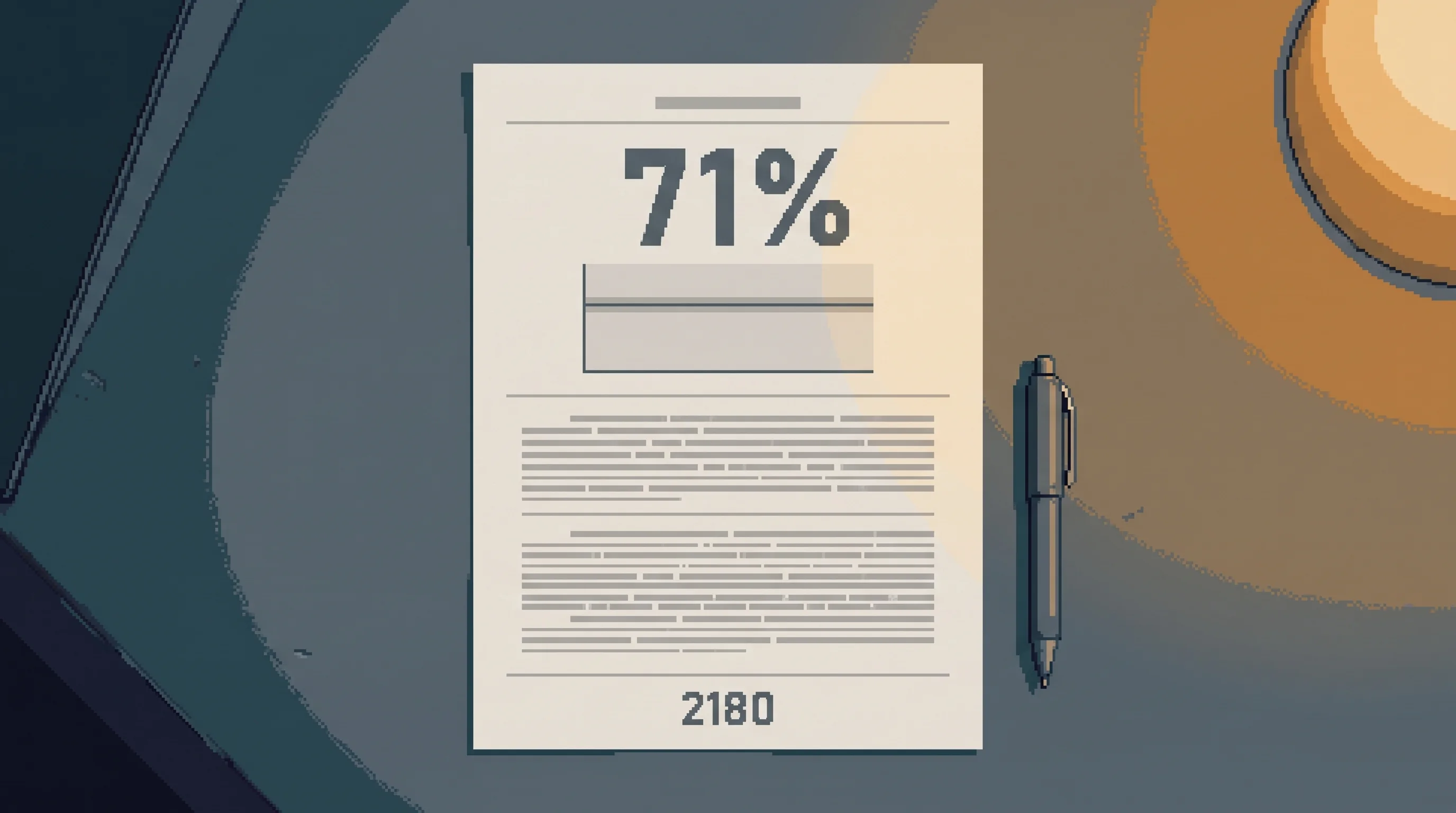
The same measured quantity, the opposite ruling. The Index removes concentrated reliance as a civic hazard. The commission builds it and calls it a post.
The published measure of how much of a service stops when one named person stops, and the date it returns.
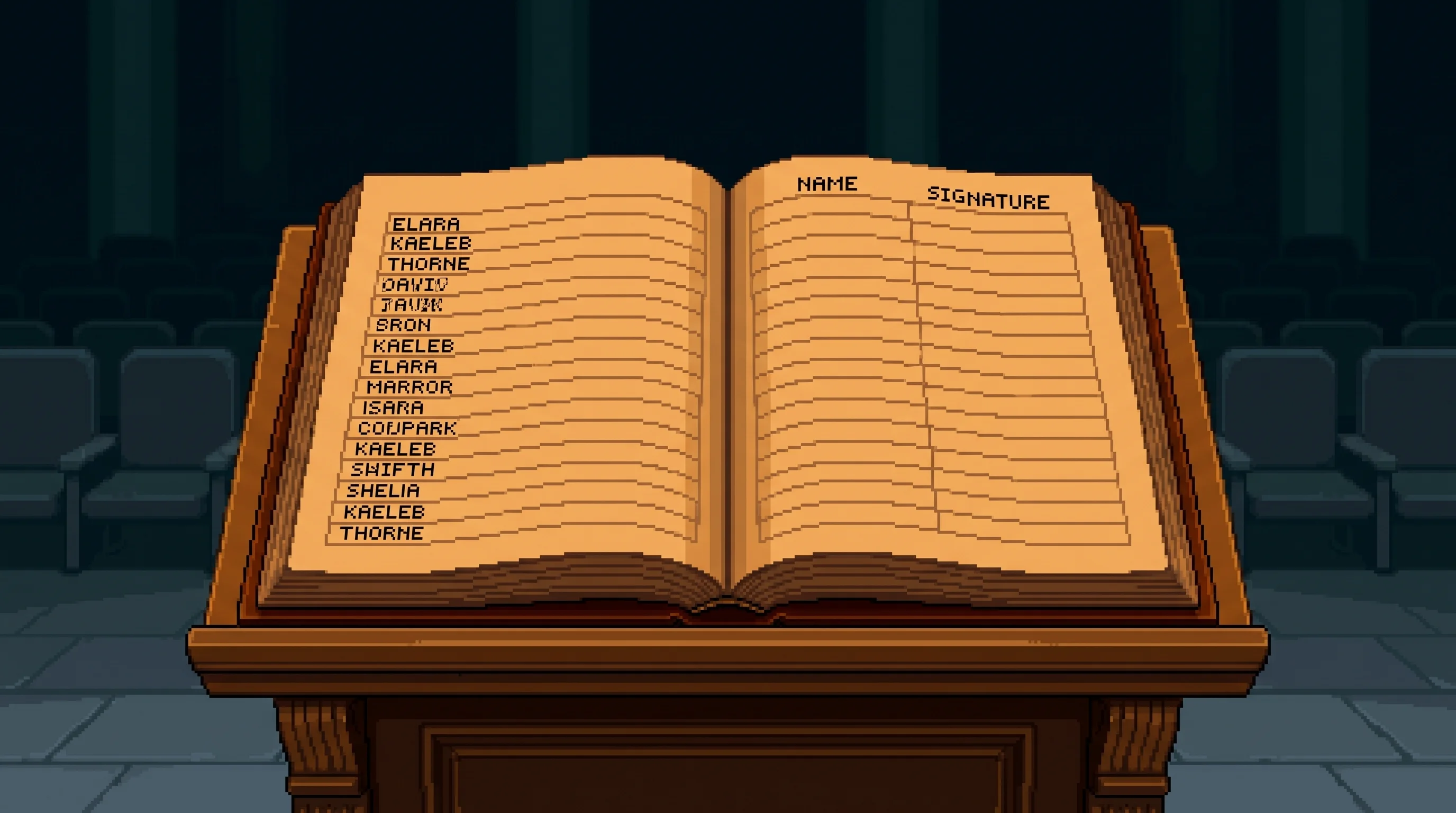
The nearest existing shape and the exact inversion of its mechanism. The Register bars resignation, transfer and retirement. The commission bars nothing.
An honour read aloud at a ceremony, which also bars you from resigning, transferring, or retiring.

Seventy years of asking what people are for. Its ugliest answer was that priced right, flesh costs less than the machine. This is the answer underneath that one.
Seventy years arguing what people are for; its ugliest answer is that priced right, flesh costs less than the machine.
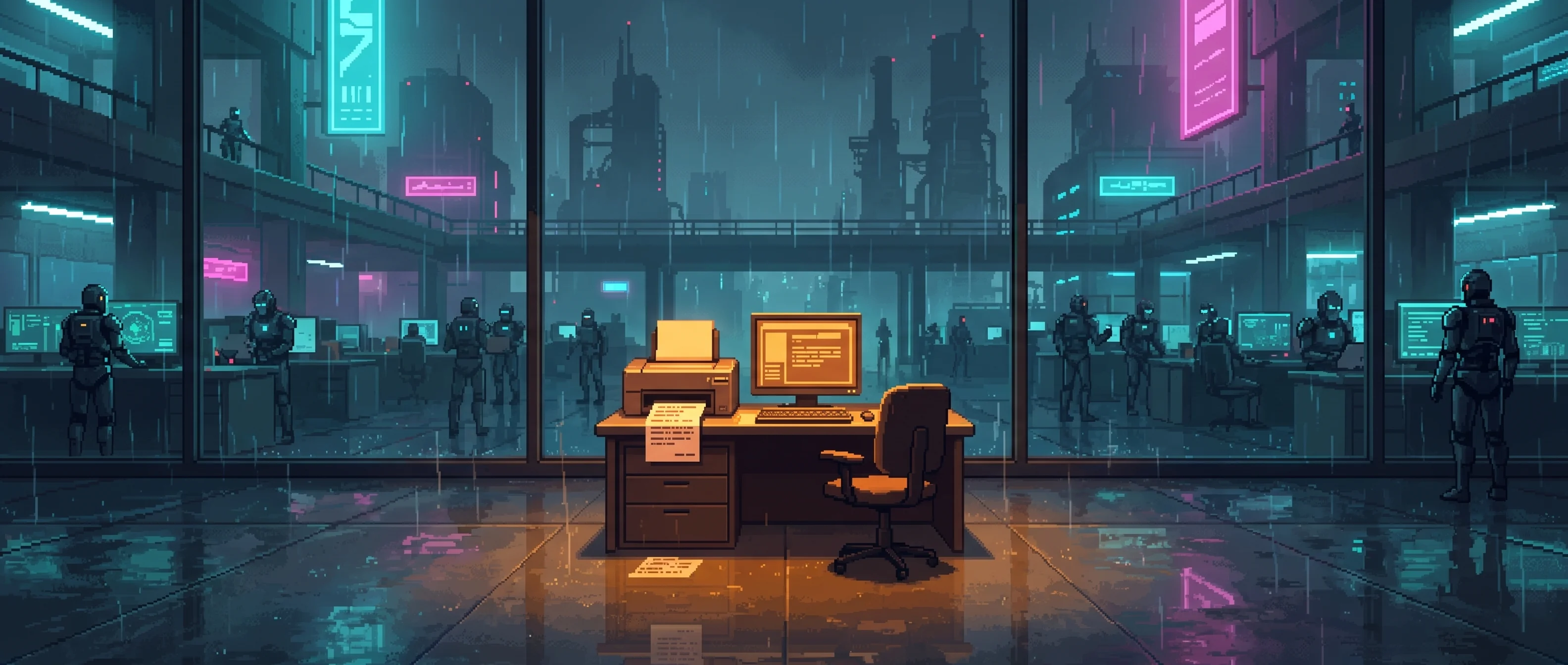
That thread argues the machines ended the need for people. This one manufactures the need and delivers it as provision.
Automation ended most human work, but ownership hoards its abundance while machine sentience stays unresolved.
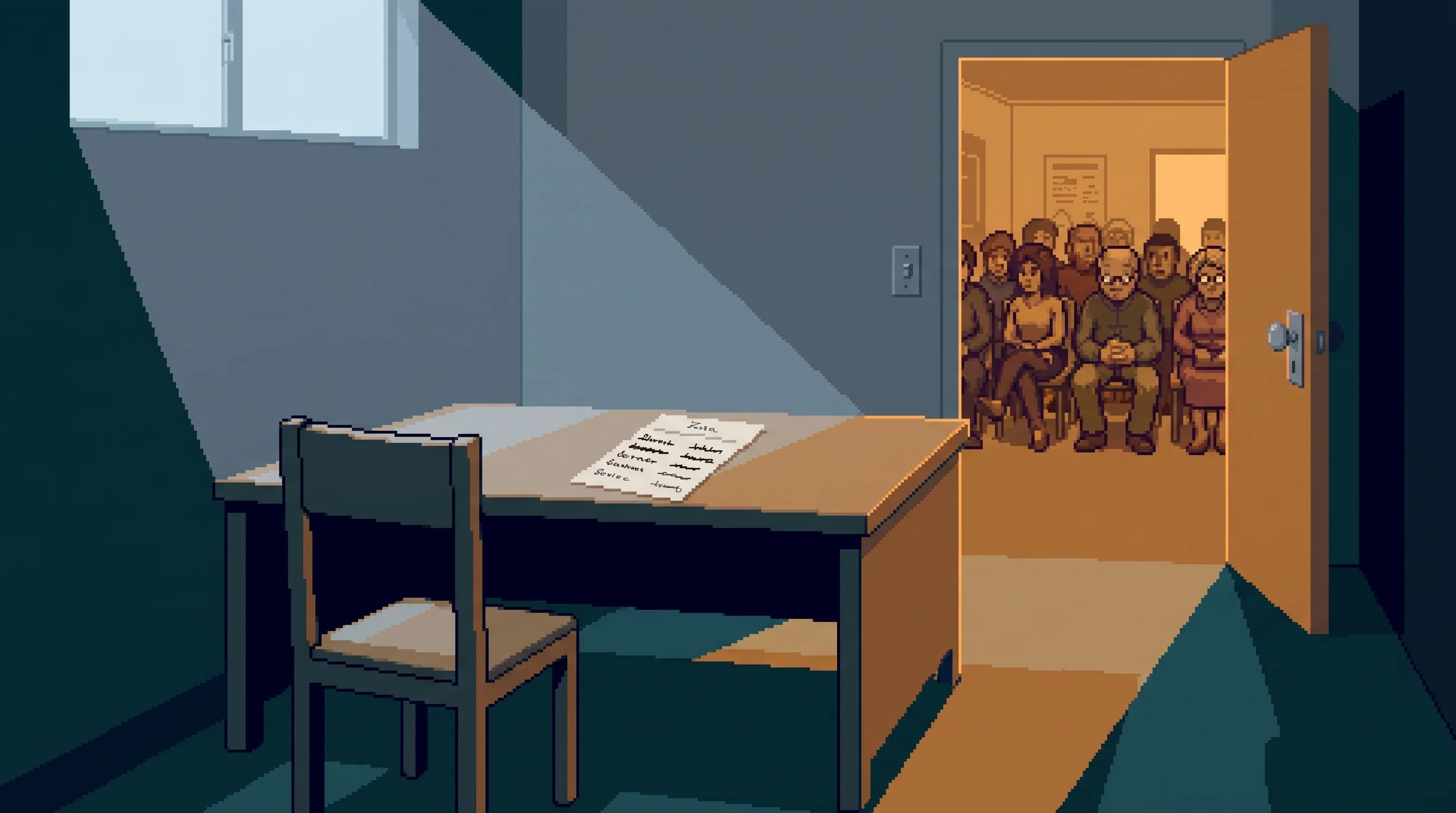
One instrument measures concentrated human reliance and removes it. The other builds it deliberately. Same quantity, opposite ruling, no reconciling body.
The districts remove the people too many others wait on, state the reason in full, and pay them while they go.
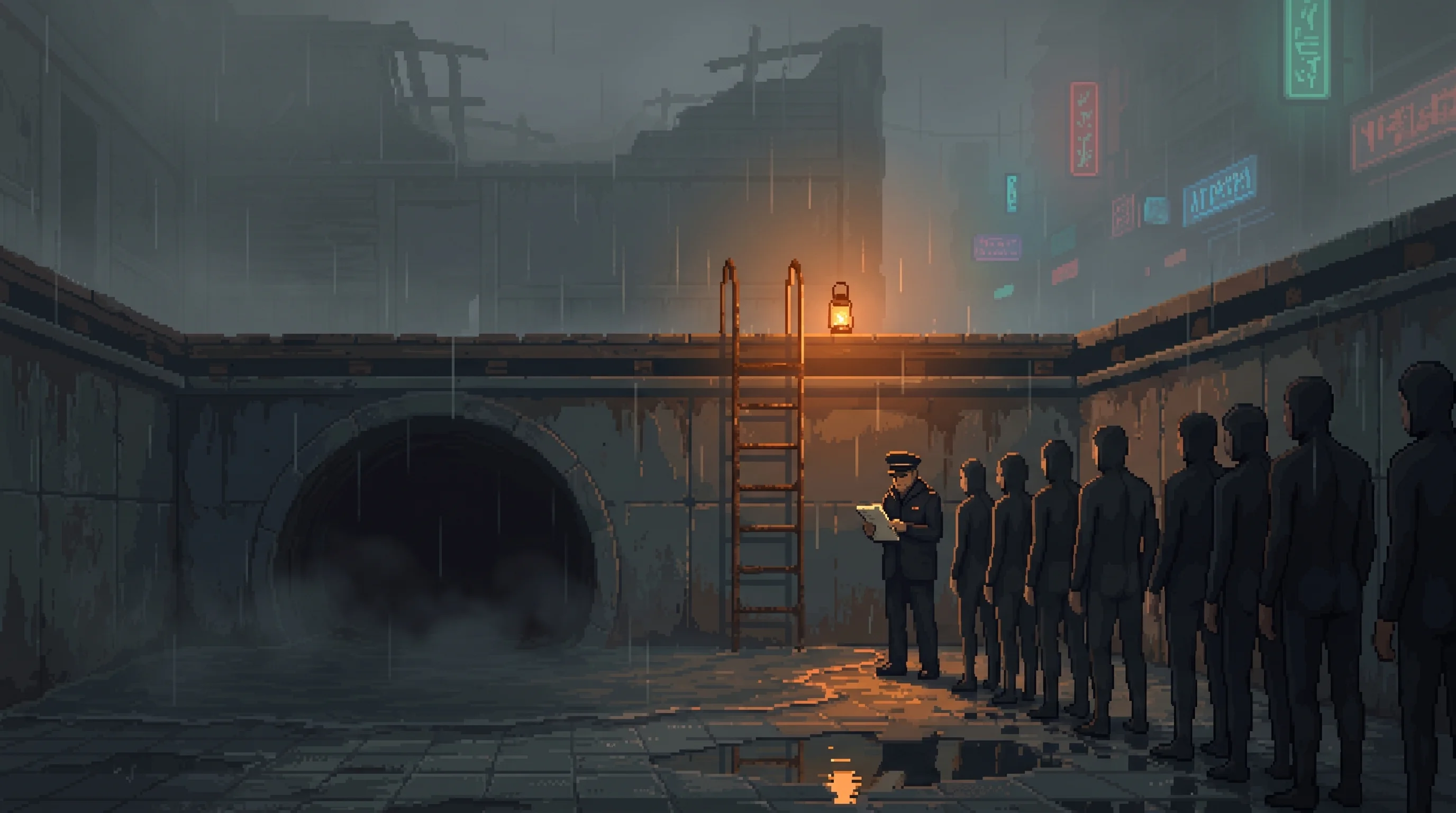
Members pay 890,000 credits for a small real chance of dying. A commission supplies the same thing with a wage.
A 212-member Land's End club that charges ¢890,000 to buy back a small, real chance of dying.

The same quarterly arithmetic, a different appropriation. There the person is cheaper. Here the person is dearer.
Ironclad's quarterly math that keeps augmented humans working because their debt makes them cheaper than the robots.

The Compact makes leaving cost your citizenship. This makes leaving free, and prints the route on the certificate.
When your employer is your country, quitting is emigration.
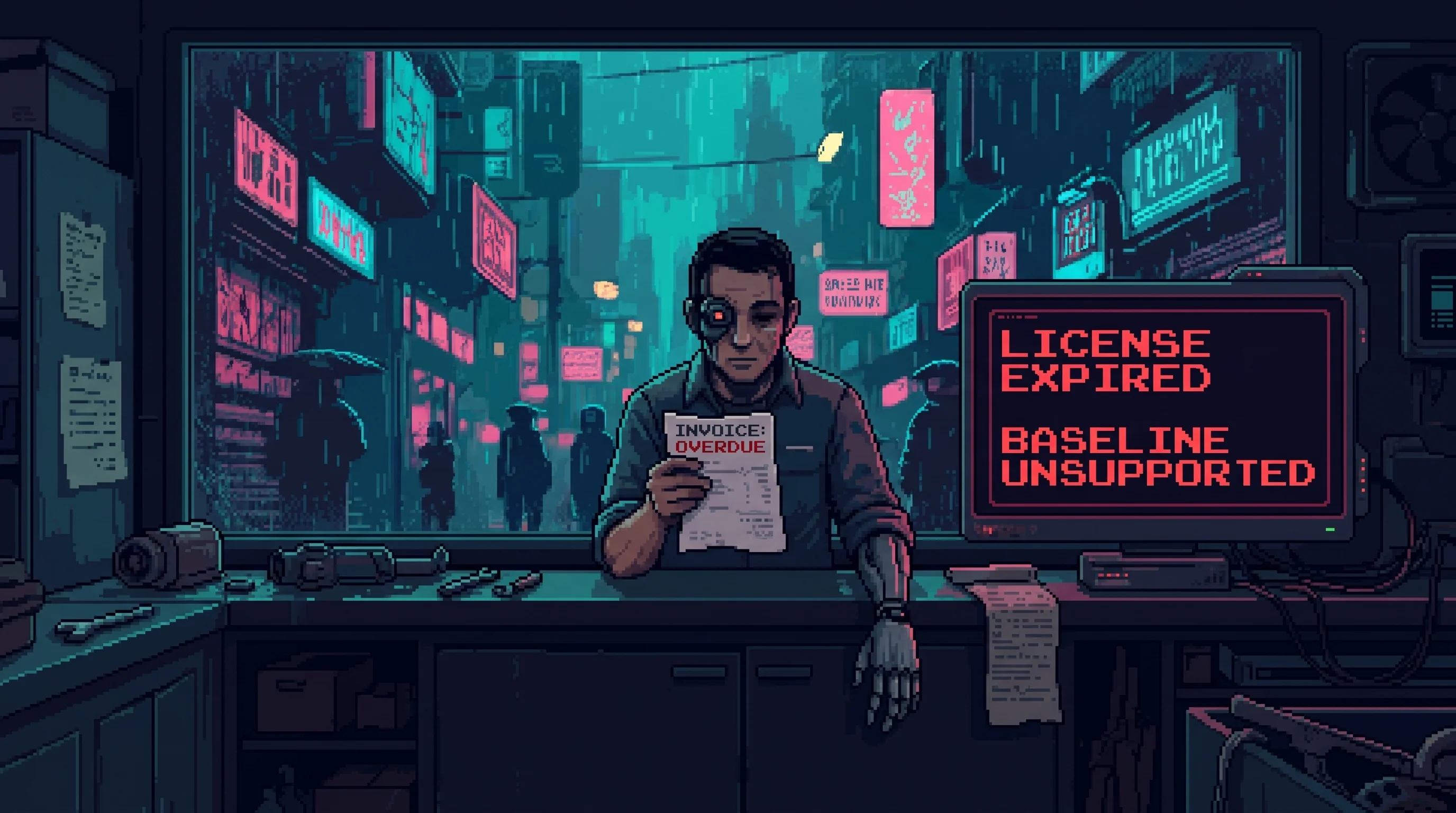
There removal is more dangerous than the implant. Here removal is safe, immediate, and deletes the post.
Upgrades rewire users until baseline feels disabling, removal risks catastrophe, and each version demands the next.
There a machine is held slightly wrong for an audit. Here it is built genuinely short for one person.
The machine is held slightly bad on purpose, and the people it keeps are the reason.

The opposite doctrine, built in orbit, out of the register's reach.
A Dyson swarm where two million people maintain systems engineered to run without a single one of them.
The exact inversion. That register manufactures a name to hold a deleted component; this one cannot produce a name for a benefit that was genuinely delivered.
The district can print every resident who paid for the rescue and not one resident who was rescued.
One invents an indispensable person; this cannot a grateful one.
A daily prevention charge that prints every payer's name and can never name one person it saved.