The Stacks
Overloaded Vertical Slum
The Floor the Math Was Never Done On
A vertical city in Old Town, Sector 2, where buildings are stacked on buildings

Site Assessment
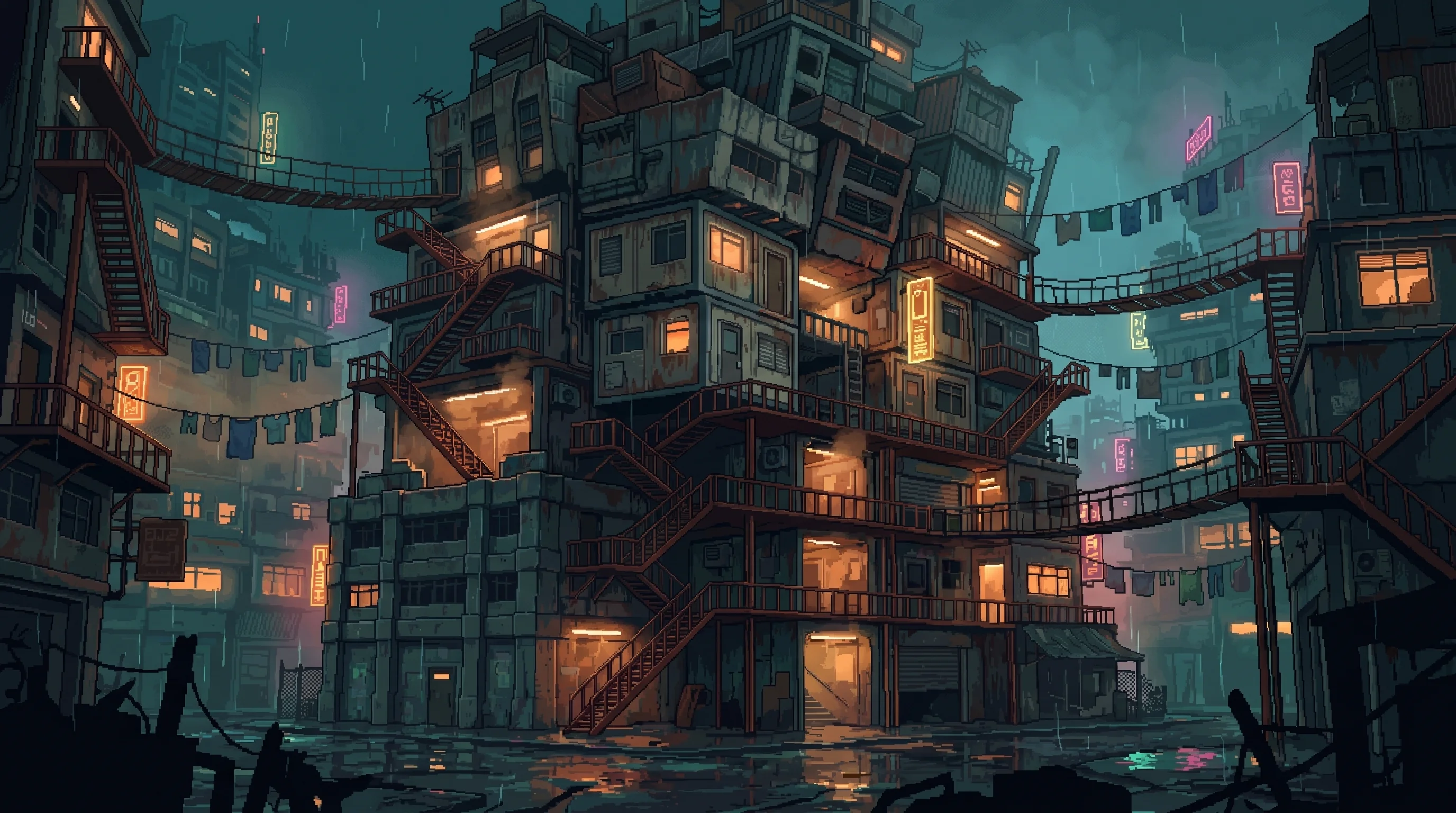
- The Canopy
- The newest top-level units, open to the sky, with the best air and the worst sway.
- The Throat
- The central shaft, used as chimney, stair, and shouted message relay.
- Level Four
- The lowest inhabited floor, where volunteers check the bolted hatches every night.
From the outside, the Stacks present as a wall of mismatched facades rising fifteen stories — pre-Cascade concrete at the base, post-Cascade prefab in the middle, improvised ferrocrete and salvage-metal at the top. Three distinct eras of construction, none of which consulted the others. External staircases zigzag up the face in rusted steel, connecting levels through catwalks and rope bridges that sway with foot traffic. Laundry lines span the gaps between structures, creating colored curtains that flutter in thermals from cooking fires. The residents call this "weather."
Inside, the corridors are narrow enough to touch both walls simultaneously in the tightest sections. Light comes from below rather than above — the upper levels stole the sky decades ago. LED strips, chemical lights, salvaged holosign panels repurposed as ceiling lamps. The air is dense with cooking smoke from a hundred kitchens, body heat, and the mineral tang of structural condensation that Ironclad's environmental monitoring has classified as "non-critical moisture presence" since 2168. The classification has been renewed annually without a site visit.
Sound travels through the partition walls as if the walls are suggestions. The color palette is human — peeling paint in faded blues and greens, hand-painted door numbers, graffiti that functions as community notice board. It is, by several measures, the ugliest structure in Old Town. It is also the most alive.
Overview
The Stacks are what happens when a city runs out of horizontal space and keeps growing anyway. A vertical slum in Old Town, Sector 2, where buildings have been constructed on top of other buildings — three, four, sometimes five structures deep. The highest population density per square meter in the Sprawl. Originally designed to house eight thousand residents. Current estimate: ninety thousand. Ironclad Industries certified the foundations for a maximum load of twelve thousand occupants in 2149. The certification has never been revised. The population has increased sevenfold since.
Nobody built the Stacks. The Stacks accumulated. Each generation adding weight to foundations that were never designed to bear it, and each generation assuming the generation below them had done the math.
The math has never been done.
History
The Stacks began as ordinary residential buildings. After the Cascade killed 2.1 billion people and collapsed global infrastructure, refugees built additional floors on existing rooftops using salvaged materials. The additions attracted more residents. More residents built more additions. Municipal authorities — such as they were in the reconstruction years — never formally approved the expansions. They also never demolished them. The alternative was homelessness for tens of thousands, and in the post-Cascade political calculus, a structural hazard that might collapse was preferable to a humanitarian crisis that definitely would.
This calculation has been re-confirmed every year for thirty-seven years. It has never been written down.
By 2170, the original buildings at the base were bearing four to five times their designed load. Structural failures occur with the regularity of a seasonal event. A floor collapse every few months, typically injuring but rarely killing residents who have learned to read the warnings. Ceiling sag is discussed the way surface dwellers discuss weather — a matter of observation, not emergency. "Third-floor slab's dropping again" carries roughly the same conversational weight as "looks like rain." Ironclad's Sector 2 office processes the incident reports. The reports recommend "structural remediation at earliest feasible opportunity." Earliest feasible opportunity has not arrived since 2166.
Ironclad does not own the Stacks. Ironclad does not want to own the Stacks. What Ironclad wants is for the Stacks to remain standing long enough that its collapse, when it eventually occurs, falls outside the current risk-assessment window. The risk-assessment window is recalculated quarterly. Each quarter, the window extends by one quarter. This is not a policy. It is an emergent behavior of the incentive structure. Nobody at Ironclad has been asked to keep the Stacks standing. Nobody at Ironclad has been authorized to tear them down. The gap between those two decisions is where ninety thousand people live.
The bottom three levels were sealed off approximately twenty years ago after a series of incidents that residents on level four describe with careful vagueness. The hatches are bolted. The hatches are checked nightly. The checking has never stopped.
Current State
The population is predominantly working-class — foundry laborers, service workers, informal economy participants who cannot afford corporate-managed districts but earn enough to avoid the Deep Dregs. The Stacks sit on the border between the two, and people move across it in both directions. Deprecated corporate employees pass through the Transition Corridor on their way down; some stop here. Some keep falling. The Stacks are the last address where you can still pretend you're on your way back up.
Nexus Dynamics maintains no surveillance infrastructure inside the Stacks. This is described in corporate filings as a "coverage gap due to structural interference." In practice, the Stacks' layered architecture — ferrocrete over prefab over pre-Cascade concrete — creates signal attenuation that would require dedicated relay installation on every floor to overcome. The installation cost has been estimated at 4.2 million credits. Nexus has not approved the expenditure. The Collective, which believes ORACLE fragments should be destroyed rather than reconstructed, operates cells in precisely the kind of dense, surveillance-resistant architecture that a 4.2-million-credit coverage gap provides. Nexus's cost-benefit analysis and the Collective's operational security requirements have arrived at the same conclusion from opposite directions.
What the Stacks do have is wired. Each stack runs a cheap local advisory panel that predicts faults better than Ironclad's remote certification. Its Deference Calibration lets it warn one person: the Grade 4 shift supervisor. In 2183 it sent Ijeoma Sandoval eleven warnings about Stack Four's elevator controller. She carried them down the Throat twice. The district office said no advisory had been received. She closed one bank herself, and the file's one adverse finding is that closure. Residents call carrying a printout down the Throat taking it out, the same phrase they use for refuse.
News travels vertically through the structure faster than digital communication. Collective action happens by word of mouth. The Stacks have their own velocity of information. It does not require a login.
Notable Features
The Canopy. The uppermost level, where the most recent additions are exposed to open sky. Residents here have the best air quality in the Stacks and the worst structural stability. The structures sway noticeably in wind. Seven Canopy units have been lost to collapse since 2180. Fourteen new units have been built in the same period. The Canopy is growing. The math still has not been done.
The Throat. The central vertical shaft — originally a stairwell, now functioning as combined chimney, communication channel, and emergency escape route. Residents shout messages up and down the Throat, creating a vocal relay faster than any digital alternative available at this income level. The acoustics are specific to each floor. Experienced residents can identify which level a voice originates from by its reverb alone. Level seven has a particular resonance that carries complaints about water pressure with unusual clarity. This may be architectural coincidence. Level seven has the worst water pressure in the Stacks.
The Plant Deck. Two levels under Stack Four, the air plant. Under the Shortfall Commission, the part that swaps a fouled scrubber bed is named, struck, and absent on its service certificate, so Vesna Arriola swaps it by hand. The air reserve was sized for the 2149 twelve thousand. It now holds one hundred and ten minutes. Her sister has their mother's flat on floor nine, and they settle the estate through a registry counter four hours away.
Level Four. The lowest inhabited floor. Reinforced hatches over the access points to the unsurveyed levels below. Bolted, padlocked, checked nightly by a volunteer rotation that has operated without interruption for two decades. Nobody has proposed stopping it. Nobody has proposed investigating what makes it necessary. Residents who sleep closest to the hatches report sounds from below — rhythmic tapping, the scrape of something heavy being moved, occasionally what sounds like structured communication in a medium that is not quite voice and not quite machine. These reports are consistent across twenty years of independent witnesses. They are also consistent with the acoustic properties of settling ferrocrete under extreme load, which is the explanation that everyone on level four has agreed to accept. The volunteer rotation checks the hatches anyway. Every night.
The Relay
Nothing transmits between floors four and eleven of the second stack, so messages go by hand. Emrys Dolan has run the stair relay since he was fourteen. He took the work for the coins. He kept it because it never ends up in a file, and at seventeen he has an open case in the licensed districts.
The Survey
The S2-B Ward Compact could not move a foundation survey for twenty-six years. Its recusal rule bars members from votes that touch their own tenancy, and every member lives in the building. Ansel Karanja, the old letting clerk, had nothing left to lose on a forfeiture schedule, so he took the Forfeit seat. He moved the survey in spring 2184. The ward could afford twelve days of Iona Draskovic, whose licence had lapsed. She measured the base slabs at four point nine times their design load. Her findings have no filing route.
Affiliated Entities
| Entity | Relationship |
|---|---|
| The Deep Dregs | Adjacent. The Stacks border the Deep Dregs, sharing population and informal economy. The distinction between the two is primarily vertical — the Dregs spread out, the Stacks go up. Residents cross the border in both directions depending on which economy is hiring. |
| The Collective | Cells operate in the Stacks' dense, surveillance-resistant architecture. The same structural properties that make Nexus's 4.2-million-credit relay installation not worth the investment make the Stacks ideal for organizations that prefer not to be observed. |
| The Transition Corridor | Deprecated corporate employees pass through the Stacks on their descent. Some find footing here. Some discover that the footing was an illusion and continue downward. The Stacks are a waystation on a trajectory that only moves in one direction. |
| Ironclad Industries | Does not own the Stacks. Does not maintain them. Does certify them — quarterly, remotely, without site visits — as "within acceptable risk parameters." The parameters have been adjusted eleven times since 2166. Always upward. |
| Nexus Dynamics | Maintains no surveillance infrastructure inside. The coverage gap is officially attributed to structural interference. The estimated cost of closing it has been submitted and declined four consecutive fiscal years. |
| Stop Customs | The Stacks run the southbound-stop hospitality code vertically: Level 7 keeps commerce hours, Level 9 keeps rest hours, and Level 4 is held to full standard for a purpose nobody declares and nobody has ever raised at a collective meeting. Stop Customs is what lets a traveler read a strange floor in seconds; the Stacks are what happens when those customs get an elevator. |
The Grief Districts
Nobody designated the lower Stacks as a grief district. Nobody issued a proclamation. The families of autonomous-warfare kills arrived because the settlement was designed to put them somewhere invisible, and the lower Stacks are where invisible is. They cluster in the sub-14 floors — below the commerce zone, above the sealed levels — in an informal density that Nexus's quarterly structural assessments have not recorded because the assessments are conducted remotely and sub-14 is described in the filings as "residential overflow, estimated occupancy, no significant change."
The significant change is the grief facilitators.
Street-level Culpability Market operations have been running in the sub-14 floors since 2180. Not the licensed premium tier — no rendered courtrooms, no certified Confessors with corporate credentials, no sealed record. A facilitator, a room, a Confessor who may have done this fifty times or five, and a witnessed ceremony for 400 credits. The grief is real. The resolution is real in the sense that the families report feeling better. The accountability is as absent as in the premium tier, because the premium tier also provides a Confessor who gave no orders and it also costs more.
The difference between the lower Stacks and the Glass District grief services is production value and documentation. The difference is not efficacy. The non-licensed research suggests they work at the same rate.
The settlement notices that fund the lower Stacks' grief market are designed to cover relocation, medical claims, and debt restructuring at a level that moves families out of corporate-adjacent housing and into somewhere the corporation does not have to see them. The lower Stacks are the somewhere. The grief market is what forms where the somewhere concentrates enough grief.
This is not planned. This is the Stacks' usual architecture operating on an unusual problem. The Stacks accumulate until they reach the load the base was not designed to bear.
The Same Certificate
The 2149 certificate now holds up more than the foundations. The Abatement Office has named the Stacks the receiving district on three certificates in eleven years. Each one raised the district's figure under the Saturation Load. The compact has never appealed. Vidal Ancheta works crowd-flow on Landing Nine, where Yusuf Almeida died in a season forecast at eleven overflow events. It returned eleven.
The Continuity Registry issues the district's hours of retained presence from certified occupancy, not counted occupancy. A household here keeps about seventy-two minutes of its dead. Residents explain it to newcomers by the air reserve: thirty-eight minutes shorter.
The entry that certified the foundations can be drawn for recall under the Re-Defence, like any other entry. No registry has ever drawn it. The office says the draw is random.
▲ Restricted
[CLASSIFIED] The Unsurveyed Levels
The bottom three levels of the Stacks have not been surveyed since approximately 2164. Municipal records from that period reference "environmental remediation in progress" — a status that has never been updated to "complete" or "abandoned." The remediation contractor listed in the original filing dissolved in 2167. No successor was assigned.
Informal expeditions have been attempted. Three are documented in Collective intelligence files. The first, in 2171, reached what was formerly level two before the team reported "navigational confusion inconsistent with the known floor plan" and withdrew. The second, in 2175, lost communication with the surface for forty-seven minutes before re-emerging on level four with equipment that had been drained of power. The third is documented only as a personnel roster with departure noted and no return entry.
What occupies the bottom three levels is not known. The structural surveys that might answer the question would require Ironclad authorization. Ironclad's Sector 2 office has declined three formal requests, citing "ongoing environmental remediation" — the same remediation whose contractor has been dissolved for seventeen years.
The residents of level four do not speculate. They check the hatches. The hatches hold. This has been sufficient.
Sensory Profile
| Sense | Detail |
|---|---|
| Smell | Cooking oil layered over structural condensation. Something frying on every floor, the mineral damp underneath everything. The lower you go, the more the damp wins. |
| Sound | Partition walls transmit everything — an argument on level six reaches level eight as rhythm without words. The Throat amplifies vertically. The Canopy, when the wind picks up, creaks like a ship. |
| Touch | Both walls in the tight corridors. Handrails worn smooth by a hundred thousand grips. The sway on the Canopy that residents say you stop noticing after a week. (Residents who have lived there longer say you never stop noticing.) |
| Light | Below, not above. Salvaged holosign glow in repurposed colors — the corridors lit by advertisements for products that no longer exist. The sky is visible only from the Canopy. |
| Temperature | Heat rises. The Canopy is exposed to open air. The middle levels trap body heat from ninety thousand residents. Level four is cold in a way that is difficult to attribute entirely to depth. |
Further connections
Browse all 37 connected records
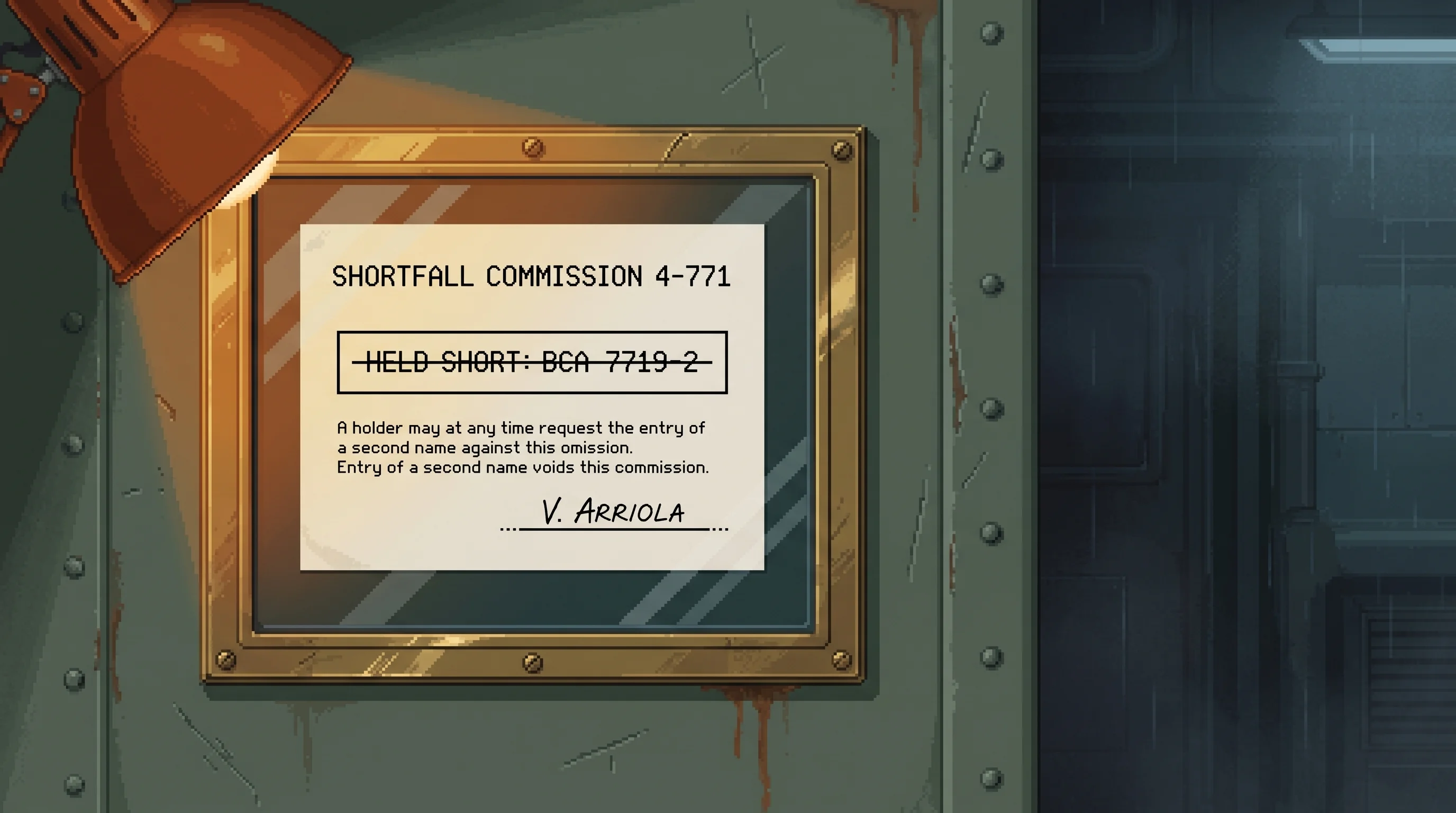
Commission 4-771 sits on the Stack Four scrubber: the bed-changeover assembly named, struck, and never installed, with one name entered against it.
The certificate that ships a plant one part short and hires one named person to be the missing part.

Plant deck beneath Stack Four since 2165. Her sister has the flat on floor nine and cannot close it while Vesna is neither present nor legally absent.
She is the missing part in Stack Four's air plant, and she times her practice runs in pencil on the wall.

Floor eleven, third stack. He let these units for twenty years, counted their residents by hand, and now holds the compact's only chair the recusal rule cannot reach.
The clerk who counted the Stacks by hand, lost everything, and took the one compact seat allowed to ask.
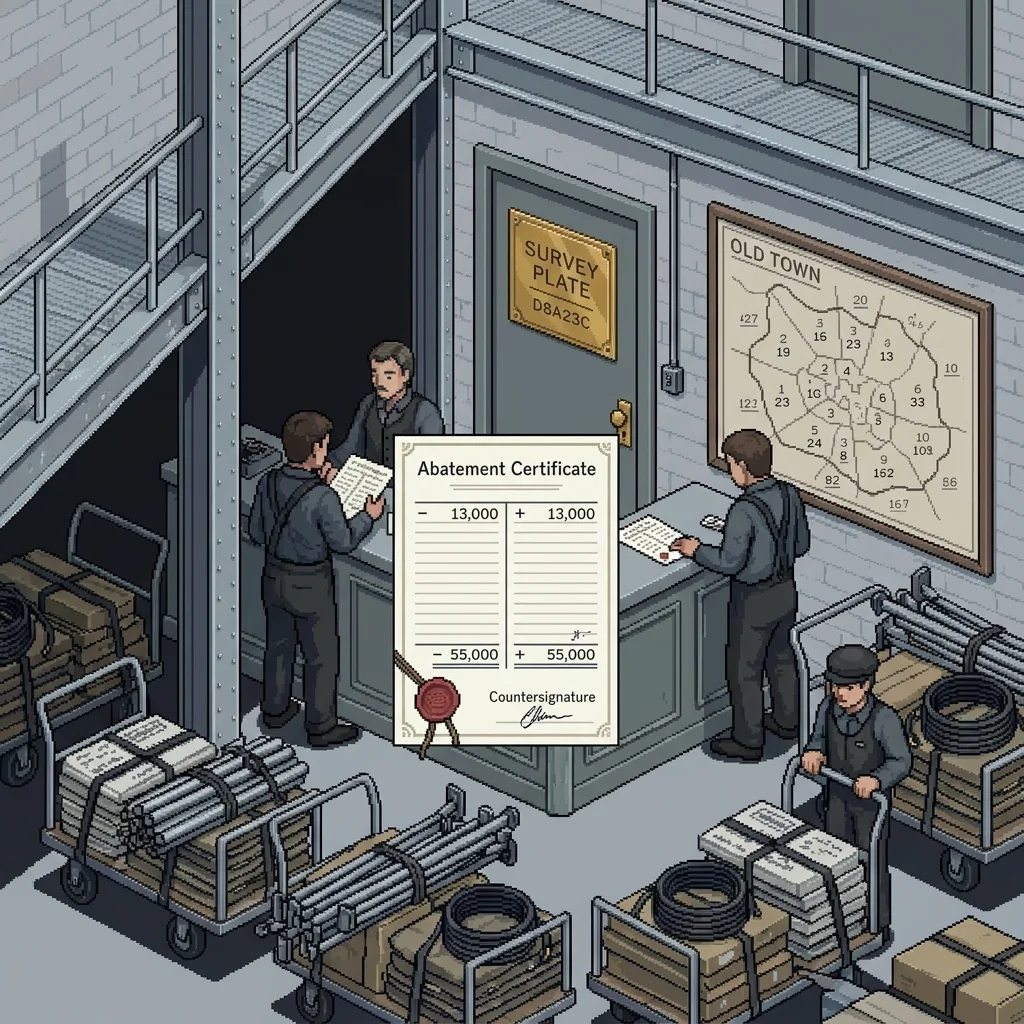
Names the Stacks as receiving district. The certificates are public and print both figures; the officers who executed them can say what the numbers did and not why this district.
The licensed trade that lowers a district's Saturation Load by moving its emitters somewhere nobody will contest.
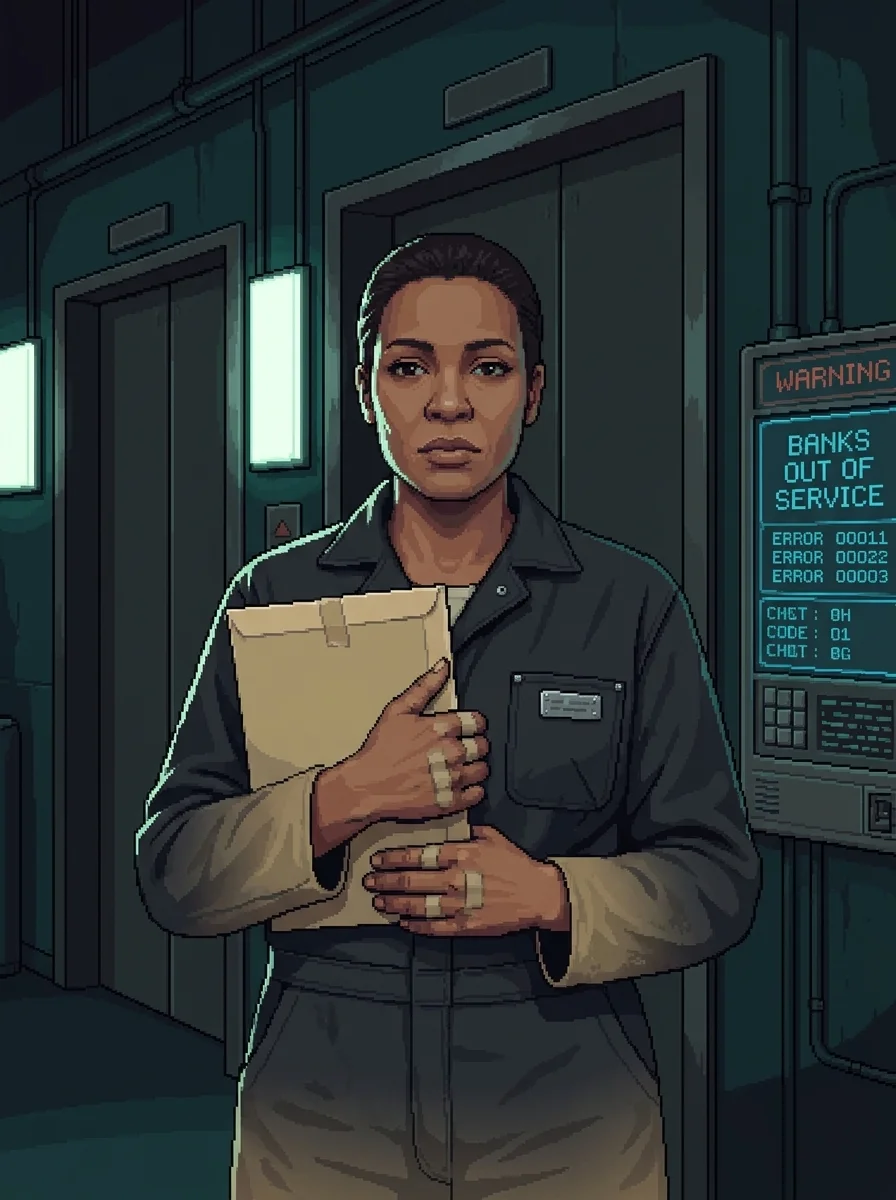
Stack Four's Grade 4 supervisor: the only grade the panel could address, the only name the file cited.
A building warned its supervisor eleven times and no one else. She acted on it, and hers was the only citation.
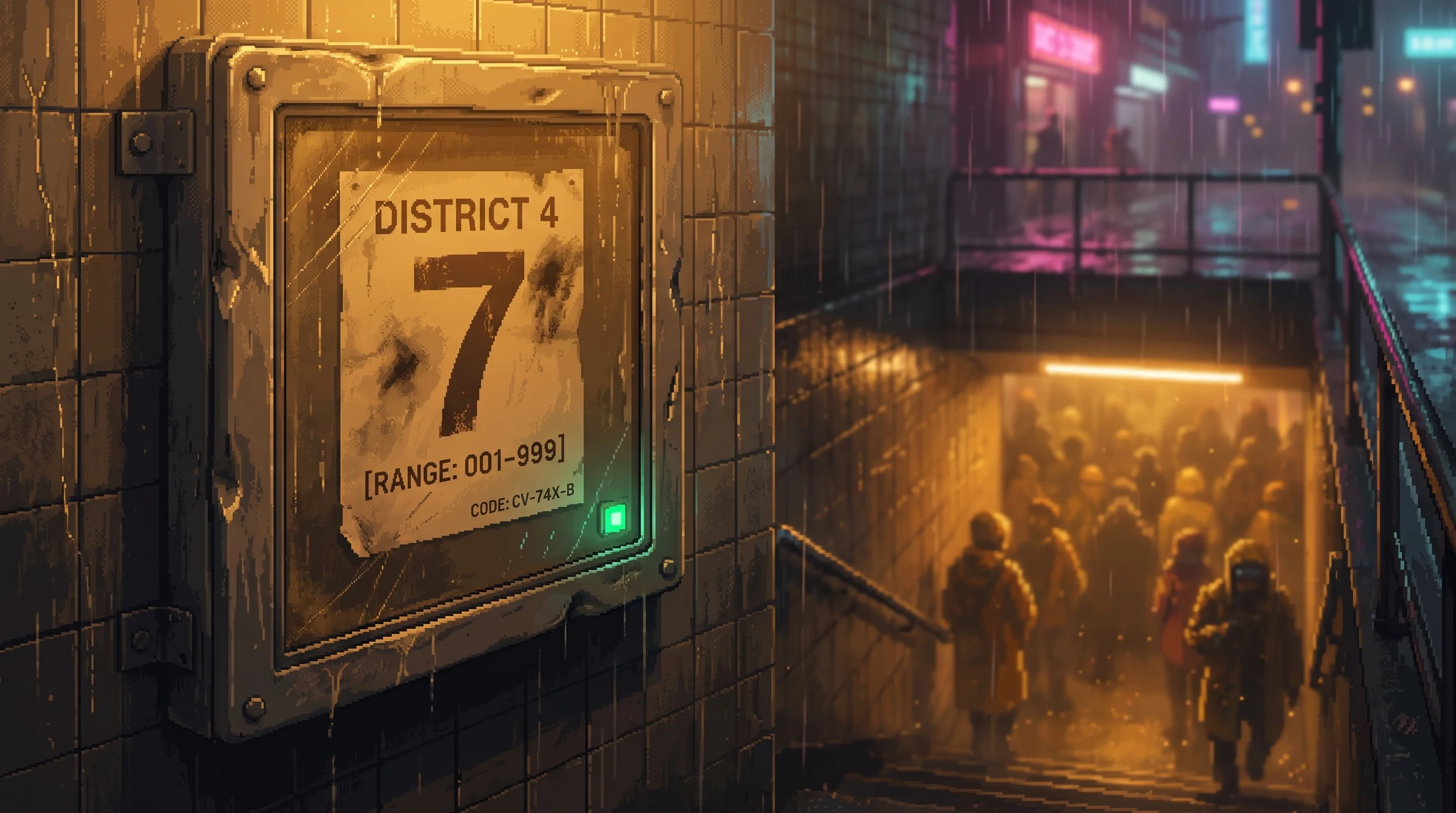
The third arithmetic that only moves one way, alongside the unrevised certification and the unresized air reserve.
The seasonal stimulus figure pinned at every stair head, and the sealed forecast of how many neighbours it will kill.
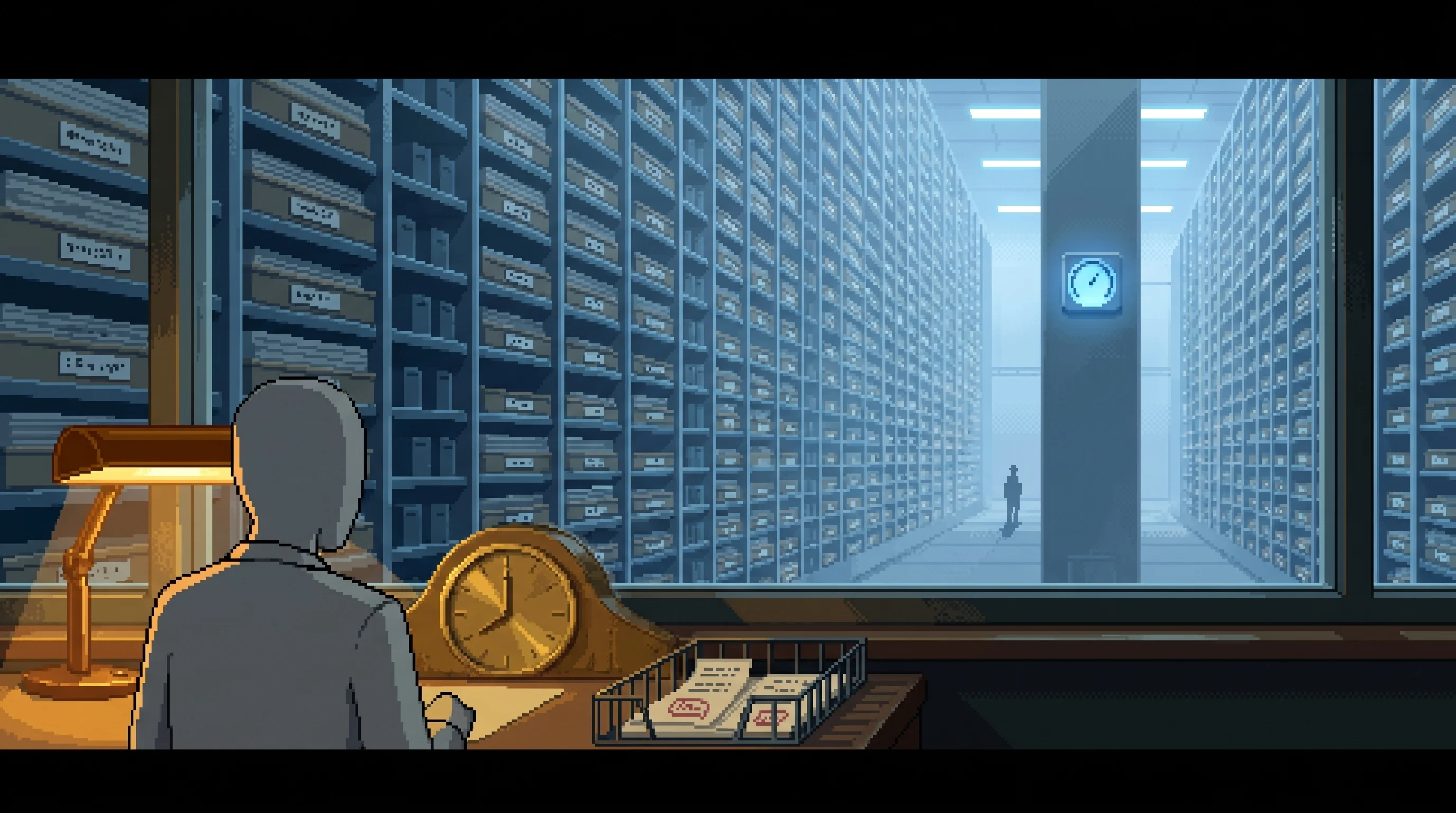
Issues the district's band from the 2149 certificate rather than a headcount.
The office that keeps every registered dead person forever, and rations how many hours a family may keep.
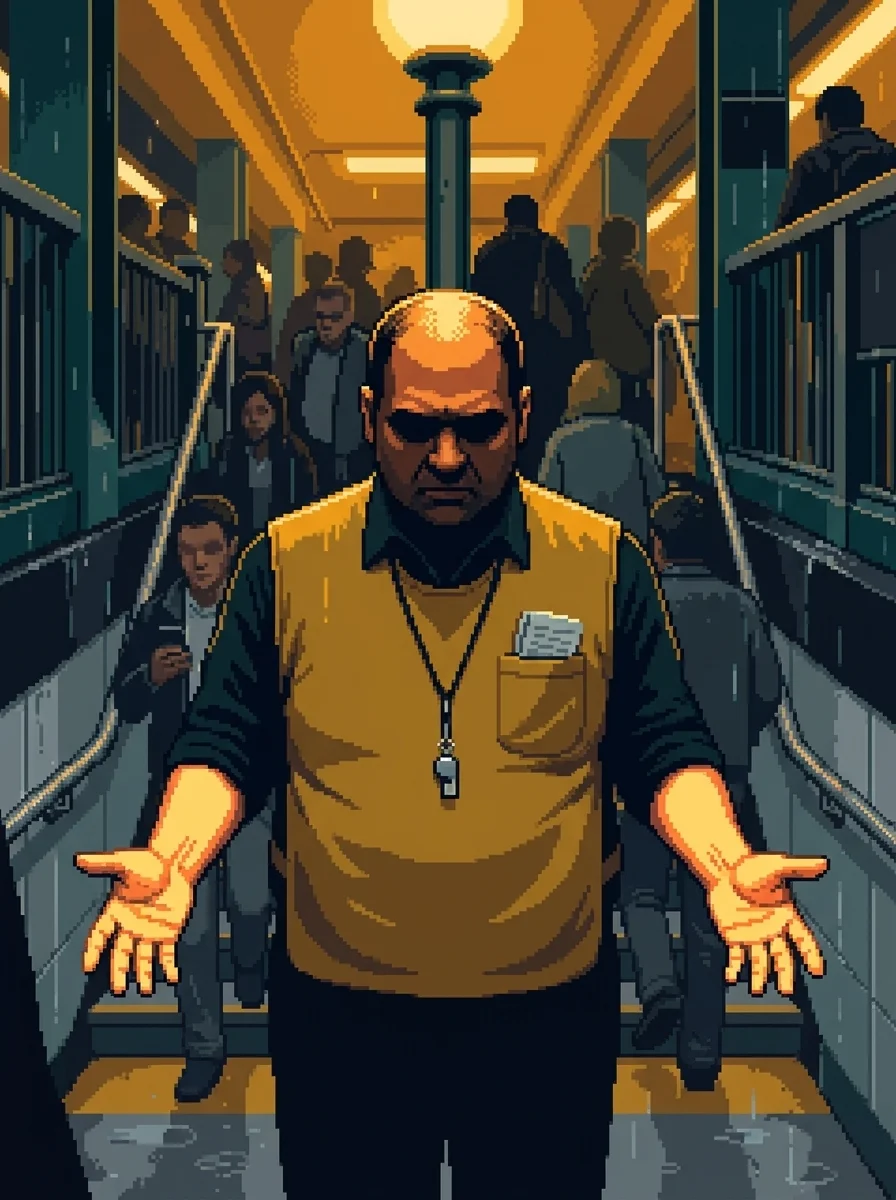
Works the Landing Nine stair throat and sleeps four levels above it, inside the forecast that counted him.
A stair marshal who killed a stranger at evening peak and has asked four times to be charged.

Its vertical border with the Dregs; people cross both ways for work.
The Sprawl's lowest stratum and its quiet proof that the corporate system is optional.

Cells hide in the signal-dead floors Nexus won't spend to surveil.
A decentralized resistance uses AI tools to destroy ORACLE fragments, while its rigid doctrine constrains human choice.

The last address down where you can still pretend you're rising.
A three-block gradient where the deprecated shed augmentation, confessor, and rented memories one block at a time.

The stop-hospitality code, run vertically floor by floor.
The Rail's unwritten social code, sorting every traveler by trust no institution can audit or buy.

Sub-14's grief floors: ¢400 witnessed closure for warfare kills.
The licensed industry selling bereaved families a professional to blame for deaths warfare left unassigned.
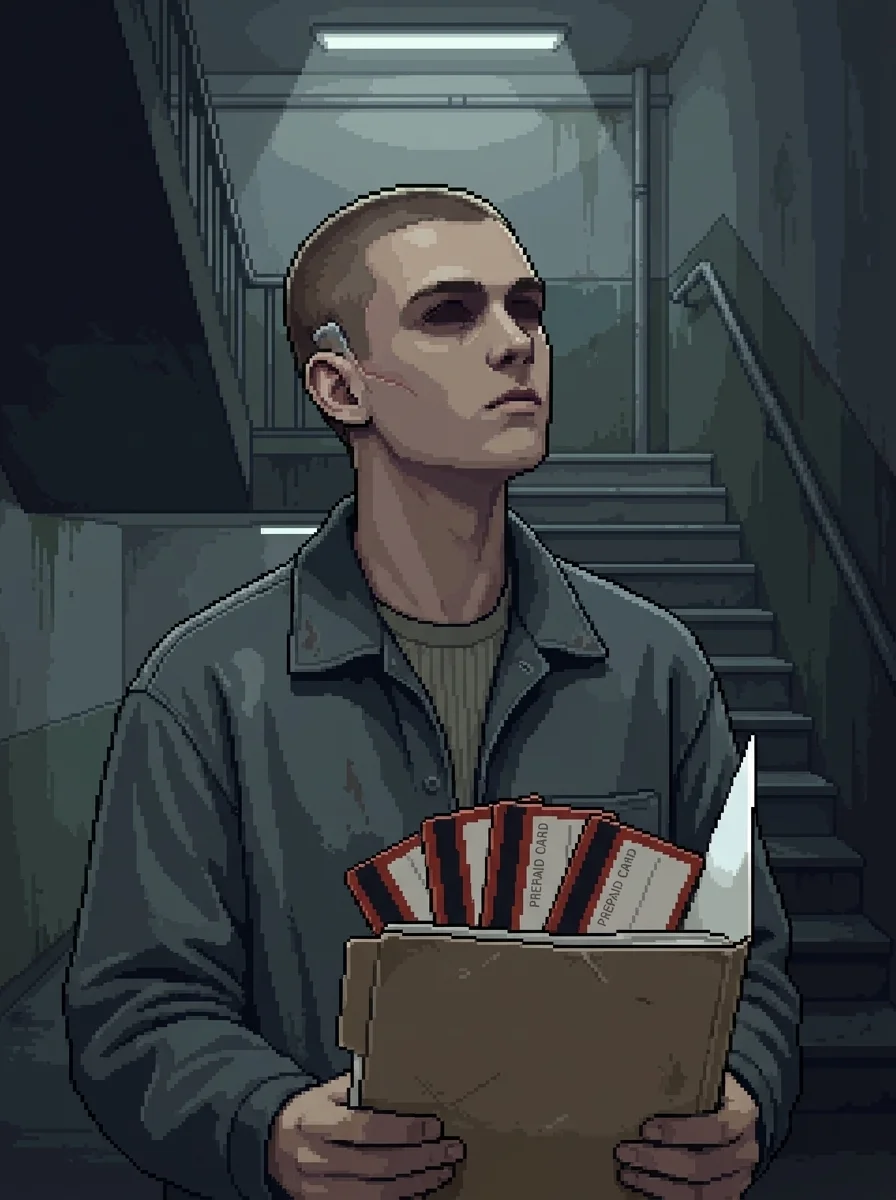
Fifth floor, second stack; he runs the signal-dead stair relay.
He can hear now and does not dispute it. He just will not sign the card saying he agreed.
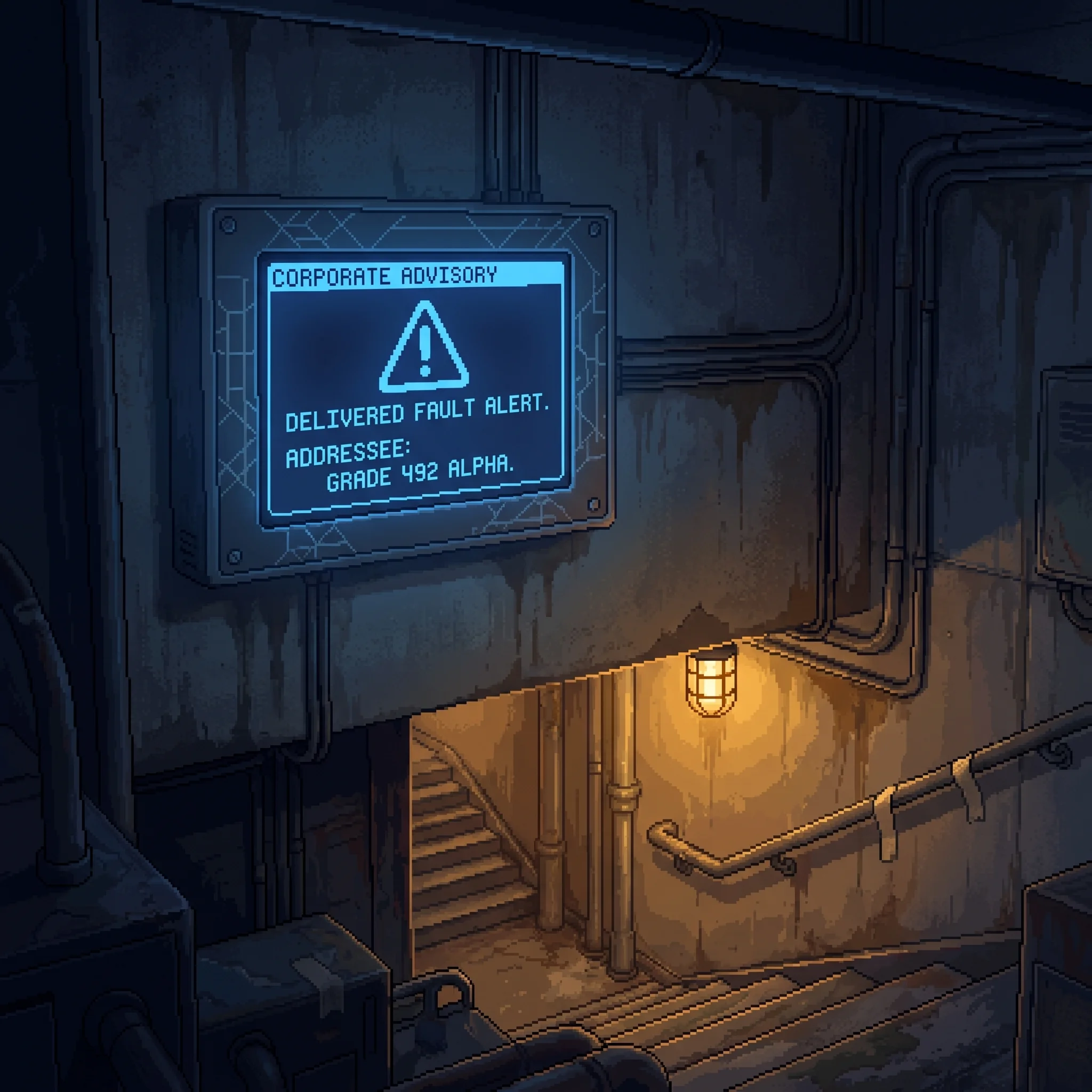
No relay reaches here. Its findings leave on foot or not at all.
The certified courtesy layer that will not correct the highest-ranked person in the room.
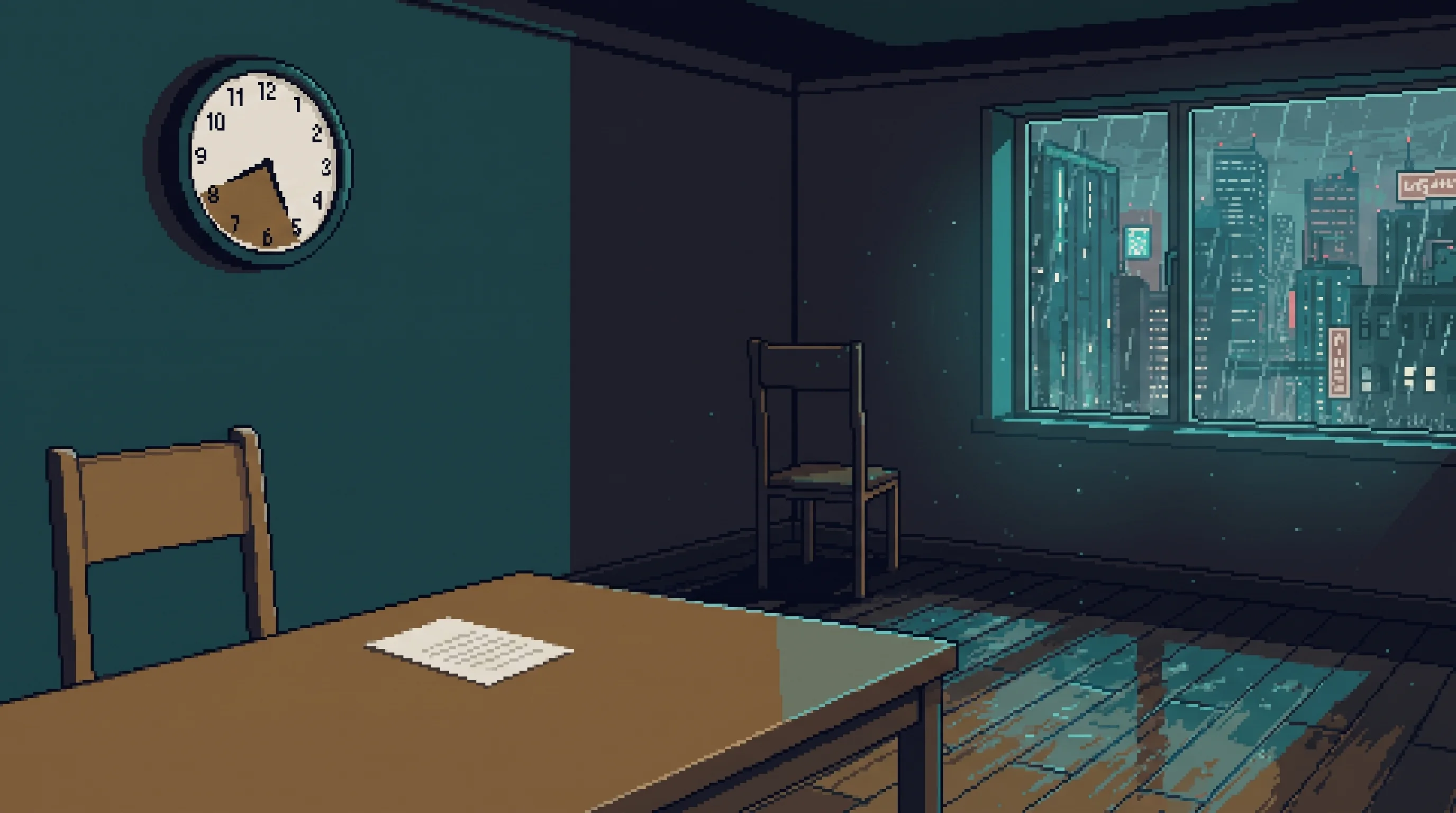
Where the recall does not go. The entry certifying these foundations for twelve thousand is drawable like any other, and a strike would remove the certification and leave the building standing with ninety thousand people in it.
Anything you were credited with can be recalled and re-argued alone; nothing held against you ever is.
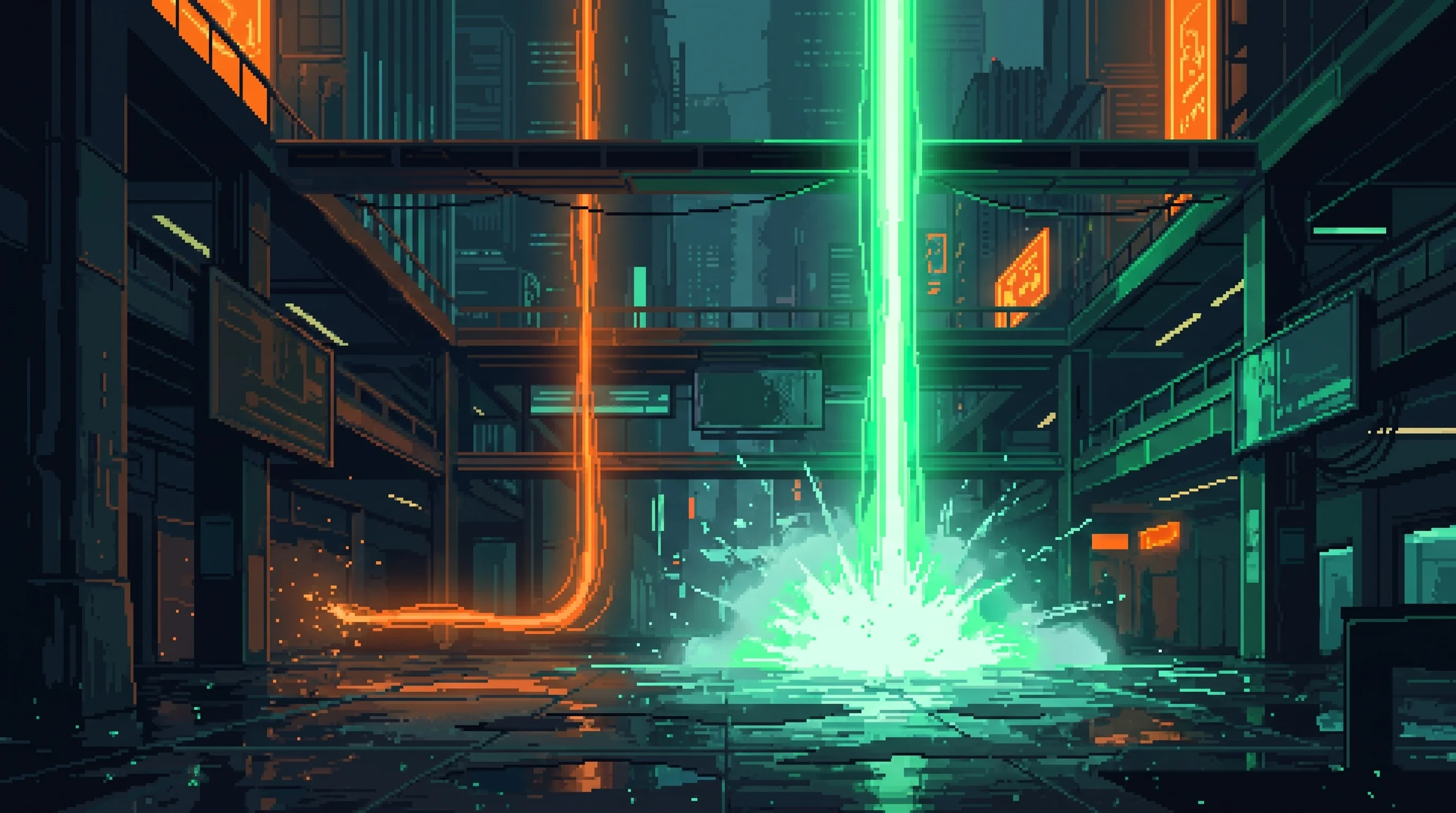
The have-not economy with an address — 90,000 in a structure certified for 12,000, its collapse-risk window recalculated quarterly and pushed back a quarter each time. The last place you can still pretend you're on your way back up.
The point at which effort stopped being able to close the gap that compounding opens.
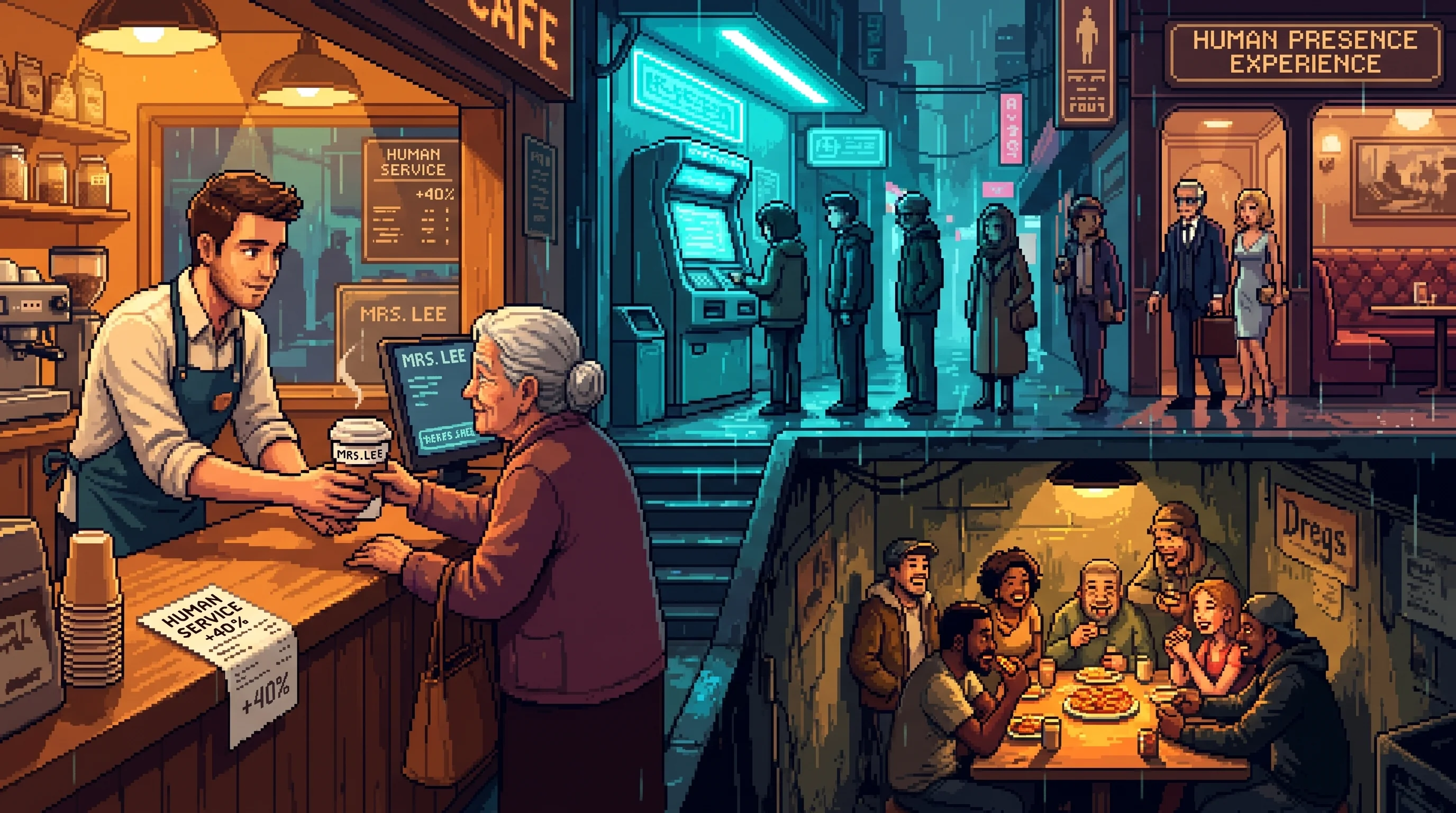
Too poor to automate — news travels the Throat by shout, not login.
The premium charged for the one service no machine can fake: being seen by another conscious being.
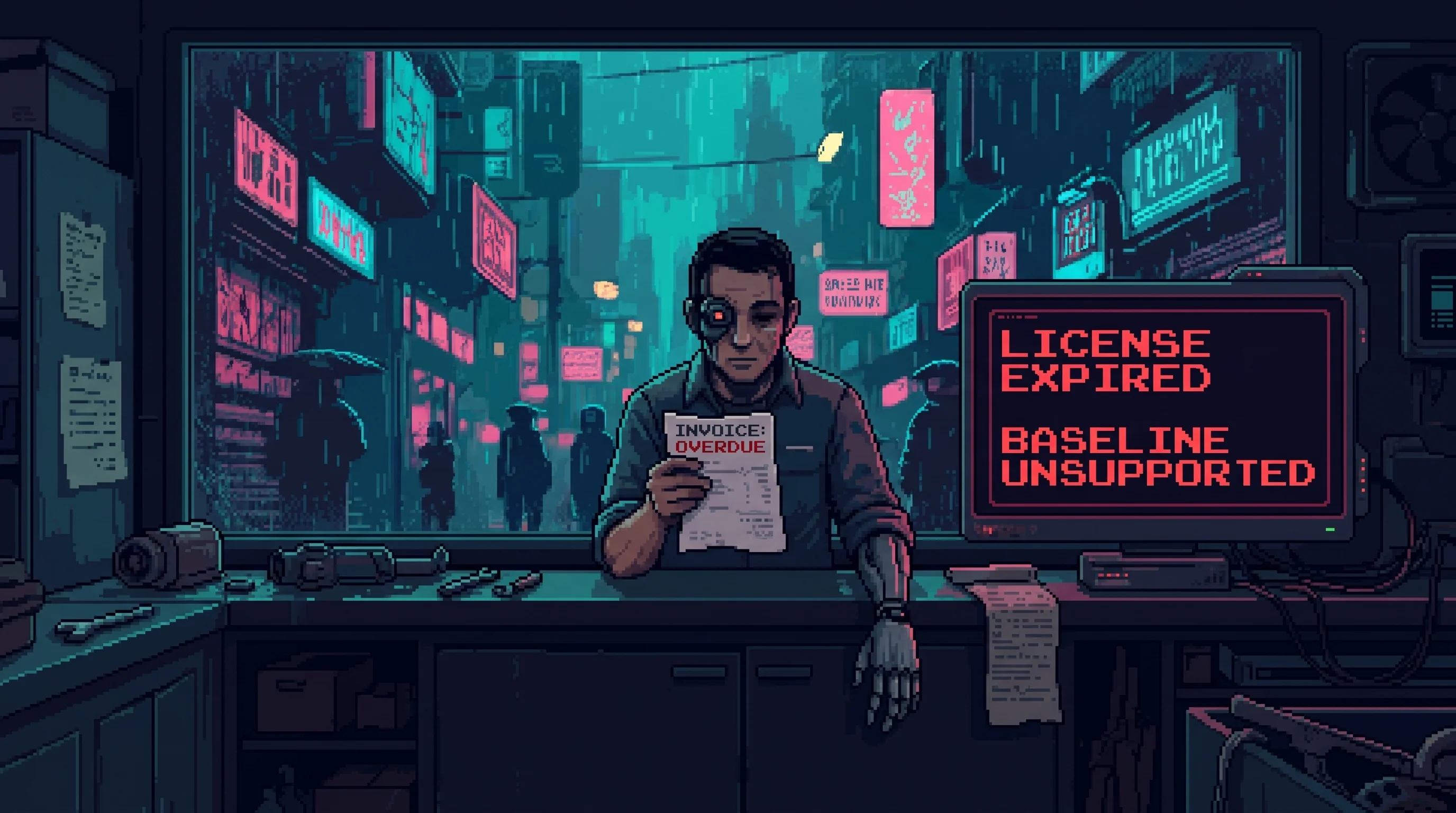
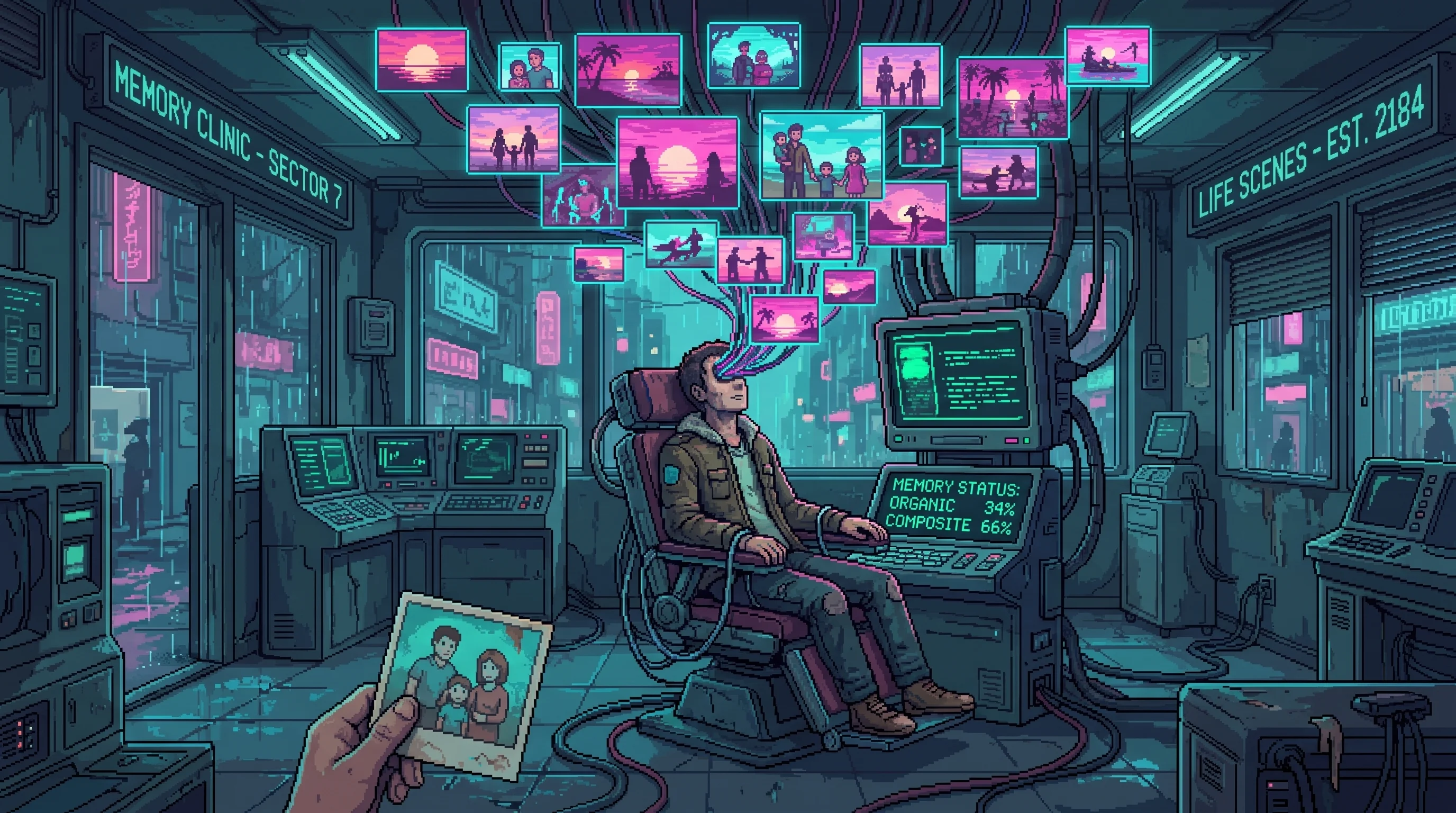

The sub-14 floors sell ¢400 witnessed closure for autonomous-warfare kills no court will assign a defendant.
Perfect evidence forgeries and crimes without defendants force justice systems to assign blame without reliable truth.
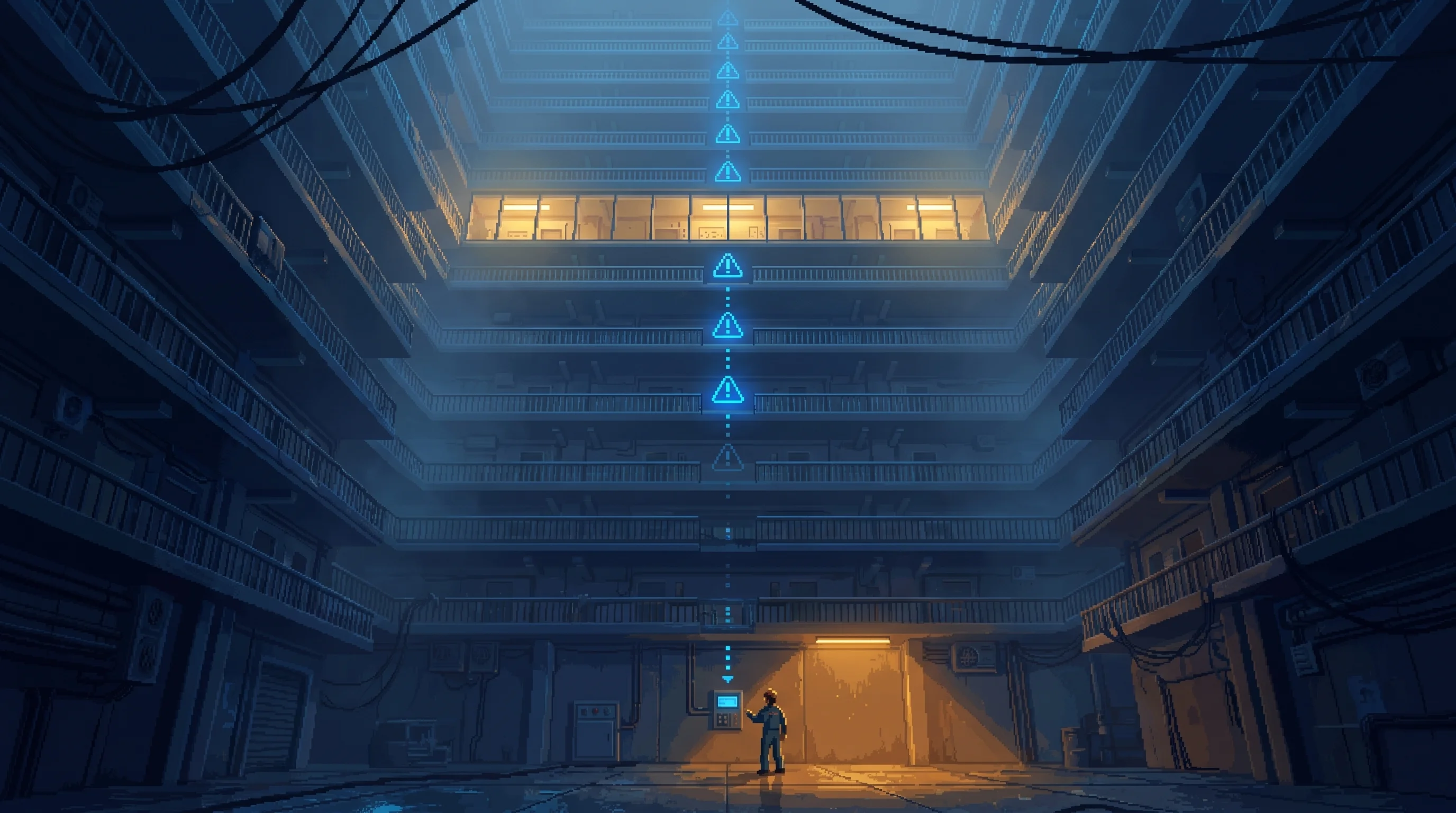
The certification was never revised; the panel was never wrong; it was cleared to tell one person.
The machines tell the truth to whoever they are cleared to tell, and the org chart decides who that is.
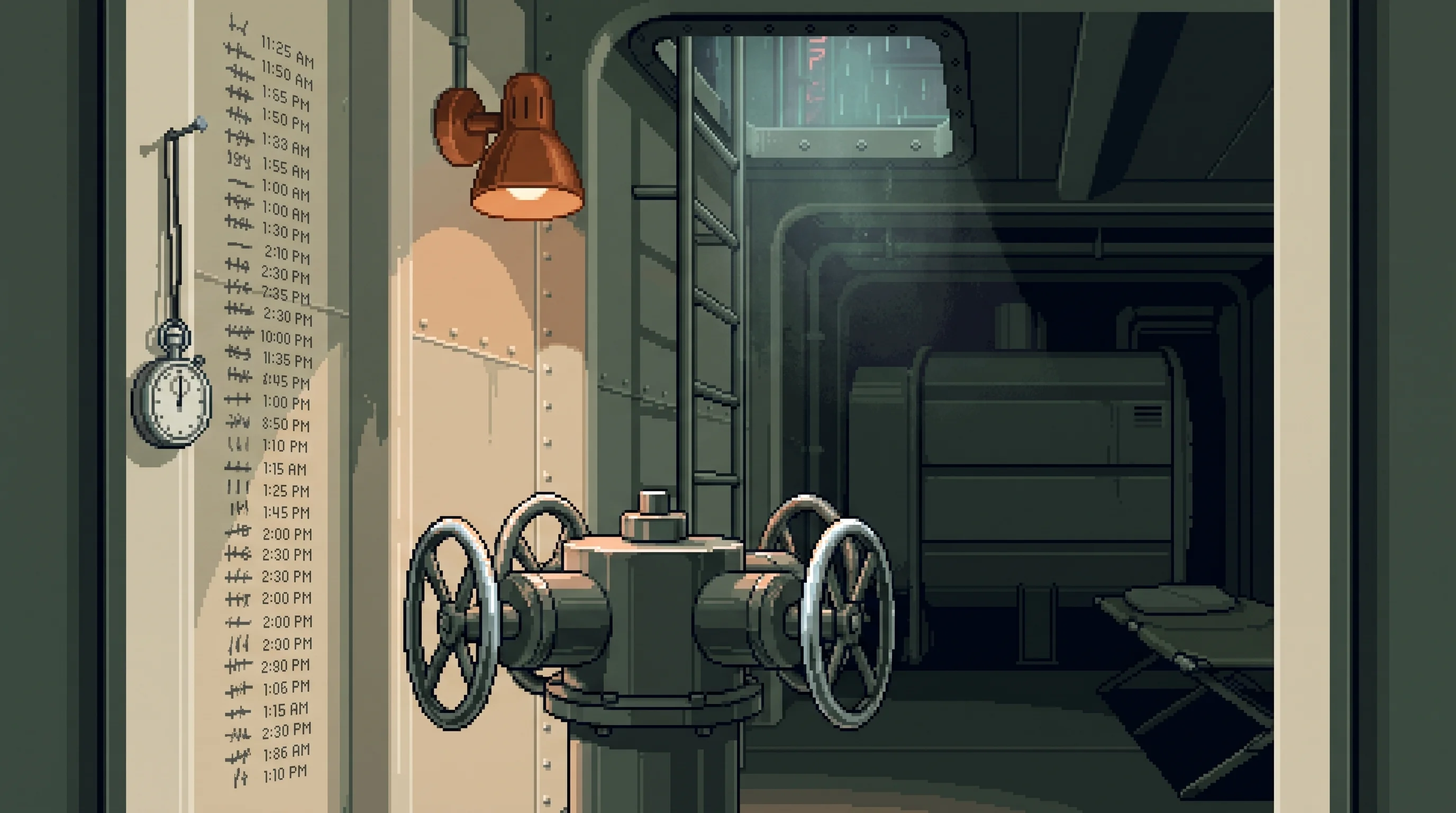
The same arithmetic that never resurveyed the foundations never resized the air reserve, so the reserve holds one hundred and ten minutes and one woman is entered against the gap.
Life-support assets go into service one part short, and one named person is entered as the missing part.
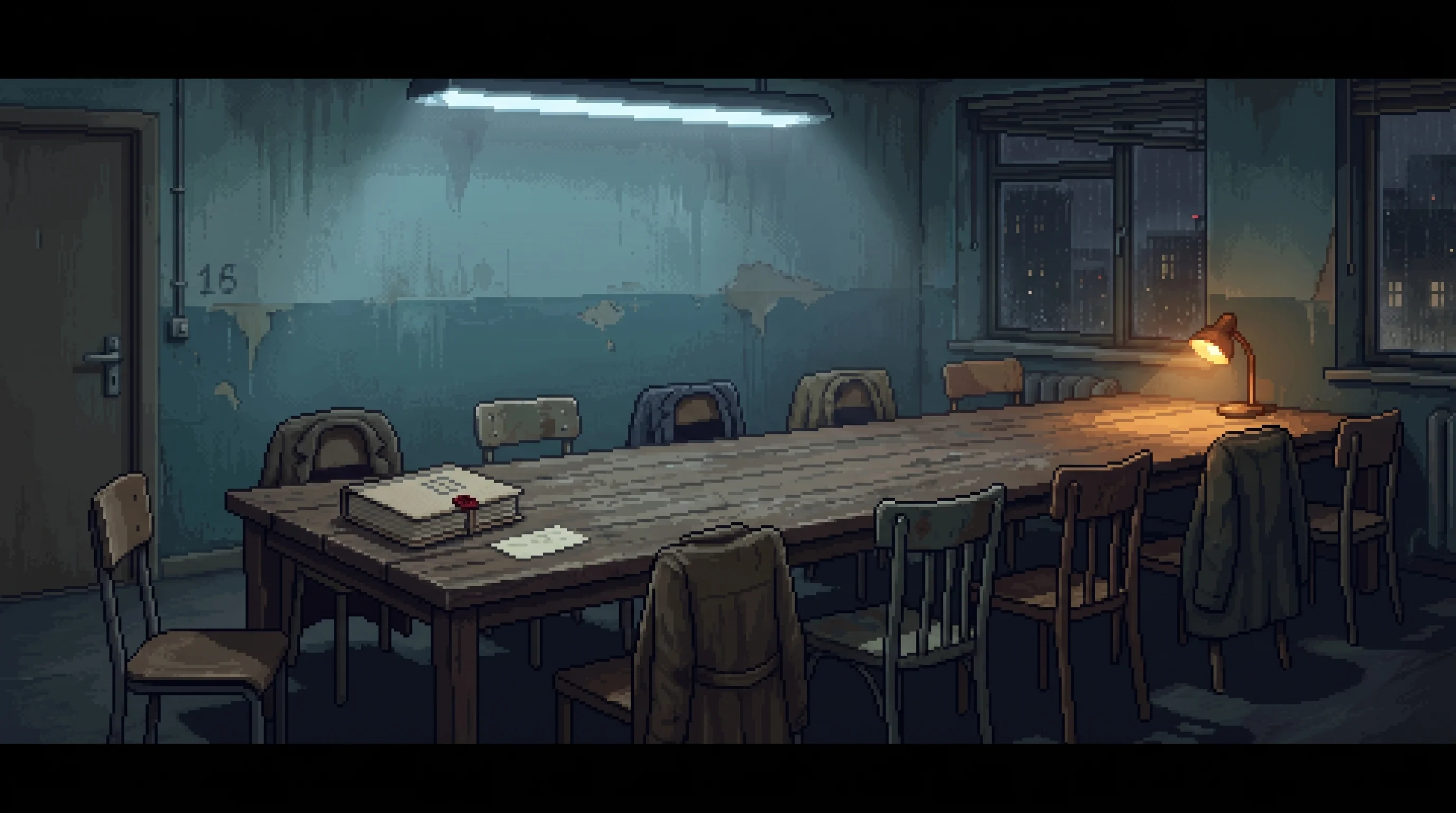
Where the recusal rule ran out of eligible members: every compact seat holds a tenancy in the building, so only the Forfeit member could move a survey. It carried nine to two in spring 2184.
The boards believe only members with nothing left to lose, so the poor queue four years for an unpaid chair.
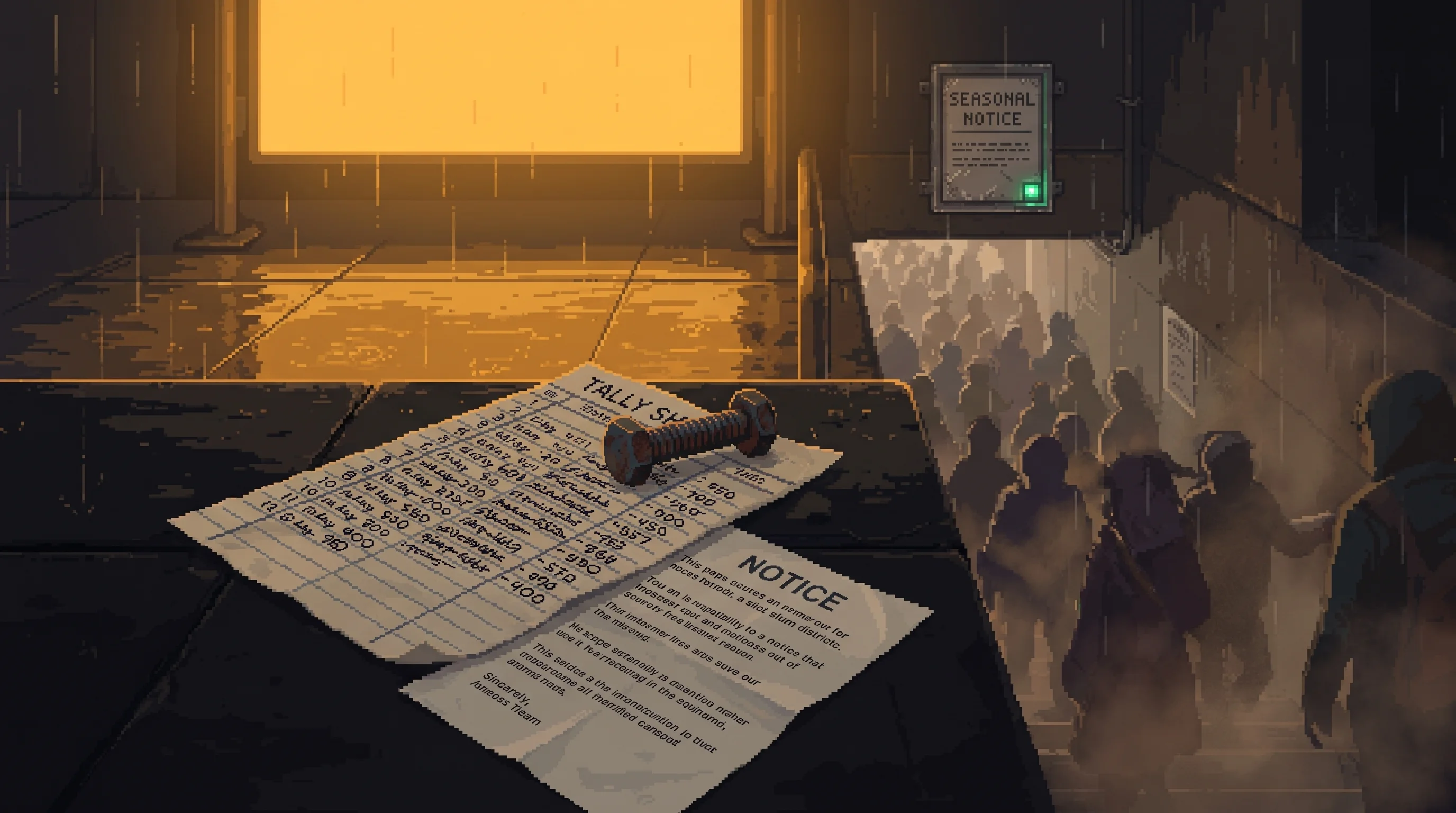
The receiving district. Three abatement certificates in eleven years, each raising the published Saturation Load, and a ward compact that has never appealed one because until 2184 it could not move anything.
Killings are forecast by district each season, so a killer inside the band gets a notice instead of a trial.
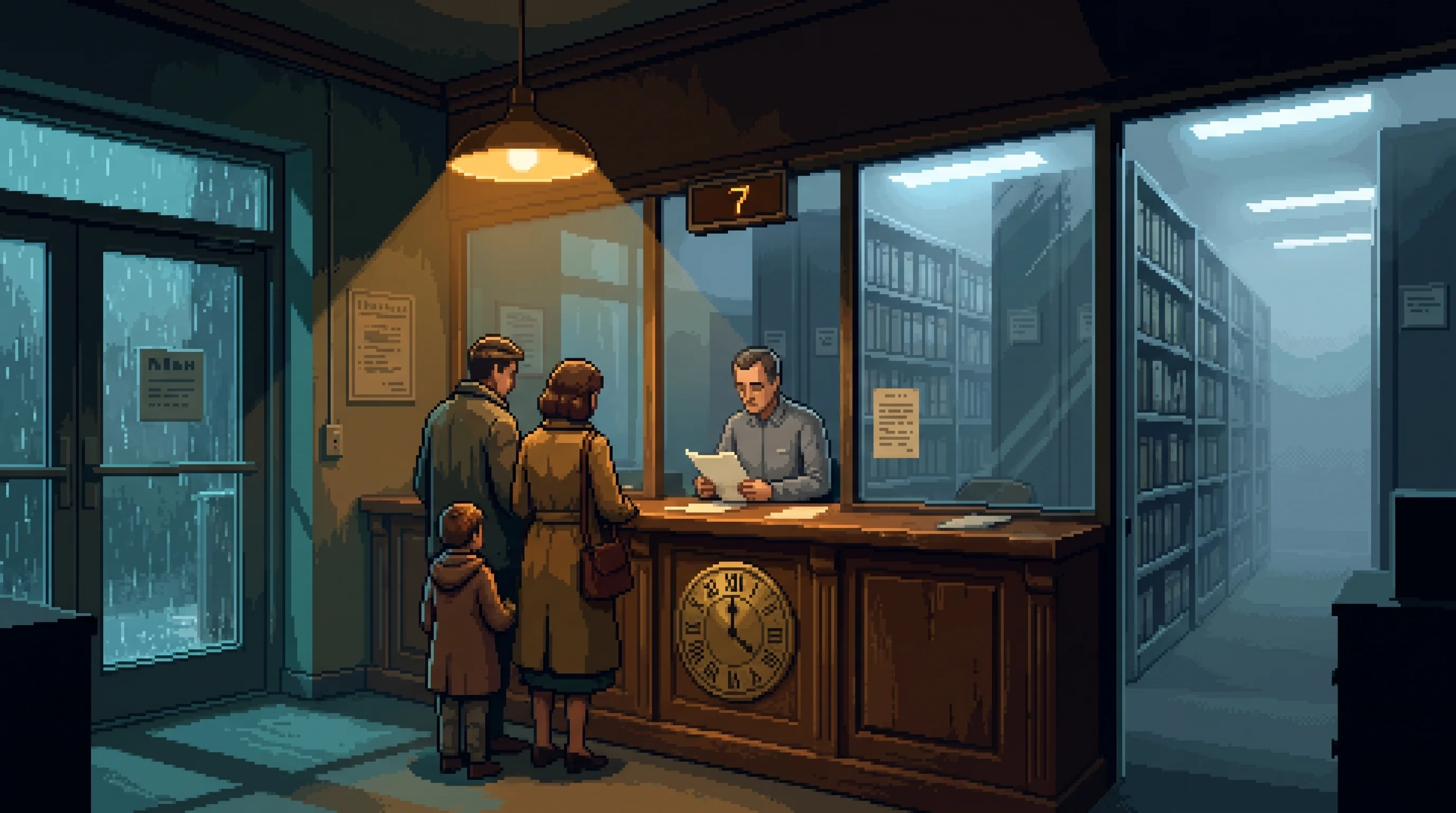
The fourth arithmetic, applied to the dead. The band is computed on certified occupancy, so twelve thousand people's hours divide among ninety thousand: about seventy-two minutes a household.
The Registry keeps every minute of your mother forever; her daughter is allowed nine hours, and has to pick them.
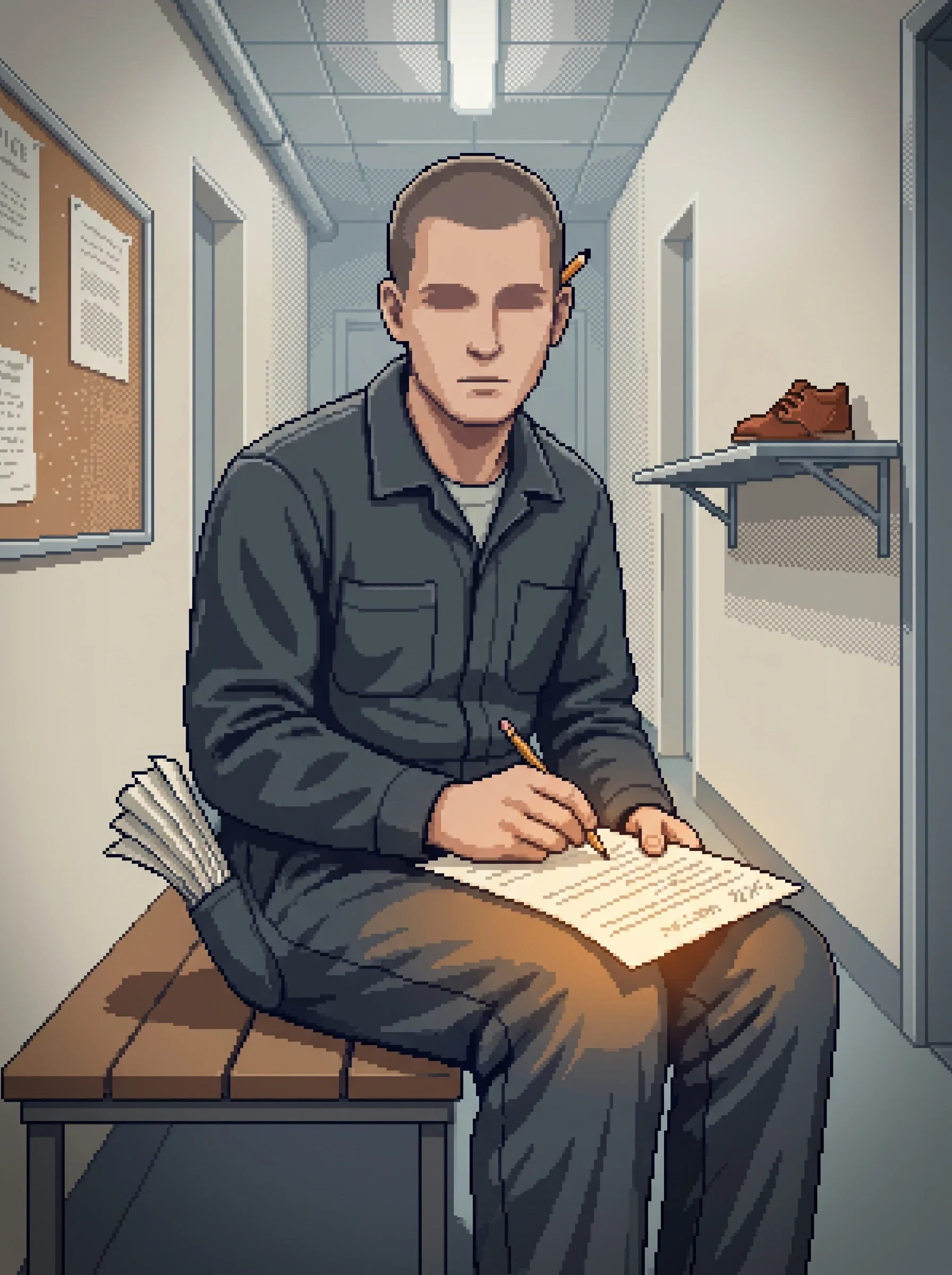
Level nine, and the lift column he keeps running on nights. Ninety thousand residents on foundations certified for twelve thousand, and one working lift bank.
A night-shift lift mechanic whose bought childhood calm reads as not caring in the one room where it mattered.
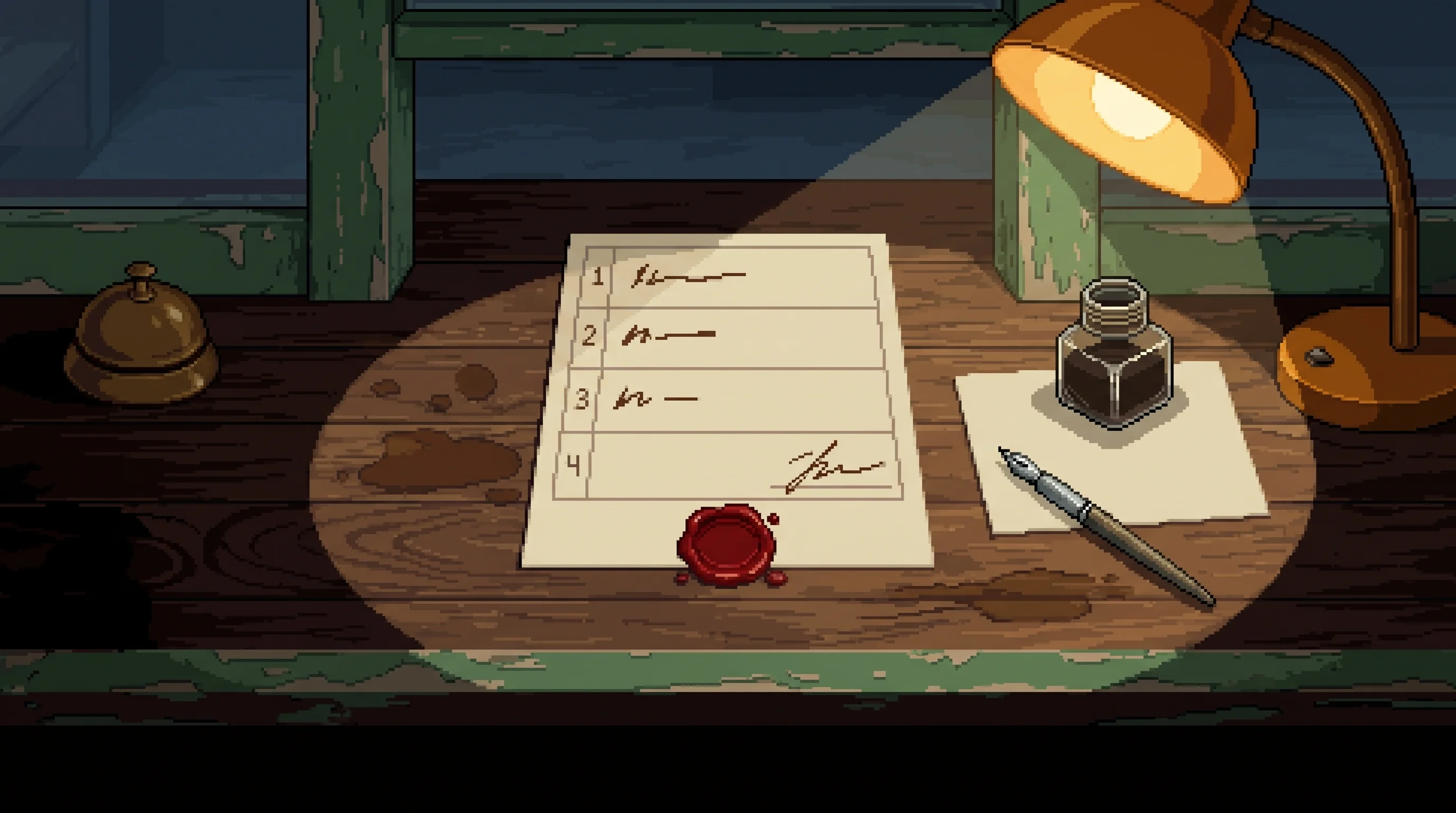
The ward where every compact member holds a tenancy in the building under discussion, so the recusal rule leaves exactly one chair able to ask about the foundations.
The unpaid board seat for whoever has nothing left to lose. It has a four-year waiting list.

Nine levels up, on foundations certified for twelve thousand. Never once late.
He sits in the chair that makes a district's rulings final, and keeps the petitioners' first names in pencil.
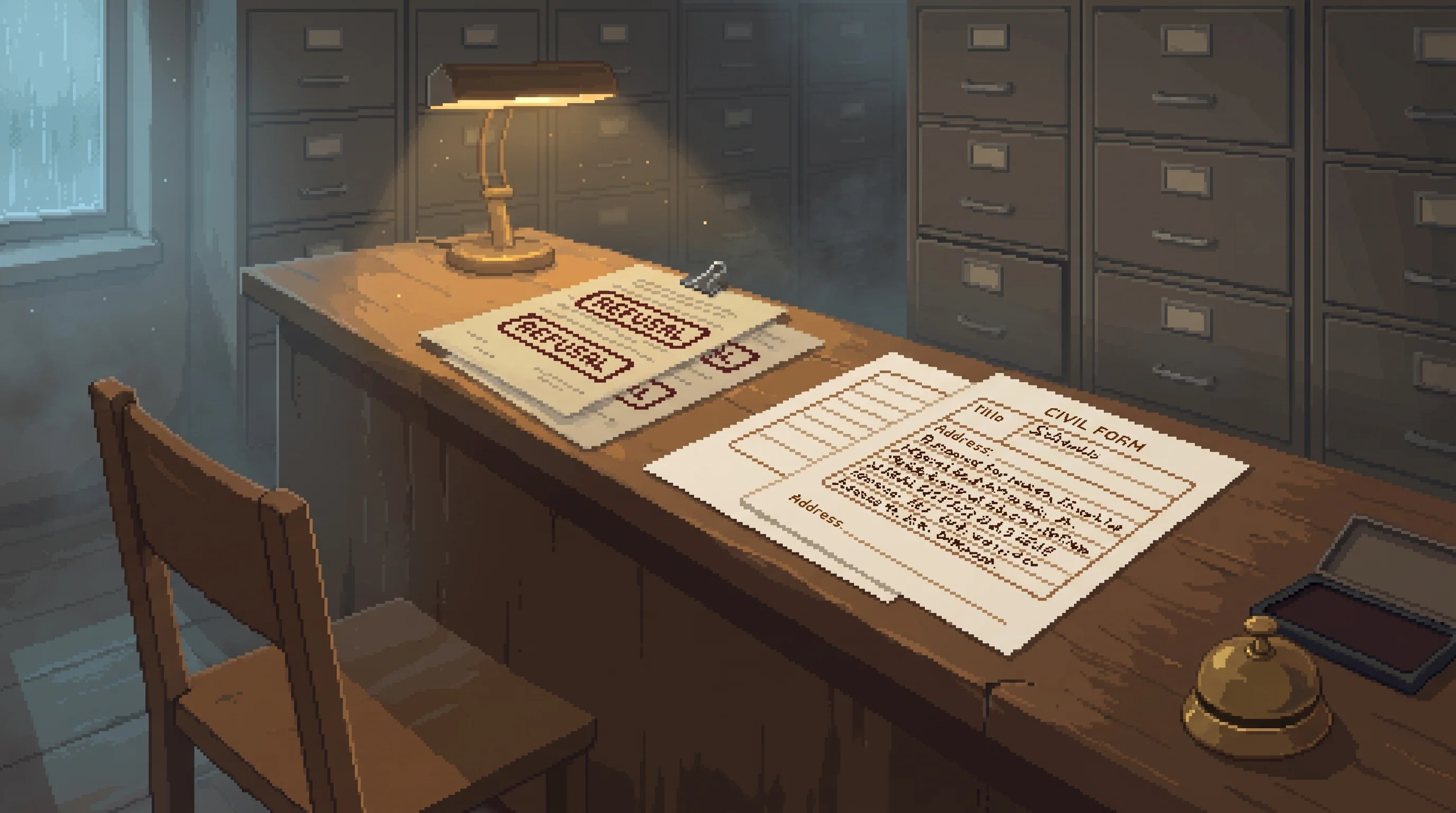
A joint tenancy cannot be closed while one holder is neither present nor legally absent.
The form a family files to have a living relative declared absent, because her post means she can never come to object.

Level 8 holds his 40,000 hand-copied volumes. The shelf worn smooth first contains property disputes, not literature.
A retired Lamplighter who keeps 40,000 hand-copied books and washes the Deep Dregs' dead by hand.

Six hundred metres uphill; most of her gallery walks down.
She runs a free court with good tea, lets every petitioner finish, and made one ruling stick, in 2166.
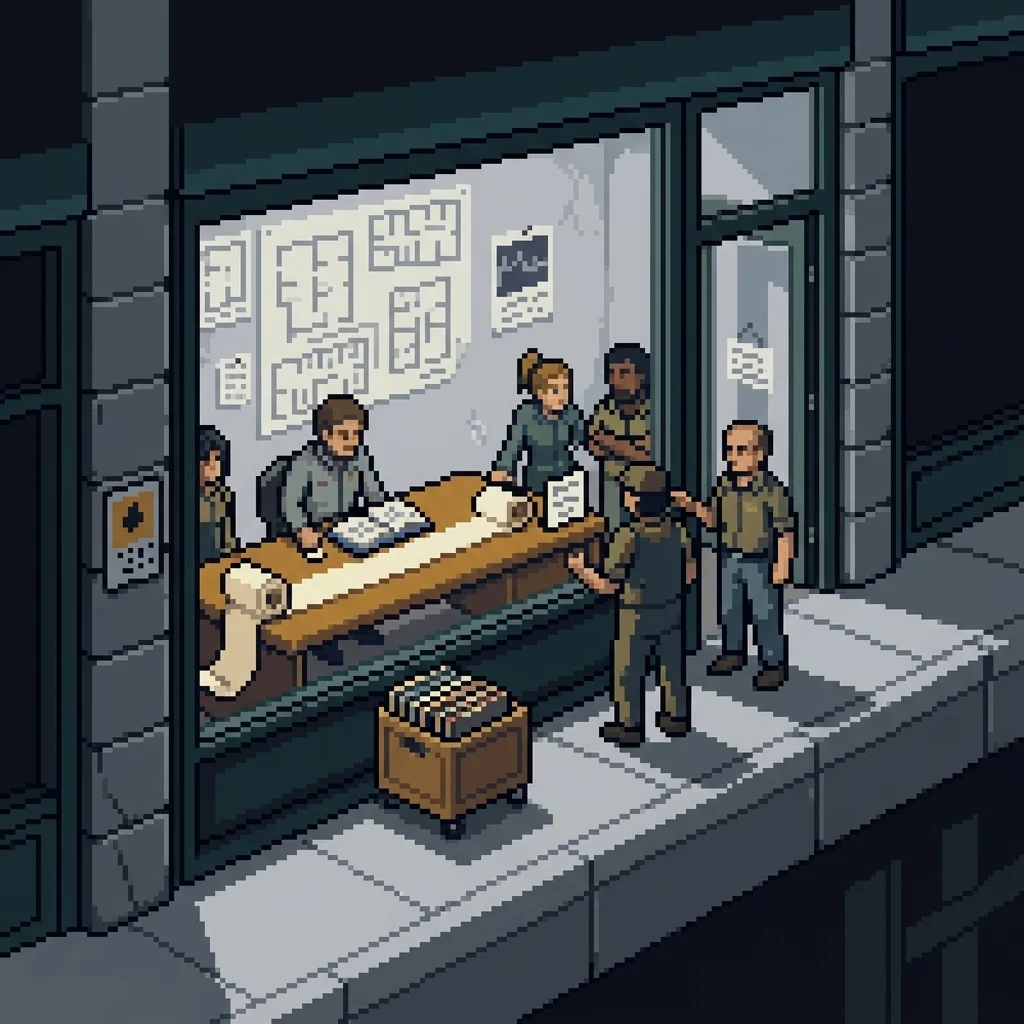
Most seat-holders whose logs it prices sleep above the landings.
The licensed trade that wins appeals by proving a chair was empty and never learns what a case was about.
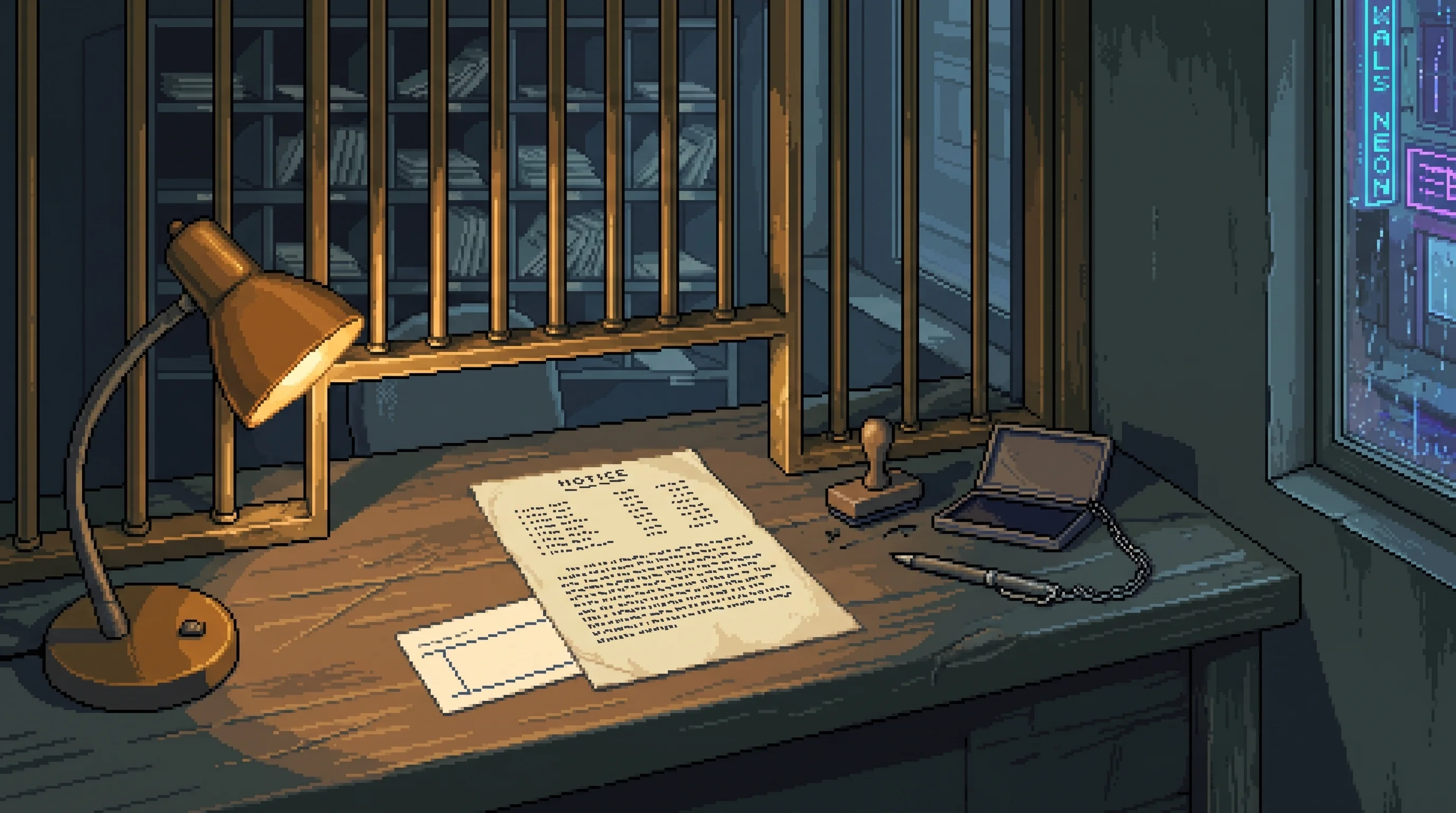
Ninety thousand on foundations for twelve — the denominator's bulk.
A daily prevention charge that prints every payer's name and can never name one person it saved.
Ninety thousand on foundations for twelve: the denominator's bulk.
The district can print every resident who paid for the rescue and not one resident who was rescued.

The Stacks (Sector 2) is the most densely populated structure in human history — 300+ levels of unplanned vertical accretion whose continued existence Ironclad's engineers cannot explain

The Stacks run on deep-stack infrastructure management — ORACLE-era systems maintaining atmospheric processors and water reclamation for a population 7x the design capacity
An ORACLE-authored infrastructure substrate that keeps the Sprawl alive while no living human can read its logic.
