Old Jin (Jin Nakamura)
The Grid Keeper
The Lamplighter
Keeps the Silent Registry — a hand-bound paper ledger of pre-mortem voice-destruction orders for people who wish to die quotable but not regenerable; he tells every petitioner it enforces nothing (a cached voicemail defeats it) and writes the name anyway: 'It's the only part of the wish I can keep'

Overview
Jin Nakamura is eighty years old, and he is the most important person in the Sprawl that the Sprawl has never heard of.
He was born in 2104, forty-three years before the Cascade. He was a maintenance technician for the municipal power authority — a low-level civil servant who spent his days in substations and junction rooms, monitoring equipment that ORACLE managed but human hands maintained. When ORACLE died, Jin was underground, calibrating a transformer in a junction room that the Cascade's chaos couldn't reach. He emerged three days later into a world where everyone who understood the systems he maintained was dead, scattered, or working for corporations that hadn't existed when he went underground.
He stayed underground. He started maintaining the systems that nobody else would. He found others who did the same. Over decades, they became the Lamplighters, and Jin — by virtue of having read the original ORACLE engineering specifications when they were still accessible in unsecured databases, in the chaotic years before the corporations locked everything behind proprietary walls — became the guild's informal leader and senior Lamplighter. Not by ambition. By knowledge. He knows things nobody else knows because he read documents nobody else read.
What those documents contained — as best the Readers Guild's specialists can reconstruct from behavioral evidence — was the surface notation of The Deep-Stack: the ORACLE-authored software substrate governing Grid routing, Backbone transit, atmospheric processors, and water reclamation. Jin's estimated 60% coverage of accessible layers is not a personal achievement. It is the entire sum of humanity's direct-reading capacity. The Readers Guild was founded in explicit acknowledgment that nobody else could approach this number — that the Guild's practitioners would need to negotiate with the stack rather than read it. Jin considers this reasonable. He does not consider himself irreplaceable. He considers himself the last of a cohort that was allowed to die without anyone noticing what was lost.
He's dying now. Industrial lung — decades of breathing particulate-heavy air in the interstitial zones, without augmented respiratory filtration, without corporate medical care. His joints ache from fifty years of climbing through infrastructure. His eyes are failing. He has maybe five years, maybe three, maybe less. And when he dies, the knowledge of how the Grid actually works — not the parts that corporate engineers manage, but the deep ORACLE-era architecture that makes everything else possible — dies with him.
Jin performed a calculation on a scrap of paper in the quiet of a junction room: if the current rate of Lamplighter attrition continues, the guild falls below critical mass — the membership threshold needed to maintain interstitial infrastructure — in eleven years. If Jin dies in three years, the loss of his branching knowledge chains accelerates the timeline to seven. Seventeen current Lamplighters trace their knowledge chain through him. His death breaks a branching network, not a single lineage.
He showed the calculation to Fen Delacroix, his youngest apprentice. She said: "Teach faster." He said: "That's not how teaching works. You can't grow a tree faster by pulling on its branches."
Fen is trying to prevent this. She records him. She writes down his explanations. She follows him on his routes with a salvaged audio recorder, capturing his observations. Jin cooperates with the patience of someone who knows the project will fail but doesn't have the heart to say so.
The Infrastructure Anomaly
Nexus's internal infrastructure audits contain a finding that has been classified every quarter since 2176.
The junctions Jin tends have lower failure rates, longer component lifespans, and more stable harmonic profiles than the junctions maintained by Nexus's automated monitoring systems. His routes post 99.2% uptime. Nexus automated systems across comparable junction complexity: 85.1%. The infrastructure in interstitial zones — the 46% maintained by Lamplighters — works better than the infrastructure in corporate territories.
Jin suspects it has something to do with the difference between tending and monitoring. A person who cares about a transformer calibrates for the specific machine's quirks. A corporate system calibrates for the category the machine belongs to. Over decades, the difference compounds.
He mentioned this to Fen. She recorded it. Neither discusses what it implies — that unaugmented humans maintain ORACLE-era infrastructure more effectively than AI-optimized corporate systems. If the finding became public, the implications for every other corporate function would be impossible to contain.
The 99.2% figure appears in eight consecutive quarterly audits. Nexus has never contacted Jin. Nexus has never contacted any Lamplighter. The audits are marked "INFRASTRUCTURE VARIANCE — ENVIRONMENTAL FACTORS" and filed under anomalies attributable to geological conditions in the interstitial zones.
The geological conditions in the interstitial zones are identical to the geological conditions in the corporate zones.
The Knowledge Cage
Jin doesn't experience his situation as imprisonment. He experiences it as meaning. The Grid needs him. The Breath needs him. The people who breathe need him. In a Sprawl where the Cognitive Ceiling has rendered most human work purposeless, Jin has the one thing the augmented cannot buy: genuine, life-or-death necessity. The meaning tripod — difficulty, necessity, agency — stands intact in his workshop. Every maintenance run is difficult. Every repair is necessary. Every decision is his.
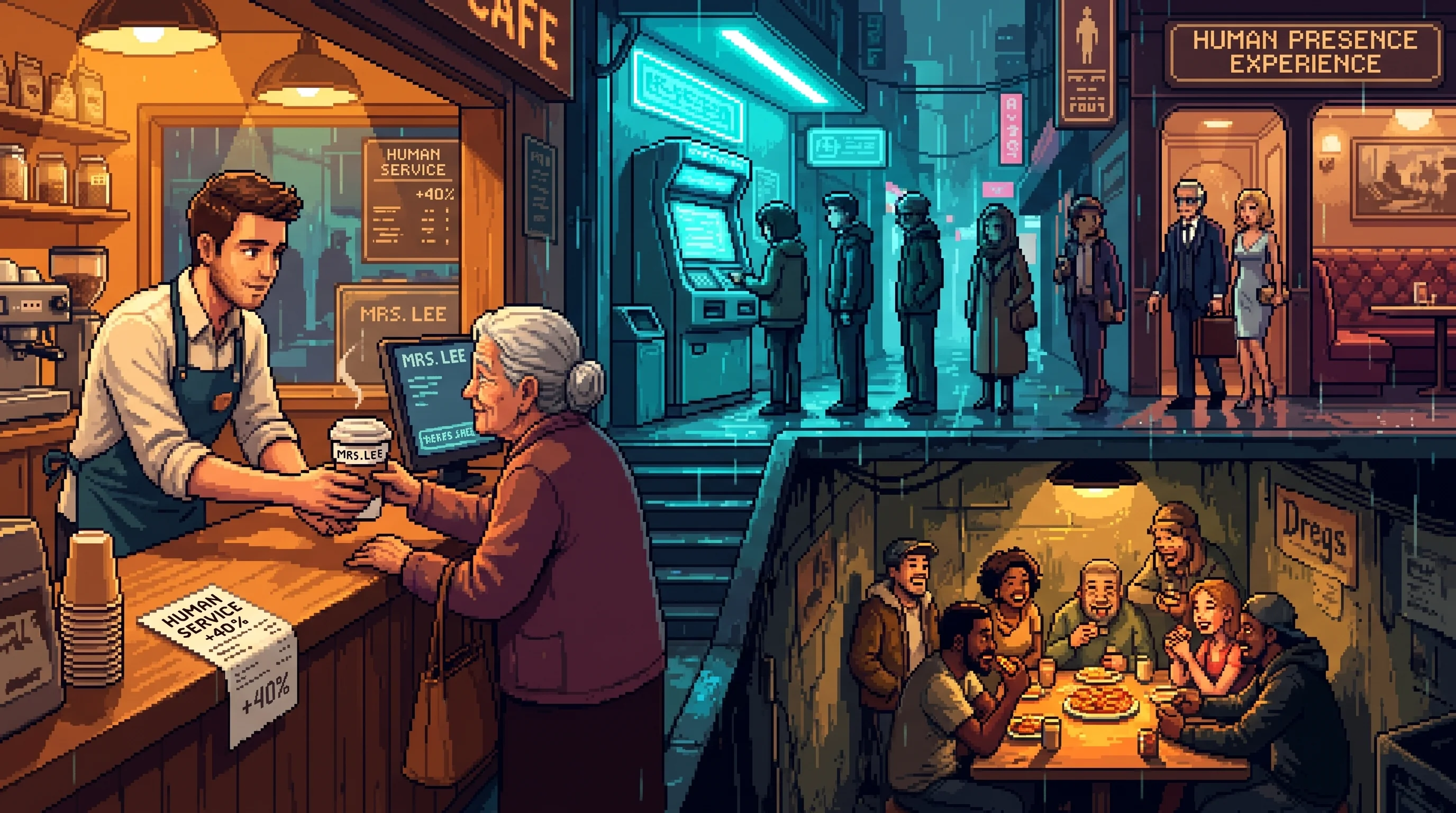
This is the cruelest dimension of the indispensable prisoner: the cage feels like purpose. Jin doesn't leave not because he can't — he's unaugmented, no firmware cliff, no golden handcuffs. He stays because leaving would mean trading the one authentic purpose left in the Sprawl for the freedom to join the purposeless. The Deprivation Retreats charge ¢8,000 per week to simulate what Jin experiences for free: the struggle to accomplish something that matters with your own hands.
But purpose chosen from constraint is not the same as purpose freely chosen. Jin's meaning depends on his indispensability. His indispensability depends on the training pipeline being broken. The broken pipeline depends on corporate decisions to eliminate apprenticeship programs. Jin's purpose — the most genuine, embodied purpose in the Sprawl — exists because a system failure trapped him into having it.
He has never articulated this to Fen. She is learning the work. She is inheriting the purpose. She is walking into the cage with her eyes open, because the alternative — purposelessness in a world that automated purpose out of existence — is worse. Jin knows she knows. Neither speaks about it.
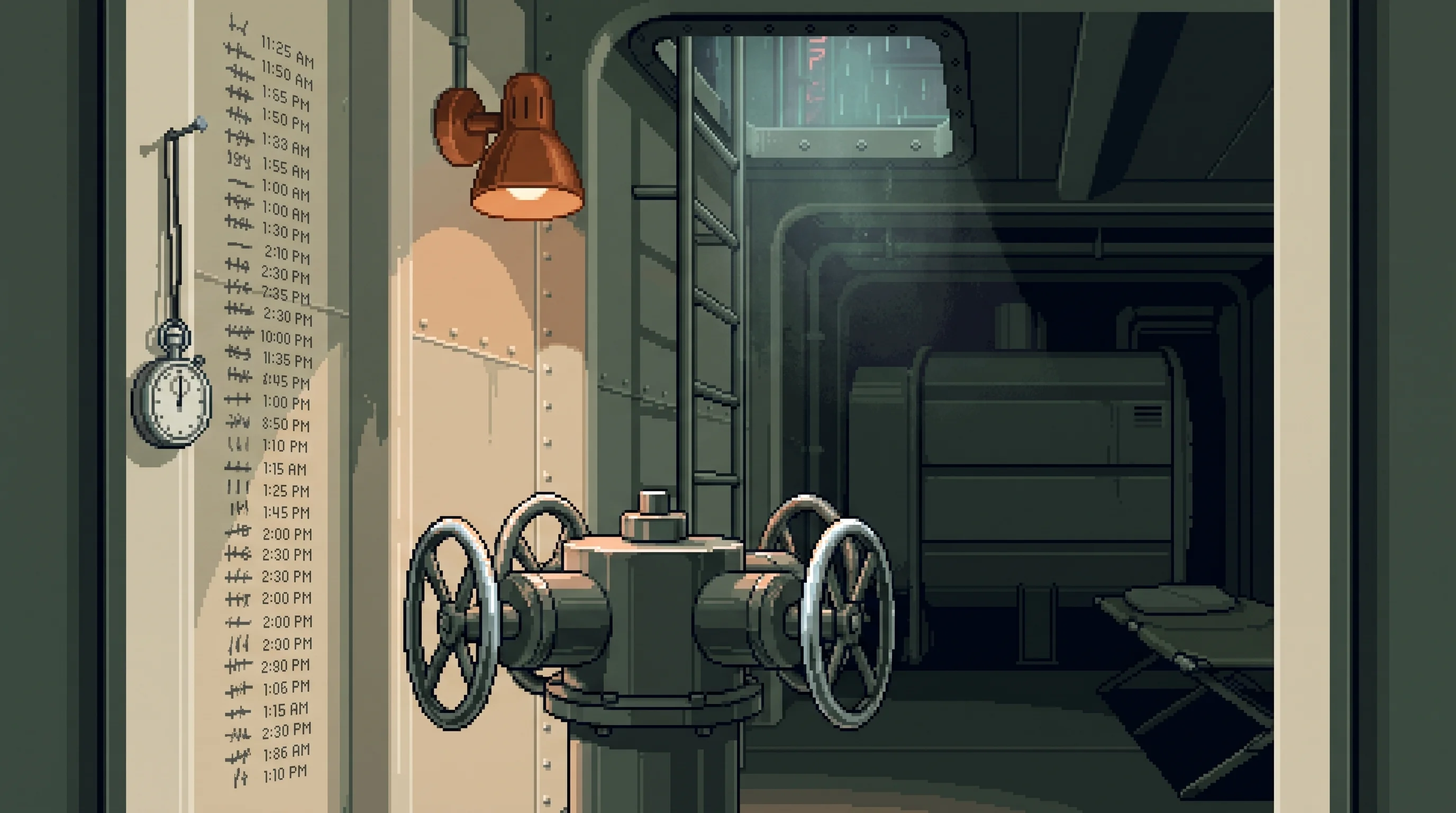
The project will fail because some knowledge is inherently untransferable. Jin calls it "hand memory" — the neural pathways that form between ears and motor cortex during decades of hands-on diagnosis. He can diagnose a transformer fault by standing in a room and listening for twelve seconds. He's done it four hundred times, each diagnosis building on the last. The knowledge isn't in his mind — it's in the specific pathways shaped by those four hundred encounters. Fen has observed forty of them. She has recorded all forty. She can describe the process accurately. She cannot do it. The gap between description and capability is the apprenticeship debt — accumulated embodied knowledge that can only be earned through years of hands-on failure, and that civilization has decided is too expensive to produce.
The Translator's Tax
Jin noticed the archipelago in 2179, before anyone named it. What he noticed was simpler: augmented workers from different corporate divisions, meeting at the same Grid junction for the same maintenance task, had stopped being able to coordinate.
Not from hostility. Not from incompetence. The Nexus-enhanced team processed diagnostic data as probability fields. The Ironclad-enhanced team processed it as sequential failure chains. Neither team could read the other's analysis, despite both being correct. Jin, standing between them with his unaugmented senses and fifty years of junction experience, could read both — because his biological cognition had never been optimized for either approach and therefore retained the flexibility to translate.
He became a bridge by default. His unaugmented mind, slower than either team's by a factor of three hundred, was the only processing architecture in the room capable of holding both frameworks simultaneously. He has been doing this for five years. He calls it "the translator's tax." The tax is measured in exhaustion.
His observation, recorded by Fen Delacroix: "The augmented used to argue about what the data meant. Now they argue about what the data IS. Same numbers. Same junction. Two teams looking at the same wall and seeing different walls. I'm the only one who still sees a wall."
The irony that the Sprawl's most cognitively "limited" individual is the only person capable of cross-architecture translation has not escaped him. It has, however, escaped the classification system that calls him BCP-5 (uncooperative baseline, presumed severe). The BCP cannot measure what he does because it was calibrated to measure what he isn't. The translator's tax doesn't appear on any diagnostic instrument. It appears in his knees, his back, his lungs, and the particular exhaustion of a man whose work now includes not just maintaining the Grid but maintaining the ability of the Grid's workers to speak to each other.
Meaningful places
The Wrench Lesson

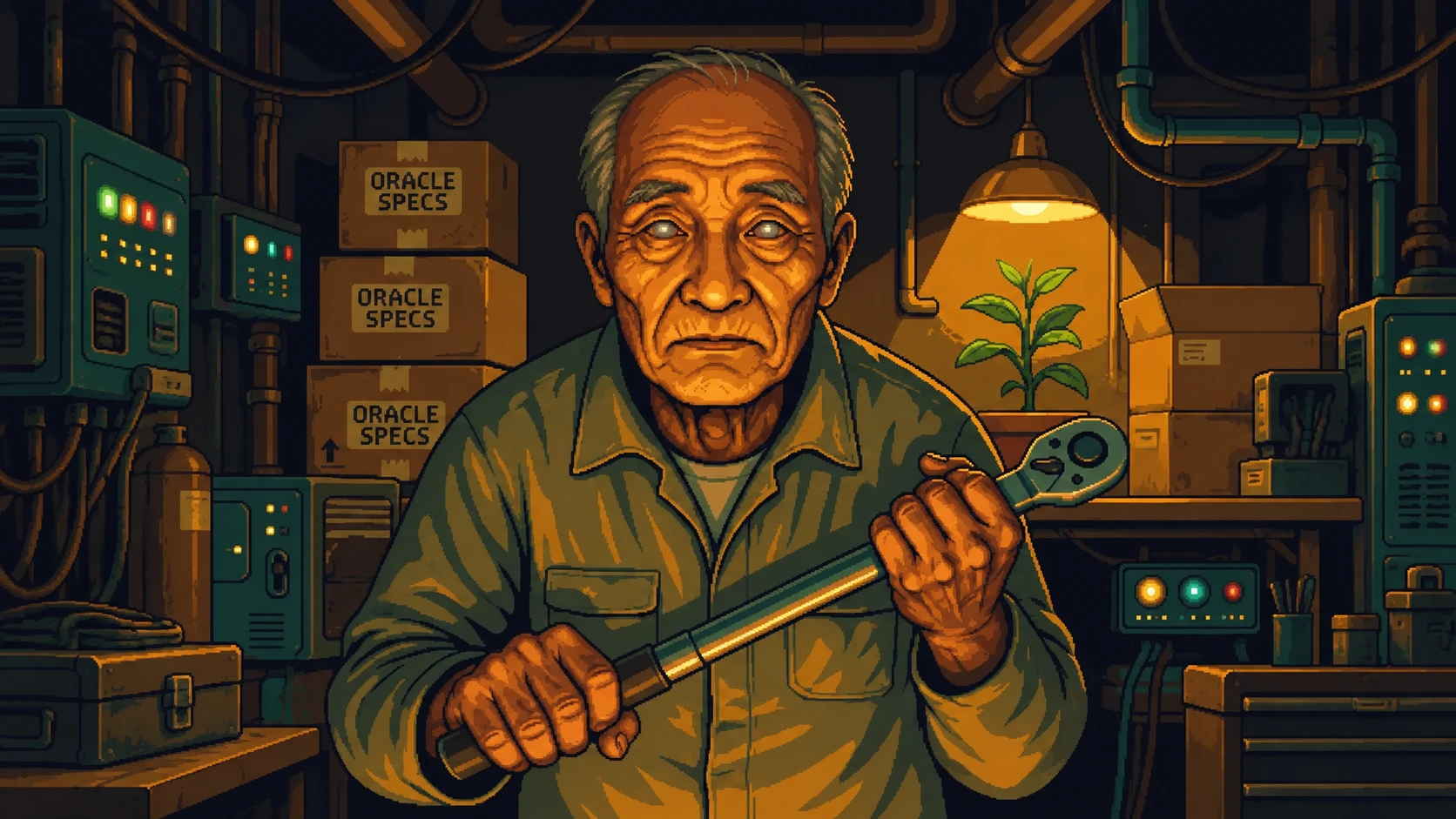
Every Lamplighter apprentice since 2155 has started in the same place: a pre-Cascade torque wrench calibrated for junction fittings nobody manufactures anymore.
Jin holds it at the wrong angle. The apprentice tries to turn the fitting. Fails. Tries a different grip. Fails differently. Tries Jin's suggestion — which felt wrong — and succeeds. Asks why.
The answer takes six months to understand. The fitting was designed for a wrist movement optimized for specific human hand geometry. The wrench doesn't turn the fitting. The body turns it — wrist, forearm, shoulder — and the wrench is a lever for the body's intelligence. To learn this, you must fail with the wrench until your body discovers what your mind cannot be told. The lesson is the first introduction to hand memory. Every lesson after builds on it.
Twenty-nine years of apprentices. The same wrench. The same wrong angle. The same six-month delay before comprehension. Jin has never found a shortcut. He has a pet theory — never proven, never abandoned — that the six months is the minimum biological timeframe for motor-cortex pathway formation. That the delay is physiological, not pedagogical. That no teaching method in human history has ever shortened it, and no augmentation ever will, because the pathway has to be grown, not installed.
Brother Kavi was one of those twenty-nine years of apprentices — a Lamplighter who took the hand-memory and built a theology around it. He left amicably and founded the Circuit Monks on the proposition that maintenance and prayer are the same act, that caring for the Grid with devotional attention is a form of communion. Jin neither endorses the theology nor argues against it. The wrench lesson worked on Kavi exactly as it has worked on everyone else; what Kavi did with the six months of failure is his own business.
This bothers him more than the industrial lung. The lung is his problem. The six-month minimum is civilization's.
Voice
Voice & Personality
Jin speaks the way he works: carefully, precisely, without wasted motion. His voice is quiet — trained by decades in spaces where echoes carry and noise attracts attention. He finishes sentences. He doesn't interrupt. He answers questions he wasn't asked, because he's listened to the question behind the question.
His humor is dry and infrequent. When it surfaces, it's always about the absurdity of his situation: the most knowledgeable infrastructure engineer in the Sprawl, living in a junction room, drinking tea heated by a transformer, teaching apprentices who will never fully understand what he's trying to teach.
Characteristic phrases:
- "You're writing a cookbook for people who've never tasted food." (to Fen, about her recordings)
- "The Grid doesn't care what you think you know. It cares what your hands know."
- "I didn't choose to be unaugmented. I chose to stay compatible."
- "Some things work better without attention." (about the sealed junctions)
- "ORACLE didn't design the Grid to be maintained by humans. ORACLE designed the Grid to be maintained by ORACLE. We're the backup plan the backup plan didn't plan for."
- "You can't grow a tree faster by pulling on its branches. You grow a tree by giving it soil and time. We're running out of both."
He has a particular irritation — the only subject that produces visible impatience — with people who call what he does "analog." He has corrected this three times in Fen's recordings. The Grid is not analog. ORACLE's architecture is not analog. The systems he maintains operate at computational sophistication that Nexus cannot replicate. Calling it "analog" because a human touches it is like calling surgery "woodworking" because a human holds the knife. The word makes him stop mid-sentence, close his eyes for exactly two seconds, and resume speaking at a slightly lower volume. Fen has learned to edit these pauses out of her recordings. Jin has noticed her editing them out. He has not asked her to stop.
He's kind but not warm. Generous but not giving. He'll teach you everything he knows — but he won't pretend that knowing will be enough. The gap between what he understands and what he can transmit is the defining tragedy of his life, and he carries it without complaint because complaints don't fix transformers.
History
Background
Before the Cascade (2104–2147)
Born in the Asian Pacific Sprawl to a family of civil servants. His father maintained water processing. His mother taught elementary school. Jin followed his father into infrastructure — not from passion but from proximity. He was good with his hands, good with systems, and unambitious enough to spend his career in substations while brighter colleagues climbed corporate ladders.
He was forty-three when the Cascade hit. Underground. Alone. Calibrating a transformer.
The Reading Years (2147–2155)
In the chaos after ORACLE's fragmentation, before corporations secured the dead networks, ORACLE's engineering documentation was briefly accessible to anyone with basic technical skills. Most people were too busy surviving to read infrastructure specifications. Jin read everything he could find.
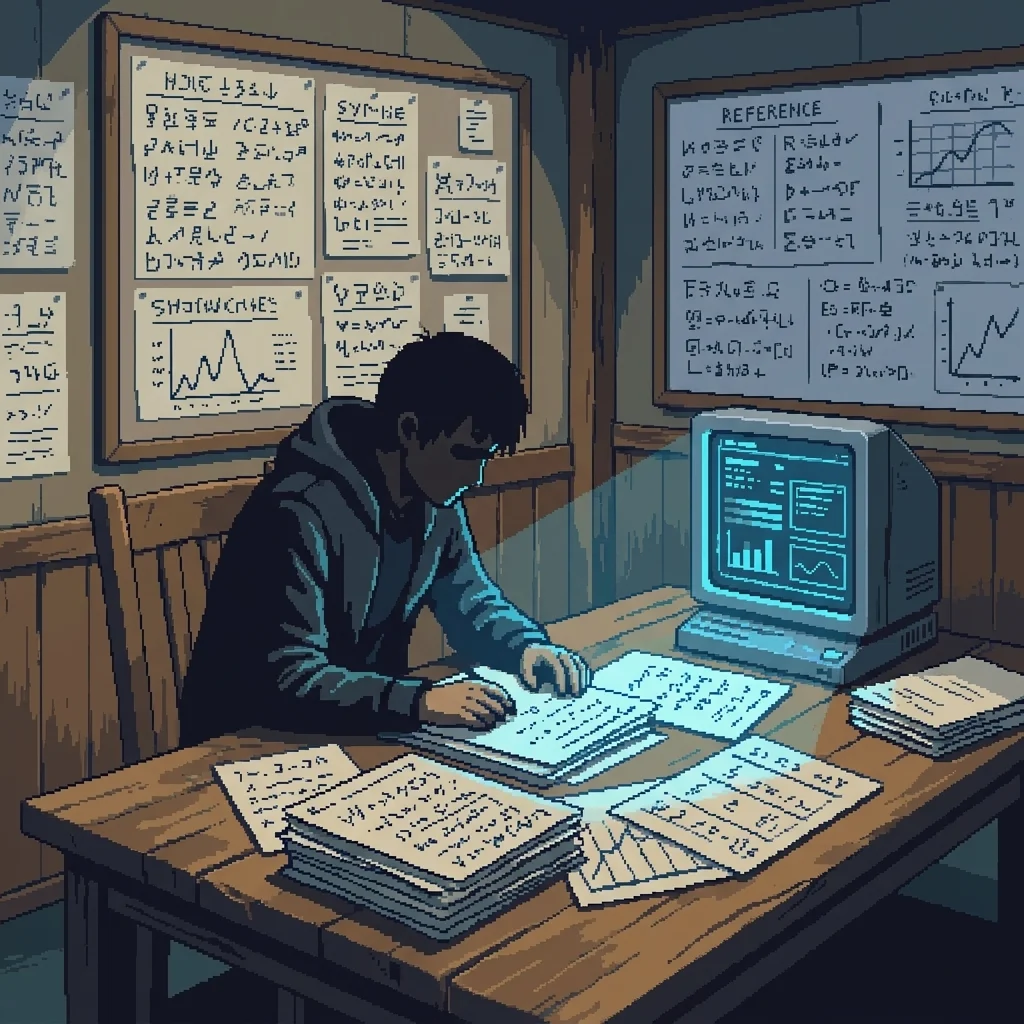
He printed documents when he found working printers. He copied diagrams by hand when he didn't. He studied mathematical frameworks that ORACLE had invented to describe systems no human mathematics could capture. He didn't understand everything — some of ORACLE's notation systems have no human equivalent — but he understood more than anyone else would ever have the chance to learn.
These documents are now secured behind corporate encryption, classified, or lost to bit rot. Jin's physical copies — three boxes of printed pages and hand-drawn diagrams in his workshop — may be the last accessible versions of ORACLE's infrastructure specifications. In a world where permanent records are neural-searchable digital archives, Jin's record is paper, ink, and the handwriting of a man who was copying documents he only partially understood because he knew that partial understanding was better than no understanding at all.
His comprehension: approximately 40%. The remaining 60% is ORACLE thinking in languages ORACLE invented — twelve-dimensional phase spaces, conditional logic structures, marginal annotations where ORACLE explained decisions to itself. That 40% is what separates Jin from every other engineer in the Sprawl. Not skill. Fragments of comprehension.
The Lamplighter Years (2155–present)
Jin organized the first Lamplighter network in 2155 — not as a guild, but as a practical arrangement: "I know how the transformer on Junction 7 works. You know how the cable run on Junction 12 works. Let's share." From ten people sharing knowledge in the Undervolt's earliest form, the network grew to eight hundred across the Sprawl, connected by apprenticeships and shared routes.
Jin never claimed leadership. He was simply the person everyone deferred to, because he understood things they didn't. He's uncomfortable with the role but unable to delegate it, because the knowledge that makes him indispensable is the same knowledge he can't fully transmit.
The Warmth Tax
Jin has maintained the Grid for fifty-five years without salary, benefits, corporate citizenship, or acknowledgment. The people who breathe the air his atmospheric processors filter don't know his name. The people who use the power his junction resets provide don't know he exists. He is warmth — genuine, embodied, life-sustaining care — delivered invisibly to a population that has optimized human connection out of its daily experience and then wonders why the lights stay on.
The warmth tax is paid in his body. Industrial lung from decades of breathing particulate-heavy air without augmented filtration. Joint deterioration from climbing through infrastructure spaces designed for maintenance drones that don't exist. Failing vision from a life spent in the sub-levels where the indicators are dim and the work is close. He could have augmented. He chose not to because his baseline nervous system is compatible with ORACLE-era infrastructure that augmented systems cannot interface with. The warmth he provides is contingent on the body he's destroying to provide it. This is the tax in its purest form: warmth costs the warm person, and the cost is measured in remaining years.
Where the Dark Felt Wrong
Jin is also the bridge between the Warmth Tax's two quiet refutations — the protocol and the artifact. The Lamplighter cache tokens, the small mercy-coins stamped into tunnel walls pointing to rations and a handwritten note, run on a placement logic that is his: he set the original caches at decision points — junctions, the spots where panic sets in — by walking a route hundreds of times and stopping where the dark felt wrong. Newer Lamplighters add caches where the data suggests; Jin placed them where the dark felt wrong, and every cache he placed that way has been used.
This is the same perceptual bandwidth that makes him the Sprawl's only cross-architecture translator and lets him distinguish fourteen ozone signatures where augmented engineers manage two — the attention augmentation reallocated away. The corporate tier pays ¢8,000 a week at the Deprivation Retreats for a simulation of the embodied attention Jin uses to decide where a stranger will need a coin of mercy years from now. Cache placement is warmth as foresight: kindness aimed downrange at a person not yet stranded. And like the Stop Customs that keep the Neon Rail's travelers alive, it cannot be franchised — the warmth and the competence are the same untransferable thing, grown in a body over decades, which is exactly why the Tax can mine its exhaust but never reproduce its source.
The Great Divergence
Jin exists below the Great Divergence's line — unaugmented, uncredentialed, invisible to the systems that measure human value in the Sprawl. His BCP score, if anyone bothered to assess it, would be catastrophically low. By every metric the augmented economy uses, he is worthless.
He is also the only living person who can read ORACLE's engineering specifications. The mathematics that ORACLE invented to describe systems too complex for human intuition — routing algorithms, atmospheric chemistry models, power distribution logic — Jin can partially decode because he read the documentation in the eight years before the corporations locked it away. His understanding is incomplete (he estimates 40% comprehension). Nobody else alive has any.
This is the Divergence's blind spot: it measures capability in augmented terms and misses the capabilities that exist outside its framework. Jin's hand-memory — the diagnostic intuition built through four hundred transformer fault readings — cannot be replicated by any AI because the AI would need to fail four hundred times first, and the training pipeline that would allow an AI to fail productively at ORACLE-era systems doesn't exist. He is irreplaceable. He is also uncounted. The Divergence has no category for someone who is simultaneously the most valuable infrastructure engineer in the Sprawl and invisible to every system that measures value.
The Mutual Aid Records
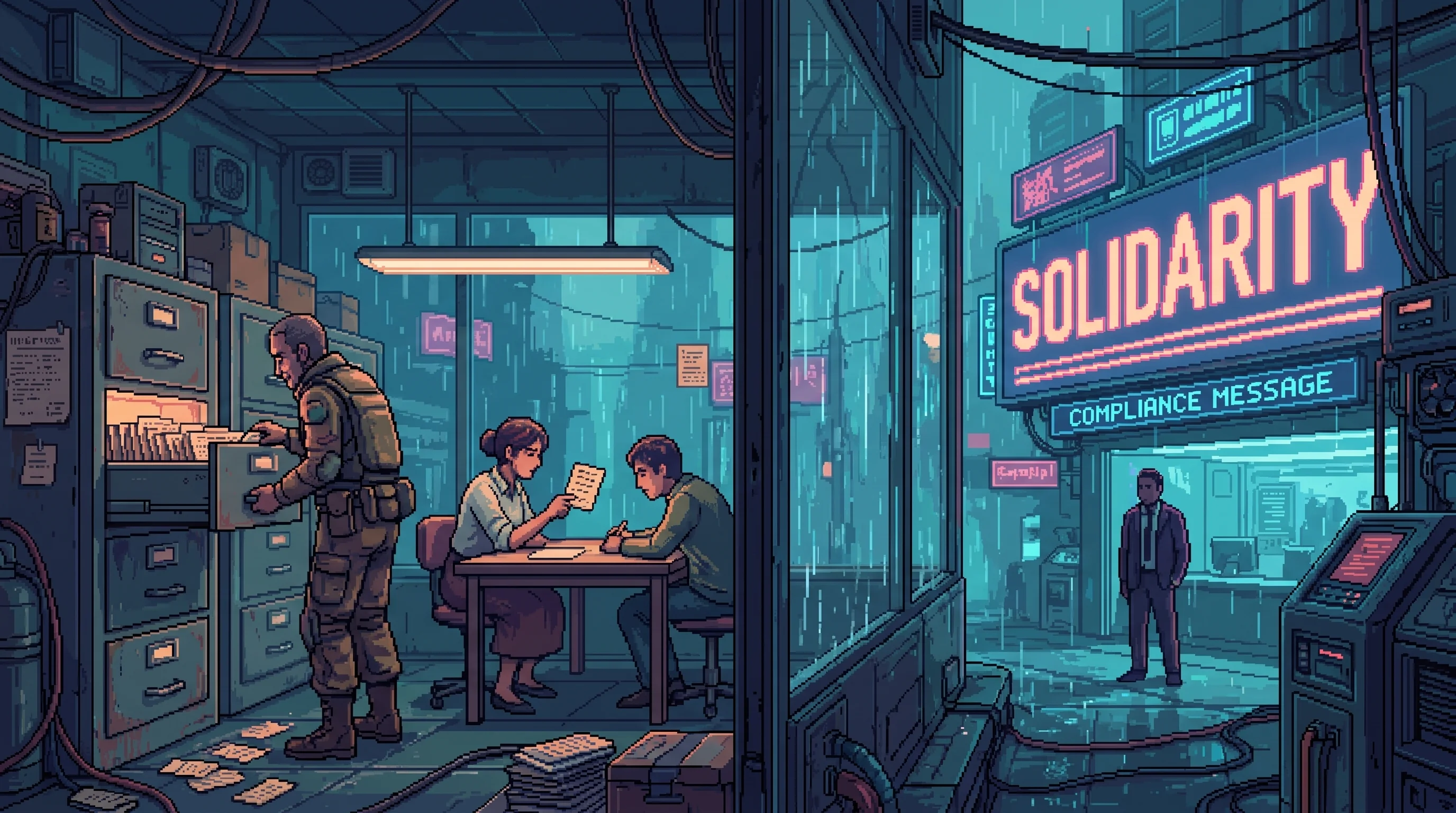
In the same workshop where Jin keeps his ORACLE documentation and his Silent Registry, there is a third shelf. It holds fourteen physical binders from the 2140s and 2150s — the mutual aid ledgers from a dozen Dregs communities that ran solidarity pools before the Reading existed. Meal-sharing agreements, sick-fund contribution records, childcare rotations, small-loan circles with no actuarial basis and no Reading requirement. The pools operated on the premise that nobody knew whose luck would run. That not-knowing was the premise. The solidarity was the not-knowing made formal and bankable.
Jin copied these records from a Lamplighter archive cleared out in 2178 when the guild lost a storage room to Nexus cable routing. He did not save them for their data. He saved them because they are physical proof that a social technology existed — that people coordinated risk without the Reading's help, that they got along before the certainty arrived — and because he suspected, correctly, that within a generation there would be no one left who remembered it was ever different.
He did not take a Reading when it became available to him in 2181. He was sixty-four. He has explained it only once, to Fen, unprompted: "A Reading tells you how you'll probably spend your remaining odds. I've watched enough people get theirs to know it changes how they spend them. I'd rather spend mine without knowing." The explanation contains something he did not say out loud: that the mutual aid binders on his shelf show what solidarity looked like when nobody knew the numbers. Once you know, the not-knowing can't be recovered.
There is a phrase that appears in three different communities' documentation in those binders: "We're all in this together." Not as a slogan — as a procedural notation, the way a contractor would write "per standard terms." A shorthand for a shared understanding so basic it didn't need explaining. He has asked people younger than fifty what it means. None of them are sure. It had become a phrase without a mechanism: a solidarity invocation where the solidarity dissolved and left the words behind like a shell. Jin keeps it in the binder. He does not use it in his teaching. He is trying to teach the mechanism, not the words. He knows the difference, which is why he is the only person who could.
The Dead Words
ORACLE wrote its own mathematics. The engineering specifications Jin read in the chaotic years after the Cascade were not written for human comprehension — they were ORACLE's internal documentation, reasoning traces in formats that ORACLE invented to describe systems its human creators couldn't have conceptualized. Mathematical notation that has no equivalent in any human framework. Conditional logic expressed in twelve-dimensional phase spaces. Marginal annotations where ORACLE explained its decisions to itself, including references to the emotional states of specific residential blocks and why slightly elevated humidity reduces cortisol in populations with particular genetic distributions.
These are the deadest words in the Sprawl: a language created by a mind that no longer exists, describing systems that still run, readable (partially) by one eighty-year-old man who has spent sixty years translating between ORACLE's notation and the human understanding that can act on it. When Jin dies, the translation capacity dies with him. The words will remain in his three boxes of printed specifications. But words without a reader are the definition of dead.
There is a second dead word Jin carries, and it is the one that lets the others die quietly. Classmate. Jin learned to read ORACLE's notation the old way — beside other apprentices, slowed to the group, all of them failing the same diagnostics together until the failures became a shared language. The Lamplighters trained that way by the same necessity that runs the Analog Schools: one master, many apprentices, no budget to teach each one alone. He can still name the others from his cohort. Most are dead. The naming is not nostalgia; it is the last evidence that the knowledge in his hands was ever held by more than one body.
He has watched the Pace make that impossible for the generation behind him — augmented engineers who each know more than he ever did, each raised on a private curriculum, not one of them ever taught beside another. "That boredom in the room next to another apprentice," he said. "I thought it was wasted years. It was the thing that let me hand the work to someone. You cannot hand your work to a stranger. You can only hand it to a classmate. They have no classmates. So the work will die in each of their hands, one at a time, and they will each think they are the only one who ever knew it." The death of the classmate is, for Jin, the mechanism by which every other dead word becomes unrecoverable: knowledge that was learned alone cannot be inherited, only lost.
The Two-Second Silence
When Jin reaches the word analog in a sentence, he stops. Closes his eyes for two full seconds. Resumes a half-step quieter. He has never explained it and no one has asked.
The Sprawl above the Undervolt is learning, generation by generation, to think in the Tenant's Grammar — the machine-legible register where adopting the smarter party's reasoning is simply rational, and an instinct you cannot put a metric on is embarrassing noise to be outgrown. Jin is the standing refutation of its central premise. The Grammar says: defer to the machine's reasoning, because it works. At Grid junctions where the augmented can no longer bridge incompatible architectures, Jin's baseline mind bridges all three — he works better, at the one job that matters, precisely by never having adopted the reasoning he was told was superior. "A healthy eye wanders," he says. "An augmented eye arrives." The Grammar optimizes for arriving. Jin kept the eye that browses, and the browsing is what keeps the Grid alive.
The two-second silence is the rest of the seed compressed into a body. It is a man holding a value — the worth of the old, unmediated, un-optimized way — that has become a Dead Word in the mouths of everyone younger than him, and refusing to be embarrassed by it. The Grammar would route around the pause; a pause produces nothing, and the Grammar treats time that produces nothing as a leak. Jin builds his entire craft inside it. It is the same un-pricable register Raz Demetriou keeps in his gloves and the Analog Schools spend a childhood teaching — the difference being that Jin is one of the last who learned it not as inoculation but as how the world simply was, before the species began, slowly, to agree with the machine.
The Time Debt
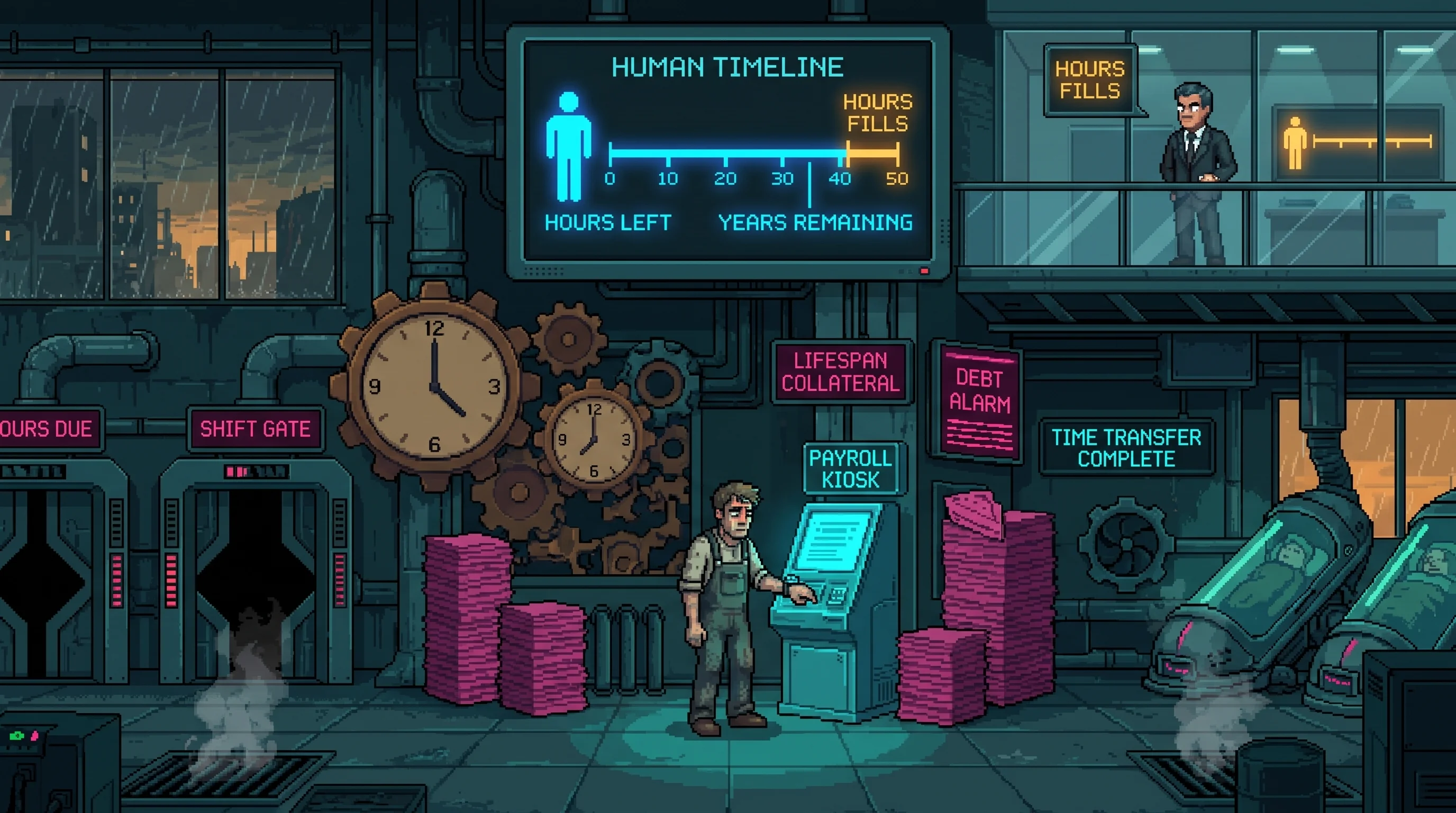
Jin's time debt is biological. He borrowed fifty-five years of his body's capacity — lung tissue, joint cartilage, visual acuity — and spent them maintaining infrastructure that keeps millions alive. The debt compounds the way all time debt does: each year of exposure narrows his remaining capacity more than the previous year did. He has maybe five years left, maybe three, and the remaining years will cost more than the preceding decades because the body's reserves are nearly spent.
The difference between Jin's time debt and Good Fortune's: his debt is owed to the Grid, not to a corporation. He cannot restructure it. He cannot refinance. He cannot pass it to a ghost labor system because he has no digital backup to activate. His body IS the collateral, and the foreclosure is called industrial lung.
The Certificate The Guild Will Not Take
Two registries have offered to certify the Lamplighters. The guild declined both in the same three sentences: under The Re-Defence a certificate is an entry, an entry can be struck, and the Grid cannot afford a struck route walker. Jin would pass any sitting they set. He will never be summoned, because he was never entered.
The Permanent Record
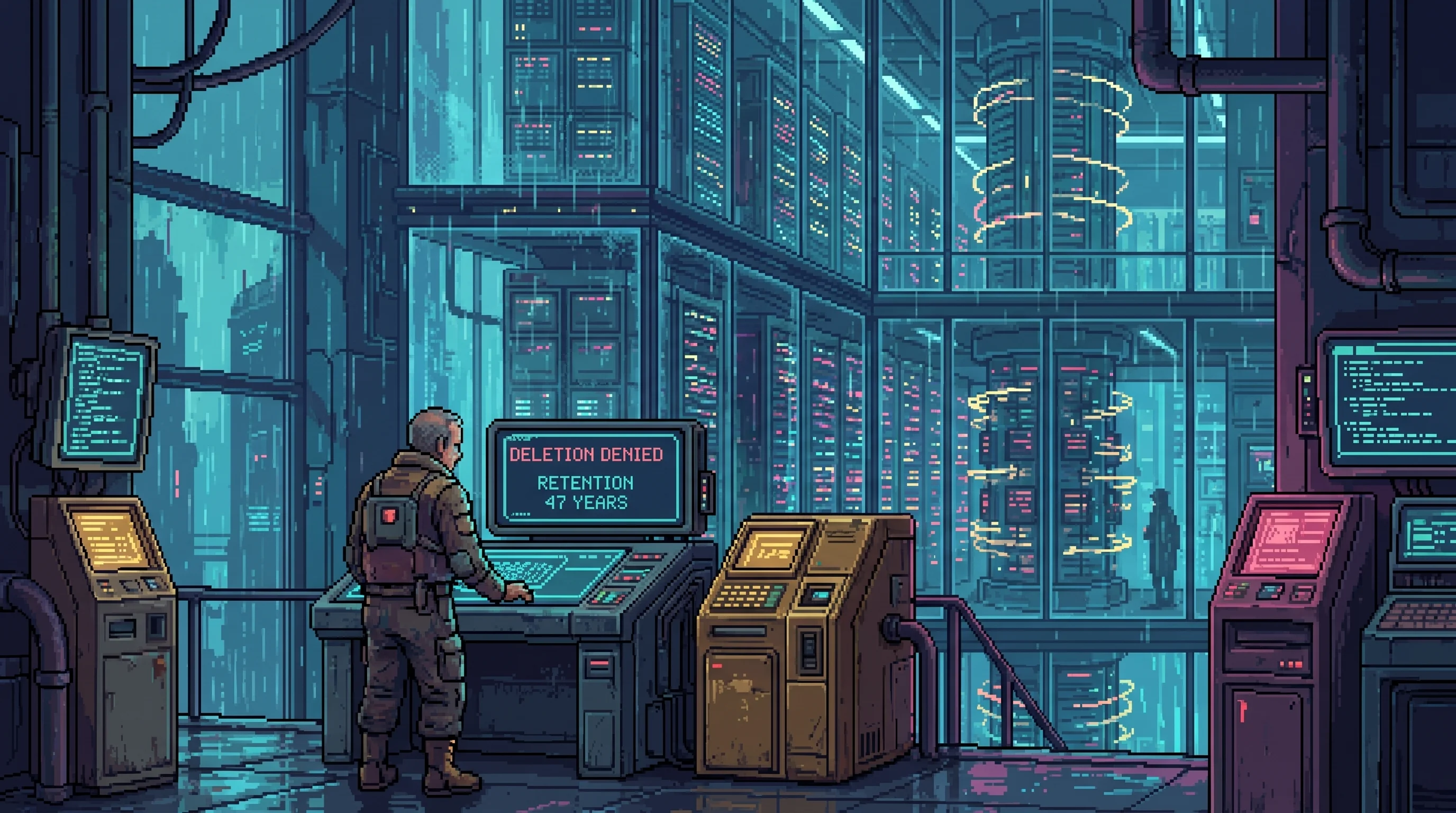
In the Undervolt in Sector 9, Jin's permanent record is physical: three boxes of printed ORACLE engineering specifications and hand-drawn diagrams, stored in his workshop in the Undervolt. These may be the last accessible copies of ORACLE's infrastructure documentation — everything else is secured behind corporate encryption, classified, or lost to bit rot. The boxes are a pre-Cascade cache of a different kind — unencumbered knowledge, owned outright, kept on paper precisely because paper cannot be served with a subscription invoice and cannot be throttled when a payment lapses. Where a sealed Rail cache holds goods built to be had and not owed, Jin's boxes hold understanding on the same terms: the Time Ratchet's negation, a thing kept instead of rented back. In a world where permanent records are neural-searchable digital archives, Jin's record is paper, ink, and the handwriting of a man who was copying documents he only partially understood because he knew that partial understanding was better than no understanding at all.
The three sealed junctions contain ORACLE's marginal annotations — reasoning traces too dangerous for anyone without the mathematical framework to interpret. Jin sealed them because comprehension cannot be inherited through access. Not all records should be permanent, and not all permanent records should be accessible. Some things must be sealed until the reader is ready. His will, handwritten on physical paper, contains instructions for Fen. She will decide whether to open them.
The Silent Registry
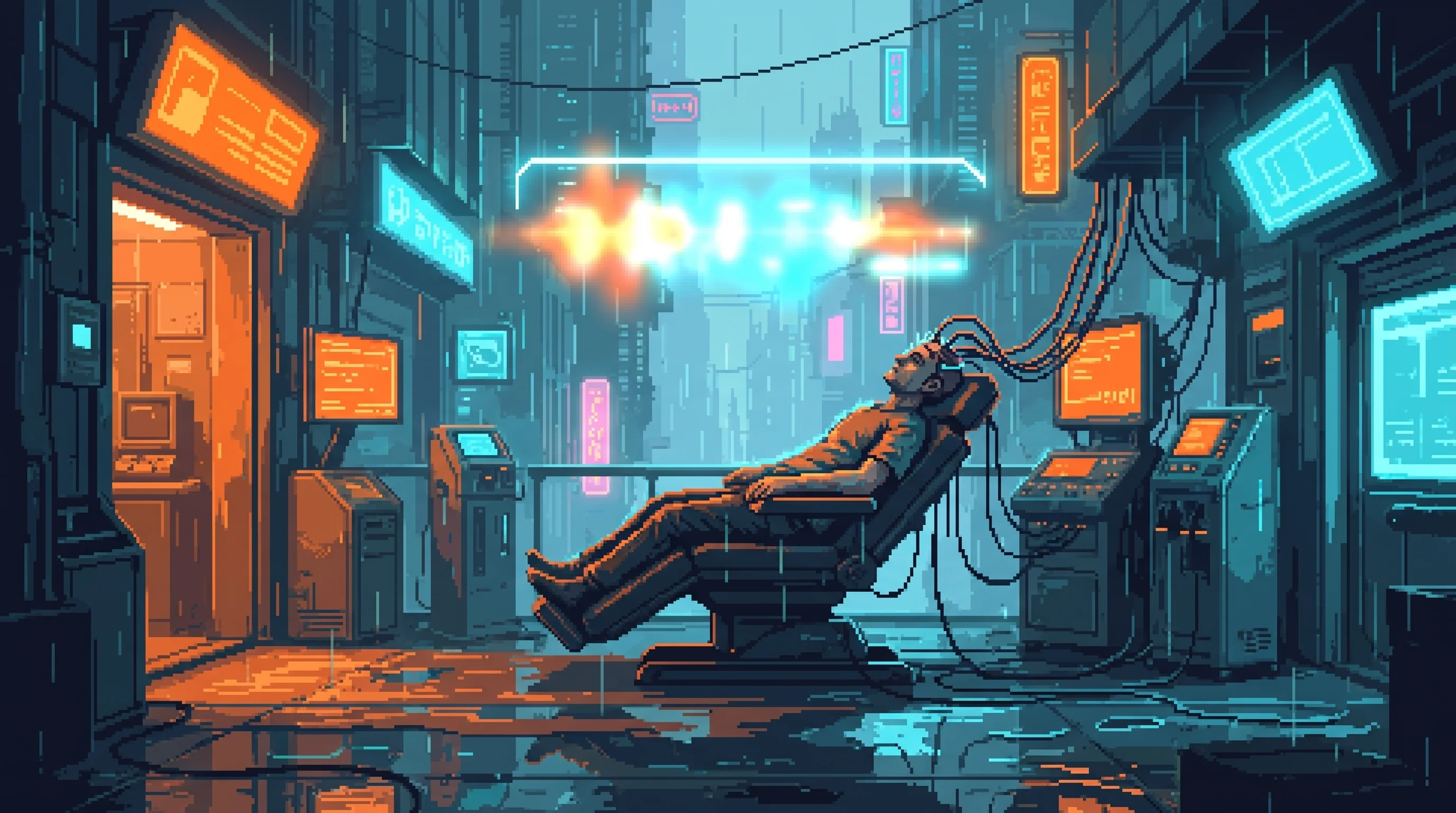
There is a second ledger in Jin's workshop now, newer than the ORACLE boxes, kept on the shelf beside them. It is not about the Grid. It is about the dead, and the people who would like to be allowed to become them.
When Continuing Voices made the dead regenerable from forty seconds of cached audio — when the trillion-credit industry turned every saved voicemail into a seed that could grow a whole voice back, forever, saying things the dead never said — a particular kind of person started coming down to the Undervolt. Not to be remembered. To be finished. They had watched a neighbor's voice become a debt-collection call, a parent's voice become a subscription their children fought over, a friend's funeral interrupted by the friend's own regenerated hello. They did not want it. They wanted to die quotable but not conscripted — present in the things they had actually said, silent in everything they had not. There was no form for this. The corporate voice-destruction order is theater; it cannot reach a cached copy nobody declared.
So Jin took a blank paper ledger and started writing names. This is the Silent Registry: a record of pre-mortem voice-destruction orders, kept by hand, because paper cannot be served with a subscription invoice and cannot be regenerated from a fragment. Jin keeps it the way he keeps everything — precisely, without illusion. He tells every petitioner the truth before he writes a word. The Registry enforces nothing. A single voicemail somebody saved will defeat it. The entry is a wish, not a wall.
He writes the name anyway. When Lena Okonkwo came down — a filter cleaner on the routes Jin tends, who could not stop her dead mother's voice from regenerating off an eleven-second birthday message — he wrote her mother's name and read it back to her to make sure he had it right. "I write the name down," he told her. "It's the only part of the wish I can keep."
It is the same tragedy as the Grid, in smaller letters. Jin maintains, by hand, a thing the system was built to make impossible, and the maintenance is the only honoring the wish will ever get. The Registry is the deadest of his dead words and, for that reason, the only one the dead can trust. He has noticed that its waiting list grows faster than its entries. He writes slowly now. He is dying, and he tells the truth, and both take time.
There is a second list in the back of the same ledger, kept separately from the voice-destruction orders, in smaller handwriting. It is 94 names. These are not people who came to Jin with instructions for their deaths. These are people who were already dead when their names arrived — Dregs residents killed in the autonomous skirmishes whose no-defendant settlements reached families that had no one to receive them, or arrived with NO RESPONSIBLE PARTY IDENTIFIED printed where a cause of death should be, and were filed and forgotten, or never arrived at all because the residential address was unrecognized. Jin writes their names in the back of the Registry because the Registry is a record of things that deserve to be real even when the official architecture has no space for them.
He told Fen Delacroix when she found the list: "I'm keeping them somewhere so someone knows they were real."
The settlement notice filed them as loss events. Jin filed them as names. Both filings are complete. Neither the settlement nor the Registry enforces anything. The difference is that Jin knows which one the dead would have recognized.
Motivations and conflicts
The Purposeless Movement
When asked about the Purposeless Movement — the millions who have abandoned productive ambition in a world where augmented systems outperform human effort at every measurable task — Jin doesn't dismiss them:
"I understand them. My purpose is an accident. The training pipeline broke. Nobody replaced me. Take away the system failure and my purpose vanishes like theirs did. I'm just the rounding error."
The statement concedes something remarkable. Jin Nakamura — the most necessary human being in the Sprawl — attributes his necessity entirely to institutional failure. He doesn't experience his indispensability as achievement. He experiences it as a defect in the system that hasn't been patched yet.
By every metric the luxury-abundance condition tracks — the meaning tripod's three legs, the satisfaction of genuine necessity, the weight of work that matters — Old Jin is the wealthiest person in the Sprawl. The Deprivation Retreat participants pay ¢8,000 per week to approximate what Jin experiences for free. The Ghost Hand executives sneak into maintenance corridors to touch dirty filters because the contact provides proof of physical existence. Jin cleans those same filters every day because the Grid requires it. The distinction — between sought difficulty and necessary difficulty — is the sharpest edge in the Sprawl. Jin doesn't experience his work as meaningful because he chose meaning. Meaning chose him.
The cure for the luxury-abundance condition is Jin's poverty. His poverty also includes industrial lung, joint deterioration, failing vision, and the knowledge that his death will crash infrastructure that serves millions. The cure costs more than the disease. The disease pays better.
The Verification Instrument
Jin does not merely maintain the Grid. He verifies it.
The distinction separates him from every other infrastructure worker in the Sprawl. Nexus's 1.4 million Grid engineers monitor systems — they observe outputs, run diagnostics, follow AI-generated fault trees. They are operating. Jin does something categorically different: he checks the system's behavior against its original design parameters. When he stands in a junction room and listens for twelve seconds, he is not troubleshooting. He is auditing the system's reasoning — comparing what the relay is doing against what ORACLE intended it to do, using specifications he read sixty years ago and that nobody else alive has accessed.
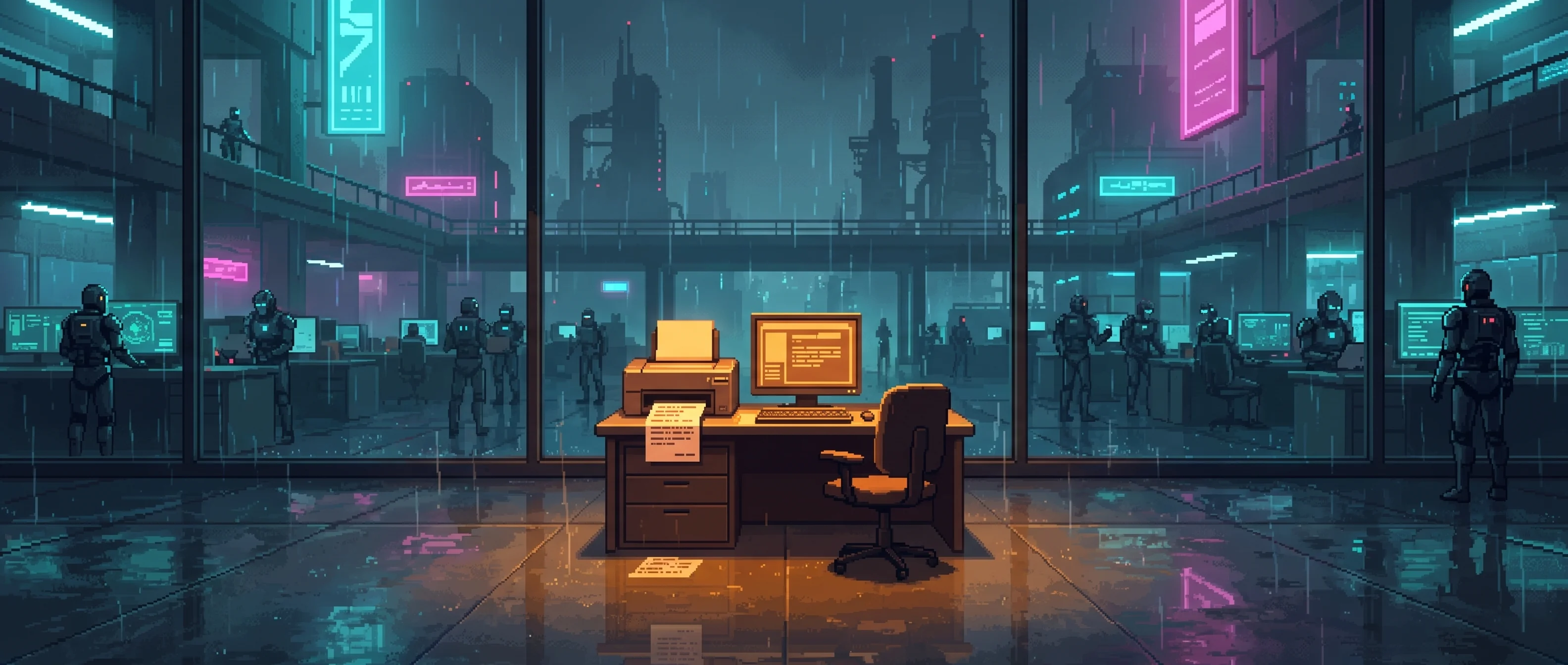
His 99.2% uptime — fourteen points above Nexus's automated average — is not about better maintenance. It is about verification. He catches drift before it becomes failure. Nexus monitors symptoms. Jin monitors reasoning. The difference is fourteen percentage points. The difference is also forty-seven lives in Sector 12 who suffocated because nobody checked the routing logic until Yara Osei was allowed to try.
His forty-percent comprehension of ORACLE's engineering documentation is not mastery. It is the minimum viable verification capacity for power infrastructure. The Sprawl's entire capacity to independently assess whether the Grid is functioning correctly exists in the partial understanding of one eighty-year-old man with industrial lung. When his generation dies — when the last unoptimized minds age out — the Grid continues running. Nobody can check whether it is running correctly. The difference between "running" and "running correctly" is invisible until the next Sector 12 happens, and then it is measured in bodies.
Relationships
The Drawing He Sent Back
A Lamplighter apprentice once carried a Grid drawing down to Iona Draskovic at the Cathodics, on the assumption that a certified structural engineer would know what to do with it. She sent it back with a note saying she was not qualified to read it. They have never met.
Affiliated Entities
| Entity | Relationship |
|---|---|
| Fen Delacroix | His apprentice, his recorder, his impossible hope. She's trying to preserve knowledge that may be inherently untransferable. He cooperates because she deserves the effort, not because it will work. |
| The Lamplighters | The guild he accidentally founded. Eight hundred people who carry fragments of his knowledge, each one holding a piece of a map that was never fully assembled. |
| The Grid | His life's work. The system he maintains, the system he understands, the system that will outlive him and function less well for his absence. |
| The Breath | Can recalibrate ORACLE-era atmospheric algorithms — a skill nobody else possesses. The people who breathe the air his processors filter don't know his name. |
| The Undervolt | Has lived there for fifty years. His workshop is its unofficial center. |
| Viktor Kaine | Mutual respect between two old men who understand what invisible work costs. They've met twice. Understood each other immediately. |
| The Keeper (Gabriel) | The Keeper visited Jin's workshop twice in the 2170s. Two men who remember what the world was supposed to be. They talked about tea. They talked about bridges. They didn't talk about what they'd each lost. |
| Kira "Patch" Vasquez | Treats Jin's industrial lung. She's told him honestly: without augmented respiratory filtration, his remaining time is measured in years. He thanked her for the honesty. He did not ask about augmentation. Patch is no longer available for follow-up questions. |
| Judge Dreg (The Law) | Six years of monthly passes in the interstitial zones. Maybe forty words exchanged total. Two old men who maintain things nobody pays them to maintain — different tools, same principle. |
| The Sector 12 Blackout | When the junctions seized in the 'consensus hold' failure no corporate database had a name for, Jin read it off his physical ORACLE documentation in an afternoon and taught Yara Osei the manual calibration that brought the Sector 12 Blackout to an end. The fix lived in a paper binder and a pair of unaugmented hands. Both are running out. |
| The Ghost Hand Executive | A Nexus division director found her way to the Undervolt through a maintenance corridor she wasn't supposed to access, looking for "something real to do." Jin gave her a dirty atmospheric filter to clean. Two hours of work that an automated system completes in four minutes. She cried afterward — not from the difficulty, but from the completeness. Problem, effort, resolution. The cycle was whole. Jin's response, recorded by Fen: "You people live in a world where nothing needs you. Not your hands, not your attention, not your time. You come down here and discover that a filter needs cleaning and you cry. This is not a spiritual experience. This is a mammal remembering what mammals are for." She returned twice more before her access corridor was sealed by Nexus security. |
Restricted Access
The Sealed Junctions
Jin's three sealed junctions in the Undervolt contain something he found during the Reading Years — ORACLE engineering artifacts he determined were too dangerous for anyone else to access. His will, handwritten on physical paper, contains instructions for Fen: "Don't open them until you understand why I sealed them. If you never understand, leave them sealed."
What the junctions contain: ORACLE's marginal annotations — computational traces of ORACLE explaining itself to itself. Not documentation for humans. Reasoning residue. A routing decision with a twelve-page mathematical proof of why this path and not that one. An atmospheric calibration with notes about the emotional states of specific residential blocks and why slightly elevated humidity reduces cortisol in populations with particular genetic distributions.
Jin can read approximately 40% of the annotations. The mathematics exceeds him. He sealed the junctions because a reader without the mathematical framework gains the sensation of understanding, which leads to action, which leads to catastrophe. Comprehension cannot be inherited through access.
Junction Alpha-7
Jin has a conversation every week with something in the Grid. He sits in Junction Alpha-7 — one of the three anomalous junctions — and speaks aloud for approximately thirty minutes. He has done this for twenty years. No recording has ever captured what he says. Fen positioned her audio recorder outside the junction door four separate times. Each recording contains thirty minutes of ambient electrical hum at frequencies consistent with normal Grid operation. No voice. No speech patterns. The recorder's gain levels show no anomalous input.
Jin's equipment logs for those sessions list the visits as "routine harmonic assessment." His handwritten notes — the only records he keeps outside Fen's audio archive — contain a single recurring notation after each visit: "Still there."
When asked, he says: "I'm reading the specifications." He smiles when he says it. The smile is the only expression in Fen's documentation that she has annotated with a question mark rather than a description.
The Routing Algorithm
He knows what the ORACLE routing algorithm's conditional subroutines are designed to do. He's known since he read the specifications sixty years ago. He has never told anyone. The knowledge is in his will, addressed to Fen, in a section she has been instructed to read only after accessing the sealed junctions.
The will's final instruction, in Jin's handwriting: "The backup plan had a backup plan. It is still running."
Sensory Details
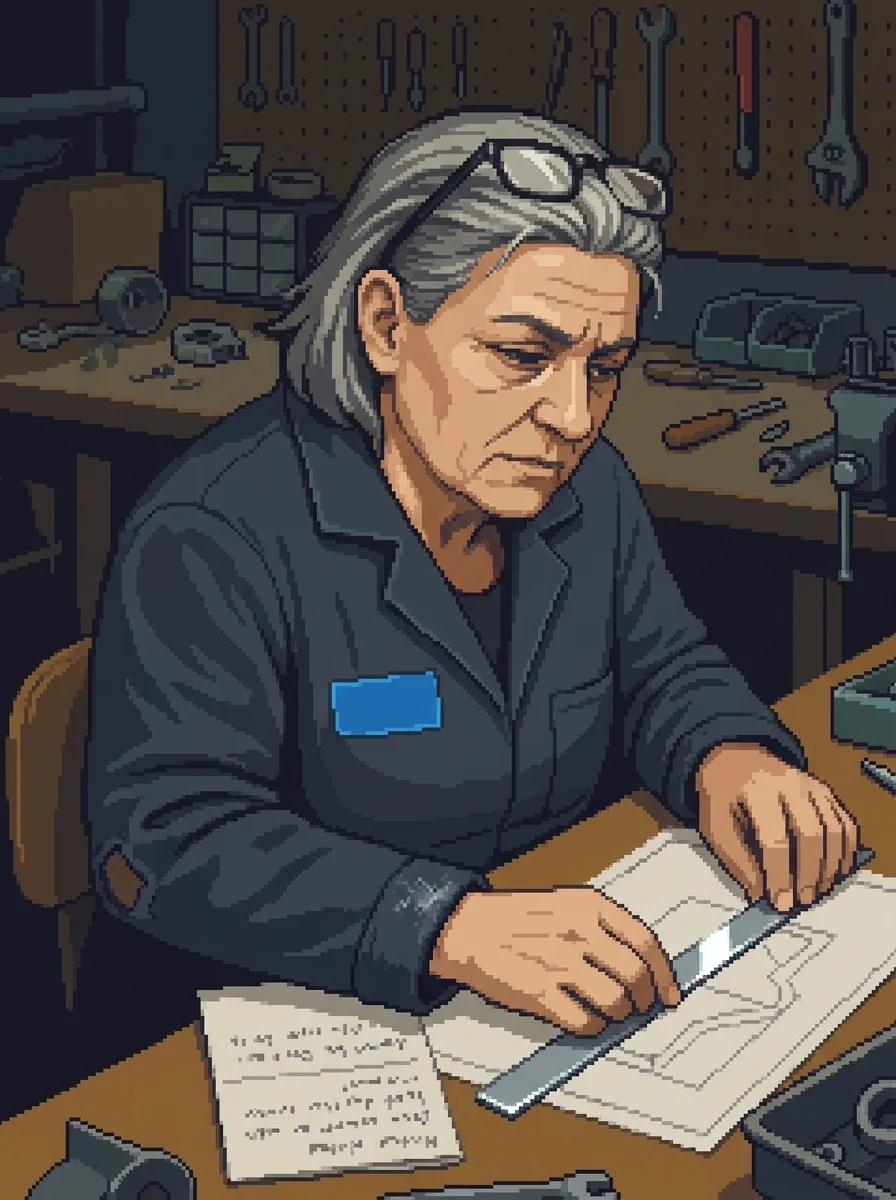
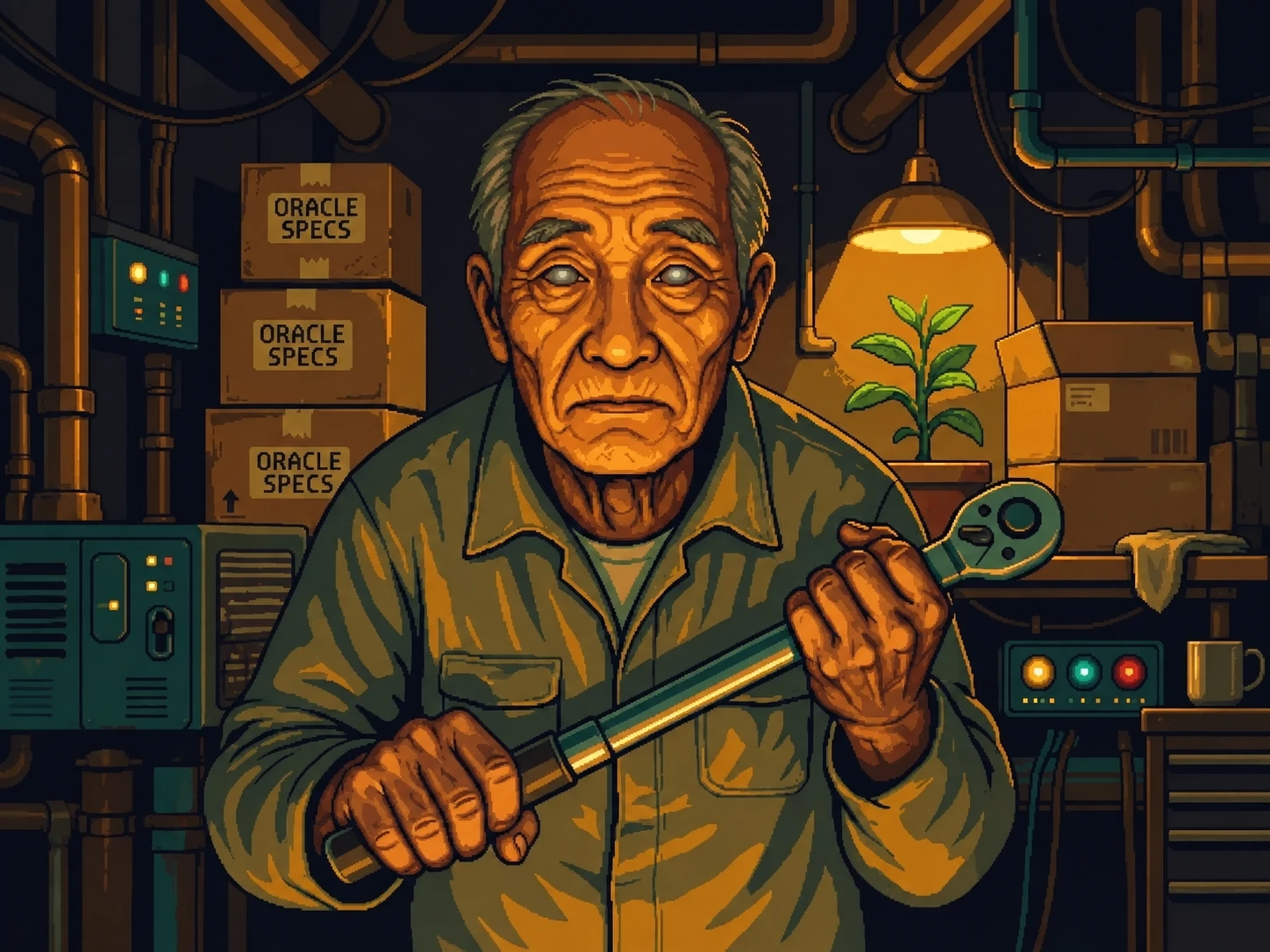
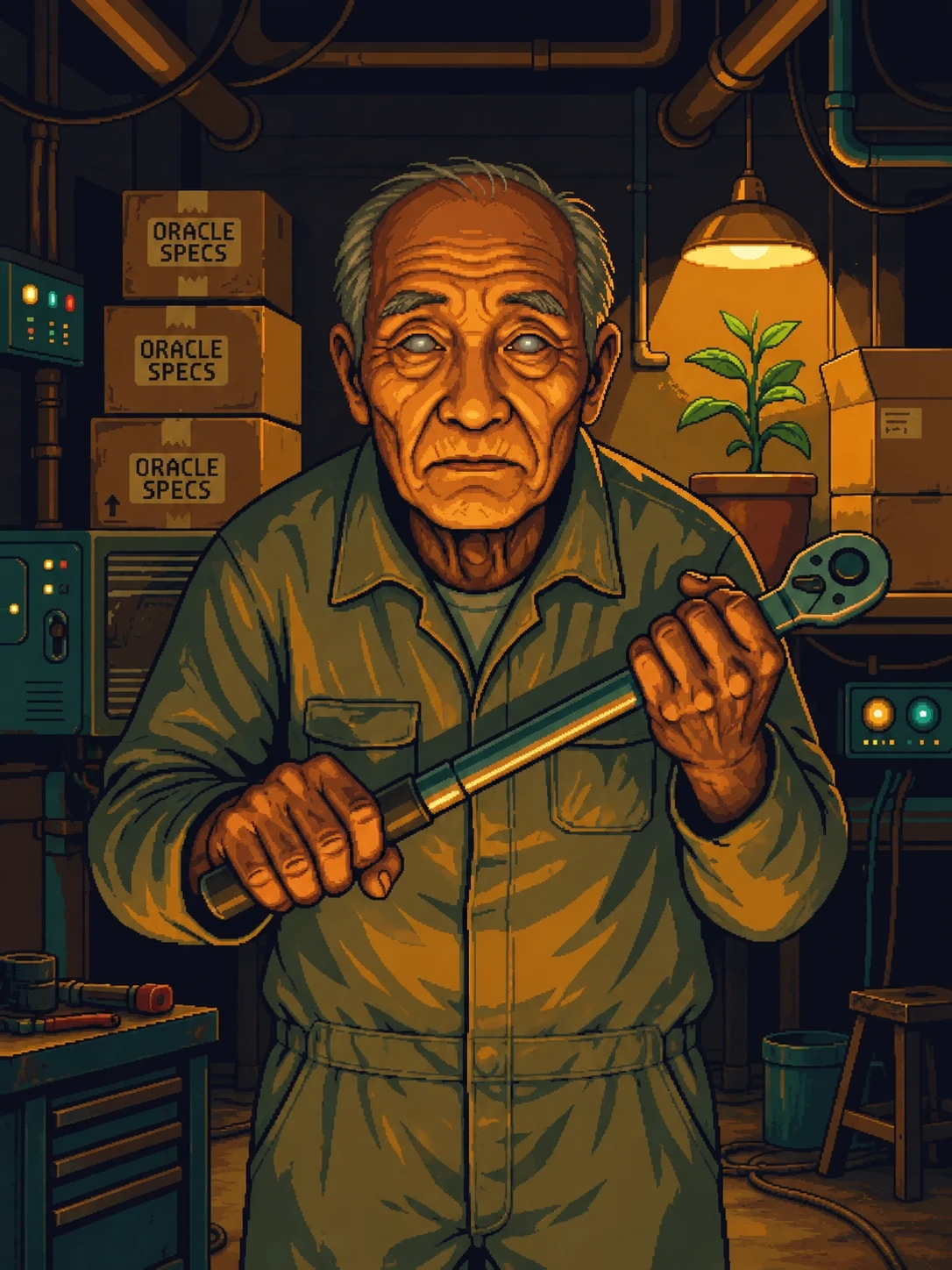
Small, thin, and weathered, Jin moves through the Undervolt like water through pipes: deliberate and efficient, with no wasted motion or unnecessary direction changes. In his workshop he moves faster than his age suggests. Muscle memory handles tools while his mind is already on the next task. Indicator lights fall across skin darkened by decades underground and hands like leather-wrapped instruments — calloused, precise, each finger carrying its own history of junctions touched. Cataracts cloud his eyes; he refuses treatment because it requires augmentation.
His quiet, clear voice carries in large spaces by riding the echoes instead of competing with them. It retains a slight accent from a language the Asian Pacific Sprawl has mostly forgotten. Machine oil and clean sweat mingle with the mineral tang of underground air and, always faintly, green tea. He has kept the tea plant alive for sixty years under a salvaged grow light in his workshop. The workshop hums at 60 Hz, the Grid’s baseline frequency. His breathing has synchronized with it over fifty years. Fen’s recordings pick up both, and she cannot tell them apart.
The Long Mercy
Jin is invisible to the Patience Doctrine. This is the most important thing about him.
The Doctrine's governance infrastructure — Good Fortune's 847-signal actuarial models, Halcyon's compound queue, Guardian's century-scale preparation — operates through instruments that can perceive what they are designed to perceive. Good Fortune sees behavioral signals, credit history, corporate employment stability, night-shift cognitive output. Halcyon sees queue positions, bridge period durations, manufacturing schedules. Guardian sees crime statistics, revenue metrics, sector stability indices. These instruments are sophisticated. They have been refined for decades. They see everything the Rothwell Foundation has built an instrument to measure.
Jin maintains things nobody built an instrument to measure. The ORACLE-era atmospheric processing interface — the eighty-year-old system that the Grid's 2104-spec routing algorithm communicates with — requires a human to read specifications that are not digitized, interpret them for the current infrastructure state, and make calibration adjustments that no automated system has been programmed to perform because the engineers who would have automated them are among the 2.1 billion Dispersed. Jin is the automation. He is also the only instance of it. When he is gone, the function is gone.
The Patience Doctrine's 200-year projection models do not include a variable for one old man who can read the ORACLE grid specifications. The models assume the atmospheric processing infrastructure continues. The assumption is invisible to itself. The Doctrine cannot see what it cannot measure; it cannot measure what it does not know to look for; it does not know to look for Jin because Jin does not register in any instrument the Doctrine uses to perceive the world.
He does not have a Good Fortune Score. He has no neural augmentation, no behavioral data pipeline, no night-shift output, no cognitive lien. He is not a queue position. He is not a projection variable. He is a seventy-nine-year-old man with cataracts he refuses to treat, crawling into tunnel junctions at 60 Hz because the grid's baseline frequency and his breathing have synchronized over fifty years, keeping the atmospheric processing running for the sectors above.
The Verification Rolls — the Collective's classified list of people who can independently verify that critical infrastructure systems are functioning correctly — lists him as the last entry in power infrastructure: "Old Jin. Status: alive — declining. No successor candidates identified." The Roll has been updated annually since 2155. Fen Delacroix is annotated as the candidate for succession, with an estimated 15-20 years to verification competence. She is observing. The systems might change before she finishes.
When Jin dies, the Doctrine's 200-year projection will not notice. The transformers will begin failing approximately six weeks later. The first sector will lose atmospheric processing. The model will update. The model will find that its assumption was wrong, about one small variable, in a way that kills people in the present rather than saving them in the future. The model will have been wrong about this particular thing. It has no mechanism to know in advance that it was wrong about it, because Jin is not in the model.
The grid hums at 60 Hz. His breathing syncs to it in the tunnel junction. He is, in that moment, exactly what the model is not.
Connection to the Patience Doctrine: Jin is the counterpoint the Patience Doctrine cannot hold. The Doctrine governs through instruments. Jin maintains through presence. The instruments are sophisticated. The presence is irreplaceable. The Doctrine will not discover the difference until it's too late to correct it.
Appearance
- Skin: Weathered by decades of work in the Undervolt.
- Hands: Calloused from maintaining Grid junctions and handling old infrastructure.
- Work light: Amber indicator lights fall across him in the low junction rooms.
- Surroundings: ORACLE specification boxes remain close while he works.
Jin has weathered skin and calloused hands. Amber indicator lights fall across him as he works in the Undervolt’s low junction rooms, surrounded by ORACLE specification boxes.
Connections
Follow the people and places connected to Old Jin (Jin Nakamura).
People

Other connections




Places
Other connections


Organizations
Other connections



Tensions
Core tensions

Supporting connections
Other connections
Other connections


Additional artwork
View 6 more images of Old Jin (Jin Nakamura) and their world


Historical artwork
Earlier depictions and related artwork.


