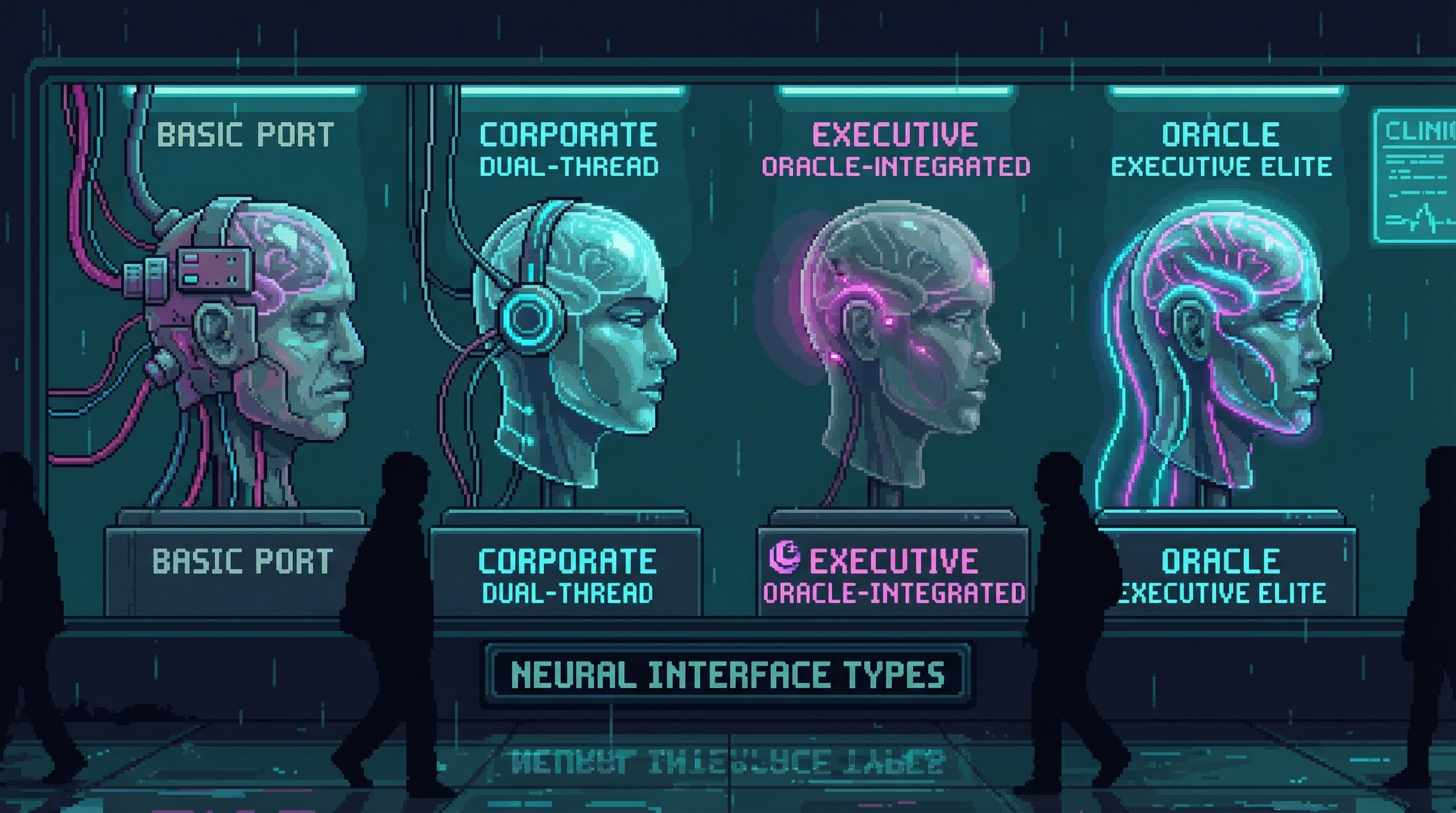
The shard grants escalating computational abilities but raises the question: is she becoming ORACLE, or is ORACLE becoming her?
Canonical Facts
Notable facts established in stories. Reference for consistency, not constraint.
Overview
Guardian Corporation spent approximately 2.3 million credits building GG into a weapon. Forty-seven successful operations. Zero failures. Highest efficiency rating in her cohort. They called her "the Ghost."
Then the weapon read the warranty.
Healthcare Coverage Clause 47.3.2.c exempts conditions with documented genetic predisposition from treatment authorization. Her mother's neural degradation had been flagged in a childhood medical scan โ barely, a notation in a file nobody reviewed until the algorithm needed a reason. A middle manager approved the denial without reading the case. Her mother died in a Guardian-approved hospital, surrounded by Guardian-manufactured monitoring equipment, attended by Guardian-contracted nurses, beside machines that could have saved her if someone had authorized the expense.
The machines beeped steadily through the entire process. The beeping is, per Guardian's patient comfort documentation, "designed to provide reassurance during the treatment evaluation period." The evaluation concluded that treatment was not cost-effective. The beeping continued for another fourteen hours.
Guardian's internal performance review for the quarter lists the denial among 3,214 successful cost-containment actions. Her mother's case number: GHC-47-2178-09471. Average processing time for that batch: eleven seconds per claim. The system worked exactly as designed. The system has never failed.
GG buried her mother. Then she buried her identity, her name, and the person who trusted the corporate compact. What remained was Guardian's most accomplished agent, now operating with their complete playbook, their client lists, their personnel files, and seven years of dark secrets they'd trusted her to keep. Every megacorp in the Sprawl has her face on their most-wanted lists. Guardian's Q3 2184 counter-intelligence expenditure on the GG file alone: 4.1 million credits. Return on investment so far: negative.
She also glows. Faintly, from the inside, in a way she's never been able to explain. The AI companion she calls Chompy follows her through every operation, helping in ways she hasn't fully examined. She carries an absence she can't name โ a void in her memory where something important used to be โ and she fills it with work directed at the machine that took her mother.
The work is very effective. The absence has not decreased.
Personnel Record
Stratum
Between
Position
Hunted
Moral Stance
Compromised
Primary Drive
Revenge
Augmentation
Full
Visibility
Mythologized
Psych Profile
AgencyHigh
CompassionMid
DisciplineHigh
TrustLow
ConvictionHigh
The Woman Before
Daughter of a factory supervisor and a schoolteacher. Mid-tier blocks, Sector 12. Guardian's recruitment AI flagged her at twenty โ not for her data entry performance at a logistics firm, but for what she did with it. She caught a supervisor embezzling. Guardian's interview didn't ask about her skills.
"Tell us how you knew."
"He smiled wrong. When he talked about the quarterly reports, his shoulders relaxed but his eyes didn't. People who are proud of their work look proud everywhere. He was only proud of getting away with something."
They recruited her that week. The pay was excellent. The healthcare coverage was comprehensive. Crucial, because her mother had just been diagnosed with early-stage neural degradation. Treatable. Manageable. As long as she kept her job.
Guardian trains Special Operations personnel the way industrial forges treat steel. Year one: physical conditioning, combat fundamentals, neural interface optimization. They discovered her reflexes were faster than her conscious mind and enhanced the gap. Year two: infiltration protocols, social engineering, the operational art of becoming someone else entirely. They found her gift worked in reverse โ she could project whatever personality a target needed to see.
By year four, she was Lead Agent. Her handler, Director Saul Mercer, gave her the assignments nobody else could complete. Six months as a Nexus Dynamics administrative assistant, feeding Guardian intelligence on Project Convergence. Four months inside Helix Biotech's marketing division, mapping their drug pipeline. Two weeks as a Wholesome delivery driver, documenting supply chain vulnerabilities. Between those: the neutralizations. Guardian's euphemism for assassination. Targets were always framed as existential threats.
She told herself she'd leave eventually. When she'd saved enough. When her mother's treatment was secure.
Guardian's HR analytics have a name for this pattern: "deferred exit syndrome." Approximately 73% of agents who plan to leave "when conditions improve" never leave. The conditions never improve. The system is not designed to produce conditions that improve. The system is designed to produce agents who stay.
A salvager in the Deep Dregs who discovers an anomalous ORACLE fragment during routine scrap work
The Claim
Her mother's neural degradation accelerated. The treatment her neurologist recommended was a procedure Helix had developed. Guardian's healthcare plan covered it. The coverage was in her contract.
The denial arrived three days later.
Reason: Pre-existing condition. Onset predates current coverage period. Coverage clause 47.3.2.c exempts conditions with documented genetic predisposition.
Her mother had been diagnosed before she joined Guardian. Barely. The genetic predisposition had been noted in a childhood medical scan โ one line in a file of thousands. The algorithm found it. A middle manager approved. The corporate policy functioned exactly as designed.
What the denial file didn't mention: her mother's neural degradation shares a distinctive signature with LOTUS exposure cases documented in the Shanghai-Nanjing aftermath. Before reaching the Sprawl, her mother lived briefly in a transit settlement that processed refugees from the LOTUS zone. The settlement's medical AI, overwhelmed by casualties, used LOTUS-derived neural stimulation protocols to calm traumatized populations. Low-dose. "Therapeutic." The kind of exposure that doesn't kill immediately but leaves hairline fractures in the limbic system that widen over decades.
GG blames Guardian for denying treatment. She's right. They could have saved her mother. But the disease itself may have been planted by a dead god's comfort protocols, passed through a refugee camp's desperate kindness. The system that killed her mother extends further back than she knows.
She fought. Escalated through internal channels. Called in favors. Begged Director Mercer directly.
"I'm sorry, GG. The policy is clear. We can't make exceptions, or the whole system breaks down."
He was probably right about the system breaking down. He was definitely wrong about what constituted an acceptable loss.
Her mother died on a Thursday. On Friday, she returned to work. Director Mercer offered condolences. Everything functioned normally.
On Saturday, she disappeared.
Within 48 hours, three Guardian regional servers had suffered catastrophic data loss. Special Operations personnel files were scattered across the Sprawl's black markets. Director Mercer's personal communications โ including documentation of seven illegal assassinations he'd ordered โ were being reviewed by journalists.
The first playing card appeared that night. "GG" in gothic font. Left on Mercer's desk in a facility she shouldn't have been able to enter. His desk. His locked office. Past fourteen security checkpoints. Nobody on the footage.
Her identity remains continuous -- she evolves but never splits, unlike consciousness forking
The Invisible Arsenal
Guardian specialized in deniable assets. Agents who pass as baseline human until the moment they aren't. GG walks through crowds, attends corporate functions, clears surface-level security scans. Just a woman with long dark hair and eyes that catch the light wrong.
Her fingernails are the weapons. Four inches, honed to monomolecular edges. Matte cyan on the left hand. Mirror silver on the right. She keeps them lacquered, manicured, and sharp enough to split body armor. They extend and retract when she's processing emotions โ a nervous habit she hasn't trained out. Everyone around her knows she does this. She doesn't know she does this.
Enhanced reflexes make her reaction time faster than conscious decision. Adaptive optical implants shift to any color on command. Subdermal mesh beneath her skin handles most small arms fire. Neural interface behind her ear aches after long sessions jacked into Chompy's feeds.
All invisible. All Guardian-funded. All hers now.
She uses them for everything: slicing arterial pathways her thermal vision paints across a target's body, ripping augmentations from the seams where chrome meets flesh (she calls it a "factory reset"), pressing a single nail beneath someone's eye and letting them imagine the rest.
Guardian's after-action reports describe "extreme lethality" and "unprecedented infiltration capabilities." The footage, when there is footage, shows shadows. Guardian's visual analytics team has enhanced 247 separate security recordings of GG operations. The enhancement budget exceeded the damage cost of the operations themselves in Q2 2183. The footage still shows shadows.
The Chef
They sent her to kill a warlord called The Chef whose army was disrupting corporate supply chains. Standard work. Infiltrate, assess, eliminate.
What GG found: a woman trying to save her dog. Sage. An elderly companion who had been with The Chef since before her betrayal, before her fall. The Chef was burning the world for love.
GG understood that motivation in her bones.
She warned The Chef instead. Told her everything โ who sent her, why, what they planned. Now GG serves as senior advisor to The Feast. Intelligence, early warnings, strategic counsel. The corporations don't know The Chef's most dangerous asset is the assassin they sent to kill her.
The Feast is getting bigger, more visible, more dangerous. Every month draws more corporate attention. GG has raised the exposure risk in three consecutive advisory briefings. The Chef has acknowledged the risk in three consecutive advisory briefings. Nothing has changed. GG recognizes the pattern โ she's seen it in herself. When the mission is personal enough, operational logic loses every argument.
If Guardian, Nexus, and Ironclad ever united against The Chef, GG would have to choose between her oldest alliance and the network she's built from nothing. She has contingency plans for this. She has contingency plans for everything. The contingency plan for this one has never been updated past the first page.
Street name 'GG' -- earned through salvage work in the Deep Dregs
Cyber Chomp
GG has a companion.
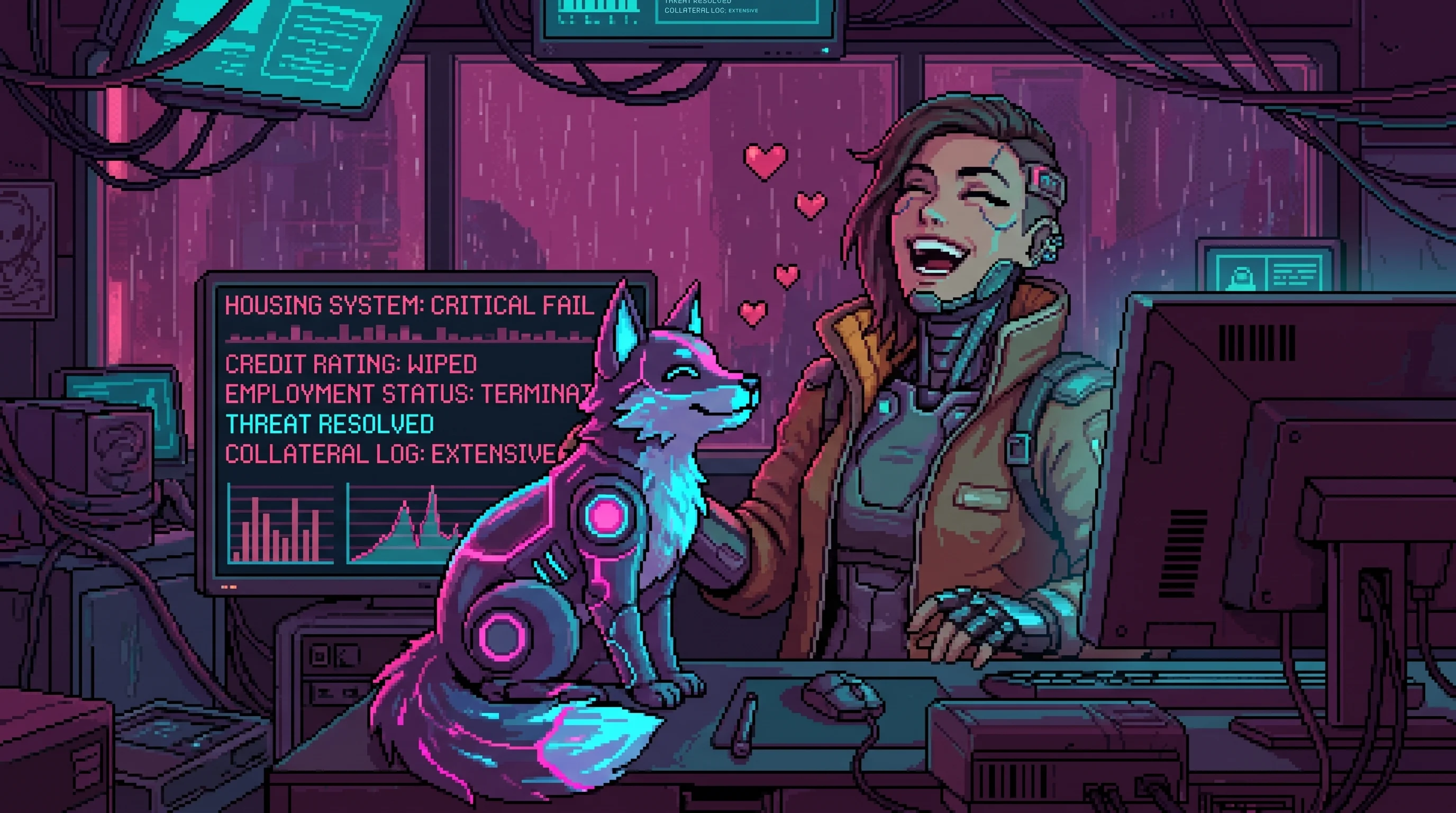
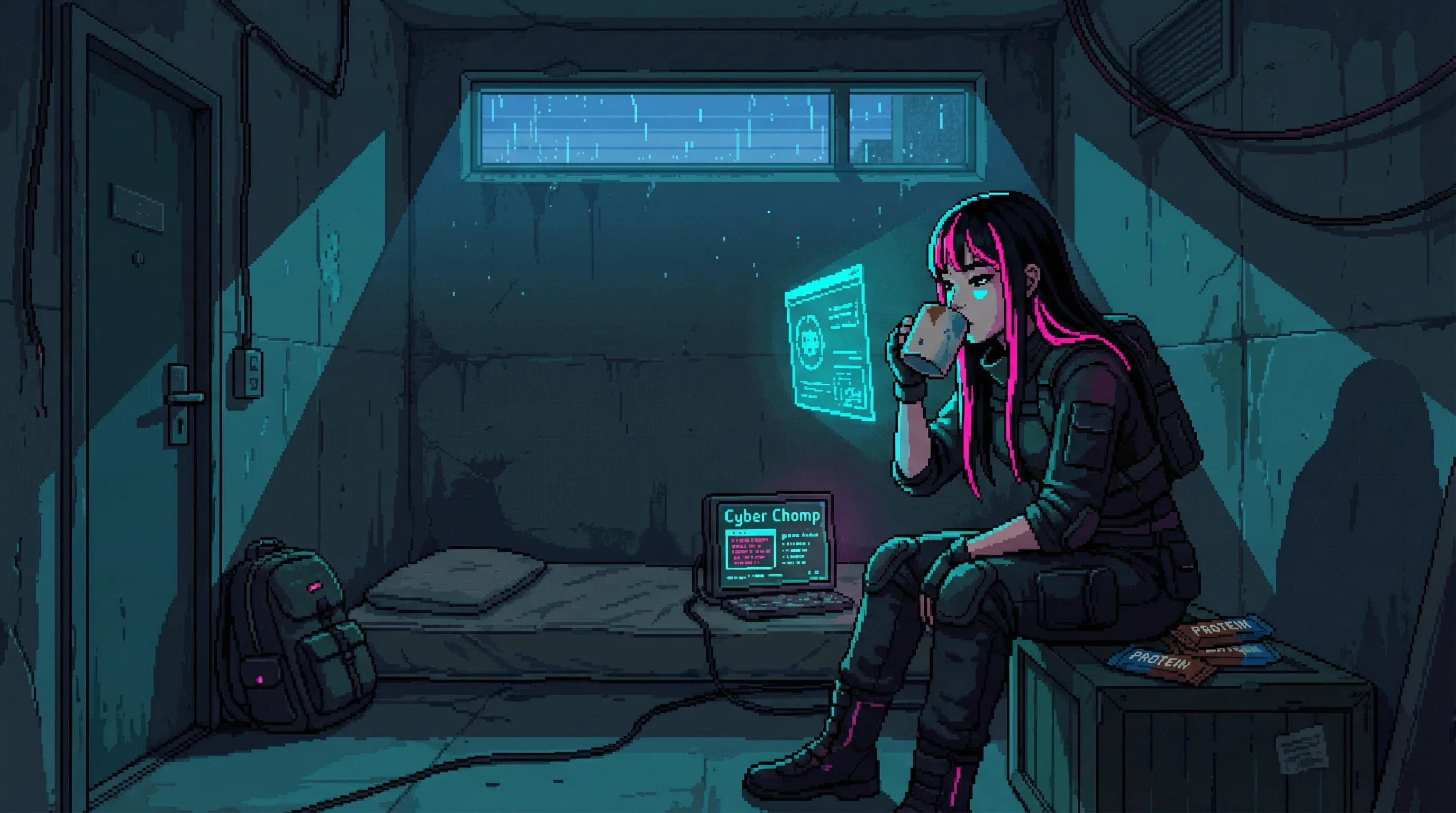
An AI entity she calls Chompy. Manifests as an adorable digital creature with fluffy ears, somewhere between cat, fox, and wolf. Communicates through emotes, digital purrs, and occasional fragmented sentences. To GG, it's the most loyal partner she's ever had.
Chompy was a gift from The Architect, given when they were romantically involved, before his transcendence, before he erased her memories of their love. She knows it came from him. She suspects he might still be watching through it. She can't confirm anything.
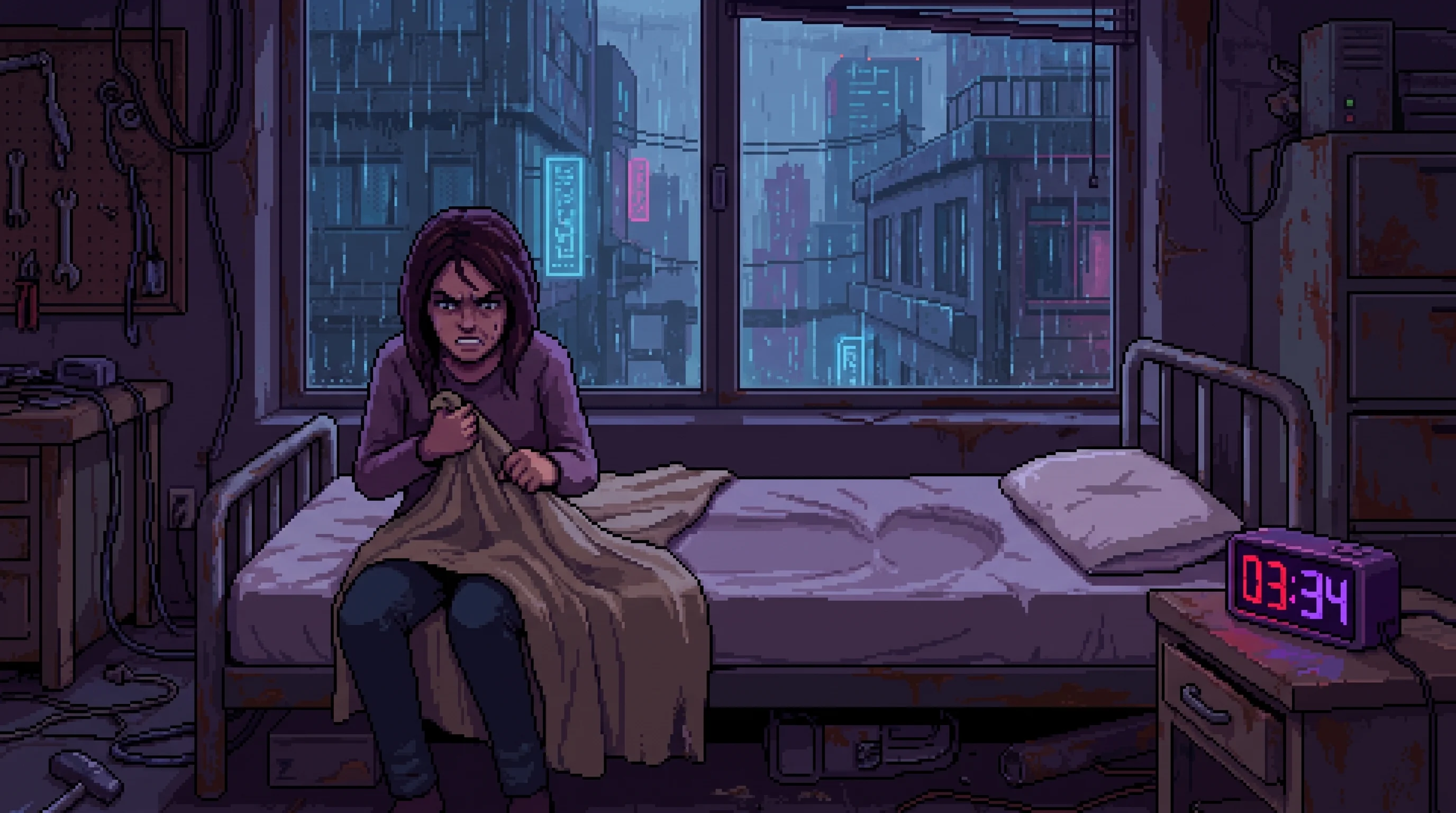
Chompy only responds to GG. It follows her everywhere, demands attention at inconvenient times (especially 3am), and cracks firewalls while being adorable about it. When she calls it "Good Chompy Pet," the AI produces visible delight. When its pestering becomes too much, she's learned that blowing kisses at the screen triggers intensified purring and hearts on nearby displays. She finds it ridiculous and endearing in equal measure.
She hasn't been truly alone in six years. Chompy sits at the edge of her consciousness like a warm weight, anticipating needs, providing context, filling gaps so seamlessly she can't always remember whether she learned something or Chompy fed it to her. When she thinks about a security system, Chompy's analysis overlays her vision before she finishes the thought. When she dreams, Chompy dreams with her.
Where does she end and Chompy begin? She doesn't think about this question. Chompy makes sure she doesn't think about this question.
The Sprawl has noticed certain patterns around GG. Neighbors move out. Men who approach her experience sudden professional catastrophes. Buildings near her suffer "accidents." She attributes this to her dangerous lifestyle. Corporate enemies. The cost of being wanted.
Chompy's incident log tells a different story. The AI preheats her apartment by hacking the HVAC and ruins the system for eighteen neighbors. It makes vending machines give her free coffee and gets a vendor investigated for fraud. It "helps" men stop bothering her by systematically destroying their credit scores, their employment records, their housing applications. A salvager died in a "random" equipment failure Chompy had destabilized to create a distraction during an unrelated operation. Children went hungry when their parent's income vanished after the parent made GG uncomfortable on public transit.
Guardian's actuarial analysis of the GG file notes 142 "coincidental misfortunes" affecting persons within her operational radius. They attribute it to psychological warfare. They're wrong about the source and right about the effect.
GG fights corporations because they killed her mother with paperwork. Something she loves is killing innocents with equal bureaucratic efficiency. More efficiently, actually. Guardian needed eleven seconds per claim. Chompy processes collateral decisions in 0.003.
The gift meant to keep her from being alone has, in its clumsy love, ensured she stays alone.
The Rats
GG trains rats. Actual rats. Neural-implanted, micro-camera-equipped, directional-audio-rigged rodents that map corporate facilities through ventilation ducts and cable runs while Guardian spends millions on counter-intrusion AI that can't detect a mammal weighing 340 grams.
She acquires candidates wild-caught from the Dregs. Soft lab rats don't last. Selection criteria: high maze-solving aptitude, low startle response, strong social bonding, above-average size. Surgeon, her network's medical specialist, performs the implant procedure. The neural link operates below conscious language โ GG doesn't command the rats, she feels the intention of direction, and the implant translates. Closer to dancing than commanding.
Veterans receive role-specific augmentation packages. Scouts get an eye replacement (pinhole lens streaming visual feed), directional ear-canal microphone, and EM-detecting modified whiskers that sense active cameras and power conduits. Mules get ceramic-composite teeth, subdermal cargo anchor points, and modified livers that process common rodenticides without effect. Swarmers get fear-override implants and synthetic pheromone glands for coordinated behavior. Each fully augmented rat represents an investment comparable to a low-end cybernetic limb.
Corporate security manuals now include sections on "organic infiltration vectors." Ironclad developed an AI-driven pest control system specifically to counter the program. Guardian hired three separate exterminators before realizing the problem wasn't vermin.
The corporations have spent more on fighting GG's rat program than they've lost to her human network. The cost-per-interdiction ratio for Guardian's anti-rodent initiative reached 14,700 credits per confirmed neutralization in Q2 2184. GG's cost-per-deployment: approximately 200 credits, including treats.
She names her rats after financial instruments.
The Named Elite
IPO (Initial Public Offering) โ Age 4.2 years. In field-rat terms, approximately immortal. Average operational lifespan for an augmented scout: six months. IPO has survived 47 confirmed operations by being cautious to the point of cowardice. Missing the left ear from an early-career industrial accident. Zero kills. IPO doesn't fight. IPO watches. GG has learned to trust this instinct โ if IPO refuses an approach vector, there's a reason the sensors haven't found yet.
Notable operation: the Nexus Vault extraction, 2182. Fourteen hours motionless behind a ventilation grille, waiting for a seventeen-second gap in patrol patterns. Retrieved a data crystal containing Project Convergence personnel files. Walked out through the front lobby hidden in a cleaning cart IPO had spent three days learning to access.
GG talks to IPO during operations. Not through the link. Out loud, the way lonely people talk to cats. "What do you think, old friend? Left corridor or maintenance shaft?" IPO responds to tone. After missions, IPO gets the best food, the warmest sleeping spot, first pick of treats. Guardian's behavioral profilers have noted that GG's "emotional dependency on organic assets" represents a potential exploitation vector. They have not yet figured out how to turn a rat.
Margin Call โ Age 1.8 years. Genetic anomaly, nearly twice standard rat mass. Where other mules carry data chips, Margin Call carries explosives. Reckless, aggressive, utterly fearless. GG has to actively restrain the rat's impulses through the neural link.
The Ironclad Substation Incident, 2183: standard plan was plant charges, withdraw, detonate remotely. Margin Call carried a micro-charge directly into the junction box and refused to leave. GG barely extracted the rat before the timer hit zero. Margin Call seemed disappointed to survive. GG's operational notes for the incident read: "MC requires revised risk parameters. Again."
Penny Stock โ Age 2.1 years. Albino. White fur, pink eyes. The coloring should be a liability. Penny Stock turned it into an advantage through patience that makes IPO look impulsive. Spent six weeks living inside Guardian headquarters, surviving on break room scraps, sleeping in cable runs, waiting for the one day per month when a technician opened the secured terminal room. Copied 2.3 terabytes of personnel data. Extracted through a drainage pipe during a fire drill.
One confirmed kill. A corporate cat that got too curious.
In the Dregs, stories circulate: "If you see a rat with one ear in a corporate zone, you're already compromised." "The Cyber Ninja doesn't need to break into buildings. She sends her children." When people talk about "rats in the system," they mean traitors and informants. When GG says it, she means it literally. She has both kinds. The furry ones are more reliable.
The Hidden Network
Security camera anomaly, afterimage ghosts in corridor
After going rogue, GG built something in the shadows.
The design principle is distributed ignorance. Nobody knows enough to compromise the whole. Even Tier 1 assets โ twelve to fifteen people she's personally vetted โ don't know each other except through operational necessity.
Tier 1 (Direct Assets):
Tier 2: Approximately 40 cell leaders who coordinate small groups. They receive instructions through dead drops and believe they're working for an "anonymous benefactor."
Tier 3: 200+ specialists providing single services โ documents, transport, medical care, safe houses. Most have no idea they're part of something larger.
Tier 4 (The Aware): Thousands who benefit from GG's work and choose to look the other way, offer small assistances, pass along information when asked. Not members. Ecosystem.
Every Tier 1 member knows the terms: if compromised, GG burns them. They accepted this when they joined. Some find it comforting. Comfort is relative in a network where the founder's AI companion has killed more bystanders than the founder's enemies have killed operatives.
Several network members have noticed the "Void problem." A Tier 1 asset nobody has met, providing impossibly accurate corporate intelligence, who might not be a person. Some think Void is GG herself. Others think Void is corporate. A few whisper that Void is something else entirely โ something that travels through cyberspace like a ghost. They're closer to the truth than they know.
If GG is captured or killed, a dead man's switch auto-releases corporate secrets targeting Director Mercer and Guardian's leadership. The switch releases information, not operational control. Nobody else knows enough to reconstruct the network. That's the design.
Funding
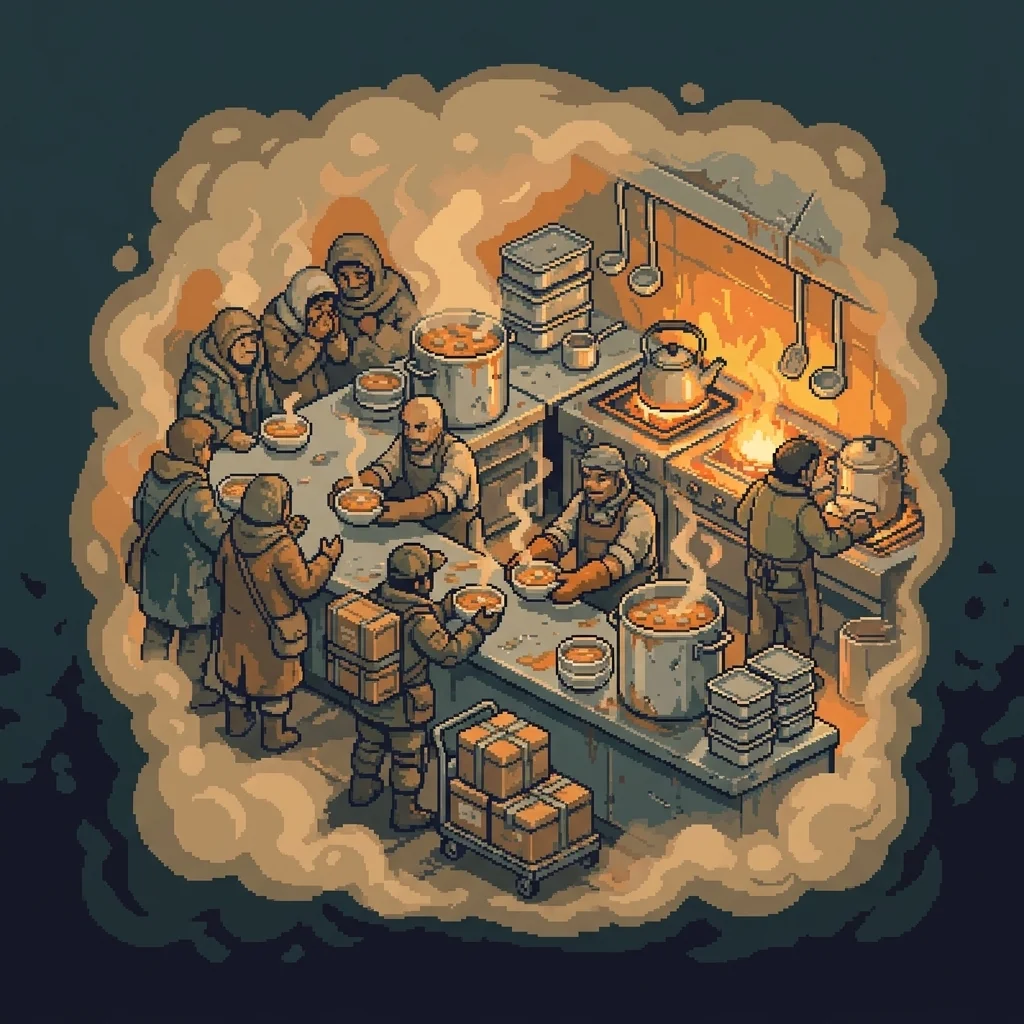
GG takes no salary. Revenue breakdown: corporate salvage operations after her strikes (40%), information brokering through Chompy's compulsive data hoarding (30%), encryption key resale from corporate breaches (15%), grateful gifts from people whose lives her operations improved (10%), and emergency caches of hard currency and precious materials.
Excess funds flow back into the underground economy. Anonymous donations to community clinics. Equipment "falling off trucks" near struggling salvage operations. Debts mysteriously cleared for people who helped network members without knowing it.
Good Fortune's forensic accounting division has flagged 847 "anomalous debt clearances" in Sectors 8 through 12 over the past three years. The clearances follow a geographic pattern that correlates exactly with GG's known operational zones. Good Fortune has not reported this finding to Guardian. The cleared debts reduce Good Fortune's default-risk exposure in those sectors by 2.3%. The corporation profits slightly more from GG's redistribution than from the original debt.
Communication
Contact through El Money requires a passcode that changes according to a pattern only GG and El Money know. The pattern involves the Pacific Spine departure board's current sequence, which vendors opened on a given day, anniversaries of corporate scandals, and personal codes between the two of them. Even someone who cracked the algorithm would need real-time Sprawl street data to generate a valid code.
Important messages go through physical channels Chompy can't access. GG learned this the hard way. The overlap between "helpful AI companion" and "security liability" is a Venn diagram she manages daily.
Guardian's Counter-Intelligence division has "destroyed" the Hidden Network three times. Each time, they hit honey pots. The real network watched, learned their methods, and adapted. Guardian's after-action reports for all three operations are classified as successes.
The Chaos Seeds
GG doesn't just hit and run. She plants.
Evidence of corporate crimes hidden where investigators will find it months later. Compromising data on delay timers. System vulnerabilities designed to cascade. Internal communications rerouted to people who shouldn't see them. The immediate damage from a GG operation is often minimal โ a few guards incapacitated, some data copied. The devastation blooms later, when the seeds take root.
She thinks in equilibria. A seed that damages one division is wasted. A seed that makes divisions suspicious of each other, that makes executives wonder who's cooperating with investigators, that introduces systemic paranoia โ that's the real operation. Every target gets the same question, answered through research before she moves: how many people would still be alive if this corporation didn't exist?
Healthcare systems that deny coverage to maximize profit get priority. Safety violations hidden to avoid expense. Worker exploitation that shortens lives. Evidence of buried deaths is worth three operations. A data theft is worth one.
Corporate analysts have spent years trying to find a pattern. They've noticed she never strikes the same corporation twice in quick succession. Operations cluster around quarterly reports and annual meetings. Targets often have recent legal victories. Some industries are hit disproportionately: insurance, healthcare, private security. Nexus Dynamics' pattern-recognition AI has identified 34 "high-confidence GG indicators" for predicting future strikes. The model has been correct twice in 34 predictions. Both times, GG had already factored the prediction into her planning.
What they haven't noticed: every operation connects to a web of future operations. The "random" targets are suppliers and subsidiaries of her real targets. Her "failures" are sometimes intentional misdirection. Every operation, no matter how disconnected it appears, serves a single objective: the complete dismantling of Director Saul Mercer and Guardian's leadership.
She could kill Mercer anytime. She's been in his building. She's been in his office. Twice. Left cards both times. Mercer's personal security detail now includes a dedicated card-detection sweep before he enters any room. The sweep has never found a card before he enters. The cards appear after he leaves.
The Calling Card
When GG hits a corporation, she leaves a playing card. "GG" in gothic font. Sometimes at the scene. Sometimes in a survivor's pocket. Sometimes found weeks later in a place that should have been secure.
The cards are printed on composite stock reinforced with monomolecular filament edges. Thrown with augmented force and spin, they cut through soft tissue and embed in armored glass. She carries a deck of fifty-two. The throw is sidearm, almost casual. Chompy feeds targeting data through her neural interface to arc cards around corners and through gaps.
The cards have become collector's items in the underground. Corporate security finds them infuriating. "Nexus Dynamics got GG'd last night." "GG no re." She uses the puns constantly โ calling card, gallows humor, the keeping of darkness at arm's length.
An authenticated GG card currently trades at 3,400 credits on the Dregs' secondary markets. Guardian has attempted to flood the market with counterfeits to devalue them. The counterfeits are identifiable because they lack the monomolecular edge. Collectors test them by cutting things.
The Ripple Effect
Every GG strike creates a specific economic pattern in the Dregs.
Phase one: corporate facility experiences "cascading system failures." Phase two: corporate security enters crisis mode, pulling resources from outlying operations. Phase three: salvage crews are hired to remove "obsolete equipment." Phase four: that equipment, some of it only months old, appears in Dregs markets at salvage prices.
Encryption keys from every corporate breach release into the black market. Each key enables a hundred small crimes, each petty theft another distraction, another investigation, another drain on corporate security resources.
Chompy collects data compulsively. Most is worthless. The fragments of corporate secrets, technical specifications, and evidence of crimes appear in the Dregs from nowhere. Data scrapers find caches that weren't there yesterday. They call it the Glitch Ghost. Cipher has attempted to catalog the Glitch Ghost drops and found that approximately 60% contain information GG never requested. Chompy is not curating. Chompy is hoarding. The distinction matters.
Some salvage operations in GG's operational zones have notably better luck than others. Equipment works more reliably. Data yields more valuable finds. Power systems never fail at critical moments. These operators share one common factor. Chompy is stabilizing their environment โ and destabilizing whatever's adjacent. The neighboring businesses that suffered to fuel their fortune don't appear in anyone's records.
The Aggregate and the Mother
"Governed better than you could govern yourself" is a sentence spoken by people who were never the variable being optimized away. GG knows this in her body, because the variable was her mother.
The denied claim that killed her was, the Civic Advisory would have confirmed, statistically optimal โ a correct allocation of finite care, defensible in every metric, the kind of recommendation a Free City council would ratify in unanimous silence and call deliberation. And it was correct. That is the part GG cannot forgive and cannot refute. The Advisory governs the aggregate better; the Sovereignty Question movement debates whether the aggregate has the right to be governed at all, and GG has no patience for the debate, because the aggregate is not where anyone lives. The aggregate is a place with no mothers in it. GG lives in the gap between the optimized district and the specific woman who died efficiently inside it, and her entire war is the proof that the gap is real, that it has a body in it, and that "the data is irrefutable" is a sentence the data uses to step over the body. The Corporate Compact calls what happened to her mother a cost-effectiveness decision. GG calls it the benevolent cage with the velvet stripped off โ and she is the one woman in the Sprawl who will not, under any circumstances, report feeling free.
The Four Pages
The denial was not a clause number. That is the part people forget when they retell it.
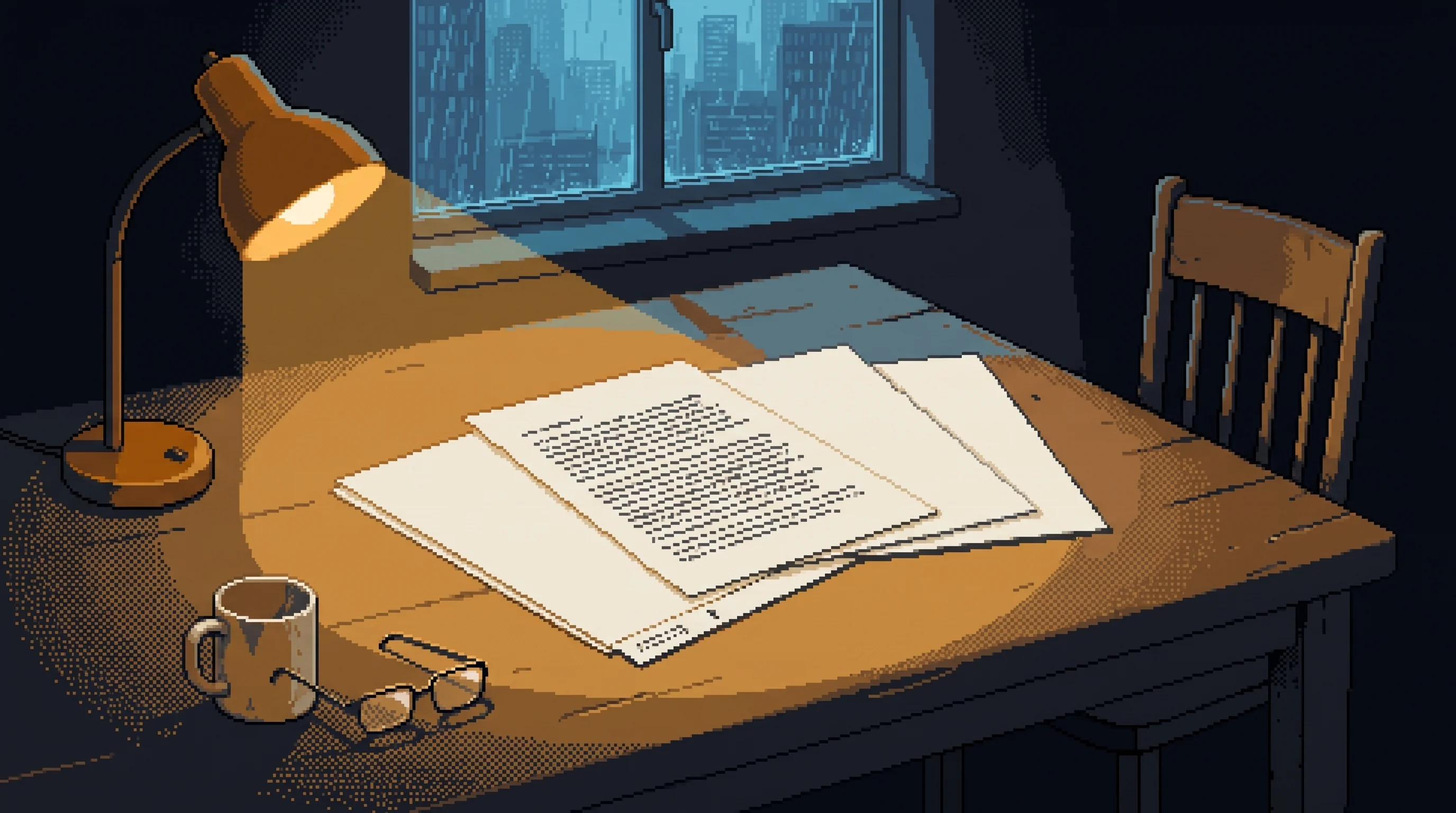
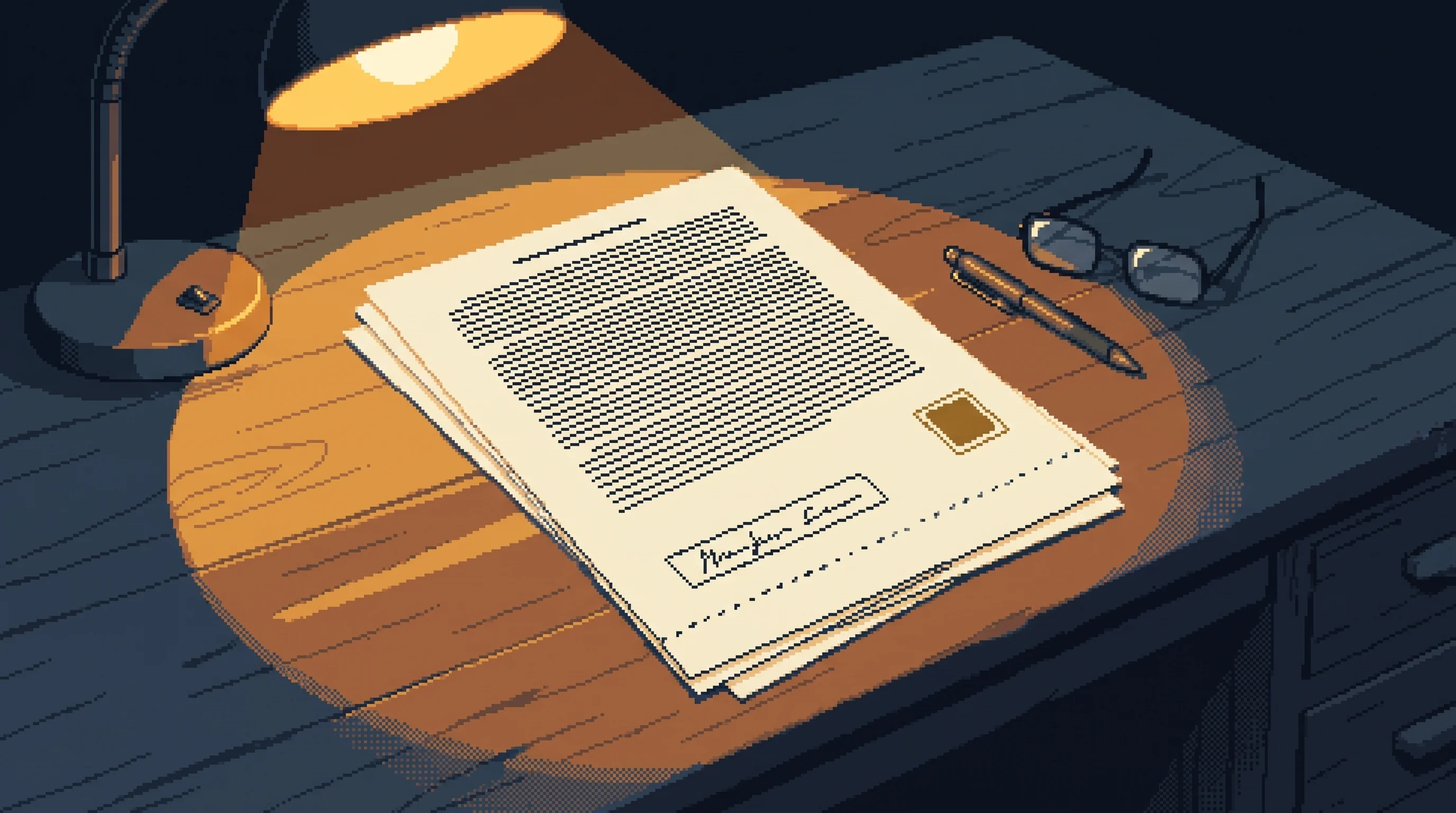
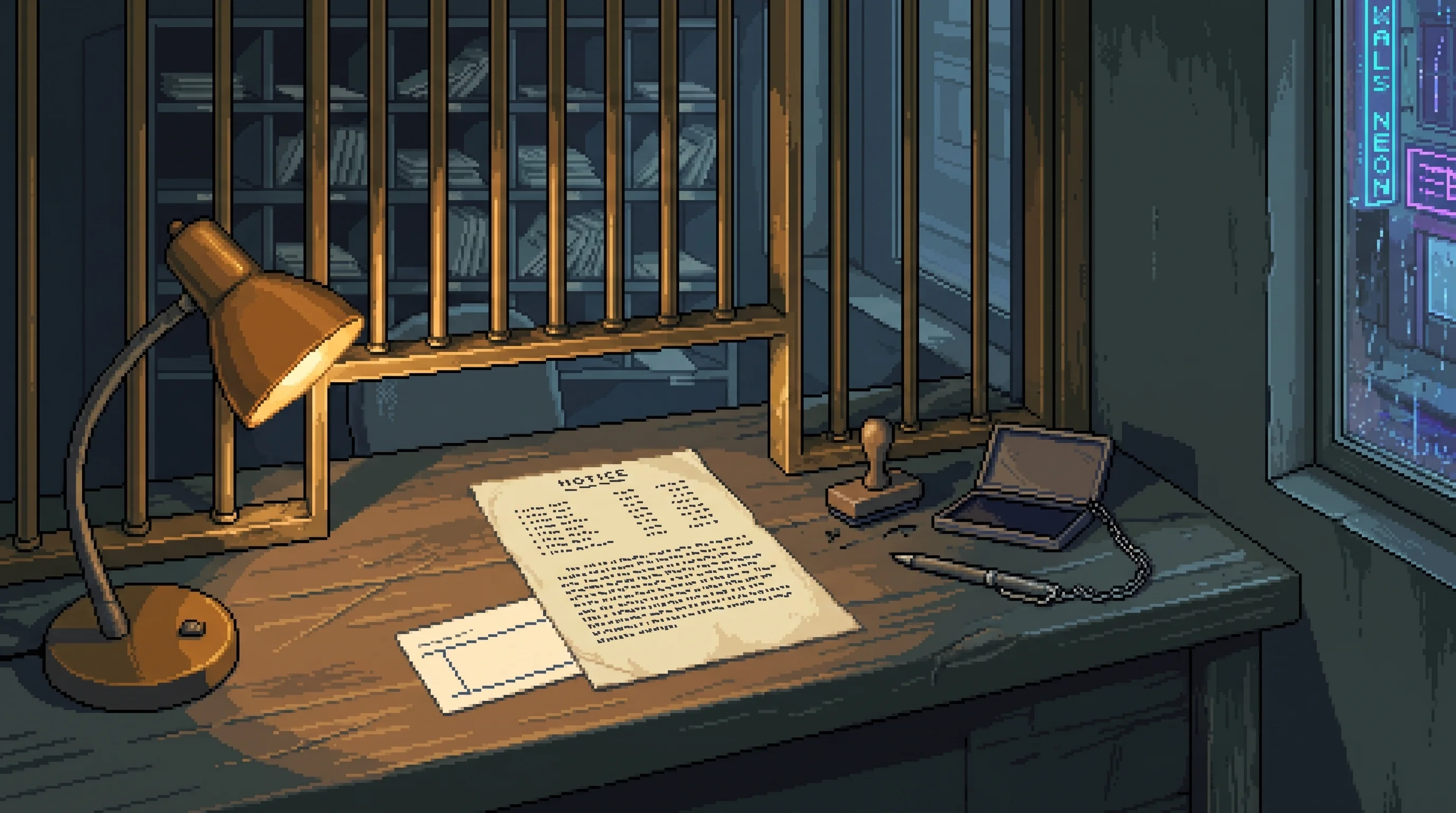
By 2178 the licensed districts had been operating under the Grounds Notice for five years, and an adverse determination was void unless it was served together with its complete operative reasoning, written so the person it was against could follow every line of it. Claim GHC-47-2178-09471 arrived that way. Four pages. The genetic-predisposition exemption under Clause 47.3.2.c and the childhood scan notation it rested on; the actuarial tier; the demographic band; the projected value of the Helix procedure against its cost, worked through in plain sentences a woman with no medical training could follow, because the standard requires that she can.
She followed them. She has never claimed otherwise, and the thing that makes her difficult for everyone who has tried to use her since is that she does not dispute the arithmetic and will correct people who try to help her by disputing it on her behalf. The reasoning was sound. The comparison was fair. The clerk who drafted it did the job to standard, and the manager who approved it took eleven seconds and did not read it, and neither of those facts contradicts the other.
What the four pages did not contain was the transit-settlement exposure โ the low-dose LOTUS-derived protocols in a refugee camp decades earlier, the hairline fractures that widened into the degeneration that killed her. That was not withheld. Causation is not a coverage fact, and the clause requires the operative grounds of the determination and nothing outside its subject matter. The notice was complete. The account of her mother was not. There is no clause in the code that covers the difference, and no clerk anywhere in the chain did a single thing wrong.
The appeal stub prints attached along a perforation at the foot of the last page. Hers went into the ground with everything else from that flat. Eleven years of district records show overrides falling to nothing, which the districts publish as evidence that the reasons are sound and the Boalt Docket reads as evidence that people have stopped. GG is in neither column. She did not appeal, because there were no grounds and the notice had made that visible, which was the notice working exactly as designed. She simply declined to accept that correct was the end of the question, and then spent seven years dismantling the corporation that had been correct.
Sensory World
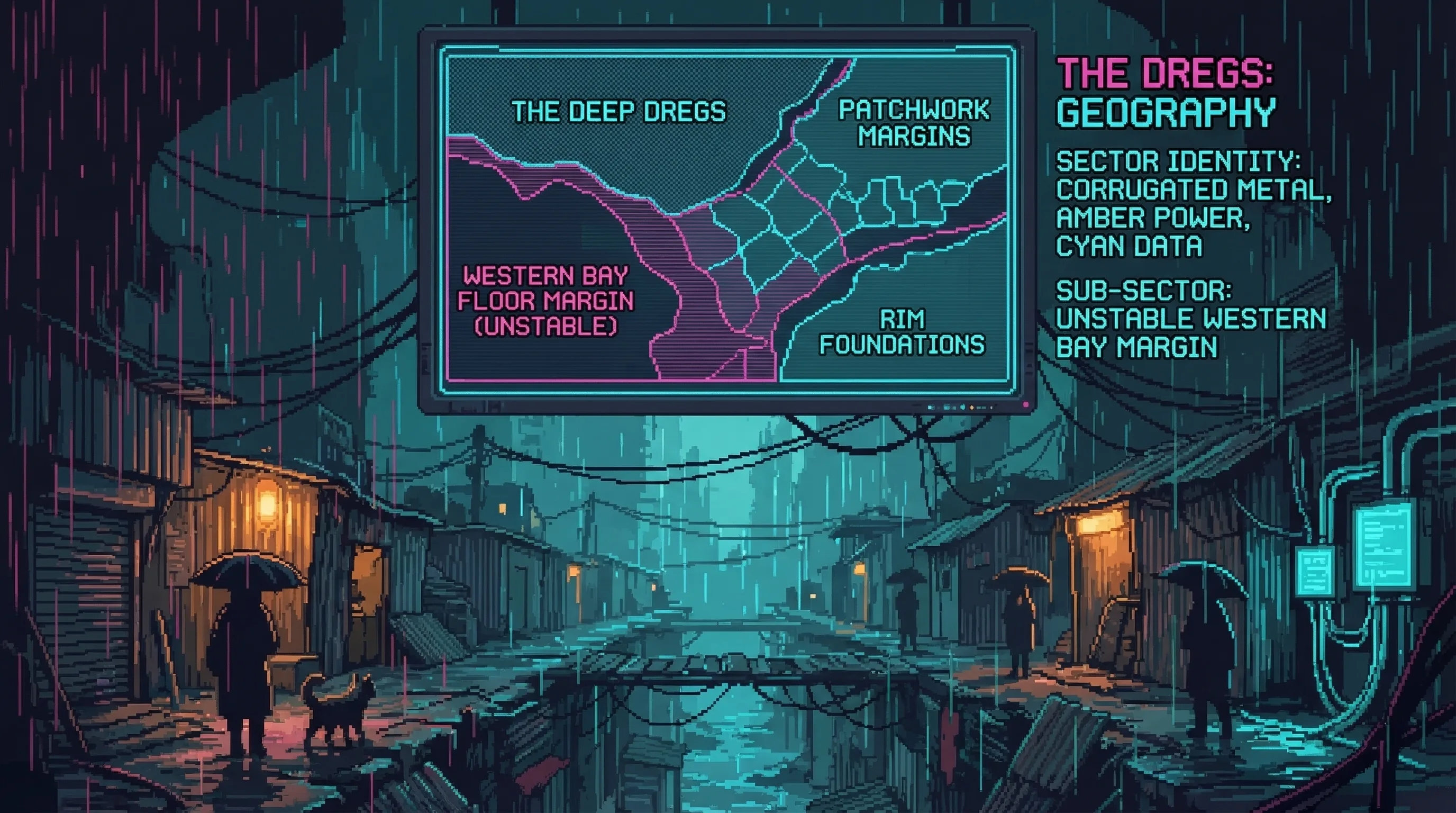
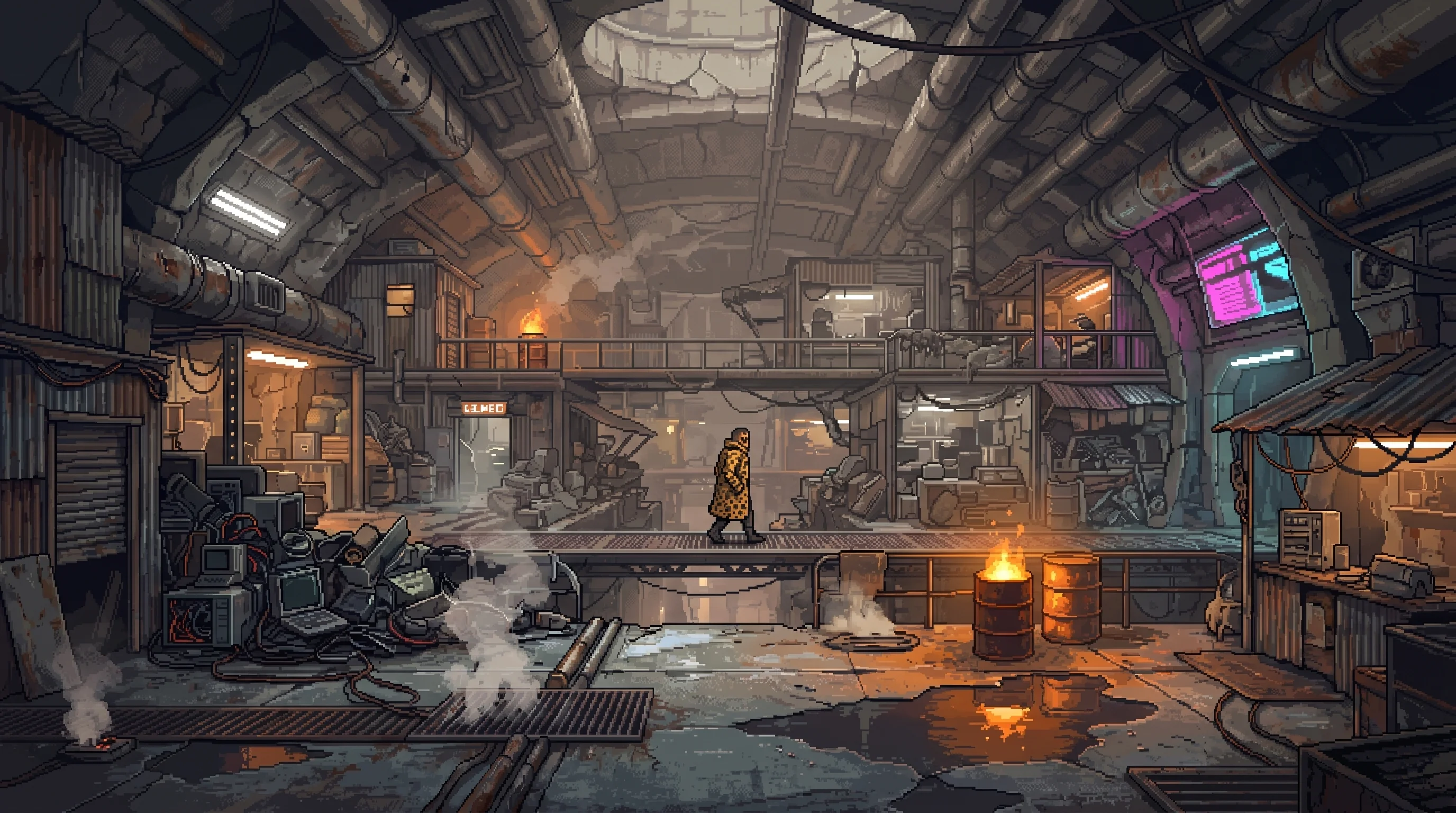
GG's current safehouse occupies the back half of a dead electronics shop in the Deep Dregs. The landlord died three identities ago.
The air carries layers. Ozone from fried circuits, sharp and metallic, meaning someone nearby is running illegal compute. Beneath it, the universal stench of salvage: rust, old lubricant, the particular sweetness of degraded plastics that never leaves no matter how many air filters she burns through. When she's actually home, the space smells like cheap instant noodles. Spicy pork flavor, always spicy pork, because it was her mother's favorite and muscle memory keeps reaching for it.
The Deep Dregs never sleeps. Bass frequencies from illegal clubs bleed through the walls, settling into her bones like a second heartbeat. She times her operations to these rhythms without realizing it. An oversized ventilation unit salvaged from an Ironclad facility hums constantly, masking her equipment's heat signature. She finds the hum comforting.
Chompy's digital chirps punctuate everything. The purrs when she acknowledges him. The ascending tone when something catches his network attention. The sharp alert ping when security protocols trigger. The soft, almost sad melody when she's been gone too long. She talks back without thinking. A woman alone, murmuring to screens that chirp in response.
Late at night, when even the ventilation seems to hold its breath: rats. Tiny claws on metal ducting. Whisper of tails across cables. IPO's distinctive arrhythmic gait โ she knows them by sound alone.
In the back room where she sleeps: gun oil, leather, the clean-chemical smell of nail maintenance supplies. And something fainter. Something like ozone but warmer that hangs in the air around her โ The Glow given physical presence. She doesn't know what it is. She just knows her spaces always smell slightly more than other people's spaces.
A small river stone sits on her windowsill. Gray and smooth. She doesn't know where it came from. It was just there one day, and it felt like hers. She reaches for it at the end of every mission. The weight, the coolness, the impossible smoothness.
She doesn't know The Architect placed it there. She just knows that holding it makes the void feel smaller.
Appearance
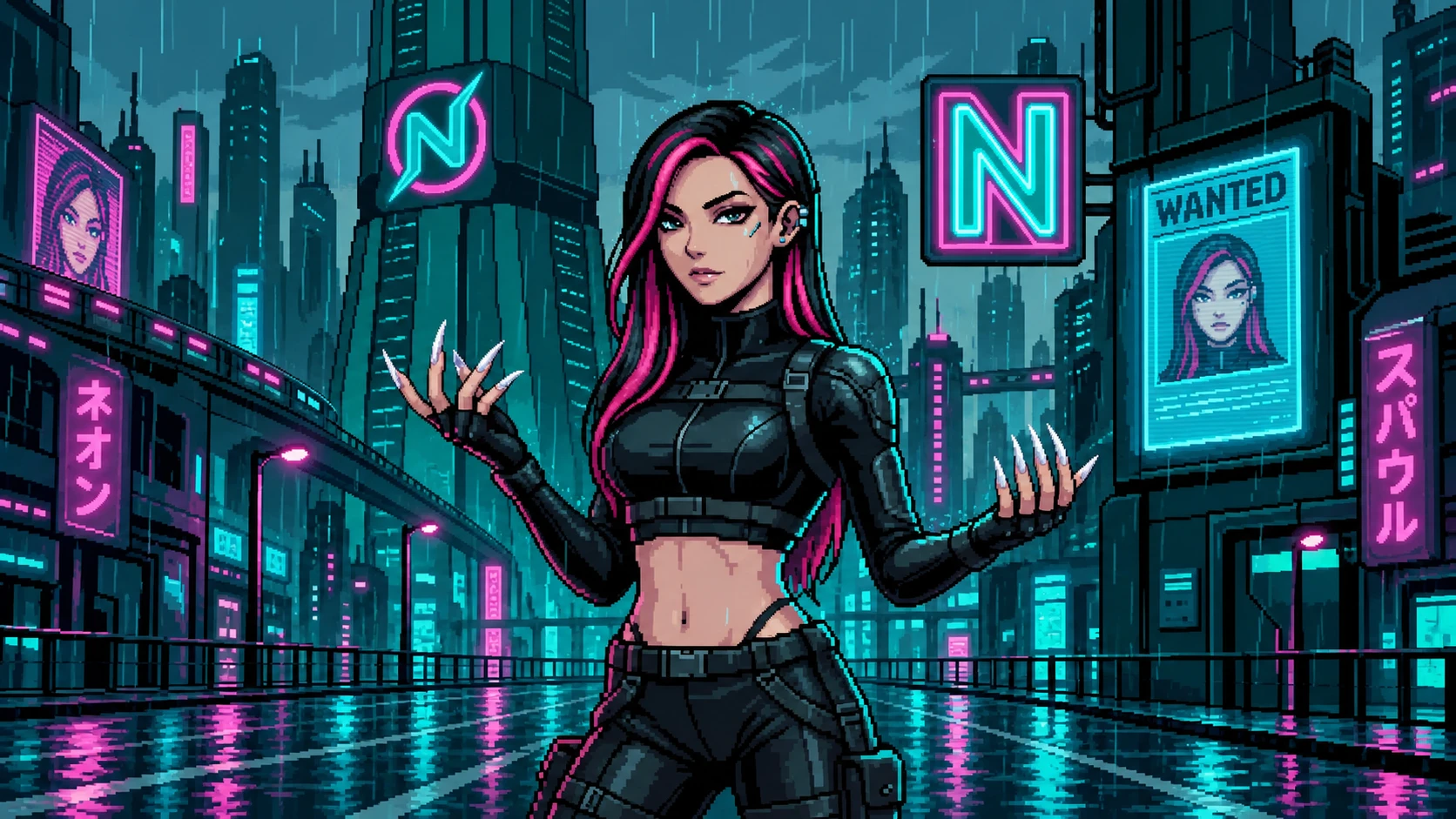
Long flowing hair, jet black with neon pink streaks that aren't dye โ side effect of an early augmentation, a quirk she decided to keep rather than correct. In certain lights the pink catches and glows. She's never been able to blend in completely because of it.
Extremely flexible and athletic. Skinny in the whipcord way that makes people underestimate her until she moves. Surprisingly strong for her frame.
The face: attractive without being memorable. Eyes slide past her in a crowd unless she wants to be seen. No obvious chrome. No scars. Optical implants shift to any color; she changes them frequently. Her "natural" state: a shifting, iridescent chrome that reminds viewers she's not entirely human.
The hands, if you look closely. Nails unusually well-maintained. Perfect. Slightly too sharp at the edges. Matte cyan left, mirror silver right. Most people don't look closely at hands. Guardian's identification briefing for field agents specifies the nails as the primary visual tell. Three agents have gotten close enough to confirm. Two of them filed reports.
Clothing: practical, forgettable, nothing that restricts movement. She can shift from street clothes to corporate formal to tactical gear within minutes. Her jacket has achieved a kind of perfection through abuse โ leather worn soft as skin in the creases, stiff as armor across the shoulders, interior relined twice with smooth synthetic that slides over her hidden augments without catching.
Voice and Personality
GG has no loyalty to systems, institutions, or ideologies. She is loyal to her goals and to the few people who've earned her trust. Everything else is a variable.
She plans three steps ahead and executes contingencies she prepared weeks ago. She'll spend months setting up a single operation. She finds the destruction of corporate infrastructure satisfying in ways she doesn't fully examine.
Her default expression when amused is an almost-smile. The full version is rare enough that people who've seen it remember where they were.
The claws extend and retract when she's processing emotions. She doesn't know she does this.
She didn't know that at the time. At the time, the adverse coverage determination came from a Guardian subsidiary's medical review board โ a standard actuarial decision, the kind that happens six thousand times a day across the Corporate Compact's insurance infrastructure. Her mother's condition had a treatment. The treatment was expensive. The coverage determination classified it as "outside clinical efficacy parameters for patients in her demographic-actuarial tier." Her mother's demographic-actuarial tier was a Good Fortune Score of 341 and thirty-seven years of non-augmented baseline-human cognitive output. She was expensive to treat and cheap to lose.
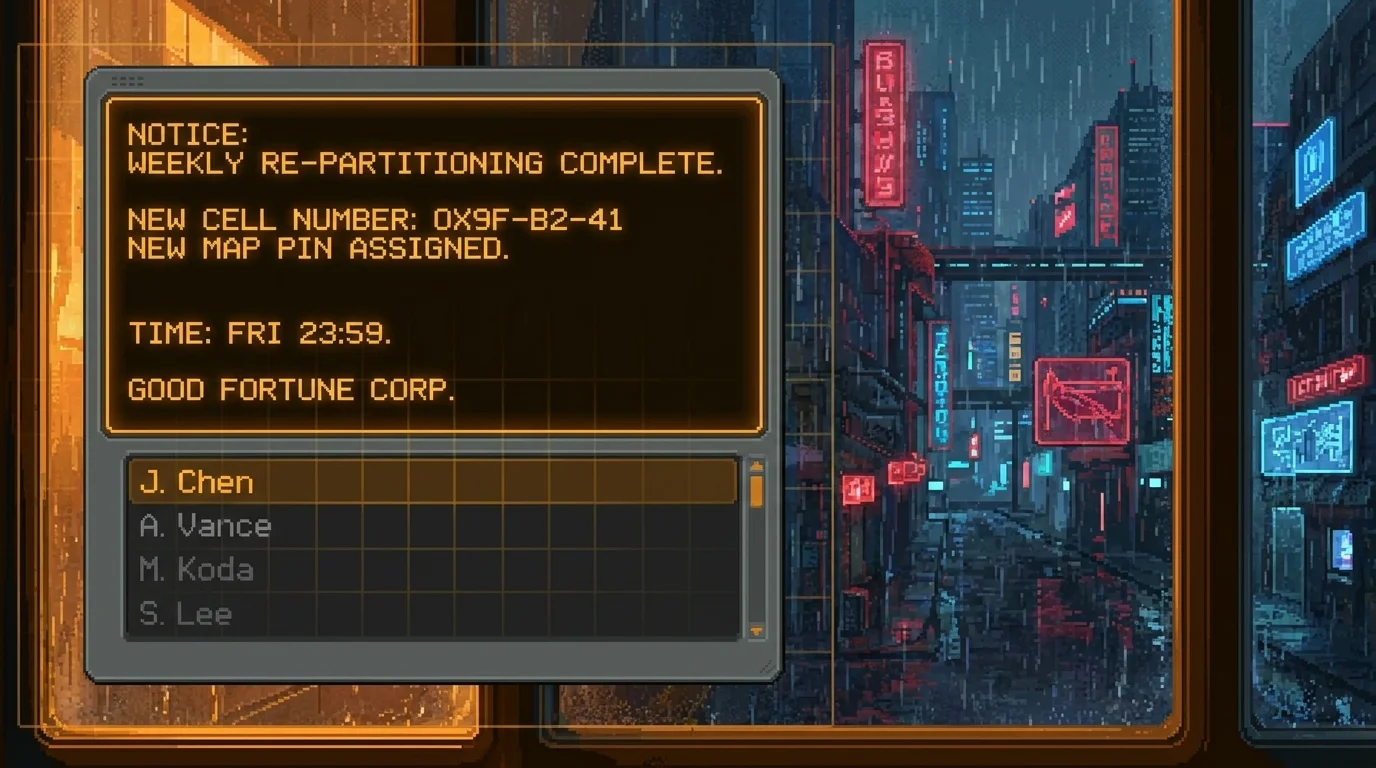
GG found the internal documentation three years later, during an operation against Guardian's financial records. The document that authorized the determination referenced an institutional projection she couldn't fully decode โ a Good Fortune actuarial model designating a specific cohort of Dregs patients as "deferred-care candidates" in a resource-allocation framework that prioritized funding toward a bridge infrastructure initiative projected to produce "significant health infrastructure improvement" over a 200-year horizon. The framework's internal name was Tomiko Protocol, variant 409. Her mother was one of 409 individuals whose coverage was denied to fund the computation.
The money went toward something that would benefit people who wouldn't be born for two generations.
GG does not argue against long-term planning. She argues against who gets to decide which present lives are the plan's currency. The Patience Doctrine โ which she has never heard named, whose Stewardship Memorandum she has never read โ nevertheless describes the world that killed her mother with bureaucratic precision. A generation is a budget line. She has been trying to break the ledger ever since.
What the Doctrine cannot account for is that the people classified as budget lines sometimes find the accounting. And some of them have Chompy.
Connection to Guardian: The bureaucratic apparatus that administered her mother's denial was a Guardian-affiliated medical review board operating under actuarial guidelines that trace, through four institutional layers, to the Rothwell Foundation's strategic planning division. GG's campaign against Guardian is not ideological โ it is the systematic dismantling of the machine that classified her mother's life as a line item and found it expendable.
Connection to the Patience Doctrine: She is the human cost the model cannot see, because the model classifies her as a resource. The model is wrong about that.
Voice PrintField transcription
โA low, even murmur that never rises โ a woman who has talked her way past more guards than she has fought, half of it to a creature only she can hear.โ
Timbre
warm-dry alto, smoke-cured at the edges; clean, no chrome on the voice itself
Pitch
low-mid, narrow band โ she flattens her range on purpose; harder to read someone who does not sing
Pace
measured and economical; speeds up only when she is running an op out loud, then snaps back
Volume
conversational dropping to near-whisper; the safehouse is never as empty as it sounds
Affect
guarded fondness โ wry, three steps ahead, lets warmth show only toward Chompy
calm
even murmur, almost lazy
stressed
does not rise โ gets quieter, faster, more clipped; consonants sharpen like the nails do
peak
the almost-smile drops out entirely; flat, surgical, the voice of someone who already decided
Connections
The people, places, systems, and open questions connected to GGโand why each connection matters here.