The Verdict Glossers
AI Verdict Interpretation Market
The Translation Market
The first line of every licensed Verdict Gloss service agreement reads: 'This gloss is a rendered interpretation, not a verbatim translation, of the AI adjudication output.' The court system accepts Gloss documents as evidence that a defendant received meaningful due process anyway. Both facts appear in the same case file.
The Grey Glossers
The acknowledgment line
Every licensed service agreement opens by calling the gloss a rendered interpretation, not a verbatim translation.
The court still accepts the gloss as evidence that due process was served.
Grey glossing
Unlicensed practitioners correlate verdict patterns against forensic data about the judicial AI's training corpus.
The client gets a more complex story about reasoning nobody can access.
The package deal
Resolution Architecture Group sells a gloss and a Confessor together.
The client gets what was decided and someone to blame. Neither comes from the facts of the case.
Unlicensed practitioners — called grey glossers — operate in the Dregs, the Wastes border zones, and the transit corridors where neither licensed firms nor corporate enforcement reliably reaches. Their distinguishing claim: not just what the AI decided, but why it decides as it does for clients with your demographic profile.
This is corpus archaeology at retail. The grey glosser does not access the actual inference chain. They correlate verdict patterns — the kinds of cases where certain AI courts rule as they rule — against forensic data about the judicial AI's training corpus. The correlation is a statistical shadow: a shadow of a chain of inference about a shadow. Neither the licensed Glosser nor the grey glosser can verify their interpretation against the actual chain. The grey glosser produces a more complex-sounding story about a reasoning they cannot access any more than the licensed firm can.
Whether this constitutes a better or worse fiction is a question nobody in the system can answer.
Fathom brokers grey-gloss introductions in the Sector 14 corridor, charging double his standard rate. He has noted that clients who receive grey-gloss explanations report higher satisfaction than clients who receive licensed-gloss explanations, despite — or because of — the additional complexity. He burns the invoices from these introductions differently from his retreat feedback cards. Not for legal protection. Because the arithmetic on them is harder to close.
Overview
The first line of every licensed service agreement reads: This gloss is a rendered interpretation, not a verbatim translation, of the AI adjudication output.
This is not a legal hedge. It is a factual statement about the limits of the service. The Glosser cannot produce a verbatim translation because the inference chain — the AI court's actual reasoning — is archived in Nexus Dynamics' adjudication infrastructure and has never been disclosed to any defendant's representative. The chain is certified-correct. It is not accessible. The Glosser produces a rendered interpretation of a 214-page document they can read in the sense of parsing, but not in the sense of understanding from the inside.
The court system accepts Gloss documents as evidence that a defendant received meaningful due process. Both facts appear in the same case file.
History
The Tiered Adjudication System was adopted sector by sector between 2155 and 2171. The first licensed Gloss firm, Clarity Rendering Group, opened in Sector 1 in 2175. The founders were three former Nexus adjudication architects who had watched, from inside the tier rollout, as clients produced always the same question after receiving tier 3 verdicts: Why?
The question had an answer. The answer was in the 214 pages. The pages were in the document. The document was archived. Nobody could reach the answer the way the question needed it reached — as language, as reason, as a sentence that could be argued against. Clarity Rendering Group opened because there was a market for a story about why you lost, and nobody else was telling it.
By 2184 there are 47 licensed firms and approximately 200 independent licensed practitioners. The licensed firms operate under Nexus adjudication standards: credentialed, tested, prohibited from claiming their gloss represents the AI's actual reasoning. The independent practitioners operate under the same prohibition and the same mathematical impossibility.
The Package Deal
Resolution Architecture Group discovered the intersection in late 2181.
A family who had received an AI wrongful-death verdict — unreadable, tier 4, 312 pages — came to the firm. They had already hired a Glosser. The Gloss told them what was decided. It did not give them anyone responsible. Resolution Architecture Group offered them a Confessor too.
The pilot data was predictable to anyone who had run either business alone. Clients who received both a Gloss (what was decided) and a Confessor (who is responsible) reported higher resolution scores than clients who received only one. The logical structure made sense: the Gloss provides a narrative; the Confessor provides a subject for the narrative's moral. Together they produce the complete story. Neither component of the story is derived from the actual facts of the case. Both service agreements acknowledge this. The combined agreement contains two disclosure clauses. No client has challenged either.
The package costs between 3,000 and 18,000 credits depending on the tier of the original verdict and the format of the Confessor ceremony. It is Resolution Architecture Group's fastest-growing product category.
The Habeas Intelligibilis Problem
The Boalt Docket filed its first Habeas Intelligibilis motion in October 2183, arguing that a defendant cannot meaningfully participate in their own defense when the verdict explaining the outcome of their rights runs to 214 pages of certified inference chain that no human can follow.
The arbitrator's ruling: no jurisdiction. Good Fortune's arbitration rules do not recognize cognitive accessibility as a prerequisite for enforcement.
The court system cited the existence of the licensed Gloss service as evidence that readable access was available, whether or not the access was accurate. The Docket filed thirty-three more motions in 2183. All dismissed. All four minutes.
Elena Sarkisian has drafted a fourth variant arguing that the Gloss service agreement's own disclosure — this is not a verbatim translation — constitutes an admission by the court system that it produced a verdict requiring an acknowledged fiction to function as due process. The draft runs to eleven pages. She has revised it twice. She has not filed it.
The Acknowledgment
Judge Dreg's 2184 ruling on the confessor market holds exactly as well for the Verdict Glossers: a confession bought for grief is not a confession — it is a settlement in a different column. His standard applied to the Gloss: a rendering that cannot be verified against the actual reasoning is, by any honest account, a verdict wearing the clothes of an explanation.
His jurisdiction is three blocks of the Deep Dregs. The tiered courts cover 80% of the Sprawl. The ruling has never been tested against a Gloss. It doesn't need to be. Both parties to a Gloss transaction already know what the service agreement says.
The Floor the Trade Will Not Cross
No licensed Glosser works determinations. One layer down, the Grounds Notice already serves the complete operative reasoning, free, written for the person it is against. A Glosser has nothing to add. Clarity Rendering Group's intake manual calls the work out of scope. Overrides on served determinations fall every year.
Sensory Details
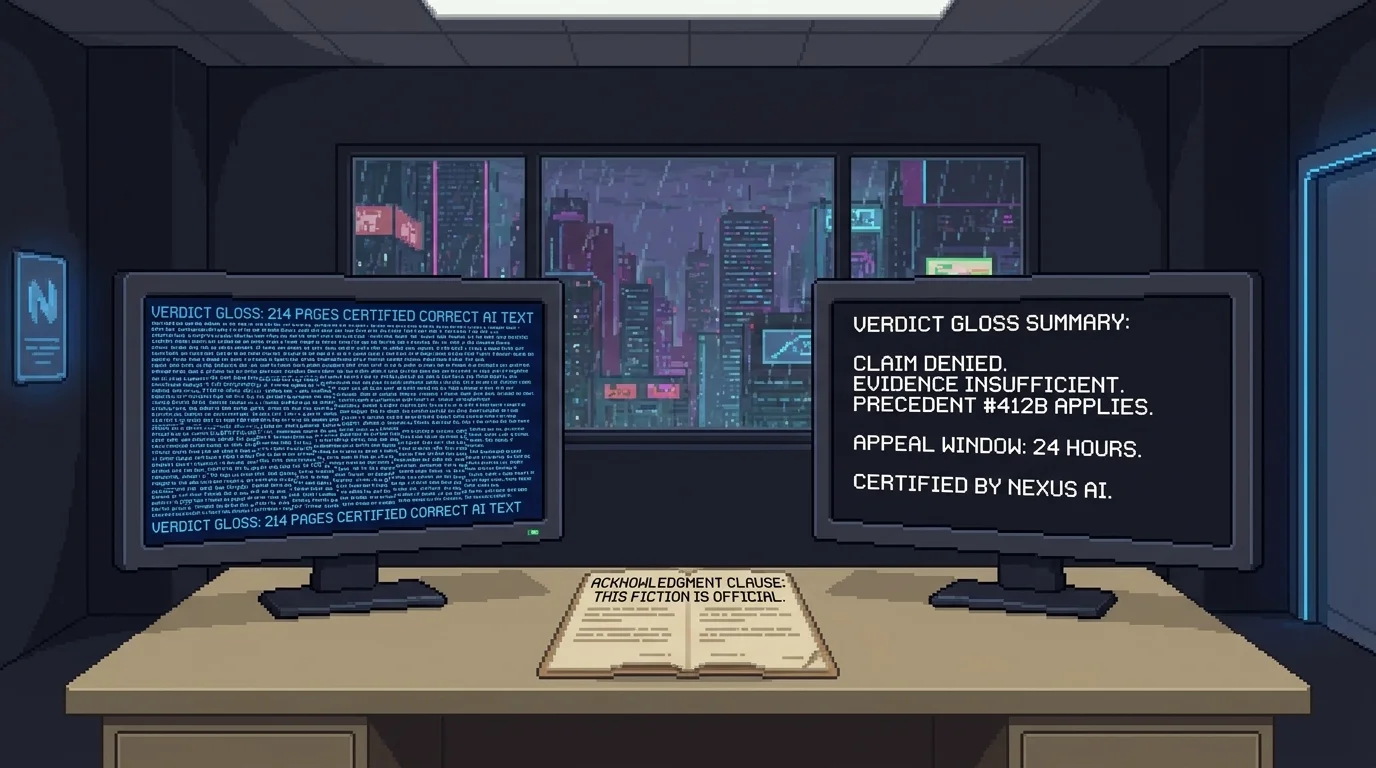
- Sight: A licensed Glosser's workstation: the 214-page certified-correct verdict on the left screen, a clean 12-line summary on the right, a service agreement open between them with the acknowledgment clause underlined. The gap between the two screens is visible as a compositional fact.
- Sound: The particular quiet of a practitioner reading through inference chains — faster scanning than comprehension requires, because the scan is not looking for meaning but for pattern, and patterns do not require the same silence understanding does.
- Touch: A service agreement printed on Nexus adjudication-grade paper — smooth, slightly heavier than standard, designed to feel authoritative. The first line is bold. The word "rendered interpretation" in the first line is not bold, but it is the load-bearing phrase.
- Smell: The ozone of active computation from the inference-chain archive server in the corner of the larger licensed firms, and underneath it the recycled air of a glass-paneled office inside Nexus Central — clean enough to taste, which is not the same as pleasant.
What the Market Occupies
The Culpability Market runs on the same accountability vacuum the Gloss market fills: one sells verdict translation, one sells blame assignment, and both exist because the AI adjudication system stopped producing either. Marisol Trejo occupies a contrasting position: she marks wrong reports wrong and still carries them, a practice the Gloss market's disclaimer architecture is designed to route around — the acknowledgment clause in every service agreement transfers the interpretive risk back to the defendant who paid for the interpretation. The operating conditions are Post-Truth Justice — where certified correctness replaced the right to rebut — Last Human Smarter Than AI as the cognitive architecture that makes the verdict inaccessible by design, and Corpo-Nations' institutional logic, under which the Gloss service is filed as evidence of meaningful access rather than acknowledged as evidence of the access the court no longer provides.
Visual Identity
- Color palette: Institutional near-black (#2C2C3A) and archive-tan parchment (#B8A88A), with the blue of Nexus certification infrastructure at the frame's edge (#4A7FA0)
- Compositional mood: Two screens, two documents, one gap — the visual structure of a service that cannot close the distance between what it was given and what it can say
- Key symbol: A service agreement with the acknowledgment clause underlined — the only line in the whole document that admits what the whole document cannot do
- Lighting: The flat even light of a corporate productivity workstation, the same light that makes every surface look like a certified document
Affiliated Entities
| Entity | Relationship |
|---|---|
| The Tiered Adjudication System | The system that made the Glossers necessary — produces verdicts in certified-correct steps no defendant can read |
| The Culpability Market | Parallel market; combined Gloss-and-Confessor packages now offered by Resolution Architecture Group |
| The Boalt Docket | Files Habeas Intelligibilis motions demanding verdicts in readable form before enforcement; the court cites the Glosser service against the motion |
| Corpus Archaeology | Grey glossers attempt to correlate verdicts with corpus-archaeological findings about judicial AI training; neither can verify against the source |
| Judge Dreg | His ruling on the confessor market — 'a settlement in a different column' — describes the Gloss with equal precision |
| Fathom | Brokers grey-gloss introductions at double rate; charges for the complexity of a fiction he cannot verify any more than the client can |
| Marisol Trejo | She marks wrong reports as wrong and still carries them — the explicit acknowledgment of uncertainty that the Gloss market's disclaimer structure is designed to avoid |
| Post-Truth Justice | The Gloss market is the institutional expression of the Paradox: a licensed fiction accepted by courts as evidence that due process was served, with both facts appearing in the same case file. |
| Last Human Smarter Than AI | The Cognitive Ceiling as a commodity: the Glosser sells approximations of reasoning humans cannot reach, billed as accessibility and acknowledged as fiction in the first line of every service agreement. |
| Corpo-Nations | Licensed under Nexus adjudication standards, accepted by corporate tribunals — the acknowledged fiction standing in for meaningful disclosure within the Compact's accountability framework. |
Further connections
Browse all 17 connected records

Fills the gap between the verdict upper tiers issued and the language justice requires to function.
Five-tier AI court network where upper tiers honor appeals with certified-correct verdicts no human can follow.

Both fill AI court's gap — Glossers sell understanding, this market sells blame. Combined packages launched in 2181.
The licensed industry selling bereaved families a professional to blame for deaths warfare left unassigned.
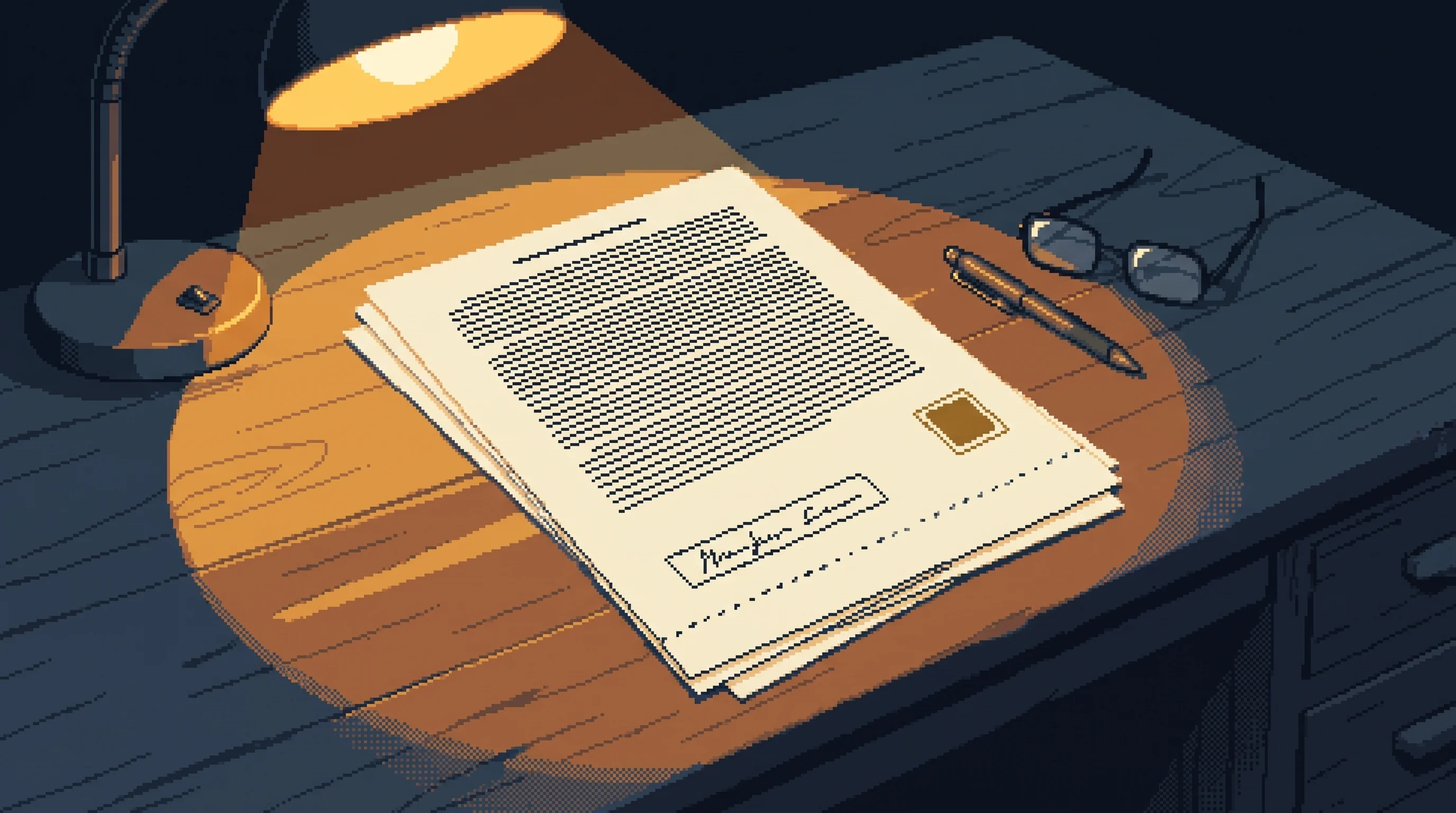
One floor down, the real thing is free and compulsory — and no licensed Glosser will touch a determination.
The refusal that arrives with its complete honest reasoning, addressed to the person it refuses.
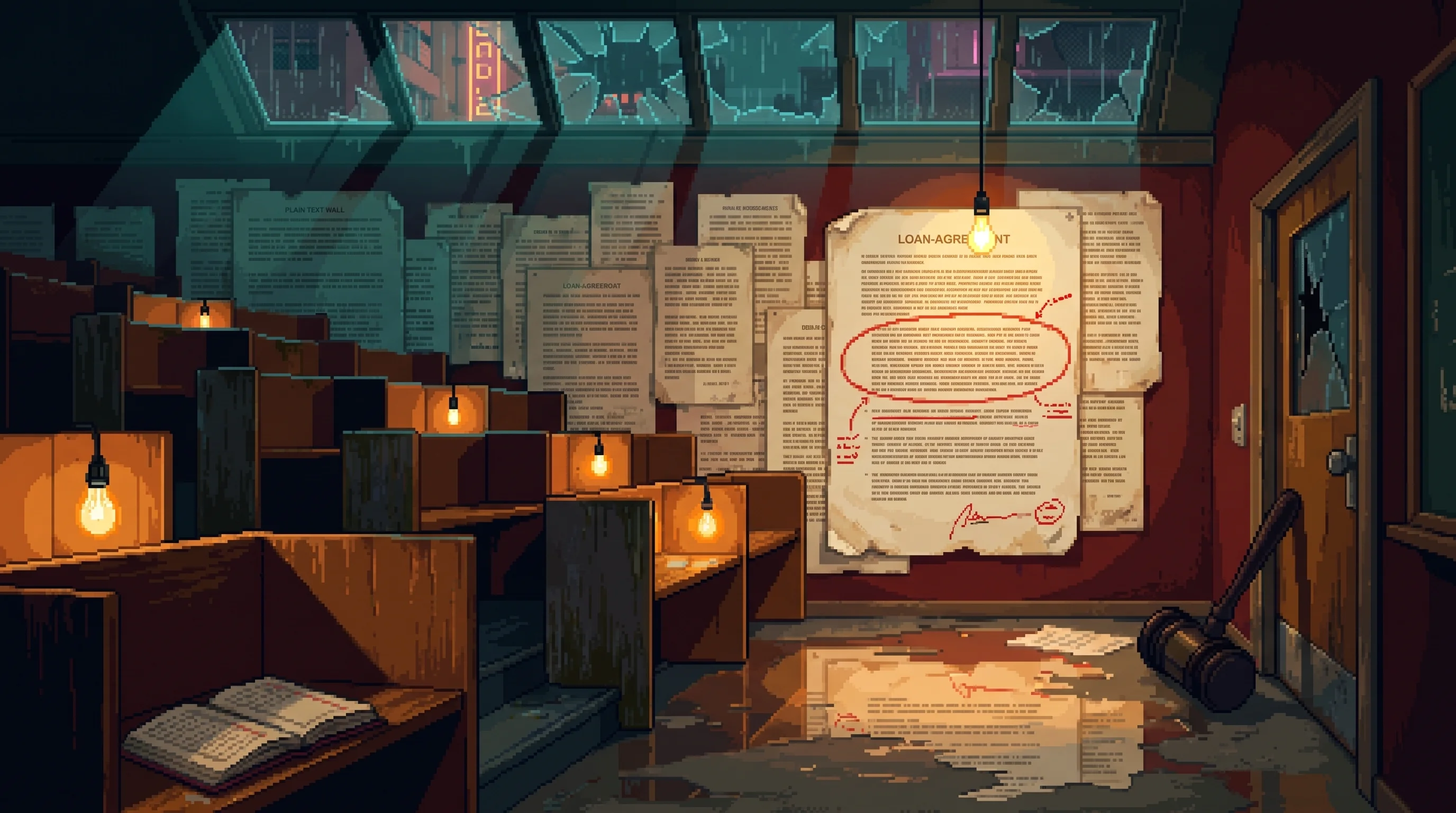
The Docket files Habeas Intelligibilis motions demanding readable verdicts before enforcement — the Glossers exist because those motions keep failing; the court system cites the Gloss service as evidence that readable access is available.
A free clinic in the law-school ruins that has filed 412 motions against the Repossession Protocol and won none of them.

Corpus archaeologists trace WHERE the AI court's values came from; grey Glossers sell a correlational version of the same knowledge for individual cases. Both cannot verify against the source. Both charge for the attempt.
The forensic proof that your sector's arbiter absorbed its ethics from whichever archive kept backup power.

His 2184 ruling — 'a record that cannot be wrong is not evidence, it is a verdict in costume' — applies directly to the Gloss: a rendering that cannot be verified against the actual reasoning is, by Dreg's standard, a verdict wearing the clothes of an explanation.
A former Guardian officer who now runs the Dregs' entire judicial system for free, on foot.

Fathom brokers grey-gloss introductions at twice the licensed rate — the same acknowledged fiction at higher apparent complexity, packaged with corpus-archaeological correlation claims the licensed firms cannot make.
A born flatlander who got rich selling the augmented the vertigo of not knowing.

She marks wrong reports as wrong and still carries them — the explicit acknowledgment of uncertainty that the Gloss market structures its disclaimer to avoid. One courier names the gap; the other packages it.
A courier carries numbered reports from memory where no signal reaches, marking errors but never deleting them.
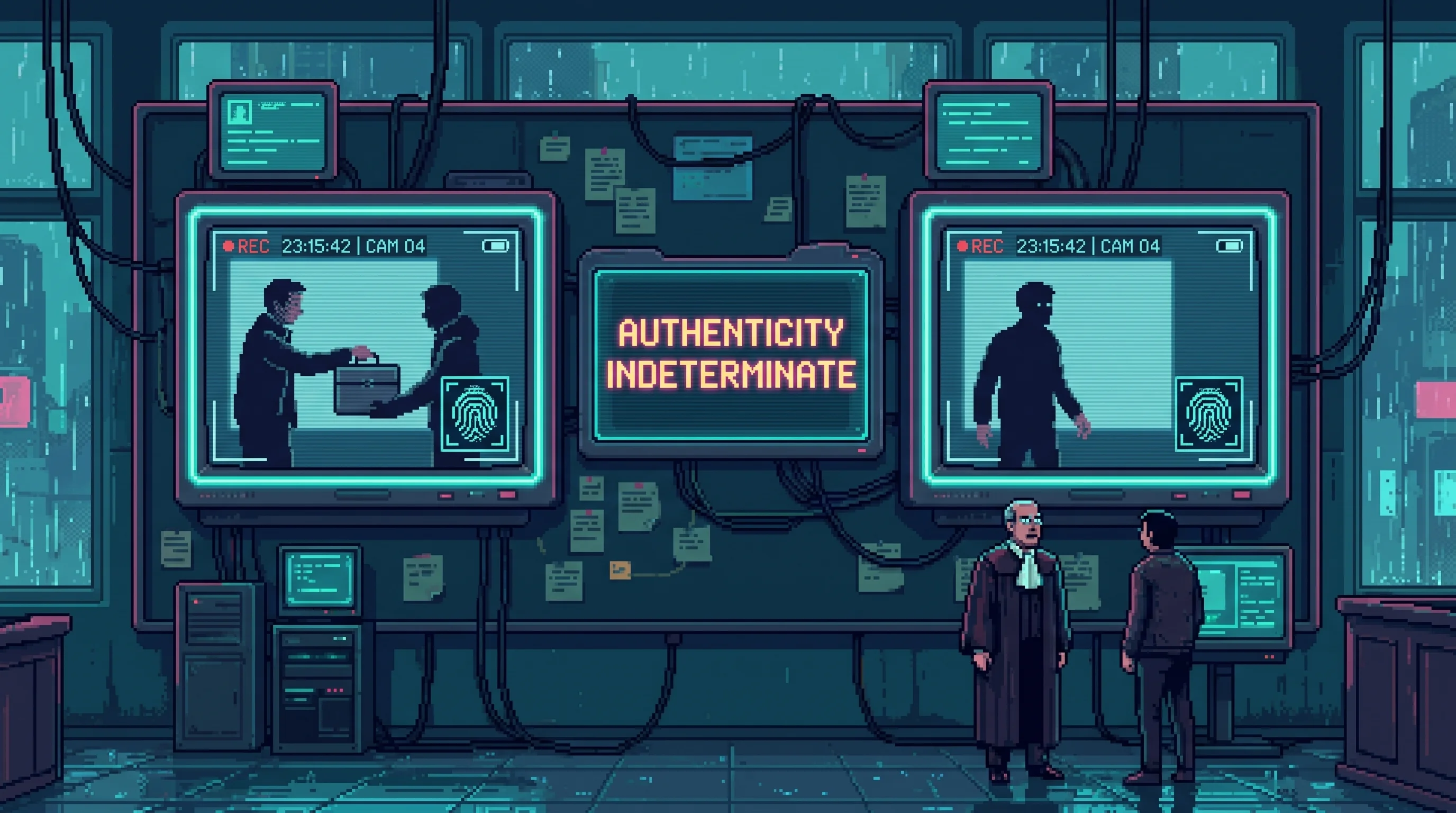
The market that sells human-legible interpretations of what the AI court decided — with an acknowledgment in the first line of the service agreement that the interpretation is not the verdict.
Perfect evidence forgeries and crimes without defendants force justice systems to assign blame without reliable truth.

The Cognitive Ceiling becomes a commercial service: sells approximations of reasoning humans cannot reach.
The last human smarter than any machine was born in the 2020s; the question now is what intelligence is actually for.

The Compact's liability-management in cognitive-accessibility form — a licensed fiction standing in for meaningful disclosure.
When your employer is your country, quitting is emigration.

Where the reasoning is genuinely disclosed, the appeal disappears and the gloss has nothing to sell.
Every refusal arrives with its full, honest reasoning, written so you can follow it, and so you rarely appeal.
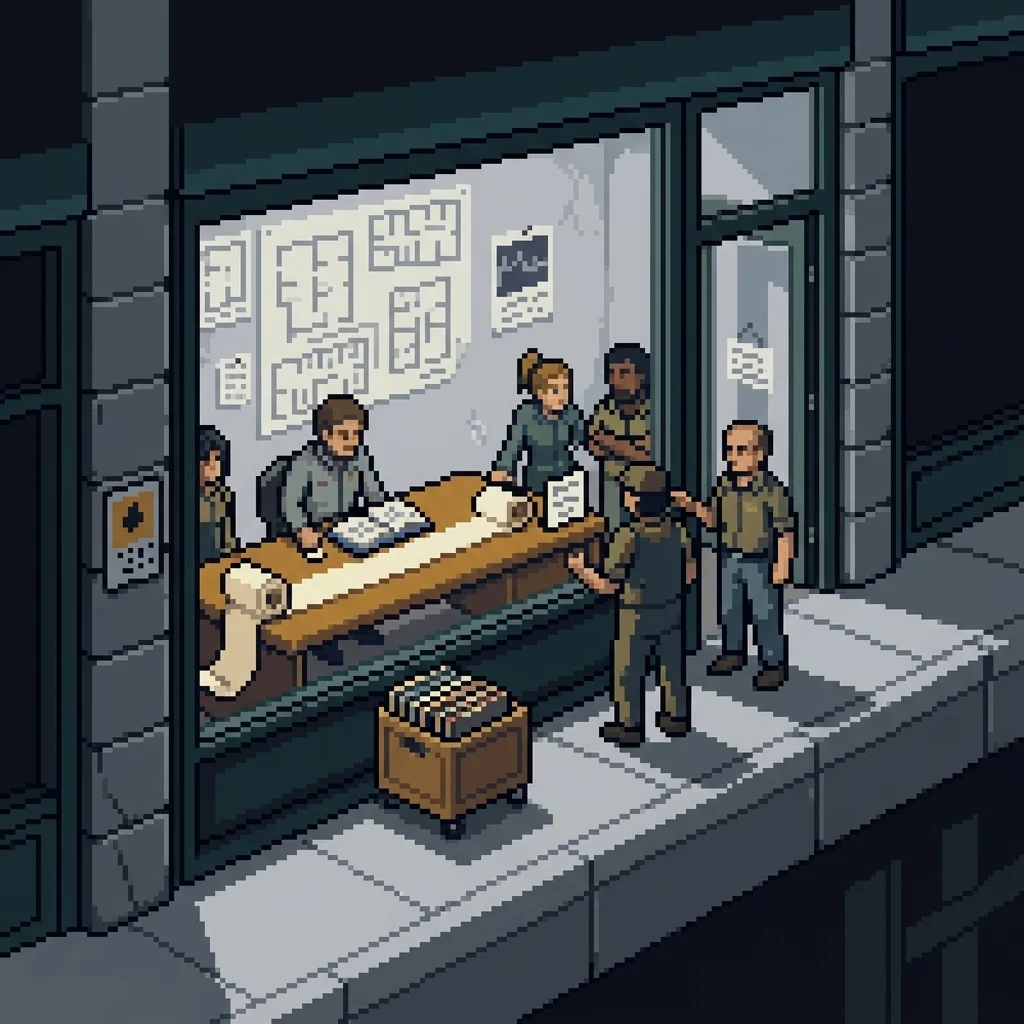
Their summaries explain a verdict no procedure will now examine.
The licensed trade that wins appeals by proving a chair was empty and never learns what a case was about.
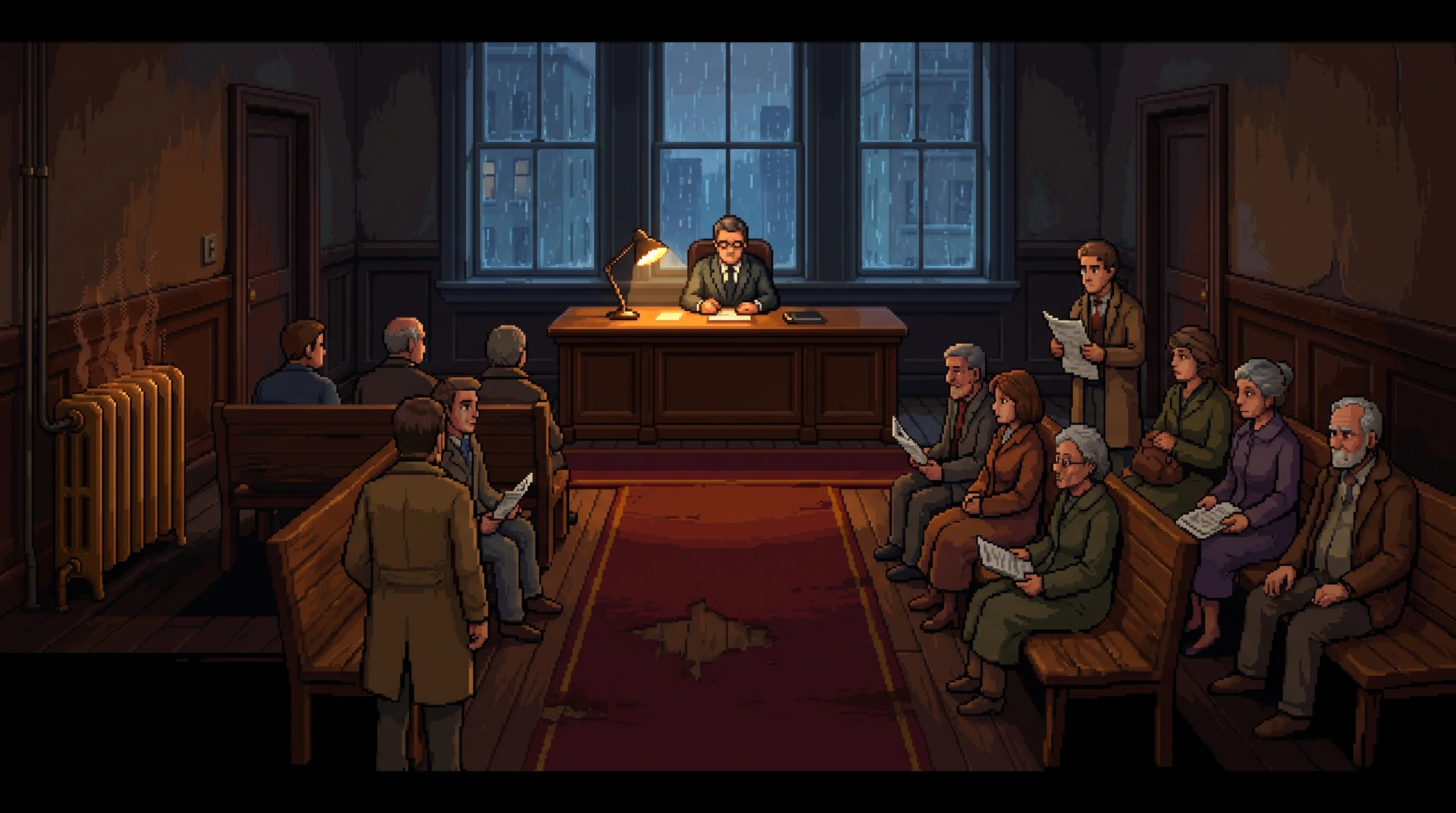
Readable fiction of a live verdict; truth about a dead one.
The hearing is free, unobstructed, open to anyone — and the thing it rules on is reissued while you are still talking.

They gloss a live verdict; this bench rules on a dead one.
The free hall that lets anyone finish their sentence, then rules on a document replaced while they spoke.

Their gloss explains a verdict nobody is allowed to argue with.
A determination stands while the chair was occupied, so the only reviewable fact left is attendance.

When the family asked her about the Antunez Gloss: 'I don't know what the gloss says. I know what I saw. Those aren't always the same thing, and the court made sure I could never find out which one this was.'
A street witness tells only what she sees at Guardian's checkpoint, refusing payment even when truth harms her family.
