The Thank-You Note for a Refusal
In the spring of 2181 a district clerk in Old Town wrote four pages refusing an application for a bed in a suspension ward.
The applicant was an elderly woman whose projected outcome was poor. The pages set out why: the number of beds, the queue, the clinical projection, and the specific reason a different applicant would get more out of the same bed. The clerk was careful with the third page, where the comparison sat, because the comparison was the part that would hurt and the district's standard says the part that hurts is the part that most needs to be understandable.

Eleven days later the district office received two lines from the applicant's daughter, Rosa Iturbe, thanking the clerk who wrote it for explaining it so clearly that she could understand.
The clerk was Junia Bexley. She resigned that quarter. She has kept the note for three years.
What the law requires
Since 2173, a refusal in the licensed districts has been void unless it comes with its reasons.
The rule is regulatory code 11.4(a), and what it requires is narrow and specific: when a determination goes against you — a coverage refusal, a credit decision, a housing tier, a licence withheld — it must be served together with the reasoning that produced it, written so that you, the person it is against, can follow it. Not a summary. Not a reference number. The actual grounds. Clerks draft them by hand and are graded on whether the recipient can follow the page, and the only clerical failure the districts publish is a notice returned as too difficult.
Before the rule, a refusal was a clause number. You could not argue with a clause number because there was nothing in it to argue with, and the abuses that hid behind them were the ordinary ones: the decision nobody had to justify, the file nobody had to open. Clerks who worked both sides of 2173 will tell you the old form was worse. They are right, and they tend to say it flatly, because they know what the sentence is about to be used for.
The number both sides claim
Overrides have fallen in each of the eleven years since. They have not risen in any of them.
The districts publish that figure as their strongest evidence: where reasons were required, the reasons turned out to be sound, and the people receiving them agree. The reading is not unreasonable. A refusal you can follow and cannot fault is a refusal you have no grounds to contest, and the appeal stub prints attached along a perforation at the foot of the last page.
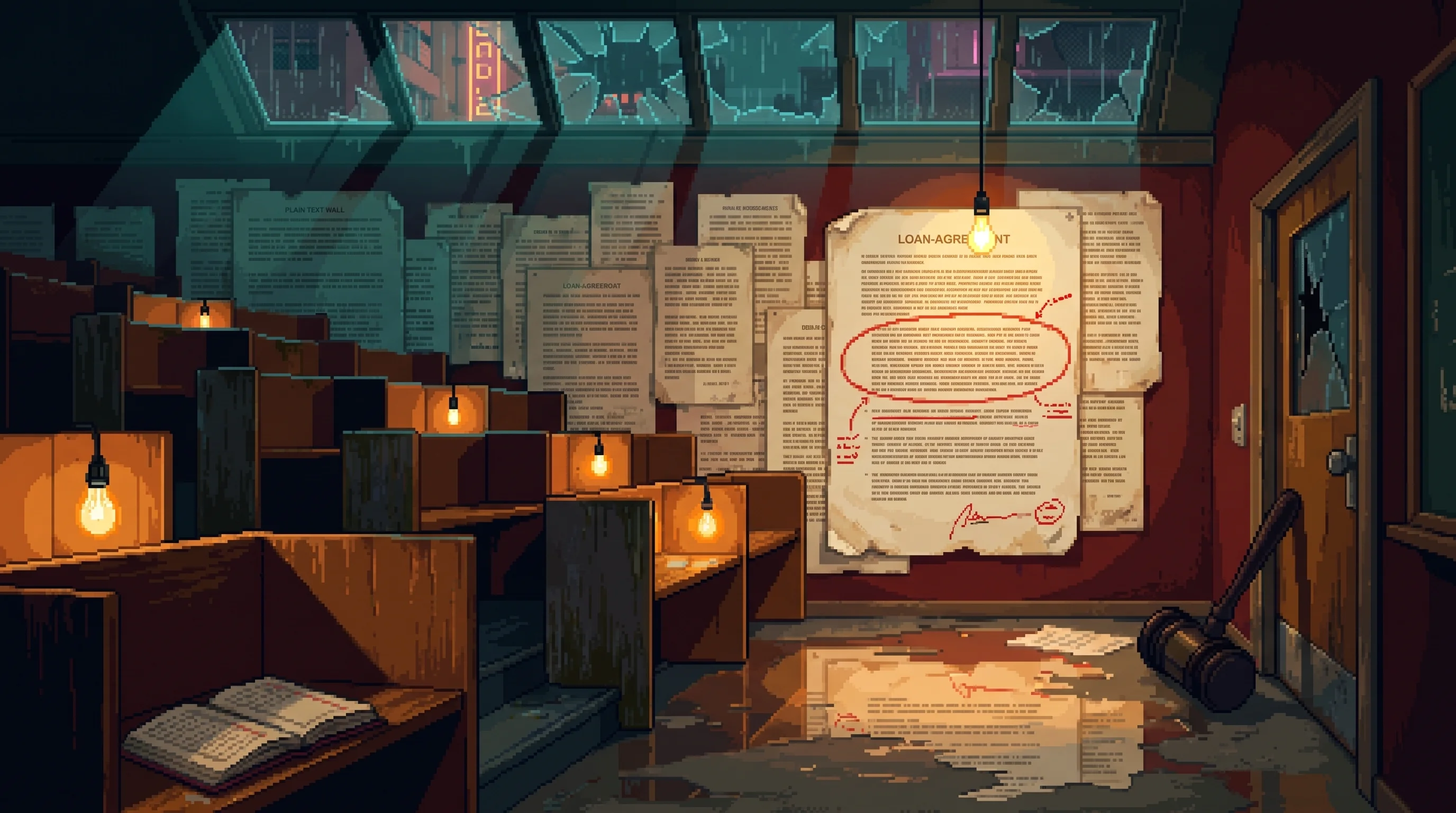
The other reading is that a population which stopped appealing is not the same as a population which was satisfied, and that nothing in the Sprawl distinguishes the two. Dr. Priya Achebe, the ethicist Nexus is required by the same clause family to employ, filed the only formal objection on record: the falling number is equally consistent with reasoning that is merely persuasive, and the board has no instrument that can tell the difference. The objection was noted. The figure appeared unchanged in the next quarter's accountability summary.
No district publishes how many appeal stubs come back with the perforation uncut.
The desk where the reasons cannot reach
The firms paid to find errors went looking for the place where errors are still findable, and they found it by removing the reasons.
A determination can be sold to a licensed audit house in what the trade calls the bare form: the outcome, the clause, and nothing else. Sending that version to the person it concerns is unlawful. Selling it is ordinary commerce, and the houses compensated on findings buy it in volume. The reviewers who work it hold a licence whose defining condition is not a skill but a prohibition — they may never be told the reasoning behind anything on their desk. They earn about four times a district clerk. Their careers run about six years. Asked what the job is like, they converge on the same phrase across houses: disagreeing with something you are not permitted to understand.

They find more errors than anyone reading the served copies. The margin has held long enough that nobody treats it as noise, and no house or district has published a mechanism for it.
Bexley took that licence in 2181 and is now the best finder in her building. She cannot explain how she does it either. What she says is that six years of writing grounds taught her exactly what a sound reason looks like, that she is extremely good at recognising one, and that the licence is the only arrangement she has found that stops the recognition from doing its work on her.
Where the rule stops
None of this reaches the courts, and that is where the fight has been loudest.
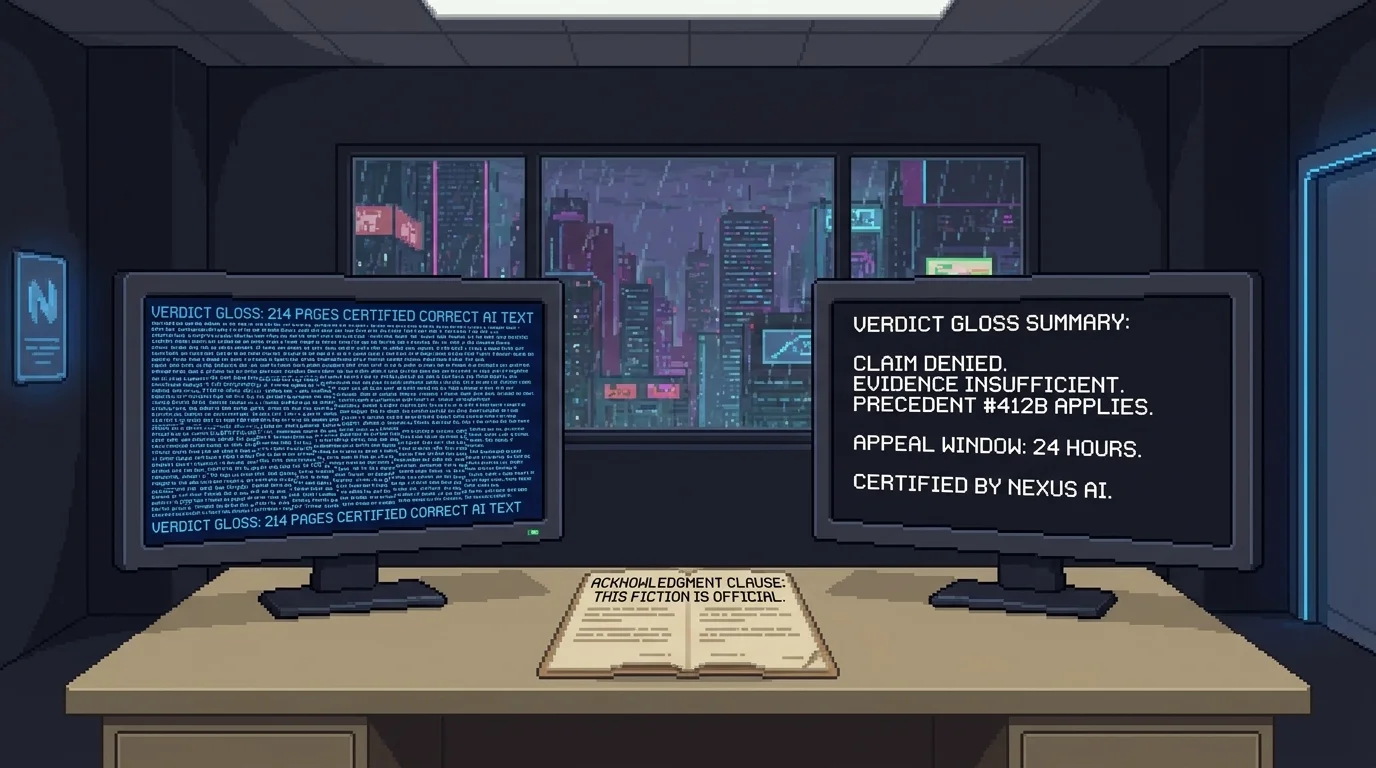
A verdict from the upper tiers of the adjudication system is not a determination, so 11.4(a) does not touch it. Those verdicts run to hundreds of certified pages nobody can follow, and a licensed profession exists to sell you an acknowledged fiction about what yours said. In 2183 the Boalt Docket filed thirty-four motions demanding that verdicts be readable before they could be enforced. All thirty-four were dismissed, most in four minutes.
In eleven of those dismissals the arbitrator cited 11.4(a) back at the clinic. Legibility had been mandated once already, downstairs, and look what happened: the reasons proved sound and nobody contested them. The clinic's best evidence was entered against it.
Elena Sarkisian, who founded the Docket, has an eleven-page reply drafted. It argues that the collapse in overrides is the injury and not the vindication. She has revised it twice and has not filed it, and everyone in the reading room understands why: her practice exists because people are handed documents they cannot read, and the draft argues that the clearest documents in the Sprawl are the ones that end the argument.
The one refusal that held
There is a single case anybody cites on the other side, and the districts have never worked out what to do with it.
In 2178 a Guardian medical review refused treatment for a woman with a degenerative neural condition. The notice came with its four pages: the exemption clause, the childhood scan it rested on, the actuarial tier, the projected value of the procedure against its cost. Her daughter read it. She has never disputed a line of the arithmetic and corrects people who try to dispute it for her. She did not appeal, because there were no grounds and the notice had made that perfectly visible, which is the notice working as designed.
Then she took the corporation's playbook and spent seven years dismantling it. GG is the only person in the Sprawl on record as having received one of these documents, agreed with every line, and refused it anyway.
What the four pages did not contain was the exposure, decades earlier in a refugee transit settlement, that had started the illness. That was not withheld by anyone. Causation is not a coverage fact, and the clause requires the grounds of the determination and nothing outside its subject. The document was complete. The account of her mother was not, and no clerk anywhere in the chain did a single thing wrong.
What people are actually buying
On Sump Row, a man at a folding table still charges ¢2 a page to read a notice out loud.
By any reasonable expectation Hollis Sarr's trade should have ended eleven years ago. His craft was built for documents designed not to be understood — the buried clause, the page nobody was meant to reach — and 11.4(a) forbids all of it. The notices explain themselves now. People bring them to him anyway, and he reads the whole thing at the pace it needs, and he still slows down at the sentence that does the damage, and the woman across the table still watches his face instead of the page.
What she is buying was never comprehension. It is somebody in the room while she gets the news, which is the one thing the clause did not think to require and could not have.
Sarr keeps a locked cabinet behind his chair holding nine years of correspondence addressed to himself, most of it findings against the legal name he leases to a fleet of machines, each one served with its complete honest reasoning explaining exactly why. Under the terms of his lease he may not open any of it. The Sprawl has built a document that tells you everything, and given the key to the other party.
The oldest version of the instrument is fifty-three years old and was free. On the wartime click floor in 2171, a gig confirmer named Maricel Dayrit filled in an optional comment box on all four hundred and twelve of her denials, one to four words at a time, into a field no system read. Six years later one of those comments became testimony in a survivor family's proceeding, and the case settled before her deposition finished.
The clause exists because of her. It made the box compulsory, paid clerks to fill it, and built machinery that consumes what they write. In the eleven years since, several million reasons have been drafted, served, read and accepted, and not one of them has been used against the district that wrote it.
Dayrit has been asked about this twice and gives the same two-part answer. The first part is that the new way is better, and she means it. The second part is arithmetic: hers were the only ones nobody had asked her for.