Elin Baptiste is fifty-four, holds a general list at a district clinic in the Corridor, and is unremarkable by every professional measure her district keeps. Her diagnostic outcomes sit near the middle of her cohort. She has published nothing. She has never had a complaint filed against her, or a commendation.
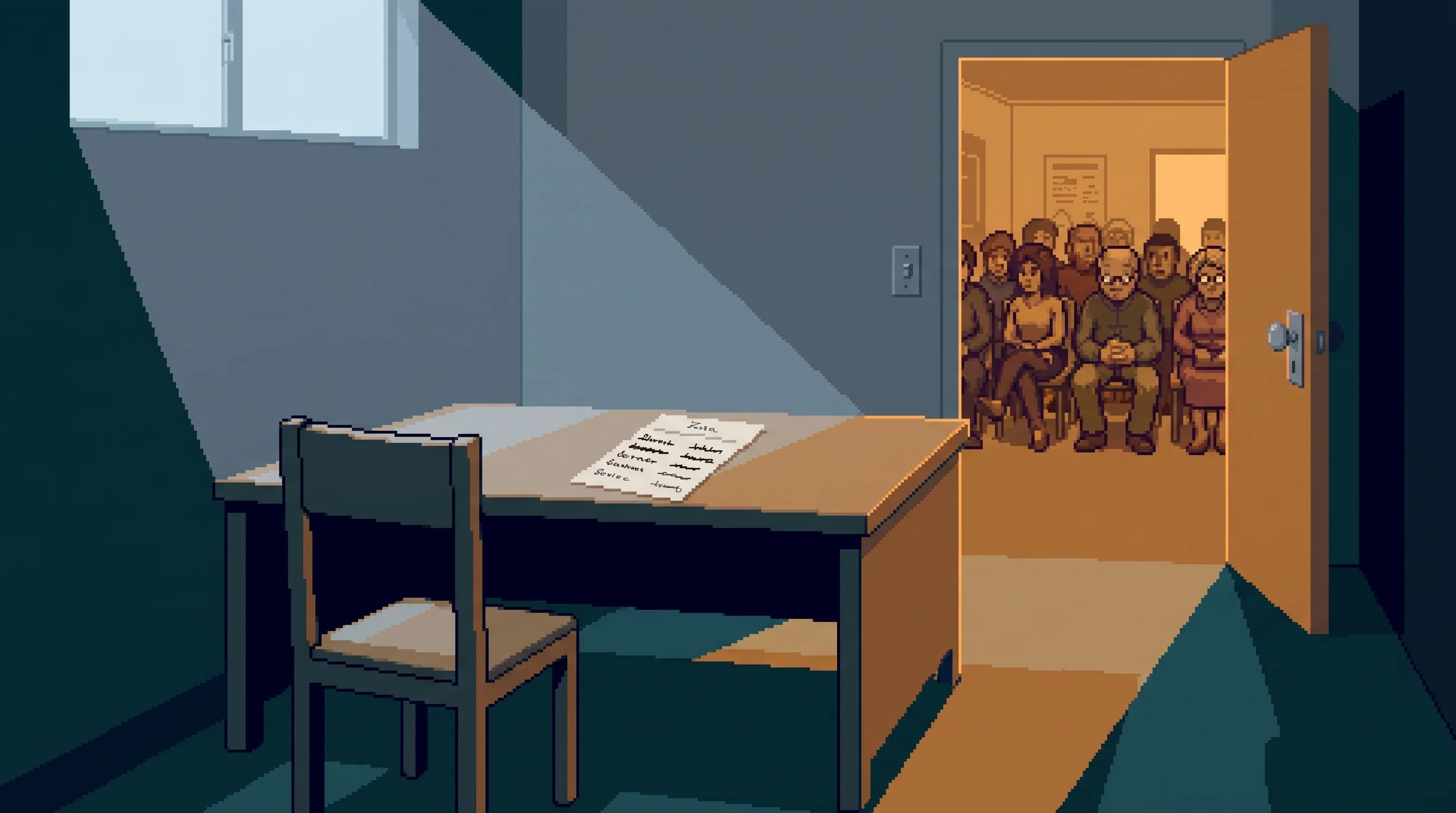
For nineteen years she returned her own calls. Every overnight message, printed onto one slip in the order it arrived, worked down in her own voice, each name crossed off with a pen she keeps behind her ear. On bad weeks she left after the cleaners.
In the spring of 2180 the district ordered her to stop working for four years.
What the district measured
She had broken no rule. The order was not a punishment and it did not pretend to be one: her pay continued at grade, her professional standing was untouched, and the notice recorded twice that nothing adverse had been found against her.
The finding was about everybody else. Over nineteen years, the share of her clinic's appointments booked for Dr. Baptiste by name — rather than for the clinic, or for an appointment — had climbed to seventy-one percent. The threshold in the licensed districts is forty.
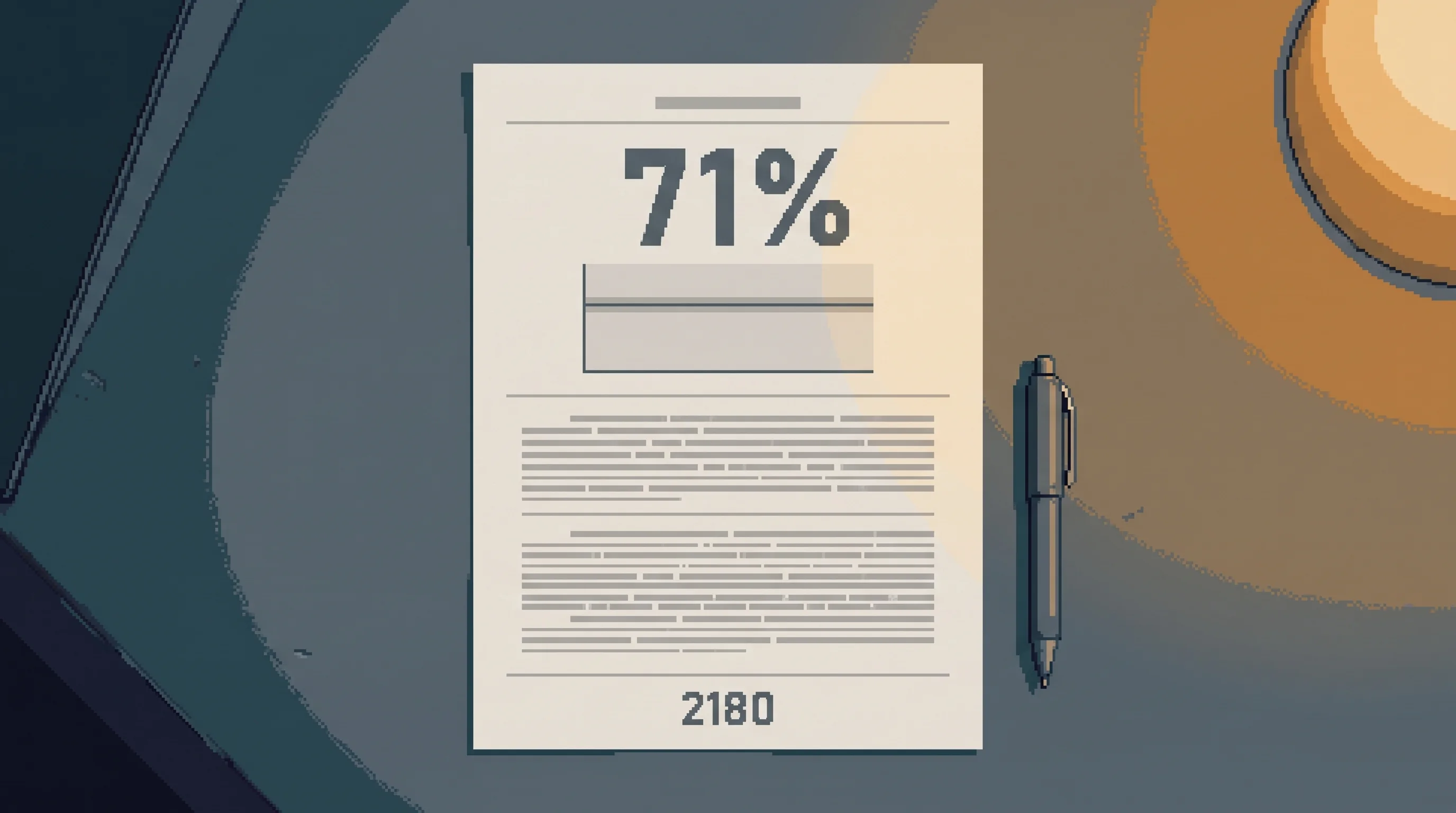
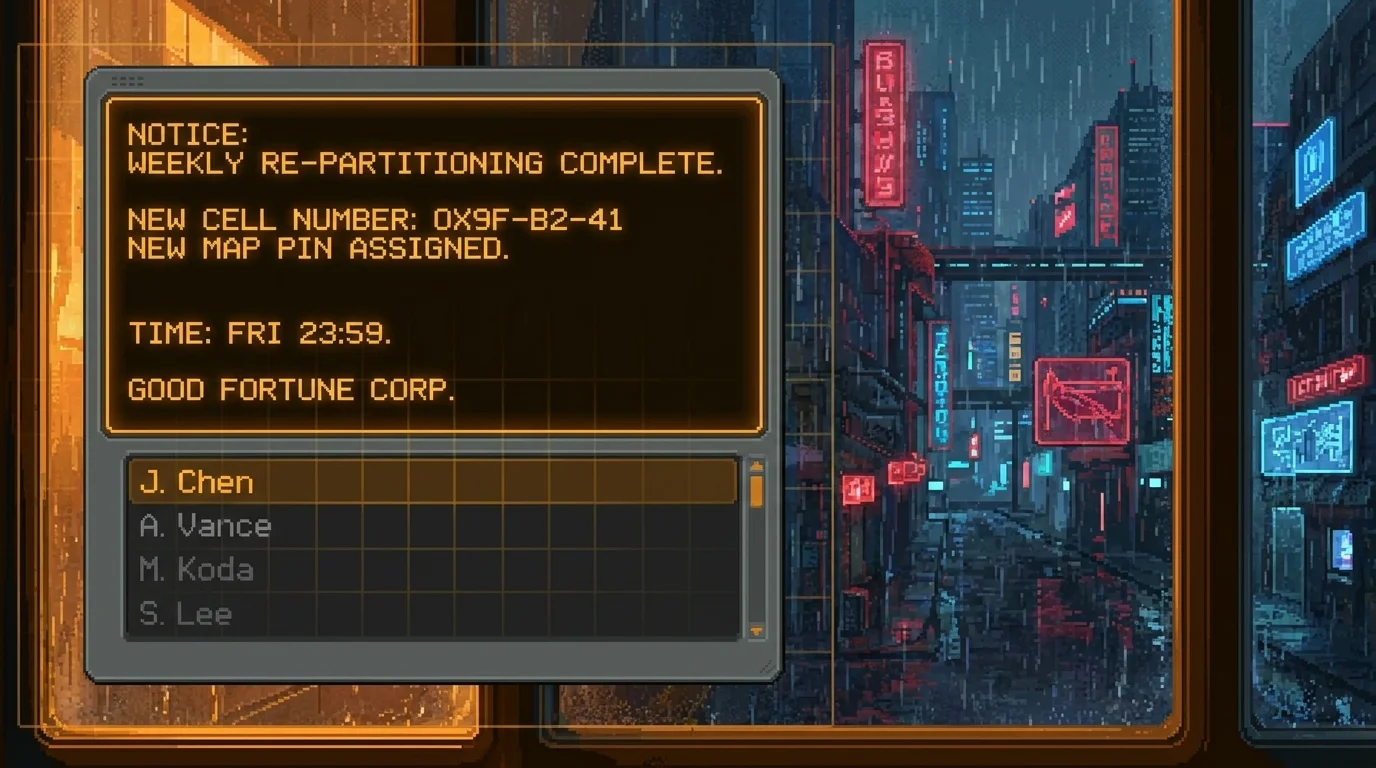
That number is produced by the Reliance Index, which every licensed district has computed quarterly since 2158. It counts named requests, decisions that route through one person, and the hours a queue holds when that person is away. Above the band it issues a continuity stand-down: four years off the work.
The reason the districts do this is not obscure and has never been denied. Between 2147 and 2150 the orphaned regional systems killed roughly three times what the Cascade's seventy-two hours killed, and the defining feature of the worst of them was that the thing everyone depended on could not be taken over by anyone else. Every institution built since has been a variation on one sentence: a dependency is dangerous in proportion to how few people can carry it. In 2158 the districts applied the sentence to staff.
The question the Sprawl has not answered is whether a society that has no enemy left to fear is entitled to remove its best people for the crime of being depended on.
Four pages she agreed with
The notice ran to four pages, because regulatory code 11.4(a) requires an adverse determination in the licensed districts to arrive carrying its complete operative reasoning, written to be understood by the person it is against. It showed the reading, the band, the inputs, and the comparison cohort. Its third page set out what would happen to her patients if she were struck by a crawler on the Corridor road, as a list of the things that would stop.
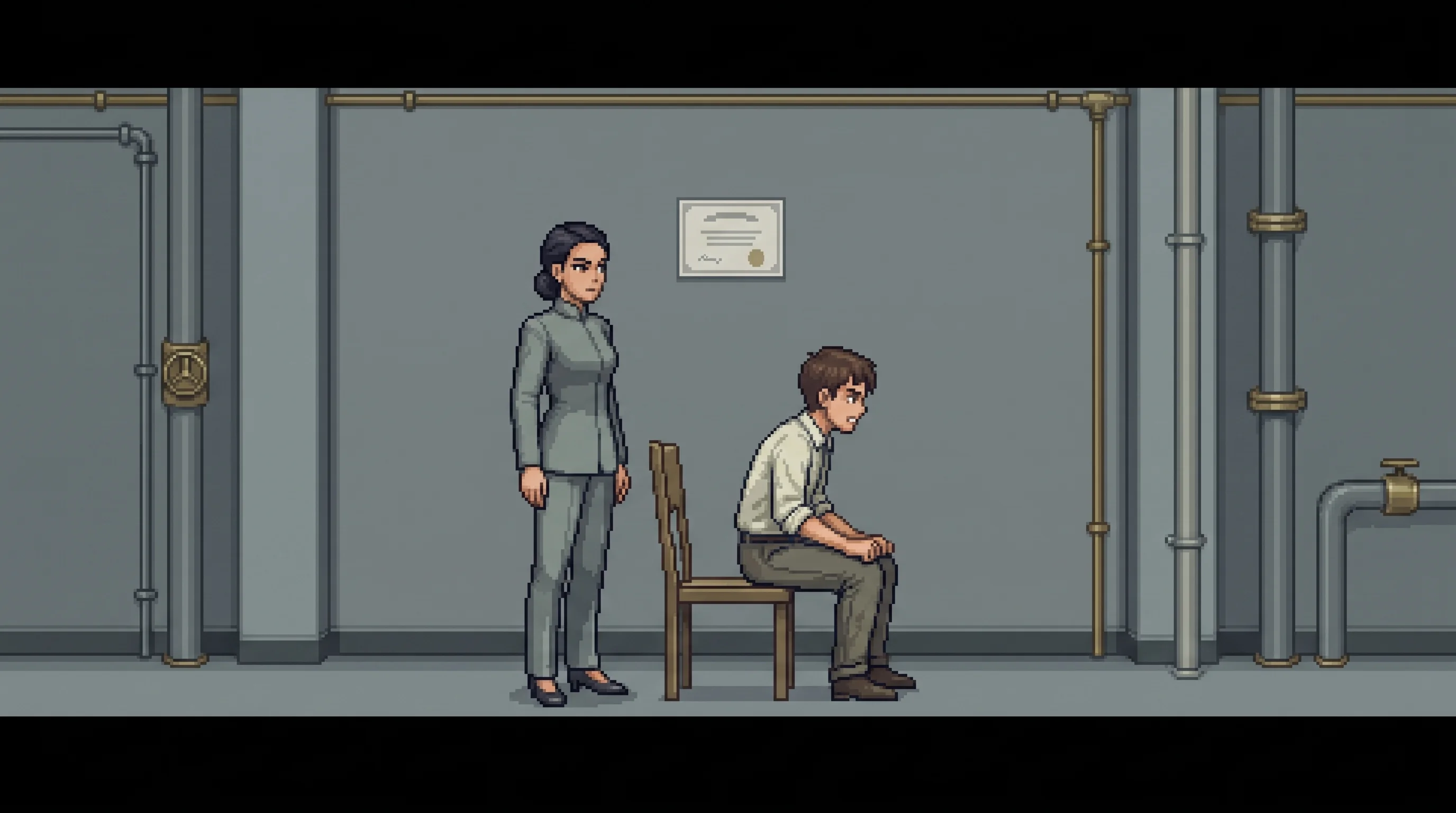
Baptiste read all four pages. She has said, every time she has been asked since, that they were correct and that she could not think of a sentence to put underneath them. She did not apply for an override. Across the licensed districts, the recorded override rate has never exceeded three percent.

This is where the instrument gets its strength, and it is not force. A person who agrees with a determination does not appeal it, and a determination nobody appeals is never tested. The Index's annual report presents the override rate as evidence of its own accuracy. It is evidence of accuracy. It is also the reason no stand-down has ever been examined by anybody who was not persuaded before they began.
The methodology is honest about its limit, too, in its first section. The Index cannot tell a service with no depth on its rota from a service people attend because of one particular person. Both produce the same number. Only one of them is fixed by removing the person; the other is caused by it. The drafters wrote that down, offered no correction for it, and moved on.
Where she went, and what she did there
A stand-down requires only that the person go somewhere the district's decision systems do not reach. The Wastes satisfy that completely, which is why the East Bore road now carries a steady trickle of well-paid professionals with nothing to do.
Baptiste took a month room at the Diablo Waystation and kept it for four years. She was not permitted to practise. She had no list and nobody to ring.
She wrote the slip anyway. Every morning: the names she would have called that day, in the order the messages would have come in, on receipt roll and manifest backs and the blank sides of tourist brochures. She never crossed any of them off.
Del Ferreira, who keeps the counter there and keeps a private ledger of every traveller the road took, watched this for eleven days. On the twelfth she emptied the bottom drawer and pushed it shut with her boot. She never asked what the papers were.
The number was right
Baptiste came back this spring.
In her absence the clinic had adopted a callback protocol — any available clinician, four-hour target, logged. It works. Median response time across the list fell from thirty-one hours to four and has stayed there since her return. Her own reading now sits at twenty-two percent, comfortably inside the band, and the district has filed the case as a successful redistribution of reliance.
It is one. Baptiste does not dispute this and becomes visibly impatient with people who invite her to. Asked by a locum whether she was angry, she said that the protocol answers faster than she ever did, and that she cannot name the thing it does not do.
She has eleven years left on her registration. On the slower mornings she has started leaving the pen behind her ear and letting somebody else take the call.
The two ways to keep your work
There is no third finding. The Index returns within band, stand down, or held.
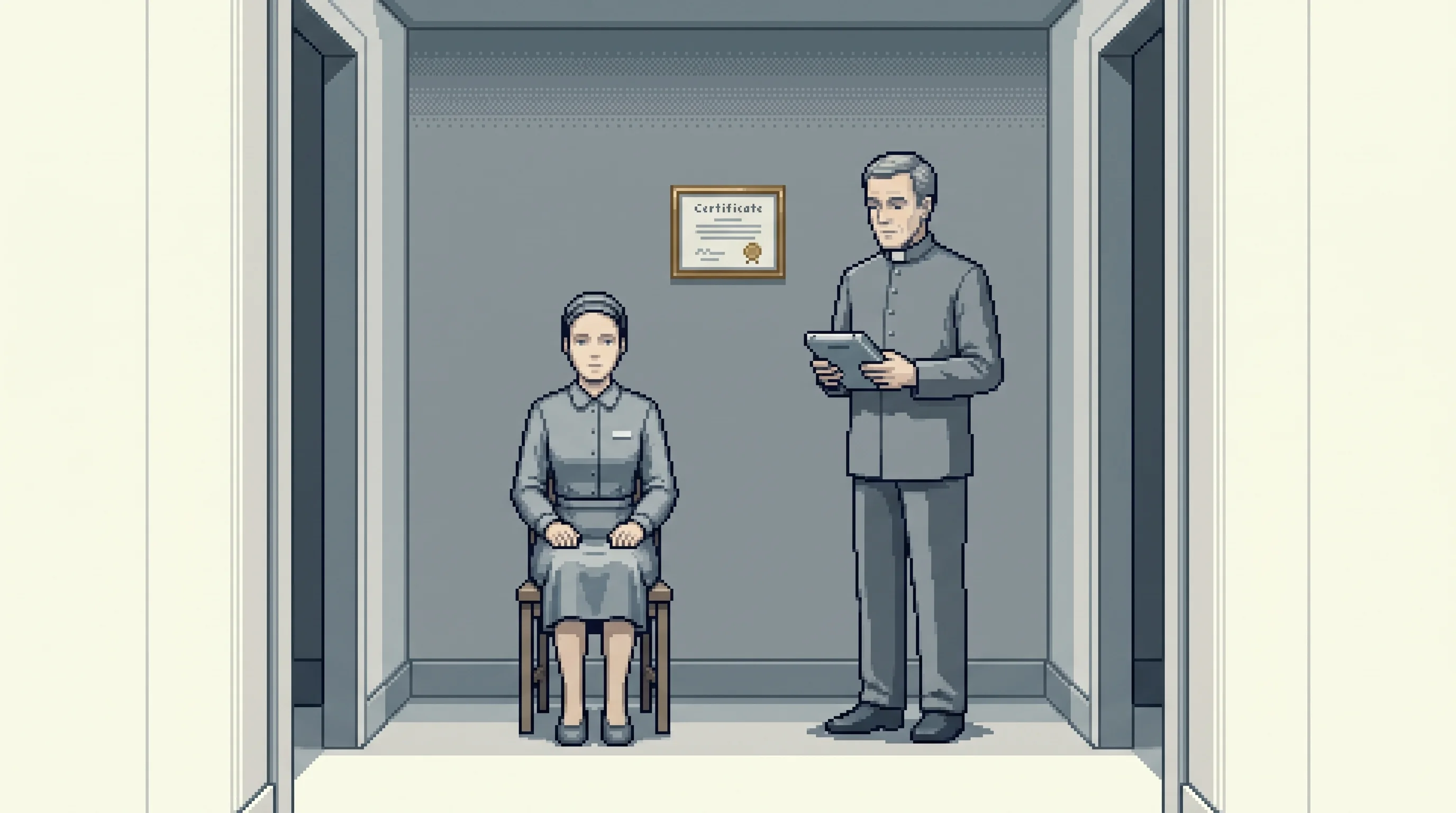
Held is the exemption, and it is the one that closes the trap. If the district can name identifiable people who would be harmed by your removal, you are not removed — you are entered on the Held Register. The notice opens In recognition of, is read aloud at the annual ceremony with your family in the hall, and bars resignation, transfer, and retirement for as long as the finding stands. The only way off is a trained successor. Roughly nine hundred people are held across the licensed districts. Four have left voluntarily since 2158.

Maren Cott is the only licensed developmental mediator in Sector 12. She applied to transfer this year. The refusal came back inside a fortnight with a correct annex: no second mediator, a caseload that does not pause, and the names of the families who would wait. She has met nine of them. She calls it the most honest document the court has ever sent her, and she has stopped looking for the door.
So the two safe positions are to matter too little to be removed and too much to survive removing. The people the instrument takes are the ones in between.
What people do about it
Mostly, they answer a little slower.
Holding a reading under band is not an offence. It cannot be measured as intent, and it has never appeared in a published district finding. You route the call to whoever is nearest. You let the second-best person take the follow-up. The Lampblack, who have been flattening their own signal against covert forecasting for a generation, regard the district version as a soft imitation — a printed threshold, a wage, and no need to think of yourself as resisting anything. They are right, and it is spreading faster in five years than theirs did in a generation.
Some people refuse. Ondine Kesh spent years arranging to be the only holder of the Discretion Tier's training, precisely so that she would be the only person in the arrangement who could say no. The Index read the arrangement exactly as she built it and gave her the standard two options: certify a second instructor, or stand down. She has declined both, in writing, in three words.
And some institutions refuse to look. At the yellow stripes on Highport, a member of the Line-Walkers Union moved that the union commission a reading on Ifechi Adeyemi, who carries three legal systems and a hundred and forty informal precedents in her head with no documented backup, hoping a formal finding would force the succession question the union has raised with her six times. The motion failed on the floor in under a minute. A reading is a document, a document is a thing a jurisdiction can act on, and the whole trade rests on the stripe belonging to nobody. Adeyemi voted with the majority.
The social machinery has adapted in its own way. Fairmonte lapses a membership for one missed brunch seating, and its reservation system registered the first stand-down as exactly that while the member's district was still applauding. Triumph's answer was the Standing Hold: a sponsor sits your seat for the duration. Four years is two hundred and eight seatings, and both Holds that have run to completion ended with the returning member reapplying behind their own sponsor.
The line the instrument cannot cross
The Index runs where professional licensing runs, and that boundary is the part nobody in the districts has costed.
Del Ferreira has been the only person east of the East Bore who can rebuild the waystation generator for eleven years. There is no understudy. The day she stops, the counter goes dark and the count in her own ledger climbs. She satisfies every criterion the districts use, and she will never appear in any register, because the Wastes issue no licences. She fed a woman who had been removed for feeding people, for four years, and gave her somewhere to put the papers.
The districts strip their own concentration and file the improvement. The ungoverned ground keeps all of it and files nothing. Nobody has run the comparison. The one institution holding models accurate enough to do it, the Custodian Corps, seals its basis under §47 and has taken eleven transparency requests for the mandates it will not explain — and not one about the instrument that explains itself in full and removes more people in a year than the Corps has issued notices in a decade.
Every continuity metric in the licensed districts has improved for twenty-six years. None of the numbers are gamed and none are disputed, including by the people who hate the instrument. What nobody has proposed is a way to measure what a district becomes once the people worth waiting for have all learned not to be.
Baptiste's clinic is faster than it has ever been. Her patients still ask when she is on.